
TL;DR

Get privacy and security gear delivered free with Prime
- Fast, free delivery on millions of items
- Prime Video, Amazon Music and more included
- Member-only deals all year
A high-quality 4K dash cam with parking mode offers sharp images and reliable security, but features like buffered recording, power options, and storage are key. No single model fits all—your choice should match your driving habits and parking environment.
Ever looked at a dash cam and wondered if it’s really worth the hype? The truth is, the best 4K dash cams with parking mode do more than just record in ultra-sharp detail. They act as silent witnesses when you’re away, protecting your vehicle from hit-and-runs, vandalism, or even minor accidents.
But not all 4K dash cams are created equal. Some excel in night clarity, others in parking coverage or smart features. This guide cuts through the noise, showing you what really makes a dash cam stand out and how to pick one that fits your needs—without wasting money on features you don’t need.
Buffered recording and impact detection are essential for meaningful parking footage.
Proper hardwire or power setup protects your vehicle battery and ensures continuous operation.
Sony STARVIS 2 sensors significantly improve low-light and HDR performance in 4K dash cams.
Three-channel systems offer the most comprehensive evidence, but require more power and storage.
Regular maintenance of storage cards prevents data loss during critical moments.
What makes a 4K dash cam truly stand out in parking mode?
Not all 4K dash cams with parking mode are equal. The key is how they handle continuous recording, impact detection, and power management. A good system captures high-res footage of every bump or swipe, even while parked. It should also wake up quickly when motion or impact happens, saving the critical moments.
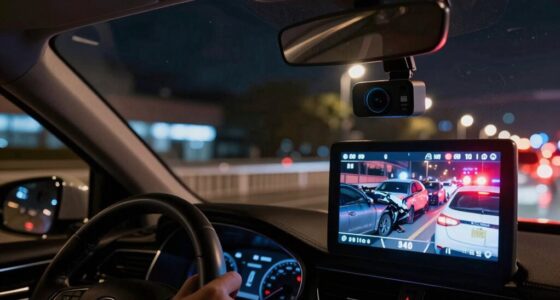
Imagine returning to your car after a long day and reviewing footage that clearly shows a hit-and-run. That’s only possible if the dash cam uses buffered recording — storing several seconds before and after an incident. It’s like having a mini security camera that’s always on standby.
Understanding this helps you realize why some dash cams can provide clear evidence while others fall short. The tradeoff often involves power consumption and storage; a system that records continuously at high resolution requires more energy and space. Choosing a model with efficient impact detection and buffering ensures you don’t miss key moments without draining your battery or filling your SD card prematurely.
As an affiliate, we earn on qualifying purchases.
The secret sauce: Buffered recording and impact detection
Buffered impact recording is the backbone of effective parking mode. It continuously records a few seconds of footage in a loop. When a G-sensor detects a collision, the system locks that clip, preventing overwriting. This means you get a pre- and post-impact view, crucial for understanding what happened.
For example, a parked car gets sideswiped at night. The buffered footage captures the moment just before the impact, showing who hit it and from where. Without buffered recording, you might only see the aftermath — useless for insurance or police reports.
Implementing buffered recording involves a delicate balance: too short, and you might miss critical pre-impact footage; too long, and your storage or power consumption increases unnecessarily. The best dash cams optimize this buffer to ensure you capture essential evidence without overtaxing the system. This feature’s importance lies in providing comprehensive context for incidents, which can be decisive in insurance claims or legal proceedings.
dual channel 4K dash cam with buffered recording
As an affiliate, we earn on qualifying purchases.
As an affiliate, we earn on qualifying purchases.
Power options that keep your dash cam alive without draining your battery
Parking mode demands stable power. Most 4K dash cams need a hardwire kit connected to constant power and a low-voltage cutoff to protect your car battery. Some models support OBD cables or even dedicated batteries for longer, safer operation.
Picture this: you park overnight in a cold garage. A good hardwire setup switches off before your starter battery drains. It’s like giving your car a gentle nudge, letting the dash cam do its job without risking a dead battery in the morning.
The tradeoff here involves complexity and cost. Hardwiring provides reliable, continuous power but requires some technical skill to install correctly. Alternatively, models with built-in batteries or portable power banks offer plug-and-play convenience but may have limited operating times. The key is to match your parking habits with the power solution—long overnight stays might justify investing in a hardwired system, while short trips could suffice with portable options. Proper power management is critical because an unreliable setup might result in the dash cam failing during a crucial incident or draining your vehicle’s battery unexpectedly.
As an affiliate, we earn on qualifying purchases.
Night and weather performance: Seeing clearly in the dark and rain
Most top-tier 4K dash cams use Sony STARVIS 2 sensors, known for low-light prowess. They balance headlights, streetlights, and dark shadows, giving you usable footage in tricky conditions. HDR processing further helps tame glare from oncoming headlights or reflections on rainy nights.
For example, a foggy dawn or a rainy evening may challenge lesser cameras. But a model with HDR and Sony sensors can deliver a surprisingly clear shot of a license plate or face, even in low light.
Understanding the importance of low-light performance matters because many incidents happen at night or in bad weather. A dash cam that handles these conditions well can mean the difference between a clear, usable recording and a blurry mess. The tradeoff often involves higher price and more complex image processing, but the payoff is crucial for reliable evidence in adverse conditions.
dash cam with impact detection and night vision
As an affiliate, we earn on qualifying purchases.
As an affiliate, we earn on qualifying purchases.
Frequently Asked Questions
Does parking mode work when the car is switched off?
Yes, but only if the dash cam has a dedicated constant power source, like a hardwire kit, OBD cable, or a built-in battery. Without these, the camera can’t operate independently of the vehicle’s ignition.
Will parking mode drain my car battery?
It can, especially if the system runs continuously. A good low-voltage cutoff and proper setup reduce the risk, but an old or cold battery may struggle. Consider a dedicated battery pack for longer, safer operation.
Is a 4K dash cam always worth the extra cost?
Generally, yes—if you want sharp details like license plates and clear night footage. But a high-quality 2K camera with a good sensor can outperform a cheap 4K model in low light, so look beyond resolution alone.
Can a dash cam record continuously while parked?
Yes, but only with the right power setup and storage. Most systems record for hours or days, depending on activity, so choose a model with sufficient capacity and proper power management.
Is cloud storage necessary for parking mode?
Not always. Cloud adds convenience with remote alerts and footage access, but local storage and buffered recording can be enough. Cloud features often require subscriptions and cellular data, adding cost and complexity.
Conclusion
Choosing a 4K dash cam with parking mode is about matching features to your lifestyle. Prioritize buffered recording, reliable power, and good coverage. Your vehicle’s silent guardian can make all the difference when it’s time to prove what really happened.
Invest in quality, install thoughtfully, and don’t forget to check your local laws. A well-chosen dash cam isn’t just tech — it’s peace of mind in every parking lot and driveway.
Fall Picks
fall essentials
As an affiliate, we earn on qualifying purchases.