Your camera placement directly shapes what elements, perspectives, and emotions you capture in an image. By choosing the right angle, height, and distance, you control the scene’s depth, focus, and overall mood. Proper placement highlights key details or context while helping you create a sense of dimension. Avoid common mistakes and experiment with different positions to tell your story more effectively—if you keep exploring, you’ll discover how to craft powerful, engaging photographs.
Key Takeaways
- Camera placement determines the composition, including which elements are included or excluded from the frame.
- It influences perspective and depth, affecting how subjects and backgrounds relate visually.
- The placement affects the perceived power or vulnerability of subjects through angles like low or high shots.
- Positioning relative to the subject controls focus, background blur, and the overall visual emphasis.
- It shapes mood and storytelling by highlighting specific details and creating emotional or dramatic effects.
How Camera Placement Shapes Your Composition

The way you position your camera directly influences the story your photo tells. Your camera placement affects composition by guiding the viewer’s focus and mood. Using lighting techniques, you can emphasize certain elements or create dramatic effects, so consider how your camera’s angle interacts with light sources. Your choice of camera gear also matters—wide-angle lenses can capture expansive scenes, while telephoto lenses isolate details. The placement of the camera determines what’s included in the frame, how objects relate to each other, and the overall balance. Experiment with different positions to see how they alter perception. Additionally, understanding focal length can help you choose the right lens for your desired effect. Proper camera positioning can also enhance depth and perspective, emphasizing certain elements over others. Recognizing the importance of visual storytelling can further inspire more meaningful compositions. Moreover, considering camera angles can dramatically influence the emotional tone of your images, guiding viewers’ interpretations. By thoughtfully choosing your camera’s placement, you shape the narrative and emotional impact of your images, making your photos more compelling and intentional. Exploring perspective control techniques can also offer new ways to creatively frame your shots and communicate your vision more effectively.
How Camera Angles Change the Perception of Your Subject

Your choice of camera angle can dramatically influence how viewers perceive your subject. By adjusting the perspective and depth, you can make your subject appear more dynamic or distant. Additionally, the angle you select can subtly convey power or vulnerability, shaping the story your photo tells. Understanding visual storytelling techniques can help you leverage camera placement to evoke specific emotions and reactions from your audience.
Perspective and Depth
Choosing the right camera angle can substantially alter how your subject is perceived, adding a sense of depth and dimension to your photos. Adjusting focal length influences how close or distant your subject appears, helping create a layered effect. Be mindful of lens distortion, which can exaggerate or warp features, affecting depth perception. Experimenting with different angles can give your images a dynamic feel, emphasizing foreground and background elements. For example, low angles make subjects appear larger and more imposing, while high angles flatten the scene, reducing depth. Consider how focal length and lens distortion impact perception, and use them intentionally.
- Use wide-angle lenses to emphasize foreground and create depth
- Avoid excessive lens distortion that can distort proportions
- Shoot from different heights to alter perspective
- Play with focal length to control spatial relationships
Perceived Power Dynamics
Camera angles play a crucial role in shaping how viewers perceive your subject’s power and authority. A low-angle shot makes your subject appear larger and more dominant, highlighting a power imbalance in their favor. Conversely, a high-angle shot diminishes their perceived strength, suggesting vulnerability or submission. The choice of angle directly influences the dominance perception; using specific perspectives can either reinforce or challenge existing power dynamics. By positioning the camera strategically, you control how your audience interprets your subject’s authority. Whether aiming to showcase strength or vulnerability, understanding how camera angles impact perceived power helps you craft more compelling and intentional images. Your shots speak volumes about the power relationship between subject and viewer—use angles wisely to convey your intended message. Additionally, being aware of visual storytelling techniques allows you to further emphasize or subvert these perceptions through composition choices.
How Camera Height Affects Perspective and Mood
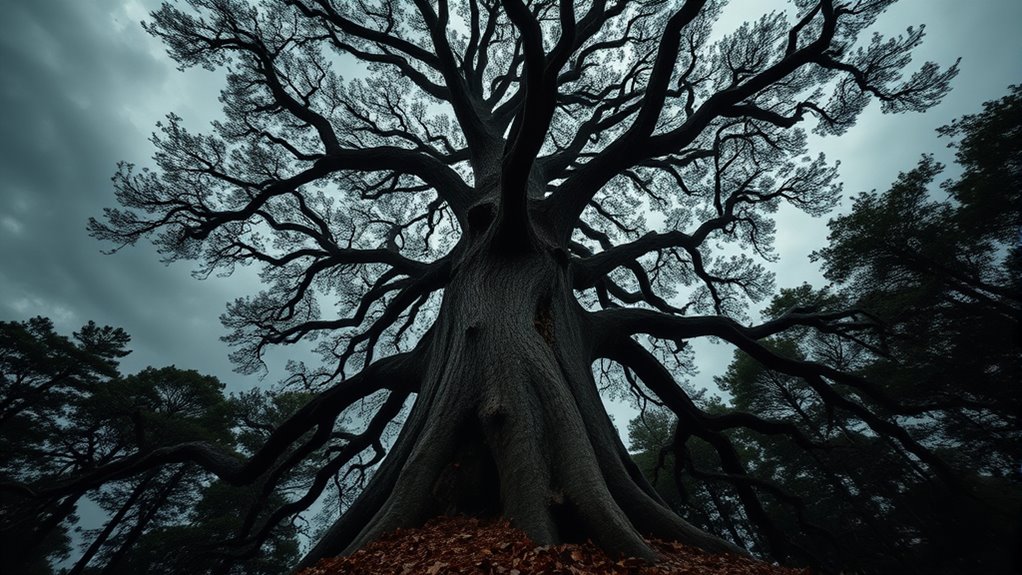
The height at which you position your camera dramatically influences both the perspective and the mood of your photos. Shooting from a low angle can make subjects appear powerful or imposing, while a high angle can evoke vulnerability or insignificance. Your choice of camera height also affects lighting techniques and equipment choices, as different angles can enhance shadows or highlight specific features. Consider these effects:
Camera height shapes mood—low for strength, high for vulnerability, influencing lighting and storytelling.
- Low shots create a sense of dominance and strength
- Eye-level shots foster connection and neutrality
- High angles add a feeling of vulnerability or detachment
- Elevated perspectives can emphasize surroundings or context
Adjusting your camera height allows you to control emotional impact and storytelling, making deliberate choices in perspective and mood. Experimenting with different heights helps you craft images that resonate more deeply with viewers. Additionally, understanding how eco-friendly practices can influence your setup may inspire more sustainable choices in your photography gear and environment. Incorporating sustainable techniques not only benefits the planet but can also inspire innovation and resourcefulness in your photography. Being mindful of green practices can also reduce your environmental footprint while enhancing your creative process. Moreover, integrating environmentally conscious methods into your workflow encourages thoughtful decision-making and can lead to more innovative, resource-efficient photography solutions.
Picking the Right Distance to Show Details or Context

Have you ever wondered how distance affects the story your photos tell? The key lies in choosing the right focal length and framing techniques. A short focal length, like a wide-angle lens, captures more background, providing context and a sense of environment. This works well when you want to show a scene’s full scope or emphasize surroundings. Conversely, a long focal length zooms in on specific details, isolating your subject and creating a sense of intimacy. Deciding how close or far to be depends on whether you want to highlight intricate features or tell a broader story. By adjusting your distance, you control what viewers notice first, guiding their understanding of the image. Mastering this balance helps you craft compelling photos with clear focus and meaningful context.
How Camera Orientation Influences Framing and Focus

Your camera’s angle and perspective can dramatically change how your subject appears, guiding viewers’ attention in specific ways. Adjusting the orientation also affects focus and depth of field, making certain elements stand out or recede into the background. By understanding these influences, you can craft more compelling and well-framed photos. For example, employing camera positioning techniques can optimize your shot’s overall impact and clarity. Additionally, being aware of visual cues can further enhance the storytelling aspect of your images. Implementing simple organizational strategies for your camera setup can help you consistently achieve the desired framing and focus, especially when considering quality assessment principles to ensure your images meet professional standards. Recognizing how essential oils can influence mood and perception is an interesting parallel, as both visuals and aromas shape viewer or user experience.
Camera Angle and Perspective
Choosing the right camera angle can dramatically change how your photos are perceived, as it directly influences framing and focus. Your perspective determines what details stand out and how viewers interpret the scene. Experimenting with different angles can highlight or diminish elements based on lens choices and lighting angles. For example, shooting from a low angle emphasizes height and power, while a high angle creates a sense of vulnerability. Adjusting lens choices can compress or expand space, affecting perspective. Similarly, lighting angles can accentuate textures or cast shadows that guide the viewer’s eye. Keep these factors in mind to craft compelling compositions that effectively communicate your intended message and mood. Incorporating adaptive lighting techniques can further enhance the scene’s atmosphere and visual impact.
Focus and Depth of Field
Camera orientation plays a crucial role in controlling focus and depth of field, shaping how viewers perceive your scene. When you adjust your camera’s angle, you influence which elements stay sharp and which blur, guiding the viewer’s eye. Proper positioning minimizes lens distortion, ensuring straight lines and accurate representation. Additionally, your camera’s autofocus accuracy depends on orientation; tilting or angling can cause focus shifts, especially in complex scenes. By carefully choosing your camera angle, you can emphasize your subject and create a pleasing background blur (bokeh). This manipulation of focus and depth of field enhances storytelling, making your images more engaging and professional. Mastering orientation helps you balance sharpness, background separation, and distortion for compelling photos.
Creating Depth and Dimension With Camera Placement

Ever wonder how photographers create photos that seem to leap off the page with depth and dimension? The secret lies in strategic camera placement combined with effective lighting techniques and camera stabilization. To add depth, consider how scene composition influences the viewer’s perception by manipulating spatial relationships. Additionally, understanding camera setup can help you make more intentional choices that enhance the scene’s realism. Incorporating depth cues such as perspective lines and scale can further elevate the three-dimensional effect. You can also leverage project management principles to plan your shots more effectively, ensuring all elements work harmoniously within the scene. – Position your subject at varying distances from the background – Use foreground elements to lead the eye into the scene – Adjust your camera angle to emphasize layers – Stabilize your camera for sharp, consistent images – Applying analytical thinking can help plan your shots more effectively by understanding how different elements interact within a scene.
These techniques help create a sense of space and realism. Proper lighting enhances contrast and highlights textures, while camera stabilization ensures clarity, making each layer stand out. By carefully choosing your position and incorporating these methods, you craft images that feel immersive and three-dimensional, mesmerizing viewers and drawing them into the scene.
Common Camera Placement Mistakes and How to Fix Them

Many photographers make common mistakes with camera placement that can weaken the impact of their images. One major error is sacrificing camera stability, resulting in blurry or shaky photos. To fix this, use a tripod or steady surface to keep your camera still, ensuring sharpness. Another mistake involves neglecting framing symmetry, which can make your composition feel unbalanced or awkward. To improve, pay attention to the horizon line and align key elements along the rule of thirds. Avoid placing subjects off-center without purpose, as it can create visual tension or confusion. Proper camera placement considers both stability and symmetry, helping your images look more polished and intentional. Correcting these mistakes enhances clarity, draws focus, and elevates the overall quality of your photos. Additionally, understanding how energetic alignment influences your creative process can help you capture more compelling and harmonious images.
Tips for Experimenting With Different Camera Angles and Distances
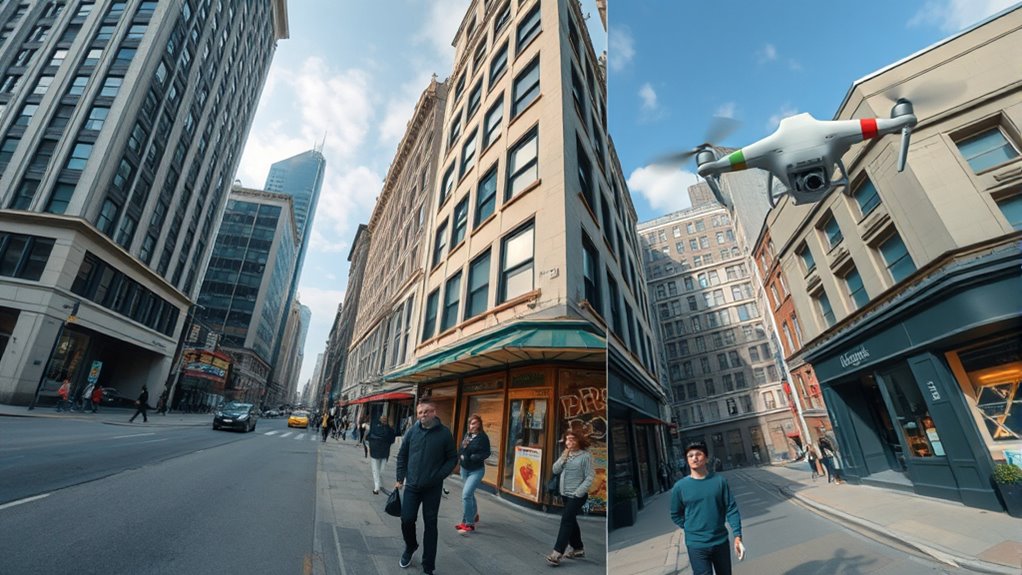
Experimenting with different camera angles and distances can dramatically change the way your photos communicate their story. To get the most impactful shots, try varying your perspective and proximity. Use different lens selections to emphasize subjects or create a sense of depth. Play with lighting techniques to highlight details or set mood, depending on your angle. Here are some tips:
- Switch between high, eye-level, and low angles to find the most compelling view
- Experiment with close-ups versus wide shots to control focus and context
- Adjust your distance to create intimacy or distance from the subject
- Combine lighting techniques with angle changes for dramatic effects
Don’t hesitate to try unconventional angles—your creativity can discoversurprising and powerful images.
Using Camera Placement Strategically to Tell Your Story

Strategic camera placement is essential for shaping how your story unfolds in a photo. It influences mood, focus, and perspective, helping you communicate your message effectively. Use lighting techniques to highlight key elements or create contrast that directs viewers’ attention. Adjust your equipment choices, like lenses and filters, to enhance storytelling—wide angles can evoke scale, while close-ups add intimacy. Consider vantage points that reveal relationships or emphasize certain details. Positioning your camera thoughtfully allows you to control what’s included or excluded, guiding viewers through your narrative. Remember, every placement decision impacts the story’s emotional tone. By combining lighting techniques with appropriate equipment choices, you craft images that not only capture moments but also evoke the feelings and ideas you want your audience to experience.
Frequently Asked Questions
How Does Camera Placement Affect the Viewer’s Emotional Response?
You can influence the viewer’s emotional response through camera placement by using emotional framing. Placing the camera close creates intimacy, making viewers feel connected, while distant shots evoke detachment or awe. You boost viewer engagement by choosing angles that highlight key emotions or details, guiding their feelings and focus. Thoughtful camera placement helps you control the mood and keeps viewers emotionally invested in your story.
What Are the Best Camera Positions for Capturing Motion?
You should position your camera angles slightly ahead of the action to effectively capture motion. Use low or dynamic angles to emphasize movement and energy. Employ framing techniques like panning or tracking shots to follow fast-paced action smoothly. Keep your camera steady but adaptable, ensuring your positioning allows for clear, continuous capture of motion, making your footage more engaging and immersive for viewers.
How Does Lens Choice Interact With Camera Placement?
You choose your lens carefully because it interacts with camera placement to shape your shot. A wide-angle lens can introduce distortion if placed too close, making subjects look exaggerated. Meanwhile, a telephoto lens offers a shallow depth of field, isolating your subject from the background, especially when positioned farther away. Your placement and lens choice together influence the perspective, distortion, and depth effects in your footage.
Can Camera Placement Influence the Storytelling Pace?
Yes, camera placement considerably influences storytelling pace. By choosing specific camera angles and framing techniques, you can create a sense of urgency or calmness. Close-up shots speed up the narrative by emphasizing emotion, while wide shots slow it down, providing context. Strategic camera placement guides viewers’ focus, shaping how they experience the story, making scenes feel more dynamic or contemplative based on your framing choices.
How Do Environmental Constraints Limit Camera Positioning Options?
Environmental constraints are like fences that limit your camera placement options. You might face lighting considerations, such as harsh sunlight or dim interiors, making certain angles impossible. Physical obstacles—like furniture, walls, or equipment—block your ideal shot, forcing you to get creative. These barriers shape what you can capture, turning your shot into a puzzle where each piece must fit around the environment’s limits.
Conclusion
As you experiment with camera placement, you’ll notice how a slight shift can transform your scene—like revealing a hidden detail or framing a powerful moment. When you align your angles and distances thoughtfully, your shots become more compelling, almost like discovering the perfect puzzle piece. Keep exploring and trusting your instincts; the right placement can turn a simple shot into a story that resonates, just like finding a familiar scene in an unexpected place.