
Proper lighting enhances your security camera’s effectiveness at night by improving visibility, reducing shadows, and preventing glare that can hide important details. Bright, well-placed lights ensure your cameras capture clear, sharp images, helping you identify intruders or activity easily. Avoiding common mistakes like overexposure or shadowy spots makes a big difference. If you want to discover proven strategies for ideal lighting setup and maximum security, there’s more to explore below.

Get privacy and security gear delivered free — and shop member deals
- Fast, free delivery on millions of items
- Access to Prime Big Deal Days deals on October 6–7
- Prime Video, Amazon Music and more included
Key Takeaways
- Proper lighting reduces shadows and glare, improving camera image clarity and detail recognition in low-light conditions.
- Motion-activated lights enhance footage quality by illuminating areas only when movement is detected, minimizing unnecessary darkness.
- Adequate, well-placed lighting prevents overexposure and light pollution, ensuring clearer, more usable security footage.
- Correct lighting minimizes blind spots and dark zones, increasing the camera’s ability to detect and identify intruders at night.
- The type and color temperature of lighting influence image sharpness and contrast, directly affecting surveillance effectiveness after dark.
LED motion sensor security lights
As an affiliate, we earn on qualifying purchases.
As an affiliate, we earn on qualifying purchases.
How Lighting Affects Nighttime Security Camera Footage

Lighting plays a crucial role in the quality of nighttime security camera footage. Infrared illumination is indispensable because it allows cameras to see clearly in darkness without visible light. Cameras equipped with infrared can capture sharp images even in complete darkness, making them ideal for security. Motion activated lighting also enhances footage by illuminating areas when movement is detected, reducing shadows and improving image clarity. This type of lighting not only helps cameras gather better detail but also acts as a deterrent to intruders. Properly timed motion activated lights ensure your property is well-lit only when needed, conserving energy and preventing false alarms. Incorporating AI cybersecurity skills into your security system can further protect your footage from digital threats and unauthorized access. Combining infrared illumination with motion activated lighting optimizes nighttime surveillance, giving you clearer footage and increased security. Additionally, understanding the impact of lighting conditions helps optimize camera placement and settings for the best possible nighttime coverage. Implementing adaptive lighting technologies can further enhance security effectiveness in varying nighttime environments. Furthermore, advances in smart lighting systems allow for dynamic adjustments based on ambient conditions, improving overall security performance. Recognizing the effect of lighting quality on camera clarity is essential for choosing the right equipment and settings to maximize your security coverage at night.
infrared night vision security cameras
As an affiliate, we earn on qualifying purchases.
As an affiliate, we earn on qualifying purchases.
The Best Types of Lighting for Clear Night Surveillance
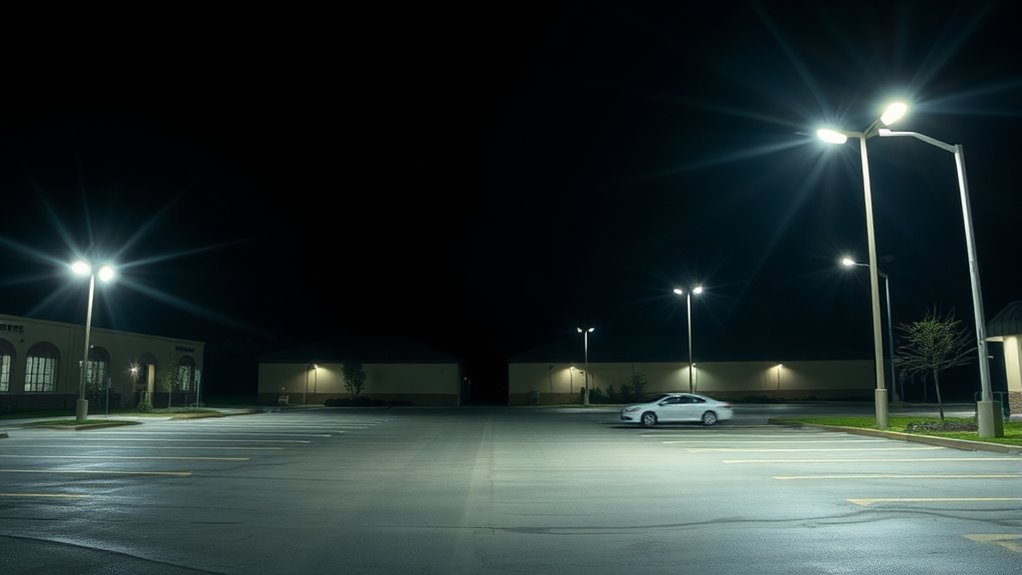
Choosing the right lighting for your property can substantially enhance night surveillance by providing clear, detailed footage. The best options often involve LED lights with adjustable color temperature, which can reduce glare and improve camera recognition. Cooler temperatures (around 5000K) offer brighter, more natural illumination, helping cameras capture sharper images. Warm lighting (around 2700K) creates a softer glow but may reduce clarity. Incorporating motion sensors ensures lights activate only when needed, deterring intruders without wasting energy. This targeted lighting minimizes shadows and enhances contrast, making it easier for your security cameras to detect faces and objects. Properly chosen lighting types can notably boost your night surveillance effectiveness, especially when considering color accuracy and contrast to optimize image clarity. Additionally, selecting weatherproof fixtures ensures consistent illumination regardless of weather conditions, maintaining security year-round. Using appropriate lighting placement can further eliminate blind spots and improve overall coverage. To maximize effectiveness, consider how lighting quality impacts the ability of cameras to distinguish details in various environments. Adequate lighting also helps reduce false alarms, improving overall security reliability.
adjustable color temperature outdoor security lights
As an affiliate, we earn on qualifying purchases.
As an affiliate, we earn on qualifying purchases.
Choosing the Right Lights to Improve Camera Performance

Selecting the right lights can make a significant difference in how well your security cameras perform at night. To enhance visibility and clarity, choose lighting that complements your camera’s capabilities. Opt for lighting color that minimizes glare and shadows, ensuring clear footage without distorting colors. Prioritize energy efficiency to keep costs low and reduce environmental impact. Consider these factors:
- Warm lighting creates a natural look, reducing glare but may lessen contrast.
- Cool lighting improves visibility and detail, ideal for high-security areas.
- LED options offer excellent energy efficiency, long lifespan, and consistent brightness. Additionally, selecting appropriate lighting types can reduce the chances of overexposure or underexposure in your footage, further improving security camera effectiveness. Using lighting designed for security can help optimize camera performance in various nighttime conditions, ensuring reliable footage. Proper lighting placement and illumination angles also play a crucial role in minimizing shadows and glare that can impair camera image quality.
Choosing the right combination of lighting color and energy-efficient options assures your cameras capture sharp, reliable footage without wasting energy or compromising image quality. Understanding lighting’s impact on security can help you make better choices for your surveillance setup. Additionally, selecting lighting that matches your security goals ensures optimal camera performance in various nighttime conditions.
weatherproof security camera lighting
As an affiliate, we earn on qualifying purchases.
As an affiliate, we earn on qualifying purchases.
Common Lighting Mistakes That Hurt Night Security Footage

Poor lighting choices can considerably reduce the quality of your night security footage. Overexposure from bright lights, bad light placement, and gaps in coverage all make it harder to identify intruders. Avoiding these mistakes helps guarantee your cameras capture clear, useful footage when it matters most. Additionally, understanding the importance of art care can influence how you consider visual clarity and maintenance of your security system. Proper lighting not only enhances image quality but also deters potential intruders, emphasizing the role of security lighting in effective surveillance. Ensuring consistent and well-designed lighting can also prevent shadowing that obscures critical details on camera footage. Paying attention to lighting design can significantly improve overall security effectiveness and reduce false alarms. Being aware of how attention to detail impacts your lighting setup allows for more precise adjustments that enhance clarity and coverage.
Overexposure From Bright Lights
Have you ever noticed how bright lights can sometimes turn security footage into a blurry mess? Overexposure from intense lighting can wash out important details, making it hard to identify faces or objects. Bright lights cause glare issues and contribute to light pollution, which can drown out vital visual information. To avoid this, stay clear of:
- Installing overly bright or poorly shielded lights
- Allowing direct light to shine into the camera lens
- Using inconsistent or excessive illumination that creates harsh contrasts
These mistakes can compromise your footage, leaving you blind to potential threats. Proper lighting should enhance visibility without overwhelming the camera’s sensors. Keep in mind that balance is key—aim for lighting that illuminates effectively without causing overexposure or glare issues. Additionally, selecting security camera systems with good low-light performance can significantly improve footage quality at night, and adjusting lighting placement can help minimize overexposure and glare. Properly designed lighting can also reduce the chances of light pollution, which can negatively impact your security footage quality.
Poorly Positioned Illumination
Ever wonder why some night security footage looks blurry or hides critical details? Poorly positioned illumination is often the culprit. If your lighting placement isn’t strategic, shadows and glare can obscure important features. Light color also plays a role—harsh or overly warm lights can distort colors and reduce clarity. To help you visualize, here’s a quick guide:
| Location | Ideal Lighting Placement | Recommended Light Color |
|---|---|---|
| Entrance | Above or beside door | Cool white |
| Driveway | Low and directed downward | Neutral white |
| Side paths | Along walls, angled toward ground | Soft white |
| Parking lot edges | Overhead, focused downward | Bright white |
| Garden areas | Spotlights, avoid glare | Cool white |
Proper lighting placement and hue enhance footage clarity, preventing missed details.
Insufficient Lighting Coverage
Insufficient lighting coverage is a common mistake that can severely compromise the effectiveness of your night security footage. When areas are poorly lit, crucial details become obscured, making it easier for intruders or accidents to go unnoticed. Relying on outdated lighting technology or neglecting proper placement reduces visibility and weakens your security. To improve your setup, consider:
- Upgrading to modern lighting technology that offers brighter, clearer illumination
- Installing strategically placed lights to eliminate dark spots
- Choosing energy-efficient options to save costs without sacrificing coverage
Proper lighting coverage not only enhances security but also ensures your cameras capture sharp, usable footage. Investing in the right lighting solutions can make a significant difference in protecting your property at night.
Tips to Optimize Your Lighting for Better Night Surveillance

To improve your night surveillance, you should use bright, consistent lighting that clearly illuminates your property. It is crucial to eliminate shadows and dark spots that can hide intruders or obscure footage. Position your lights strategically to cover all vulnerable areas without creating glare or blind spots.
Use Bright, Consistent Lighting
Bright, consistent lighting is essential for effective night surveillance because it helps security cameras capture clear, detailed images. When your lighting is uniform, it reduces glare and shadows, giving your cameras the best chance to identify faces and activities. Choose lighting with the right color — cool white or daylight tones work best for clarity. Guarantee fixtures are durable to withstand weather and tampering, maintaining consistent illumination.
Consider these key points:
- Feel secure knowing your lighting enhances visibility and deters intruders.
- Enjoy peace of mind with long-lasting, reliable fixtures that require minimal maintenance.
- Experience clearer footage, making investigations easier and more effective.
Consistent, bright lighting transforms your security setup into a powerful deterrent and reliable surveillance system.
Avoid Shadows and Dark Spots
Even with good lighting, shadows and dark spots can create blind spots that compromise your security. Ambient shadows, caused by uneven lighting, can obscure intruders or important details. To minimize this, ensure your lighting eliminates harsh contrasts and smooths out shadowed areas. Pay attention to color contrast; using lights that produce consistent, neutral tones helps prevent areas from appearing overly dark or overly bright. Avoid placing lights directly behind objects or in positions that cast long shadows. Instead, aim for even illumination that reduces contrast variations. This way, your security camera captures clear, detailed footage without losing critical information in shadowed zones. Proper lighting design, focusing on reducing ambient shadows and balancing color contrast, enhances the overall effectiveness of your night surveillance.
Position Lights Strategically
Strategically positioning your lights is essential for maximizing night surveillance effectiveness. Proper lighting placement and directing lights wisely can eliminate blind spots and improve camera clarity. Focus on illuminating key entry points, pathways, and dark corners to create a well-lit environment. Adjust the light direction to avoid glare that can obscure camera images and reduce visibility.
Consider these emotional impacts:
- Feel safer knowing every angle is covered
- Deter intruders with bright, strategic lighting
- Gain confidence in your security system’s reliability
Deciding Which Lighting Setup Fits Your Security Needs

Choosing the right lighting setup is essential to guarantee your security cameras work effectively after dark. Your decision depends on factors like lighting color and power sources. For example, warm lighting creates a welcoming feel but may reduce visibility, while cool lighting enhances clarity. Consider power sources—solar lights are eco-friendly but may need sunlight, whereas wired options offer consistent power.
| Lighting Type | Power Sources | Best Use |
|---|---|---|
| Floodlights | Wired, Solar | Large outdoor areas |
| Path Lights | Solar, Battery-powered | Pathways and entry points |
| Spotlights | Wired, Battery-powered | Focused illumination on specific spots |
Frequently Asked Questions
How Does Ambient Light Influence Camera Night Vision Capabilities?
Ambient light directly impacts your security camera’s night vision. When there’s enough ambient light, your camera relies less on infrared illumination, providing clearer images. However, in low-light conditions, infrared illumination kicks in to enhance visibility. Motion-activated lighting can also improve effectiveness by briefly illuminating the area, reducing reliance on infrared and helping your camera capture better details. Combining ambient light with infrared and motion-activated lighting optimizes your camera’s night performance.
Can Excessive Lighting Cause Glare or Reflections That Impair Footage?
A bright spotlight can turn into a double-edged sword, creating glare issues and reflection problems that impair your camera footage. Excessive lighting causes reflections on glass or shiny surfaces, obscuring details and reducing visibility. These glare and reflections act like visual noise, making it harder to identify faces or objects clearly. To avoid this, guarantee lighting is balanced and strategically placed, so your security cameras capture clear, accurate images without unwanted glare or reflections.
What Are the Cost Differences Between Various Lighting Options?
You’ll find that LED lighting offers the best cost comparison, as it’s affordable upfront and saves money on energy bills over time. Solar-powered lights might have higher installation expenses but eliminate ongoing electricity costs. Traditional halogen fixtures are cheaper initially but can be costly long-term due to higher energy use and replacement needs. Overall, your choice depends on balancing upfront costs with the ongoing savings and installation expenses you’re willing to invest.
How Do Weather Conditions Affect Lighting Effectiveness at Night?
Imagine a cozy evening disrupted by unpredictable weather that can dim or distort your lighting’s reach. Rain, fog, or snow can lessen visibility, making your security camera’s night vision less effective. Plus, light pollution and wildlife disturbance may cause reflections or distractions, further reducing clarity. You might consider weather-resistant lights or strategic placement to minimize these impacts, ensuring your security remains reliable regardless of weather whims.
Are There Privacy Concerns Associated With Increased Outdoor Lighting?
Yes, increased outdoor lighting can raise privacy risks, as it may enable better surveillance and unintended observation of private spaces. It can also contribute to light pollution, disrupting local ecosystems and obscuring night skies. You should consider these factors when installing outdoor lights, balancing security benefits with potential privacy concerns and environmental impacts. Proper placement and motion-activated lighting can help mitigate these issues while maintaining safety.
Conclusion
By understanding how lighting impacts your security camera footage, you can turn your property into a well-lit stage rather than a shadowy mystery. Think of your lights as the spotlight that reveals all—without them, your footage might be as clear as mud. So, choose wisely, avoid common mistakes, and optimize your setup. When you do, your security system will be shining bright, giving you peace of mind like a lighthouse guiding ships safely home.
Evergreen bestsellers Picks
bestsellers
As an affiliate, we earn on qualifying purchases.