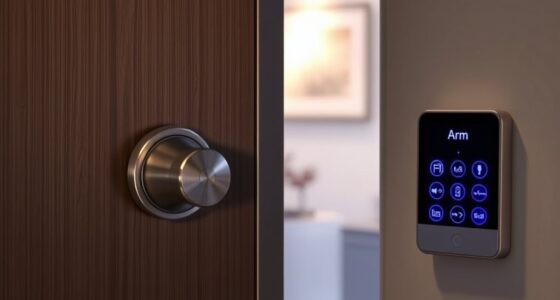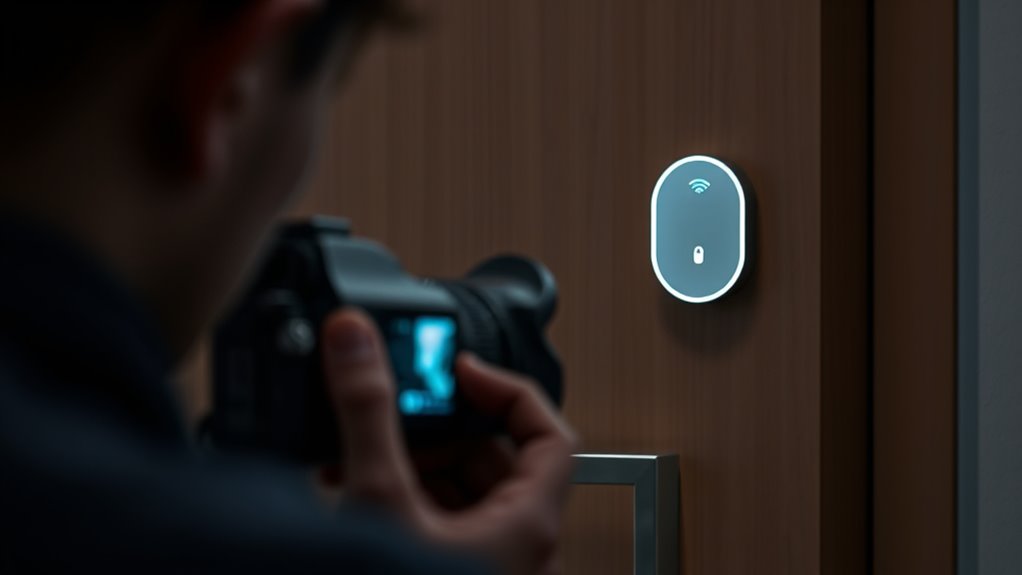

Bluetooth jamming attacks on smart locks are a real and accessible threat. Attackers can use inexpensive jammers to flood the Bluetooth frequency, disrupting communication without needing to hack or decrypt signals. While encryption helps secure data, it doesn’t prevent your lock from losing connection during an attack. Understanding how these interference tactics work is vital to staying protected. Keep exploring to discover more about how to safeguard your smart lock against such risks.
Key Takeaways
- Bluetooth jamming is a real threat that can disable communication between smart locks and devices.
- Attackers can easily acquire and operate Bluetooth jammers to disrupt lock functionality.
- Jamming bypasses encryption by flooding signals, making cryptographic security ineffective during interference.
- Modern Bluetooth devices have limited resistance to jamming, so connectivity can be easily blocked.
- Preventing jamming requires specialized anti-interference measures, as it is a practical and credible security concern.

As smart locks become increasingly popular for home security, they also face new vulnerabilities, including Bluetooth jamming attacks. These attacks can potentially disable your lock’s communication, leaving your home exposed. It’s natural to wonder whether Bluetooth jamming is a myth or a real threat. To understand this, you need to grasp how these attacks work and what weaknesses they exploit. Bluetooth technology relies on wireless signals to communicate between your smart lock and your smartphone or access device. While convenient, this wireless communication introduces certain vulnerabilities, especially if attackers harness wireless interference techniques to disrupt signals.
Bluetooth jamming can disrupt smart lock communication, exposing vulnerabilities and requiring anti-jamming measures.
One core concern involves cryptographic vulnerabilities. Many smart locks use encryption to secure their Bluetooth connections, but some implementations may have flaws that make them susceptible to hacking. If encryption is weak or poorly implemented, attackers might exploit these cryptographic vulnerabilities to eavesdrop or manipulate the communication. However, even with strong encryption, attackers don’t necessarily need to break the cryptography to cause trouble—they can simply obstruct the signal. By flooding the Bluetooth frequency with noise or interference, an attacker can effectively prevent your device from establishing or maintaining a connection with the lock. This is where wireless interference techniques come into play. These techniques involve emitting signals on the same frequency bands used by Bluetooth, overwhelming the legitimate signals and rendering them unusable.
The danger here isn’t just theoretical; jamming devices are relatively simple to acquire and operate. They can be as basic as a portable RF jammer that floods the Bluetooth spectrum with interference. Once active, these devices can cut off communication between your phone and your smart lock, making it impossible to unlock or lock the door remotely. This kind of disruption can be temporary or persistent, depending on the attacker’s intent and the jammer’s power. Although Bluetooth standards include some resilience against interference, they cannot entirely prevent determined jamming efforts.
Furthermore, interference resistance in Bluetooth devices varies, and some models are more vulnerable to jamming than others. While cryptographic vulnerabilities are important to address, the real threat from Bluetooth jamming lies in these interference techniques that disable communication without needing to break encryption. That means even a perfectly secure cryptographic setup can be rendered useless if the signal is blocked by interference. Protecting against such attacks involves not only strengthening encryption but also implementing anti-jamming measures and choosing devices with robust interference resistance. So, don’t dismiss Bluetooth jamming as a myth; it’s a tangible threat that you should consider when evaluating your smart lock’s security.

Protect 1206i RF Bug Detector, Hidden Camera Detector & GPS Tracker Finder – Professional Anti-Spy RF Signal Scanner 50MHz-12GHz Bluetooth, WiFi, GSM, DECT, Wireless Video Cameras, Vibration Alert
ULTIMATE PRIVACY PROTECTION AGAINST INVISIBLE THREATS: Detect hidden cameras, GPS trackers, listening devices & bugs up to 12GHz…
As an affiliate, we earn on qualifying purchases.
As an affiliate, we earn on qualifying purchases.
Frequently Asked Questions
Can Bluetooth Jamming Attacks Be Detected Easily?
You can’t easily detect Bluetooth jamming attacks, as they cause signal interference that looks like normal disruption. Interference detection tools can identify unusual activity or degraded signals, but attackers often mask their jamming efforts. To improve detection, monitor your smart lock’s connection stability and use security systems that alert you to potential interference. Staying vigilant and using specialized tools helps you recognize when your Bluetooth signals experience unexpected interference.
What Are the Legal Implications of Bluetooth Jamming?
You face serious legal consequences if you engage in Bluetooth jamming, as it violates regulations and disrupts legitimate communication. Regulatory compliance is vital, and unauthorized jamming can lead to hefty fines, criminal charges, or lawsuits. Ignoring these legal implications risks damaging your reputation and incurring penalties. Protect yourself by understanding the laws, respecting wireless boundaries, and avoiding actions that interfere with Bluetooth signals, ensuring you’re compliant and responsible.
How Do Smart Lock Manufacturers Prevent Jamming Attacks?
Smart lock manufacturers prevent jamming attacks by implementing advanced encryption protocols that secure Bluetooth communications, making it harder for attackers to interfere. They also incorporate hardware safeguards, such as signal filtering and frequency hopping, to detect and block jamming attempts. These measures help guarantee your smart lock remains reliable and secure, even when faced with potential Bluetooth interference. Regular firmware updates further strengthen protection against evolving threats.
Are There Specific Signs Indicating a Bluetooth Jamming Attempt?
You might notice unusual RF signal interference, like your smart lock failing to respond or disconnecting unexpectedly, which can be a sign of a jamming attempt. These signals disrupt device vulnerability, making it seem like the lock is under attack. While no signs are foolproof, persistent connection issues or sudden loss of Bluetooth communication could indicate someone’s trying to jam your signal, so stay alert and check for unusual activity.
Can Bluetooth Jamming Affect Other Nearby Wireless Devices?
Yes, Bluetooth jamming can affect nearby wireless devices, causing interference that disrupts their signals. You can mitigate this by implementing interference mitigation strategies and ensuring device resilience. For example, using frequency hopping or switching to alternative communication channels helps reduce vulnerability. Maintaining strong security practices and monitoring device performance also help protect your devices from the effects of jamming, keeping your network more reliable and secure.

Keylesslife Fingerprint Padlock,Gym Locker Lock,Smart Padlock Bluetooth APP Control,Fingerprint Lock USB Rechargeable for Gym Locker,Locker, School,Storage Black
🔒【 Fast Fingerprint Unlock】 No keys,No passwords,Your Finger is the Key!High fingerprint recognition rate of 99% and quick…
As an affiliate, we earn on qualifying purchases.
As an affiliate, we earn on qualifying purchases.
Conclusion
In the end, Bluetooth jamming on smart locks isn’t just a myth—it’s a shadow lurking in the background of digital security. Like a silent storm waiting to break, it reminds you that every lock has its Achilles’ heel. Stay vigilant, update your defenses, and don’t let the illusion of security lull you into complacency. Because in the digital age, the true key isn’t just in your lock, but in how you guard your peace of mind.

BESIGN Ground Loop Noise Isolator for Car Audio/Home Stereo System with 3.5mm Audio Cable
Ground loop filter noise isolator, eliminating the hiss, buzz and interference caused by ground loops which happens when…
As an affiliate, we earn on qualifying purchases.
As an affiliate, we earn on qualifying purchases.

Remote Key Frequency Tester for RF or Infrared Signal Testing;3-in-1 Key Frequency Detection & Button Battery Voltage Check; 315/433/868/902MHz RF & Infrared Signal Detection.
【3-in-1 Remote Key Frequency Tester】 This product is applicable for key frequency detection, infrared signal detection and button…
As an affiliate, we earn on qualifying purchases.
As an affiliate, we earn on qualifying purchases.