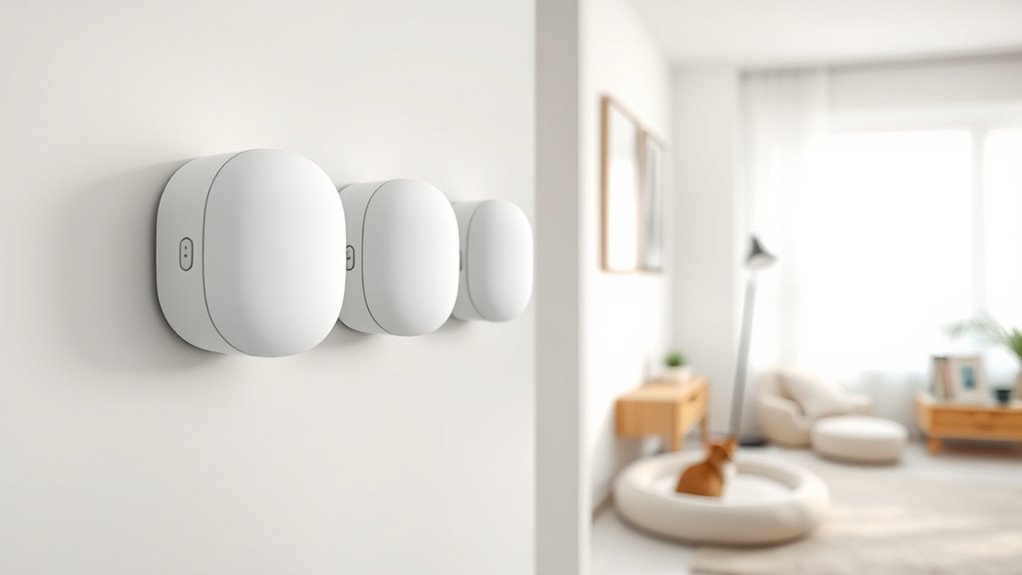

A motion sensor with pet immunity is designed to reduce alarms triggered by household animals, but performance depends on the sensor, its placement, and your pet’s size and behavior. My best overall pick is the DSC BV-600 for its dual-element approach, while the Bosch TriTech stands out for buyers seeking multiple detection technologies and the DSC PG9914 for a wireless PowerG setup. The main tradeoffs are wired reliability versus wireless convenience, indoor coverage versus outdoor use, and basic PIR detection versus more advanced sensing. Pet immunity is not a guarantee against false alarms, especially if pets can climb on furniture or approach the sensor closely. Read on for the full comparison and guidance on matching a sensor to your alarm system and home.

Get privacy and security gear delivered free with Prime
- Fast, free delivery on millions of items
- Prime Video, Amazon Music and more included
- Member-only deals all year
Key Takeaways
- The DSC BV-600 leads the lineup for buyers who want a dual-element pet-immune detector without prioritizing wireless connectivity or added monitoring features.
- Bosch TriTech and DSC PG9984P offer a different detection approach from basic PIR models, making them candidates for buyers who value dual-technology sensing and can confirm system compatibility.
- The DSC PG9914 models are the wireless standouts, with one listing adding temperature monitoring; confirm which features and PowerG receiver support your installation requires.
- Outdoor use calls for an outdoor-rated model, such as the Outdoor Dual PIR or Yosoo, rather than assuming an indoor pet-immune detector can handle weather and outdoor movement.
- Wired choices vary in practical flexibility: the NC/NO dry-contact model may suit compatible custom panels, while named alarm-system detectors require closer checks for panel and wiring compatibility.


| motion sensor with pet immunity | Pet immunity |
|---|---|
| DSC BV-600 Dual-Element Pet-Im | Up to 35 kg (85 lbs) |
| Honeywell IS2535 Selectable Pe | Selectable |
| Pet-Immune Wired PIR Motion De | Designed for pets under 15 kg |
| Outdoor Dual PIR Motion Detect | Described as 30 kg; listed avoidance figures vary |
| DSC PowerG 915 MHz Wireless PI | Yes; weight limit not specified |
| DSC PG9914 PowerG Wireless Ind | Up to 38 kg (85 lb) |
| MOWEO Wired Pet-Immune PIR Mot | Pets under 15 kg |
| Wired PIR Motion Sensor with N | Up to 25 kg (55 lb) |
| Sunydog Wired Infrared PIR Mot | — |
| DSC PG9914 Wireless PowerG Pet | — |
| Yosoo Outdoor Wired Motion Det | — |
| DSC PG9984P PowerG Wireless Du | — |
| Bosch TriTech Pet-Immune Motio | — |
| Tyco DSC LC-100-PI Digital PIR | — |
| ADT Blu Pet-Friendly Motion Se | — |
More Details on Our Top Picks
DSC BV-600 Dual-Element Pet-Immune Motion Detector
The DSC BV-600 is the clearest fit here for homes where a larger pet could trigger a standard indoor detector: its stated immunity covers animals up to 35 kg (85 lbs), paired with dual-element passive infrared sensing. That defined limit makes it easier to judge against the Pet-Immune Wired PIR Motion Detector, which is specified for pets under 15 kg. Its Form A alarm contact suits integration with a compatible alarm setup, but this is a wired component rather than a standalone sensor. Compared with the Honeywell IS2535, the BV-600 gives a specific pet-weight threshold, while the Honeywell adds selectable sensitivity and immunity. The main compromise is the corded power requirement, so buyers should confirm their system and wiring plan before choosing it.
Pros:- Specified pet immunity for animals up to 35 kg (85 lbs)
- Dual-element passive infrared sensing
- Form A alarm contact for compatible security systems
- Instructions provided in English, French, and Spanish
Cons:- Requires a corded electrical power source
- The supplied details do not specify detection range or angle
- Requires integration with a compatible alarm system
Best for: Households with a larger dog that need a wall-mounted detector for a compatible wired security system
Not ideal for: Buyers seeking a battery-powered or wireless sensor, or those who need selectable sensitivity settings
- Sensor type:Passive infrared, dual-element
- Pet immunity:Up to 35 kg (85 lbs)
- Alarm contact:Form A
- Power source:Corded electric
- Mounting type:Wall mount
- Model:BV600
- Instructions:English, French, and Spanish
Our verdict“Choose the BV-600 if a defined 35 kg pet-immunity limit matters more than wireless power or adjustable sensitivity.”
Honeywell IS2535 Selectable Pet-Immune Motion Detector, 35 × 40 ft
The Honeywell IS2535 earns its place for buyers who want to tune a detector to their room rather than accept a fixed sensitivity profile. Its selectable pet immunity and sensitivity offer more setup flexibility than the DSC BV-600, whose listed appeal is a defined 35 kg pet threshold and dual-element sensing. The Honeywell also specifies 35 × 40 ft coverage, giving room planners a useful footprint to work from. It is a wall-mounted, corded component for a security system, not a self-contained smart-home motion sensor; listed hub compatibility should not be mistaken for standalone operation. The tradeoff is that the product data does not state a pet-weight limit, unlike the BV-600, and a battery is not included. I’d favor it when adjustability and stated coverage matter more than a quantified animal threshold.
Pros:- Selectable pet immunity lets buyers adapt the setup
- Selectable sensitivity provides another adjustment for the installation
- Specified 35 × 40 ft detection coverage
- Flexible wall mounting and listed compatibility with security systems and smart-home hubs
Cons:- Pet-immunity weight limit is not specified
- Corded electric power is required
- Battery is not included
Best for: Security-system owners who want selectable sensitivity and pet-immunity settings for a defined indoor coverage area
Not ideal for: Buyers who need a stated maximum pet weight, battery-powered operation, or a standalone smart-home sensor
- Detection coverage:35 × 40 ft
- Pet immunity:Selectable
- Sensitivity:Selectable
- Power source:Corded electric
- Mounting type:Wall mount
- Compatible devices:Security system, smart-home hub
- Model number:IS2535
- Manufacturer warranty:1 year
Our verdict“Pick the IS2535 for adjustable settings and stated coverage, but choose the DSC BV-600 if a specific pet-weight limit is the priority.”
Pet-Immune Wired PIR Motion Detector for Security Alarm Systems
This wired PIR is the most installation-specific option in the group: it lists an 8 m range, a 90° detection angle, and a compact body weighing about 54 g. Adjustable pulse count, temperature compensation, and anti-tamper protection give installers more configuration and fault-resistance features than the basic data supplied for the DSC BV-600. Its pet limit, however, is notably narrower: it is designed to reduce false alarms from animals under 15 kg, versus the BV-600’s stated 35 kg threshold. That makes this a better match for smaller pets, not larger dogs. It also needs a compatible 9–16 V wired alarm system and must be installed between 1.1 and 3.1 m high. I’d choose it for a compact, specified wired setup, but skip it if pet size or wireless installation is the deciding factor.
Pros:- Specified 8 m range and 90° detection angle
- Designed to reduce false alarms from pets under 15 kg
- Adjustable pulse count and automatic temperature compensation
- Anti-tamper protection and anti-EMI/RFI features
Cons:- Requires a compatible wired alarm system and 9–16 V supply
- Pet limit is lower than the DSC BV-600’s stated 35 kg threshold
- Installation height is limited to 1.1–3.1 m
Best for: Installers and homeowners with a compatible wired alarm panel, smaller pets, and a need for a compact detector with specified coverage
Not ideal for: Homes with pets weighing 15 kg or more, or buyers who need wireless operation or mounting outside the 1.1–3.1 m height range
- Detection range:8 m
- Detection angle:90°
- Pet immunity:Designed for pets under 15 kg
- Working voltage:9–16 V
- Standby current:12 mA
- Working current:≤30 mA
- Installation height:1.1–3.1 m
- Dimensions and weight:Approx. 9 × 5.3 × 4 cm; approx. 54 g
Our verdict“Choose this compact wired detector for smaller pets and a defined installation footprint, not for large animals or a wireless setup.”
Outdoor Dual PIR Motion Detector with Pet Immunity
Unlike the indoor-focused DSC BV-600 and Honeywell IS2535, this detector is intended for driveways, garages, gardens, and terraces. Its dual PIR design and stated maximum range of 11 meters suit outdoor alarm zones where a wall-mounted sensor needs to cover an approach or open area. The weak point is the pet specification: the listing describes immunity at 30 kg but also gives conflicting avoidance figures of 5 kg at 12 m and 35 kg at 9 m. That makes it harder to predict how it will behave around pets than the BV-600, which gives one clear weight limit. It is also a wired detector that needs a separate alarm device, not an independent outdoor alert. I’d select it only when outdoor placement is the priority and the seller or installer can clarify the animal limits.
Pros:- Designed for outdoor locations including driveways and gardens
- Dual PIR sensors
- Maximum stated range of 11 meters
- Wall-mountable and intended for alarm-system use
Cons:- Pet-immunity figures conflict across the product information
- Requires a wired connection and separate alarm device
- No detection angle or detailed environmental rating is provided
Best for: Owners planning a wired alarm zone for a driveway, garage, garden, or terrace who can verify the pet-immunity limits before installation
Not ideal for: Buyers who need consistent, clearly stated pet-weight performance or a standalone, battery-powered outdoor sensor
- Sensor type:Dual PIR
- Maximum range:11 meters
- Pet immunity:Described as 30 kg; listed avoidance figures vary
- Listed animal-avoidance figures:5 kg at 12 m and 35 kg at 9 m
- Power source:Corded electric
- Mounting type:Wall mount
- Compatible device:Alarm system
- Intended locations:Driveway, garage, garden, terrace
Our verdict“Consider it for an outdoor wired alarm zone only if its inconsistent pet limits are confirmed for your animals and mounting distance.”
DSC PowerG 915 MHz Wireless PIR Motion Detector with Built-In Camera and Pet Immunity
The DSC PowerG PG9934P is the only option in this set with a built-in camera, making it the most distinctive choice for a compatible system that benefits from visual verification alongside motion detection. Its 915 MHz PowerG wireless link sets it apart from wired detectors such as the DSC BV-600 and the compact wired PIR, potentially simplifying sensor placement where alarm wiring is inconvenient. The listed power source is still corded electric, however, so wireless communication does not mean battery-free installation—or a completely wire-free unit. Pet immunity is stated without a weight threshold, which leaves less guidance for owners of large animals than the BV-600 provides. I’d place this above the wired choices for buyers who specifically want camera-equipped PowerG hardware, but not for someone who needs a clearly quantified pet limit or a fully wireless power setup.
Pros:- Built-in camera adds visual verification capability
- Uses 915 MHz PowerG wireless technology
- Pet immunity is specified
- Avoids the alarm-sensor wiring required by options such as the DSC BV-600
Cons:- Listed power source is corded electric despite wireless communication
- Pet-immunity weight limit is not provided
- Compatibility details beyond PowerG are not specified
Best for: Owners of a compatible DSC PowerG system who want a wireless-link PIR detector with a built-in camera for visual verification
Not ideal for: Buyers without a compatible PowerG setup, those needing a stated pet-weight limit, or anyone seeking battery-powered operation
- Model:PG9934P
- Sensor type:PIR motion detector
- Wireless frequency:915 MHz
- Camera:Built-in
- Pet immunity:Yes; weight limit not specified
- Power source:Corded electric
- Brand:DSC
- Number of items:1
Our verdict“Choose the PG9934P for a compatible PowerG system that needs camera verification, but favor the BV-600 if a specific pet-weight threshold matters more.”
DSC PG9914 PowerG Wireless Indoor Pet-Immune PIR Motion Detector with Temperature Monitoring
For a PowerSeries Neo owner whose pet exceeds the weight limits of many wired options, the DSC PG9914 is the clearest fit here: its pet-immunity specification covers animals up to 38 kg (85 lb), while detection reaches 12 m. That gives it a wider pet allowance than the MOWEO, which is specified for pets under 15 kg, and the wired sensor with NC/NO outputs, rated for pets up to 25 kg. Its 6–8-year typical battery life and temperature monitoring also reduce the need for frequent battery attention and add useful room data. The tradeoff is system fit: this detector is designed for PowerSeries Neo, not as a standalone universal sensor, and it is for indoor use. Choose it for compatible systems and larger pets; skip it if you need outdoor coverage or a wired, broadly compatible detector.
Pros:- Pet immunity specified for animals up to 38 kg (85 lb), higher than the MOWEO and the 25 kg wired NC/NO option.
- Wireless PowerG design avoids running sensor cable to the alarm system.
- Typical battery life is listed as 6–8 years.
- Adds temperature monitoring alongside motion detection.
Cons:- Compatibility is limited to PowerSeries Neo alarm systems.
- Designed for indoor use only.
- Pet immunity is a stated weight threshold, not a guarantee against every false alarm caused by animal movement or placement.
Best for: PowerSeries Neo households with a dog or other pet weighing up to 38 kg that want wireless indoor coverage and temperature monitoring.
Not ideal for: Owners of non-Neo alarm systems, or anyone needing an outdoor detector or a standalone sensor.
- Sensor type:Wireless indoor PIR motion detector
- Pet immunity:Up to 38 kg (85 lb)
- Maximum range:12 m (39 ft)
- Compatible systems:PowerSeries Neo alarm systems
- Wireless frequency:915 MHz
- Power source:Battery powered
- Typical battery life:6–8 years
- Additional monitoring:Temperature
Our verdict“Choose this for a compatible PowerSeries Neo system when pet weight and wireless installation matter more than broad system compatibility.”
MOWEO Wired Pet-Immune PIR Motion Sensor
The MOWEO suits buyers who already have a wired alarm host and want a straightforward wall-mounted sensor with adjustable pulse count. Its 110° detection angle and 11 m coverage provide broad room monitoring, while the pulse setting offers some control over how the detector responds to movement. The main limitation is its 15 kg pet threshold: compared with the DSC PG9914, which is specified for pets up to 38 kg, this is a better match for smaller animals. The wired NC/NO sensor in this roundup allows pets up to 25 kg and offers selectable outputs, so it may suit a wider range of pets and alarm wiring needs. MOWEO’s appeal is its simple wired role, not broad compatibility; it needs a host, and placement away from sunlight and heat sources matters.
Pros:- 110° detection angle covers a broad area from a wall-mounted position.
- Adjustable pulse count offers a way to tune detection response.
- Tamper alarm is included.
- Operating range of -10°C to 50°C supports varied indoor conditions.
Cons:- Pet immunity is limited to pets under 15 kg, below the DSC PG9914 and 25 kg wired alternative.
- Requires a compatible wired alarm host and 9–16 V power.
- Must be kept away from direct sunlight and heat sources.
Best for: Homeowners with a wired alarm host, smaller pets under 15 kg, and the ability to mount the detector away from sunlight and heat.
Not ideal for: Households with larger pets or buyers who need a wireless sensor that can be installed without wiring to an alarm host.
- Sensor type:Dual PIR
- Pet immunity:Pets under 15 kg
- Detection angle:110°
- Detection distance:11 m × 11 m
- Working voltage:9–16 V
- Standby current:20 mA
- Mounting:Wall mount
- Installation height:1.1–3.1 m
- Operating temperature:-10°C to 50°C
Our verdict“Pick the MOWEO if you have a wired alarm system and a small pet, but choose a higher-threshold model for larger animals.”
Wired PIR Motion Sensor with NC/NO Dry Contact Output
This sensor earns its place for buyers whose priority is matching a wired alarm panel’s input style. Its selectable NC/NO dry-contact output makes it more adaptable to different compatible systems than the MOWEO, while its 25 kg pet-immunity rating sits between MOWEO’s 15 kg limit and the DSC PG9914’s 38 kg specification. Coverage is 10 m across a 110° angle, with adjustable pulse count and an LED indicator to help with setup. Those are practical advantages for an installer, but they do not remove the need for a compatible wired host and DC supply. Like the MOWEO, it is an indoor sensor that needs careful placement; rapid temperature changes can affect detection. Choose it for wiring flexibility and medium-sized pets, not for wireless convenience or larger animals.
Pros:- Selectable NC/NO dry-contact alarm output supports different compatible wired input configurations.
- Pet immunity is specified up to 25 kg, above the MOWEO’s under-15-kg limit.
- Adjustable pulse count and LED indication support setup and tuning.
- 110° detection angle covers a wide indoor area.
Cons:- Requires a compatible wired alarm system and a 9–16 V DC supply.
- Pet threshold is lower than the DSC PG9914’s 38 kg specification.
- Placement should avoid sources of rapid temperature change.
Best for: DIY installers or alarm technicians who need selectable NC/NO contacts and pet immunity for animals up to 25 kg.
Not ideal for: Buyers without a compatible wired alarm system, those seeking wireless installation, or households with pets above the stated 25 kg limit.
- Sensor type:Dual pyroelectric PIR
- Detection range:10 m (32 ft)
- Detection angle:110°
- Pet immunity:Up to 25 kg (55 lb)
- Power:DC 9–16 V; 12 V recommended
- Alarm output:Selectable NC/NO dry contact
- Tamper contact:NC dry contact
- Mounting:Wall mount; approximately 2.2 m high
- Operating temperature:-10°C to +50°C
Our verdict“Choose this wired model when selectable alarm contacts and a 25 kg pet threshold matter more than wireless setup.”
Sunydog Wired Infrared PIR Motion Sensor with Micro Detection
Sunydog takes a different approach from the pet-weight-rated DSC PG9914 and the two wired pet-immune models: its product details emphasize K-band micro detection, temperature compensation, and interference resistance, but do not state a pet-immunity weight limit. That makes it a possible fit for buyers focused on responsive movement detection in changing temperatures, not a clearly documented choice for homes where pet filtering is the main requirement. Its 7.6 m maximum range is also shorter than the 10 m wired NC/NO sensor and the DSC PG9914’s listed 12 m coverage. The ABS housing and wall-mount design offer a practical, durable form, but the wired connection limits placement flexibility. I would only shortlist it for this roundup if the seller or system documentation confirms how it handles pets.
Pros:- K-band micro detection is designed to improve sensitivity and reduce false alarms.
- Temperature compensation is intended to support operation across hot and cold conditions.
- ABS housing is described as shock resistant.
- Wall-mounted format is intended for quick installation.
Cons:- Product data does not specify a pet-immunity weight limit, unlike the DSC PG9914 and the other listed wired pet-immune sensors.
- Maximum range of 7.6 m is shorter than the 10 m wired NC/NO sensor and 12 m DSC PG9914.
- Requires a wired connection, limiting placement flexibility.
Best for: Wired-system owners prioritizing temperature compensation and sensitivity features who can verify pet handling with the manufacturer or installer.
Not ideal for: Buyers who need a confirmed pet-immunity weight rating or longer coverage than 7.6 m.
- Sensor type:Wired infrared PIR motion sensor
- Maximum range:7.6 m
- Detection technology:K-band micro detection
- Mounting:Wall mount
- Compatible devices:Security systems and garage door openers
- Frequency:10.13 GHz
- Material:ABS
- Dimensions:1.69 × 2.95 × 1.69 in
Our verdict“Consider Sunydog only if its pet response is confirmed for your setup; its listed features do not establish a specific pet-immunity threshold.”
DSC PG9914 Wireless PowerG Pet-Immune PIR Motion Detector
This listing points to the same PG9914 model as the other DSC entry, so its strongest case is familiar: wireless PowerG operation, pet-immune design, and temperature monitoring for a compatible PowerSeries Neo system. The difference is that this product data lists a maximum range of only 2 meters and tabletop mounting, unlike the other PG9914 listing’s 12 m range and corner-placement description. That discrepancy makes this a less dependable choice for room coverage until the seller or installer confirms the correct specification. Compared with the MOWEO and NC/NO wired sensors, it avoids a wired alarm connection, but remains tied to a specific DSC system. I would rank this below the more fully specified PG9914 listing for buyers who need dependable coverage details.
Pros:- PowerG wireless technology avoids running a sensor cable to the alarm host.
- Pet-immune design is intended to help reduce animal-triggered false alarms.
- Combines motion detection with temperature monitoring.
- Compatible with PowerSeries Neo alarm systems.
Cons:- The listed 2 m maximum range is far shorter than the 12 m stated for the other PG9914 listing and needs confirmation.
- Product data lists tabletop mounting, limiting clarity about standard wall or corner installation.
- Compatibility is limited to PowerSeries Neo alarm systems.
Best for: Existing PowerSeries Neo owners who want a wireless pet-immune detector and can confirm the correct range and mounting method before purchase.
Not ideal for: Buyers who need clearly documented room coverage, a standalone sensor, or compatibility beyond PowerSeries Neo systems.
- Model:PG9914
- Power source:Battery powered
- Maximum range:2 m (as listed)
- Mounting type:Tabletop (as listed)
- Compatible devices:PowerSeries Neo alarm systems
- Wireless technology:PowerG
- Additional monitoring:Temperature
- Color:White
Our verdict“Choose this only after confirming its range and mounting details, since the other PG9914 listing provides much clearer coverage information.”
Yosoo Outdoor Wired Motion Detector with Pet Immunity
For an outdoor alarm installation that already has compatible wiring, the Yosoo DG85 offers a clear advantage over indoor-focused choices such as the ADT Blu sensor: it is rated IP65 and specifies operation from -35°C to +50°C. Its dual infrared sensors and stated pet-immunity range are intended to help reduce animal-triggered alarms while still covering an 11-meter range across 90 degrees. That makes it a practical fit for monitoring a defined approach, such as a side yard or entry path, rather than an entire property.
The tradeoff is installation flexibility. Unlike the battery-powered ADT Blu, this detector needs a compatible security alarm unit and a 9–16 V DC wired connection, so placement depends on cabling and system compatibility. Its pet-immunity figures also vary by distance—5 kg at 12 m to 35 kg at 9 m—so I would match the expected animal size and mounting position to those limits before choosing it.
Pros:- IP65 rating and broad stated operating-temperature range suit outdoor installation.
- Dual infrared sensing is designed to help distinguish people from animals.
- 11-meter detection range with a 90-degree detection angle.
- Pet-immunity limits are specified by distance, helping buyers compare placement against animal size.
Cons:- Requires a compatible alarm unit and a 9–16 V DC wired connection.
- Wiring can restrict placement compared with battery-powered options such as ADT Blu.
- Pet immunity is distance-dependent, so the stated maximum animal weight does not apply at every range.
Best for: Homeowners with a compatible wired alarm panel who need an outdoor detector for a defined approach and want weather protection.
Not ideal for: Renters or anyone seeking quick, cable-free installation, or households with larger pets moving close to the detector.
Our verdict“Choose the Yosoo if you need a weather-rated detector for a compatible wired outdoor alarm, but skip it if flexible placement matters more than cabling.”
DSC PG9984P PowerG Wireless Dual-Tech Motion Detector
The DSC PG9984P combines dual PIR and K-band microwave sensing in a wireless PowerG detector, giving it a different emphasis from the simpler PIR-only Tyco LC-100-PI. That combination is designed to reduce false alarms, while tamper protection, anti-masking technology, and low-battery indication add useful system-monitoring features. With up to 50 feet of coverage over 90 degrees, it suits a broad indoor area where a wireless connection is preferable to running detector cable.
The main buying caution is the pet-immunity specification: the description states up to 40 lb (18 kg), while the product title says up to 85 lb. I would use the lower figure unless the alarm-system documentation confirms otherwise. It also requires a compatible PowerG system, so it is less universal than a standalone sensor, and its two CR123A batteries will eventually need replacement. Compared with the ADT Blu, it avoids that product’s stated app-and-subscription requirement but still depends on its own security-system ecosystem.
Pros:- Dual PIR and K-band microwave technologies are designed to reduce false alarms.
- Up to 50 feet of coverage across a 90-degree angle.
- Includes tamper protection, anti-masking technology, and low-battery indication.
- Battery powered, with two CR123A batteries included.
Cons:- Pet-immunity information conflicts between the title and description; the description specifies up to 40 lb.
- Requires a compatible PowerG wireless security system.
- Battery operation means periodic battery replacement.
Best for: Owners of a compatible PowerG alarm system who want wireless coverage, dual-tech sensing, and added tamper and masking safeguards.
Not ideal for: Buyers without a PowerG-compatible panel or households that need confirmed immunity for pets heavier than 40 lb.
Our verdict“Pick the PG9984P for a compatible PowerG setup that benefits from dual-tech sensing, but verify the pet-weight limit before relying on it.”
Bosch TriTech Pet-Immune Motion Detector, 40 ft × 40 ft
The Bosch TriTech is the strongest fit here when pet size and room coverage matter more than wireless convenience: it combines PIR and microwave sensing, claims pet immunity up to 100 lb, and covers an area up to 40 ft × 40 ft. That is a higher stated pet threshold than the DSC PG9984P’s 40 lb description and the Tyco LC-100-PI’s 55 lb limit. Its dust- and insect-protected sensor also addresses a practical source of nuisance trouble in indoor installations.
This is not the flexible choice for a system that needs a battery-powered sensor. The Bosch uses corded electric power and must connect with a compatible security, smart-home, or lighting system. The supplied data lists tabletop mounting, yet recommends installing it at 7.5–9 ft; that mismatch calls for checking the actual mounting method before purchase. Its wide coverage is useful in open rooms, but may be more than needed for a narrow hallway where a smaller sensing footprint could be easier to position.
Pros:- Pet immunity is specified for animals up to 100 lb.
- PIR and microwave sensing combine in one detector.
- 40 ft × 40 ft coverage suits larger open spaces.
- Sensor protection from dust and insects helps reduce environmental interference.
Cons:- Corded electric power can limit placement and requires compatible wiring.
- Listed tabletop mounting conflicts with the recommended 7.5–9 ft mounting height.
- Its broad coverage may be excessive for small or narrow spaces.
Best for: Households with large pets and a broad indoor area to cover, provided they have a compatible wired system and suitable elevated mounting.
Not ideal for: Buyers who need wireless placement, a compact coverage area, or clear mounting instructions without resolving the tabletop-versus-elevated-installation discrepancy.
Our verdict“Choose the Bosch for a wired, open indoor area where large-pet immunity is the priority, after confirming how it will be mounted.”
Tyco DSC LC-100-PI Digital PIR Detector with Pet Immunity
The Tyco DSC LC-100-PI keeps the sensing approach simpler than the Bosch TriTech: it uses digital PIR detection with Quad Linear Imaging Technology rather than combining PIR and microwave. Its specified 55 lb pet-immunity limit sits between the Bosch’s 100 lb claim and the DSC PG9984P’s 40 lb description, making it a middle-ground option for a residential alarm system. A slim profile and included alarm contact and tamper switch give it a useful set of installation and security basics without adding wireless-system features.
Its limitations are substantial enough to check first. This is a wired detector, so cable routing and alarm-system compatibility shape where it can go. The listed tabletop mounting type is unclear for a detector typically placed to monitor movement from a fixed position, and the supplied operating-temperature value is only 68°F rather than a useful range. Compared with the Bosch, it gives up dual-tech sensing and the higher pet threshold; it makes more sense when a compatible system calls for this specific digital PIR design.
Pros:- Pet immunity is specified for animals up to 55 lb.
- Quad Linear Imaging Technology supports digital analysis of movement.
- Slim design can suit residential installations.
- Includes an alarm contact and tamper switch.
Cons:- Wired power limits placement and requires alarm-system compatibility.
- The listed tabletop mounting type may not suit the intended fixed detector position.
- The supplied operating-temperature specification lists only 68°F, not a working range.
Best for: Homeowners with a compatible residential alarm system who want a slim wired PIR detector for pets up to the stated 55 lb limit.
Not ideal for: Buyers who need wireless installation, documented operation across varied temperatures, or a confirmed mounting arrangement.
Our verdict“Choose the LC-100-PI for a compatible wired residential system and a midrange stated pet limit, but confirm mounting and temperature details first.”
ADT Blu Pet-Friendly Motion Sensor
The ADT Blu Pet-Friendly Motion Sensor is the most app-centered option in this group: it sends motion and tamper alerts through the ADT+ app and mounts with screws or adhesive tape. It covers up to 33 feet across 90 degrees and is specified to ignore animals under 85 lb, a higher stated limit than the DSC PG9984P description. Unlike the wired Yosoo, it does not need detector cabling, so placement is easier within a compatible indoor system.
That convenience comes with a firm ecosystem boundary. It requires an ADT Blu Base and paid subscription and does not work with other ADT systems, making it a poor fit for buyers who want a sensor that can join an existing mixed-brand alarm setup. Its 300-foot maximum range is a separate listed figure from its 33-foot motion-detection range, so I would not treat it as 300 feet of sensing coverage. The 90-day limited warranty is also shorter than some buyers may want for a fixed security component.
Pros:- Ignores movement from animals under 85 lb, according to the product description.
- 33-foot detection range across a 90-degree field of view.
- Motion and tamper alerts are sent through the ADT+ app.
- Battery and mounting hardware are included, with screw or adhesive installation.
Cons:- Requires an ADT Blu Base and a paid subscription.
- Not compatible with other ADT systems.
- The 300-foot maximum-range figure is distinct from its 33-foot detection range.
- Warranty is limited to 90 days.
Best for: ADT Blu households that want app-based motion and tamper alerts, easy mounting, and a stated pet limit under 85 lb.
Not ideal for: People using another ADT system, buyers who do not want a paid subscription, or anyone seeking broad third-party compatibility.
Our verdict“Choose this sensor if you already use ADT Blu and want app alerts with pet immunity, but skip it if you need broader system compatibility.”

How We Picked
I ranked these sensors by how clearly their stated design and intended use answer the pet-immunity question, then weighed system compatibility, indoor or outdoor fit, detection approach, and useful extras. A pet-immunity label alone does not tell a buyer whether a sensor works with their alarm panel or whether its coverage suits a particular room, so I gave preference to options whose product names identify a distinct role or feature. I also separated wired, wireless, indoor, outdoor, PIR, and dual-technology choices rather than treating them as interchangeable.
The ranking favors clear use cases and meaningful differentiation over a long feature list. The DSC BV-600 takes the overall position for its dual-element design; Bosch TriTech and DSC PG9984P rank as advanced alternatives, while the PG9914 models are more compelling for PowerG wireless installations. Outdoor models are ranked for buyers with exterior coverage needs, not as universal upgrades. Because the product details supplied do not establish exact pet-size limits, panel compatibility, or installation performance, I treat those as verification points rather than making unsupported guarantees.
Factors to Consider When Choosing Motion Sensor With Pet Immunity
Before choosing a pet-immune motion sensor, start with the alarm panel and the space it must protect. A sensor can have an appealing feature set and still be the wrong fit if it uses an incompatible connection, is intended for indoor use, or is placed where a pet can get close to it. These checks help prevent common purchasing and installation mistakes.
Match the sensor to your alarm panel
Compatibility is often the first filter, not a detail to check after choosing a model. Wired detectors may use different terminal arrangements, while wireless models can depend on a specific radio protocol or system receiver. A PowerG sensor, for example, is not automatically compatible with every wireless alarm panel. Check the panel model, supported devices, and wiring or enrollment requirements before ordering. If you are replacing a working detector, compare its connection type and required features rather than relying on a similar-looking housing. A dry-contact output can offer flexibility with compatible equipment, but it does not make a sensor universally compatible.
Treat pet immunity as a placement aid, not a guarantee
Pet immunity describes how a sensor is intended to distinguish certain animal movement from human movement; it does not mean every pet, room, or installation is covered. A cat jumping onto a cabinet or a dog approaching the detector may behave differently from an animal moving across the floor. Follow the manufacturer’s stated animal limits and mounting guidance, and avoid aiming the sensor at stairs, furniture, or surfaces pets can climb. A common mistake is buying a pet-immune unit while leaving its field of view unchanged. Careful placement and testing with the household’s normal activity remain part of the setup.
Choose indoor or outdoor hardware for the actual location
Outdoor detection brings different challenges from monitoring a room: changing light, weather exposure, moving branches, and wildlife can all affect operation. An outdoor-rated detector is the appropriate starting point for a yard or exterior approach; an indoor model should not be assumed suitable just because it includes pet immunity. Even outdoors, think about what the sensor will see and whether the detection zone can avoid paths used by pets or other animals. For indoor use, coverage shape and room layout may matter more than a headline range. Match the device to the environment before comparing extras.
Decide whether wired simplicity or wireless flexibility fits
Wired sensors avoid dependence on a sensor battery and can suit an existing wired alarm installation, but installation may involve running or reusing cable. Wireless devices can be easier to place where cabling is impractical, yet they add battery upkeep and require compatible receivers or enrollment. Do not choose wireless solely for convenience if the panel cannot support the device’s protocol. Conversely, a wired replacement may be less practical if the needed cable or terminals are unavailable. Compare the full installation path, including maintenance, rather than only the sensor itself.
Pay for advanced detection only when it solves a real problem
Dual-technology and multi-feature sensors can appeal to buyers who want more than basic PIR detection, but extra technology may bring added setup or compatibility requirements. A temperature-monitoring feature is useful only if the connected system can use or report that information. Likewise, a built-in camera may matter to a buyer seeking visual verification, but it is not automatically an improvement for a simple motion alarm. Start with the problem you need to solve, then check whether the panel supports the feature. Paying for functions that remain unused adds complexity without improving the installation’s fit.
Frequently Asked Questions
Will a pet-immune motion sensor work with my existing alarm panel?
Not necessarily: compatibility depends on whether the detector is wired or wireless and on the panel’s supported connections or radio protocol. Check the exact panel model against the sensor’s compatibility list before buying, and confirm whether a compatible receiver or accessory is needed. With a wired replacement, compare terminal requirements and the existing installation. A similar brand name or product appearance is not proof of compatibility. If the system is professionally monitored, ask the installer to confirm the replacement will report correctly.
Can pet immunity stop every false alarm caused by my dog or cat?
No sensor can be assumed to ignore every animal in every situation. Pet size, movement, distance from the detector, and access to raised furniture can all affect how the sensor responds. The product’s stated pet limits and installation instructions are more useful than the label alone. Mount the detector where pets are less likely to approach or climb into its detection zone, then test the room under normal conditions. If your pet’s movement cannot be kept within the stated limits, consider a different sensor type or another way to secure that area.
Should I choose a dual-technology sensor instead of a basic PIR model?
A dual-technology model may suit a buyer seeking a different detection approach, but it is not automatically the best fit for every home. First check whether the alarm panel supports the sensor and whether its added technology addresses a recurring problem in your installation. A straightforward PIR detector can be simpler when the room is predictable and the panel already supports it. Advanced sensing may add setup requirements and may not remove the need for careful placement. Compare the stated detection design and compatibility rather than assuming more technology guarantees fewer false alarms.
Can I use an indoor pet-immune sensor to monitor a porch or yard?
Do not assume an indoor detector is suitable outdoors. Exterior locations expose equipment to environmental conditions and movement sources that indoor models may not be designed to handle. Choose a model explicitly intended for outdoor use, then check its installation guidance and coverage zone for the location. Also consider whether pets, wildlife, or moving vegetation may cross the detection area. If the intended location is sheltered but still outside, verify the manufacturer’s stated environmental limits rather than relying on the shelter alone.
What should I check before replacing a wired detector with a wireless one?
Confirm that the alarm panel supports the wireless sensor’s protocol and that it can enroll the device or use the required receiver. Check battery replacement expectations and whether the new placement provides suitable communication with the panel. A wireless sensor can simplify cable-free placement, but it may not preserve every function of the wired detector it replaces. If the existing detector is part of a monitored system, confirm that the panel will recognize and report the new device correctly. Compare installation requirements before removing the wired unit.
Conclusion
For most buyers seeking a wired indoor option, I’d start with the DSC BV-600 as best overall, thanks to its dual-element design and clear pet-immune role. The best value pick is the MOWEO Wired Pet-Immune PIR for shoppers who want a straightforward wired option and can verify its fit with their panel. For best premium-style detection, compare Bosch TriTech and DSC PG9984P, choosing only after confirming system support. The best choice for a wireless PowerG installation is the DSC PG9914; the temperature-monitoring listing suits buyers who can use that extra information. Beginners should favor the sensor that matches their current panel and installation method rather than the one with the longest feature list. For exterior coverage, focus on the Outdoor Dual PIR or Yosoo outdoor model, and confirm environmental suitability and placement guidance before purchase.