A DIY home security system with outdoor cameras can give you a choice between easy-to-place solar cameras and systems built for local recording and broader coverage. My best overall pick is the REOLINK 5MP 8-Channel System for its mix of detailed video, an 8-channel recorder, and a 2TB hard drive. For simpler solar installation, the aosu 2K Solar 4-Camera Kit stands out, while the ANNKE 3K Lite Wired System suits homes where dependable wired connections matter more than quick setup. The main tradeoffs are installation effort, how footage is stored, and whether your property needs a small kit or room to expand. Read on for the full breakdown and help matching a system to your home.

Get privacy and security gear delivered free with Prime
- Fast, free delivery on millions of items
- Prime Video, Amazon Music and more included
- Member-only deals all year
Key Takeaways
- Recording style separates the leading options: the REOLINK and ANNKE NVR kits center on local hard-drive recording, while solar wireless kits favor easier camera placement.
- Solar power can simplify installation, but it depends on exposure: shaded eaves and short winter days may make a wired or rechargeable setup a better fit.
- Channel capacity matters before you buy: 8- and 16-channel systems can leave room for more cameras, but a larger recorder is of little use if you only need four views.
- More cameras do not automatically mean better coverage: plan for entry points, blind spots, and camera angles before choosing an eight-camera kit or expandable NVR.
- Monitor and PTZ features serve specific needs: Hiseeu’s 14-inch monitor suits a dedicated viewing point, while dual-lens and 360-degree cameras can reduce blind spots but add setup and positioning decisions.
| aosu 2K QHD Solar Wireless Outdoor Security Camera System, 4-Camera Kit |  | Best Overall for Straightforward Solar Coverage | Camera count: 4 | Resolution: 2K QHD | Field of view: 166° | VIEW ON AMAZON | See Our Full Breakdown |
| 4MP Solar-Powered Wireless Outdoor Security Camera System, 4-Camera Kit |  | Best for Active, Trackable Coverage | Camera count: 4 | Resolution: 4MP | Field of view: 355° pan-and-tilt coverage | VIEW ON AMAZON | See Our Full Breakdown |
| ANNKE 16-Channel Wireless Security Camera System with 2TB HDD |  | Best for Large, Permanently Powered Setups | Channels: 16 | Included cameras: 12 | Camera resolution: 3MP listed in specifications; description also mentions 2K | VIEW ON AMAZON | See Our Full Breakdown |
| CAMCAMP Wireless Outdoor Security Camera System with 16-Channel NVR |  | Best for Multi-Angle Monitoring | Camera count: 8 | Video resolution: 1080p (2MP) | Pan and tilt: 355° pan, 90° tilt | VIEW ON AMAZON | See Our Full Breakdown |
| Hiseeu Solar-Powered Outdoor Security Camera System, 8 Cameras, Expandable to 10, 4MP Color Night Vision, 1TB HDD |  | Best Solar Pick for Larger Properties | Camera count: 8 included; supports up to 10 | Resolution: 4MP | Storage: 1TB HDD; supports up to 8TB hard drive or 256GB SD card | VIEW ON AMAZON | See Our Full Breakdown |
| aosu 2K QHD Solar Wireless Outdoor Security Camera System, 4-Camera Kit |  | Best Subscription-Free Solar Kit | Camera count: 4 | Video resolution: 2K; 3 MP | Viewing angle: 130 degrees | VIEW ON AMAZON | See Our Full Breakdown |
| REOLINK 5MP 8-Channel Home Security Camera System with 2TB HDD |  | Best for Continuous Recording | Camera resolution: 5MP (2560 × 1920) | Camera count: 4 | NVR channels: 8 | VIEW ON AMAZON | See Our Full Breakdown |
| Hiseeu 5MP Wireless Security Camera System with 14-Inch Monitor, 4 PTZ Cameras, and 3TB HDD |  | Best Built-In Monitor Setup | Camera resolution: 5MP | Included cameras: 4 PTZ dome cameras | NVR channels: 16 | VIEW ON AMAZON | See Our Full Breakdown |
| 2K Solar-Powered Wireless Security Camera System, 4-Pack |  | Best for Flexible Camera Angles | Video resolution: 2K | Camera quantity: 4 | Power: Solar panel with built-in backup battery | VIEW ON AMAZON | See Our Full Breakdown |
| Camcamp 4-Camera Wireless Outdoor Security System with Dual-Lens PTZ Cameras |  | Best Expandable PTZ System | Camera count: 4 | Camera type: Dual-lens PTZ | NVR channels: 10 | VIEW ON AMAZON | See Our Full Breakdown |
| ELYSOO 2K/4MP 4-Camera Solar Home Security System |  | Best for Dual-Band Wi-Fi | Camera count: 4 | Resolution: 2K/4MP | Wi-Fi: 2.4GHz and 5GHz | VIEW ON AMAZON | See Our Full Breakdown |
| ANNKE 3K Lite Wired Security Camera System with 8 Cameras and 1TB HDD |  | Best for Continuous, Broad Coverage | Camera count: 8 bullet cameras | Camera resolution: 1080p | DVR: 8 channels | VIEW ON AMAZON | See Our Full Breakdown |
| GMK 4-Pack Wireless Outdoor Security Camera System (2K/3MP) | 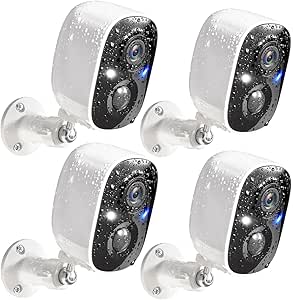 | Best for Active Deterrence | Camera count: 4 | Resolution: 2K (3MP) | Power: Rechargeable battery | VIEW ON AMAZON | See Our Full Breakdown |
| aosu D1 Classic 4-Camera Wireless Outdoor Security Camera Kit with Solar Power | 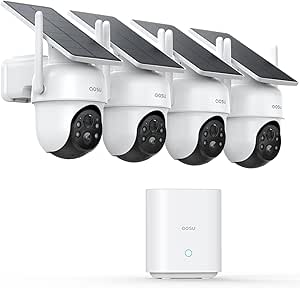 | Best for Subscription-Free Solar Coverage | Camera count: 4 | Resolution: 2K (3MP) | Local storage: 32GB | VIEW ON AMAZON | See Our Full Breakdown |
| eufy Security eufyCam C37 4-Camera Kit with 360° Pan and Tilt |  | Best for Expandable Local Storage | Camera count: 4 | Resolution: 2K | Pan and tilt: 360° with auto-tracking | VIEW ON AMAZON | See Our Full Breakdown |
| diy home security system with outdoor camera | Camera count | Weather resistance | Storage |
|---|---|---|---|
| aosu 2K QHD Solar Wireless Out | 4 | IP66 | — |
| 4MP Solar-Powered Wireless Out | 4 | IP66 | 128GB encrypted local storage; up to 3 months of loop recording |
| ANNKE 16-Channel Wireless Secu | — | — | — |
| CAMCAMP Wireless Outdoor Secur | 8 | IP66; operating temperature -4°F to 122°F | — |
| Hiseeu Solar-Powered Outdoor S | 8 included; supports up to 10 | IP66 | 1TB HDD; supports up to 8TB hard drive or 256GB SD card |
| aosu 2K QHD Solar Wireless Out | 4 | IP67 waterproof | 32GB encrypted local storage |
| REOLINK 5MP 8-Channel Home Sec | 4 | — | 2TB HDD |
| Hiseeu 5MP Wireless Security C | — | — | 3TB HDD |
| 2K Solar-Powered Wireless Secu | — | IP65 | Optional microSD card (not included) or cloud storage |
| Camcamp 4-Camera Wireless Outd | 4 | — | — |
| ELYSOO 2K/4MP 4-Camera Solar H | 4 | IP65 | 64GB included; supports up to 256GB |
| ANNKE 3K Lite Wired Security C | 8 bullet cameras | IP67 | 1TB HDD; expandable up to 10TB |
| GMK 4-Pack Wireless Outdoor Se | 4 | IP65 | Local SD card and cloud |
| aosu D1 Classic 4-Camera Wirel | 4 | IP65 | — |
| eufy Security eufyCam C37 4-Ca | 4 | — | — |
More Details on Our Top Picks
aosu 2K QHD Solar Wireless Outdoor Security Camera System, 4-Camera Kit
For a buyer who wants a practical four-camera setup without running power cables or paying for local recording, the aosu 2K QHD Solar Wireless Outdoor Security Camera System is the most balanced fit here. Its 166° field of view covers more of a yard or entry area per camera than the ANNKE 16-Channel system’s listed 70° view, while solar power keeps installation simpler than that corded setup. The base stores recordings locally, and the app can show all four feeds at once, which helps when checking several sides of a home.
The tradeoff is less reach and recording smoothness than some alternatives: color night vision is rated to 23 feet, and video runs at 15 fps. Buyers who need broad, movable coverage may prefer the 4MP Solar-Powered system with pan-and-tilt cameras; I’d choose aosu for a simpler fixed-camera layout.
Pros:- Four wireless 2K cameras pair with solar panels for flexible placement.
- 32GB encrypted local storage supports recording without a subscription.
- 166° field of view captures a broad area from each camera position.
- Color night vision, two-way audio, and spotlight-and-alarm deterrence add useful response options.
Cons:- Color night vision is specified for a range of only 23 feet.
- 15 fps footage is less fluid than the 30 fps listed for the ANNKE system.
- Fixed cameras cannot pan and tilt to follow movement.
Best for: Homeowners who want four fixed outdoor views, solar power, and local recording without a subscription.
Not ideal for: Buyers who need long-range night coverage, smoother motion footage, or pan-and-tilt tracking.
- Camera count:4
- Resolution:2K QHD
- Field of view:166°
- Local storage:32GB encrypted base storage
- Power:Solar; operates with as little as 2 hours of direct sunlight per day
- Night vision:Full color, up to 23 feet
- Frame rate:15 fps
- Weather resistance:IP66
Our verdict“Choose aosu for broad, subscription-free coverage across four solar-powered cameras, but look elsewhere for tracking or longer night vision.”
4MP Solar-Powered Wireless Outdoor Security Camera System, 4-Camera Kit
This four-camera kit prioritizes movement coverage over the simpler fixed views offered by the aosu 2K QHD Solar system. Its cameras pan and tilt across a stated 355° field of view, while AI human detection and app-enabled auto tracking can help follow activity instead of leaving it at the edge of a stationary frame. The 4MP video, color night vision rated up to 65 feet, and 128GB encrypted hub also give it more specified storage and night-vision reach than aosu.
That added coverage comes with setup details to manage: auto tracking is off by default, so it must be enabled in the app, and the solar panels need about three hours of daily sunlight for continuous operation. This is a better match for driveways and open yards than for buyers seeking a minimal, set-and-forget system. Alexa compatibility is listed, but the supplied details do not specify broader smart-home integrations.
Pros:- Pan-and-tilt cameras provide far more adjustable coverage than fixed-camera kits.
- 128GB encrypted local storage supports up to 3 months of loop recording.
- 4MP color night vision is specified up to 65 feet.
- Human detection, two-way audio, dual-band Wi-Fi, and Alexa compatibility are included.
Cons:- Auto tracking must be enabled manually in the app.
- Continuous solar operation requires about three hours of sunlight daily.
- Moving cameras may need more careful positioning and configuration than fixed-view alternatives.
Best for: Homeowners monitoring open driveways or yards who want movable views, human detection, and longer-range color night vision.
Not ideal for: Buyers who want the simplest setup, have limited daily sunlight, or prefer fixed cameras with fewer app settings.
- Camera count:4
- Resolution:4MP
- Field of view:355° pan-and-tilt coverage
- Storage:128GB encrypted local storage; up to 3 months of loop recording
- Power:Solar powered with 8000mAh battery and 5W solar panel
- Night vision:Color, up to 65 feet
- Wi-Fi:2.4GHz and 5GHz
- Weather resistance:IP66
Our verdict“Pick this kit when tracking motion across open outdoor areas matters more than a minimal setup.”
ANNKE 16-Channel Wireless Security Camera System with 2TB HDD
The ANNKE system is the capacity pick for someone building a larger, always-powered camera layout rather than avoiding cables. It arrives with 12 cameras, a 16-channel NVR, and a 2TB hard drive that can expand to 8TB. Continuous recording is an option, and the listed 30 fps frame rate is higher than the 15 fps specified for the aosu solar kit. Human detection alerts, app viewing, and infrared night vision rated up to 100 feet suit a property where dependable coverage matters more than quick installation.
The main compromise is substantial: both cameras and recorder need power adapters, so “wireless” refers to video transmission, not a cable-free install. Its 70° field of view is also narrower than aosu’s 166°, meaning placement matters more. Buyers wanting solar simplicity should choose aosu or the Hiseeu solar system; ANNKE makes more sense where outlets and permanent mounting are available.
Pros:- Includes 12 cameras and a 16-channel NVR, with room for four more channels.
- Preinstalled 2TB hard drive expands up to 8TB.
- Supports continuous or motion-triggered recording and remote app viewing.
- 30 fps recording and infrared night vision rated up to 100 feet.
Cons:- Cameras and NVR require power adapters, limiting placement flexibility.
- The listed 70° field of view is narrower than the aosu solar kit’s 166° view.
- 24/7 recording must be activated manually.
Best for: Owners of larger properties who can provide power at camera locations and want many channels with expandable local recording.
Not ideal for: Renters or homeowners seeking cable-free solar installation, or anyone who needs a wide view from each camera.
- Channels:16
- Included cameras:12
- Camera resolution:3MP listed in specifications; description also mentions 2K
- Hard drive:2TB, expandable up to 8TB
- Field of view:70°
- Frame rate:30 fps
- Night vision:Infrared up to 100 feet; color night vision up to 33 feet
- Power:Corded electric; cameras and NVR require power adapters
Our verdict“Choose ANNKE for a power-ready property that needs many cameras and expandable recording, not for a cable-free DIY install.”
CAMCAMP Wireless Outdoor Security Camera System with 16-Channel NVR
CAMCAMP is the better fit when several outdoor zones need active camera coverage and a local recorder. It combines eight 1080p cameras with 355° pan, 90° tilt, and auto tracking, so each unit can scan more area than the fixed cameras in the Hiseeu solar system. AI human detection and 24/7 recording with event detection support ongoing monitoring, while the 16-channel NVR leaves room to add up to eight cameras. Two-way audio, color night vision, and Alexa commands round out a feature set aimed at a connected, multi-camera property.
Its main limitation is the 500GB hard drive: continuous recording across eight cameras can fill storage faster than the 1TB Hiseeu system, though the supplied information does not state retention time. CAMCAMP also records at 1080p, below Hiseeu’s 4MP resolution. Choose it for movable views and expansion; choose Hiseeu for solar power, higher listed resolution, or local display monitoring without internet.
Pros:- Eight cameras offer 355° pan and 90° tilt with automatic human tracking.
- 16-channel NVR supports eight additional channels.
- Includes 500GB local storage and supports 24/7 recording with AI event detection.
- IP66 weather resistance and an operating range of -4°F to 122°F.
Cons:- 1080p resolution is lower than the 4MP Hiseeu system.
- The 500GB drive may limit retention during continuous recording across multiple cameras.
- The supplied product details do not clarify camera power requirements or recording retention.
Best for: Homeowners who want several pan-and-tilt cameras, active tracking, and NVR capacity to add more views later.
Not ideal for: Buyers who prioritize higher-resolution footage, solar-powered cameras, or extended retention from a larger included drive.
- Camera count:8
- Video resolution:1080p (2MP)
- Pan and tilt:355° pan, 90° tilt
- NVR and storage:16-channel NVR with 500GB hard drive
- Recording:24/7 recording with AI event detection
- Wireless bands:2.4GHz and 5GHz
- Night vision:Color night vision with spotlights
- Weather resistance:IP66; operating temperature -4°F to 122°F
Our verdict“Pick CAMCAMP for expandable, movable multi-camera coverage, but favor Hiseeu if resolution and included storage matter more.”
Hiseeu Solar-Powered Outdoor Security Camera System, 8 Cameras, Expandable to 10, 4MP Color Night Vision, 1TB HDD
Hiseeu combines the scale of an NVR system with the placement flexibility of solar cameras. Its eight 4MP cameras and 1TB hard drive give it more included coverage and storage than the four-camera aosu kit, while support for up to 10 cameras makes room for later expansion. The 135° field of view is narrower than aosu’s 166°, but Hiseeu’s higher listed resolution and local viewing through a connected display without internet make it appealing for properties where a phone app is not the only monitoring option.
Solar power still has limits: the cameras need about four hours of direct sunlight daily, more than the two hours specified for aosu. AI detection for people, vehicles, and pets also requires a paid cloud plan, so the local-storage setup does not provide every smart alert feature without added service. I’d favor Hiseeu for camera count and offline display access, but choose aosu for a smaller, simpler solar installation.
Pros:- Eight solar-powered cameras are included, with expansion support up to 10.
- 1TB local hard drive supports recording without a subscription for local storage.
- 4MP video and color night vision provide higher listed resolution than CAMCAMP’s 1080p cameras.
- Connected-display monitoring can work without internet access.
Cons:- Solar operation requires about four hours of direct sunlight daily.
- AI detection for people, vehicles, and pets requires a paid cloud plan.
- The 135° field of view is narrower than the aosu four-camera system’s 166°.
Best for: Owners of larger properties who want eight solar cameras, substantial local storage, and a way to monitor feeds on a connected display without internet.
Not ideal for: Buyers with shaded camera locations or those who want AI person, vehicle, and pet detection without a cloud plan.
- Camera count:8 included; supports up to 10
- Resolution:4MP
- Storage:1TB HDD; supports up to 8TB hard drive or 256GB SD card
- Power:Solar and battery; about 4 hours of direct sunlight daily
- Field of view:135°
- Wi-Fi:2.4GHz and 5GHz
- Weather resistance:IP66
- Compatibility:EseeCloud app, smartphone, PC, or connected TV/display
Our verdict“Choose Hiseeu for a larger solar-powered layout with local display monitoring, provided its sunlight needs and cloud-gated AI features suit your setup.”
aosu 2K QHD Solar Wireless Outdoor Security Camera System, 4-Camera Kit
For a DIY setup that avoids both camera power cables and ongoing storage fees, the aosu 2K QHD kit offers a strong middle ground. Its four solar-and-battery cameras record to 32GB of encrypted local storage, with playback and downloads available without a subscription. Color night vision, a spotlight, and a 120 dB siren add useful deterrence, while simultaneous viewing and cross-camera tracking help connect activity across the property. Compared with the REOLINK 5MP system, installation is less involved because the cameras do not need PoE runs, but local capacity is much smaller than REOLINK’s 2TB drive. The tradeoff is sunlight dependence: shaded mounting spots may limit solar charging. Wall mounting also requires drilling, so this is not a completely tool-free install.
Pros:- Four 2K cameras provide coverage across multiple outdoor areas.
- Solar charging with battery backup avoids routine camera recharging where sunlight is available.
- Encrypted local storage supports playback and downloads without a subscription.
- Simultaneous viewing and cross-camera tracking help follow activity between camera zones.
Cons:- Solar charging can be limited by shade or poor sun exposure.
- The 32GB local storage capacity is modest beside systems with multi-terabyte drives.
- Wall installation requires drilling and screws.
Best for: Homeowners who want four outdoor cameras, local playback without recurring storage fees, and solar power at mounting spots with good sun exposure.
Not ideal for: Buyers with heavily shaded eaves, a large archive of continuous footage to keep, or no willingness to drill mounting holes.
- Camera count:4
- Video resolution:2K; 3 MP
- Viewing angle:130 degrees
- Night vision:Color, up to 30 ft
- Storage:32GB encrypted local storage
- Connectivity:Dual-band Wi-Fi (2.4GHz and 5GHz)
- Power and battery:Solar and battery; 5500 mAh
- Weather resistance:IP67 waterproof
- Alarm:120 dB siren, spotlight, and app notifications
Our verdict“Choose this kit for wire-free outdoor coverage and no-subscription playback, provided the camera locations get enough sunlight.”
REOLINK 5MP 8-Channel Home Security Camera System with 2TB HDD
The REOLINK 5MP system suits buyers who put dependable recording and image detail ahead of a quick wireless installation. Four PoE cameras connect to an eight-channel NVR, and the included 2TB hard drive supports continuous, scheduled, or motion-triggered recording. Person, animal, and vehicle detection can make alerts more specific, while 100-foot night vision reaches farther than the 65-foot range listed for the Camcamp dual-lens system. That recording capacity and wired connection come with a real installation cost: each camera needs a cable run back to the NVR, which can mean more planning and drilling than the solar-powered aosu kit. The 80-degree viewing angle is also narrower than the aosu’s 130 degrees, so camera placement matters. The stated recording window is about ten days before older footage is overwritten.
Pros:- Four 5MP cameras deliver higher listed resolution than the 2K aosu kit.
- The 2TB NVR supports continuous, scheduled, and motion-triggered recording.
- Person, animal, and vehicle detection can make alerts more targeted.
- Night vision reaches up to 100 feet, with built-in microphones for audio capture.
Cons:- PoE installation requires running cables from the cameras to the NVR.
- The 80-degree viewing angle is relatively narrow compared with the aosu kit’s 130 degrees.
- Included storage is described as holding about ten days of recordings before overwriting.
Best for: Homeowners who can run Ethernet cables and want four outdoor cameras recording continuously to a local NVR.
Not ideal for: Renters or DIY installers who need fully wireless camera placement, or buyers who want broad views from each fixed camera.
- Camera resolution:5MP (2560 × 1920)
- Camera count:4
- NVR channels:8
- Storage:2TB HDD
- Connectivity:Wired PoE
- Night vision range:Up to 100 feet
- Viewing angle:80 degrees
- Recording modes:Motion, scheduled, and 24/7 recording
- External storage support:One additional HDD up to 8TB via eSATA
Our verdict“Pick REOLINK if you can handle PoE cabling and want longer-range night vision with flexible local recording modes.”
Hiseeu 5MP Wireless Security Camera System with 14-Inch Monitor, 4 PTZ Cameras, and 3TB HDD
The Hiseeu 5MP system is the clearest fit for buyers who want a dedicated viewing station rather than relying on a phone for every check. Its NVR has a built-in 14-inch Full HD monitor, four PTZ dome cameras, and a 3TB drive for continuous local recording without subscription fees. The cameras can pan 355 degrees, tilt 90 degrees, and track motion, giving each unit more flexibility than the fixed-view cameras in the REOLINK 5MP system. Hiseeu also offers more included storage than the Camcamp system’s 500GB drive. Its wireless camera connection does not make the setup cable-free, though: every camera needs corded power. Night vision is rated to 65 feet, shorter than REOLINK’s 100 feet, and remote access depends on the HiseeCloud app. Buyers should plan around both power outlets and the included monitor’s placement.
Pros:- The built-in 14-inch monitor allows local viewing without buying a separate screen.
- Four PTZ cameras provide 355-degree pan, 90-degree tilt, and motion tracking.
- The 3TB HDD supports continuous local recording without subscription fees.
- Wireless camera connectivity avoids running network cables to the NVR.
Cons:- Cameras still require corded power, limiting placement where outlets are unavailable.
- The 65-foot night vision range is shorter than REOLINK’s listed 100 feet.
- Remote viewing and alerts rely on the HiseeCloud app.
Best for: Households that want a local camera-monitor station, pan-and-tilt coverage, and continuous recording without a storage subscription.
Not ideal for: Installers who need battery or solar cameras, longer-range night vision, or a system that does not depend on a specific remote-viewing app.
- Camera resolution:5MP
- Included cameras:4 PTZ dome cameras
- NVR channels:16
- Monitor:14-inch Full HD LCD
- Storage:3TB HDD
- Pan and tilt:355° pan, 90° tilt
- Night vision range:Up to 65 feet
- Recording mode:Continuous
- Power source:Corded electric
Our verdict“Choose Hiseeu if a built-in monitor and movable camera views matter more than solar power or longer-range night vision.”
2K Solar-Powered Wireless Security Camera System, 4-Pack
This four-camera kit combines solar-powered placement with app-controlled pan and tilt, making it appealing when fixed views would leave gaps around a driveway or yard. AI human detection, two-way audio, and a motion-activated spotlight cover everyday alert and deterrence needs, while dual-band Wi-Fi gives it more router flexibility than a single-band setup. Unlike the aosu 2K solar kit, though, it does not list included onboard storage: recording requires a separately purchased microSD card or optional cloud storage. That means buyers seeking subscription-free local playback need to budget for and install a card, while cloud recording may carry a recurring fee. Its listed night vision range is 328 feet, but the supplied data does not specify the conditions behind that figure, so I would not choose it on range alone. The IP65 rating is also below the aosu kit’s IP67 rating.
Pros:- Solar panels and backup batteries support wireless outdoor placement.
- App-controlled pan and tilt can adjust views without physically repositioning cameras.
- AI human detection, two-way audio, and a spotlight support alerts and deterrence.
- Dual-band Wi-Fi supports both 2.4 GHz and 5 GHz networks.
Cons:- A microSD card is not included, and cloud storage is optional.
- Cloud recording may involve a subscription, unlike the aosu kit’s included local storage.
- IP65 weather resistance is a lower rating than the IP67 aosu system.
Best for: DIY homeowners who want solar-powered cameras with remotely adjustable views and are comfortable adding their own microSD cards.
Not ideal for: Buyers who expect included local storage, want a stated no-subscription recording setup, or need IP67-rated weather protection.
- Video resolution:2K
- Camera quantity:4
- Power:Solar panel with built-in backup battery
- Wi-Fi:2.4 GHz and 5 GHz
- Night vision range:328 feet
- Weather resistance:IP65
- Storage:Optional microSD card (not included) or cloud storage
- Features:Pan-tilt, AI human detection, two-way audio, spotlight
- Compatibility:Alexa
Our verdict“Choose this kit for solar power and adjustable camera views if you are prepared to supply your own local storage.”
Camcamp 4-Camera Wireless Outdoor Security System with Dual-Lens PTZ Cameras
Camcamp’s defining advantage is the pairing of four dual-lens PTZ cameras with a 10-channel NVR, giving a DIY setup room to grow beyond the included cameras. Each camera can pan 355 degrees and tilt 90 degrees, while auto tracking and three night vision modes add flexibility for monitoring changing activity. The included 500GB hard drive supports local recording without a monthly storage subscription and can be expanded up to 6TB. That is a smaller starting archive than Hiseeu’s 3TB drive, but Camcamp offers a stated upgrade path and a larger NVR channel count than REOLINK’s eight-channel recorder. The main installation constraint is power: cameras connect over Wi-Fi but still need plug-in electricity, so placement depends on nearby outlets. Wi-Fi also makes the system less suited to buyers who prefer wired camera connections.
Pros:- Four dual-lens PTZ cameras combine multiple views with pan, tilt, and auto tracking.
- The 10-channel NVR leaves room to add cameras beyond the included four.
- Local recording does not require a monthly subscription.
- The 500GB drive can be expanded up to 6TB.
Cons:- Cameras require plug-in power, which restricts placement around the property.
- The included 500GB drive is substantially smaller than Hiseeu’s 3TB HDD.
- Cameras rely on Wi-Fi rather than a wired PoE connection.
Best for: Homeowners planning to add cameras later who want PTZ coverage and expandable local storage without a subscription.
Not ideal for: Buyers who need solar or battery-powered cameras, a large included recording drive, or wired PoE connectivity.
- Camera count:4
- Camera type:Dual-lens PTZ
- NVR channels:10
- Included storage:500 GB HDD
- Expandable storage:Up to 6 TB
- Pan and tilt:355° pan, 90° tilt
- Night vision range:Up to 65 feet
- Connectivity:2.4/5 GHz Wi-Fi
- Power source:Corded electric
Our verdict“Pick Camcamp if you want PTZ cameras and room to expand, and can provide reliable Wi-Fi and nearby power for each camera.”
ELYSOO 2K/4MP 4-Camera Solar Home Security System
Dual-band Wi-Fi sets this four-camera kit apart from the GMK 4-Pack and eufyCam C37, both of which are limited to 2.4GHz. That may give buyers more flexibility when their home network uses both bands, though actual connection quality still depends on camera placement and the network. The 2K/4MP video, color night vision, and 350° pan and 90° tilt give each camera useful coverage options, while human detection can make alerts more focused than basic motion notifications.
Solar power and included 64GB local storage reduce routine charging and subscription dependence. Compared with the aosu D1 Classic, ELYSOO offers more included storage and dual-band Wi-Fi, but its solar charging still relies on sunlight. Cloud storage and AI analysis are optional services, so buyers seeking those features should account for that tradeoff.
Pros:- Supports both 2.4GHz and 5GHz Wi-Fi
- Includes 64GB local storage and supports cards up to 256GB
- Solar power reduces routine battery charging
- Color night vision, pan-and-tilt movement, and human-detection alerts
Cons:- Solar charging depends on adequate sunlight
- Cloud storage and AI analysis are optional services
Best for: Homeowners who want four solar-powered cameras, local recording, and compatibility with either 2.4GHz or 5GHz Wi-Fi.
Not ideal for: Buyers with shaded camera locations or anyone who requires cloud storage and advanced AI analysis without optional services.
- Camera count:4
- Resolution:2K/4MP
- Wi-Fi:2.4GHz and 5GHz
- Storage:64GB included; supports up to 256GB
- Power:Solar-powered with rechargeable battery
- Weather resistance:IP65
- Pan and tilt:350° pan; 90° tilt
- Detection:PIR human detection with app alerts
Our verdict“Choose ELYSOO if dual-band Wi-Fi and included local storage matter more than guaranteed charging in shaded spots.”
ANNKE 3K Lite Wired Security Camera System with 8 Cameras and 1TB HDD
When the priority is recording across many outdoor angles rather than avoiding cables, the eight-camera wired layout gives this ANNKE system an advantage over the four-camera ELYSOO and aosu D1 Classic kits. Its DVR records continuously to an included 1TB hard drive, so footage does not depend on individual camera batteries or solar exposure. Human and vehicle detection plus smart search can help narrow down recorded events, while IP67-rated cameras are suited to outdoor installation.
The tradeoff is the installation: running power and camera connections takes more planning than placing wireless solar cameras. Also, the included cameras capture 1080p video, even though the DVR supports compatible cameras up to 3K/5MP. That makes this a better fit for buyers who value uninterrupted recording and camera count over a low-effort, high-resolution wireless setup.
Pros:- Includes eight cameras and an eight-channel DVR
- Pre-installed 1TB hard drive supports continuous recording
- Human and vehicle detection with smart search
- IP67 weather resistance and color or infrared night vision
Cons:- Wired installation requires more effort and cable planning
- Included cameras record at 1080p, not the DVR’s supported maximum
- The supplied 1TB drive may need expansion for longer retention
Best for: Homeowners who need eight outdoor views and continuous DVR recording, and are prepared to run cables for a fixed installation.
Not ideal for: Renters or DIY installers who want a quick wireless setup, solar-powered cameras, or 2K-or-higher video from the included cameras.
- Camera count:8 bullet cameras
- Camera resolution:1080p
- DVR:8 channels
- Storage:1TB HDD; expandable up to 10TB
- Recording modes:24/7 continuous, event, and schedule
- Detection:Human and vehicle detection
- Weather resistance:IP67
- Night vision range:Up to 100 feet black-and-white; up to 66 feet color
Our verdict“Pick ANNKE if you need continuous recording from eight fixed cameras and can handle a more involved wired installation.”
GMK 4-Pack Wireless Outdoor Security Camera System (2K/3MP)
The GMK kit is the clearest choice here for buyers who want cameras to do more than record: two-way audio and an active siren add ways to respond when motion is detected. Its AI PIR detection, color night vision, and 2K video give it a more deterrence-focused setup than the ELYSOO kit, which emphasizes dual-band Wi-Fi and solar power. GMK also offers local SD-card storage alongside cloud service, giving buyers a choice of recording approach.
These cameras are battery-powered rather than solar-powered, unlike the aosu D1 Classic and ELYSOO systems, so they need periodic recharging. The stated standby life ranges from one to six months, making real upkeep dependent on usage. GMK is also limited to 2.4GHz Wi-Fi, and advanced AI features and cloud storage require a paid subscription after the trial. Its strengths suit buyers who value active warnings more than hands-off solar charging.
Pros:- 2K video with full-color and infrared night vision
- Two-way audio and siren support active responses to motion
- Local SD-card and cloud storage options
- Rechargeable batteries avoid fixed camera wiring
Cons:- Supports 2.4GHz Wi-Fi only
- Cameras require manual recharging, with battery life varying by use
- Advanced AI features and cloud storage require a paid subscription after the trial
Best for: Homeowners who want four wireless cameras with two-way talk, a siren, and local SD-card recording for visible deterrence.
Not ideal for: Buyers who need 5GHz Wi-Fi, solar charging, or subscription-free access to advanced AI and cloud features.
- Camera count:4
- Resolution:2K (3MP)
- Power:Rechargeable battery
- Standby battery life:1–6 months
- Wi-Fi:2.4GHz only
- Storage:Local SD card and cloud
- Audio and deterrence:Two-way audio and siren
- Weather resistance:IP65
Our verdict“Choose GMK if audio talk and an alarm matter more than solar charging or dual-band network support.”
aosu D1 Classic 4-Camera Wireless Outdoor Security Camera Kit with Solar Power
The aosu D1 Classic combines four solar-powered cameras with a base that stores footage locally, making it a strong fit for buyers who want a multi-camera DIY setup without a required cloud subscription. Its 360° coverage, motion tracking, and two-way audio help cameras follow activity and cover more ground than the fixed-view GMK cameras. The system also supports simultaneous live viewing in the app, which is useful when checking several outdoor areas at once.
Compared with the eufyCam C37, the D1 Classic has less built-in storage—32GB versus 64GB—but does not rely on the C37’s HomeBase compatibility requirements. Its cameras connect wirelessly to the base, which must connect to the router by Ethernet. Solar charging calls for about three hours of direct sunlight daily, and the base offers no HDMI or TV output, so viewing is app-based.
Pros:- 32GB local storage with no subscription required
- 360° pan and tilt with motion tracking
- Four cameras support simultaneous live viewing in the app
- Integrated solar panels reduce routine charging
Cons:- Solar charging depends on about three hours of direct sunlight daily
- Base connects to the router by Ethernet and has no HDMI or TV output
- Included local storage is less than the 64GB in the eufyCam C37 kit
Best for: Homeowners who want four solar-powered, pan-and-tilt cameras with local recording and no required subscription.
Not ideal for: Buyers who need a TV-connected recorder, shaded camera placements, or more included storage than 32GB.
- Camera count:4
- Resolution:2K (3MP)
- Local storage:32GB
- Recording:Event-based; about 120 days of loop recording
- Field of view:360°
- Solar charging:About 3 hours of direct sunlight daily recommended
- Weather resistance:IP65
- Connectivity:Wireless cameras connect to base; base connects to router by Ethernet
Our verdict“Choose the aosu D1 Classic if solar charging, camera tracking, and subscription-free local recording are your priorities.”
eufy Security eufyCam C37 4-Camera Kit with 360° Pan and Tilt
The eufyCam C37 stands out for combining 360° pan-and-tilt auto-tracking with 64GB of local storage that can expand up to 1TB using a separately sold microSD card. That storage headroom gives it an advantage over the aosu D1 Classic’s included 32GB, while its detachable solar panels offer more placement flexibility than cameras with integrated panels. Color night vision and a built-in spotlight add visibility when motion occurs.
This is a base-dependent system, not a set of cameras that works on its own: it requires HomeBase Mini or a compatible HomeBase 3. It also supports 2.4GHz Wi-Fi only, like the GMK kit, rather than the dual-band ELYSOO system. Buyers already using HomeBase-compatible equipment may find the setup appealing; those with HomeBase 2 or HomeKit devices should skip it because neither is supported.
Pros:- 360° pan-and-tilt with automatic tracking
- 64GB local storage, expandable up to 1TB
- Detachable 3W solar panels allow flexible panel placement
- Color night vision with a built-in spotlight
Cons:- Requires HomeBase Mini or a compatible HomeBase 3
- Supports 2.4GHz Wi-Fi only
- Storage expansion requires a separately sold microSD card
Best for: Homeowners who want solar-assisted pan-and-tilt cameras, local recording, and the option to expand storage substantially.
Not ideal for: Buyers who need HomeKit or HomeBase 2 compatibility, 5GHz Wi-Fi, or a system that works without a compatible HomeBase.
- Camera count:4
- Resolution:2K
- Pan and tilt:360° with auto-tracking
- Night vision:Color with built-in spotlight
- Solar panels:Detachable, 3W per camera
- Local storage:64GB built-in; expandable up to 1TB via microSD
- Wi-Fi:2.4GHz
- Compatibility:HomeBase Mini or HomeBase 3; not compatible with HomeKit or HomeBase 2
Our verdict“Pick the eufyCam C37 if you have a compatible HomeBase and want tracking cameras with room to expand local storage.”

How We Picked
I compared these systems as complete DIY options for outdoor coverage, looking at camera count, video resolution, power and connection needs, recording method, recorder capacity, expansion potential, and included monitoring features. I gave more weight to combinations that can cover a typical home without forcing buyers into a single installation style. Product names and specifications supplied for this roundup also show when a system includes solar power, a local hard drive, a monitor, or PTZ cameras; features not stated in those details are not assumed.
The ranking reflects fit across different homes rather than camera count alone. The REOLINK 5MP kit leads for its stated resolution, 8-channel recorder, and 2TB storage, while the aosu solar kit is a strong alternative for buyers who put easier placement first. Wired ANNKE and larger NVR kits rank well for buyers who want a fixed recording setup or broader expansion, but they demand more planning. Several listings appear in near-identical or repeated configurations, so I treat those as close alternatives rather than claiming unverified differences.
| diy home security system with outdoor camera | Weather resistance |
|---|---|
| aosu 2K QHD Solar Wireless Out | IP66 |
| 4MP Solar-Powered Wireless Out | IP66 |
| ANNKE 16-Channel Wireless Secu | — |
| CAMCAMP Wireless Outdoor Secur | IP66; operating temperature -4°F to 122°F |
| Hiseeu Solar-Powered Outdoor S | IP66 |
| aosu 2K QHD Solar Wireless Out | IP67 waterproof |
| REOLINK 5MP 8-Channel Home Sec | — |
| Hiseeu 5MP Wireless Security C | — |
| 2K Solar-Powered Wireless Secu | IP65 |
| Camcamp 4-Camera Wireless Outd | — |
| ELYSOO 2K/4MP 4-Camera Solar H | IP65 |
| ANNKE 3K Lite Wired Security C | IP67 |
| GMK 4-Pack Wireless Outdoor Se | IP65 |
| aosu D1 Classic 4-Camera Wirel | IP65 |
| eufy Security eufyCam C37 4-Ca | — |
Factors to Consider When Choosing Diy Home Security System With Outdoor Cameras
Before choosing a kit, I would map the camera locations and decide how much installation work the property can support. The right system depends on more than headline resolution: power access, sightlines, recording needs, and future camera plans all affect whether a setup will work well day to day.
Plan Coverage Before Picking Camera Count
Start with the areas you need to see: doors, ground-floor windows, driveway access, and paths around the home. A camera aimed too high, placed behind glare, or pointed at a busy street can produce footage that is less useful than a lower-resolution view with a clear angle. Walk the property and note likely mounting points, obstructions, and how far each view must reach. Four cameras can cover a compact home well, while a larger lot may call for more cameras or a recorder with spare channels. Do not buy extra cameras just because a kit includes them; check that each one has a distinct job. This planning also helps you compare fixed cameras with PTZ models, which can move but still cannot watch every direction at once.
Match Power to Sunlight and Installation Access
Solar-powered cameras can reduce wiring and make outdoor placement easier, but they are not equally convenient at every mounting point. A camera under a deep porch or on a north-facing wall may receive too little direct sunlight for dependable charging. Check whether each planned location has suitable exposure and whether you can reach the camera for maintenance. If those locations are shaded, a wired system may take more work at installation but avoid reliance on solar conditions. Wireless video does not mean a camera needs no power, and the power arrangement should be part of your plan before mounting. For a mixed property, prioritize solar where the light is favorable and use a different power approach where it is not.
Choose Recording Around Your Internet and Privacy Needs
Local recording to an NVR or included hard drive can suit buyers who want footage stored at home and systems designed around continuous recording. Wireless solar kits may be simpler to place, but you should check the exact recording method and any app or network requirements before purchase. Do not assume that wireless means internet-independent or that local storage means every feature works without a network connection. If your broadband is unreliable, confirm what you can view and retrieve when the connection is down. Think about how long footage needs to remain available and how often you are willing to review or manage recordings. Storage capacity is only one part of that decision; camera count and recording settings also affect retention.
Treat Resolution as One Part of Useful Evidence
Higher resolution can preserve more detail, but it does not make every image clear at night or at a distance. Camera angle, lighting, motion, and the distance to a face or vehicle all shape what the footage can show. Choose a viewpoint that captures the approach to an entry rather than only the top of a person’s head or a broad area with little detail. A well-positioned 2K camera may be more useful for a doorway than a higher-resolution camera mounted too far away. Consider night-vision type and color-night-vision claims alongside the scene’s available light, rather than treating a resolution number as a promise of identification. If a specific event matters, make sure the camera is aimed and placed for that event.
Pay for Expansion Only If You Have a Real Plan
An 8- or 16-channel recorder can leave room to add cameras, but unused capacity does not improve present-day coverage. Expansion is valuable if you expect renovations, new outbuildings, or additional exterior viewpoints. Before choosing a larger system, check whether added cameras must match the recorder or meet particular connection requirements. A compact four-camera kit may be easier to install and manage if your coverage needs are settled. Also consider the physical footprint: NVR systems need a suitable indoor location for the recorder and its cables, while a wireless kit shifts more attention to camera placement and power. I would choose spare capacity as a deliberate future option, not as a substitute for a coverage plan.
Decide Whether PTZ and a Monitor Fit Your Routine
Pan-and-tilt cameras can redirect a view, which may help cover a larger open area with fewer fixed viewpoints. That flexibility comes with a tradeoff: a moving camera cannot show every direction at once, so it may miss activity outside its current view. Dual-lens designs and 360-degree movement can also add controls and setup choices that are unnecessary for a simple front-door view. An included monitor is useful if you want a dedicated screen at home, but it may be less valuable if you mainly check cameras from a phone. Think about who will monitor the system and where; a feature is only useful if it fits how your household actually checks footage. For critical entrances, a fixed view can complement a PTZ camera rather than relying on movement alone.
Frequently Asked Questions
Can I install a solar camera system on a shaded house?
Possibly, but shade can limit how well a solar camera stays charged, especially at locations with little direct sun. Check the exposure at each intended mounting point across the day rather than judging from the yard as a whole. A sunny wall may work for one camera while a covered porch does not. If a key location stays shaded, compare a wired system or another power arrangement before buying a full solar kit. Keep access for cleaning and repositioning in mind too.
Should I choose an NVR kit or a wireless four-camera kit?
An NVR kit is a stronger starting point if you want a recorder and hard-drive storage, expect to add cameras, or can plan for the recorder and its connections indoors. A wireless four-camera kit is more appealing when flexible placement and a simpler installation matter more than a larger recording setup. The word wireless does not tell you how footage is stored or whether all features work without internet access, so check those details for the exact model. Also compare where each camera gets power. Choose based on the installation your home can support, not on the connection label alone.
Is a 16-channel recorder a sensible choice if I only need four cameras?
It can be sensible if you expect to add cameras later or want a system built around a larger property. If your coverage plan is firmly limited to four cameras, spare channels may add complexity without solving a present need. Confirm whether the recorder accepts the cameras you might add, since channel count alone does not guarantee broad compatibility. Consider the indoor space and setup effort needed for the recorder as well. A smaller system is often the clearer choice when expansion is unlikely.
Do PTZ cameras replace the need for fixed outdoor cameras?
Not always: a PTZ camera can move its view, but it cannot show every direction at the same moment. If it is pointed toward the driveway, activity at a side entrance may be outside its view. Fixed cameras provide consistent coverage of priority areas, while PTZ models can add flexibility for a larger open space. A dual-lens or 360-degree design may reduce some blind spots, but its actual coverage depends on placement and camera design. For key doors, I would plan a dependable fixed view before treating a moving camera as the only coverage.
How should I decide between 2K, 4MP, 5MP, and 3K camera systems?
Compare the system’s complete recording setup and intended camera distance, not just the resolution label. Higher resolution can retain more image detail, but lighting, angle, motion, and storage settings affect the footage you actually get. Confirm that the recorder supports the included cameras at their stated resolution and consider how long you want recordings kept. For close views of a doorway, placement may matter more than a jump in resolution. If you need evidence from farther away, plan the camera position and lighting before choosing a system on its pixel count alone.
Conclusion
For the broadest balance of resolution, recorder capacity, and included storage, my best overall choice is the REOLINK 5MP 8-Channel System. Buyers who want a solar-powered setup with less wiring should look first at the aosu 2K Solar 4-Camera Kit, while the 4MP solar kits offer alternatives when the camera package and placement suit their property. For a best value choice, compare the listed four-camera solar kits against your actual coverage plan and storage needs rather than paying for unused channels. The ANNKE 3K Lite Wired System is my pick for buyers who prefer a wired setup and eight cameras, and the Hiseeu system with a 14-inch monitor fits households that want a dedicated viewing screen and PTZ cameras. For beginners, a four-camera solar kit is the simpler place to start when mounting locations get good sun; for larger properties, consider expandable NVR options from REOLINK, ANNKE, CAMCAMP, or Hiseeu. Match the system to your mounting conditions, recording preferences, and camera plan before choosing between them.