
When searching for the best smart smoke and carbon monoxide detectors with self-testing capabilities, it’s vital to consider factors like ease of use, reliability, and integration with smart home systems. The Kidde Smart Smoke and Carbon Monoxide Detector stands out as the overall top pick thanks to its app-enabled alerts and straightforward setup. For those prioritizing portability or budget, the Kidde Battery-Powered Portable CO Detector offers reliable detection without complex wiring. The main tradeoffs revolve around balancing advanced features like app notifications against the simplicity and cost of basic models. Continue reading for a detailed breakdown of these options to find the best fit for your needs.
Key Takeaways
- Top picks differentiate mainly on connectivity features—Wi-Fi and app alerts offer smarter monitoring but can add complexity.
- Battery-powered models excel in portability and ease of installation, ideal for renters or temporary setups.
- Interconnected units provide coverage across multiple rooms but often come at a higher price point.
- Self-testing reliability varies; models with automatic or manual self-test features reduce maintenance effort.
- Pricing ranges significantly, with premium models offering advanced diagnostics and integration, while basic units focus on core detection.
| Kidde Carbon Monoxide Detector, Plug-In Wall with Battery Backup and Test-Hush Button |  | Best Overall for Reliable, Long-Term CO Monitoring | Power Source: Plug-in with 2-AA battery backup | Alarm Sound Level: 85 decibels | Sensor Technology: Electrochemical | VIEW LATEST PRICE | See Our Full Breakdown |
| Kidde Smart Smoke and Carbon Monoxide Detector, App Enabled, Battery Powered |  | Best for Tech-Savvy Users Who Want Mobile Alerts | Detection: Smoke and Carbon Monoxide | Connectivity: Ring App, Alexa | Power Source: 2-AA batteries | VIEW LATEST PRICE | See Our Full Breakdown |
| 3-Pack Interconnected Smoke and Carbon Monoxide Detectors with Test & Silence Button |  | Best for Whole-House Coverage in Battery-Powered Systems | Power Source: Battery Powered | Alarm Sound: ≥85dB | Sensors: Photoelectric and Electrochemical | VIEW LATEST PRICE | See Our Full Breakdown |
| 3-Pack Wi-Fi Smoke and Carbon Monoxide Detector Combo with App Notifications |  | Best for Modern Homes with Long-Range Connectivity | Connectivity: WiFi (2.4GHz) | Battery Life: 5-10 years | Alarm Sound: 85dB | VIEW LATEST PRICE | See Our Full Breakdown |
| Kidde Smoke & Carbon Monoxide Detector, AA Battery Powered, LED Warning Light Indicators, 1 Pack |  | Best for Budget-Conscious Home Safety with Smart Features | Detection Type: 2-in-1 Smoke & CO | Power Source: 2 x AA batteries (included) | Alarm Sound: 85-decibel | VIEW LATEST PRICE | See Our Full Breakdown |
| 6-Pack Interconnected Smoke and Carbon Monoxide Detectors, Battery Operated |  | Best for Whole-House Interconnection and Easy Battery Power | Power Source: Battery Powered | Alarm Volume: 85dB | Product Style: Combination Smoke & Carbon Monoxide Alarms | VIEW LATEST PRICE | See Our Full Breakdown |
| Kidde Carbon Monoxide & Gas Detector with Digital LED Display |  | Best for Multi-Gas Detection with Digital Readout | Power Source: 120V plug-in with 9-volt battery backup | Alarm Volume: 85 decibels | Display: Digital LED | VIEW LATEST PRICE | See Our Full Breakdown |
| Kidde Carbon Monoxide Detector, Battery Powered, Portable for Travel or Home | 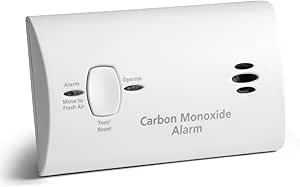 | Best for Portability and Personal Safety | Sensor Technology: Electrochemical | Power Source: 2 AA batteries | Alarm Sound: 85 decibels | VIEW LATEST PRICE | See Our Full Breakdown |
More Details on Our Top Picks
Kidde Carbon Monoxide Detector, Plug-In Wall with Battery Backup and Test-Hush Button
This Kidde plug-in model stands out for its simplicity and dependability, especially with its electrochemical sensor technology that offers precise CO detection. Compared to the battery-only Kidde detector, this option provides continuous power from a wall outlet, with a backup battery ensuring protection during outages. Its digital display, Peak Level Memory, and Hush button add user-friendly features, making it suitable for those seeking a straightforward, reliable solution. The 10-year warranty emphasizes its durability, but the requirement for a standard wall outlet limits placement options, and it lacks smart home integration. The alarm’s 85-decibel level is effective but could be overwhelming in quiet spaces. Overall, this model is ideal for homeowners prioritizing long-term safety and easy installation.
Pros:- Easy to install with plug-in design and battery backup
- Reliable electrochemical sensor technology
- Includes Peak Level Memory and Hush function for convenience
Cons:- Requires a standard wall outlet, limiting placement flexibility
- No smart home connectivity or app control
Best for: Homeowners who want a dependable, non-smart CO detector with long warranty coverage
Not ideal for: Renters with limited outlet options or those seeking smart home integration
- Power Source:Plug-in with 2-AA battery backup
- Alarm Sound Level:85 decibels
- Sensor Technology:Electrochemical
- Display:Digital CO level
- Peak Level Memory:Yes
- Hush Button:Yes
- Certifications:UL, UL 2034, UL217, NFPA72, California Fire Marshal, FHA, HUD
- Warranty:10 years
Bottom line: This detector is best for users seeking a straightforward, dependable CO monitor without smart features.
Kidde Smart Smoke and Carbon Monoxide Detector, App Enabled, Battery Powered
This Kidde smart detector excels in providing real-time alerts directly to your smartphone via the Ring app, making it ideal for those who want remote safety monitoring. Unlike the plug-in model, it runs on batteries, offering flexibility in placement without wiring concerns. Its compatibility with Alexa adds an extra layer of notification options. While this makes it suitable for tech-focused households, it requires AA batteries that are not rechargeable, and an optional subscription may be needed for continuous monitoring. The lack of wired or hardwired options could be a drawback in larger homes. Compared to the Wi-Fi models, this pick emphasizes convenience but sacrifices some ongoing power stability. It’s best for users comfortable with app management and wireless setups.
Pros:- Real-time notifications via Ring app and Alexa
- Wire-free setup for flexible placement
- Reduces false alarms with smart detection features
Cons:- Requires AA batteries that are not rechargeable
- Optional subscription for full monitoring services
Best for: Homeowners seeking a wireless, app-controlled smoke and CO detector with smartphone alerts
Not ideal for: Users who prefer wired or hardwired systems or dislike replacing batteries regularly
- Detection:Smoke and Carbon Monoxide
- Connectivity:Ring App, Alexa
- Power Source:2-AA batteries
- Interconnectivity:Wire-free
- Standards:UL 217, FCC
Bottom line: Ideal for tech-savvy users wanting remote alerts but willing to manage battery replacements.
3-Pack Interconnected Smoke and Carbon Monoxide Detectors with Test & Silence Button
This 3-pack of interconnected detectors offers comprehensive coverage by sounding alarms simultaneously across multiple rooms, a significant advantage over standalone units like the Kidde app-based model. Featuring both photoelectric and electrochemical sensors, they detect smoke and CO effectively, with easy testing and silencing functions. Their battery-powered design ensures operation during power outages, but the reliance on batteries means you’ll need to monitor and replace them periodically, and the volume could be a concern for sensitive spaces. While they lack smart connectivity, the interconnected feature provides a reliable safety net for larger homes needing coordinated alerts. This pick is well-suited for those prioritizing coverage and simplicity over app integration or wired connections.
Pros:- Whole-house interconnected alarms for coordinated alerts
- Dual sensors for smoke and CO detection
- Easy to test and silence alarms
Cons:- Battery replacement needed over time
- Limited to battery power, no wired option
- Alarm volume may be too loud for some users
Best for: Homeowners seeking reliable, whole-house safety coverage without smart home dependence
Not ideal for: People who want app notifications or wired security systems
- Power Source:Battery Powered
- Alarm Sound:≥85dB
- Sensors:Photoelectric and Electrochemical
- Interconnection:Yes
- Installation:Ceiling or wall mount
Bottom line: This set is best for households wanting dependable, interconnected safety alarms without smart home features.
3-Pack Wi-Fi Smoke and Carbon Monoxide Detector Combo with App Notifications
This trio of Wi-Fi enabled detectors combines smoke and CO detection with long-lasting batteries, offering a seamless safety network through the Smart Life app. Unlike the battery-only Kidde model, these provide instant alerts to your device, with visual and audible signals to supplement app notifications. The long battery life of 5-10 years reduces maintenance, but the dependence on WiFi means your safety alerts hinge on a stable internet connection. These are well-suited for households that want integrated monitoring and remote control, yet they may face false alarms if sensors are not properly maintained or if WiFi issues occur. Compared with basic battery units, this pick emphasizes connectivity and convenience but requires a consistent WiFi environment.
Pros:- App integration for real-time alerts and management
- Long battery life of 5-10 years reduces upkeep
- Combined smoke and CO detection in one device
Cons:- Requires WiFi connection for app notifications
- Potential for false alarms if sensors are not maintained
Best for: Homeowners wanting smart, remote-accessible smoke and CO detection with long-lasting batteries
Not ideal for: Homes with unreliable WiFi or users preferring wired systems
- Connectivity:WiFi (2.4GHz)
- Battery Life:5-10 years
- Alarm Sound:85dB
- Sensors:Photoelectric and electrochemical
- App Compatibility:Smart Life app
- Alert Types:Audible, visual, app notifications
Bottom line: Best suited for tech-oriented households seeking integrated, long-term safety monitoring over traditional wired systems.
Kidde Smoke & Carbon Monoxide Detector, AA Battery Powered, LED Warning Light Indicators, 1 Pack
This Kidde model offers a 2-in-1 solution for smoke, fire, and CO detection, combining reliable sensors with LED warning indicators for clear status updates. Its battery operation ensures protection during power outages, similar to the Kidde plug-in model, but with added flexibility for placement. The self-testing feature enhances reliability, and the 10-year warranty underscores durability. Compared to the app-enabled Kidde detector, this unit lacks remote alerts but excels in simplicity and affordability. The LED indicators help users quickly assess device status, yet the limited battery life and the loud alarm volume might be drawbacks for some. It strikes a good balance for those who need basic, battery-powered safety without the complexity of smart home integration.
Pros:- Dual detection of smoke, fire, and CO
- Battery operated for protection during outages
- LED indicators provide clear status updates
Cons:- Battery replacement needed after 10 years
- Limited to 2 AA batteries, which may require frequent replacements
Best for: Budget-conscious families seeking a dependable, battery-powered combo detector with visual indicators
Not ideal for: Those desiring app notifications or wired systems for integrated home safety
- Detection Type:2-in-1 Smoke & CO
- Power Source:2 x AA batteries (included)
- Alarm Sound:85-decibel
- LED Indicators:Green, Amber, Red
- Sensor Technology:Photoelectric, Electrochemical
- Warranty:10 years
Bottom line: Ideal for budget-minded households wanting reliable, battery-powered fire and CO detection with clear status signals.
6-Pack Interconnected Smoke and Carbon Monoxide Detectors, Battery Operated
This 6-pack of interconnected detectors excels in providing simultaneous alerts across multiple rooms, making it ideal for larger homes. Compared with the Kidde portable CO detector, these units prioritize whole-house safety with interconnected alarms, though they rely solely on batteries which means regular replacement is necessary. The inclusion of flashing LEDs and LCD screens enhances monitoring, but the need for ongoing battery changes can be a drawback for those seeking low-maintenance solutions. The alarms’ loud 85dB volume ensures occupants will hear alerts, but this can be disruptive in quiet settings. Overall, this set is best suited for homeowners who prefer straightforward, battery-powered safety coverage without wiring hassles.
Pros:- Interconnected alarms ensure whole-house alerts
- Easy to install with battery power and test/silence buttons
- Reliable detection with sensitive sensors and clear alarms
- Includes flashing LED and LCD display for concentration levels
Cons:- Battery replacement required for ongoing operation
- Loud alarms may be disruptive in quiet environments
Best for: Homeowners wanting reliable, interconnected alarms across multiple rooms without wiring.
Not ideal for: People who prefer low-maintenance devices or have small spaces where loud alarms could be disturbing.
- Power Source:Battery Powered
- Alarm Volume:85dB
- Product Style:Combination Smoke & Carbon Monoxide Alarms
- Color:White
- Item Dimensions:4.09″D x 1.53″W x 4.09″H
- Item Weight:0.23 Pounds
Bottom line: This pick makes the most sense for larger homes needing interconnected safety with straightforward battery operation.
Kidde Carbon Monoxide & Gas Detector with Digital LED Display
Compared with the 6-pack, this plug-in detector offers a more streamlined setup for single-room coverage, with the added benefit of a digital LED display that clearly shows gas levels—helpful for ongoing monitoring. It detects multiple gases including propane and natural gas, making it more versatile than standard CO-only units like the Kidde Battery-Powered Portable. However, its plug-in design limits placement options and may be less suitable for areas where wiring isn’t accessible. The alarm volume of 85 decibels is standard, but some users might find it too loud in quiet bedrooms. This device is an ideal choice for those who want detailed gas level information and a plug-in setup for quick installation.
Pros:- Easy to install with plug-in design
- Provides backup power during outages
- Clear digital display of gas levels
- Detects multiple types of gases
Cons:- May require calibration over time
- Limited to indoor use
- Alarm volume could be loud for some users
Best for: Homeowners seeking detailed gas monitoring with easy plug-in installation.
Not ideal for: Renters or people needing portable solutions or battery-only units for travel.
- Power Source:120V plug-in with 9-volt battery backup
- Alarm Volume:85 decibels
- Display:Digital LED
- Detection Types:Carbon monoxide, propane, natural gas, methane, explosive gases
Bottom line: This detector is best suited for users who want multi-gas detection with a digital readout and a plug-in setup.
Kidde Carbon Monoxide Detector, Battery Powered, Portable for Travel or Home
While the 6-pack provides broad, interconnected coverage for a home, this portable Kidde CO detector is designed for personal safety on the go or in specific rooms. Its electrochemical sensor offers reliable CO detection, and the battery operation ensures it works during power outages—comparable to the battery-only units in the lineup, but with added portability. Its simple two-AA battery setup makes it easy to replace, though it limits continuous operation without battery changes. The device’s LED indicators and 85dB alarm deliver clear alerts, but since it only detects CO, it lacks the multi-gas or digital readout features of the other models. This unit is best for individuals needing a portable, easy-to-use CO detector for travel or supplemental home safety.
Pros:- Portable and suitable for travel or specific rooms
- Easy to install without wiring
- Operates during power failures on battery power
- Provides clear visual and audible alerts
Cons:- Battery replacement required for continuous operation
- Limited to detecting CO only
Best for: Travelers or homeowners wanting a portable, easy-to-install CO detector for personal safety.
Not ideal for: Households seeking interconnected alarms or multi-gas detection in a fixed home setup.
- Sensor Technology:Electrochemical
- Power Source:2 AA batteries
- Alarm Sound:85 decibels
- Indicators:Green LED for power, Red LED for CO detection
- Edition:3rd
Bottom line: This pick makes sense for users needing a portable, reliable CO detector that can be used anywhere.

How We Picked
These products were evaluated based on their self-testing capabilities, connectivity features, ease of installation, build quality, and overall value. Priority was given to models that incorporate reliable self-test functions, whether manual or automatic, to ensure ongoing safety. We also considered user reviews and brand reputation for maintaining long-term performance, along with compatibility with smart home ecosystems. Products are ranked to balance performance with affordability and usability, helping different types of buyers find the best fit for their specific needs.Factors to Consider When Choosing Best Smart Smoke And Carbon Monoxide Detector Self Testing
Selecting the best smart smoke and carbon monoxide detector with self-testing involves weighing several important factors. These range from connectivity options to ease of maintenance, ensuring you get a device that fits your home’s layout and your safety priorities. Understanding these key considerations can help you avoid common pitfalls and make a more informed decision.Connectivity and Smart Features
Deciding between Wi-Fi, Bluetooth, or standalone models impacts how you receive alerts and monitor your home remotely. Wi-Fi-enabled detectors can send notifications directly to your phone and integrate with other smart devices, offering peace of mind. However, this often comes with increased complexity and potential connectivity issues. If you prefer a simple setup, a Bluetooth or non-connected model may suffice, but you’ll miss out on remote alerts and diagnostics.
Self-Testing Capabilities
Reliable self-testing is crucial for ongoing safety. Manual test buttons are common but require regular user action, while automatic self-tests can proactively identify sensor issues. Consider models with clear indicators or app notifications that confirm the self-test was successful. Overlooking this feature may lead to false confidence, especially in models without automatic testing, increasing the risk of undetected sensor failures.
Ease of Installation and Maintenance
Battery-powered units are typically easier to install without wiring, making them suitable for renters or temporary setups. Hardwired or interconnected models often require professional installation but provide greater coverage and integration. Look for features like quick-release batteries or straightforward mounting mechanisms to simplify regular testing and battery replacement, which are vital for consistent safety performance.
Build Quality and Durability
Durability matters, especially for detectors placed in high-traffic areas or exposed to dust and humidity. Choose models with solid construction, clear LED indicators, and long-lasting batteries. Some premium options include digital displays showing CO levels or status updates, which can be beneficial for ongoing monitoring and troubleshooting.
Price and Overall Value
Higher price points often reflect added features like app integration, automatic self-testing, or multiple interconnected units. Balance your budget with your safety needs—investing in a reliable, feature-rich detector can provide peace of mind, but basic models still meet essential safety standards. Consider long-term costs such as replacement batteries or subscription services for enhanced monitoring when evaluating value.
Frequently Asked Questions
How often should I test my smart smoke and CO detectors?
Most manufacturers recommend testing your detectors monthly to ensure they are functioning correctly. Use the built-in test button or app features if available. Regular testing helps identify issues early, especially since sensors can degrade over time, and it maintains confidence in your safety system.
Can I rely solely on a smart detector with self-testing features?
While smart detectors with self-testing capabilities enhance reliability, they shouldn’t replace routine manual checks. Self-tests are designed to verify sensor function, but physical inspections and battery replacements are still necessary. Combining regular manual testing with automated self-tests offers the best assurance of ongoing safety.
Are interconnected detectors worth the extra cost?
Interconnected detectors can be very effective in large or multi-room homes, as they trigger alarms simultaneously, increasing safety. They do come with higher initial costs and installation complexity, but for larger households or homes with multiple levels, this coverage can be invaluable. Evaluate your home’s size and layout to determine if interconnected units justify their expense.
What should I do if my detector’s self-test fails?
If a self-test indicates a failure, replace the unit immediately or consult the manufacturer for troubleshooting. Ignoring such alerts risks missing critical sensor malfunctions that could prevent detection during an actual emergency. Regular self-tests and prompt action are key to maintaining a reliable safety system.
Is a portable CO detector sufficient for travel or temporary use?
Portable CO detectors are a practical option for travel, RVs, or temporary setups where permanent detectors aren’t installed. They typically require batteries and are easy to move, but they may lack the connectivity and automatic self-testing features of permanent units. For ongoing safety in a fixed location, a dedicated, wired detector remains the better choice.
Conclusion
This roundup offers clear guidance based on different buyer needs: the Kidde Smart Smoke and Carbon Monoxide Detector stands out as the best overall for its balance of connectivity and reliability. For budget-conscious buyers or renters, a simple battery-powered model like the Kidde Portable CO Detector provides essential detection without extra bells and whistles. If you want ultimate safety coverage, a set of interconnected detectors or premium models with advanced diagnostics will serve well. Beginners should prioritize ease of installation, while more experienced users may prefer models with detailed app integrations and automatic self-testing.