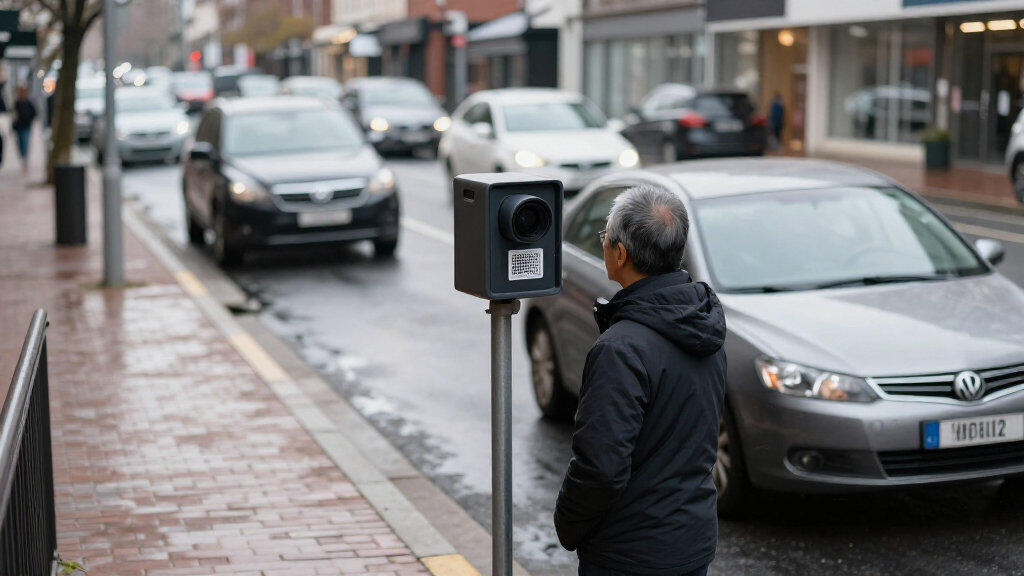

Choosing the best license plate recognition cameras requires balancing image clarity with processing speed. The 4MP DeepinView ANPR Bullet IP Camera stands out as the top overall pick due to its superior low-light performance and dedicated AI chip. For those needing a full system, the GW Security 16-Channel 12MP PoE System offers unmatched scalability, while the Amcrest IP4M-1072EW-AI provides excellent value for single-camera setups. The main tradeoff lies between fixed-lens simplicity and motorized zoom flexibility. Read on to see which model fits your specific security requirements.

Get privacy and security gear delivered free — and shop member deals
- Fast, free delivery on millions of items
- Access to Prime Big Deal Days deals on October 6–7
- Prime Video, Amazon Music and more included
Key Takeaways
- Resolution alone does not guarantee accurate reads; lens quality and shutter speed matter more.
- Dedicated AI chips significantly reduce false positives compared to software-only solutions.
- Motorized zoom lenses offer greater installation flexibility but often cost more than fixed options.
- Low-light performance is the primary differentiator between budget and premium LPR cameras.
- Integration with existing NVRs is often easier with PoE-enabled models than Wi-Fi alternatives.
| 4MP DeepinView ANPR Bullet IP Camera with License Plate Recognition |  | Best for Challenging Lighting | Resolution: 4MP | Lens: 8–32 mm varifocal | Recognition: Built-in ANPR/LPR | VIEW LATEST PRICE | See Our Full Breakdown |
| GW Security 16-Channel 12MP PoE Security Camera System with 8 Cameras |  | Best Complete Multi-Camera System | Channels: 16 | Cameras included: 8 | Camera resolution: 12MP (4512 × 2512) | VIEW LATEST PRICE | See Our Full Breakdown |
| Amcrest IP4M-1072EW-AI 4MP License Plate Recognition PoE Bullet Camera |  | Best for Vehicle Detail | Model: IP4M-1072EW-AI | Resolution and frame rate: 4MP; up to 30 fps | Lens: 8–32 mm optical zoom | VIEW LATEST PRICE | See Our Full Breakdown |
| Anpviz 4MP License Plate Recognition PoE IP Camera |  | Best for Long-Range Night Monitoring | Resolution: 4MP; up to 2688 × 1520 at 30 fps or 2560 × 1440 at 60 fps | Lens: 8–32 mm motorized varifocal; 4× optical zoom | Night vision range: Up to 330 feet | VIEW LATEST PRICE | See Our Full Breakdown |
| ONWOTE 4MP License Plate Recognition PoE IP Camera with 8–32mm Motorized Lens |  | Best for Existing ONWOTE NVR Owners | Model: BA40-LPR832 | Resolution and frame rate: 4MP (2592 × 1520) at 30 fps | Lens: 8–32 mm motorized varifocal, F1.6 | VIEW LATEST PRICE | See Our Full Breakdown |
| Anpviz 4MP License Plate Recognition PoE Camera with 8–32mm Motorized Zoom |  | Best for TVT NVR Setups | Resolution: 4MP (2592 × 1520) | Frame rate: 30 fps | Lens: 8–32mm motorized 4× zoom | VIEW LATEST PRICE | See Our Full Breakdown |
| GW Security 8-Channel 12MP NVR Security Camera System with AI Detection and Color Night Vision |  | Best for Multi-Camera AI Coverage | NVR channels: Title states 8; description also mentions 16 | Camera quantity: Title states 4; description states 12 | Camera resolution: 5MP | VIEW LATEST PRICE | See Our Full Breakdown |
| GW Security Professional License Plate Recognition PoE Camera, 4MP, 4× Optical Zoom |  | Best for Fast-Moving Traffic | Resolution: 4MP (2688 × 1520) | Frame rate: 60 FPS | LPR speed: Up to 120 km/h | VIEW LATEST PRICE | See Our Full Breakdown |
| ENS Titanium 4MP License Plate Recognition Bullet Network Camera |  | Best for Long-Range Night Capture | Resolution and frame rate: 2688 × 1520 at 30 fps | Image sensor: 1/1.8-inch CMOS | Lens: Motorized 8–32mm | VIEW LATEST PRICE | See Our Full Breakdown |
| Mayflower 2MP Outdoor Motorized Varifocal Bullet Security Camera with License Plate Recognition |  | Best for CMS-Based Existing Systems | Resolution: 2MP (1920 × 1080) | Frame rate: Up to 60 fps | Lens: Motorized 2.8–12mm, F/1.4 | VIEW LATEST PRICE | See Our Full Breakdown |
| 2MP License Plate Recognition Bullet Camera with 8–32mm Motorized Lens |  | Best for Low-Light Range | Resolution: 2MP (1920 × 1080) | Lens: 8–32mm motorized zoom | Infrared Range: Up to 360ft | VIEW LATEST PRICE | See Our Full Breakdown |
| license plate recognition camera | Lens | Storage | Resolution |
|---|---|---|---|
| 4MP DeepinView ANPR Bullet IP | 8–32 mm varifocal | — | 4MP |
| GW Security 16-Channel 12MP Po | — | 4TB included; supports up to 24TB | — |
| Amcrest IP4M-1072EW-AI 4MP Lic | 8–32 mm optical zoom | MicroSD card up to 256GB | — |
| Anpviz 4MP License Plate Recog | 8–32 mm motorized varifocal; 4× optical zoom | MicroSD slot supports up to 1TB | 4MP; up to 2688 × 1520 at 30 fps or 2560 × 1440 at 60 fps |
| ONWOTE 4MP License Plate Recog | 8–32 mm motorized varifocal, F1.6 | MicroSD card slot supports up to 256GB | — |
| Anpviz 4MP License Plate Recog | 8–32mm motorized 4× zoom | MicroSD up to 256GB | 4MP (2592 × 1520) |
| GW Security 8-Channel 12MP NVR | — | Pre-installed 2TB drive; up to 24TB total | — |
| GW Security Professional Licen | Motorized 8–32mm, 4× optical zoom | — | 4MP (2688 × 1520) |
| ENS Titanium 4MP License Plate | Motorized 8–32mm | MicroSD up to 256GB | — |
| Mayflower 2MP Outdoor Motorize | Motorized 2.8–12mm, F/1.4 | MicroSD/SDHC/SDXC up to 128GB | 2MP (1920 × 1080) |
| 2MP License Plate Recognition | 8–32mm motorized zoom | — | 2MP (1920 × 1080) |
More Details on Our Top Picks
4MP DeepinView ANPR Bullet IP Camera with License Plate Recognition
This camera’s strongest case is its 140 dB WDR and DarkFighter low-light imaging, a useful pairing when headlights, shadows, or dim conditions make plate capture difficult. Its 8–32 mm varifocal lens lets an installer narrow the view around a driveway or lane instead of relying on a broad security-camera angle. Compared with the Amcrest IP4M-1072EW-AI, it offers similar 4MP resolution and lens range, while its listed night-vision reach extends farther. The tradeoff is a more infrastructure-dependent setup: it needs wired Ethernet and power, and the supplied details specify NVR compatibility rather than standalone plate search or storage. I’d favor it where lighting is the primary challenge, but look at a complete camera system if you also need storage and monitoring gear included.
Pros:- Built-in ANPR/LPR identifies plates without relying on a separate detection feature
- DarkFighter imaging and 140 dB WDR address dim scenes and strong backlighting
- 8–32 mm varifocal lens supports tighter views of a particular lane
- IP67 weather and IK10 impact ratings suit exposed installations
Cons:- Requires wired Ethernet and a separate power source
- NVR is listed as the compatible device, so buyers should confirm their recorder supports the camera’s LPR features
- No onboard storage capacity is specified
Best for: Installers monitoring a fixed outdoor entrance with glare or uneven lighting who already have a compatible NVR and wired network.
Not ideal for: Buyers seeking a wireless, standalone camera or a complete surveillance system with recording hardware included.
- Resolution:4MP
- Lens:8–32 mm varifocal
- Recognition:Built-in ANPR/LPR
- Dynamic range:140 dB WDR
- Night vision range:164 feet
- Video compression:H.265+
- Protection:IP67 weather resistance; IK10 impact resistance
- Connectivity and power:Wired RJ45; 12 volts
Our verdict“Choose this camera for a wired, NVR-based entrance where low-light handling and backlight control matter more than an all-in-one kit.”
GW Security 16-Channel 12MP PoE Security Camera System with 8 Cameras
Unlike the standalone LPR bullets in this roundup, this is a 16-channel PoE system supplied with eight cameras and a recorder drive, making it a practical starting point for monitoring several approaches to a property. Its AI includes license plate and vehicle detection alongside human, face, and activity alerts, while 145° views can cover broad areas with fewer camera positions. That wide coverage serves general surveillance better than a tightly framed plate camera, though it may not offer the same focused capture setup as the Amcrest IP4M-1072EW-AI with its 8–32 mm optical zoom. The included 4TB drive gets recording underway, but it is below the stated 24TB maximum, and the system still needs wired PoE connections. I’d choose it for broad site coverage, not a single lane dedicated to plate detail.
Pros:- Eight cameras and a 16-channel recorder provide broad system coverage and room to expand
- AI includes license plate, vehicle, human, and face detection
- 145° lenses and color night vision suit wide-area surveillance
- Pre-installed 4TB drive, expandable storage, remote viewing, and two-way audio are included
Cons:- Wide-angle lenses are less suited to tightly framed, long-distance plate capture than a motorized varifocal LPR camera
- Requires wired Ethernet and PoE connections for the cameras
- The included 4TB drive is below the system’s stated 24TB maximum
Best for: Property managers and small businesses that need multiple wired cameras, centralized recording, and plate detection as one part of a wider security setup.
Not ideal for: Drivers or site operators who need a single camera tightly framed on a gate, or buyers who cannot run Ethernet/PoE cabling.
- Channels:16
- Cameras included:8
- Camera resolution:12MP (4512 × 2512)
- Lens and viewing angle:2.8 mm; 145°
- Frame rate:20 fps
- Night vision range:100 feet
- Storage:4TB included; supports up to 24TB
- Connectivity:Ethernet and Power over Ethernet
- Warranty:2 years
Our verdict“Pick this system when you need a broad, expandable PoE surveillance setup with plate detection, rather than a dedicated plate-capture camera.”
Amcrest IP4M-1072EW-AI 4MP License Plate Recognition PoE Bullet Camera
The Amcrest earns its place by identifying more than the plate: it can also classify vehicle type and color, which adds useful context when reviewing an alert or searching past traffic. Its 4MP video runs at up to 30 fps, and the 8–32 mm optical zoom supports tighter framing than the fixed wide-angle cameras in the GW Security system. Its stated plate-capture distance is 26.25–98.43 feet, making it a fit for entrances where the camera can be aimed at a defined lane. The limits are practical rather than cosmetic: some plate-search functions require a PC and browser workarounds, and some NVRs offer live viewing only. Compared with the DeepinView, it adds vehicle attributes and active warning LEDs, but its listed night-vision reach is shorter.
Pros:- Recognizes license plates, vehicle types, and vehicle colors
- Records 4MP video at up to 30 fps
- 8–32 mm optical zoom and a stated capture distance suited to a defined lane
- IP67 and IK10 construction with night vision and active warning LEDs
Cons:- Some plate-search features require a PC and browser compatibility workarounds
- Some listed NVRs support live viewing only rather than the full search workflow
- PoE installation requires wired network cabling
Best for: Owners of a gated driveway or access lane who want plate recognition plus vehicle type and color details, and can verify their PC/NVR workflow.
Not ideal for: Buyers who need plug-and-play plate searches through any NVR or a simple wireless installation.
- Model:IP4M-1072EW-AI
- Resolution and frame rate:4MP; up to 30 fps
- Lens:8–32 mm optical zoom
- Field of view:15°–40°
- Plate capture distance:26.25–98.43 feet
- Night vision range:Up to 98 feet
- Storage:MicroSD card up to 256GB
- Power:Power over Ethernet
- Protection:IP67 weatherproof; IK10 impact protection
Our verdict“Choose the Amcrest when vehicle attributes matter alongside plate reads and you can confirm that your recorder supports its search features.”
Anpviz 4MP License Plate Recognition PoE IP Camera
For locations where vehicles approach in darkness, this Anpviz pairs up to 330 feet of infrared range with low-light sensitivity and 140 dB WDR. Its motorized 4× optical zoom can tighten the view on a lane, while parking detection and allowlist/blocklist functions add a layer of access monitoring beyond plate capture. Against the ONWOTE BA40-LPR832, it offers a longer stated infrared range and more explicit parking controls; the ONWOTE, by contrast, gives a stated recognition distance and microSD support. The Anpviz’s main constraint is its ecosystem: it requires an NVR and works only with compatible Anpviz models, so it is a poor match for buyers trying to reuse a different recorder. I’d shortlist it for a dedicated night-facing entrance, after confirming NVR compatibility.
Pros:- Up to 330 feet of infrared night vision for long, dark approaches
- Motorized 8–32 mm lens provides 4× optical zoom for tighter framing
- 140 dB WDR and strong stated low-light sensitivity support difficult scenes
- Plate recognition, parking detection, and allowlist/blocklist functions suit access monitoring
Cons:- Works only with compatible Anpviz NVRs
- NVR is required for use, adding hardware and setup requirements
- Buyers with existing systems from other brands may not be able to integrate it
Best for: Businesses monitoring a long outdoor driveway or parking entrance after dark that can use a compatible Anpviz NVR.
Not ideal for: Owners of third-party NVRs, or buyers who want a camera that can operate independently of a recorder.
- Resolution:4MP; up to 2688 × 1520 at 30 fps or 2560 × 1440 at 60 fps
- Lens:8–32 mm motorized varifocal; 4× optical zoom
- Night vision range:Up to 330 feet
- Low-light sensitivity:0.0005 Lux color; 0.0001 Lux black and white
- Dynamic range:140 dB WDR
- Storage:MicroSD slot supports up to 1TB
- Compression:H.265+
- Protection:IP67 weather resistance; IK10 impact protection
- Compatibility:Compatible Anpviz NVRs only
Our verdict“Choose this Anpviz for a compatible NVR setup focused on long-range nighttime vehicle monitoring and parking controls.”
ONWOTE 4MP License Plate Recognition PoE IP Camera with 8–32mm Motorized Lens
The ONWOTE makes the most sense as an add-on for buyers already using one of its supported TD Series recorders. Its 8–32 mm motorized lens lets an installer adjust framing from the recorder-side setup without changing the camera position, and the manufacturer gives a 23–98 foot recognition distance to help assess whether a gate or lane fits the intended use. That stated range is more specific than the DeepinView’s listed night-vision distance, though the DeepinView supplies stronger 140 dB WDR versus ONWOTE’s 120 dB. Local microSD recording can provide an additional recording option, but it does not remove the central compatibility restriction: this camera works only with select ONWOTE TD Series NVRs. I’d choose it for a matching system, not as a flexible replacement camera.
Pros:- Motorized varifocal lens supports remote adjustment of the monitored lane
- Stated plate-recognition distance of 23–98 feet helps with placement planning
- 120 dB WDR and low-light enhancement support changing outdoor illumination
- MicroSD slot supports local storage up to 256GB
Cons:- Compatible only with three specified ONWOTE TD Series NVR models
- Requires wired PoE networking and is not wireless
- Dynamic range is lower than the 140 dB listed for the DeepinView and Anpviz cameras
Best for: Owners of ONWOTE PNT-808, PNA-8016-T, or PNT-1232 recorders who need a dedicated camera for one vehicle entrance.
Not ideal for: Buyers with a different NVR brand, no recorder, or a requirement for wireless connectivity.
- Model:BA40-LPR832
- Resolution and frame rate:4MP (2592 × 1520) at 30 fps
- Lens:8–32 mm motorized varifocal, F1.6
- Recommended recognition distance:23–98 feet
- Dynamic range:120 dB WDR
- Storage:MicroSD card slot supports up to 256GB
- Connectivity:Wired PoE over Ethernet
- Compatibility:ONWOTE TD Series PNT-808, PNA-8016-T, and PNT-1232
- Weather protection:IP67 stated in description; IP66 listed in product details
Our verdict“Pick this camera if you already own a supported ONWOTE NVR and need a motorized LPR view for a defined approach.”
Anpviz 4MP License Plate Recognition PoE Camera with 8–32mm Motorized Zoom
The Anpviz makes the most sense when a site needs adjustable plate framing and already uses a compatible TVT recorder. Its motorized 8–32mm lens can be refocused remotely, which helps tune the view for an entrance without physically repositioning the camera. The stated 23–98 ft recognition range, 30 fps capture, and 120dB WDR give it a more specific LPR profile than the broader GW Security 8-Channel system, whose listing emphasizes several kinds of AI detection rather than a stated plate-reading distance. Outdoor durability is another plus, with IP67 and IK10 ratings. The major limitation is the TVT NVR-only compatibility; this is a poor fit for buyers building around another recorder ecosystem, and wired power and networking limit placement flexibility.
Pros:- Motorized 8–32mm zoom allows remote framing and focus adjustment
- Stated license plate recognition distance of 23–98 ft
- 120dB WDR and 100 ft IR night vision support challenging outdoor lighting
- IP67 weather and IK10 impact ratings suit exposed locations
Cons:- Compatible only with TVT NVRs, restricting recorder choice
- Wired power and connectivity are required
- MicroSD capacity is limited to 256GB
Best for: Property owners with a TVT NVR who need remotely adjustable plate capture across a defined driveway or gate approach.
Not ideal for: Buyers with a non-TVT recorder, or anyone needing a wireless camera that can be installed without wired power and networking.
- Resolution:4MP (2592 × 1520)
- Frame rate:30 fps
- Lens:8–32mm motorized 4× zoom
- Recommended LPR distance:23–98 ft
- Night vision:100 ft IR
- Storage:MicroSD up to 256GB
- Protection:IP67 weather resistance; IK10 impact resistance
- NVR compatibility:TVT NVRs only
Our verdict“Choose this Anpviz when you already run a TVT NVR and want durable, remotely adjustable plate capture rather than a recorder-agnostic setup.”
GW Security 8-Channel 12MP NVR Security Camera System with AI Detection and Color Night Vision
This is the lineup’s system-level option for buyers who want plate alerts alongside general property monitoring, not just a dedicated LPR camera. Its AI detection covers plates, vehicles, people, and faces, while intrusion and wrong-way alerts can add context around an entry point. That broader role sets it apart from the ENS Titanium, which is a single-camera LPR unit with a motorized lens and long-range IR. The GW system also lists color night vision, two-way audio, remote viewing, and up to 24TB of storage. I would approach the listing carefully, though: it conflicts on whether the system includes four or twelve cameras and whether the recorder has eight or sixteen channels. Those unresolved details make it harder to plan coverage and expansion before purchase.
Pros:- AI detection includes license plates, people, vehicles, and faces
- Color night vision and two-way audio add monitoring options beyond plate capture
- Includes a recorder with a pre-installed 2TB drive and support for up to 24TB total
- Remote viewing, motion alerts, and cloud storage support
Cons:- Listing conflicts on camera quantity: title says four while description says twelve
- Listing also conflicts on NVR channel count, complicating capacity planning
- The supplied details do not state a dedicated plate capture distance or vehicle speed limit
Best for: Small businesses or property managers seeking a bundled recorder-and-camera system with plate alerts plus person and vehicle monitoring.
Not ideal for: Buyers who need a clearly specified camera count, a dedicated long-range LPR camera, or certainty about recorder channel capacity before planning an installation.
- NVR channels:Title states 8; description also mentions 16
- Camera quantity:Title states 4; description states 12
- Camera resolution:5MP
- NVR supported resolution:Up to 12MP
- Frame rate:25 fps
- Night vision:100 ft; color night vision listed
- Storage:Pre-installed 2TB drive; up to 24TB total
- Smart detection:License plate, face, human, vehicle, intrusion, line crossing, loitering, wrong-way, illegal parking, and people counting
- Warranty:Two years
Our verdict“Pick this system for broad AI-assisted site monitoring only if you can confirm the camera count and NVR capacity before ordering.”
GW Security Professional License Plate Recognition PoE Camera, 4MP, 4× Optical Zoom
The clearest reason to choose this GW Security camera is its stated ability to recognize plates on vehicles traveling up to 120 km/h. Its 60 FPS capture gives it an advantage over the 30 fps Anpviz and ENS Titanium models when motion at an entrance is fast, while the motorized 8–32mm lens lets installers adjust the field of view remotely. Vehicle type, color, and direction recognition can help sort traffic beyond the plate itself. The camera also supports a 1TB SD card, a larger stated local-storage ceiling than those two alternatives. This is still a wired PoE installation, and the supplied details do not give a specific recognition distance. Buyers should plan the camera position and verify their recording workflow rather than assume the speed figure alone guarantees readable plates at any distance.
Pros:- Rated for license plate recognition at speeds up to 120 km/h
- 4MP video at 60 FPS helps capture fast-moving vehicles
- Motorized 8–32mm 4× optical zoom supports remote framing adjustments
- Vehicle type, color, and direction recognition plus up to 1TB SD storage
Cons:- Requires wired Ethernet and PoE
- No specific license plate recognition distance is provided
- Outdoor durability rating is not specified in the supplied details
Best for: Sites monitoring a road or access lane where vehicles may pass at speed and operators need plate capture plus vehicle classification.
Not ideal for: Buyers seeking a wireless camera, a clearly stated recognition distance, or a simple standalone setup without Ethernet and PoE infrastructure.
- Resolution:4MP (2688 × 1520)
- Frame rate:60 FPS
- LPR speed:Up to 120 km/h
- Lens:Motorized 8–32mm, 4× optical zoom
- Night vision:Up to 80m (262.5 ft)
- Local storage:SD card up to 1TB
- Vehicle recognition:Type, color, and direction
- Compliance and warranty:TAA and NDAA compliant; two-year warranty
Our verdict“Choose this GW Security model for speed-focused plate capture and vehicle classification, provided you can supply wired PoE and set the camera at a suitable distance.”
ENS Titanium 4MP License Plate Recognition Bullet Network Camera
For a location where plates must be captured after dark, the ENS Titanium stands out for its 70–100m smart IR range and stated support for vehicles traveling up to 120 km/h. Its motorized 8–32mm lens gives installers room to narrow the view toward an approach lane, while PoE, 12V DC, and 24V AC options offer more power flexibility than the PoE-only GW Security professional camera. It also provides alarm and audio connections for integration with other site equipment. Compared with the Anpviz, the ENS offers a longer stated infrared reach and more power options, but its LPR distance is not specified and recording requires a separate NVR or compatible setup. Buyers should account for that system requirement rather than treating it as a complete recorder package.
Pros:- Smart IR night vision specified at 70–100m
- LPR capture speed listed up to 120 km/h
- Motorized 8–32mm lens and PoE, 12V DC, or 24V AC power options
- IP67 protection and microSD support up to 256GB
Cons:- Requires a separate NVR or compatible recording setup
- Wired Ethernet is required
- No recommended license plate recognition distance is given
Best for: Installers covering a long outdoor approach who need strong stated IR reach, motorized framing, and flexible power options.
Not ideal for: Homeowners seeking a complete camera-and-recorder bundle or buyers who need a stated LPR distance before choosing an installation position.
- Resolution and frame rate:2688 × 1520 at 30 fps
- Image sensor:1/1.8-inch CMOS
- Lens:Motorized 8–32mm
- LPR capture speed:0–120 km/h
- Infrared range:70–100m, up to 328 ft
- Storage:MicroSD up to 256GB
- Power:PoE, DC 12V, or AC 24V
- Outdoor protection:IP67
- Operating temperature:-30°C to 60°C
Our verdict“Choose the ENS Titanium for long-range night coverage and flexible power, but only if you already have a compatible recording plan.”
Mayflower 2MP Outdoor Motorized Varifocal Bullet Security Camera with License Plate Recognition
The Mayflower is a practical fit for buyers whose LPR workflow already depends on CMS software and who prefer a shorter-range varifocal lens. Its 2.8–12mm lens is less reach-oriented than the 8–32mm lenses on the Anpviz and ENS Titanium, so it suits closer gates or driveways better than distant road approaches. In return, the camera offers up to 60 fps, 140dB WDR, and EXIR night vision rated to 150 ft—useful traits when plates pass through uneven light. It also supports PoE or 12V DC and has local microSD storage. The main catch is that LPR depends on CMS software, and its 2MP resolution is lower than the 4MP alternatives. Buyers should confirm software compatibility and recording needs before choosing it.
Pros:- Captures up to 60 fps for moving vehicles
- 140dB WDR helps manage strong contrast around entrances
- EXIR night vision reaches up to 150 ft
- Supports PoE or 12V DC, IP67 protection, and microSD storage up to 128GB
Cons:- LPR requires compatible CMS software
- 2MP resolution is lower than the 4MP cameras in this batch
- 2.8–12mm lens offers less long-range framing flexibility than 8–32mm alternatives
Best for: Owners of a compatible CMS-based surveillance setup who need LPR at a nearby gate or driveway and value high frame rate and strong WDR.
Not ideal for: Buyers seeking higher-resolution footage, a long-range varifocal lens, or a camera that performs LPR without CMS software.
- Resolution:2MP (1920 × 1080)
- Frame rate:Up to 60 fps
- Lens:Motorized 2.8–12mm, F/1.4
- Wide dynamic range:140dB
- Night vision:EXIR up to 150 ft
- Minimum illumination:0.005 lux; 0 lux with IR
- Storage:MicroSD/SDHC/SDXC up to 128GB
- Power:PoE (802.3af) or 12V DC
- Weather resistance:IP67
Our verdict“Pick the Mayflower for a nearby plate-capture point already managed through compatible CMS software, not for a high-resolution long-distance view.”
2MP License Plate Recognition Bullet Camera with 8–32mm Motorized Lens
This 2MP License Plate Recognition Bullet Camera distinguishes itself through its 360ft infrared range, making it superior for parking lots or driveways where distance is a factor. While the Amcrest IP4M-1072EW-AI offers higher resolution at 4MP, this model compensates with a 0.005 lux sensitivity that captures clear plates in near-total darkness without relying on ambient light. The 140dB Wide Dynamic Range effectively handles high-contrast scenarios, such as headlights reflecting off wet pavement, which is often a weak point for lower-WDR alternatives. However, the 2MP resolution means you will need to mount this closer to the capture zone than the 4MP options to read smaller text clearly. It is a specialized tool for darkness rather than general surveillance clarity.
Pros:- Extensive 360ft IR illumination for dark environments
- High 140dB WDR for managing headlight glare
- Durable IP67 and IK10 rated housing
- Flexible PoE and 12V DC power options
Cons:- 2MP resolution limits detail at long distances
- Requires specific CMS software for ANPR features
- Potential compatibility friction with some NVRs
Best for: Property owners with large, unlit perimeters who prioritize night visibility over pixel density.
Not ideal for: Users needing to read small fonts on distant plates or those requiring 4K-level detail for forensic evidence.
- Resolution:2MP (1920 × 1080)
- Lens:8–32mm motorized zoom
- Infrared Range:Up to 360ft
- Low-Light Sensitivity:0.005 lux; 0 lux with IR
- Wide Dynamic Range:140dB
- Connectivity:PoE (802.3af) or 12V DC
Our verdict“Choose this camera if your primary challenge is capturing license plates in complete darkness rather than maximizing image resolution.”
How We Picked
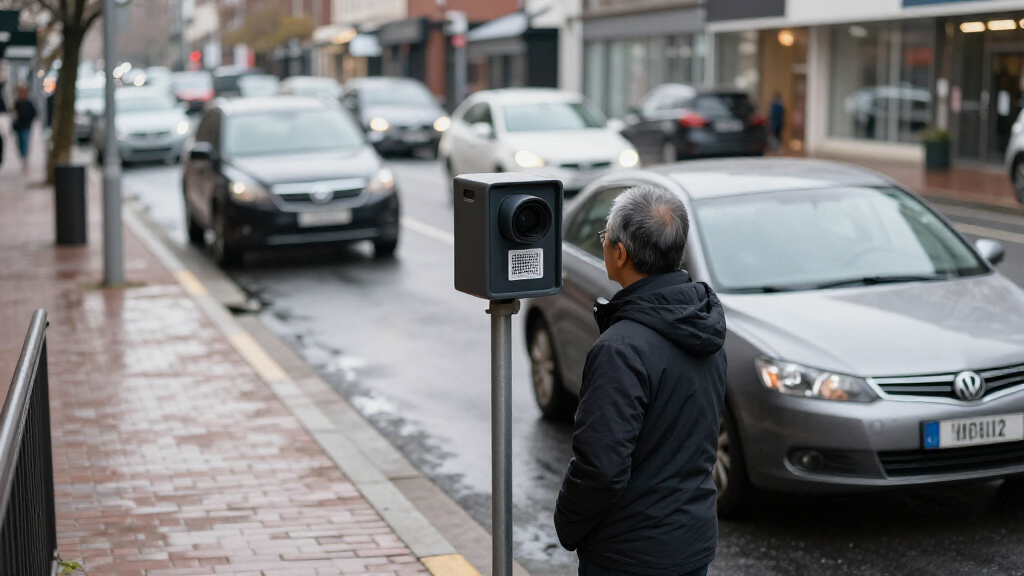
I evaluated these cameras based on three core pillars: image clarity, processing efficiency, and installation versatility. Image clarity was assessed by looking at sensor size and resolution, but more importantly, by examining the shutter speed capabilities, which are critical for capturing moving vehicles without motion blur. Processing efficiency focused on whether the camera uses onboard AI or relies on external servers, a factor that determines system responsiveness and network load. Installation versatility considered lens options, such as motorized zooms versus fixed lenses, and connectivity standards like PoE versus Wi-Fi.
The ranking logic prioritizes cameras that deliver reliable reads in challenging conditions, such as night time or high-speed traffic. Products with dedicated LPR firmware and specialized infrared illumination received higher scores than generic security cameras with basic software plugins. This approach ensures that the recommendations reflect real-world utility rather than just theoretical specs.
Factors to Consider When Choosing Best License Plate Recognition Cameras
Selecting the right license plate recognition camera involves more than just picking the highest megapixel count. Several technical and practical factors influence how well a camera performs in real-world scenarios. Here are the key areas to focus on before making a purchase.
Resolution vs. Shutter Speed
Many buyers assume that higher resolution equals better plate recognition, but this is a common mistake. Shutter speed is often more critical because vehicles are moving objects. A 4MP camera with a fast shutter speed will capture sharper plates than an 8MP camera with a slow shutter speed, which may result in motion blur. Look for cameras that allow manual shutter adjustment or have automatic modes optimized for traffic monitoring. The 4MP DeepinView excels here by balancing resolution with a fast shutter, ensuring clear reads even at moderate speeds.
Lens Flexibility and Field of View
The type of lens determines how far away you can place the camera from the road. Motorized zoom lenses, like those on the ONWOTE 4MP, allow you to adjust the field of view remotely, which is ideal for installations where the distance to the road may vary. Fixed lenses are cheaper but require precise placement during installation. If you are installing a permanent gate or entrance, a fixed lens may suffice, but for temporary setups or variable distances, zoom lenses offer essential flexibility.
Lighting and Infrared Capabilities
License plates are reflective, which can cause glare under standard infrared illumination. Specialized WDR (Wide Dynamic Range) and dedicated LPR infrared lights help mitigate this issue. Premium models often include specialized filters or lighting modes that reduce headlight glare. The GW Security Professional LPR Camera includes specific night vision enhancements that distinguish it from generic night-vision cameras. Without proper lighting management, even the best camera will struggle with night-time reads.
Processing Power and AI Integration
Some cameras process recognition data onboard, while others send video streams to a central server or NVR. Onboard AI reduces network bandwidth usage and provides faster alerts, which is beneficial for real-time access control. However, it may limit the number of plates processed simultaneously compared to server-based systems. The Amcrest IP4M-1072EW-AI offers a good middle ground by handling basic recognition locally while allowing for cloud integration. Consider your network infrastructure when deciding between edge processing and central processing.
Connectivity and Power Supply
PoE (Power over Ethernet) is the standard for professional installations because it simplifies wiring by combining power and data into a single cable. Wi-Fi cameras are easier to install wirelessly but may suffer from latency or connection drops, which can miss plates. For reliable access control, wired PoE connections are generally superior. The Anpviz 4MP models leverage PoE for stable performance, making them suitable for critical entry points where missed reads are unacceptable.
Frequently Asked Questions
Do I need a specialized LPR camera, or can I use a standard security camera?
You can use a standard security camera for basic monitoring, but it will likely fail at automated plate recognition. Specialized LPR cameras have faster shutter speeds and specialized firmware to handle the glare and motion associated with vehicle plates. Standard cameras often produce blurred images of moving plates and struggle with headlight glare at night. If your goal is automated access control or logging, a dedicated LPR model is necessary for reliability.
How far away can these cameras read a license plate?
The effective range depends heavily on the lens focal length and the speed of the vehicle. Motorized zoom lenses allow you to extend the range by narrowing the field of view, potentially reading plates from 30 to 50 feet away under ideal conditions. Fixed lenses typically have a shorter effective range, often around 15 to 25 feet. Always check the manufacturer’s specifications for maximum read distance at specific speeds to ensure the camera meets your site requirements.
Can these cameras work in heavy rain or fog?
Most professional LPR cameras have an IP66 or higher rating, meaning they are protected against water and dust. However, environmental conditions like heavy fog or rain can still obscure the plate itself, regardless of camera quality. Some models use specialized infrared wavelengths that penetrate fog better than visible light. While the camera hardware will survive the weather, accuracy may drop in severe conditions, so consider supplementary lighting or placement strategies for exposed areas.
Is it better to buy a single camera or a full system?
If you only need to monitor one entry point, a single LPR camera like the Amcrest IP4M-1072EW-AI is cost-effective and simple to set up. Full systems, such as the GW Security 16-Channel System, are better if you need to monitor multiple lanes or integrate with other security zones. Full systems also typically include an NVR with more storage and processing power, which is beneficial for long-term logging and multi-camera management.
How important is the angle of installation for LPR cameras?
Installation angle is critical for accurate recognition. The camera should be positioned at a low angle, ideally less than 15 degrees from the horizontal plane of the road, to minimize glare from headlights and maximize plate visibility. Mounting the camera too high can result in distorted plates or obscured views due to vehicle body angles. Many installers recommend placing the camera as low as possible while maintaining security from tampering.
Conclusion
Choosing the right license plate recognition camera depends on your specific security infrastructure and budget. For most users seeking a balance of performance and price, the Amcrest IP4M-1072EW-AI is the best value pick, offering solid AI capabilities and PoE connectivity. If you need a complete, scalable solution for a large facility, the GW Security 16-Channel 12MP PoE System is the best premium choice, providing extensive storage and multi-camera management. For those prioritizing ease of installation and flexibility, the ONWOTE 4MP with its motorized zoom lens is the best option for beginners or variable installation sites. Ultimately, prioritize shutter speed and lighting capabilities over raw resolution to ensure reliable plate reads in all conditions.
Halloween Picks
halloween
As an affiliate, we earn on qualifying purchases.