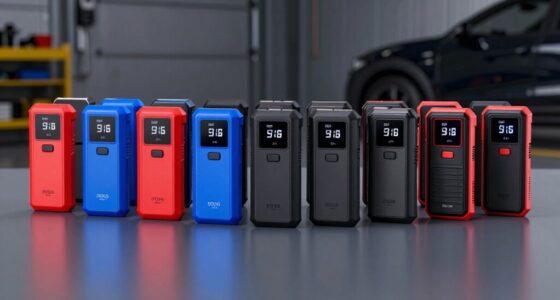
Finding the best air quality monitor with app alerts means balancing accuracy, usability, and smart features. The Amazon Smart Air Quality Monitor stands out for its seamless Amazon ecosystem integration, making it ideal for smart home enthusiasts. Meanwhile, the Airthings 2960 View Plus impresses with its battery-powered design and comprehensive radon detection, perfect for portable use. The main challenge in this category is choosing between deep feature sets and straightforward setups—some monitors excel in detailed metrics, while others prioritize ease of use. Continue reading for a detailed breakdown of what makes each option unique and how to pick the right monitor for your space.
Key Takeaways
- Top monitors combine multiple parameters, with the 16-in-1 models offering the most comprehensive data.
- Battery-powered options like the Airthings View Plus provide portability but may sacrifice some advanced connectivity features.
- Ease of setup and app usability vary widely—simpler models often have fewer parameters but are more user-friendly.
- Price often reflects the breadth of features; premium models include professional-grade sensors and detailed alerts.
- Compatibility with smart home systems can be a decisive factor for tech-savvy users seeking automation.
| Amazon Smart Air Quality Monitor |  | Best Overall for Alexa Ecosystem Integration | Key Factors Monitored: PM 2.5, VOCs, CO, humidity, temperature | Connectivity: Works with Alexa | Notifications: Phone alerts and Echo announcements | VIEW LATEST PRICE | See Our Full Breakdown |
| Airthings 2960 View Plus – Battery-Powered Radon & Air Quality Monitor |  | Best Multi-Sensor & Radon Monitoring with Battery Power | Sensor Types: Electrochemical, Passive Diffusion Chamber | Radon Detection: Digital Radon Detector with Alpha Spectrometry | Air Quality Measurements: Radon, PM2.5, CO2, VOCs, Humidity, Temperature, Air Pressure | VIEW LATEST PRICE | See Our Full Breakdown |
| Breathe Airmonitor Plus: Smart Indoor Air Quality Monitor with App – 8-in-1 CO2, Formaldehyde, VOC, Particulate, Temperature & Humidity |  | Best for Multi-Parameter Monitoring and Trend Tracking | Measurement Capabilities: CO₂, PM1, PM2.5, PM10, TVOC, Formaldehyde, Temperature, Humidity | Connectivity: App with alerts and data history | Calibration: Built-in quick calibration | VIEW LATEST PRICE | See Our Full Breakdown |
| SAF Aranet4 Wireless Indoor Air Quality Monitor for Home, Office, and School |  | Best Long Battery Life & Simplicity for CO2 Monitoring | Measurement Parameters: CO2, Temperature, Humidity, Atmospheric Pressure | Display: E-ink screen | Battery Life: Up to 4 years | VIEW LATEST PRICE | See Our Full Breakdown |
| Indoor Air Quality Monitor with 17 Parameters and APP Control |  | Best for Extensive Parameter Coverage & Multi-Location Monitoring | Parameters Monitored: CO₂, PM2.5, PM10, Temperature, Humidity, UV index | Sensors: Main unit + 3 wireless sub-sensors | App Compatibility: Tuya app | VIEW LATEST PRICE | See Our Full Breakdown |
| Atmocube Professional 12-in-1 Indoor Air Quality Monitor with Wi-Fi, Ethernet & PoE |  | Best for Professional-Grade, Comprehensive Monitoring | Parameters Monitored: CO2, PM1/PM2.5/PM10, TVOCs, Formaldehyde, Temperature, Humidity, Pressure, Light, Noise | Connectivity: Wi-Fi, Ethernet, PoE, Bluetooth | Sensor Technology: Multi-sensor | VIEW LATEST PRICE | See Our Full Breakdown |
| SwitchBot CO2 Detector, Indoor Air Quality Monitor with Temperature and Humidity |  | Best Portable and User-Friendly CO2 Monitor | Display Size: 92mm | Weight: 154g | Battery Life: Up to 12 months | VIEW LATEST PRICE | See Our Full Breakdown |
| 16-in-1 Indoor Air Quality Monitor with 7-inch Display and Alerts |  | Best Large Display with Multiple Alerts | Parameters Monitored: CO2, PM2.5, PM1.0, PM10, HCHO, TVOC, Temp, Humidity, AQI | Display Size: 7 inches | Sensor Accuracy: 0.001 units | VIEW LATEST PRICE | See Our Full Breakdown |
More Details on Our Top Picks
Amazon Smart Air Quality Monitor
The Amazon Smart Air Quality Monitor stands out for its seamless integration with Alexa devices, making it an excellent choice for users already invested in Amazon’s ecosystem. It provides real-time updates on PM 2.5, VOCs, CO, humidity, and temperature, with visual cues and app alerts that help users respond swiftly. Compared to the Airthings View Plus, it offers a more straightforward setup for Alexa users but is limited to indoor air quality and lacks advanced sensors like radon detection. Its reliance on Alexa-enabled devices means it’s less suitable for those without compatible hardware or who need broader pollutant monitoring. The monitor excels for smart home enthusiasts prioritizing simple, voice-activated alerts and routines, but it doesn’t cover radon or outdoor parameters.
Pros:- Seamless Alexa integration for notifications and routines
- Tracks multiple parameters—PM 2.5, VOCs, CO, humidity, temperature
- Real-time visual and app-based updates
Cons:- Requires Alexa-enabled devices for full functionality
- Limited to indoor air quality only
Best for: Homeowners already using Alexa who want integrated air quality notifications and routines
Not ideal for: Users without Alexa devices or those needing radon or multi-room monitoring
- Key Factors Monitored:PM 2.5, VOCs, CO, humidity, temperature
- Connectivity:Works with Alexa
- Notifications:Phone alerts and Echo announcements
- Additional Features:Built-in temperature sensor, supports routines
Bottom line: Ideal for Alexa smart home users seeking convenient, voice-activated air quality monitoring.
Airthings 2960 View Plus – Battery-Powered Radon & Air Quality Monitor
The Airthings View Plus makes a compelling case for comprehensive indoor air monitoring, with sensors for radon, CO2, PM2.5, VOCs, humidity, and air pressure. Its battery-powered design and WiFi connectivity mean it can be placed anywhere without cables, ideal for multi-room setups. Compared with the Breathe Airmonitor Plus, it offers radon detection and a longer battery life—up to five years—though it requires internet access and app registration, which could pose a barrier for some users. The device provides detailed trend analysis and notifications, making it suitable for health-conscious households or those needing radon screening. Its main tradeoff is the dependency on WiFi and app connectivity, which may be a hurdle in less connected environments.
Pros:- Battery-powered with up to 5 years of operation
- Multi-sensor measurements including radon, CO2, PM2.5, VOCs
- Real-time data with trend analysis via app
Cons:- Requires stable internet and app registration
- Setup may be slightly complex for some users
Best for: Homeowners or landlords needing radon detection combined with overall air quality monitoring
Not ideal for: Technically inexperienced users or those without reliable WiFi coverage
- Sensor Types:Electrochemical, Passive Diffusion Chamber
- Radon Detection:Digital Radon Detector with Alpha Spectrometry
- Air Quality Measurements:Radon, PM2.5, CO2, VOCs, Humidity, Temperature, Air Pressure
- Connectivity:WiFi
- Power:Battery
- Operating Temperature:4 to 40°C / 39 to 104°F
Bottom line: Best suited for users seeking thorough, long-term indoor air and radon monitoring without wiring constraints.
Breathe Airmonitor Plus: Smart Indoor Air Quality Monitor with App – 8-in-1 CO2, Formaldehyde, VOC, Particulate, Temperature & Humidity
The Breathe Airmonitor Plus excels at capturing a broad spectrum of indoor pollutants—CO₂, formaldehyde, VOCs, particulate matter—and environmental factors like temperature and humidity. Its comprehensive sensor suite makes it ideal for environments where multiple pollutants may be present, such as homes, offices, or classrooms. Unlike simpler monitors, it offers remote access through a user-friendly app with alert notifications and trend data, helping users identify patterns over time. Compared to the Indoor Air Quality Monitor with 17 parameters, it offers a more streamlined setup, though it may lack some of the extended features like weather forecasting. Its main limitation is that details on power and price are less clear, which could be a concern for budget-conscious buyers.
Pros:- Monitors eight key indoor air parameters accurately
- Remote monitoring and alert notifications via app
- Easy calibration and quick setup
Cons:- Price details are less transparent
- Dependent on smartphone app for full functionality
Best for: Schools, offices, or homes requiring detailed, multi-pollutant tracking with remote alerts
Not ideal for: Users seeking a simple, plug-and-play device or with limited smartphone access
- Measurement Capabilities:CO₂, PM1, PM2.5, PM10, TVOC, Formaldehyde, Temperature, Humidity
- Connectivity:App with alerts and data history
- Calibration:Built-in quick calibration
- Design:Compact, modern
Bottom line: A versatile choice for users who need detailed, remote air quality insights across multiple pollutants.
SAF Aranet4 Wireless Indoor Air Quality Monitor for Home, Office, and School
The Aranet4 is distinguished by its impressive four-year battery life and focus on CO2, temperature, humidity, and atmospheric pressure. Its clear e-ink display offers instant readings, and the free app allows for historical data analysis, making it perfect for those prioritizing long-term CO2 monitoring without constant power concerns. Compared to the Airthings View Plus, it lacks radon detection and advanced multi-pollutant sensors but compensates with extended battery life and simplicity. It’s best suited for environments where CO2 levels are the main concern, such as classrooms or small offices. The main limitation is that it doesn’t track VOCs or particulate matter, which might matter to more concerned users.
Pros:- Long-lasting battery up to 4 years
- Real-time CO2, temperature, humidity, pressure readings
- Simple, easy-to-read e-ink display
Cons:- Limited to CO2, temperature, humidity, and pressure
- Requires smartphone for detailed data analysis
Best for: Educational settings or small offices focusing on CO2 and environmental factors over comprehensive pollutant testing
Not ideal for: Users needing detection of VOCs, formaldehyde, or radon
- Measurement Parameters:CO2, Temperature, Humidity, Atmospheric Pressure
- Display:E-ink screen
- Battery Life:Up to 4 years
- Connectivity:Wireless, App for data
Bottom line: Best for users who need reliable, long-term CO2 monitoring with minimal maintenance.
Indoor Air Quality Monitor with 17 Parameters and APP Control
This multi-parameter monitor offers an extensive list—over 17 factors including CO₂, PM2.5, PM10, temperature, humidity, and UV index—making it suitable for users who want detailed, comprehensive air quality data. Its wireless sensors enable flexible coverage across different rooms, with real-time alerts and remote control via the Tuya app. Compared with the Breathe Airmonitor Plus, it adds weather forecasting and longer historical data storage, but its setup may be more involved, and sensor re-pairing can be a hassle. This device is ideal for those who need continuous, multi-room monitoring in homes or offices and are comfortable managing multiple sensors and app features.
Pros:- Monitors over 17 parameters with high accuracy
- Wireless sensors for flexible multi-room coverage
- Real-time alerts and extensive historical data
Cons:- Sensor re-pairing may be necessary
- Setup may involve calibration and initial configuration
Best for: Tech-savvy homeowners or facility managers needing detailed, multi-room air quality data
Not ideal for: Less experienced users or those who prefer plug-and-play simplicity
- Parameters Monitored:CO₂, PM2.5, PM10, Temperature, Humidity, UV index
- Sensors:Main unit + 3 wireless sub-sensors
- App Compatibility:Tuya app
- Forecast:3-day weather forecast
- Historical Data:365 days
- Waterproof Probe:2 meters
Bottom line: Perfect for users seeking in-depth, multi-location air quality insights with detailed historical tracking.
Atmocube Professional 12-in-1 Indoor Air Quality Monitor with Wi-Fi, Ethernet & PoE
This monitor stands out for its extensive parameter coverage, offering 12 environmental metrics from CO2 to noise, making it ideal for detailed indoor air analysis. Compared to the 16-in-1 Indoor Air Quality Monitor, it provides more parameters, but its setup is more complex, and its bulkier design can be a drawback for small spaces. The support for multiple connectivity options like Wi-Fi, Ethernet, and PoE enhances its reliability in professional settings, and real-time cloud access ensures data is accessible anywhere. However, the complexity of installation and higher cost may deter casual users. Overall, this pick makes the most sense for environments where detailed air quality data is critical and technical expertise is available.
Pros:- Provides detailed monitoring of 12 parameters for in-depth analysis
- Supports multiple connectivity options including Ethernet and PoE for reliable data transfer
- Real-time cloud dashboard and mobile app access for continuous monitoring
- Suitable for professional or institutional environments
Cons:- Setup can be technically challenging for non-experts
- Higher price point compared to basic monitors
- Bulkier design may not fit in tight spaces
Best for: Facilities managers, healthcare providers, or serious home users needing comprehensive environmental tracking.
Not ideal for: Casual homeowners or anyone seeking a simple, plug-and-play monitor due to its complex setup and price.
- Parameters Monitored:CO2, PM1/PM2.5/PM10, TVOCs, Formaldehyde, Temperature, Humidity, Pressure, Light, Noise
- Connectivity:Wi-Fi, Ethernet, PoE, Bluetooth
- Sensor Technology:Multi-sensor
- Dimensions:7.09 x 6.3 x 3.54 inches
- Weight:14.1 ounces
- First Available:November 4, 2025
Bottom line: This monitor is best suited for users who need detailed, professional-grade air quality data and are comfortable with complex setup processes.
SwitchBot CO2 Detector, Indoor Air Quality Monitor with Temperature and Humidity
This device excels in delivering quick, accurate CO2, temperature, and humidity readings with a sleek, portable design. Unlike the 16-in-1 Indoor Air Quality Monitor, which offers a large display and multiple parameters, the SwitchBot CO2 Detector emphasizes portability and simplicity, making it ideal for on-the-go or varied indoor spaces. Its Swiss-made NDIR sensors ensure high precision, and the long battery life of up to 12 months minimizes maintenance. However, it requires a SwitchBot Hub to receive app notifications, adding an extra component for full functionality, and it’s limited to indoor use, which could restrict some users. This pick is perfect for users who want high-accuracy readings in a compact form factor without complex setup.
Pros:- High-precision Swiss-made NDIR sensors for accurate CO2 measurement
- Large, easy-to-read display shows multiple data points at once
- Compact, lightweight design with a long battery life of up to 12 months
- Flexible placement options with wall-mount and adjustable stand
Cons:- Requires SwitchBot Hub for app notifications, adding extra cost and setup steps
- Limited to indoor use; unsuitable for outdoor or industrial environments
- No advanced parameter monitoring beyond CO2, temperature, and humidity
Best for: Homeowners, office workers, or greenhouse growers who prioritize portability and accuracy without needing extensive parameters.
Not ideal for: People who want detailed multi-parameter monitoring or integrated alerts without additional hardware like the SwitchBot Hub.
- Display Size:92mm
- Weight:154g
- Battery Life:Up to 12 months
- Sensor Type:Swiss-made NDIR
- Measurement Range:400-9000 ppm
- Accuracy:±50 ppm
- Dimensions:92mm x 79mm x 25mm
Bottom line: This monitor is ideal for users seeking precise, portable CO2 and environmental data, especially if they prefer a straightforward device with long battery life.
16-in-1 Indoor Air Quality Monitor with 7-inch Display and Alerts
This monitor combines a broad parameter set with a large, adjustable 7-inch display, making it easy to read environmental data at a glance. Compared to the Atmocube, which offers more parameters, this device emphasizes user-friendly features like a sizable screen and multiple alert functions, including buzzers. Its high-precision sensors deliver reliable readings, but the setup can be complex, especially for configuring time and alert parameters. Battery life is decent at around 8 hours of portable use, yet recharging is required regularly. This model makes the most sense for users who want comprehensive data visualization and alerts in a portable package, ready to be used in varied indoor settings.
Pros:- Large, clear 7-inch display with adjustable brightness for visibility
- High-precision sensors for accurate environment readings
- Portable with a rechargeable battery lasting up to 8 hours
- Multiple alert options including buzzers and visual indicators
Cons:- Setup complexity for time, units, and alerts may challenge some users
- Limited battery life for all-day portable use without frequent recharging
- Sensor calibration requires careful handling to maintain accuracy
Best for: Home users or small business owners who need a visually accessible device with multiple alert options and high accuracy.
Not ideal for: Those seeking a permanently installed, professional-grade system or extended battery life for continuous monitoring without recharging.
- Parameters Monitored:CO2, PM2.5, PM1.0, PM10, HCHO, TVOC, Temp, Humidity, AQI
- Display Size:7 inches
- Sensor Accuracy:0.001 units
- Battery Capacity:2500mAh
- Battery Life:Up to 8 hours
- Dimensions:2.95 x 5.59 x 7.91 inches
Bottom line: This monitor suits users who prioritize visual data, multiple alert types, and a portable design for comprehensive indoor air quality management.
How We Picked
I evaluated these air quality monitors based on performance, accuracy, app functionality, ease of use, and build quality. Devices had to feature app alerts that notify users in real-time about air quality changes, with a focus on user-friendly interfaces and setup processes. Additional factors like parameter coverage, battery life, and compatibility with smart home systems were considered to ensure each product offers distinct advantages. The ranking reflects a balance between value, versatility, and targeted use cases, helping buyers identify the best options for different needs and budgets.Factors to Consider When Choosing Best Air Quality Monitor With App Alerts
Choosing the best air quality monitor with app alerts involves understanding key factors that influence performance and usability. Beyond the advertised features, consider how accurate and reliable the sensors are, and whether the device covers the parameters most relevant to your environment. Ease of setup and app responsiveness are crucial for timely alerts, especially if air quality issues need quick attention. Additionally, think about the monitor’s connectivity options and compatibility with your existing smart home system. Price can vary significantly, so weigh the value of advanced features against your specific needs and budget.Parameter Coverage and Accuracy
Different monitors measure varying sets of parameters, from basic CO2 and humidity to comprehensive 16-in-1 sensors including formaldehyde, VOCs, and particulate matter. Accurate sensors are essential for meaningful insights, especially if you’re sensitive to specific pollutants. Be wary of overly cheap models that promise broad coverage but deliver unreliable readings, which can lead to false alarms or missed issues. Consider your environment—homes with smokers or chemical sensitivities benefit from monitors with formaldehyde and VOC detection.
Ease of Use and App Functionality
Effective app alerts depend on intuitive interfaces and reliable notifications. Look for apps that are easy to navigate, with clear data visualization and customizable alert thresholds. Some devices offer push notifications, emails, or even integrations with smart home systems, which can be a game-changer for quick responses. Beware of apps that are slow, buggy, or require complex setup, as they can hinder timely alerts when air quality shifts suddenly.
Connectivity and Compatibility
Connectivity options like Wi-Fi, Ethernet, or Bluetooth influence how seamlessly a monitor integrates into your smart home ecosystem. Devices with Wi-Fi are typically more flexible, supporting remote monitoring and app alerts anywhere. Compatibility with systems like Alexa, Google Assistant, or Apple HomeKit can streamline automation and voice control. However, added compatibility often comes with higher price points, so assess whether these features are worth the extra cost for your setup.
Design, Portability, and Maintenance
Consider whether your monitor needs to be portable or stationary. Battery-powered models like the Airthings View Plus offer mobility, useful for rental homes or multiple rooms. Durable, compact designs make placement easier without cluttering your space. Regular maintenance, such as sensor calibration or filter replacement, can impact long-term usability. Choose a model with accessible maintenance features to ensure ongoing accuracy without hassle.
Price and Value
Price ranges widely based on parameter coverage, build quality, and smart features. While premium monitors provide detailed data and advanced alerts, budget options may suffice for basic awareness. Avoid overpaying for features you won’t use, but be cautious of very cheap models that lack reliability. Evaluating the value means balancing your specific needs with the monitor’s capabilities and durability over time.
Frequently Asked Questions
How accurate are app alerts from these monitors?
App alerts from these monitors are generally reliable when sensors are calibrated properly and the device has a strong Wi-Fi connection. However, the accuracy of the alerts depends heavily on sensor quality; some budget models may produce false positives or miss sudden changes. Keep in mind that environmental factors like placement and airflow can influence readings, so it’s wise to position your monitor correctly and verify with periodic manual checks. Reliable app alerts can help you respond quickly to air quality issues, but they should complement, not replace, other safety measures.
Can I use these monitors in multiple rooms or locations?
Many monitors support multiple locations, especially those with battery power and Wi-Fi connectivity. Devices like the Airthings View Plus and Atmocube allow you to monitor different rooms, often through multiple units or by moving a single device. Always check whether the monitor’s app allows for multiple profiles or locations to keep data organized. Keep in mind that placement impacts accuracy—avoid placing monitors near vents, windows, or sources of pollution for best results.
Are these monitors suitable for detecting radon or chemical pollutants?
Some models, like the Airthings 2960 View Plus, include radon detection, making them suitable for home health concerns related to radon exposure. Others focus primarily on common indoor pollutants like CO2, VOCs, and particulate matter. If detecting radon or specific chemicals is a priority, make sure to select a monitor with specialized sensors. Keep in mind that combining monitors or choosing devices with multiple parameters can provide a more comprehensive picture of indoor air quality.
How often do I need to calibrate or maintain these monitors?
Calibration frequency varies by model, but most quality monitors recommend calibration every 6 to 12 months to maintain accuracy. Some devices have self-calibration features, reducing maintenance needs, while others require manual calibration or sensor cleaning. Check the manufacturer’s instructions to avoid drifting readings, especially if you rely on the monitor for health-critical decisions. Regular maintenance ensures your device continues providing reliable alerts over its lifespan.
Is it worth paying extra for smart home compatibility?
Investing in a monitor with smart home compatibility can be worthwhile if you want seamless automation, such as adjusting ventilation when poor air quality is detected. Compatibility with voice assistants and automation platforms enhances convenience and prompt response. However, these features often come with higher costs and increased complexity. If your primary goal is simple monitoring and alerts, a non-integrated, less expensive model might suffice, but for tech enthusiasts, the added connectivity can significantly improve your indoor air management.
Conclusion
For most buyers, the Amazon Smart Air Quality Monitor offers a balanced mix of performance and smart home integration at a reasonable price, making it ideal for those seeking an easy-to-use device. The Airthings 2960 View Plus stands out for portability and radon detection, perfect for users who need mobility or have specific radon concerns. If detailed parameter coverage is a priority, the 16-in-1 Indoor Air Quality Monitor with Alerts is the best choice, especially for tech-savvy users wanting comprehensive data. Beginners or those on a budget should focus on models with straightforward apps and reliable alerts, while professionals may consider premium options with advanced sensors and integrations. Ultimately, your choice depends on your environment, specific needs, and how much you value detailed data versus ease of use.