
When searching for personal VPN routers, you’re looking for devices that combine secure, private internet access with reliable Wi-Fi performance. The best options balance strong VPN capabilities with ease of setup, portability, and speed. The GL.iNet GL-BE3600 stands out as the overall top pick, offering a portable design with Wi-Fi 7 and an intuitive touchscreen. Meanwhile, the TP-Link ER605 V2 appeals to those needing advanced load balancing and wired connections, and the TP-Link Roam 7 provides versatile travel features with support for OpenVPN and WireGuard. Each choice involves tradeoffs between complexity, speed, portability, and cost. Keep reading to see how these options compare and find the best fit for your needs.
Key Takeaways
- Top picks balance VPN strength with ease of use and setup, not just raw speed.
- Portability features are increasingly important, with several models designed specifically for travel.
- Wired options like the ER605 V2 excel for reliability and advanced network management, but are less portable.
- Wi-Fi 7 support is becoming a key differentiator among premium models, offering future-proof speeds.
- OpenWrt and other customizable firmware options provide advanced users with greater control, but add complexity.
| GL.iNet GL-BE3600 (Slate 7) Portable Travel Router, Dual-Band Wi-Fi 7, 2.5G Ethernet, VPN, Touchscreen |  | Best Overall for Travel Security and Convenience | Wireless Speed: 688Mbps (2.4G) + 2882Mbps (5G) | Ethernet Ports: 2.5G (1x WAN, 1x LAN) | USB Port: USB 3.0 | VIEW LATEST PRICE | See Our Full Breakdown |
| TP-Link AX1800 WiFi 6 Router (Archer AX21 V5) – Dual Band Wireless Internet, Gigabit, Easy Mesh, Works with Alexa |  | Best for Whole-Home Coverage with Easy Setup | WiFi Standard: Wi-Fi 6 (802.11ax) | Bands: Dual Band | Maximum Speed: 1200 Mbps on 5 GHz, 574 Mbps on 2.4 GHz | VIEW LATEST PRICE | See Our Full Breakdown |
| TP-Link ER605 V2 Wired Gigabit VPN Router, Up to 3 WAN Ethernet Ports + 1 USB WAN, Omada SDN, Load Balancing, Lightning Protection |  | Best for Business-Grade Wired Connectivity and Load Balancing | Number of Ports: 5 | WAN Ports: 3 | USB WAN Port: Yes | VIEW LATEST PRICE | See Our Full Breakdown |
| GL.iNet GL-MT3600BE Beryl 7 Portable Travel Router with Wi-Fi 7, VPN, and OpenWrt |  | Best for Customizable Portable Connectivity | Wireless Speed: 688Mbps (2.4G) + 2882Mbps (5G) | Ethernet Ports: 2.5G WAN and LAN | USB Port: USB 3.0 | VIEW LATEST PRICE | See Our Full Breakdown |
| ASUS RT-AX1800S Dual Band WiFi 6 Extendable Router with Network Security and Parental Control |  | Best for Whole-Home Wi-Fi with Security and Parental Controls | WiFi Standard: Wi-Fi 6 (802.11ax) | Bands: Dual Band | Antennas: External x 4 | VIEW LATEST PRICE | See Our Full Breakdown |
| TP-Link ER707-M2 Omada Multi-Gigabit VPN Router with Dual 2.5G WAN Ports |  | Best for High-Capacity Business Networks | Ports: 1 2.5Gbps WAN, 1 2.5Gbps WAN/LAN, 4 Gigabit WAN/LAN, 1 Gigabit SFP WAN/LAN, 1 USB 2.0 | Maximum concurrent sessions: 500,000 | Maximum clients: 1000+ | VIEW LATEST PRICE | See Our Full Breakdown |
| GL.iNet GL-SFT1200 (Opal) Portable WiFi Travel Router, Dual Band OpenWrt VPN Wireless Repeater |  | Best for Mobile Travelers Needing Secure Wi-Fi | Wireless Speed: 300 Mbps (2.4GHz) + 867 Mbps (5GHz) | Ports: 2 Gigabit LAN, 1 Gigabit WAN | Antenna: 2 retractable antennas | VIEW LATEST PRICE | See Our Full Breakdown |
| GL.iNet GL-BE6500 (Flint 3e) WiFi 7 Router with VPN and 5 Gigabit Ethernet Ports |  | Best for Large Homes & Gaming with Cutting-Edge WiFi 7 | Wireless Standard: WiFi 7 | Maximum Speed: 6.5 Gbps | Ethernet Ports: 5 x 2.5G | VIEW LATEST PRICE | See Our Full Breakdown |
| TP-Link Roam 6 AX1500 Portable Wi-Fi 6 Travel Router |  | Best for Compact, Fast Travel Wi-Fi with VPN | Wi-Fi Standard: Wi-Fi 6 | Speed: 1201 Mbps on 5 GHz, 300 Mbps on 2.4 GHz | Ports: 2 Gigabit, 1 USB 2.0 | VIEW LATEST PRICE | See Our Full Breakdown |
| TP-Link Roam 6 AX1500 Portable Wi-Fi 6 Travel Router Dual-Band |  | Best for Easy, Reliable Travel Wi-Fi with VPN | Wi-Fi Standard: Wi-Fi 6 | Speed: up to 1,201 Mbps (5 GHz) and 300 Mbps (2.4 GHz) | Ports: 1 Gbps WAN/LAN, 1 Gbps LAN, USB 3.0 | VIEW LATEST PRICE | See Our Full Breakdown |
| TP-Link AXE5400 Tri-Band WiFi 6E Router (Archer AXE75) | 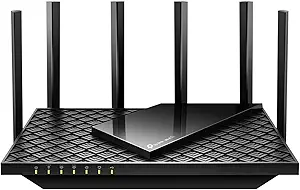 | Best Overall for High-Speed, Secure Home Networks | WiFi Speed: up to 5400 Mbps | Bands: Tri-Band (6 GHz, 5 GHz, 2.4 GHz) | 6 GHz Band: Yes | VIEW LATEST PRICE | See Our Full Breakdown |
| TP-Link Roam 7 BE3600 Wi-Fi 7 Portable Travel Router, Dual-Band, 2.5G Port, USB 3.0, Multi-Mode, OpenVPN, WireGuard, Public WiFi Sharing |  | Best for Portable, High-Speed Travel Connectivity | Wi-Fi Technology: Wi-Fi 7 | Bands: Dual-Band (5 GHz and 2.4 GHz) | Max Speed: 2882 Mbps on 5 GHz | VIEW LATEST PRICE | See Our Full Breakdown |
| GL.iNet GL-AXT1800 (Slate AX) Portable Travel Router |  | Best for Tech-Savvy Travelers Needing Customization | Wi-Fi Standard: Wi-Fi 6 | Dual-band Speed: 1800 Mbps | VPN Support: OpenVPN, WireGuard | VIEW LATEST PRICE | See Our Full Breakdown |
| TP-Link Archer AX55 Dual-Band AX3000 Wi-Fi 6 Router |  | Best for Balanced Performance and Simplicity | Wi-Fi Speed: 2402 Mbps (5 GHz), 574 Mbps (2.4 GHz) | Antennas: 4 high-gain external antennas | Technology: Wi-Fi 6, OFDMA, MU-MIMO, Beamforming | VIEW LATEST PRICE | See Our Full Breakdown |
| GL.iNet GL-MT3000 Beryl AX Portable Travel Router with Wi-Fi 6 |  | Best for Ultra-Compact Travel Security and Flexibility | Wireless Speed: 574 Mbps (2.4G), 2402 Mbps (5G) | Ports: 2.5G WAN, 1G LAN, USB 3.0 | Wi-Fi Standard: Wi-Fi 6 (802.11ax) | VIEW LATEST PRICE | See Our Full Breakdown |
More Details on Our Top Picks
GL.iNet GL-BE3600 (Slate 7) Portable Travel Router, Dual-Band Wi-Fi 7, 2.5G Ethernet, VPN, Touchscreen
The GL.iNet Slate 7 stands out for combining cutting-edge Wi-Fi 7 technology with a user-friendly touchscreen interface, making it a top choice for travelers who want both speed and ease of use. Compared with the GL.iNet GL-MT3600BE Beryl 7, it offers faster dual-band speeds up to 2882Mbps, which is essential for high-bandwidth activities on the go. Its built-in VPN support and multiple security protocols provide robust protection, but the need for active VPN subscriptions can add ongoing costs. Setup may be slightly complex for non-technical users, especially with open-source firmware like OpenWrt. This model is ideal for frequent travelers who need high-speed, secure connectivity in various environments, and can handle technical setup. The touchscreen simplifies management, reducing the need for app-based configurations, which is a plus for tech-savvy users.
Pros:- Supports Wi-Fi 7 with blazing-fast dual-band speeds
- Intuitive touchscreen interface for quick setup and monitoring
- Built-in VPN client and server for versatile security
Cons:- Requires active VPN subscription for full features
- Setup can be complex for less technical users
- Speed may vary depending on network conditions
Best for: Travelers needing fast, secure internet with simple management on the go
Not ideal for: Users seeking plug-and-play simplicity without technical setup or ongoing VPN fees
- Wireless Speed:688Mbps (2.4G) + 2882Mbps (5G)
- Ethernet Ports:2.5G (1x WAN, 1x LAN)
- USB Port:USB 3.0
- Plug Types:US, UK, EU, AU
- Firmware:OpenWrt 23.05
- VPN Support:OpenVPN, WireGuard
Bottom line: This router is best suited for tech-savvy travelers who prioritize speed and security in remote locations.
TP-Link AX1800 WiFi 6 Router (Archer AX21 V5) – Dual Band Wireless Internet, Gigabit, Easy Mesh, Works with Alexa
The TP-Link Archer AX21 V5 offers strong Wi-Fi 6 speeds up to 1.8 Gbps, making it well suited for households with multiple devices. Compared to the ASUS RT-AX1800S, it provides wider coverage thanks to four high-gain antennas and beamforming technology, which is critical for larger homes. While it doesn’t support the 6 GHz band, its compatibility with all major ISPs and easy mesh setup through TP-Link’s ecosystem make it appealing for users seeking hassle-free expansion. Its performance can be affected by environmental factors and device placement, and it requires a separate modem for most ISPs. This router is ideal for families or small offices that want reliable Wi-Fi 6 coverage without complex configurations, especially if they plan to expand mesh networks over time.
Pros:- Supports fast Wi-Fi 6 speeds supporting multiple devices
- Excellent coverage with four high-gain antennas
- Easy to set up and extend with TP-Link mesh systems
Cons:- Requires a separate modem for most ISPs
- Lacks support for Wi-Fi 6E or 6 GHz band
- Performance depends heavily on environment and device placement
Best for: Households or small offices needing reliable, expandable Wi-Fi coverage
Not ideal for: Tech enthusiasts wanting Wi-Fi 6E or gaming-focused routers with lower latency features
- WiFi Standard:Wi-Fi 6 (802.11ax)
- Bands:Dual Band
- Maximum Speed:1200 Mbps on 5 GHz, 574 Mbps on 2.4 GHz
- Antennas:4 high-gain antennas
- Security:Advanced security, VPN support
- Compatibility:Works with all major ISPs
Bottom line: This router makes the most sense for users seeking simple, reliable whole-home Wi-Fi coverage and future expandability.
TP-Link ER605 V2 Wired Gigabit VPN Router, Up to 3 WAN Ethernet Ports + 1 USB WAN, Omada SDN, Load Balancing, Lightning Protection
The TP-Link ER605 V2 excels for small business or advanced home users who need robust, wired VPN capabilities. Its three WAN ports support load balancing and backup, ensuring continuous uptime—much more suited for a wired environment than wireless-focused options like the GL.iNet GL-BE3600. While it lacks built-in Wi-Fi, its support for Omada SDN allows centralized management of multiple devices, which is a major advantage over standalone routers. The setup can be intricate, especially for beginners, and it doesn’t support smart home integrations, making it less appealing for typical smart home users. This device is ideal for users who prioritize secure, reliable wired connections and multi-WAN redundancy over wireless features.
Pros:- Supports multiple WAN ports for load balancing and failover
- Advanced VPN protocols for secure remote access
- Omada SDN for centralized network control
Cons:- No built-in Wi-Fi, requires separate access points
- Setup can be complex for beginners
- Limited smart home or wireless features
Best for: Small businesses or advanced users needing multi-WAN and centralized management
Not ideal for: Home users seeking integrated Wi-Fi or simple plug-and-play solutions
- Number of Ports:5
- WAN Ports:3
- USB WAN Port:Yes
- Maximum Data Transfer Rate:4000 Mbps
- Wireless Compatibility:Wi-Fi 6 (802.11ax)
- Firewall Security Level:Advanced
Bottom line: This router is best for users needing secure, high-performance wired internet with redundancy and management capabilities.
GL.iNet GL-MT3600BE Beryl 7 Portable Travel Router with Wi-Fi 7, VPN, and OpenWrt
The GL.iNet Beryl 7 combines Wi-Fi 7 speed with extensive customization via OpenWrt, making it a flexible choice for tech-savvy travelers. Its dual-band speeds up to 688Mbps (2.4G) and 2882Mbps (5G) are comparable to the GL.iNet GL-BE3600, but its open-source firmware allows advanced users to tailor security, routing, and VPN configurations. Built-in VPN server and client support enhance security, though active VPN subscriptions are necessary for full use. The device’s portable form factor is perfect for remote work, hotel stays, or cruises. Setup can be complex for those unfamiliar with OpenWrt, and real-world speeds often depend on local network conditions. It’s a solid pick for those comfortable with technical adjustments who need reliable, customizable travel connectivity.
Pros:- Supports Wi-Fi 7 with high-speed dual-band connectivity
- OpenWrt firmware offers extensive customization options
- Built-in VPN server and client for secure connections
Cons:- Setup may be complex for non-technical users
- Requires active VPN subscription for full functionality
- Speeds vary based on local network and real-world conditions
Best for: Tech-savvy travelers needing customizable, secure internet access on the go
Not ideal for: Users seeking a simple, plug-and-play travel router without technical setup
- Wireless Speed:688Mbps (2.4G) + 2882Mbps (5G)
- Ethernet Ports:2.5G WAN and LAN
- USB Port:USB 3.0
- VPN Speed:1100 Mbps (WireGuard), 1000 Mbps (OpenVPN)
- Firmware:OpenWrt 21.02
- Security Protocols:WPA3, DNS over HTTPS/TLS
Bottom line: This router is ideal for technically skilled travelers who want a portable, customizable Wi-Fi 7 device with strong security features.
ASUS RT-AX1800S Dual Band WiFi 6 Extendable Router with Network Security and Parental Control
The ASUS RT-AX1800S offers reliable Wi-Fi 6 performance with MU-MIMO and OFDMA, designed for households that need fast, stable connections across multiple devices. Compared to the TP-Link AX1800, it provides a dual-core processor and AiProtection security, making it suitable for families concerned about online safety. Its four external antennas help extend coverage, and AiMesh support allows easy expansion into a mesh network. While throughput and coverage can depend on environment, it’s an appealing entry for users wanting to enhance their existing Wi-Fi setup without complex configuration. This model is best for home users who want security, parental controls, and expandability without sacrificing performance.
Pros:- Supports Wi-Fi 6 for faster speeds and efficiency
- Includes comprehensive security and parental controls
- Extendable with AiMesh for seamless whole-home coverage
Cons:- Actual performance varies with environment and device placement
- Limited to Wi-Fi 6, no Wi-Fi 6E support
- Requires compatible devices to fully utilize Wi-Fi 6 features
Best for: Families seeking secure, expandable Wi-Fi coverage with parental controls
Not ideal for: Power users needing Wi-Fi 6E or dedicated gaming routers with low latency
- WiFi Standard:Wi-Fi 6 (802.11ax)
- Bands:Dual Band
- Antennas:External x 4
- Processor:Dual-core
- Ports:1 Gigabit WAN, 4 Gigabit LAN
- Security:AiProtection Classic, VPN
Bottom line: This router is best for home users who want reliable, secure Wi-Fi with easy expansion options for the whole family.
TP-Link ER707-M2 Omada Multi-Gigabit VPN Router with Dual 2.5G WAN Ports
The TP-Link ER707-M2 stands out for its impressive support for numerous concurrent sessions and clients, making it ideal for small to medium businesses needing robust VPN and network capacity. Compared to the GL.iNet GL-BE6500, which offers WiFi 7 for consumer speed, the ER707-M2 focuses on wired performance and scalability, at the expense of wireless features. Its complex setup may challenge less technical users, and limited wireless info means it’s not suitable for wireless-only environments. The cloud management feature simplifies remote control of multiple sites, but the hardware’s primary strength remains wired connectivity and VPN support for enterprise environments.
Pros:- Supports up to 500,000 concurrent sessions for heavy network traffic
- Flexible port configurations, including dual 2.5Gbps WAN ports
- Cloud management enables remote network oversight
Cons:- Setup process can be technically demanding for beginners
- Lack of integrated Wi-Fi limits wireless flexibility
- Limited info on wireless capabilities
Best for: IT professionals managing enterprise or multi-office VPN networks requiring high throughput and centralized control.
Not ideal for: Home users or small offices seeking simple, wireless-centric VPN solutions without complex setup needs.
- Ports:1 2.5Gbps WAN, 1 2.5Gbps WAN/LAN, 4 Gigabit WAN/LAN, 1 Gigabit SFP WAN/LAN, 1 USB 2.0
- Maximum concurrent sessions:500,000
- Maximum clients:1000+
- VPN support:LAN-to-LAN IPsec, OpenVPN, L2TP, PPTP
- Warranty:5 years
Bottom line: This router is best suited for tech-savvy professionals needing high-capacity wired VPN connectivity in a business setting.
GL.iNet GL-SFT1200 (Opal) Portable WiFi Travel Router, Dual Band OpenWrt VPN Wireless Repeater
The GL.iNet GL-SFT1200 (Opal) offers a lightweight, travel-friendly solution with dual-band WiFi speeds up to 1200 Mbps, making it ideal for those who need reliable internet on the go. Unlike the TP-Link Roam 6 AX1500, which emphasizes speed and multiple modes, the Opal prioritizes portability and VPN security within a compact design. Its reliance on OpenWrt gives advanced users customization options but may intimidate beginners. The built-in VPN support and retractable antennas improve signal stability and security during travel, though setup requires some initial configuration in the admin panel, and it doesn’t support tethering for seamless mobile data sharing.
Pros:- Supports dual-band WiFi with speeds up to 1200 Mbps
- Portable design with retractable antennas for better signal
- Built-in VPN support with advanced customization via OpenWrt
Cons:- Requires manual VPN setup—no one-tap toggle
- Limited to OpenWrt firmware, which may be complex for some users
- No support for easy tethering or mobile data sharing
Best for: Travelers or remote workers needing secure, portable Wi-Fi with VPN support in a compact form factor.
Not ideal for: Users seeking a simple plug-and-play device without manual setup or advanced customization options.
- Wireless Speed:300 Mbps (2.4GHz) + 867 Mbps (5GHz)
- Ports:2 Gigabit LAN, 1 Gigabit WAN
- Antenna:2 retractable antennas
- Operating System:OpenWrt
- Security Protocols:OpenVPN, WireGuard, WPA2-PSK, WPA3
- Control:App control
Bottom line: Ideal for tech-savvy travelers needing secure, portable Wi-Fi with VPN support, despite a slightly complex setup process.
GL.iNet GL-BE6500 (Flint 3e) WiFi 7 Router with VPN and 5 Gigabit Ethernet Ports
The GL.iNet GL-BE6500 (Flint 3e) pushes speeds up to 6.5 Gbps with WiFi 7, making it a prime choice for large households or gaming setups. Unlike the TP-Link Roam 6 AX1500, which balances speed and portability, the Flint 3e emphasizes ultra-fast wireless performance and extensive coverage with five 2.5G Ethernet ports. Its setup can be intricate due to advanced features, and VPN speeds might vary depending on the provider. The router’s multiple antennas and WiFi 7 support ensure minimal latency and maximum throughput, but the complexity and overkill for basic browsing might deter casual users.
Pros:- Supports WiFi 7 with speeds up to 6.5 Gbps
- Long-range coverage up to 2500 sq ft
- Five 2.5G Ethernet ports for wired connections
Cons:- Setup can be complex for non-technical users
- Premium features may be excessive for simple internet use
- VPN performance depends on external factors
Best for: Power users seeking the fastest WiFi for gaming, streaming, or large coverage areas with VPN and multiple wired connections.
Not ideal for: Basic users or those with modest internet needs who won’t benefit from WiFi 7’s high speeds or advanced features.
- Wireless Standard:WiFi 7
- Maximum Speed:6.5 Gbps
- Ethernet Ports:5 x 2.5G
- Coverage Area:2500 sq ft
- RAM:1 GB
- Control Method:App, Push Button
Bottom line: Best suited for tech enthusiasts and large households demanding ultra-fast WiFi 7 with extensive wired options.
TP-Link Roam 6 AX1500 Portable Wi-Fi 6 Travel Router
The TP-Link Roam 6 AX1500 offers a sleek, pocket-sized design that packs Wi-Fi 6 speeds up to 1,201 Mbps, making it perfect for frequent travelers. Unlike the GL.iNet GL-SFT1200, which supports dual-band and OpenWrt, the Roam 6 emphasizes simplicity and speed with multiple operation modes, including hotspot and access point. Its portable form factor and USB-C power make it highly convenient, though it lacks support for OpenWRT firmware, limiting advanced customization. It’s an excellent choice for users who want fast, secure internet on the move without fuss, but it does require external power, which might be less ideal in some scenarios.
Pros:- Fast Wi-Fi 6 speeds suitable for streaming and gaming
- Multiple modes including router, hotspot, and access point
- Compact, durable, and portable design
Cons:- No support for OpenWRT firmware customization
- Limited to Wi-Fi 6 devices for optimal performance
- Requires external USB-C power source
Best for: Travelers and remote workers seeking a quick, secure Wi-Fi 6 device that’s easy to carry and set up.
Not ideal for: Advanced users wanting custom firmware or extensive network control options.
- Wi-Fi Standard:Wi-Fi 6
- Speed:1201 Mbps on 5 GHz, 300 Mbps on 2.4 GHz
- Ports:2 Gigabit, 1 USB 2.0
- Dimensions:4.09 in. × 3.54 in. × 1.10 in.
- Power:USB-C or 5V/3A PD
Bottom line: A solid choice for travelers needing fast, secure Wi-Fi with minimal setup effort, despite limited customization options.
TP-Link Roam 6 AX1500 Portable Wi-Fi 6 Travel Router Dual-Band
The TP-Link Roam 6 AX1500 combines portability with reliable Wi-Fi 6 speeds up to 1,201 Mbps across dual bands, making it ideal for users who need straightforward, secure internet while traveling. It offers multiple modes including VPN support, similar to the TP-Link Roam 6 AX1500 but with slightly different hardware configurations. Its setup is user-friendly, and the app interface simplifies management, though it shares the same limitation of not supporting OpenWRT for advanced customization. The device’s compact size and USB-C power support enhance its travel readiness, but coverage is limited to about 1500 sq ft, which may not suit larger spaces.
Pros:- Supports fast Wi-Fi 6 speeds for multiple devices
- Easy setup through app or web interface
- Compact, travel-friendly design with VPN support
Cons:- Limited to 1500 sq ft coverage
- No support for OpenWRT firmware
- Requires external power via USB-C
Best for: Travelers and small households seeking quick, secure Wi-Fi with minimal fuss and reliable VPN support.
Not ideal for: Power users who want extensive customization or larger coverage areas.
- Wi-Fi Standard:Wi-Fi 6
- Speed:up to 1,201 Mbps (5 GHz) and 300 Mbps (2.4 GHz)
- Ports:1 Gbps WAN/LAN, 1 Gbps LAN, USB 3.0
- Dimensions:4.6 × 3.5 × 1.3 inches
- Coverage:up to 1500 sq ft
Bottom line: Ideal for those seeking a portable, quick-to-deploy Wi-Fi 6 router with VPN capabilities for travel or small spaces.
TP-Link AXE5400 Tri-Band WiFi 6E Router (Archer AXE75)
The TP-Link Archer AXE75 stands out for its tri-band WiFi 6E support, delivering speeds up to 5400 Mbps, including the new 6 GHz band that provides lower latency ideal for gaming and streaming. Compared with the TP-Link AX55, it offers better performance with a dedicated 6 GHz band, but this comes with a higher price and more complex setup. Its quad-core CPU and 512 MB RAM ensure reliable handling of multiple devices, while OneMesh support helps create seamless whole-home coverage. Built-in VPN and security features like WPA3 and TP-Link HomeShield make it a strong choice for users prioritizing security. The main tradeoff is that it requires a separate modem for most ISPs and may involve some initial setup complexity.
Pros:- High-speed tri-band WiFi 6E with 6 GHz band for low latency
- Powerful quad-core CPU and ample memory for multi-device reliability
- Supports OneMesh for seamless whole-home coverage
- Built-in VPN and security features
Cons:- Requires a modem for most ISPs
- Premium features may demand additional setup and configuration
Best for: Tech-savvy homeowners seeking a fast, secure network with mesh capabilities for large homes
Not ideal for: Sellers on a tight budget or users needing simple plug-and-play solutions, due to its premium price and setup complexity
- WiFi Speed:up to 5400 Mbps
- Bands:Tri-Band (6 GHz, 5 GHz, 2.4 GHz)
- 6 GHz Band:Yes
- Processor:Quad-Core 1.7 GHz
- Memory:512 MB RAM
- Security:WPA3, TP-Link HomeShield
Bottom line: This router is best suited for users who want top-tier WiFi 6E performance and advanced security in a large home environment.
TP-Link Roam 7 BE3600 Wi-Fi 7 Portable Travel Router, Dual-Band, 2.5G Port, USB 3.0, Multi-Mode, OpenVPN, WireGuard, Public WiFi Sharing
The TP-Link Roam 7 BE3600 is designed for travelers needing versatile, high-capacity internet sharing on the go. Its Wi-Fi 7 support delivers speeds up to 2882 Mbps on 5 GHz, surpassing older Wi-Fi 6 options like the GL.iNet GL-AXT1800, especially in crowded environments. It offers multiple modes—router, hotspot, access point, and client—making it adaptable for various scenarios, from hotel stays to outdoor adventures. The device’s 2.5 Gbps WAN port and USB 3.0 support enhance its connectivity options, while VPN support via OpenVPN and WireGuard helps secure your browsing on public networks. However, it does not support Wi-Fi 6E’s 6 GHz band, and setup can be complex for less experienced users.
Pros:- Supports Wi-Fi 7 for fastest wireless connections on the go
- Multiple modes for versatile internet sharing
- Compact, portable design suitable for travel
- VPN support for secure public Wi-Fi use
Cons:- Does not support Wi-Fi 6E or the 6 GHz band
- Setup complexity may challenge non-technical users
Best for: Frequent travelers and remote workers needing fast, secure internet sharing in multiple environments
Not ideal for: Casual users seeking a simple, plug-and-play device, as the setup and configuration are somewhat involved
- Wi-Fi Technology:Wi-Fi 7
- Bands:Dual-Band (5 GHz and 2.4 GHz)
- Max Speed:2882 Mbps on 5 GHz
- Ports:1x 2.5 Gbps WAN, 1x 1 Gbps LAN, USB 3.0, Type-C power
- Supported Modes:Router, Hotspot, AP, RE, Client
- VPN Support:OpenVPN, WireGuard
Bottom line: This device excels for travelers requiring high-speed, secure Wi-Fi sharing with flexible modes, provided they’re comfortable with setup.
GL.iNet GL-AXT1800 (Slate AX) Portable Travel Router
The GL.iNet GL-AXT1800 combines portability with powerful features, supporting Wi-Fi 6 speeds up to 1800 Mbps. Its support for OpenWrt 21.02 allows advanced users to customize their network, including VPN toggling, NAS, and other services. Compared with the TP-Link AX55, it’s more flexible due to OpenWrt but requires more technical know-how to set up and optimize. Its ability to turn public Wi-Fi into a secure private network makes it ideal for security-conscious travelers. The main tradeoffs include needing manual setup for VPN features and limited internal storage, which may frustrate less experienced users.
Pros:- Fast Wi-Fi 6 speeds supporting multiple devices
- Supports VPN for secure browsing
- OpenWrt OS allows deep customization
- Can act as NAS and repeater
Cons:- Requires manual setup for VPN toggle
- Reconnection needed after public Wi-Fi time limits
Best for: Tech enthusiasts who want customizable travel routers with VPN and file sharing capabilities
Not ideal for: Less technical travelers or those seeking a simple, out-of-the-box solution, due to setup complexity
- Wi-Fi Standard:Wi-Fi 6
- Dual-band Speed:1800 Mbps
- VPN Support:OpenVPN, WireGuard
- Device Capacity:up to 120 devices
- Operating System:OpenWrt 21.02
- Features:NAS, Repeater mode, VPN toggle
Bottom line: This router is ideal for tech-savvy users who need extensive customization and VPN control on the go.
TP-Link Archer AX55 Dual-Band AX3000 Wi-Fi 6 Router
The TP-Link Archer AX55 provides reliable dual-band Wi-Fi 6 speeds—up to 2402 Mbps on 5 GHz—making it suitable for streaming, gaming, and multiple device use. Compared with the AXE75, it offers solid performance at a more accessible price point, though it lacks the 6 GHz band and mesh support. Its four external antennas and Beamforming technology help extend coverage, but setup can be complex for users unfamiliar with advanced networking. Security is strengthened with TP-Link HomeShield, and Alexa compatibility adds convenience. The main compromise is that it doesn’t support Wi-Fi 6E or mesh out of the box, limiting future scalability.
Pros:- Fast Wi-Fi 6 speeds for smooth streaming and gaming
- Good coverage with multiple antennas and Beamforming
- Enhanced security with HomeShield
- Voice control via Alexa
Cons:- Requires a modem for most ISPs
- Some features may need subscription or advanced setup
Best for: Home users seeking reliable Wi-Fi 6 performance with straightforward setup and security features
Not ideal for: Power users needing the latest Wi-Fi 6E or mesh capabilities, or those requiring ultra-high speeds for demanding applications
- Wi-Fi Speed:2402 Mbps (5 GHz), 574 Mbps (2.4 GHz)
- Antennas:4 high-gain external antennas
- Technology:Wi-Fi 6, OFDMA, MU-MIMO, Beamforming
- Security:HomeShield
- USB Ports:USB 3.0
- Compatibility:All major ISPs
Bottom line: This router fits well for users wanting consistent Wi-Fi 6 performance with easy security and voice control integration.
GL.iNet GL-MT3000 Beryl AX Portable Travel Router with Wi-Fi 6
The GL.iNet GL-MT3000 Beryl AX offers Wi-Fi 6 speeds up to 574 Mbps on 2.4 GHz and 2402 Mbps on 5 GHz, wrapped in a tiny, portable design. Its support for OpenWrt 21.02 allows extensive customization, including VPN, NAS, and network sharing, making it a favorite among advanced travelers. Compared to the TP-Link AXE75, it sacrifices raw speed for extreme portability and open-source flexibility, though this means setup can be daunting for non-technical users. The device’s multiple Ethernet ports and VPN protocols bolster security, but it requires active VPN subscription and some configuration expertise to get the most out of it.
Pros:- Supports Wi-Fi 6 for fast speeds
- OpenWrt allows deep customization
- Built-in VPN support for secure browsing
- Small, lightweight design
Cons:- Setup can be complex for beginners
- Limited internal storage and features without configuration
Best for: Travelers with technical skills seeking a compact, customizable Wi-Fi 6 router with VPN capabilities
Not ideal for: Less experienced users or those seeking simple setup, as OpenWrt configuration can be complex
- Wireless Speed:574 Mbps (2.4G), 2402 Mbps (5G)
- Ports:2.5G WAN, 1G LAN, USB 3.0
- Wi-Fi Standard:Wi-Fi 6 (802.11ax)
- Security Protocols:WPA3, DNS over HTTPS, TLS
- Firmware:OpenWrt 21.02
- Coverage:Up to 100 meters
Bottom line: This router is best suited for tech-savvy travelers needing a portable, flexible Wi-Fi 6 solution with VPN support.

How We Picked
I evaluated these personal VPN routers based on multiple criteria that matter to users: VPN compatibility and security features, Wi-Fi performance and standards, ease of setup and use, build quality and portability, and overall value for the price. Devices were also assessed for their versatility—whether they support multiple VPN protocols like OpenVPN and WireGuard—and their capacity to handle demanding network tasks such as load balancing. The ranking favors models that offer a strong balance of security, speed, and user-friendly features, with a clear distinction between those designed for travel, home use, or advanced networking enthusiasts.Factors to Consider When Choosing Personal VPN Routers
Choosing the right personal VPN router involves understanding your specific needs and how different features align with those needs. Beyond basic VPN compatibility, factors like speed, security protocols, and portability play a significant role. Making an informed decision involves recognizing tradeoffs—such as sacrificing some advanced features for easier setup or opting for higher speeds at a higher cost. Keep these considerations in mind when selecting your ideal device to ensure it supports your privacy goals without unnecessary complexity.VPN Compatibility and Security Protocols
Not all routers support the same VPN protocols, so verify whether your chosen device supports OpenVPN, WireGuard, or both. WireGuard, in particular, offers faster connections and simpler configuration, making it popular among privacy-conscious users. Devices that support multiple protocols provide flexibility, especially if you switch VPN providers or need to adapt to different security standards. Consider how easily the router integrates with your preferred VPN service and whether it allows for firmware upgrades or third-party options like OpenWrt for further customization.
Performance and Wi-Fi Standards
Speed is a key factor, especially if you stream high-definition content or engage in online gaming. Wi-Fi 6 and Wi-Fi 7 standards are becoming increasingly important for future-proofing, offering higher throughput and lower latency. While Wi-Fi 7 is limited to premium models, Wi-Fi 6 strikes a good balance between performance and cost. For travel routers, performance may be secondary to portability, but for home use, investing in higher standards can significantly improve your experience. Remember, hardware quality and antenna design also influence real-world speeds.
Portability and Design
If you travel frequently or need a router for temporary setups, portability becomes a decisive factor. Compact, lightweight models like the GL.iNet travel routers provide easy packing and quick setup on the go. However, these often sacrifice some advanced features or wired connectivity options found in larger, more permanent units. On the other hand, full-sized routers with multiple Ethernet ports and larger antennas serve well in fixed locations but are less convenient for mobility. Match your device choice to your typical use environment.
Ease of Use and Setup
Some routers offer straightforward setup with user-friendly interfaces, making them suitable for beginners or those less comfortable with networking. Others provide advanced options like custom firmware, allowing power users to fine-tune their network security and performance. Be aware that more features often mean a steeper learning curve. Look for routers with clear documentation, mobile apps, or touchscreen controls if you value simplicity. Balancing ease and functionality ensures your VPN setup remains manageable over time.
Price and Overall Value
Prices vary widely, from budget-friendly models to premium devices with the latest Wi-Fi standards and features. High cost doesn’t always guarantee better security or performance for your specific needs. Consider what features you truly need—such as support for multiple VPN protocols, wired ports, or portability—and compare those against the price. Sometimes, investing in a slightly more expensive model yields better long-term value by offering future compatibility and more robust security features. Avoid overspending on features you won’t use.
Frequently Asked Questions
Can I set up a VPN on any personal router?
While many routers support VPN setup, not all are equally compatible or easy to configure. Some routers come with built-in VPN server features, while others require custom firmware like DD-WRT or OpenWrt to enable VPN capabilities. Compatibility with different protocols, such as OpenVPN or WireGuard, varies across devices. It’s essential to verify whether your chosen router supports your preferred VPN provider and protocols before purchasing. A router with native VPN support simplifies setup and ensures smoother operation.
Are portable VPN routers safe for public Wi-Fi?
Yes, portable VPN routers enhance security when using public Wi-Fi by creating a private, encrypted network for your devices. They act as a secure bridge between your device and the internet, preventing eavesdropping and man-in-the-middle attacks. However, their effectiveness depends on proper configuration and regular firmware updates. Always use reputable models with strong security features and keep firmware up to date. Remember, a portable VPN router is an additional layer of security, not a replacement for good security practices.
Is Wi-Fi 6 or Wi-Fi 7 necessary for VPN use?
Wi-Fi 6 and Wi-Fi 7 offer faster speeds and lower latency, which can improve your overall internet experience, especially when multiple devices are connected. For VPN use, higher Wi-Fi standards can reduce the impact of encryption overhead, leading to smoother streaming and browsing. However, they are not strictly necessary for VPN functionality. If you’re primarily concerned with security and basic browsing, a Wi-Fi 5 router may suffice. For future-proofing and high-demand activities, investing in Wi-Fi 6 or Wi-Fi 7 makes sense.
Should I choose a wired or wireless VPN router?
Wired routers typically provide more reliable, faster connections, which is beneficial for activities like gaming or large file transfers over VPN. They also tend to be more secure and easier to manage in fixed locations. Wireless VPN routers offer greater flexibility, especially in environments where running Ethernet cables isn’t practical, like in hotels or temporary setups. The choice depends on your environment—if stability and speed are priorities, wired is better; for convenience and mobility, wireless models are more suitable.
How much should I expect to pay for a good personal VPN router?
The price of personal VPN routers varies based on features, standards, and portability. Budget models typically cost between $50 and $100 and may lack advanced VPN support or high-speed standards. Mid-range options, around $100 to $200, often include support for multiple protocols, Wi-Fi 6, and better build quality. Premium models above $200 focus on Wi-Fi 7, multi-gigabit ports, and extensive customization. Consider your specific needs—if you require portable VPN use or advanced features, investing in a higher-priced model may be justified.