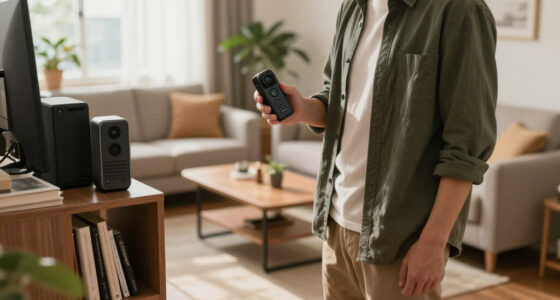
Hardware security keys add a physical sign-in step that can help protect accounts from phishing, but the right choice depends on your devices and the services you use. I name the Yubico YubiKey 5C NFC my best overall pick for its USB-C and NFC connections, while the YubiKey 5 NFC suits people with USB-A devices and the Thetis FIDO2 two-pack offers a practical spare-key route. The main tradeoffs are connection compatibility, whether you need advanced authentication protocols or just FIDO sign-in, and how you plan to recover access if a key is lost. A USB-C-only key may be simpler, while NFC or a second key can make day-to-day use and backup planning easier. Continue reading for the full breakdown and advice on matching a key to your accounts.

Get privacy and security gear delivered free with Prime
- Fast, free delivery on millions of items
- Prime Video, Amazon Music and more included
- Member-only deals all year
Key Takeaways
- The YubiKey 5C NFC is the strongest all-around fit in this group for users who want both USB-C and NFC, rather than choosing one connection type.
- The YubiKey 5 series and Security Key series serve different needs: the 5 models target broader authentication use, while the Security Key models focus on FIDO-based sign-in.
- USB-A remains useful for older computers: the YubiKey 5 NFC and Yubico Security Key NFC avoid requiring an adapter for compatible USB-A ports.
- The Thetis two-pack stands apart through its included spare, which can help with recovery planning, though buyers should check service and device compatibility before choosing it.
- USB-C and NFC do not mean universal compatibility: the best connection depends on the ports and NFC support on the devices used to sign in.
| Yubico YubiKey 5C NFC Security Key |  | Best Overall | Connectivity: USB-C, NFC | Supported protocols: FIDO2/WebAuthn, FIDO U2F, Yubico OTP, OATH-TOTP/HOTP, PIV, OpenPGP | Passkey slots: 100 | VIEW LATEST PRICE | See Our Full Breakdown |
| YubiKey 5C Multi-Factor Authentication Security Key with USB-C, FIDO Certified |  | Best for Protocol Flexibility | Connectivity: USB-C | Supported protocols: FIDO2, U2F, OTP, PIV, OpenPGP | Operating system compatibility: Windows, macOS, ChromeOS, Linux | VIEW LATEST PRICE | See Our Full Breakdown |
| Yubico YubiKey 5 NFC Security Key |  | Best for USB-A Devices | Connectivity: USB-A, NFC | Supported protocols: FIDO2/WebAuthn, FIDO U2F, Yubico OTP, OATH-TOTP/HOTP, PIV, OpenPGP | Operating systems: Linux, macOS | VIEW LATEST PRICE | See Our Full Breakdown |
| Yubico Security Key NFC, USB-A and NFC FIDO Security Key | | Best for Straightforward Passkeys | Connectivity: USB-A, NFC | Supported protocols: FIDO2/WebAuthn, FIDO U2F | Passkey slots: 100 | VIEW LATEST PRICE | See Our Full Breakdown |
| Thetis FIDO2 USB-A Security Keys, 2-Pack |  | Best Two-Key Set | Quantity: 2 keys | Interface: USB 2.0, USB Type-A | FIDO2 passkey slots: 200 | VIEW LATEST PRICE | See Our Full Breakdown |
| Yubico Security Key C NFC | | Best for a Simple USB-C and NFC Setup | Brand: Yubico | Model: 100957 | Authentication: FIDO2/WebAuthn and FIDO U2F | VIEW LATEST PRICE | See Our Full Breakdown |
| hardware security key | Connectivity | Dimensions | Supported protocols | Durability |
|---|---|---|---|---|
| Yubico YubiKey 5C NFC Security | USB-C, NFC | 0.15 × 0.7 × 1.77 in | FIDO2/WebAuthn, FIDO U2F, Yubico OTP, OATH-TOTP/HOTP, PIV, OpenPGP | Water-resistant, crush-resistant |
| YubiKey 5C Multi-Factor Authen | USB-C | 0.49 × 1.16 × 0.2 in | FIDO2, U2F, OTP, PIV, OpenPGP | Waterproof |
| Yubico YubiKey 5 NFC Security | USB-A, NFC | 0.71 × 1.77 × 0.13 in | FIDO2/WebAuthn, FIDO U2F, Yubico OTP, OATH-TOTP/HOTP, PIV, OpenPGP | — |
| Yubico Security Key NFC | USB-A, NFC | — | FIDO2/WebAuthn, FIDO U2F | Water-resistant, crush-resistant |
| Thetis FIDO2 USB-A Security Ke | — | 0.3 × 0.6 × 0.3 in | — | — |
| Yubico Security Key C NFC | USB-C and NFC | 0.1 x 1.8 x 0.7 inches | — | Waterproof and crush-resistant |
More Details on Our Top Picks
Yubico YubiKey 5C NFC Security Key
For buyers who want one key to cover modern phones, laptops, and more than basic passkey sign-ins, the YubiKey 5C NFC is the strongest all-around fit here. USB-C handles direct connections to newer computers and phones, while NFC offers a cable-free login on compatible devices. Its support for FIDO2/WebAuthn, OTP, PIV, and OpenPGP gives it more uses than the simpler Yubico Security Key NFC, which focuses on FIDO authentication. That flexibility suits people managing work and personal accounts with different login requirements. The tradeoff is extra capability that many passkey-only users may never need, and losing the key can complicate account recovery. I’d pair it with a backup key rather than treat it as the sole route to important accounts.
Pros:- USB-C and NFC cover direct and contactless authentication
- Broad protocol support suits both personal accounts and more specialized workflows
- Supports up to 100 passkey slots
- Requires no battery or internet connection
Cons:- USB-C may require an adapter for USB-A-only devices
- Its wider protocol range adds little value for buyers who only need FIDO passkeys
- A backup key is advisable to reduce lockout risk if the primary key is lost
Best for: People who use USB-C devices and NFC-capable phones and want one key for passkeys plus OTP, smart-card, or OpenPGP workflows
Not ideal for: Passkey-only users who want the simplest option, or anyone whose devices rely on USB-A and lack NFC
- Connectivity:USB-C, NFC
- Supported protocols:FIDO2/WebAuthn, FIDO U2F, Yubico OTP, OATH-TOTP/HOTP, PIV, OpenPGP
- Passkey slots:100
- Dimensions:0.15 × 0.7 × 1.77 in
- Durability:Water-resistant, crush-resistant
- Power and connection:No battery or internet connection required
Our verdict“Choose this if you want a versatile USB-C and NFC key with broader protocol support than the simpler Yubico Security Key NFC.”
YubiKey 5C Multi-Factor Authentication Security Key with USB-C, FIDO Certified
The YubiKey 5C is the better pick when a security key needs to do more than confirm passkey logins. Its USB-C connection and support for FIDO2, U2F, OTP, PIV, and OpenPGP make it useful across compatible accounts and smart-card or encryption workflows. Compared with the YubiKey 5C NFC, it gives up contactless phone login, so it is less convenient for users who regularly authenticate by tapping a mobile device. In return, it keeps the setup focused on a direct USB-C connection and works across the listed Windows, macOS, ChromeOS, and Linux systems. That breadth is valuable for mixed-service use, but is unnecessary complexity for someone who only wants a straightforward FIDO key. It also cannot plug directly into USB-A ports without an adapter.
Pros:- Supports FIDO2, U2F, OTP, PIV, and OpenPGP protocols
- Works with Windows, macOS, ChromeOS, and Linux
- Compact, waterproof design
- Runs without batteries or an internet connection
Cons:- USB-C only, so USB-A devices need an adapter
- No NFC for tap-to-authenticate use on compatible phones
- Advanced protocol support may be unnecessary for passkey-only users
Best for: USB-C laptop users who need FIDO sign-ins alongside OTP, PIV smart-card, or OpenPGP support
Not ideal for: People who want NFC phone authentication, or users whose computers have USB-A ports and no adapter
- Connectivity:USB-C
- Supported protocols:FIDO2, U2F, OTP, PIV, OpenPGP
- Operating system compatibility:Windows, macOS, ChromeOS, Linux
- Weight:0.2 oz
- Dimensions:0.49 × 1.16 × 0.2 in
- Durability:Waterproof
Our verdict“Pick the YubiKey 5C if USB-C and broad protocol support matter more to you than NFC convenience.”
Yubico YubiKey 5 NFC Security Key
For computers with USB-A ports, the YubiKey 5 NFC avoids the adapter problem while still offering NFC for compatible phones. It supports the same broad protocol family as the YubiKey 5C NFC, including FIDO2/WebAuthn, OTP, PIV, and OpenPGP, but swaps USB-C for USB-A. That makes it a more natural fit for older laptops and desktops; owners of newer USB-C-first devices may prefer the 5C NFC instead. The broad compatibility is useful for accounts that call for different authentication methods, though it can be more capability than a passkey-only buyer needs. The supplied system details list Linux and macOS, so buyers should verify compatibility with their specific device and service. As with any single physical key, keeping a spare helps guard against account lockout.
Pros:- USB-A and NFC support computer and compatible phone sign-ins
- Broad protocol support for FIDO, OTP, PIV, and OpenPGP use
- Compact and lightweight at 0.1 oz
- Needs no battery or internet connection
Cons:- USB-A is less convenient for devices with only USB-C ports
- Listed operating system compatibility is limited to Linux and macOS
- A backup key is recommended in case the primary key is lost
Best for: People with USB-A computers who also want NFC authentication on compatible phones and need more than basic FIDO support
Not ideal for: USB-C-only device owners, or buyers seeking a basic passkey key without OTP, smart-card, or OpenPGP features
- Connectivity:USB-A, NFC
- Supported protocols:FIDO2/WebAuthn, FIDO U2F, Yubico OTP, OATH-TOTP/HOTP, PIV, OpenPGP
- Operating systems:Linux, macOS
- Weight:0.1 oz
- Dimensions:0.71 × 1.77 × 0.13 in
- Firmware:5.7
Our verdict“Choose this over the YubiKey 5C NFC if USB-A is your main computer connection and you still want NFC.”
Yubico Security Key NFC, USB-A and NFC FIDO Security Key
The Yubico Security Key NFC is for buyers who want phishing-resistant FIDO sign-ins without paying attention to a long list of extra protocols. Its USB-A and NFC connections cover many computers and compatible mobile devices, while FIDO2/WebAuthn and U2F handle supported passkey and security-key logins. Compared with the YubiKey 5 NFC, it leaves out OTP, PIV, OpenPGP, and Yubico Authenticator support. That narrower feature set is a real limitation for mixed authentication needs, but it also makes this a more focused choice for everyday FIDO use. It needs no battery or network connection, and its water- and crush-resistant construction suits keychain carry. Check that your services use compatible FIDO standards before choosing it over the more flexible YubiKey 5 NFC.
Pros:- USB-A and NFC offer two ways to authenticate
- Supports FIDO2/WebAuthn and FIDO U2F
- Water-resistant and crush-resistant construction
- Works without a battery, network connection, or recurring fee
Cons:- Does not support one-time passwords
- Not compatible with the Yubico Authenticator app
- Has fewer protocols than the YubiKey 5 NFC
Best for: People who want a durable USB-A and NFC key for FIDO2 or U2F logins and do not need OTP or smart-card functions
Not ideal for: Users who rely on one-time passwords, Yubico Authenticator, PIV, or OpenPGP features
- Connectivity:USB-A, NFC
- Supported protocols:FIDO2/WebAuthn, FIDO U2F
- Passkey slots:100
- Compatible devices:Desktop, laptop, mobile, tablet, NFC-enabled devices
- Durability:Water-resistant, crush-resistant
- Power and connection:No battery or internet connection required
Our verdict“Choose this focused FIDO key if you want USB-A and NFC access without the extra protocols found on the YubiKey 5 NFC.”
Thetis FIDO2 USB-A Security Keys, 2-Pack
The Thetis FIDO2 two-pack puts redundancy first: having two keys makes it easier to register a backup before one is lost or damaged. Both use USB-A and support FIDO2 passkeys and hardware MFA, while a rotating metal cover helps protect the connector during keychain carry. Compared with the Yubico Security Key NFC, this set trades contactless phone authentication for a second physical key and does not support NFC. Thetis also specifies OATH slots, but initial PIN setup requires the Thetis Manager App, adding a setup step absent from the simple plug-in experience described for Yubico’s keys. Compatibility is listed for Windows and selected services, so buyers should check their own platforms and accounts. Skip this if NFC or a broader range of protocols is central to your setup.
Pros:- Two keys make it practical to register a backup
- Supports FIDO2 passkeys and hardware MFA
- Rotating metal cover protects the connector during carry
- Requires no battery or network connection
Cons:- No NFC support for contactless authentication
- Initial PIN setup requires the Thetis Manager App
- ID Austria is not supported
Best for: USB-A users who want a built-in spare key for FIDO2 accounts and selected services such as Google Workspace or Apple ID
Not ideal for: People who need NFC phone authentication, broad operating system coverage, or compatibility with ID Austria
- Quantity:2 keys
- Interface:USB 2.0, USB Type-A
- FIDO2 passkey slots:200
- OATH slots:50
- Compatibility:Windows, Google Workspace, Apple ID, Coinbase, Salesforce
- Physical features:Rotating metal cover; water-, crush-, and tamper-resistant; keychain-compatible
- Dimensions:0.3 × 0.6 × 0.3 in
- Weight:8.53 g
Our verdict“Choose this set if having a spare FIDO2 key matters more than NFC or broad protocol compatibility.”
Yubico Security Key C NFC
The Yubico Security Key C NFC suits buyers who want phishing-resistant sign-in without extra authentication features to manage. It supports FIDO2/WebAuthn and FIDO U2F, with USB-C for compatible computers and NFC for supported phones, so one key can cover more devices than the USB-A Yubico Security Key NFC. It also works without batteries or an internet connection, while its waterproof and crush-resistant construction helps it hold up as an everyday carry item.
The tradeoff is a deliberately narrow feature set: it does not support one-time passwords and is not compatible with the Yubico Authenticator App. Buyers who need broader authentication options should compare it with the YubiKey 5C NFC. This key makes more sense for people who want straightforward FIDO sign-in, but it is less suitable as a multi-purpose credential.
Pros:- USB-C and NFC support access across compatible computers and phones.
- FIDO2/WebAuthn and FIDO U2F support phishing-resistant sign-in for compatible services.
- Needs no batteries or internet connection to authenticate.
- Waterproof and crush-resistant construction suits regular carrying.
Cons:- Does not support one-time passwords.
- Not compatible with the Yubico Authenticator App.
Best for: People who want one compact FIDO key for USB-C computers and NFC-capable phones, especially for compatible Google, Microsoft, or Apple accounts.
Not ideal for: Buyers who need one-time passwords or Yubico Authenticator App support, or who want the broader authentication features of the YubiKey 5C NFC.
- Brand:Yubico
- Model:100957
- Authentication:FIDO2/WebAuthn and FIDO U2F
- Connectivity:USB-C and NFC
- Weight:0.16 ounces
- Dimensions:0.1 x 1.8 x 0.7 inches
- Durability:Waterproof and crush-resistant
- One-time passwords:Not supported
Our verdict“Choose this key for straightforward USB-C and NFC FIDO sign-in, but pick the YubiKey 5C NFC if you need broader authentication options.”

How We Picked
I compared these six keys around the decisions that affect everyday account protection: supported sign-in standards, connection options, device fit, and backup practicality. A key with USB-C and NFC can work across more current devices, while USB-A models make sense for computers that still rely on that port. I also distinguished FIDO-focused Security Key models from the YubiKey 5 family, which is positioned for broader authentication use; extra capability matters only when a buyer’s services require it.
The ranking favors useful compatibility and clear purpose over feature count alone. That puts the YubiKey 5C NFC first as a flexible choice, then gives dedicated roles to USB-A, simpler FIDO-focused, and multi-key options. A model ranks lower when its connection or narrower purpose suits fewer buyers—not because it is a poor fit for its intended use. Buyers should confirm each service’s accepted sign-in methods and the exact connector they need before ordering.
| hardware security key | Connectivity | Supported protocols | Durability |
|---|---|---|---|
| Yubico YubiKey 5C NFC Security | USB-C, NFC | FIDO2/WebAuthn, FIDO U2F, Yubico OTP, OATH-TOTP/HOTP, PIV, OpenPGP | Water-resistant, crush-resistant |
| YubiKey 5C Multi-Factor Authen | USB-C | FIDO2, U2F, OTP, PIV, OpenPGP | Waterproof |
| Yubico YubiKey 5 NFC Security | USB-A, NFC | FIDO2/WebAuthn, FIDO U2F, Yubico OTP, OATH-TOTP/HOTP, PIV, OpenPGP | — |
| Yubico Security Key NFC | USB-A, NFC | FIDO2/WebAuthn, FIDO U2F | Water-resistant, crush-resistant |
| Thetis FIDO2 USB-A Security Ke | — | — | — |
| Yubico Security Key C NFC | USB-C and NFC | — | Waterproof and crush-resistant |
Factors to Consider When Choosing Hardware Security Keys
Choosing a hardware key is less about collecting the most features and more about avoiding a mismatch with your accounts, devices, or recovery plan. I would settle these questions before choosing a model:
Match the Key to Your Accounts’ Sign-In Methods
Start with the services you actually need to protect, then check which security-key methods each one accepts. FIDO2 and WebAuthn support is common across many services, but not every account supports every authentication method a key may offer. A frequent mistake is buying a more capable model before confirming that the added protocols matter to the buyer. If your use is limited to FIDO-based sign-in, a focused Security Key model may be a simpler fit than a YubiKey 5 model. If work systems or specialist software require other authentication methods, check those requirements before choosing. Keep a short list of priority accounts and verify their current setup instructions.
Choose Ports for the Devices You Sign In From
USB-C works well with many newer laptops and phones, while USB-A can be handy with older computers and shared workstations. NFC can provide a tap-based option on compatible phones, but it does not replace checking whether the phone and the service support that flow. Do not assume an adapter will solve every mismatch: it can add bulk, and mobile-device support varies. Think about where sign-ins happen most often, not just the newest device you own. If a household or team uses a mix of devices, a key with more than one connection method can reduce friction. If all your devices share one port type, a simpler connector choice may be enough.
Decide Whether You Need Broad Authentication Support
The YubiKey 5 family is aimed at buyers who may need more than FIDO-based web sign-in, while the Security Key line keeps the focus narrower. More supported methods can be useful for people working across different systems, but they can also add capabilities that go unused. The common mistake is treating the broadest feature set as automatically best. Check requirements from your employer, password manager, and key online accounts before paying attention to protocol lists. For personal accounts that use FIDO sign-in, simplicity may be more useful than extra flexibility. Choose broader support when you can name a real service or workflow that needs it.
Plan for Loss Before You Register Your First Key
A hardware key can secure sign-ins, but it can also become a problem if it is the only recovery method on an account. Where a service permits it, register a second key or set up its approved recovery options before relying on the first one. The Thetis two-pack makes a spare available in the same purchase, while a single-key purchase calls for a separate backup plan. Keep a spare in a different secure location rather than carrying both keys together. Recovery codes should be stored privately and according to the service’s guidance. Do not remove existing recovery methods until you have confirmed the new sign-in and backup arrangements work.
Pay for Capability You Will Use
When choosing among these models, compare the role each one fills rather than assuming the most feature-rich option is always the best fit. Broad protocol support has value when your accounts need it; extra ports matter when you regularly switch between compatible devices. A two-key pack may be useful if you need a spare immediately, but it is less compelling if you already have a safe backup key. Beginners may prefer a straightforward FIDO-focused model for accounts that support it. Before deciding, factor in the cost and inconvenience of adapters, extra keys, and account recovery—not just the device itself. A well-matched, properly registered key is more useful than unused features.
Check Daily Handling and Your Backup Routine
Keys are small items that can be misplaced, left attached to a computer, or carried alongside the device they are meant to protect. Consider whether you want one key on a keyring, a second stored at home, or separate keys for personal and work accounts. NFC can make phone sign-ins easier when supported, while a USB connection may be more predictable on a desktop. A compact design is convenient, but small size does not remove the need for a consistent storage habit. Choose a routine you can maintain, then register the key on each account and test the backup path. This planning often matters more to long-term access than a minor difference between models.
Frequently Asked Questions
Should I choose a YubiKey 5 model or a Security Key model?
I would choose based on the authentication methods your accounts require, not the product family name alone. The YubiKey 5 models are positioned for broader authentication use, while the Security Key models focus on FIDO-based sign-in. If your important services accept FIDO sign-in and you do not need other protocols, a Security Key may cover your needs with less complexity. If a workplace or specialist service has additional requirements, verify them before selecting a model. Check each account’s current security settings because support can differ by service.
Is a USB-C key enough if I also sign in on my phone?
It may be enough if your phone and the services you use support the key’s USB-C sign-in path. NFC can make signing in by tapping more convenient on compatible phones, but phone hardware and account support both matter. A USB-C connector alone does not guarantee that every mobile sign-in flow will work. Check the instructions for your phone platform and key services before choosing. If you use both computers and phones regularly, a USB-C-and-NFC option offers more ways to connect.
Do I need to buy two hardware security keys?
A second registered key is a useful safeguard when an account supports more than one key. It can preserve access if the everyday key is lost, damaged, or unavailable. You do not have to carry both: storing a spare securely in a separate place lowers the chance of losing both at once. If you choose a single key, set up the service’s approved recovery methods and keep recovery information private. The Thetis two-pack makes a spare readily available, but buyers should still confirm that the key works with their accounts.
Can one security key protect all my accounts?
One key may be registered with multiple accounts, but each service must support a compatible sign-in method and be set up individually. The key does not automatically secure every account on your devices. Some services may impose their own rules for registration, recovery, or using a key alongside other sign-in methods. I would prioritize email, password management, financial services, and work accounts, then follow each service’s setup guidance. Keep another recovery route available so losing the key does not lock you out.
Will a hardware security key work with older computers?
It depends on the computer’s available ports and the sign-in method supported by its operating system and services. A USB-A model can connect directly to many older computers, while a USB-C key may need an adapter if the computer lacks that port. Adapters do not guarantee compatibility with every device or sign-in flow. NFC is an alternative only when the device and service support it. Check your main computer’s ports and the account’s instructions before buying.
Conclusion
For most people who want flexibility across current devices, I recommend the Yubico YubiKey 5C NFC as best overall. For a simpler FIDO-focused option, the Yubico Security Key NFC or Security Key C NFC may suit buyers whose accounts do not need broader authentication support; choose USB-A or USB-C to match your devices. The YubiKey 5C Multi-Factor Authentication key is the best premium-style fit for buyers who have a clear need for the 5 series’ broader authentication capabilities, while the Thetis FIDO2 two-pack is the best value-oriented pick for someone who wants a spare included. Beginners should start with a focused FIDO key that matches their main device and register a backup or recovery method before relying on it. If you regularly use USB-A devices, the YubiKey 5 NFC or Yubico Security Key NFC is the more direct fit. Match the key to your accounts first, then pick the connection and backup setup that fits your routine.
Halloween Picks
halloween
As an affiliate, we earn on qualifying purchases.