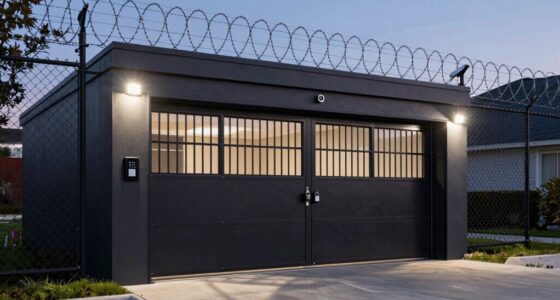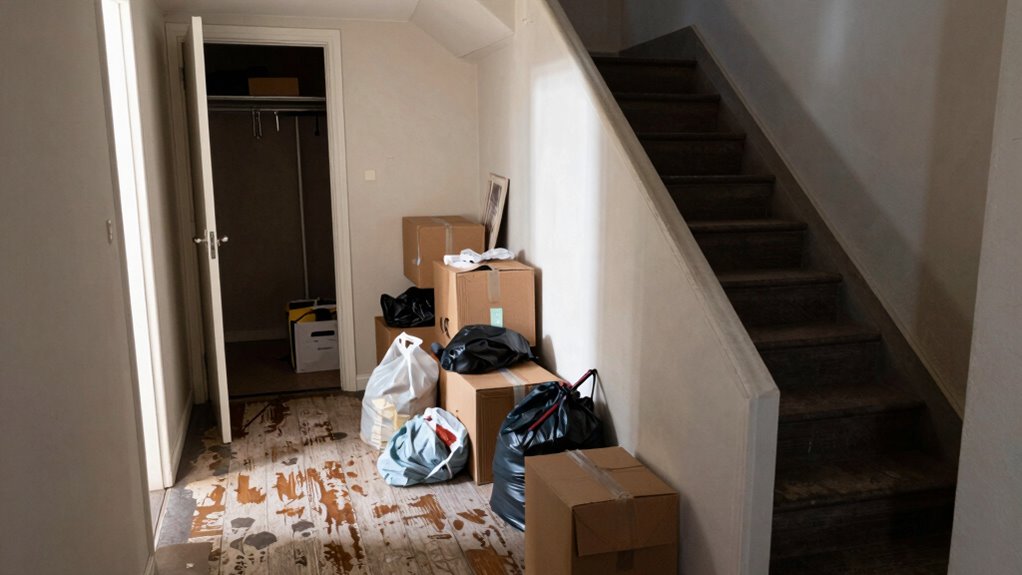

Shared hallways and package areas can hide serious risks. Poorly maintained access controls or lack of surveillance let intruders slip through unnoticed, increasing chances of theft, vandalism, or violence. Clutter and neglect create safety hazards like fallen objects or slippery floors, risking injury. Regular inspections, security measures, and resident awareness are key to reducing these dangers. If you want to understand how to better protect your space, keep exploring these hidden vulnerabilities.

Get privacy and security gear delivered free — and shop member deals
- Fast, free delivery on millions of items
- Access to Prime Big Deal Days deals on October 6–7
- Prime Video, Amazon Music and more included
Key Takeaways
- Unsecured shared spaces can hide security breaches and facilitate unauthorized access or theft.
- Cluttered package areas increase fire hazards and obstruct emergency egress routes.
- Poor maintenance in hallways can lead to structural damage and safety risks.
- Lack of surveillance and monitoring allows malicious activities to go unnoticed.
- Inadequate resident education and management heighten vulnerability to security and safety hazards.

Shared hallways and package areas may seem convenient, but they can hide significant safety and security risks if not properly managed. When multiple residents or tenants use these common spaces without strict oversight, vulnerabilities quickly emerge. Security vulnerabilities become obvious when access controls are lax or poorly maintained, giving unauthorized individuals an easier path to entry. Someone with malicious intent could slip through an unlocked door or exploit a lack of surveillance, increasing the risk of theft, vandalism, or even violence. The shared nature of these spaces makes it easier for intruders to blend in and go unnoticed, especially if security measures aren’t consistently enforced or upgraded.
In addition to security concerns, maintenance challenges pose a serious problem. Shared hallways and package areas tend to accumulate clutter, stray packages, or debris, which can obstruct pathways and create safety hazards. If maintenance isn’t regular or thorough, these spaces can become breeding grounds for pests or mold, further compromising health and safety standards. Over time, neglect can lead to structural issues, such as damaged flooring or faulty lighting, which increase the risk of accidents. You might find yourself dealing with slippery floors, broken locks, or malfunctioning security cameras, all of which undermine the safety of everyone using the space. The more these areas are left unmanaged, the more difficult it becomes to keep them safe and secure. Regular inspections and preventive maintenance are essential to mitigate these risks effectively. Ensuring proper security measures are in place, such as controlled access and surveillance systems, can significantly reduce vulnerabilities. Implementing security protocols tailored to shared spaces can further enhance protection. Additionally, incorporating technology solutions can streamline monitoring efforts and detect potential issues before they escalate.
Managing the risks associated with shared spaces requires proactive planning. You need to establish clear security protocols, like controlled access, surveillance cameras, and regular patrols. Ensuring that maintenance is consistent and thorough is equally important. Routine inspections, prompt repairs, and cleanliness standards keep these spaces safe and functional. Without this vigilance, vulnerabilities grow, and safety concerns escalate. It’s also vital to educate residents or tenants about security practices, such as reporting suspicious activity or avoiding leaving packages unattended. Additionally, recognizing that security vulnerabilities are often linked to poor oversight can help prioritize investments in surveillance and access controls. When everyone understands their role in maintaining safety, these shared spaces become less of a liability and more of a communal asset. Regular training and communication are key components of effective management strategies.
Ultimately, overlooking the risks associated with shared hallways and package areas can lead to serious security breaches and increased maintenance costs. You must recognize that convenience has limits and that actively managing these spaces is essential. By addressing security vulnerabilities head-on and prioritizing ongoing maintenance, you protect residents and safeguard property. Proper management turns what could be a risky, neglected area into a secure, well-maintained part of your community or building.
Frequently Asked Questions
How Can Residents Report Safety Concerns Anonymously?
You can report safety concerns anonymously by using designated anonymous reporting tools provided by your building or management. Many communities offer online forms, suggestion boxes, or hotline numbers that safeguard your identity. By utilizing these options, you contribute to resident safety without revealing who you are. Always check your building’s policies or contact management to guarantee your anonymous report is received and acted upon promptly, helping improve overall safety.
Are There Legal Regulations for Maintaining Shared Hallway Safety?
Think of shared hallways as the backbone of your building—legally, they must follow building codes that guarantee everyone’s safety. These regulations act like a shield, reducing liability insurance risks for property owners. You’re protected when regulations are up-to-date, and safety measures are in place. Staying compliant isn’t just legal; it’s essential for creating a secure environment where residents can move freely without worry.
What Insurance Coverage Applies to Package Theft or Damage?
Your insurance coverage for package theft or damage typically involves filing insurance claims through your homeowner’s or renter’s insurance. Many policies offer package protection, which covers stolen or damaged deliveries. You should review your policy details to understand specific coverage limits and exclusions. Always document the damage or theft with photos and reports to support your claims, ensuring you maximize your protection and avoid unexpected out-of-pocket costs.
How Often Should Security Audits of Shared Areas Be Conducted?
You should conduct security audits of shared areas at least quarterly to guarantee safety. During these audits, check that security camera placement covers all key points and that emergency exit accessibility isn’t blocked. Regular inspections help identify vulnerabilities, prevent package theft, and maintain a secure environment. Consistent reviews ensure that security measures stay effective and that shared hallways and package areas remain safe for everyone.
Can Technology Prevent Package Theft in Shared Spaces?
Yes, technology can prevent package theft in shared spaces. Imagine a thief trying to steal a package, only to be caught by surveillance cameras that record every move. Smart locks add an extra layer of security, allowing only authorized residents to access package areas. Together, these tools create a digital shield, deterring theft and giving you peace of mind, knowing your deliveries are protected by modern security solutions.
Conclusion
While shared hallways and package areas seem convenient, they hide unseen risks that can compromise your safety. Think of them as quiet guardians—helping deliver essentials—yet also potential gateways for germs and hazards. By staying vigilant and practicing good hygiene, you transform these overlooked spaces from hidden dangers into safe passages. So, embrace their convenience but never forget to respect their risks, turning everyday routines into mindful acts of protection.
Fall Picks
fall essentials
As an affiliate, we earn on qualifying purchases.