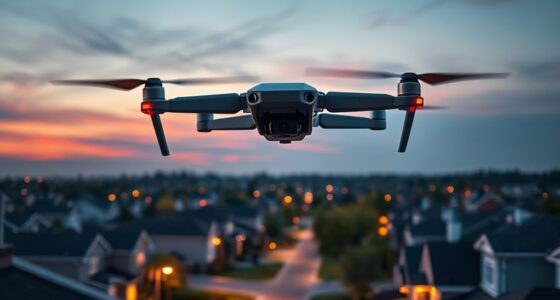

You’ll find guard dogs excel at sensing behavioral cues and providing immediate threat response, but they can be limited by fatigue and training variances. High-tech sensors detect movement or heat quickly and reliably once calibrated, with scalability and minimal physical space needs. However, environmental factors can cause false alarms. To understand which option suits different settings, consider their costs, maintenance, and adaptability—more insights await as you explore further.
Key Takeaways
- Sensors detect threats faster and more consistently, while guard dogs excel at recognizing behavioral cues and adapting to new scenarios.
- Guard dogs have low false alarms driven by instinct, whereas sensors require calibration to minimize environmental false triggers.
- Scaling sensor systems is easier and more cost-effective than expanding dog teams, which involve ongoing training and health maintenance.
- Environmental factors and terrain impact sensor performance and connectivity, while dogs’ effectiveness depends on breed traits and training.
- Human oversight remains essential for both, ensuring ethical practices, system calibration, and appropriate response to detected threats.

REOLINK Smart 5MP 8CH Home Security Camera System, 4pcs Wired PoE IP Cameras Outdoor with Person/Pet/Vehicle Detection, 4K 8CH NVR with 2TB HDD for 24-7 Recording, RLK8-520D4-5MP
CAPTURE CRIME FROM DETAILS: Discover potential crime has never been so easier with superior 5MP HD. With advanced...
As an affiliate, we earn on qualifying purchases.
Effectiveness in Detecting Threats

While both guard dogs and high-tech sensors aim to detect threats, their effectiveness often depends on the situation. Guard dogs excel at recognizing behavioral adaptations, such as unfamiliar scents or suspicious movements, which can trigger an alert. However, their effectiveness is limited by factors like fatigue or distraction, and they might not detect distant or stealthy threats. High-tech sensors, on the other hand, rely on advanced technology to identify movement, heat, or sound, but they face technological limitations such as false alarms from environmental interference or inability to differentiate between threats and benign activity. Your choice depends on understanding these strengths and weaknesses—guard dogs adapt behaviorally, but can be limited by their focus and fatigue, while sensors are limited by technology but work consistently over large areas.

ANNKE 3K Lite Wired Security Camera System Outdoor with AI Human/Vehicle Detection, 8CH H.265+ DVR and 8 x 1920TVL 2MP IP67 Home CCTV Cameras with Smart Dual Light, Color Night Vision, 1TB Hard Drive
AI Motion Detection 2.0 – Driving AI to the next level, human&vehicle detection and flexible detection area are...
As an affiliate, we earn on qualifying purchases.
Response Time and Alerting Capabilities
When it comes to response time, high-tech sensors typically detect threats faster than guard dogs, giving you vital moments to react. You’ll also find that alert accuracy varies between the two, affecting how reliably you’re notified of an intrusion. However, false alarms can differ markedly, impacting your trust in the system’s alerts. Additionally, the effectiveness of support solutions can influence overall security, as properly maintained systems reduce the likelihood of missed detections or unnecessary alerts.
Response Speed Differences
High-tech sensors typically detect intrusions faster than guard dogs can react, thanks to their rapid data processing and instant alerting capabilities. While a sensor instantly registers movement or sound, a guard dog relies on animal behavior cues, which can introduce delays. Proper sensor calibration guarantees quick detection, reducing false alarms and response time. Dogs may take longer to respond due to environmental distractions or unfamiliar stimuli. Additionally, organization and placement of sensors play a crucial role in ensuring optimal response times and minimizing blind spots.
Alert Accuracy Levels
High-tech sensors generally offer greater alert accuracy than guard dogs because they deliver rapid, reliable responses and clear notifications. Proper sensor calibration guarantees that alerts are precise, reducing missed detections or false positives. Unlike dogs, whose alerting depends heavily on ongoing dog training and individual temperament, sensors provide consistent performance once calibrated correctly. To illustrate, consider:
- Sensor calibration guarantees consistent detection thresholds.
- Automated alerts are sent immediately, without human delay.
- Sensor reliability minimizes false alarms caused by misinterpretation or training lapses.
- Sleep and meditation practices can enhance alertness and mental clarity, contributing to better sensor management and response.
While dogs rely on their training to recognize threats accurately, sensors depend on precise calibration for optimal performance. Both systems require maintenance, but sensors excel in delivering fast, dependable alerts with minimal variability.
False Alarm Frequency
False alarm frequency depends heavily on behavioral assumptions and sensor calibration. Guard dogs tend to have low false alarms because their responses are driven by instinct rather than programmed assumptions, but their response times can vary with individual behavior. High‑tech sensors, on the other hand, rely on precise sensor calibration to minimize false triggers. Poor calibration or flawed behavioral assumptions about what constitutes a threat can lead to frequent false alarms, reducing trust in the system. Both systems can respond rapidly if correctly calibrated, but sensors require ongoing adjustments to maintain accuracy. Additionally, understanding the contrast ratio helps in assessing how well each system can distinguish threats from benign activity, especially in varying lighting conditions. Ultimately, the frequency of false alarms hinges on how well behavioral assumptions are understood and sensor calibration is maintained.

Hiseeu 3K PTZ Wired Security Camera System Outdoor with Color Night Vision,Audio,8 x 5MP IP67 CCTV Cameras,5MP DVR 8CH,3TB HDD,360°Coverage,Person/Vehicle Detection,Alarm Spotlight,24/7 Recording
【360° Surveillance & Dual Control Security System】Flexibility 355° Pan + 90° Tilt Coverage - Eliminate blind spots with...
As an affiliate, we earn on qualifying purchases.
Reliability and False Alarm Rates
You need to consider how often false alarms occur with each security method, as frequent false alerts can lead to complacency. Consistent detection is vital, so you should evaluate how reliably guard dogs and sensors identify genuine threats. Understanding their reliability helps you choose the most effective option for your security needs. Additionally, assessing the accuracy of detection ensures that your security system remains trustworthy and minimizes unnecessary disruptions.
False Alarm Frequency
False alarm frequency is a critical factor in evaluating the reliability of security systems, whether they rely on guard dogs or high-tech sensors. High false alarm rates can lead to complacency, unnecessary responses, and ethical concerns about disturbing innocent parties. For example, false alarms can occur due to:
- Insufficient training requirements, causing sensors or dogs to misinterpret benign movements as threats.
- Overly sensitive sensors that react to minor environmental changes.
- Inconsistent training or handling, increasing the likelihood of false alerts.
- Proper calibration and regular updates are essential to maintaining sensor accuracy and reducing false positives.
While guard dogs require ongoing training to reduce false alarms, high-tech sensors depend on calibration and software updates. Both options raise ethical considerations about privacy and disturbance, emphasizing the importance of balancing sensitivity with reliability.
Detection Consistency
Detection consistency is crucial for ensuring security systems reliably identify threats without frequent false alarms. Guard dogs rely on animal instincts and sensory perception, which can vary with training and experience, leading to high detection consistency. Their ability to discern threats in complex environments often surpasses technological limits, but their responses may sometimes be inconsistent due to fatigue or distraction. Vetted products and proper training can enhance their reliability. High-tech sensors, on the other hand, provide consistent performance, unaffected by emotions or physical states. They utilize advanced algorithms to minimize false alarms and maintain steady detection rates. While sensors offer reliability, their effectiveness depends on proper calibration and maintenance. Ultimately, combining the innate detection consistency of guard dogs with the reliability of sensors can optimize overall security, balancing the strengths of both approaches.

REOLINK 8CH 5MP Home Security Camera System, 6pcs Wired Outdoor PoE IP Cameras with Person/Vehicle/Pet Detection, 4K/8MP 8CH NVR with 2TB HDD for 24-7 Recording, RLK8-410B6-5MP
5MP SUPER HD & STUNNING NIGHT VISION: Capture crystal clear videos day & night with 5MP super HD...
As an affiliate, we earn on qualifying purchases.
Cost Analysis and Budget Considerations

When evaluating security options, understanding the costs involved is essential for making informed decisions. Budget constraints often influence whether you choose guard dogs or high-tech sensors. Consider these factors:
- Initial investment: Guard dogs require training, veterinary care, and equipment, while sensors involve purchasing hardware and installation.
- Recurring expenses: Dogs need food, healthcare, and ongoing training; sensors incur subscription fees and maintenance costs.
- Scalability options: Expanding a dog team can be costly and logistically challenging, whereas sensors can easily scale with software upgrades or additional units.
- Additionally, the security effectiveness of each option can influence your overall investment decision, ensuring that you select a solution that provides reliable protection.
Balancing these costs helps you determine which option fits your budget while meeting your security needs. Evaluating long-term expenses ensures you choose a solution that remains effective without breaking the bank.
Maintenance and Operational Requirements

Maintaining security systems requires ongoing effort and attention to guarantee they operate effectively. For guard dogs, this means regular training to ensure behavioral responsiveness and health checks. High-tech sensors demand strict adherence to maintenance schedules to prevent malfunctions. Both systems need dedicated oversight: dogs require consistent care, while sensors need technical updates. Consider the following:
| Aspect | Requirements |
|---|---|
| Training Requirements | Regular for guard dogs; software updates for sensors |
| Maintenance Schedule | Routine health checks; sensor calibration |
| Operational Oversight | Daily monitoring; system troubleshooting |
| Skill Level Needed | Professional training; technical expertise |
| Cost of Maintenance | Ongoing expenses; equipment/software updates |
This comparison highlights the distinct ongoing operational needs of each system, impacting overall security management. Regular system calibration and maintenance are essential to sustain optimal performance.
Adaptability to Different Environments
Adapting security systems to different environments requires careful consideration of their unique characteristics. With guard dogs, you need to factor in training requirements to guarantee they respond appropriately to various settings, from urban areas to rural farms. Ethical considerations also come into play, such as animal welfare and appropriate handling. For high‑tech sensors, adaptability depends on factors like:
- Environmental conditions, such as weather or terrain, which can affect sensor performance
- Infrastructure compatibility, ensuring the technology integrates seamlessly into existing setups
- Power and connectivity needs, crucial for maintaining reliable operation in remote or challenging locations
- Dog Names can also influence how well a dog adapts to different environments, reflecting their personality and breed characteristics.
Both options demand tailored approaches to maximize effectiveness, but the key is understanding these environmental factors to choose the right system for each setting.
Human Oversight and Intervention Needs
While high-tech sensors can automate many security functions, they still require human oversight to guarantee proper operation and response. You need trained personnel to interpret sensor data accurately, as training limitations can lead to misjudgments or missed threats. Human intervention is essential for making nuanced decisions that machines can’t handle, especially in complex situations. Additionally, ethical implications arise when automated systems act without human judgment, raising concerns about accountability and appropriate use. Proper oversight ensures that responses align with legal standards and ethical considerations. Without vigilant human oversight, both systems risk malfunction or misuse, potentially compromising security. Hence, integrating human intervention remains essential to address technological shortcomings and uphold responsible security practices.
Case Studies and Real-World Performance Data
Real-world performance data and case studies provide critical insights into how guard dogs and high-tech sensors operate in practical security scenarios. For example, in a commercial complex:
- Guard dogs, trained with strict protocols, quickly deter intruders but require ongoing reinforcement.
- Sensors, calibrated regularly, detect unauthorized access with high accuracy, reducing false alarms.
- Both systems face challenges: dogs need human oversight, while sensors depend on proper calibration and maintenance.
Case studies reveal that guard dogs excel in immediate threat response, but their effectiveness depends heavily on training protocols. Sensors offer consistent monitoring, but their performance hinges on correct sensor calibration. Combining these approaches often enhances overall security, leveraging the strengths of each.
Frequently Asked Questions
Which Security Method Is More Accepted by Property Owners?
You might wonder which security method property owners prefer. Many consider community trust and cost considerations when choosing. Guard dogs often foster trust due to their visible presence, but they come with higher maintenance costs. High-tech sensors are becoming more accepted for their affordability and discreetness. Ultimately, acceptance varies depending on the property’s needs, budget, and the owner’s confidence in technology or traditional security.
How Do Legal Liabilities Differ Between Dog and Sensor Security?
When comparing legal liabilities, you should consider that guard dogs often bring higher liability insurance costs due to potential bites or injuries. You need to guarantee legal compliance with local laws on dog ownership. In contrast, high-tech sensors generally pose fewer liability issues, but you still must maintain proper documentation and adhere to privacy laws. Both methods require careful legal planning to minimize risks and protect your property.
Can Sensors Replace Trained Guard Dogs Entirely?
You might think sensors can fully replace trained guard dogs, but that’s unlikely. While sensor maintenance is easier and more consistent, guard dog training offers unpredictable, instinctual responses to threats. Dogs can assess a situation and act accordingly, whereas sensors rely on programmed responses. A complete replacement ignores the nuanced judgment and adaptability of dogs, making sensors a valuable complement rather than a total substitute for security needs.
What Environmental Factors Impact Sensor and Dog Effectiveness?
Environmental factors substantially impact the effectiveness of sensors and guard dogs. You’ll find that environmental interference, like heavy rain or fog, can reduce sensor accuracy and trigger false alarms. Weather resilience also matters; guard dogs perform well in diverse conditions, while sensors may falter in extreme weather. Understanding these factors helps you choose the right security measure, ensuring reliable protection regardless of environmental challenges.
How Does Public Perception Influence Security Strategy Choices?
Think of public perception as the compass guiding your security choices. When public trust is high, you’ll likely lean toward visible measures like guard dogs, symbolizing safety and tradition. Cultural attitudes shape these perceptions, influencing whether communities favor organic guardians or tech-driven solutions. You must consider this trust and attitude to craft strategies that resonate, ensuring your security measures are welcomed and effective in the eyes of those they protect.
Conclusion
In your security setup, choosing between guard dogs and high-tech sensors is like picking between a trusty steed and a modern drone—each has its strengths. While dogs bring instinct and loyalty, sensors offer precision and data-driven alerts. Consider your environment, budget, and need for human oversight. Ultimately, blending both might be the siren song of safety, ensuring you’re prepared for any scenario—just like a well-armed knight and his trusty automaton guard your castle.