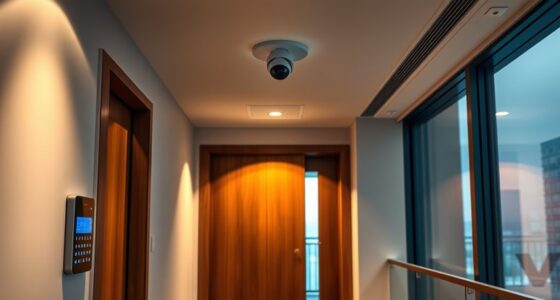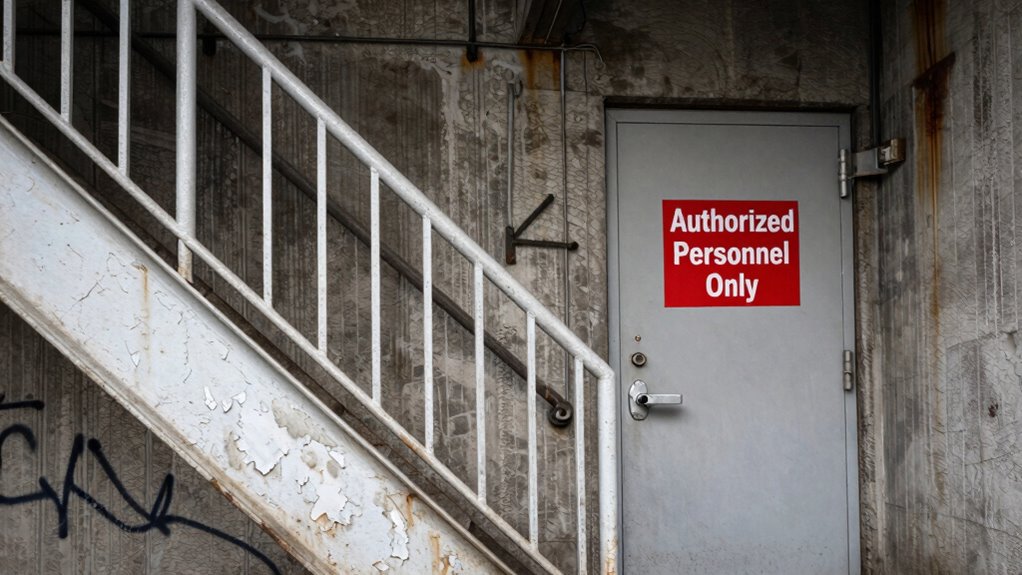

To prevent unauthorized entry into stairwells and fire escapes, you should implement security measures like access control systems, clear signage, and regular maintenance of locks and pathways. Surveillance cameras and physical barriers help monitor and restrict access, while educating tenants about safety protocols encourages responsible behavior. Routine inspections ensure everything stays in good working order. Keep security tight, and you’ll ensure these critical routes remain safe and accessible—if you’re interested, there’s more to learn about effective safety strategies.
Key Takeaways
- Install access control systems like keycards or keypad locks to restrict unauthorized entry into stairwells and fire escapes.
- Use clear signage to indicate restricted areas and proper emergency exit routes, discouraging misuse.
- Implement surveillance cameras to monitor stairwells and fire escapes, deterring unauthorized access and enabling quick response.
- Conduct regular inspections and maintenance of locks, signage, and pathways to ensure safety and proper functioning.
- Educate tenants and staff on fire safety protocols and the importance of keeping exits unobstructed and secure.
Why Unauthorized Access to Emergency Exits Is a Safety Hazard

Unauthorized access to emergency exits might seem harmless, but it can substantially compromise safety during emergencies. When you ignore access control measures, you weaken the effectiveness of emergency protocols designed to protect everyone. Emergency exits are strategically placed to ensure quick evacuation; blocking or misusing them disrupts these plans. Unauthorized entry can lead to confusion, delays, and even injuries if people can’t find a clear escape route. Plus, it can cause authorities to question the reliability of safety procedures, increasing risk during crises. Proper enforcement of access control helps maintain the integrity of emergency protocols, ensuring exits remain unobstructed and ready for use. Additionally, dog beds for Golden Retrievers can provide comfort and support for animals during stressful situations, highlighting the importance of safety and well-being for all. Implementing access control measures can further prevent unauthorized use and reinforce safety compliance. Effective safety protocols are essential for minimizing hazards and ensuring a swift response during emergencies. By respecting these safety measures, you contribute to a safer environment for yourself and others during emergencies. Maintaining clear pathways is a key component of emergency preparedness, which is essential for effective evacuation procedures. Incorporating smart security systems can also enhance access control and monitoring of emergency exits to prevent unauthorized use.
Physical and Technological Security Measures to Protect Fire Escapes

To guarantee fire escapes remain accessible and secure during emergencies, implementing both physical and technological security measures is essential. Access control systems, like keycard entry or keypad locks, restrict unauthorized individuals from entering stairwells or fire escape points. These measures ensure only authorized personnel or residents can access these exits when needed. Surveillance systems, such as cameras, provide continuous monitoring of stairwells and fire escape routes. They help identify and deter tampering or unauthorized entry in real-time, allowing for quick responses. Combining physical barriers with technological tools creates a layered security approach that enhances safety and access management. By implementing these measures, you assure fire escapes stay functional, safe, and ready for emergency use at all times.
Signage, Locks, and Maintenance Tips for Securing Stairwells

Effective signage, robust locks, and regular maintenance play essential roles in keeping stairwells secure and operational during emergencies. Clear signage visibility guarantees occupants can quickly identify exit routes, reducing confusion during evacuations. Strong access control prevents unauthorized entry, maintaining safety and security. Regular maintenance keeps locks functioning properly and signage legible, avoiding delays in emergency situations. You should:
- Check signage visibility periodically and replace faded or damaged signs
- Ensure locks are secure and functioning correctly
- Test access control systems regularly for reliability
- Keep stairwells free of obstructions and debris for easy evacuation
- Incorporate ventilation considerations to prevent stale air buildup and maintain a safe environment during use, as proper airflow management can significantly improve safety and comfort during emergency situations. Additionally, implementing preventive maintenance routines ensures that all safety features remain in optimal condition, reducing the risk of failure when it’s most needed, and considering security upgrades can further enhance stairwell safety measures. Regular inspections and safety audits are also vital to identify potential vulnerabilities before they compromise occupant safety.
Developing Policies and Educating Tenants on Emergency Route Security

Developing clear policies and actively educating tenants are crucial steps in ensuring emergency route security. You should implement tenant screening processes to select responsible individuals who respect safety protocols and understand the importance of secure stairwells and fire escapes. Regular emergency training sessions are essential to inform tenants about proper evacuation procedures, emphasizing the significance of keeping routes clear and accessible. Communicate your policies clearly through written guidelines and community meetings, making sure tenants understand their responsibilities. By establishing consistent rules and providing ongoing education, you foster a safety-conscious environment. This proactive approach reduces the risk of unauthorized entry and ensures everyone knows how to react swiftly and safely during emergencies. Incorporating knowledge about fire safety and proper escape routes can further enhance your safety protocols.
Regular Checks and Updates to Keep Fire Escapes Safe and Accessible

Regular inspections are essential to keep fire escapes safe and accessible, especially since wear and damage can occur unexpectedly. Regular checks help identify issues early, ensuring that fire escape design remains functional and stairwell aesthetics are maintained. You should examine all components, including ladders, rails, and anchoring points, for corrosion or damage. Updating safety features and repairing any defects prevent accidents during emergencies. To stay proactive, consider these points:
- Schedule routine inspections by qualified personnel
- Keep pathways clear of debris and obstructions
- Verify signage and lighting are visible and functional
- Review the fire escape’s structural integrity regularly
- Incorporate drone inspections to monitor hard-to-reach areas efficiently
Maintaining proper fire escape design and stairwell aesthetics not only enhances safety but also ensures quick access during emergencies. Consistent checks are your best defense against unexpected failures.
Frequently Asked Questions
How Can Residents Report Unauthorized Access Effectively?
You can report unauthorized access effectively by following your building’s tenant communication and reporting procedures. Use designated channels like a maintenance hotline, online portal, or email to notify management promptly. Provide clear details about the incident, such as location and time, to help authorities respond quickly. Staying vigilant and reporting suspicious activity guarantees stairwell and fire escape safety, helping prevent accidents or security breaches.
Are There Legal Penalties for Tampering With Fire Escape Systems?
Are you aware of the legal consequences of tampering with fire escape systems? Engaging in such actions can lead to serious legal penalties, including hefty fines and possible jail time. Tampering penalties are strict because fire escapes are essential for safety and emergency response. If you tamper with fire escape systems, you risk endangering lives and facing legal repercussions. Always respect safety regulations to keep everyone protected.
What Materials Are Best for Durable, Tamper-Proof Locks?
You should choose locks made from high-grade stainless steel or hardened brass for ideal durability and tamper resistance. These materials withstand force and resist corrosion, guaranteeing long-lasting security. Look for locks with reinforced mechanisms and anti-drill features to prevent tampering. By selecting high-quality, durable materials, you’ll effectively deter unauthorized entry and maintain fire escape safety compliance. Always guarantee locks meet relevant safety standards for maximum protection.
How Often Should Security Training Sessions Be Held for Tenants?
Think of security training like watering a garden; regular care maintains it thriving. You should hold sessions at least twice a year to reinforce access control and tenant awareness. Frequent training helps residents recognize unauthorized entry and understand safety protocols. This consistent approach ensures everyone stays vigilant, like a well-tended garden, making unauthorized access less likely. Remember, ongoing education is key to maintaining a secure environment for all tenants.
Can Technology Help Monitor Unauthorized Entries in Real-Time?
Yes, technology can help oversee unauthorized entries in real-time. You can install video surveillance cameras to detect suspicious activity instantly, and access control systems to restrict entry to authorized personnel only. These tools work together to provide continuous monitoring, alert security staff of breaches, and prevent unauthorized access. Implementing these technologies enhances safety, ensures compliance, and gives you peace of mind knowing you’re actively managing stairwell and fire escape security.
Conclusion
Remember, keeping unauthorized folks out of fire escapes is basically the building’s version of a secret club—except the prize is your safety. Don’t let curiosity or laziness turn a quick exit into a death trap. Stay vigilant, enforce those locks, and remind everyone that fire escapes aren’t for unauthorized tours. After all, you wouldn’t want your building to double as a playground for troublemakers—unless you’re into risky adventures, then carry on!