You need better ownership transfer rules for your smart lock to keep your property secure and guarantee a smooth change of control. Proper procedures prevent former owners from retaining access and stop potential security breaches. They also make it easier to update credentials and reset security features, reducing risks of hacking or errors. Clear transfer rules improve trust and reliability in your smart lock system. If you keep exploring, you’ll discover how improved processes can protect your home even better.

Get privacy and security gear delivered free — and shop member deals
- Fast, free delivery on millions of items
- Access to Prime Big Deal Days deals on October 6–7
- Prime Video, Amazon Music and more included
Key Takeaways
- To prevent unauthorized access by previous owners and ensure secure transition of control.
- To avoid security vulnerabilities and hacking risks during ownership change.
- To guarantee old credentials are invalidated and replaced with new access methods.
- To streamline the transfer process, reducing errors and confusion for users.
- To maintain the integrity of security protocols and protect property during ownership changes.
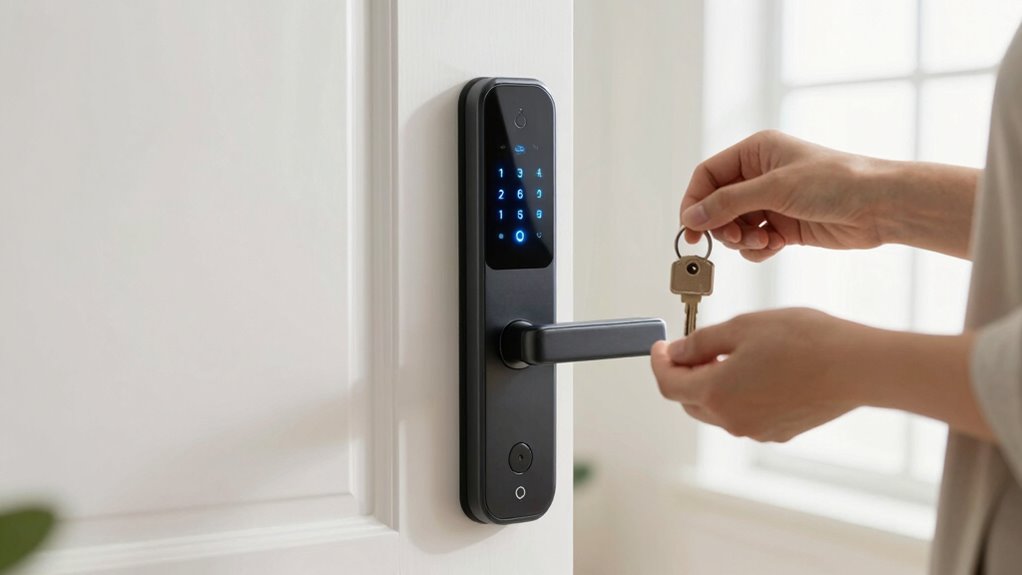
Have you ever wondered how to seamlessly transfer ownership of a smart lock when moving or selling your property? The process might seem straightforward, but without proper rules, it can become complicated and risky. Smart locks are increasingly popular because they offer convenience and enhanced digital security, but their true potential is only realized when ownership transfers happen effortlessly and securely. When you transfer ownership, you’re not just changing a device setting — you’re shifting access rights, user authentication credentials, and control over digital security features. If these aren’t handled properly, the new owner could end up with access they shouldn’t have, or you could remain vulnerable to unauthorized entry.
That’s why smart lock manufacturers and property owners alike need better ownership transfer rules. Clear, standardized procedures can help prevent security gaps and guarantee that the transition respects user authentication protocols. User authentication is at the heart of digital security for smart locks, and when ownership changes hands, it’s vital to revoke old access and establish new credentials without leaving loopholes. Without strict transfer rules, previous owners might retain access, or the new owner may face delays in gaining full control, risking both security and convenience. Implementing standardized transfer procedures can significantly reduce these risks and ensure a smooth transition for all parties involved.
Clear transfer rules protect security, revoke old access, and ensure seamless ownership changes for smart locks.
A key reason for improved transfer rules is to prevent unauthorized access. When ownership changes, all previous user credentials must be be invalidated and replaced with new ones. This process should be straightforward, transparent, and secure, allowing the new owner to set up their access without exposing sensitive information. If the transfer isn’t handled properly, it could leave the lock vulnerable to hacking or unauthorized use, defeating its purpose as a security device. Additionally, a poorly managed transition can cause disputes or confusion, especially if the new owner can’t immediately access the property or if the previous owner retains some control. Establishing standardized procedures can help ensure a consistent and secure transfer process across different devices and brands.
Furthermore, better rules would standardize how digital security features are transferred. This includes guidelines for updating firmware, resetting access codes, or reprogramming user authentication methods. Such standards would ensure that every smart lock user enjoys consistent security practices, no matter the brand. They’d also make it easier for property managers and homeowners to follow best practices, reducing errors and vulnerabilities during ownership changes. Incorporating automated reset features into smart locks can further streamline this process and reduce human error. A comprehensive approach to ownership transfer processes can help mitigate potential security vulnerabilities and streamline the transition for all parties involved.
Ultimately, a secure and efficient ownership transfer process isn’t just about convenience — it’s about safeguarding your property and digital security. Establishing better rules ensures that access rights are properly managed, user authentication remains robust, and the transition happens smoothly. When you prioritize clear, secure procedures, you protect yourself and the new owner from potential security breaches, making smart locks truly effective tools for modern property management.
smart lock ownership transfer kit
As an affiliate, we earn on qualifying purchases.
As an affiliate, we earn on qualifying purchases.
Frequently Asked Questions
How Secure Are Digital Ownership Transfers Compared to Traditional Methods?
Digital ownership transfers are generally more secure than traditional methods, thanks to digital encryption and user authentication. These features guarantee that only authorized individuals can access or transfer ownership of your smart lock. You actively validate identities, making unauthorized transfers difficult. However, vulnerabilities can exist if encryption isn’t strong or if authentication processes are weak. Overall, with proper security measures, digital transfers can be safer and more efficient than traditional paper-based methods.
Can Ownership Transfer Be Reversed if Necessary?
Coincidentally, reversing ownership transfer depends on robust user authentication and transfer validation. If these systems are strong, you can typically undo an ownership change through a secure process, like re-authenticating yourself or verifying transfer details. Without proper safeguards, reversing a transfer becomes risky or impossible. So, ensuring your smart lock has reliable validation methods protects you if you need to reverse ownership, adding a crucial layer of security and flexibility.
What Are the Legal Implications of Digital Ownership Transfer?
The legal implications of digital ownership transfer hinge on digital signatures and ownership verification. When you transfer digital assets, authentic digital signatures confirm the transfer’s legitimacy, making it legally binding. Proper ownership verification ensures both parties agree on the transfer, reducing disputes. If the transfer isn’t properly verified, it could lead to legal challenges or claims of fraud. Guaranteeing secure, verifiable transfers protects your rights and maintains legal clarity.
How Does Transfering Ownership Affect Existing Access Permissions?
When you transfer ownership of a smart lock, existing access control settings and user authentication are affected because the new owner gains control over who can access the lock. The transfer updates permissions, potentially revoking previous users or granting access to new ones. This process guarantees that only authorized individuals can operate the lock, maintaining security and proper access management during ownership changes.
Are There Industry Standards for Smart Lock Ownership Transfer Processes?
You can’t judge a book by its cover, so don’t assume all smart lock transfer processes follow industry standards. While some manufacturers incorporate user authentication and data encryption, there’s no universal protocol. Industry standards are still evolving, leaving gaps that could compromise security during ownership transfer. To stay safe, choose smart locks that prioritize secure transfer methods, including multi-factor authentication and encrypted data transfer, ensuring your access rights stay protected.
smart lock reset and reprogramming tools
As an affiliate, we earn on qualifying purchases.
As an affiliate, we earn on qualifying purchases.
Conclusion
Without clear ownership transfer rules, your smart lock can become a security risk when sharing access. You might worry about losing control or someone retaining access after you’ve moved out. But by establishing simple, reliable transfer procedures, you guarantee only authorized people keep access. This way, you stay in control, and your home remains secure. Don’t overlook the importance of proper ownership transfer—it’s the key to truly safe and flexible smart lock use.
digital smart lock access management
As an affiliate, we earn on qualifying purchases.
As an affiliate, we earn on qualifying purchases.
smart lock firmware update device
As an affiliate, we earn on qualifying purchases.
As an affiliate, we earn on qualifying purchases.
Fall Picks
fall essentials
As an affiliate, we earn on qualifying purchases.