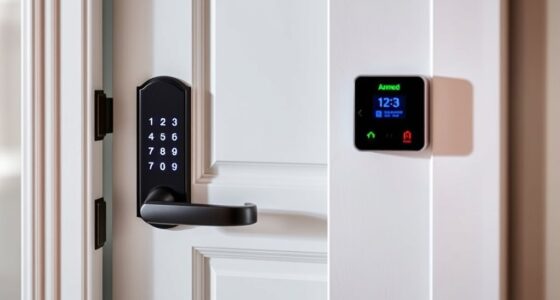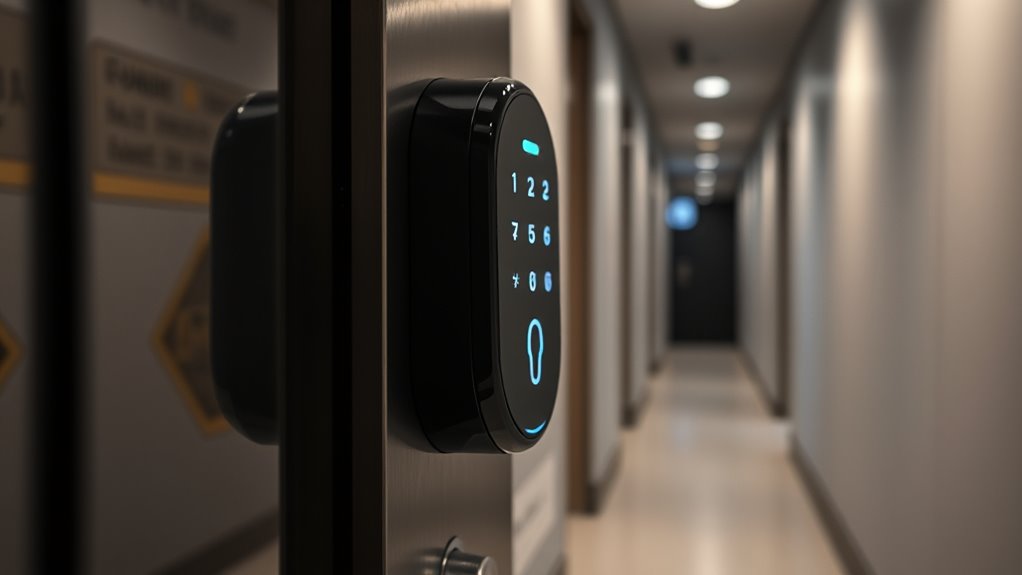

Smart locks can be vulnerable to man-in-the-middle attacks if their wireless communication uses weak encryption, outdated firmware, or insecure protocols like unprotected Wi-Fi or Bluetooth. Attackers can intercept or manipulate signals, especially over unsecured networks. Keeping your device updated with the latest firmware and using strong, secure networks reduces these risks. Stay informed to learn more about how to protect your smart lock from such threats effectively.
Key Takeaways
- Smart locks can be vulnerable to MITM attacks if encryption protocols are weak or improperly configured.
- Outdated firmware increases the risk of exploitation through interception or manipulation.
- Secure wireless communication standards like WPA3 and AES are essential to prevent interception.
- Using unsecured or public networks during pairing or operation heightens MITM attack risks.
- Regular firmware updates and strong security practices significantly reduce vulnerability to MITM threats.

Smart locks have become a popular choice for modern security, offering convenience and remote access. However, with these benefits come potential vulnerabilities, especially against sophisticated cyber threats like man-in-the-middle (MITM) attacks. In such attacks, an intruder intercepts the communication between your smartphone and the lock, potentially gaining unauthorized access or manipulating the lock’s operation. To understand the risks, it’s essential to see how smart locks communicate and what safeguards are in place.
Most smart locks rely on wireless communication protocols, such as Bluetooth, Wi-Fi, or Z-Wave. These protocols use wireless encryption to secure data transmission, which is fundamental for preventing eavesdropping. Strong wireless encryption makes it difficult for attackers to decipher the data exchanged during pairing or lock operation. But encryption alone isn’t foolproof. If a smart lock’s firmware isn’t regularly updated, vulnerabilities can remain unpatched, leaving the device susceptible to exploits that could facilitate MITM attacks. Firmware updates are essential because they often contain security patches that fix known vulnerabilities, strengthen encryption protocols, and improve overall resilience against hacking attempts.
When you set up your smart lock, guaranteeing that it supports robust wireless encryption standards like WPA3 or AES encryption is key. These standards help shield your communication from interception. However, even the best encryption can be compromised if the lock’s firmware is outdated. Manufacturers frequently release firmware updates to patch security flaws that could be exploited by attackers to intercept or manipulate your device’s signals. Neglecting these updates leaves your smart lock exposed, increasing the risk of MITM attacks that could override your security measures. Additionally, staying informed about security best practices can further help protect your device from emerging threats.
To minimize vulnerabilities, you should regularly check for firmware updates and apply them promptly. Many smart lock manufacturers offer automatic updates or notifications when new firmware is available. This proactive approach ensures that your device benefits from the latest security enhancements. Additionally, when pairing your smart lock with your device, avoid unsecured or public networks, as these can be easier targets for attackers attempting to perform MITM attacks. Using a secured Wi-Fi network with strong encryption and a unique password adds an extra layer of protection.
Frequently Asked Questions
Can I Detect a Man-In-The-Middle Attack on My Smart Lock?
You can often detect a man-in-the-middle attack on your smart lock by monitoring for unusual activity or connection issues. Wireless vulnerabilities, like unexpected device pairings or data delays, may signal interference. Keep firmware updated to prevent exploits, as outdated firmware can be vulnerable to exploits. Regularly check your lock’s connection logs and watch for irregular behavior, helping you identify potential attacks early and maintain your smart lock’s security.
Are There Specific Brands More Vulnerable to Hacking?
Did you know that 60% of smart lock hacks target specific brands? Some brands are more vulnerable due to weaker security protocols, making them more susceptible to hacking. You should research brand vulnerabilities before choosing a smart lock, as certain manufacturers may have higher hacking susceptibility. Always update firmware and use strong, unique passwords to protect yourself, regardless of the brand’s reputation.
How Often Do Security Updates Patch Vulnerabilities?
Security updates for smart locks vary, but most manufacturers release patches regularly to fix firmware vulnerabilities. You should verify the update frequency often—some brands release patches monthly, others quarterly. Keeping your device up-to-date reduces the risk of exploitation by addressing firmware vulnerabilities promptly. Regular updates help ensure your smart lock remains secure against emerging threats, so make it a habit to install updates as soon as they’re available.
Do Smart Locks Use Encryption to Prevent Eavesdropping?
Smart locks do use encryption protocols to safeguard your wireless communication, helping to keep eavesdropping at bay. While no system is flawless, these encryption methods substantially strengthen your lock’s defenses against unauthorized access. By encrypting signals, they make it much harder for intruders to intercept or tamper with your data. So, you can feel more confident knowing your smart lock employs these protective measures to secure your home.
Is It Safer to Disable Remote Access Features?
Disabling remote access features can reduce remote access risks, making your smart lock more secure. If you don’t need to open or control your lock remotely, turning off this feature prevents potential hacking attempts and man-in-the-middle attacks. However, if you rely on remote access, guarantee your smart lock uses strong encryption and secure connections. Balancing convenience and security helps you protect your home effectively without unnecessary vulnerabilities.
Conclusion
You should know that over 40% of smart lock users haven’t updated their firmware, leaving them vulnerable to man-in-the-middle attacks. These attacks can give hackers access to your home without you realizing it. It’s essential to stay vigilant and keep your devices updated. Protecting your smart lock isn’t just about convenience — it’s about your safety and peace of mind. Don’t let complacency be your weakest link; stay proactive and secure your home today.