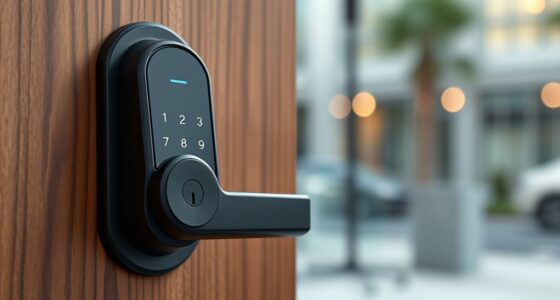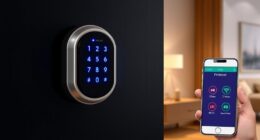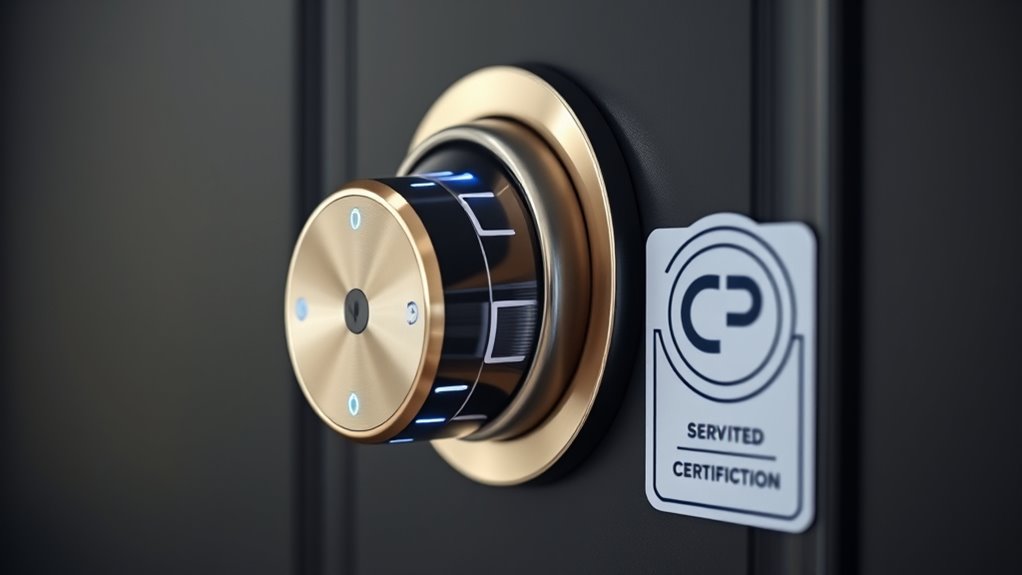
When evaluating smart lock certifications, look for trusted marks like UL for safety, FCC for electromagnetic compliance, and certifications for cybersecurity protocols like Z-Wave or Zigbee. Confirm the certifications are current and verify labels from the manufacturer. Reputable certifications demonstrate the lock meets industry standards for safety, data privacy, and wireless security. Continuing your search will help you understand what certifications guarantee you’re choosing a reliable, secure smart lock.
Key Takeaways
- Verify that the smart lock has current certifications from reputable organizations like UL, FCC, or similar industry standards.
- Check for certifications related to wireless communication protocols such as Z-Wave, Zigbee, or Bluetooth, including encryption features.
- Ensure the certifications confirm compliance with cybersecurity standards and data privacy regulations.
- Confirm that the product’s certifications are up-to-date and have not expired or been revoked after modifications.
- Compare certifications against recognized industry benchmarks to assess security, safety, and interoperability levels.

When choosing a smart lock, understanding its certifications is crucial to guarantee it meets security and compatibility standards. Certifications serve as proof that the lock has undergone rigorous testing and adheres to recognized security standards, giving you confidence in its reliability. These standards are set by industry organizations and regulatory bodies that establish benchmarks for safety, data protection, and interoperability. By verifying a smart lock’s certifications, you ensure it won’t just work with your devices but also provides the security features you need to protect your home or business.
One of the key aspects to evaluate is the manufacturer’s credentials. Reputable manufacturers typically pursue certifications from trusted organizations, demonstrating their commitment to quality and security. Certifications like the UL (Underwriters Laboratories) mark indicate that the product has been tested for safety hazards, such as electrical malfunctions or fire risks. Similarly, certifications like the FCC mark confirm that the device complies with electromagnetic interference standards, ensuring it won’t interfere with other electronic devices. When a manufacturer has a proven track record of obtaining and maintaining these credentials, it’s a strong indicator that their smart lock is built with security and quality in mind.
Beyond safety certifications, look for standards that address cybersecurity. Many certified smart locks meet specific protocols like Z-Wave, Zigbee, or Bluetooth, which ensure secure wireless communication. These standards often include encryption features designed to prevent hacking or unauthorized access. Some certifications also indicate compliance with data privacy regulations, meaning your personal information and digital keys are protected. When you check for these security standards, you’re safeguarding against vulnerabilities that could compromise your property.
It’s also essential to verify that the certifications are current and valid. Manufacturers sometimes lose or let expire certifications if they make significant changes to their products. Always check the latest certification labels or documentation provided by the manufacturer. If a smart lock boasts multiple certifications from reputable sources, it reinforces its credibility and your peace of mind. Additionally, awareness of the security standards set by industry organizations can help you compare different smart locks more effectively.
Frequently Asked Questions
Do Certifications Guarantee Smart Lock Security?
Certifications don’t guarantee complete smart lock security, but they do show adherence to key standards like strong encryption standards and reliable user authentication. When a lock is certified, it means it has passed tests for vulnerabilities, making it harder for hackers to breach. However, you still need to stay vigilant, update firmware regularly, and use strong, unique passwords to maximize your smart lock’s security.
Are There Regional Certification Differences to Consider?
Yes, regional certification differences matter. You should consider regional standards set by specific certification agencies, as they guarantee smart locks meet local security and privacy requirements. For example, certifications in North America might differ from those in Europe or Asia, affecting compatibility and legal compliance. Checking these regional standards helps you choose a smart lock that’s reliable and legally compliant in your area, ensuring better security and peace of mind.
How Often Are Smart Lock Certifications Updated?
You might think smart lock certifications update as often as your phone’s apps, but they actually depend on firmware updates and certification renewal cycles. Usually, manufacturers renew certifications every 1-3 years or after major firmware updates. Keep an eye on manufacturer announcements and check for certification renewal dates, because falling behind could mean your smart lock isn’t keeping up with current security standards—and that’s a risk you shouldn’t take.
Can Uncertified Locks Be Secure?
Uncertified locks can still be secure, but their durability and user convenience might be questionable. Without certification, you can’t be sure they meet industry standards for security features, which could mean weaker materials or less reliable technology. While some uncertified locks may perform well, it’s safer to select certified ones to ensure you get reliable durability and ease of use. Certification offers peace of mind that your lock is both durable and user-friendly.
Do Certifications Include Data Privacy Standards?
Yes, certifications often include data privacy standards and data protection requirements. When you check a smart lock’s certification, look for those that specifically mention privacy standards, ensuring your personal information stays secure. Certifications like UL or FCC may also address data security measures, giving you peace of mind. Always verify that the certification covers privacy and data protection, so your smart lock doesn’t just secure your home but also safeguards your information.
Conclusion
When choosing a smart lock, look for certifications that promise security, compatibility, and peace of mind. Trust in standards that safeguard your home, compatibility that fits your lifestyle, and certifications that verify quality. By focusing on these, you build a lock that protects your space, integrates seamlessly with your devices, and stands the test of time. Choose wisely, and let your smart lock be the vigilant guardian that keeps your home safe and secure.