Finding the right auto-lock timer balances security with convenience. If you set it too short, it might interrupt your workflow, but too long increases vulnerability to unauthorized access. Consider your usage habits, environment, and sensitivity of information stored on your device. Adjusting the timer and enabling biometrics can help protect your privacy without hassle. Keep exploring to discover how to fine-tune your settings for ideal safety and ease of use.
Key Takeaways
- Balance short timers in sensitive areas for security with longer durations during focused work for convenience.
- Regularly review and adjust auto-lock settings based on changing usage patterns and security needs.
- Enable biometric authentication to provide quick access without compromising security.
- Consider device environment—public spaces require shorter timers, private spaces may allow longer durations.
- Educate users on the importance of proper timer settings to prevent security gaps and workflow disruptions.
As an affiliate, we earn on qualifying purchases.
Understanding Auto-Lock Timer Basics

Auto-lock timers are features built into devices that automatically turn off or lock the screen after a set period of inactivity. They help conserve battery life by reducing power drain when you’re not actively using your device. Your user habits influence how you should set these timers; if you often forget to lock your screen, a shorter timer can safeguard your data and extend battery life. Conversely, if you prefer quick access or frequently glance away, a longer timer might suit you better. Understanding how auto-lock timers work allows you to balance convenience with security. Adjusting the timer based on your routine ensures your device stays protected without unnecessarily draining the battery or causing inconvenience. Finding this balance optimizes both device longevity and usability. Being aware of AI vulnerabilities can also inform your security settings to better protect your device from potential threats.

Mantra MFS 110 L1 Biometric Single Fingerprint Scanner | Aadhaar Authentication Device | Latest Updated RD Service | High Securety and Fast scanning | Reliable and Durable
- Model and Type: MFS110 L1 USB Fingerprint Scanner
- Compatibility: Supports Windows, Android, Linux
- Service Registration: Includes 1 Year RD Service
As an affiliate, we earn on qualifying purchases.
As an affiliate, we earn on qualifying purchases.
The Benefits of Proper Timer Settings

Setting your auto-lock timer correctly offers numerous benefits, including improved device security and better battery life. When you tailor the timer to your user preferences, you reduce privacy concerns by preventing unauthorized access if your device is left unattended. Proper settings also minimize the risk of accidental data exposure while conserving power. Consider the following: You can further optimize your device’s security by understanding the crochet styles for locs, which highlight the importance of protective and customizable styling options.
As an affiliate, we earn on qualifying purchases.
Common Challenges in Setting Auto-Lock Timers
Choosing the right auto-lock timer can be tricky because many users struggle to find a balance between security and convenience. One common challenge is battery drain; setting the timer too short can cause frequent lock cycles, draining your device’s battery quickly. On the other hand, a timer that’s too long may leave your device vulnerable. User frustration also arises when the timer is inconsistent or doesn’t work as expected, leading to confusion and inconvenience. Additionally, some devices automatically reset or ignore timer settings, complicating the process further. Finding the perfect balance requires understanding your usage habits and device capabilities. Without careful adjustment, you risk either compromising security or sacrificing convenience, both of which can lead to dissatisfaction and reduced device longevity. Proper cookie management can help optimize device performance and security overall.
As an affiliate, we earn on qualifying purchases.
Factors to Consider When Choosing a Timer Duration
When selecting the right timer duration, it’s crucial to take into account how you use your device and what level of security you need. Your user habits and the device’s battery life play key roles in this decision. Longer timers reduce the frequency of auto-locks, conserving battery but risking security lapses. Shorter timers enhance security but may inconvenience you. Consider these factors:
- How often you access your device daily
- The sensitivity of the information stored on it
- Battery life and how quickly it drains
- Your typical device usage patterns
- Understanding the divorce process can also inform your approach to managing device security during legal proceedings.
Balancing these elements helps you choose a timer that offers ideal convenience without compromising security or draining your battery unnecessarily.
How Shorter Timers Enhance Security
Shorter timers substantially boost your device’s security by limiting the window of opportunity for unauthorized access. When your auto-lock activates quickly, it reduces the chances someone can snoop or tamper with your device unnoticed. Biometric authentication, like fingerprint or facial recognition, becomes especially effective in these situations, allowing you to unblock swiftly without sacrificing security. Additionally, shorter timers encourage you to be more mindful of your device’s safety. Proper calibration of the device’s color accuracy can also help users better identify potential security threats visually. However, it’s important to contemplate emergency override options, which let you access your device quickly if needed. By balancing a shorter timer with reliable biometric authentication and accessible override features, you create a more secure environment that deters intruders while still maintaining ease of access during urgent moments.
Risks Associated With Longer Auto-Lock Periods
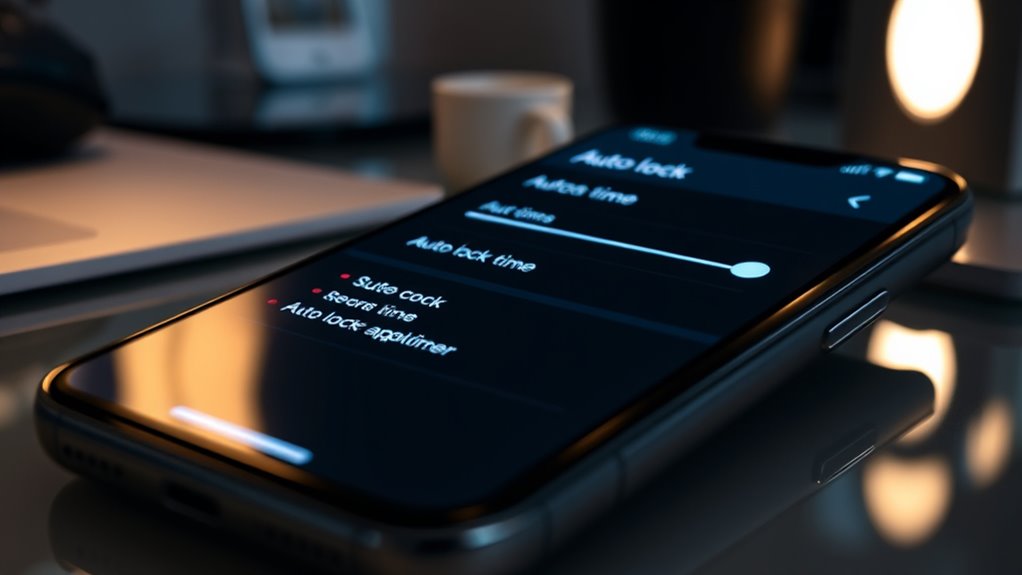
Longer auto-lock periods may seem convenient, but they also pose significant security risks. First, they increase the chance of an accidental lock if you forget to release your device, delaying access when needed. Second, extended periods can drain your battery faster, as the device stays active longer, leading to more power consumption. Third, longer timers may give intruders more time to access your device if it’s left unattended. In addition, neglecting to adjust auto-lock settings can result in missed security alerts or updates, increasing vulnerability. In the end, you might overlook security alerts or updates, assuming your device is secure due to the delay. While longer auto-lock times might seem beneficial, they can compromise your device’s security and performance, especially if you’re concerned about battery drain or accidental lock incidents.
Strategies for Finding the Optimal Balance
Finding the right auto-lock timer requires balancing convenience with security. To do this effectively, consider your accessibility features and how they influence your user preferences. If you prioritize quick access, set a longer timer, but be aware of the security risks. Conversely, shorter timers enhance safety but might inconvenience you during frequent use. Adjust settings based on your routine, ensuring accessibility features are compatible with your needs. For example, if you have visual or motor impairments, optimize the timer to prevent frustration without compromising security. Regularly reassess your preferences, especially if your environment or health changes. Incorporating security zone info can help you understand how various security measures impact overall safety. By tuning your auto-lock timer thoughtfully, you create a personalized balance that respects both your convenience and security concerns.
Practical Tips for Adjusting Your Auto-Lock Timer

Wondering how to fine-tune your auto-lock timer for the best balance? Start by evaluating your daily habits and environment. Here are practical tips:
- Set a shorter timer if you often work in public spaces to boost password security.
- Increase the timer if you prioritize user convenience during focused tasks.
- Enable quick access features, like fingerprint or face recognition, to maintain security without sacrificing ease.
- Regularly review your auto-lock settings, especially after software updates or changes in your routine.
- Consider the security benefits of adjusting your auto-lock timer to protect sensitive information effectively.
Adjusting your auto-lock timer thoughtfully ensures your device stays secure while remaining accessible. Finding this balance helps protect sensitive information without causing frustration, making your device both safe and user-friendly.
Frequently Asked Questions
Can Auto-Lock Timers Be Customized for Different User Profiles?
You can customize auto-lock timers for different user profiles, especially in multi-user settings. By enabling user profile customization, you guarantee each person’s preferences are met, balancing convenience and security. Some systems allow you to set specific lock times for individual profiles, making it easy to tailor auto-lock timers based on usage patterns. This way, you optimize device security without sacrificing user-specific convenience.
What Are the Legal Implications of Auto-Lock Timer Misuse?
You might think auto-lock timers are just simple features, but misuse can cause massive legal issues—like privacy concerns spiraling out of control or liability issues that could ruin you financially. If you ignore proper use or misconfigure them, you risk breaching privacy laws or facing lawsuits. Always guarantee you understand the legal responsibilities tied to auto-lock timers to protect yourself from unintended legal consequences.
How Do Auto-Lock Timers Impact Data Recovery After a Crash?
Auto-lock timers can substantially impact data recovery after a crash by influencing how quickly your device secures data. If timers are too short, you risk data loss if the system crashes unexpectedly, as unsaved work may be locked or inaccessible. To mitigate this, implement recovery strategies like regular backups and autosave features. Properly setting auto-lock timers helps balance security with minimizing data loss, ensuring smoother data recovery post-crash.
Are There Compatibility Issues With Certain Devices and Auto-Lock Timers?
You might encounter device compatibility issues with auto-lock timers, especially if your device has specific security features or outdated software. Not all devices support timer customization, which can limit how you set or adjust auto-lock settings. It’s crucial to check your device’s compatibility and available options for timer customization to guarantee smooth functioning without risking security or convenience. Always verify your device’s specifications before implementing auto-lock timers.
How Do Auto-Lock Timers Affect Accessibility for Users With Disabilities?
They say, “the proof of the pudding is in the eating,” and when it comes to auto-lock timers, accessibility is key. You might find that auto-lock timers can pose challenges for users with visual impairments or motor difficulties, making it harder to open or navigate devices. To guarantee inclusivity, consider adjustable timers or alternative access methods, helping everyone use devices comfortably without compromising security.
Conclusion
Finding the right auto-lock timer isn’t just about convenience—it’s about balancing security and ease. Did you know that 70% of thefts happen when devices are left unlatched? By adjusting your timer thoughtfully, you protect your data without sacrificing accessibility. Take the time to find that sweet spot; it’s a simple step that can make a big difference in keeping your digital life safe and secure.