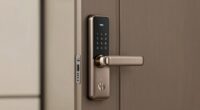
Integrating smart locks with alarm systems allows you to instantly arm or disarm your home security with just a tap, making your routines more seamless and secure. You can control access remotely, get real-time alerts for suspicious activity, and automate locking or opening based on your alarm’s status. This integration simplifies managing your security, enhances safety, and keeps your home protected at all times. Continue to explore how this unified system can transform your home security setup.
Key Takeaways
- Seamless integration enables automatic arming/disarming of alarm systems based on smart lock status.
- Centralized control interfaces simplify managing both smart locks and alarm settings simultaneously.
- Real-time alerts notify homeowners of lock or alarm status changes instantly.
- Automated routines can lock doors when arming the alarm and unlock when disarming remotely.
- Integration enhances security by reducing manual errors and enabling proactive home protection.
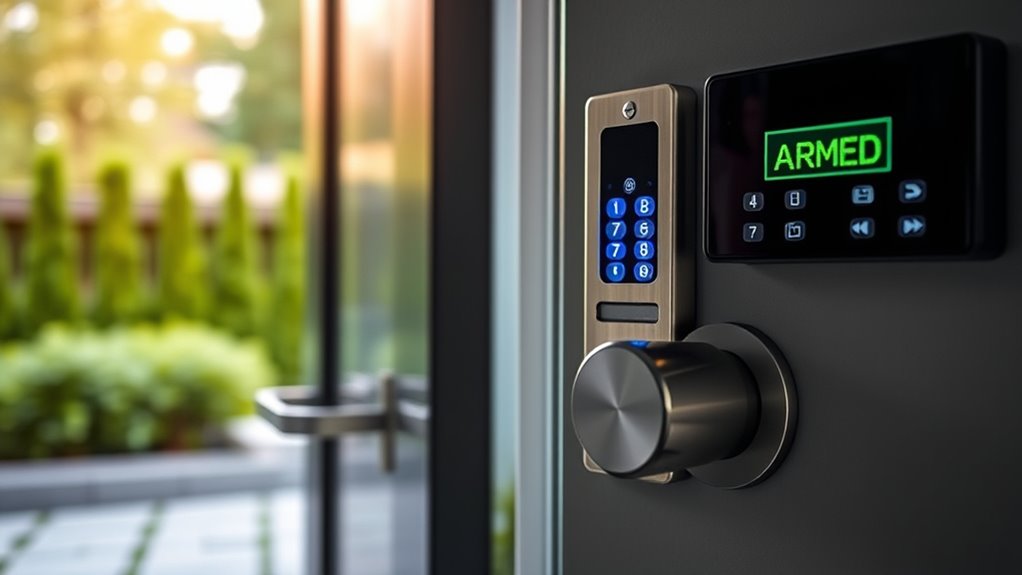
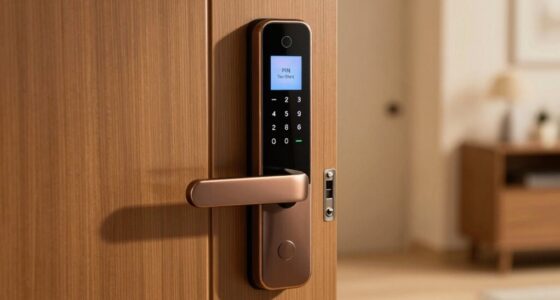
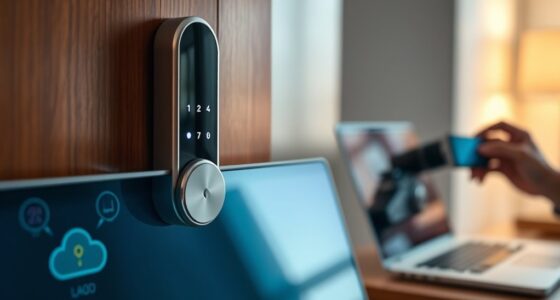
Integrating smart locks with alarm systems enhances your home security by providing seamless control and real-time alerts. When you connect these devices, you gain the ability to manage access control effortlessly from anywhere. Instead of fumbling for keys or manually arming your alarm system, you can lock or open doors remotely, giving you greater flexibility and peace of mind. This integration guarantees that your home is protected even when you’re miles away, as you can monitor and adjust security settings instantly through your smartphone or smart home hub.
Seamlessly control your home security with smart locks and alarm systems for real-time alerts and remote access.
With smart locks integrated into your alarm system, remote monitoring becomes straightforward. You can check the status of your doors—whether they’re locked or open—and receive instant notifications if someone enters or exits during specific times. This real-time insight allows you to respond quickly to any suspicious activity, whether you’re at work, on vacation, or simply out for the evening. The combined system acts as a digital gatekeeper, providing detailed logs of who accessed your home and when, which is vital for both everyday convenience and security audits.
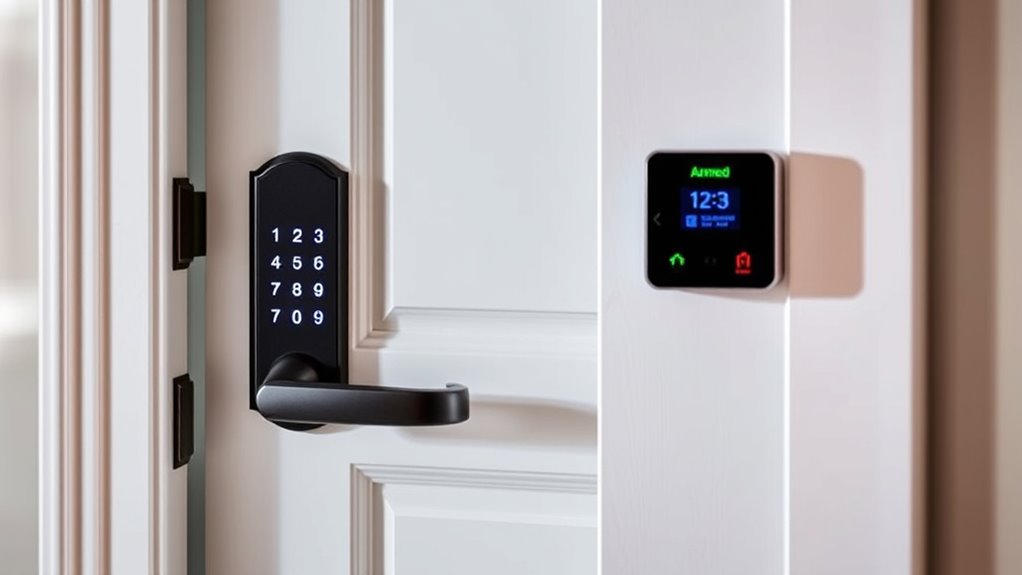
One of the key benefits of integrating these systems is the ability to automate security routines. For example, you can set your smart lock to automatically lock when you arm your alarm system or open when you disarm it, eliminating the risk of leaving a door unlocked unintentionally. This automation not only saves time but also reduces the chances of human error. You can also program access codes for family members, friends, or service providers, and revoke their access immediately if needed, all through your unified control system.
Furthermore, the integration streamlines your security management by centralizing controls. Instead of juggling multiple apps or devices, you can oversee your smart lock and alarm system from a single interface. This simplifies daily routines and enhances your ability to respond quickly to any security concern. If an alarm is triggered, your system can automatically lock the doors or send you alerts, allowing for immediate action. The synergy between smart locks and alarm systems creates a thorough security environment where control is at your fingertips, and your home is constantly monitored.
In essence, by integrating smart locks with your alarm system, you make your home smarter, safer, and more responsive. You gain better access control, detailed remote monitoring, and automated routines that adapt to your lifestyle. This seamless connection empowers you to protect your home proactively, providing confidence that your security system works in harmony to keep you safe at all times. Additionally, understanding the core traits of your security system can help you optimize its performance and reliability.
Frequently Asked Questions
Can Smart Locks Be Hacked When Connected to Alarm Systems?
Yes, smart locks connected to alarm systems can be hacked, especially if cybersecurity vulnerabilities exist. Hackers might exploit weak passwords or unencrypted data to gain access. Wireless interference can also disrupt signals, potentially allowing unauthorized entry or system bypass. To protect yourself, guarantee your smart lock and alarm system have strong security features, regularly update firmware, and avoid using default passwords. Staying vigilant reduces the risk of hacking attempts.
Do All Alarm Systems Support Smart Lock Integration?
Not all alarm systems support smart lock integration. Picture a sleek control panel seamlessly connecting to your smart lock, creating a fortress of security. To make this happen, your system must follow strict security protocols and robust user authentication methods. Without these features, integration isn’t possible, leaving your home vulnerable. Check your alarm system’s specifications or consult with your provider to verify compatibility and a secure, smooth connection.
How Does Battery Failure Affect Integrated Smart Lock and Alarm Functions?
Battery failure can disable your integrated smart lock and alarm system if there’s no power backup or system redundancy in place. Without backup power, the smart lock may lock or unlock unexpectedly, and the alarm might not activate or deactivate properly. To prevent this, guarantee your system has a reliable power backup, like a UPS, and redundancy features that keep security functions operational even during power outages.
Are There Privacy Concerns With Remote Smart Lock Control?
Remote control of your smart lock raises privacy concerns because it involves transmitting your data over the internet, which could be vulnerable to hacking or unauthorized access. You should guarantee your system uses strong encryption and secure connections to protect your privacy. Always review the manufacturer’s privacy policies and update firmware regularly. Being cautious with permissions and monitoring access logs helps you maintain control and safeguard your personal information.
What Is the Typical Installation Time for Integrated Systems?
Think of installing integrated smart lock systems like assembling furniture—you can complete it in about 2 to 4 hours. The process varies depending on installation complexity, with simpler setups taking less time. You’ll need some user training to familiarize yourself with features like remote control and security settings. Overall, expect a smooth, quick setup if you follow instructions carefully, and most users are up and running within a few hours.
Conclusion
By integrating smart locks with your alarm system, you create a seamless security network that’s both convenient and reliable. Many believe this setup can instantly deter intruders and give you peace of mind, but does it truly prevent all threats? While it enhances security, it’s not foolproof. Still, combining these technologies offers a smarter way to protect your home, making it harder for anyone to breach your defenses. Stay vigilant and keep your system updated for maximum safety.