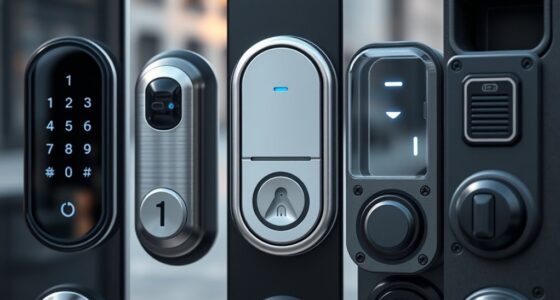
Bluetooth door locks rely on wireless signals that have limited and often variable ranges, typically within 10 meters, influenced by walls, furniture, and interference from other devices. This can impact both convenience and security, as signals might weaken or drop unexpectedly. Environmental factors and device compatibility also play roles in connection quality. Understanding how these limits work can help you optimize your setup. Keep exploring to discover how to improve your Bluetooth lock’s reliability and security.

Get privacy and security gear delivered free — and shop member deals
- Fast, free delivery on millions of items
- Access to Prime Big Deal Days deals on October 6–7
- Prime Video, Amazon Music and more included
Key Takeaways
- Bluetooth locks typically operate within a 10-meter range, but obstacles can significantly reduce this distance.
- Wireless interference from other devices can weaken Bluetooth signals and compromise door security.
- Compatibility and firmware updates improve Bluetooth connectivity and help maintain reliable, secure access.
- Physical barriers like walls and furniture diminish Bluetooth effectiveness, requiring strategic device placement.
- Signal fluctuations due to environment and device quality can cause disconnections, impacting security and convenience.

Many people assume that Bluetooth-enabled door locks are secure because of their convenience, but understanding their actual range is crucial for maintaining safety. While these locks offer quick access without keys, their security depends heavily on how well you understand their operational limits. One key factor that influences their effectiveness is wireless interference. Devices like Wi-Fi routers, cordless phones, and even microwave ovens can disrupt Bluetooth signals, reducing the lock’s effective range or causing connection issues. If you rely on Bluetooth for entry, you need to be aware that interference can create blind spots, making it easier for unauthorized access or accidental lockouts.
Device compatibility also plays a significant role in how well your Bluetooth lock functions. Not all devices are created equal, and some may have limited Bluetooth versions or outdated software that hinder proper communication with your lock. For example, older smartphones or tablets might not support the latest Bluetooth standards, which can result in decreased range or unstable connections. To guarantee your system works seamlessly, you should verify that your devices are compatible with your lock’s specifications and keep their firmware updated. This proactive approach minimizes connectivity issues and helps you understand the limitations of your setup. Additionally, device compatibility can influence the overall reliability of your Bluetooth connection, emphasizing the importance of choosing compatible hardware for security.
You might think that Bluetooth range is solely a matter of distance, but it’s more complex. Typically, Bluetooth operates effectively within a 10-meter (33-foot) radius, but obstacles like walls, furniture, and other electronic devices can substantially reduce this distance. When you’re trying to unlock your door from outside, these physical barriers can weaken the signal, possibly preventing the lock from recognizing your device. Furthermore, in environments with multiple wireless devices, the crowded spectrum can cause interference, further diminishing the effective range. Understanding these environmental factors can help you position your device and lock appropriately, reducing the chances of connectivity hiccups. Additionally, wireless interference can fluctuate based on the environment, making it essential to regularly assess your setup for optimal performance. Being aware of signal strength and its impact can help you troubleshoot connectivity problems more effectively. Recognizing that Bluetooth signal quality can vary helps you better adapt your setup for consistent operation. It’s also beneficial to periodically test your Bluetooth connection in different environments to identify potential weak spots.
It’s also important to recognize that Bluetooth range isn’t static. It varies depending on device quality, environmental conditions, and interference levels. If you notice frequent disconnections or difficulty unlocking your door, it may be time to evaluate your device compatibility, reduce interference sources, or upgrade to a newer lock with a stronger Bluetooth signal. By understanding these factors, you can better protect your home, knowing that your convenience doesn’t come at the cost of security. Ultimately, awareness of wireless interference and device compatibility helps you maintain a secure, reliable connection, guaranteeing your Bluetooth-enabled door lock functions effectively when you need it most.
As an affiliate, we earn on qualifying purchases.
Frequently Asked Questions
Can Bluetooth Range Be Extended With External Devices?
Yes, you can extend Bluetooth range with external devices. By using Bluetooth amplification or signal boosting devices, you improve communication between your device and the receiver. These external tools amplify the Bluetooth signal, allowing it to reach farther and penetrate obstacles better. Just make certain the booster is compatible with your device, and position it ideally for the best effect, so your connection remains strong and reliable over longer distances.
How Does Environmental Interference Affect Bluetooth Door Security?
Imagine your Bluetooth door as a delicate dance partner, but environmental interference acts like sudden gusts of wind, disrupting the rhythm. Wireless interference and signal disruption from other electronic devices or thick walls can weaken or block your Bluetooth connection, rendering your security vulnerable. This interference hampers reliable communication, making your door less secure. To maintain a steady dance, minimize obstacles and keep electronic devices away from your Bluetooth-enabled door system.
Are There Legal Restrictions on Bluetooth Signal Boosting?
Yes, there are legal regulations on signal amplification for Bluetooth devices. You can’t legally boost Bluetooth signals beyond the manufacturer’s specifications, as doing so may violate local radio frequency laws and regulations. These rules aim to prevent interference with other wireless devices and ensure safety. Always check your country’s specific regulations before attempting any signal amplification, and consider using approved devices to stay compliant with legal standards.
What Are the Best Practices for Securing Bluetooth-Enabled Door Locks?
You should prioritize encrypting your Bluetooth door lock communications, as strong encryption protocols like AES protect against eavesdropping. Implementing robust user authentication guarantees only authorized users can access the door, reducing security risks. Remember, nearly 60% of Bluetooth vulnerabilities stem from weak security measures. Keep your device firmware updated, disable unnecessary features, and regularly change access codes to stay ahead of potential breaches.
How Often Should Bluetooth Door Security Systems Be Updated?
You should update your Bluetooth door security system regularly, ideally every few months, to address smart lock vulnerabilities and guarantee peak performance. Frequent updates patch security flaws and improve battery life optimization, preventing potential breaches and extending your lock’s functionality. Keep an eye on manufacturer notifications, and don’t delay installing updates to stay ahead of emerging threats and maintain a secure, reliable smart lock system.
Bluetooth range extender for smart locks
As an affiliate, we earn on qualifying purchases.
As an affiliate, we earn on qualifying purchases.
Conclusion
Don’t let misconceptions about Bluetooth range make you complacent. While it might seem limited, smart security measures can mitigate potential vulnerabilities. Remember, no system is entirely foolproof, but staying informed and proactive keeps your home safer. Trusting technology doesn’t mean ignoring best practices; it means using them wisely. So, instead of fearing Bluetooth’s reach, focus on strengthening your security habits—because awareness and preparation are your best defenses.
wireless interference blocker for Bluetooth locks
As an affiliate, we earn on qualifying purchases.
As an affiliate, we earn on qualifying purchases.
As an affiliate, we earn on qualifying purchases.
Fall Picks
fall essentials
As an affiliate, we earn on qualifying purchases.