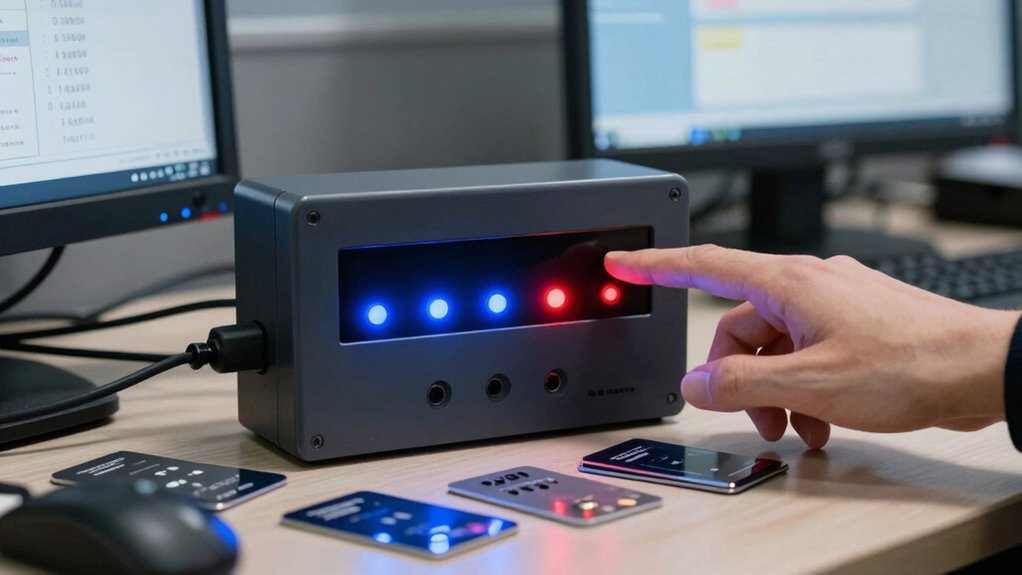

False activations happen when your security system triggers without a real threat, often caused by poor sensor placement, environmental factors, or user errors. To prevent this, check sensor sensitivity, ensure proper placement away from dust, wildlife, and pollution, and regularly calibrate and maintain your system. Use advanced technology, customize user settings, and manage background noise. If problems persist, professional help can fine-tune your system—continue to explore for expert tips that can help improve your security’s reliability.

Get privacy and security gear delivered free with Prime
- Fast, free delivery on millions of items
- Prime Video, Amazon Music and more included
- Member-only deals all year
Key Takeaways
- Properly calibrate and position sensors to reduce sensitivity issues and environmental interference.
- Regularly maintain and test sensors to ensure correct alignment and optimal performance.
- Adjust sensitivity settings based on environment to balance detection and false alarm risks.
- Minimize environmental triggers by avoiding placement near wildlife, pollution sources, and dust.
- Use advanced detection technologies and user training to distinguish real threats from false activations.
security system sensor calibration kit
As an affiliate, we earn on qualifying purchases.
As an affiliate, we earn on qualifying purchases.
What Are False Activations and Why Do They Matter?

Have you ever experienced your security system going off without an apparent reason? That’s a false activation, which occurs when your alarm triggers without an actual threat. False alarms happen for various reasons, often linked to poor alarm calibration, where sensors aren’t properly adjusted to detect genuine threats. Proper sensor calibration is essential for minimizing false alerts and ensuring your system functions as intended. These incidents matter because they can lead to unnecessary emergency responses, wasting resources and causing frustration. Alarm calibration plays a vital role in reducing false alarm statistics, helping guarantee your system responds accurately. When false alarms happen frequently, authorities may impose penalties, and your credibility with responders diminishes. Understanding what false activations are and why they matter emphasizes the importance of maintaining a well-calibrated, reliable security system. Additionally, leveraging advanced detection technologies can further enhance system accuracy and reduce false alarms significantly. Regular maintenance and system testing can also identify calibration issues before they result in false alarms, ensuring your security measures remain effective and trustworthy. Performing periodic sensor adjustments is crucial for adapting to changing environmental conditions and maintaining optimal detection performance.
wireless motion detector sensors
As an affiliate, we earn on qualifying purchases.
As an affiliate, we earn on qualifying purchases.
What Causes False Activations in Security Systems?

False activations often happen because of sensor sensitivity issues or user errors. If sensors are too sensitive, they may trigger alarms from minor disturbances, while improper setup can cause malfunctions. Understanding these causes helps you reduce false alarms and keep your security system reliable. Additionally, being aware of Free Floating issues can help in troubleshooting ambiguous sensor responses. Proper calibration and placement of sensors are crucial, as sensor sensitivity can be affected by environmental factors, leading to unintended activations. Regular maintenance and awareness of air quality considerations can also influence sensor performance and help prevent false triggers. For instance, fluctuations in environmental conditions can sometimes cause sensors to respond unexpectedly, so monitoring these factors is essential for system accuracy. Maintaining optimal sensor calibration is vital to ensure consistent performance and reduce false alarms.
Sensor Sensitivity Issues
Sensor sensitivity issues often cause security system false activations when sensors are set too high or too low. If the sensitivity is too high, even minor movements or environmental changes can trigger alarms. Conversely, if it’s too low, genuine threats might go unnoticed. Proper sensor calibration is essential to find the right equilibrium, ensuring the system reacts accurately without false alarms. Additionally, device compatibility plays a role; incompatible sensors may not respond correctly, leading to false triggers. Regularly testing and adjusting sensor sensitivity helps maintain system accuracy. Keep in mind that environmental factors, like temperature or humidity, can also influence sensor performance, making ongoing calibration and compatibility checks crucial for preventing false activations. Research shows that security system effectiveness can be compromised by improper sensor settings, emphasizing the importance of proper calibration and maintenance. To optimize sensor performance, incorporating modern technology with traditional sensors can enhance detection accuracy and reduce false alarms. Moreover, understanding how sensor sensitivity interacts with environmental influences can help in designing more reliable security solutions, as sensor placement also significantly impacts false activations.
User Error Risks
User errors are a common cause of false activations in security systems, often resulting from user mistakes or misunderstandings. Without proper user training, you might accidentally trigger alarms by misusing the system or forgetting protocols. To minimize these risks, make sure you understand how your system functions and follow best practices. Customizing your system settings can also prevent false alarms; for example, adjusting sensor sensitivity or setting appropriate arming modes reduces accidental triggers. Regularly reviewing and updating your system’s configuration helps you stay aligned with your security needs. Remember, a well-trained user who customizes the system thoughtfully substantially decreases false activations caused by human error, keeping your property secure without unnecessary disruptions. Additionally, understanding how your system functions can help you recognize and avoid common mistakes that lead to false alarms. Educating yourself about system troubleshooting techniques can further reduce the likelihood of accidental triggers. Incorporating local automation and routines can also help prevent user errors by automating certain actions and reducing manual input. Being aware of system limitations can help set realistic expectations and prevent misinterpretations that cause false alarms. Moreover, understanding user interface design can help you navigate the system more effectively and avoid accidental activations.
security alarm sensitivity adjustment tool
As an affiliate, we earn on qualifying purchases.
As an affiliate, we earn on qualifying purchases.
How Do Sensor Sensitivity and Placement Affect Accuracy?

Your sensor placement and sensitivity settings directly influence detection accuracy. If sensors aren’t positioned precisely or set too high, they might trigger false alarms or miss real threats. Environmental factors like interference can further impact performance, so optimizing both placement and sensitivity is essential. Additionally, understanding sensor calibration can help ensure your system responds appropriately to various conditions. Proper calibration and regular maintenance can also reduce the likelihood of false activations, ensuring your system remains reliable over time. Regular testing and adjusting settings based on environmental conditions can further improve overall accuracy and reliability, especially when considering sensor placement strategies for optimal performance.
Sensor Placement Precision
Proper sensor placement is essential because even slight deviations can markedly impact detection accuracy. When positioning sensors, follow installation best practices to ensure consistent coverage and avoid blind spots that could cause false alarms. Accurate sensor calibration during setup helps fine-tune sensitivity and ensures the device responds correctly to genuine events. Keep sensors away from sources of interference, such as drafts or electrical noise, which can distort signals. Make sure the placement considers the environment’s layout to maximize coverage without overlapping zones excessively. Regularly verify placement during maintenance checks to prevent drift or displacement. Precision in installation minimizes false activations and enhances overall system reliability, making your detection setup more effective and trustworthy.
Optimal Sensitivity Settings
Sensor sensitivity settings play a vital role in the accuracy of your detection system, working hand-in-hand with placement. Proper sensitivity ensures the sensor detects true events without triggering false alarms. You should regularly perform sensor calibration to fine-tune sensitivity levels, adapting to changing conditions. Overly sensitive settings can cause false activations, while low sensitivity might miss genuine events. Keep your system updated with the latest firmware to improve performance and stability, which can also enhance sensitivity calibration processes. Adjusting sensitivity involves finding a balance that minimizes false alarms while maintaining reliable detection. Remember, ideal sensitivity depends on your environment and sensor placement, so regular testing and calibration are essential to maintain accuracy and prevent false activations.
Environmental Interference Impact
Environmental interference can markedly impact the accuracy of your detection system, especially when sensitivity settings and placement are not optimized. Factors like poor air quality, wildlife interference, and sensor positioning can cause false activations. For example, sensors placed near trees may detect wildlife movement, leading to false alerts. Similarly, dust or pollutants in the air can skew readings. To minimize these issues, carefully choose sensor locations away from potential wildlife activity and pollution sources. Adjust sensitivity settings to balance detection and false alarms. Use the table below to evaluate factors affecting accuracy:
| Factor | Effect on Detection |
|---|---|
| Air Quality | Impairs sensor readings, causes false alarms |
| Wildlife Interference | Triggers false activations |
| Sensor Placement | Influences detection accuracy |
| Sensitivity Settings | Too high causes false alarms; too low misses events |
environmentally resistant security sensors
As an affiliate, we earn on qualifying purchases.
As an affiliate, we earn on qualifying purchases.
How to Reduce Background Noise and Environmental Triggers
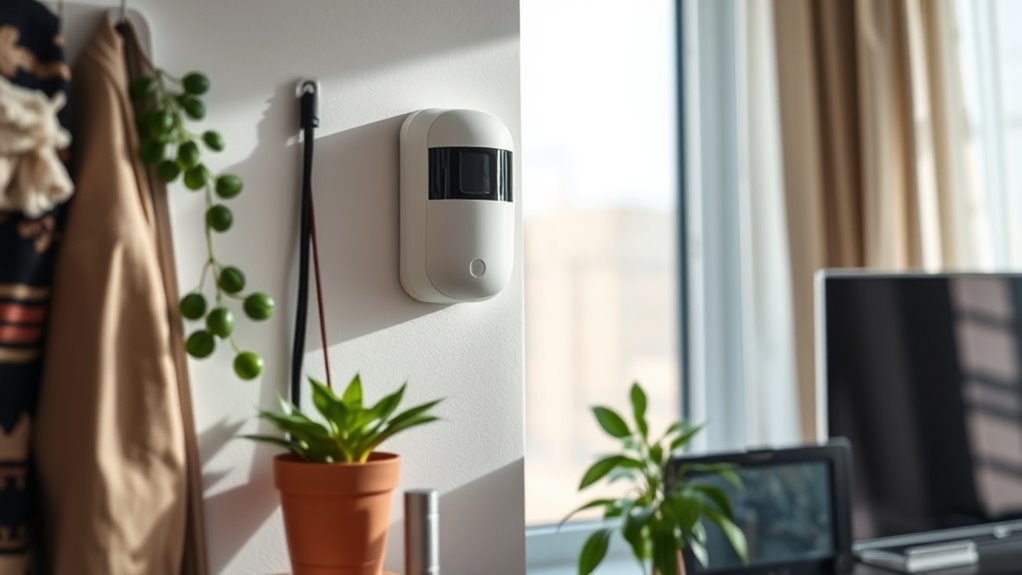
Minimizing background noise and environmental triggers is essential to prevent false activations. Effective noise reduction can markedly improve device accuracy, while environmental monitoring helps identify and eliminate common triggers. To achieve this, consider these steps:
Reducing noise and monitoring environments prevent false activations and improve device accuracy.
- Use soundproofing materials around the device area to cut down ambient noise.
- Position microphones away from noisy appliances or vents.
- Regularly check and update environmental monitoring systems to detect unusual activity.
- Limit background activity during sensitive periods to reduce unpredictable triggers.
Tips for User Settings to Minimize False Alarms

Adjusting your device’s user settings thoughtfully can substantially reduce false alarms. Start by customizing sensitivity levels to prevent minor sounds or movements from triggering alerts. Managing user privacy settings helps filter out unnecessary notifications, ensuring your device only activates when genuinely needed. Turn off or limit mobile notifications for non-essential apps to avoid distractions that may cause false activations. Regularly review and update your device’s permission settings to control what sensors can access. Additionally, consider setting personalized activity zones or schedules, so alerts only occur during specific times or areas. These adjustments help prevent accidental triggers, especially in busy environments. By fine-tuning your user privacy and notification preferences, you create a more reliable system that minimizes false alarms and keeps you informed without unnecessary interruptions.
Tech Solutions for Preventing False Activations

To effectively prevent false activations, implementing advanced technological solutions can make a significant difference. In your smart home, AI integration plays an essential role in distinguishing real threats from false alarms. Consider these solutions:
- Use AI-powered sensors that analyze motion patterns to reduce accidental triggers.
- Integrate smart cameras with facial or object recognition to verify activity.
- Enable adaptive algorithms that learn your routines, minimizing false alerts.
- Connect your system with voice assistants to confirm activations before sounding alarms.
These tools help filter genuine threats from false alarms, making your smart home more reliable. AI integration ensures your security system adapts over time, reducing unnecessary disruptions and providing peace of mind.
When to Call a Pro for Persistent False Alarms
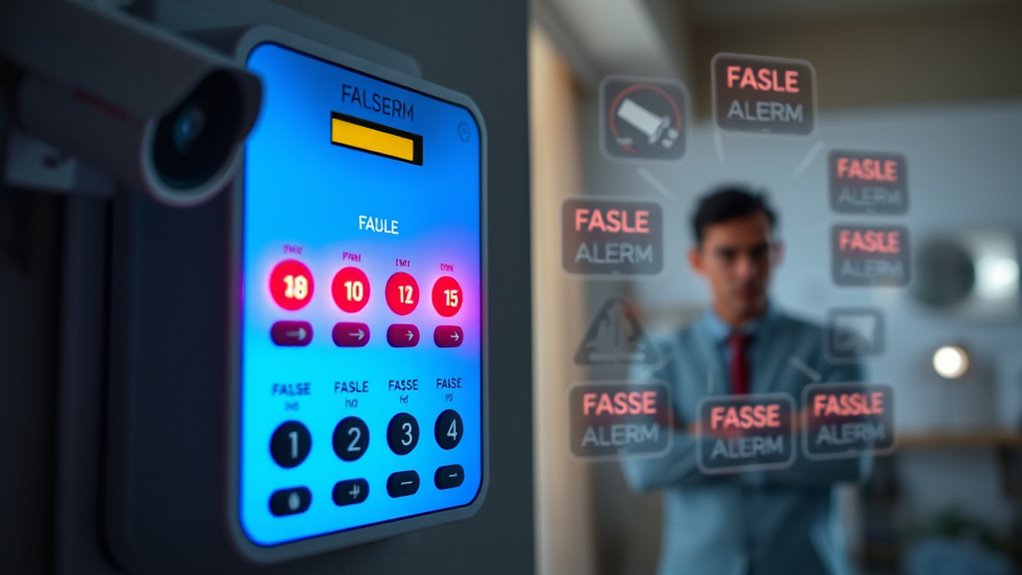
Persistent false alarms can be more than just an inconvenience; they may indicate underlying issues that require professional attention. If you’re experiencing frequent false triggers despite following basic alarm troubleshooting steps, it’s time to call a pro. Constant false alarms could signal sensor malfunctions, wiring problems, or interference issues that you might not be equipped to handle. Professionals have the tools and expertise to diagnose the root cause accurately and resolve persistent false triggers effectively. Ignoring repeated false alarms can compromise your security system’s reliability and cause unnecessary stress. When troubleshooting on your own doesn’t stop the false activations, seeking expert help ensures your system functions correctly and minimizes future false alarms. Don’t hesitate to get professional support when needed.
Frequently Asked Questions
Can False Activations Compromise Overall Security System Effectiveness?
Yes, false activations can compromise your security system’s effectiveness. They might cause you to ignore real threats or delay responses. To prevent this, you should adjust sensor sensitivity to reduce false triggers and guarantee proper user training. When you understand how your system works and optimize its settings, you reduce false activations, maintaining reliable security and avoiding unnecessary alerts that could weaken your overall safety.
Are Certain Alarm Systems More Prone to False Alarms?
Think of your alarm system as a finely tuned orchestra—some are more prone to false alarms if their sensor calibration or system sensitivity isn’t set just right. Systems with overly sensitive sensors or poor calibration tend to react to minor movements or environmental changes, making them more prone to false alarms. Choosing models with adjustable sensitivity and ensuring regular calibration helps reduce these false triggers, keeping your security reliable and peace of mind intact.
How Does Weather Impact False Activation Rates?
Weather impact can substantially increase false activation rates of alarm systems. You might notice more false alarms during heavy rain, snow, or high winds, as these conditions can trigger sensors unintentionally. Extreme temperatures also affect system sensitivity, causing malfunctions. To minimize weather-related false activations, make certain your alarm system is properly weatherproofed and calibrated for your climate. Regular maintenance and sensor checks help reduce false alarms caused by weather impact.
What Are Legal Liabilities Related to False Alarms?
False alarms can turn your peace of mind into a legal minefield. You’re liable for legal consequences if authorities or clients take action based on false alarms, especially if they result in damages or injuries. Insurance claims may be denied, leaving you to foot the bill. To avoid this, verify your alarm system is reliable and well-maintained, reducing the risk of costly legal and financial repercussions.
How Often Should System Calibrations Be Performed to Prevent False Triggers?
You should perform system calibrations at least once every six months to guarantee optimal false trigger prevention. Regular calibration adjusts sensors and detection settings, reducing false alarms caused by environmental changes or sensor drift. Consistent calibration frequency helps maintain system accuracy, minimizing false triggers and ensuring reliable operation. If your environment is particularly variable, consider more frequent calibrations to stay ahead of potential false activations.
Conclusion
By understanding what causes false activations and applying the right tips, you can keep your security system reliable and stress-free. Regularly check sensor placement, adjust sensitivity settings, and stay aware of environmental factors. When false alarms persist, don’t hesitate to call a professional. After all, isn’t peace of mind worth taking extra steps to protect? Staying proactive guarantees your system works when you need it most—so why leave it to chance?
Fall Picks
fall essentials
As an affiliate, we earn on qualifying purchases.