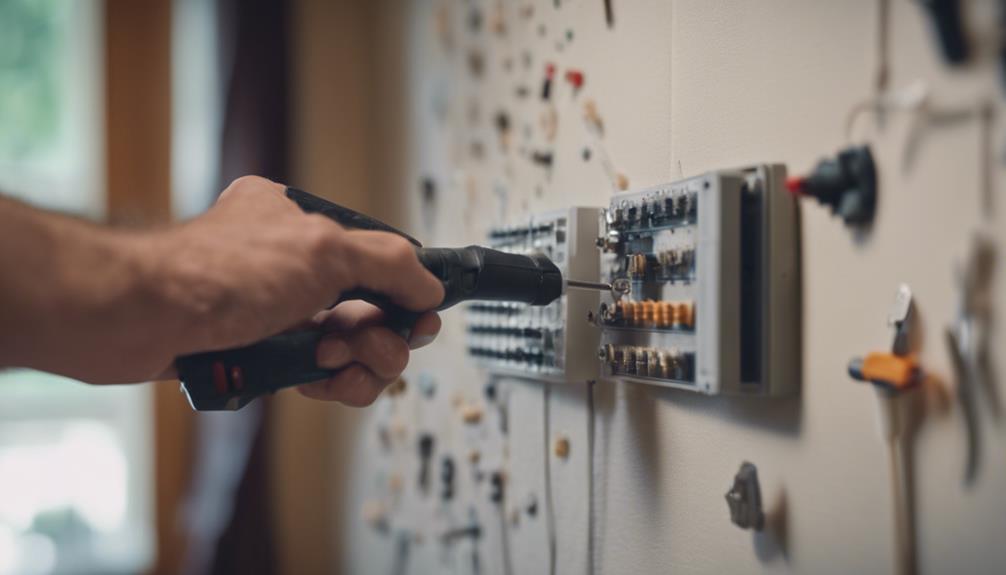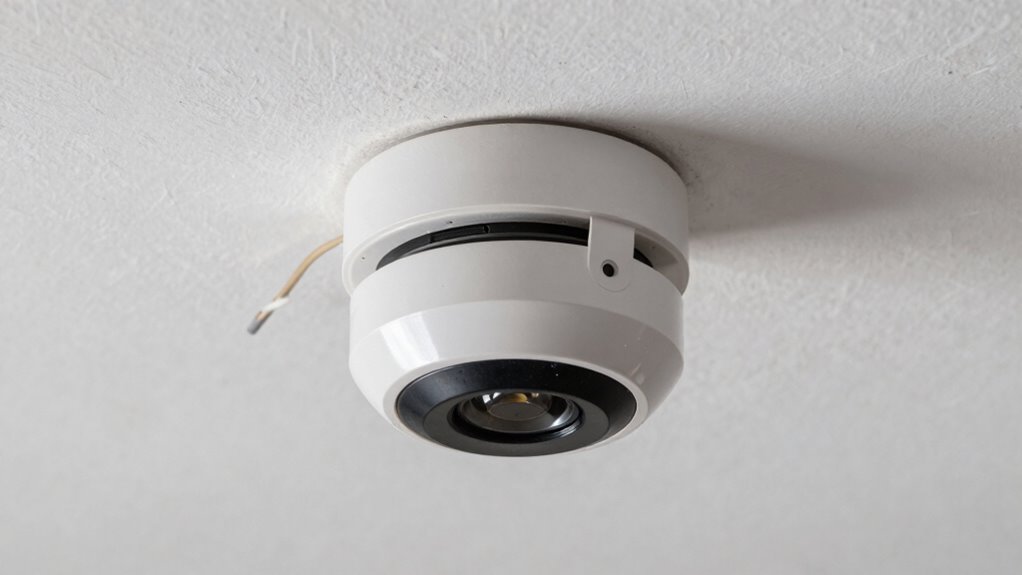

Mounting a motion detector incorrectly can cause frequent false alarms and reduce security. Avoid placing it near windows, doors, vents, or areas with moving branches and shadows. Don’t mount it too high or too low, as this can hinder detection. Make sure it isn’t facing sunlight or pet activity, which can trigger false alerts. Proper placement and testing are essential for reliable protection. Keep exploring to discover how to place your detector for ideal results.
Open a free Amazon Business account
Business pricing, bulk buying and tax-exempt orders.
As an affiliate, we earn on qualifying purchases.
Key Takeaways
- Mounting the detector directly facing windows or doors to sunlight causes frequent false alarms.
- Installing sensors too high or too low can result in missed detections or obstructions.
- Placing sensors near vents, air conditioners, or moving branches increases false triggers.
- Ignoring environmental factors like pet activity or airflow interference reduces system reliability.
- Overlapping detection zones without testing can cause multiple alerts from a single movement.
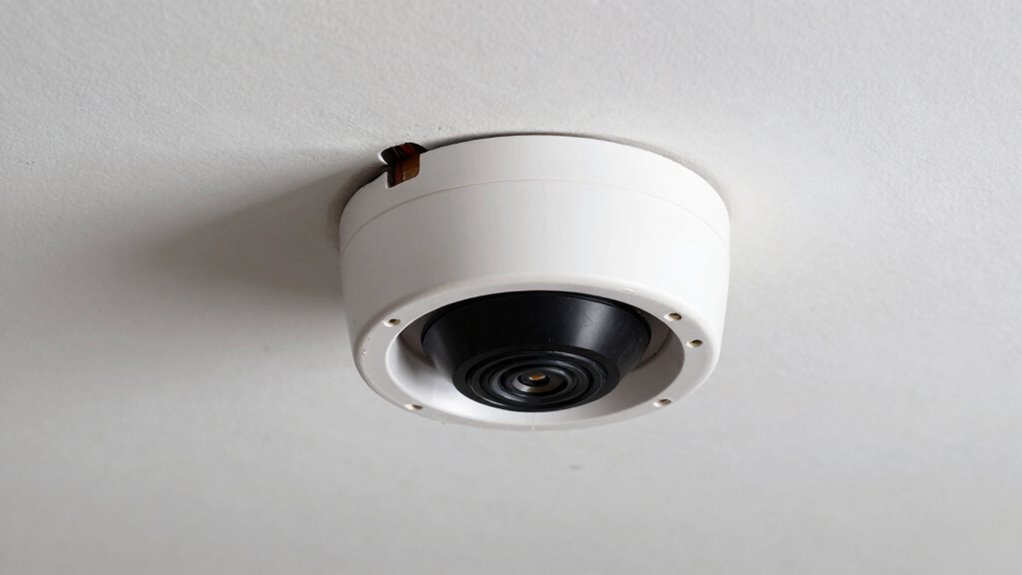
Mounting a motion detector might seem straightforward, but doing it the wrong way can compromise its effectiveness. If you don’t pay attention to false alarm prevention, you’ll find yourself constantly resetting the system due to harmless triggers like moving branches or passing shadows. To avoid this, you need to focus on suitable placement. Positioning the sensor correctly is key to ensuring it detects genuine intrusions while ignoring irrelevant movement. A common mistake is placing the detector too close to windows or doors, where sunlight, drafts, or pet activity can trigger false alarms. Instead, aim for a spot where environmental factors won’t interfere with its sensors.
Proper placement prevents false alarms and ensures your motion detector reliably detects real intrusions.
Another mistake is mounting the detector too high or too low. If you put it too high, it might miss quick movements at eye level; too low, and it could be obstructed by furniture or clutter. The ideal height is typically around 6 to 8 feet from the ground, allowing the sensor to cover a broad area without obstructions. Also, avoid mounting it directly facing windows, as sunlight can cause false alarms, especially during the day. Instead, angle it slightly away from windows to minimize the impact of changing light conditions.
When installing your motion detector, don’t forget to think about the detection range. Many sensors have a limited field of view, so you want to place them where they’ll cover critical entry points without overlapping excessively with other sensors. Overlapping fields can lead to multiple alarms for a single movement, which doesn’t improve security but does lead to annoyance. Proper placement involves testing the sensor’s detection zone after installation, walking through the area to ensure it triggers when you want it to and stays silent when you don’t.
Avoid mounting the detector near heating vents or air conditioners, as airflow can cause false alarms by moving the sensor’s detection zone. Similarly, avoid placing it in areas where pets are free to roam, unless you have a pet-immune model. Otherwise, your pet’s movement might set off false alarms frequently, defeating the purpose of the system. Checking the manufacturer’s guidelines on placement can help you find the optimal placement that balances coverage with false alarm prevention. Additionally, understanding the sensor’s detection zone can help you optimize placement and improve system reliability. Being aware of environmental interference factors can further enhance the effectiveness of your setup.
In essence, your goal is to position your motion detector where it reliably detects genuine intruders without being triggered by everyday environmental factors. Proper placement and understanding the sensor’s detection zone are your best tools for achieving false alarm prevention and ensuring your security system works when it’s supposed to.
motion detector mounting bracket
As an affiliate, we earn on qualifying purchases.
As an affiliate, we earn on qualifying purchases.
Frequently Asked Questions
Can I Install a Motion Detector Outdoors?
Yes, you can install a motion detector outdoors, but consider privacy concerns and placement. Avoid mounting it where it might invade neighbors’ privacy or get false triggers from trees or lights. Follow maintenance tips like regularly cleaning the sensor and checking batteries. Position the detector at the right height and angle to cover desired areas effectively, ensuring it functions properly and respects privacy boundaries.
What Tools Are Needed for Mounting a Motion Detector?
Did you know that proper sensor placement can reduce false alarms by up to 50%? To mount a motion detector, you’ll need a drill, screwdriver, and possibly a step ladder. Focus on wiring requirements first, making sure power is off before connecting wires. Use a pencil for marking the ideal sensor placement to maximize coverage. These tools help you mount securely and guarantee your motion detector functions effectively.
How Often Should I Test My Motion Detector’s Functionality?
You should test your motion detector’s functionality at least once a month. During testing, guarantee the sensor is properly calibrated for accurate detection. Check that the power supply considerations are stable—replace batteries if needed or verify wiring connections. Move through the detection area to confirm the sensor responds correctly. Regular testing helps identify issues early, ensuring your system works effectively and providing reliable security.
Are There Any Legal Restrictions for Mounting Detectors in Certain Areas?
Yes, there are legal restrictions for mounting detectors in certain areas. You need to guarantee legal compliance by checking local laws and regulations, especially in shared or private spaces. Privacy concerns are also critical; avoid installing detectors in areas where they could infringe on personal privacy, like bathrooms or bedrooms. Always respect legal boundaries and privacy rights to prevent potential legal issues or conflicts.
Can I Adjust the Sensitivity After Installation?
Yes, you can adjust the sensitivity after installation. Use the sensitivity adjustment feature on your motion detector to fine-tune its response to movement. During installation, follow these tips: position the detector correctly, avoid obstacles, and set the sensitivity level appropriately to prevent false alarms or missed detections. Regularly check and adjust sensitivity as needed to maintain the best security and guarantee the detector functions effectively in your specific environment.
As an affiliate, we earn on qualifying purchases.
Conclusion
If you mount your motion detector the wrong way, it’s like trying to catch a fish with a broken net—you might get some, but most will slip through. I once saw a neighbor constantly reset his system because his detector missed intruders. Proper placement isn’t just a detail; it’s the backbone of security. When you mount it correctly, you’re building a reliable shield around your home—don’t let poor positioning be the weak link in your safety chain.
As an affiliate, we earn on qualifying purchases.
wireless motion detector for home
As an affiliate, we earn on qualifying purchases.
As an affiliate, we earn on qualifying purchases.
NFL season / tailgating Picks
team gear
As an affiliate, we earn on qualifying purchases.