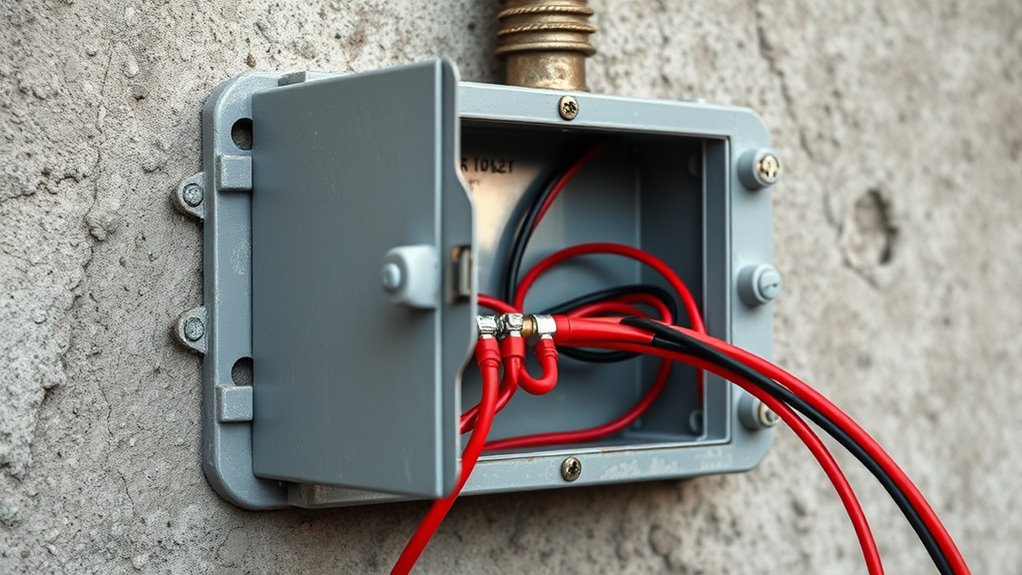

To safeguard alarm communication lines from tampering, you should use tamper-resistant wiring and run cables through secure conduits or underground. Adding physical barriers can slow down or prevent unauthorized access. Encrypt your signals to prevent interception and manipulation, making it harder for intruders to tamper unnoticed. Regularly update your encryption protocols and combine physical security with cybersecurity measures for extensive protection. Keep learning to discover more effective ways to guarantee your alarm system remains secure.

Get privacy and security gear delivered free — and shop member deals
- Fast, free delivery on millions of items
- Access to Prime Big Deal Days deals on October 6–7
- Prime Video, Amazon Music and more included
Key Takeaways
- Use tamper-resistant wiring and secure conduits to prevent physical access and damage.
- Install cables inside protective conduits or underground to reduce exposure and tampering risks.
- Implement signal encryption to protect transmitted data from interception and manipulation.
- Employ physical barriers and secure installation practices to deter unauthorized access to communication lines.
- Combine physical security measures with cybersecurity protocols for comprehensive protection against tampering.

Alarm communication lines are essential for ensuring the reliability of security systems, but they are often vulnerable to interference, tampering, or accidental damage. One of the most common threats is wire tampering, where someone intentionally disrupts or cuts the communication lines to disable your alarm system. This type of sabotage can go unnoticed until it’s too late, leaving your property unprotected. To prevent this, you need to implement measures that make tampering difficult and detectable. Using tamper-resistant wiring or placing cables inside protective conduits adds physical barriers that discourage or slow down intruders. Additionally, running wires underground or through secure channels minimizes exposure, making it harder for someone to access or cut the lines unnoticed.
However, physical security isn’t enough on its own. Signal encryption plays a key role in safeguarding the data transmitted over your alarm communication lines. Even if an intruder manages to tap into the wires, without proper encryption, they could potentially intercept sensitive information or send false signals, compromising your system’s integrity. Encryption converts your alarm signals into coded messages that are unintelligible without the correct decryption key. This way, even if somebody intercepts the communication, they won’t be able to understand or manipulate the data. Ensuring that your alarm system uses strong, up-to-date encryption protocols greatly reduces the risk of signal interception and unauthorized access.
Incorporating encryption into your alarm communication lines also helps protect against more advanced attacks, like signal jamming or replay attacks. These tactics aim to flood or replay signals to cause false alarms or disable the system. With encrypted signals, you add an extra layer of security that verifies the authenticity of each message, making it much harder for attackers to deceive your system. Regularly updating encryption keys and protocols is essential to stay ahead of evolving threats. Additionally, implementing secure communication protocols can further enhance the protection of your alarm signals against cyber threats. Combining physical measures to prevent wire tampering with robust encryption ensures that your alarm communication lines remain dependable and secure.
Ultimately, protecting your alarm communication lines requires a holistic approach. You must prevent physical access through secure installation methods and employ advanced cybersecurity techniques like signal encryption. This dual strategy ensures that even if someone attempts wire tampering, your system remains resilient against interception, false signals, or disruption. By taking these steps, you safeguard your security infrastructure, ensuring continuous, trustworthy alarm communication that keeps your property safe and your peace of mind intact.
As an affiliate, we earn on qualifying purchases.
Frequently Asked Questions
How Often Should Alarm Communication Lines Be Inspected for Tampering?
You should inspect alarm communication lines regularly, at least quarterly, to guarantee they haven’t been tampered with. During these inspections, perform line testing to verify signal integrity and check tampering detection features. Look for physical signs of interference or damage, and test the system’s ability to detect tampering. Consistent inspections help maintain reliable alarm performance and prevent false alarms or security breaches caused by compromised lines.
What Are the Best Practices for Securing Wireless Alarm Communication Lines?
Think of securing your wireless alarm lines as locking the barn door after the horse has bolted. Use strong wireless encryption to prevent unauthorized access and regularly update your firmware to patch vulnerabilities. To guard against signal jamming, consider deploying frequency hopping or anti-jamming technology. Keep an eye on your signal strength and interference levels, and conduct routine security audits to stay one step ahead of potential tampering.
Can Encryption Prevent Tampering of Alarm Signals?
Yes, alarm signal encryption can prevent tampering by making data unreadable to unauthorized parties. When you use alarm signal encryption, even if someone intercepts the communication, they can’t alter or understand the signals, enhancing tampering prevention. This added layer of security guarantees that your alarm system remains reliable, protecting your property and peace of mind from potential interference or malicious tampering attempts.
What Legal Considerations Exist for Monitoring Alarm Line Security?
You need to guarantee your alarm line monitoring complies with legal requirements, including privacy laws and regulations. Legal compliance involves obtaining proper consent if necessary and following data protection standards. Be aware of privacy concerns, especially if monitoring involves personal or sensitive information. Regularly review your policies and stay updated on local laws to avoid legal issues. Implementing secure systems and transparent communication helps balance security needs with privacy rights.
How Do Environmental Factors Affect Alarm Communication Line Security?
Environmental factors can substantially impact your alarm communication line security by causing interference that disrupts signal integrity. To guarantee reliable communication, you should implement interference mitigation techniques, such as shielding cables and avoiding proximity to electrical noise sources. Regularly inspect and maintain your lines, especially in harsh environments, to prevent signal degradation. These steps help maintain consistent alarm transmission, reducing false alarms and ensuring prompt response when needed.
security conduit for alarm cables
As an affiliate, we earn on qualifying purchases.
As an affiliate, we earn on qualifying purchases.
Conclusion
Just as a fortress guards its most precious treasures, safeguarding your alarm communication lines shields your peace of mind. Picture these lines as the lifelines of your security system, vulnerable yet essential. By implementing proper protection, you guarantee no intruder can silently cut the communication, leaving your home exposed. Remember, a well-guarded line is like a sealed vault—secure from tampering, ready to alert you at the first sign of trouble, keeping your sanctuary safe and sound.
As an affiliate, we earn on qualifying purchases.
underground alarm cable protection
As an affiliate, we earn on qualifying purchases.
As an affiliate, we earn on qualifying purchases.
Fall Picks
fall essentials
As an affiliate, we earn on qualifying purchases.