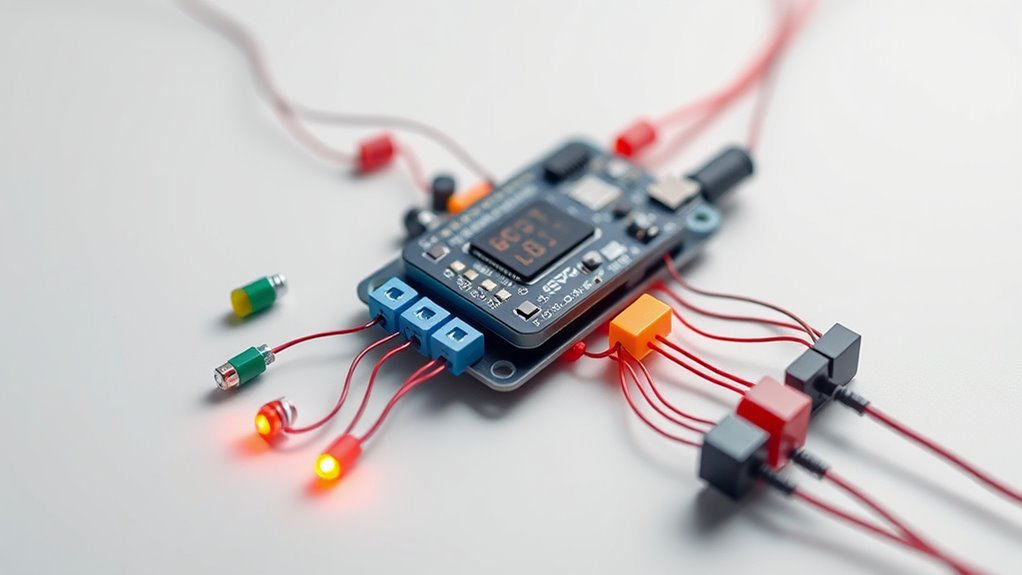

To expand your system with additional sensors, start by selecting devices compatible with your existing hardware and communication protocols. Calibrate each sensor properly according to manufacturer instructions to guarantee accuracy. Integrate sensor data seamlessly through compatible interfaces and software, verifying that data formats are consistent. Regularly monitor sensor performance for calibration drift or faults, and document each step. Continuing with these best practices will help you build a reliable, accurate, and scalable sensor network for your needs.
Play games included with Prime
Start a Prime free trial and play with Amazon Luna on your devices.
As an affiliate, we earn on qualifying purchases.
Key Takeaways
- Assess compatibility of new sensors with existing hardware interfaces and communication protocols.
- Calibrate and verify each new sensor to ensure data accuracy before integration.
- Update system software or middleware to recognize and process additional sensor data streams.
- Ensure consistent data formats and communication standards across all sensors for seamless integration.
- Regularly monitor and maintain the expanded sensor network to ensure ongoing data quality and system reliability.

Adding sensors to your system can markedly enhance its functionality and responsiveness. When you’re expanding your setup, it’s vital to focus on proper sensor calibration to guarantee accurate readings. Calibration involves fine-tuning each sensor so that its output aligns with known standards or reference points. If your sensors aren’t calibrated correctly, you risk receiving misleading data, which can lead to poor decision-making or system errors. Take the time to calibrate new sensors according to manufacturer instructions or industry standards. This process might involve exposing sensors to specific environmental conditions or using calibration tools to verify their accuracy. Proper calibration not only improves data quality but also boosts your confidence in the insights generated by your expanded system. For example, ensuring that sensors are properly inflating tires can prevent inaccurate pressure readings, which is critical for maintaining optimal performance. Once your sensors are calibrated, the next step is seamless data integration. Data integration involves combining the outputs from multiple sensors into a unified system that can interpret and respond to the collected information effectively. This requires compatible hardware interfaces and robust software that can process diverse data streams. You’ll want to guarantee that your sensors communicate smoothly with your existing system, avoiding conflicts or data loss. Integrating data from various sensors can reveal insights that weren’t apparent before, like correlating temperature and humidity readings or detecting patterns across different input sources. To achieve this, consider using middleware or data aggregation platforms designed for sensor networks, which can aggregate, filter, and analyze data in real-time. As you expand, it’s also wise to keep an eye on the communication protocols your sensors use—whether it’s Wi-Fi, Bluetooth, Zigbee, or wired connections. Compatibility guarantees that your sensors can be easily added without extensive reconfiguration. Additionally, maintaining a consistent data format simplifies integration and reduces errors. During implementation, test each sensor’s data output to confirm it aligns with your system’s requirements. Regularly monitor the data for anomalies or inconsistencies, which could indicate calibration issues or faulty sensors. This vigilance helps you maintain a reliable and accurate sensor network.
As an affiliate, we earn on qualifying purchases.
Frequently Asked Questions
What Are the Best Sensors for Low-Power Applications?
For low-power applications, you should choose sensors that use wireless communication like Bluetooth Low Energy or Zigbee, which minimize energy consumption. Look for sensors with advanced power management features, such as sleep modes and low-power operation. These options keep your system efficient, extend battery life, and guarantee reliable data transmission without draining power quickly. Combining smart sensor selection with effective power management is key to successful low-power system expansion.
How Do I Ensure Sensor Data Accuracy Over Time?
Think of your sensors as a steady compass guiding you through a storm. To guarantee data accuracy over time, you need to regularly perform sensor calibration, like tuning your compass for true direction. Incorporate data validation processes to catch anomalies early, like a vigilant lighthouse. These steps keep your system reliable, ensuring your sensor readings stay precise, so you can trust your data to lead you correctly, no matter the conditions.
Can I Integrate Sensors From Different Manufacturers?
Yes, you can integrate sensors from different manufacturers, but you need to guarantee sensor compatibility and data integration. Check if the sensors support common communication protocols like MQTT or HTTP, and verify compatibility with your existing system. Using a universal data format or middleware can help streamline data integration. Always test the sensors together to confirm they work seamlessly, ensuring reliable, accurate data collection across your expanded system.
What Safety Precautions Are Necessary When Installing Sensors?
Installing sensors is like handling fragile glass—you must prioritize safety. You should always wear protective gear, make sure power is off during installation, and double-check connections. Proper sensor calibration is essential for accuracy, so follow manufacturer guidelines carefully. To stay safe, work in well-lit areas, avoid static discharge, and verify system compatibility. These precautions help prevent accidents and ensure your sensors function reliably right from the start.
How Do I Troubleshoot Sensor Connectivity Issues?
When troubleshooting sensor connectivity issues, start by checking the sensor calibration to confirm accurate readings. Next, perform wireless troubleshooting by verifying your network signal strength, restarting the sensor, and checking for interference. Make sure the sensor’s firmware is up to date. If problems persist, re-pair the sensor with your system and consult the manufacturer’s guidelines for specific troubleshooting steps. This helps restore proper connectivity effectively.
IoT sensor data integration devices
As an affiliate, we earn on qualifying purchases.
As an affiliate, we earn on qualifying purchases.
Conclusion
Now that you know how to add sensors, imagine the possibilities that lie ahead. Each new sensor open fresh insights, new functionalities, and greater control. But don’t stop here—there’s always more to explore, more data to gather, and more innovations to discover. Are you ready to push your system even further? The next step could change everything. Keep experimenting, keep expanding—your enhanced system awaits, just beyond the horizon.
As an affiliate, we earn on qualifying purchases.
As an affiliate, we earn on qualifying purchases.
Fall Picks
fall essentials
As an affiliate, we earn on qualifying purchases.