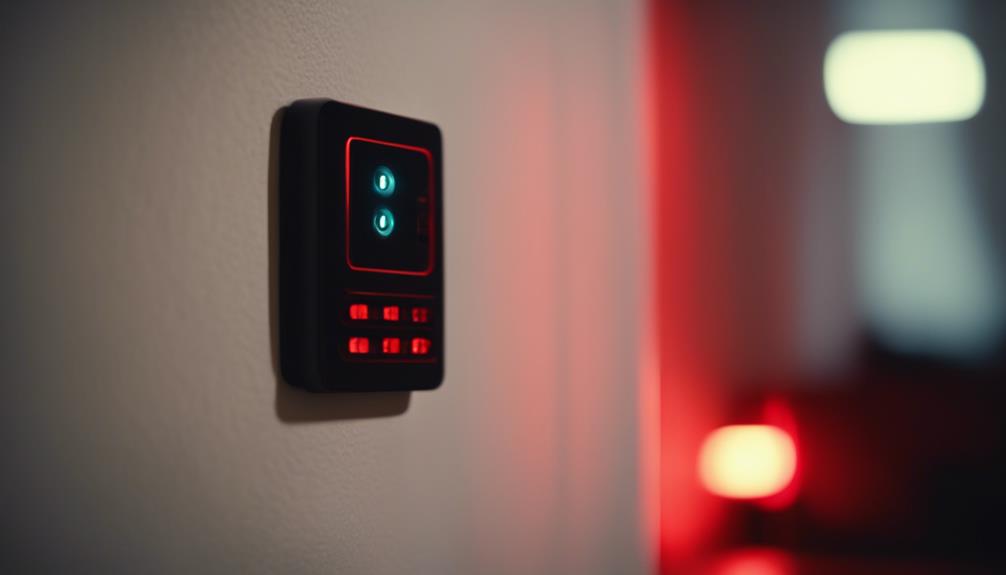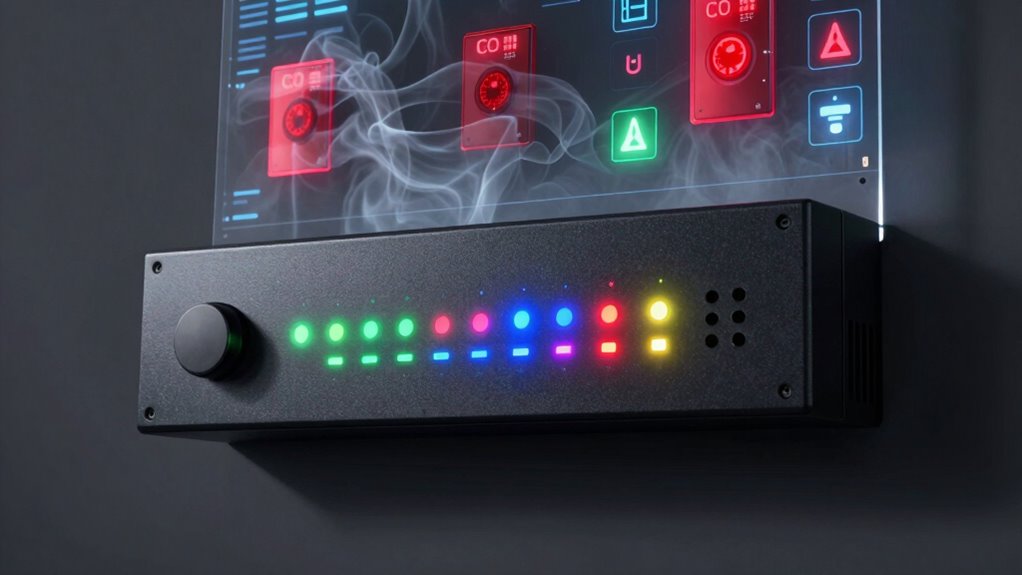

To layer smoke, CO, and intrusion alerts effectively, integrate compatible wireless sensors into a unified system that communicates seamlessly. Prioritize critical alerts like smoke and CO to trigger immediate notifications through sirens or mobile alerts, while routine intrusion alerts can be scheduled or monitored separately. Automation features can help respond quickly by releasing doors or activating alarms. Keep your system updated and secure to prevent vulnerabilities—continue exploring to learn how to optimize your safety network even further.

Get privacy and security gear delivered free with Prime
- Fast, free delivery on millions of items
- Prime Video, Amazon Music and more included
- Member-only deals all year
Key Takeaways
- Integrate all sensors into a centralized wireless alert system for seamless communication and coordinated notifications.
- Prioritize alerts based on severity, ensuring critical events like fire or intrusion trigger immediate responses.
- Use automation to trigger specific actions (e.g., unlocking doors, activating alarms) for combined emergencies.
- Regularly test and update system firmware to maintain reliable communication across all alert types.
- Implement security measures to protect the network from cyber threats and unauthorized access.

When it comes to safeguarding your home or business, layering smoke, CO, and intrusion alerts is essential for thorough protection. A well-integrated alert system ensures you’re promptly notified of any danger, no matter the source. Wireless integration plays a vital role here, allowing your alarms to communicate seamlessly without cumbersome wiring. By connecting your smoke detectors, CO alarms, and security sensors wirelessly, you create a cohesive network that’s easier to install, expand, and maintain. This setup ensures alerts are synchronized, so you receive real-time notifications on your smartphone or control panel, regardless of where each sensor is located. Wireless systems also reduce the risk of dead zones or communication failures, making sure your safety alerts reach you consistently.
To make this system truly effective, you need to focus on alert prioritization. Not all alerts are equally urgent, and your system should be intelligently distinguish between minor issues and critical emergencies. When your smoke detector goes off, it demands immediate attention, but a low-battery warning from a CO alarm might not require the same urgency. Your alarm system should be programmed to escalate high-priority alerts instantly, possibly triggering audible sirens, flashing lights, or direct notifications to your mobile device. Low-priority alerts can be scheduled for routine checks or less intrusive notifications. Proper alert prioritization prevents alarm fatigue—where you start ignoring alerts because of frequent false alarms—and ensures you act swiftly in life-threatening situations.
Integrating these alerts wirelessly also facilitates automation. For instance, when a smoke detector senses a fire, your system can automatically unlock smart locks, turn on ventilation fans, or notify emergency services. Similarly, intrusion alerts can trigger security cameras to focus on suspicious activity or activate exterior lighting. This automation enhances safety and convenience, giving you peace of mind that your system is working proactively. Regular testing and updates are also essential, as a wireless system’s reliability depends on consistent communication and firmware maintenance. A layered system only works if all components communicate properly, and firmware updates help fix vulnerabilities or improve functionality. Incorporating security best practices ensures your system remains protected from potential cyber threats and unauthorized access. Additionally, understanding the biodiversity of threats and vulnerabilities can help you tailor your system to better defend against emerging risks. Implementing comprehensive security measures further strengthens your defenses against cyber intrusions. By combining wireless integration with smart alert prioritization, you’ll create a comprehensive safety network that reacts swiftly and accurately to any threat. This approach not only protects your property but also ensures your peace of mind, knowing that your integrated system is always ready to respond effectively.
wireless smoke and CO alarm system
As an affiliate, we earn on qualifying purchases.
As an affiliate, we earn on qualifying purchases.
Frequently Asked Questions
Can Different Alarm Brands Be Integrated Seamlessly?
Different alarm brands can sometimes be integrated seamlessly, but brand compatibility often poses challenges. You need to check if the systems support common protocols or smart home platforms, which can ease integration. Without careful planning, you might face compatibility issues or integration challenges. To guarantee smooth operation, consider choosing brands known for compatibility or using a universal hub that connects multiple alarm systems effectively.
How Often Should Alarm Systems Be Tested?
You should test your alarm systems at least once a month to guarantee they’re working properly. Regular alarm maintenance includes checking battery life, inspecting sensors, and verifying system calibration. This helps detect issues early and guarantees reliable alerts during emergencies. Don’t forget to review manufacturer instructions for specific testing procedures and schedule professional inspections annually to keep your system in peak condition.
What Is the Average Cost for Layered Alert Systems?
The average cost for layered alert systems varies based on features and installation, but generally ranges from $500 to $2,500. Conducting a cost comparison helps you identify affordable options that meet your safety needs. An affordability analysis reveals that combining smoke, CO, and intrusion alerts can be cost-effective over individual systems, providing all-encompassing protection without breaking the bank. You can find options that balance quality and price effectively.
Are There Legal Requirements for Alarm Installation?
Are legal requirements for alarm installation a maze or a clear path? You must follow legal compliance and installation standards to guarantee your system is lawful and effective. Local building codes, fire safety laws, and insurance policies often mandate specific alarms and their placement. Ignoring these rules risks fines or voided coverage. Always check with local authorities and professional installers to make sure your security system meets all legal and safety standards.
How to Ensure Reliable Communication Between Alarms?
To guarantee reliable communication between alarms, you should prioritize wireless compatibility and a solid battery backup. Wireless systems guarantee seamless communication without the hassle of wiring, while battery backups keep alarms operational during power outages. Regularly test your system’s wireless connections and replace batteries as needed. These steps guarantee your alarms stay connected and functional, providing continuous protection even during emergencies or network disruptions.
As an affiliate, we earn on qualifying purchases.
Conclusion
Layering smoke, CO, and intrusion alerts enhances your home’s safety, providing thorough coverage without overwhelming you with alerts. Some might think it causes false alarms, but proper configuration guarantees alerts are accurate and timely. By customizing sensitivities and response protocols, you create a reliable safety system that’s both effective and manageable. Don’t compromise your security—layer these alerts thoughtfully, and you’ll enjoy peace of mind knowing your home is well-protected from multiple threats.
wireless home security alert system
As an affiliate, we earn on qualifying purchases.
As an affiliate, we earn on qualifying purchases.
automated fire and intrusion alarm
As an affiliate, we earn on qualifying purchases.
As an affiliate, we earn on qualifying purchases.
Halloween Picks
halloween
As an affiliate, we earn on qualifying purchases.