Alarm systems are essential parts of a broader safety routine that includes fire prevention, security measures, emergency planning, and regular maintenance. When you integrate alarms with smoke detectors, security cameras, and access controls, you create a layered defense that responds quickly to threats. Regularly testing and training ensure these systems work reliably, boosting safety overall. Keep exploring how connecting these elements can strengthen your safety plan and protect what matters most.
Key Takeaways
- Alarm systems provide immediate alerts that integrate seamlessly with emergency procedures and safety habits to ensure rapid response.
- Regular maintenance, staff training, and system updates keep alarms reliable, reinforcing proactive safety routines.
- Connecting alarm systems with fire prevention measures and security features enhances overall safety and crime deterrence.
- Interoperable alarm components facilitate quick breach detection, centralized management, and effective emergency evacuation plans.
- Incorporating alarm systems into a comprehensive safety strategy, including drills and emergency kits, creates a resilient safety routine.
Why a Complete Safety Routine Includes More Than Just Alarm Systems
While alarm systems are vital for alerting you to potential dangers, relying on them alone isn’t enough to guarantee safety. Your personal safety depends on proactive measures, such as knowing emergency procedures and staying aware of your surroundings. Emergency preparedness involves more than installing alarms; it includes planning escape routes, keeping emergency kits ready, and practicing drills. These steps help you respond quickly and effectively during a crisis. An alarm system can notify you of an issue, but your awareness and preparation enable you to take immediate action, reducing risk. Building a complete safety routine means integrating alarm systems with personal safety habits and preparedness strategies. For example, incorporating smart home safety devices can enhance your overall security approach. Regularly updating emergency plans ensures you stay prepared for unforeseen situations. Incorporating personal safety habits into your daily routine can further strengthen your resilience in emergencies. Developing a mindset of preventative safety is key to minimizing hazards before they occur. Additionally, understanding the limitations of alarm systems helps you recognize their role within a comprehensive safety plan. This holistic approach offers the best protection, ensuring you’re not solely dependent on technology but also ready to handle emergencies confidently.
How Alarm Systems Fit Into Your Overall Safety Plan
Alarm systems are a critical component of your overall safety plan because they provide immediate alerts during emergencies, giving you valuable time to respond. Incorporating alarm systems into your emergency planning guarantees you’re promptly notified of issues like break-ins or hazards. They also enhance community awareness, alerting neighbors and authorities quickly. By integrating alarms with other safety measures, you create a thorough approach that minimizes risks and maximizes protection. Regularly reviewing and updating your alarm system aligns with your broader safety goals, guaranteeing it functions correctly when needed. Remember, alarm systems are most effective when part of a well-organized safety routine, supporting swift action and fostering a safer environment for everyone involved. Understanding safety systems helps you make informed decisions to protect your home and loved ones, especially when combined with fire safety protocols and other preventative measures. Incorporating monitoring systems and routine maintenance ensures your alarm setup remains reliable over time. Additionally, understanding security zone info can help you optimize your safety strategy for maximum effectiveness. To further enhance your safety routine, consider integrating smart home technologies that adapt to your specific needs and improve overall security.
Linking Fire Alarms With Fire Prevention Strategies
Integrating fire alarms with fire prevention strategies substantially enhances your overall safety efforts. When fire safety measures and alarm systems work together, you create a proactive defense against fires. Alarm integration guarantees that alerts are connected to other safety systems, such as sprinkler controls or emergency lighting, providing a coordinated response. This seamless communication reduces reaction times and helps prevent small issues from escalating into major disasters. By linking fire alarms with prevention strategies, you reinforce safe practices, like regular maintenance and safety audits. It also promotes comprehensive safety protocols that address potential vulnerabilities proactively. Proper color accuracy in alarm indicators and visual signals ensures clear communication during emergencies. This approach ensures that your home or business is better protected, making your entire environment safer and more resilient against fire-related risks.
How Security Measures and Alarm Systems Work Together to Deter Crime

Security measures and alarm systems work together to create a powerful deterrent against crime by making potential intruders think twice before attempting a break-in. When you combine visible security features with proactive efforts like security patrols and neighborhood watch programs, you strengthen your safety routine. Alarm systems alert you and authorities instantly, while security patrols deter criminals through their presence. Neighborhood watch groups increase community vigilance, reducing opportunities for crime. This layered approach signals that your property is protected from multiple angles, discouraging intruders before they strike. Incorporating smart security technology can further enhance your overall safety by providing real-time monitoring and alerts. Additionally, choosing reliable security systems ensures consistent protection and quick response times. Understanding the importance of home wiring and electrical safety helps ensure that your security devices function properly and safely. Maintaining proper electrical connections is crucial for the reliable operation of alarm systems and to prevent potential fire hazards.
Using Alarm Systems to Support Emergency Evacuations
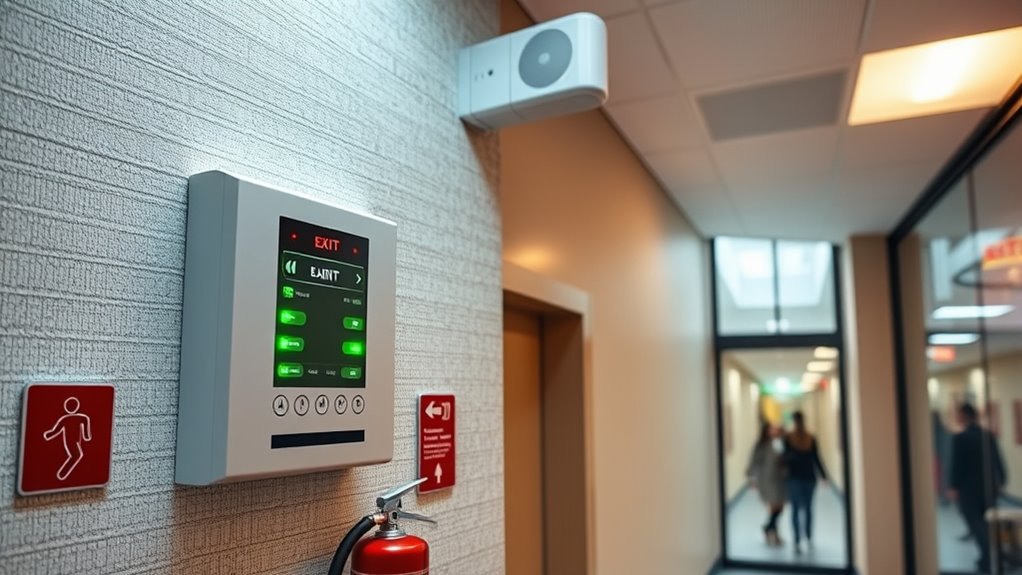
Building on the layers of safety provided by security measures, alarm systems play a vital role in supporting emergency evacuations. When an alarm sounds, it quickly alerts everyone to evacuate, reducing confusion and delays. Conducting regular evacuation drills helps you familiarize everyone with alarm signals and evacuation routes, making responses more effective. Clear emergency signage guides occupants toward exits, complementing alarm alerts and ensuring safe evacuation paths. Modern alarm systems can be integrated with public address systems to provide instructions during emergencies, further enhancing safety. These features work together to minimize chaos and ensure swift, organized evacuations. Properly maintained alarm systems, combined with routine drills and clear signage, strengthen your overall safety routine, making sure everyone knows how to react when it matters most. Additionally, understanding the importance of backup power for alarm systems ensures continuous operation during outages, maintaining safety even when the power grid fails. Having a reliable backup power source for alarm systems is essential to prevent interruptions during critical moments. Ensuring alarm system reliability is also crucial for maintaining trust in your safety protocols during emergencies.
How to Integrate Cameras, Access Control, and Alarms for Total Security

To achieve all-encompassing security, you need to connect your cameras, access control systems, and alarms into a unified network. This integration enhances your home automation capabilities, allowing you to monitor and control security features remotely. Linking cameras provides real-time video feeds, while access control manages who enters your property. Alarms alert you instantly to any breaches, and when combined with personal alerts, you receive immediate notifications on your devices. A connected system simplifies managing security, making it easier to respond swiftly to threats. It also creates a seamless safety routine, where each component supports the others. System interoperability is key to creating an effective security routine. Additionally, leveraging European cloud servers can enhance data security and ensure compliance with privacy regulations, further strengthening your overall safety measures. Incorporating secure data storage practices within your system can prevent unauthorized access and safeguard your sensitive information. Ensuring your system uses interoperable components helps maintain compatibility as you expand or upgrade your security setup.
How Regular Maintenance and Staff Training Maximize Your Safety Systems
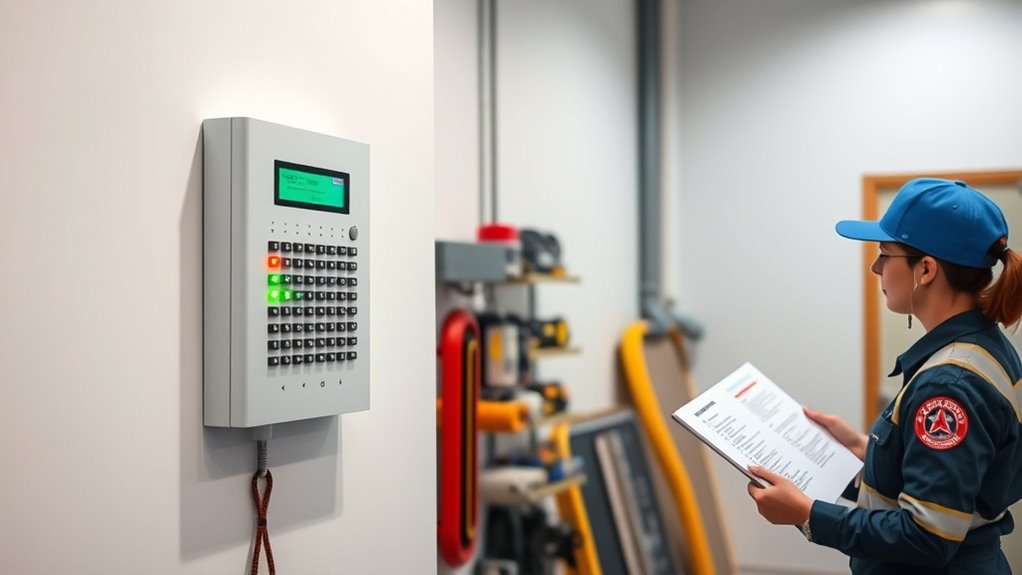
Regular maintenance and staff training are essential to keep your safety systems functioning effectively and respond promptly to any issues. Regularly scheduled inspections ensure your alarm system upgrades are up-to-date, reducing the risk of failures during emergencies. Maintenance also helps identify potential problems before they escalate, keeping your system reliable. Equally important, well-trained staff follow staff safety protocols diligently, ensuring everyone knows how to activate, troubleshoot, and maintain the alarms. Training sessions should be ongoing, covering new features and updates to your alarm system. By combining routine maintenance with exhaustive staff training, you maximize your safety system’s effectiveness, ensuring quick response times and minimizing vulnerabilities. This proactive approach creates a safer environment and enhances your overall security routine.
Frequently Asked Questions
How Do Alarm Systems Impact Insurance Premiums?
Alarm systems can lower your insurance premiums by providing insurance discounts and premium reductions. When you install a reliable alarm system, insurance companies see your home as less risky, so they’re often willing to offer you better rates. You should check with your insurer to see what discounts are available, as having an alarm system can make a significant difference in reducing your overall insurance costs.
Can Alarm Systems Be Customized for Specific Hazards?
Yes, alarm systems can be personalized for specific hazards through various customization options. You can tailor the system to focus on particular risks like fire, carbon monoxide, or intrusion detection. Advanced hazard detection features allow you to set alerts for unique hazards in your environment. This ensures your alarm system provides targeted protection, giving you peace of mind knowing it’s specifically designed to address the hazards most relevant to your home or business.
What Are the Latest Technological Advancements in Alarm Systems?
You won’t believe the latest alarm tech—it’s like having a security superhero! Wireless connectivity now lets you control and monitor your alarm remotely, from anywhere in the universe. Biometric authentication adds a layer of superhero-level security, using your fingerprint or face scan to unseal doors or disable alarms instantly. These advancements make your safety system smarter, faster, and more personalized, transforming everyday security into science fiction reality.
How Do Alarm Systems Integrate With Smart Home Devices?
You can easily integrate alarm systems with smart home devices by connecting them through your home’s Wi-Fi or hub. This allows you to control and monitor your alarm via smartphone apps. Take advantage of automation features, like setting the alarm to activate when you leave or receive alerts from door sensors. Smart device integration enhances your security, providing seamless control and real-time updates for a smarter, safer home environment.
What Are Common Challenges in Implementing Comprehensive Safety Routines?
You might think implementing safety routines is straightforward, but challenges like community awareness and emergency preparedness often complicate efforts. People may overlook the importance of alarms or lack training, reducing their effectiveness. To overcome this, engage your community actively, educate everyone on emergency protocols, and guarantee alarm systems are integrated into a thorough plan. This proactive approach boosts safety and helps your routine become more effective and resilient.
Conclusion
Remember, a safety routine isn’t complete without integrating alarm systems into your overall plan. They’re your first line of defense, but they work best when combined with prevention, security measures, and regular upkeep. Stay proactive, keep everything connected, and train your team. After all, an ounce of prevention is worth a pound of cure—so invest in an all-encompassing safety approach to protect what matters most.