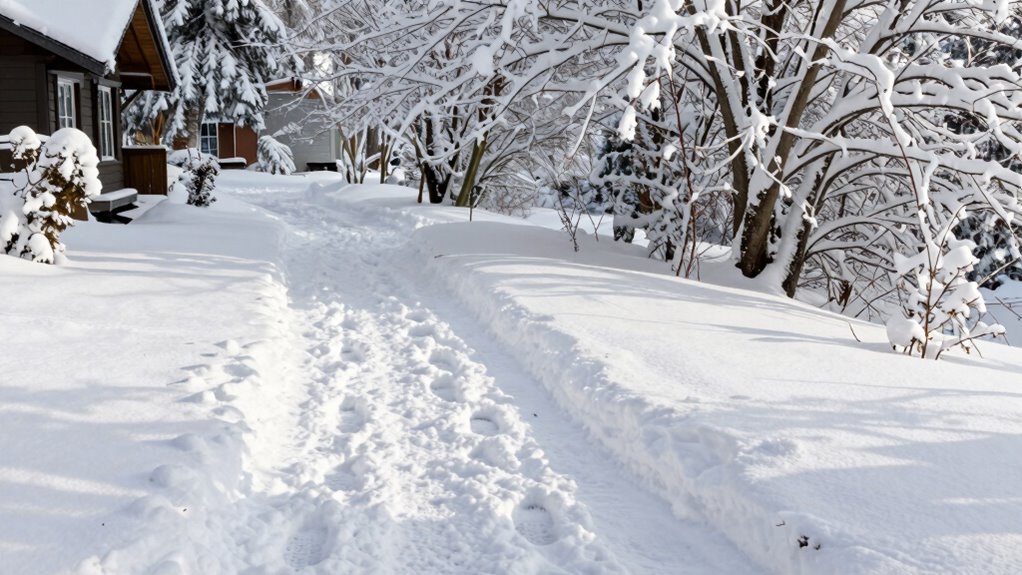

When you see fresh footprints in the snow near your property, it signals that someone recently passed through, potentially indicating that you’re away or your home is unoccupied. Intruders look for these signs to assess if your place is vulnerable before entering. Clear, recent footprints that lead toward entry points or away from the house suggest recent activity. To protect yourself, understanding how footprints reveal your absence can help you take smarter precautions if you keep investigating further.
Key Takeaways
- Fresh, undisturbed snow near entry points indicates no recent human activity, suggesting the property is unoccupied.
- Footprints leading away from the property without recent disturbance imply intruders have already left.
- Absence of footprints in expected areas can signal that someone has concealed their tracks or entered covertly.
- Snow that shows no new footprints despite visible access points suggests recent absence of occupants.
- Patterns of footprints ending abruptly or leading to hidden spots can warn intruders that residents are currently away.

FONDAIL Solar Security Cameras Wireless Outdoor, 2K 360° View Solar Powered WiFi 3MP Security Camera for Home Security with Color Night Vision, PIR Detection, 2-Way Audio, Motion Alert, Easier to use
【Solar Powered, Install Anywhere, 100% Wireless】FONDAIL Outdoor Security Camera: Simply place it in direct sunlight to charge! No…
As an affiliate, we earn on qualifying purchases.
As an affiliate, we earn on qualifying purchases.
How Footprints in Snow Can Show You’re Away
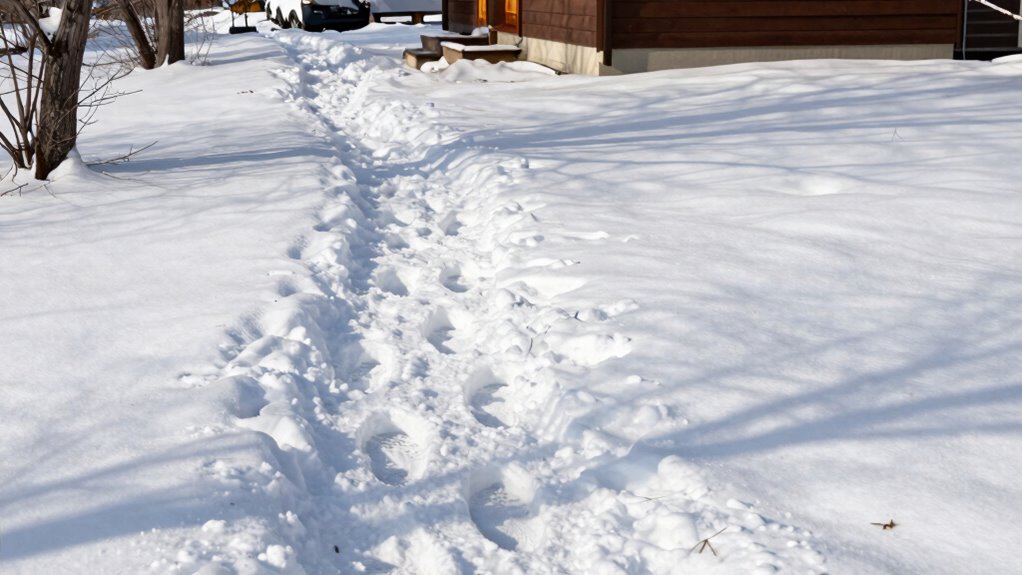
When you leave footprints in fresh snow, they instantly reveal your absence. Intruders can spot these tracks quickly, especially if you’ve used snow camouflage by stepping lightly or creating fake patterns to disguise your presence. Footprint analysis allows them to gauge how long you’ve been gone, the direction you took, and whether someone else was there recently. Fresh, undisturbed snow indicates recent activity, suggesting you’re away or inside. Conversely, if footprints are sparse or appear deliberately obscured, it signals someone’s attempt to hide their movements. Recognizing these signs helps intruders determine if the coast is clear or if the timing’s right for an intrusion. Your footprints, whether obvious or masked, serve as silent clues revealing your absence. Additionally, understanding the contrast ratio of your environment can influence how visible footprints are against the snow’s surface, affecting how easily intruders can detect or overlook them. Awareness of environmental conditions can further help intruders assess the likelihood of detection based on snow texture and lighting. Moreover, temperature fluctuations can alter the appearance of footprints over time, either revealing recent activity or hiding signs of movement. Adjusting footprint depth with deliberate steps can also create confusion about your recent presence, making it harder for outsiders to interpret the tracks. Incorporating herbal remedies like calming chamomile or valerian roots into your routine can help reduce stress and improve your awareness of surroundings, potentially aiding in better snow camouflage strategies.

VIRTAVO Wireless Outdoor Security Camera, Solar Powered 2K Starlight Color Night Vision, Battery, AI Human/Vehicle Detection, 2-Way Audio, IP66 Weatherproof, 2.4G WiFi, SD/Cloud Storage
2K detail with starlight color night vision: See faces, license plates, and key details in crisp 2K. The…
As an affiliate, we earn on qualifying purchases.
As an affiliate, we earn on qualifying purchases.
What Intruders Look for Before Entering Your Property
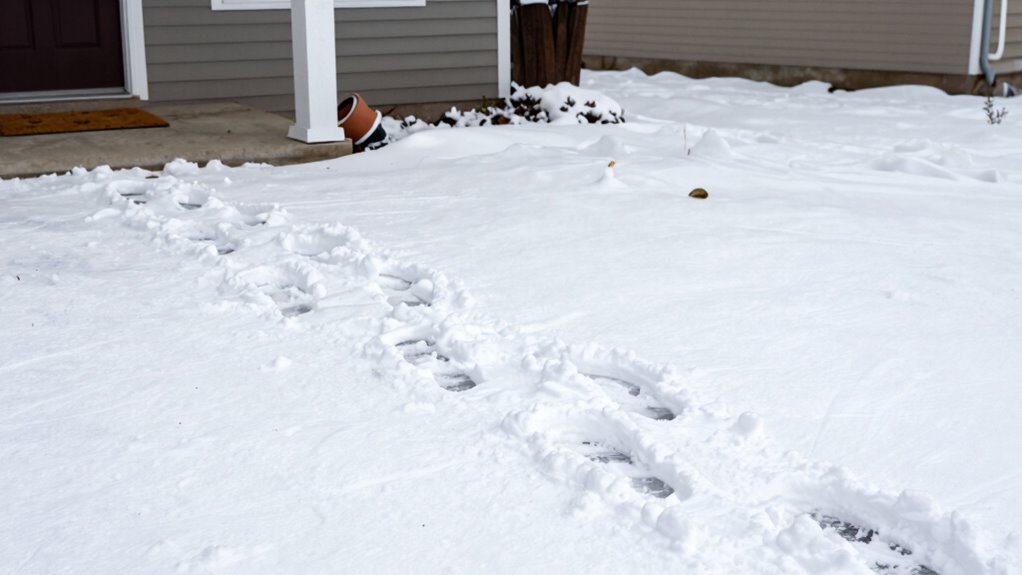
Intruders scan your property for visible entry points like doors and windows that are easy to access. They also look for unusual footprints patterns or signs of recent activity in the snow. Any disturbed snow areas or irregular footprints can indicate recent movement and potential targets. Additionally, they might be wary of secure investment options, which can include measures like security cameras or alarm systems that deter break-ins. Recognizing these signs can help you take proactive steps to maximize your truck bed’s potential for security purposes. Being aware of intruder behavior patterns and their detection techniques allows homeowners to better defend their property and respond effectively to potential threats. Understanding security vulnerabilities in your property can further enhance your safety measures.
Visible Entry Points
Visible entry points are the first things intruders notice when scouting your property. They often look for doors, windows, or other access points that are easy to breach. Footprint symbolism can reveal recent activity, so a fresh set of footprints near these entryways might indicate someone has recently entered or exited. Intruders also watch for snow concealment—areas where snow has been disturbed or cleared—suggesting someone might have already gone inside. These clues help them determine if an entry point is viable and safe. Keeping entrances clear of footprints, footprints leading away, or signs of snow concealment can deter intruders by making your property less inviting or easier to detect. Understanding security vulnerabilities can help you identify and reinforce these entry points effectively. Securing and monitoring these points is key to preventing unwanted visitors. Being aware of footprint patterns can also assist in recognizing suspicious activity early, especially when combined with other surveillance techniques. Additionally, understanding detection methods can improve your ability to spot signs of intrusion before entry occurs. Regularly inspecting these vulnerable areas and applying security measures can significantly reduce the risk of intrusion.
Unusual Footprints Patterns
Before making their move, intruders often scan for unusual footprint patterns that stand out from normal activity. They look for signs like footprints that seem out of place, irregular shapes, or footprints that hint at footprint camouflage to avoid detection. Snow footprint analysis helps them identify recent activity and determine if a property is unoccupied. Unusual patterns may include overlapping footprints, inconsistent stride lengths, or footprints leading to hidden entry points. Recognizing these clues allows intruders to plan their entry carefully.
| Normal Footprints | Unusual Footprints |
|---|---|
| Regular stride, consistent depth | Irregular spacing, inconsistent depth |
| Clear, symmetrical patterns | Disrupted, haphazard marks |
| Multiple footprints, same direction | Mixed directions, overlapping prints |
| No signs of footprint camouflage | Footprints blending into snow |
Disturbed Snow Areas
When approaching a property covered in snow, intruders focus on areas where the snow appears disturbed or uneven, signaling recent activity. They look for signs of footprint camouflage or snow concealment techniques that hide their tracks, making it easier to slip in unnoticed. Even subtle disturbances, such as flattened or melted patches, can reveal recent movement. Intruders often avoid heavily trafficked paths and seek out spots where footprints seem less obvious or intentionally concealed. By observing these disturbed snow areas, they identify the best entry points that minimize detection. Spotting uneven snow or areas where the snow’s surface appears broken or melted helps intruders gauge where they can move without leaving obvious traces, increasing their chances of breaching your property unnoticed. Employing packing techniques such as snow shoveling or covering footprints with fresh snow can further complicate detection efforts.

Clouree Home Security System, Home Alarm System Wireless 8 Piece Kit with Phone APP Alert Siren Remote Control Motion Detection Real-time Alarm No Contract Required,24/7 Protection
Home Alarm System: The wireless home security system 8-piece set includes 1 host, 1 motion detection, 4 door/window…
As an affiliate, we earn on qualifying purchases.
As an affiliate, we earn on qualifying purchases.
How to Spot Fresh Footprints in Snow to Detect Intruders
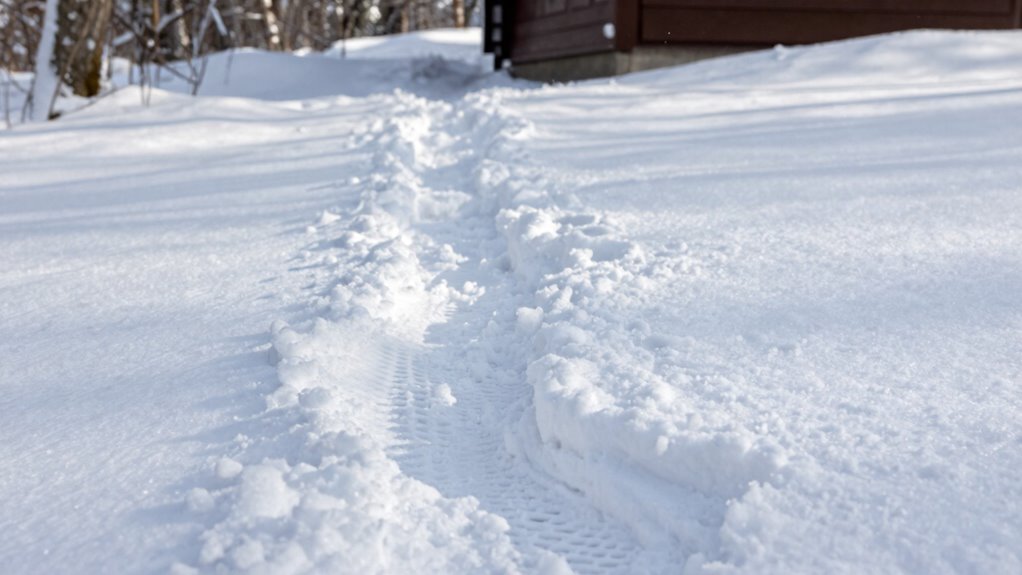
To identify fresh footprints, look for recent snow patterns that haven’t been disturbed. Pay attention to the depth and size of the tracks, which can reveal the weight and type of intruder. Also, track the direction of the footprints to determine their movement and point of entry. Recognizing signs of activity can help you plan a quick, energizing meal after inspecting your property. Additionally, observing the pattern of footprints, such as multiple sets or zigzagging paths, can provide clues about whether someone was searching the area or trying to avoid detection. Monitoring payment security measures can also help safeguard your home systems from cyber threats that could be exploited by intruders.
Fresh Snow Patterns
Fresh snow patterns can reveal recent intruder activity, as new footprints create distinct marks that stand out clearly against untouched snow. Look for irregular shapes or lines that break the smooth surface, indicating fresh movement. Be alert to signs like:
- Disrupted snow camouflage, where footprints break the natural cover, revealing who passed through.
- Footprint decoys, such as multiple sets of tracks leading nowhere or appearing manipulated to mislead.
- Uneven spacing and direction, suggesting someone trying to hide or create false trails.
Track Depth and Size
Examining the depth and size of footprints can reveal how recently someone passed through the snow. Fresh footprints often have distinct shapes, showing the footprint shapes clearly, and their depth varies depending on weight and snow conditions. If the snow is shallow, footprints will be less deep, but if it’s deeper, a heavier step will create a more noticeable mark. Look for consistent depth and shape; irregularities might indicate someone paused or altered their path. Comparing footprints’ sizes can help identify if multiple people are involved or if the intruder is larger or smaller than expected. Keep an eye on snow depth around the footprints, as recent activity leaves clearer, more defined impressions. This detail helps determine the timeline and potential threat. Free floating footprints can sometimes drift or shift with wind, so consider environmental factors when assessing freshness.
Direction of Footprints
When trying to determine the direction of footprints in snow, look for the orientation of the toe and heel marks. This reveals the intruder’s path. Pay attention to snow patterns: fresh footprints often have clear, crisp edges, while older ones are softer and diffused. To identify footprint types and direction, focus on these clues:
- The toe marks usually point toward the intruder’s movement, acting like an arrow.
- The heel prints may be more recessed and suggest where they started.
- The overall pattern of the snow can show if the footprints are recent or weathered by wind or melting.
- Checking for halal certification on food packaging can also help ensure the authenticity and safety of what you consume, especially when verifying ingredients or sources during outdoor or travel situations.

LONNKY LED IR Illuminator Wide Angle 8-LEDs 90 Degree 100Ft IR Infrared Flood Light for CCTV Security Cameras, IP Camera, Bullet Camera, Dome Camera, Suitable for Outdoor and Indoor Use
Powerful Infrared Illumination: The LONNKY LED IR Illuminator features 8 high-intensity LEDs that provide a robust and efficient…
As an affiliate, we earn on qualifying purchases.
As an affiliate, we earn on qualifying purchases.
Reading Footprints to Understand Intruder Activity

By carefully analyzing footprints in the snow, you can uncover valuable clues about an intruder’s activity. Look for patterns like repeated trips or sudden stops, which might indicate surveillance or hesitation. Footprint size and depth reveal whether they carried heavy objects or moved cautiously. Combining these clues with footage from security cameras or alarm system alerts helps build a clearer picture. For example, footprints leading toward a window could suggest attempted entry, while multiple sets may indicate multiple intruders. Use the table below to interpret common footprints signs:
| Footprint Pattern | Possible Meaning |
|---|---|
| Multiple footprints | Multiple intruders |
| Fresh, deep prints | Recent activity, heavy foot traffic |
| Going in circles | Confusion or searching |
| Leading to an exit | Leaving after activity |
| Paired footprints | Person carrying something |
Additionally, understanding off-road top speeds can help you gauge how quickly an intruder might have fled the scene, providing further context for your investigation. Recognizing the footprint patterns can also assist in estimating the intruder’s intentions and level of caution during their activity. Being aware of typical footprint behaviors helps differentiate between an intruder and an animal or person passing by innocently. Being familiar with forensic footprint analysis techniques can further enhance your ability to interpret these clues accurately.
Practical Ways to Avoid Leaving Footprints That Reveal Your Absence
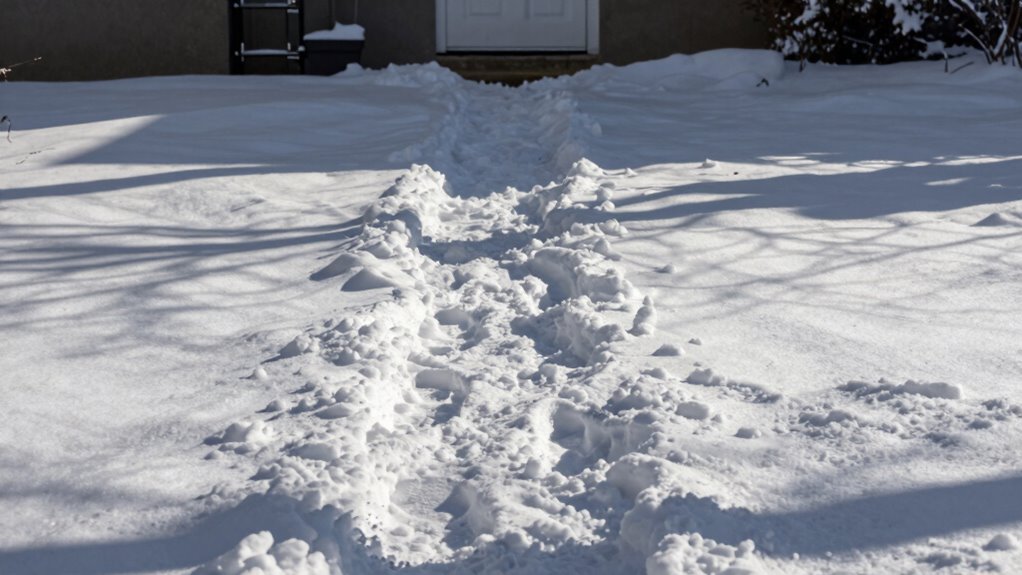
To prevent leaving footprints that reveal your absence, you need to take deliberate steps to minimize your trail. Footprint concealment and snow camouflage are key. First, walk along existing snow-covered paths or areas with disturbed snow to blend in. Second, use a wide stance, distributing your weight evenly to reduce the depth of footprints. Third, consider placing boards or planks on the snow to walk without direct contact, effectively concealing footprints. Wearing snowshoes or boots with soft soles can also help prevent leaving clear marks. By combining these tactics, you create a layer of snow camouflage around your steps, making it difficult for intruders or investigators to trace your movements. These practical measures can considerably decrease the risk of your footprints revealing your absence.
What Steps to Take If You Find Footprints in Snow When You’re Not Home
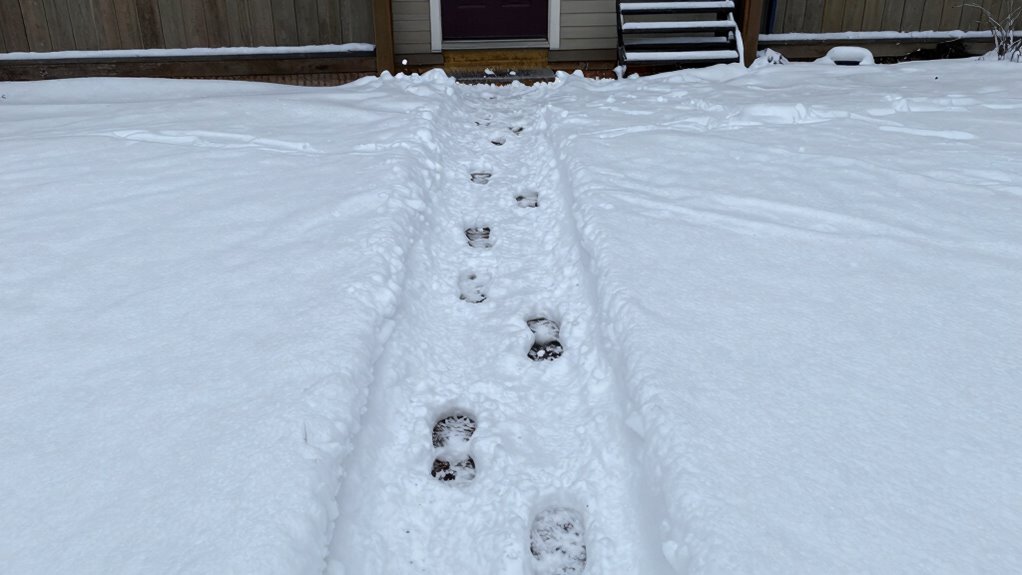
Noticing footprints in the snow when you’re not home can be alarming, signaling a potential intrusion or breach of security. First, check your security cameras immediately to identify any suspicious activity or unfamiliar figures near your property. If your cameras capture intruders, save the footage as evidence. Next, activate your alarm system if it’s not already triggered, alerting neighbors and authorities to the situation. Contact local law enforcement to report the footprints and provide them with any evidence you’ve gathered. Avoid approaching the footprints or the area to prevent alerting intruders. Stay on the line with authorities until they arrive, and review your security measures afterward. Implementing camera alerts and upgrading your alarm system can help prevent future incidents.
Frequently Asked Questions
Can Animals Create Misleading Footprints in Snow?
Yes, animals can create misleading footprints in snow. They often use misdirection tactics to confuse predators or humans, such as doubling back or crossing their own tracks. You might see animal tracks that seem to lead nowhere or suddenly change direction, making it harder to follow them. These clever tactics help animals hide their presence and protect themselves, but they can also make tracking more challenging for you.
How Long Do Footprints Typically Stay Visible in Snow?
Footprints in snow typically stay visible for a few hours to a day, depending on weather conditions. Tracking patterns are clearer when snow is fresh, but snow melting or new snowfall can quickly obscure them. If you want footprints to last longer, avoid warm weather or heavy wind that accelerates melting. Regular snowfall can also hide earlier tracks, making it harder to monitor activity around your property.
Are There Specific Footwear Types That Leave Less Noticeable Footprints?
You can choose footwear with minimal shoe tread patterns and smooth, non-rigid footwear material to leave less noticeable footprints in snow. Shoes with flat soles and less aggressive treads, like dress shoes or slip-ons, tend to make lighter impressions. Materials like rubber or soft leather also help reduce footprint visibility. Wearing such footwear helps you stay discreet, especially in snowy conditions where footprints can easily reveal your presence.
What Weather Conditions Affect the Visibility of Footprints?
Did you know that snow density and weather conditions considerably impact footprint visibility? In light, powdery snow, footprints are easily traced, while heavy, wet snow can obscure tracking patterns. Rain or wind can also erase footprints quickly. If you’re trying to detect intruders, consider that recent snowfall makes footprints more prominent, but melting or windy weather can hide them, making it harder to track patterns effectively.
How Can Homeowners Differentiate Between Human and Animal Footprints?
You can differentiate between human and animal footprints by examining tracking techniques and footprint patterns. Human footprints typically show heel-to-toe walking, aligned toes, and a consistent stride. Animal footprints often have paw or hoof marks, with claw or toe marks, and irregular spacing. Observe the size, shape, and pattern to identify them accurately. Tracking techniques like looking for multiple tracks or trail directions help you distinguish between human and animal footprints effectively.
Conclusion
By paying attention to footprints in the snow, you can spot potential intruders before they strike. Stay vigilant, especially after storms, and remember that even a single set of fresh prints can tell a story. Think of it like Sherlock Holmes examining clues at a crime scene—every detail matters. Stay safe, keep your property secure, and don’t forget to clear your steps or hide your tracks like a true ninja to stay one step ahead.