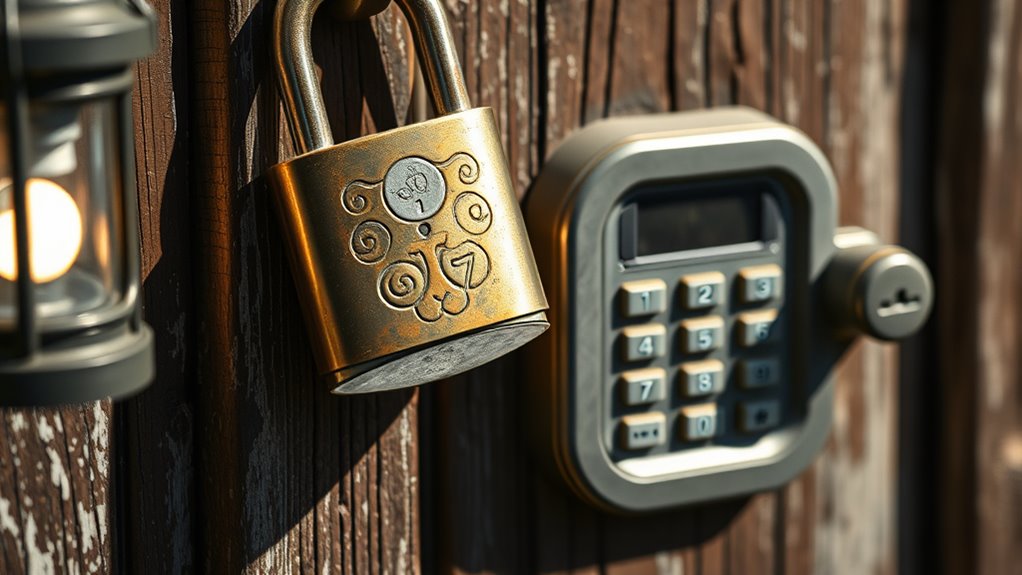

A single lock can’t provide complete security because it has vulnerabilities that can be exploited over time. To truly protect your property, you need multiple defenses—like strong physical locks, electronic systems, surveillance cameras, and alarms—that work together to block different attack methods. This layered approach repeatedly raises the difficulty for intruders and helps protect assets more effectively. Keep exploring to discover how combining these elements creates a stronger, more reliable security system.
Key Takeaways
- Relying on a single lock creates vulnerabilities that can be exploited, making layered security essential for comprehensive protection.
- Multiple security measures, such as physical barriers and digital controls, work together to prevent breaches and insider threats.
- Combining different layers ensures continuity during emergencies like power outages or natural disasters.
- Visible deterrents and rapid alert systems reduce intruder confidence and enable quick responses.
- Regular audits, staff training, and backup plans strengthen overall security and address potential gaps effectively.
The Limitations of Single Lock Systems

While a single lock might seem enough to secure your property, it often isn’t. Relying on just one lock can give a false sense of security, as its durability could be compromised over time due to wear and tear. Weak spots might develop, making it easier for intruders to force entry. Additionally, managing keys for a single lock can become complicated if multiple people need access, increasing the risk of lost keys or unauthorized duplication. Poor key management can undermine your security even if the lock itself remains sturdy. A single lock cannot address all vulnerabilities, leaving gaps that could be exploited. To truly protect your property, you need more than just one lock; layered security involves multiple measures to cover these limitations. Incorporating practices such as security awareness and regular maintenance can further enhance overall safety.
Combining Physical and Electronic Security Measures

You can bolster your security by integrating physical and electronic measures, creating a seamless defense system. When these layers work together, they form a more effective deterrent and response to threats. Combining these strategies ensures your property is protected from multiple angles, making it harder for intruders to succeed. Incorporating security zone info can further enhance your overall safety plan.
Physical and Digital Integration
Have you ever considered how integrating physical and digital security measures can create a more robust defense? When you combine access control systems with digital monitoring, you strengthen your overall security. For example, electronic access control can restrict entry to sensitive areas, while security audits guarantee all access points are properly monitored and maintained. Digital tools can log every entry and exit, providing real-time data that helps identify suspicious activity early. Physical barriers like locks work seamlessly with digital authentication methods, reducing vulnerabilities. Additionally, using Crochet Styles for Locs in security gear can add an extra layer of personalization and protection. This integration allows you to respond quickly to breaches and verify security effectiveness. By uniting these layers, you create an all-encompassing system that’s harder for intruders to bypass, ensuring your assets remain protected at every level.
Layered Defense Strategies
Combining physical and electronic security measures creates a layered defense that considerably enhances your overall protection. This approach ensures that if one measure fails, another steps in to prevent unauthorized access. You can integrate access control systems with durable locks to strengthen security. Electronic access controls, like card readers or biometric scanners, restrict entry efficiently, while high-quality locks provide physical resistance. To maximize effectiveness, consider the following:
- Use high-durability locks that withstand tampering and forced entry
- Implement multi-factor access control for sensitive areas
- Regularly update electronic security systems to patch vulnerabilities
- Combine CCTV surveillance with physical barriers for real-time monitoring
Additionally, employing Kia Tuning modifications such as upgraded locking mechanisms can further reinforce vehicle security.
Deterrence and Response
How can integrating physical and electronic security measures effectively deter threats and guarantee swift responses? By combining visible deterrents like security cameras and alarms with physical barriers, you influence threat perception through security psychology. When intruders see multiple layers, they’re less confident and more likely to abandon their plans. Electronic alerts trigger rapid responses, such as security patrols or law enforcement. Here’s how these measures interact:
| Measure | Purpose | Response Trigger |
|---|---|---|
| Security Cameras | Deter and record | Alert monitoring center |
| Access Control | Restrict unauthorized entry | Lockdown or alarm activation |
| Intrusion Alarms | Notify of breaches | Immediate response |
| Physical Barriers | Slow or prevent access | Deterrence and delay |
| Lighting & Signage | Increase threat perception | Discourage intruders |
This layered approach enhances threat perception and ensures swift, effective responses. Additionally, understanding security psychology can help design more effective deterrents by influencing intruder behavior.
The Role of Surveillance Cameras in Layered Security

Why are surveillance cameras a vital component of layered security? They provide constant oversight, deterring potential intruders and capturing evidence if an incident occurs. Modern cameras with motion detection alert you instantly to unusual activity, reducing response time. Remote monitoring allows you to oversee your property from anywhere, offering peace of mind and quick action when needed. Cameras also create a visual record, which strengthens your overall security system. When integrated with other security measures, they form a comprehensive barrier against threats. Additionally, understanding local security statistics can help you determine the most effective camera placement strategies.
Alarm Systems and Their Contribution to Safety

Alarm systems play a crucial role in enhancing your security by providing immediate alerts when unauthorized access occurs. When an alarm is triggered, alarm monitoring services quickly notify you or authorities, guaranteeing a rapid response. This constant vigilance helps deter intruders and minimizes potential damage. Panic buttons add an extra layer of safety, allowing you to discreetly alert authorities instantly if you’re in danger or witness a break-in. These systems work seamlessly with other security measures, creating a reliable safety net. By integrating alarm monitoring and panic buttons into your security plan, you make it much harder for intruders to succeed. Incorporating home decor elements like strategic lighting and visual cues can further reinforce security measures. This layered approach not only protects your property but also ensures peace of mind, knowing help is just a press away.
The Importance of Strong Locks and Access Controls

Strong locks and access controls are fundamental to safeguarding your property, as they serve as the first line of defense against intruders. A sturdy key lock prevents unauthorized entry and ensures only trusted individuals gain entry. Implementing effective access control systems helps you monitor who enters and exits, reducing potential security breaches. Choosing high-quality locks and managing access permissions are essential steps in layered security. Regularly inspecting and maintaining your locks can prevent wear and tear that might compromise security. high-quality locks and managing access permissions are essential steps in layered security.
Natural Disasters and Redundant Security Strategies

Natural disasters can strike unexpectedly, so you need multiple barriers to safeguard your assets. Backup power systems ensure operations continue when the main power fails, and a solid emergency response plan keeps everyone safe. Regular maintenance and system efficiency improvements are essential to ensure these strategies remain effective during crises. Together, these strategies create a resilient security framework that minimizes risks during crises.
Multiple Barriers Protect Assets
How can organizations guarantee their assets remain protected against unpredictable threats? By implementing multiple barriers, you create a layered defense that minimizes risks from security breaches and insider threats. Relying on just one security measure leaves gaps vulnerable to attack, but layered strategies ensure continuity even if one barrier fails. To add depth, consider:
- Combining physical security with cybersecurity protocols
- Regular staff training to prevent insider threats
- Using intrusion detection systems alongside access controls
- Conducting frequent security audits to identify vulnerabilities
- Incorporating payment security measures to safeguard sensitive transaction data
These strategies help ensure that when natural disasters or malicious actors strike, your organization can withstand disruptions and safeguard critical assets effectively. Multiple barriers act as safety nets, making it substantially harder for threats to succeed.
Backup Power Systems Essential
Have you considered what happens to your organization’s operations when the power goes out due to a disaster? A power outage can halt critical functions, causing delays, data loss, and security vulnerabilities. That’s why backup power systems are essential. They guarantee your systems stay operational during outages, maintaining security and productivity. Installing uninterruptible power supplies (UPS) and generators provides a seamless shift, preventing downtime. Backup power isn’t just about convenience; it’s a crucial part of your layered security strategy. Without it, your organization is vulnerable to disruption and compromise. Planning for reliable backup power means you’re prepared to keep essential operations running, even in the face of natural disasters or other emergencies. Don’t leave your security to chance—invest in backup power now.
Emergency Response Planning
When power outages occur due to natural disasters, your organization’s ability to respond effectively can determine whether operations resume quickly or face prolonged disruption. Implementing a solid emergency response plan guarantees you’re prepared for such events. This includes maintaining access control protocols during emergencies to prevent unauthorized entry, regardless of power loss. Regular emergency drills help staff respond swiftly, reducing chaos during actual incidents. You should also develop redundant security strategies, like backup access controls and communication systems, to keep essential operations running. Additionally, identify safe zones and establish clear evacuation procedures. Keeping these elements in mind helps your organization stay resilient, minimizing damage and downtime while ensuring safety for everyone involved. Proper planning is your best defense when natural disasters strike.
Case Studies: Successes of Layered Security Approaches

Layered security strategies have proven highly effective in protecting organizations against evolving cyber threats. Consider a case where a company faced repeated attempts at lock picking and key duplication, risking unauthorized access. By combining physical locks with electronic access controls and surveillance, they created multiple barriers that deterred intruders. Even if someone tried lock picking or duplicated a key, the layered system would detect suspicious activity and trigger alerts. This approach didn’t rely on a single lock but integrated several security measures, making breaches considerably harder. The success of such strategies shows that no single security layer is foolproof, but together, they form a robust defense. This layered approach effectively minimizes vulnerabilities, safeguarding assets and enhancing overall security resilience.
Building a Comprehensive Security Plan for Your Property

Creating a thorough security plan for your property requires careful evaluation and strategic planning. Start by analyzing vulnerabilities through security audits to identify weak points. Implement access control systems to regulate who enters, ensuring only authorized individuals gain entry. Consider layered defenses like alarms, surveillance, and physical barriers to complement your locks. Regularly review and update your plan to adapt to changing threats, and train staff to recognize security risks. Conduct periodic security audits to verify your measures remain effective. Remember, a comprehensive plan combines multiple security layers, making it harder for intruders to breach. By systematically assessing risks and deploying diverse safeguards, you strengthen your property’s defenses beyond a single lock.
Frequently Asked Questions
How Often Should Security Measures Be Reviewed and Updated?
You should review and update your security measures regularly, ideally conducting a security audit and vulnerability assessment at least once a year. However, if you experience significant changes in your environment or detect new threats, it’s wise to do these assessments more frequently. Staying proactive helps you identify weaknesses early and strengthen your defenses, ensuring your security remains robust and effective against evolving risks.
Can Layered Security Systems Prevent All Types of Breaches?
Did you know that 85% of data breaches involve a security gap? While layered security systems substantially reduce risks, they can’t prevent all breaches. You must recognize that attackers constantly evolve, exploiting vulnerabilities. Relying solely on one security measure leaves gaps that hackers can exploit. Effective breach mitigation requires multiple layers of protection, continuously reviewed and updated, to address new threats and guarantee robust defense against diverse attack methods.
What Training Is Necessary for Effective Security System Management?
You need proper staff training to manage security systems effectively. Focus on access control procedures, teaching staff how to handle keys, passwords, and biometric data securely. Guarantee they understand how to identify and respond to security breaches. Regularly update training to stay current with new threats and technologies. Well-trained staff can prevent breaches by maintaining layered security, understanding protocols, and acting promptly, making your security system much more resilient.
How Do Budget Constraints Affect Layered Security Implementation?
You know, every penny counts when it comes to layered security. Budget constraints can substantially impact your ability to implement multiple security measures, making it a tightrope walk between cost impact and effective protection. These financial limits often lead to implementation challenges, forcing you to prioritize and sometimes compromise on security features. Ultimately, careful planning helps you maximize security within your budget, but it’s always a balancing act to avoid leaving gaps.
What Are the Latest Technological Advancements in Layered Security?
You should know that the latest advancements in layered security include biometric authentication, which enhances protection by using your unique traits like fingerprints or facial recognition. These technologies help you better defend against evolving cyber threats. Combining biometric systems with other security layers creates a robust defense, making it much harder for cyber attackers to breach your systems. Staying updated on these innovations ensures your security measures remain effective and all-encompassing.
Conclusion
You might think a single lock keeps your property safe, but imagine a thief easily bypassing it. Layered security creates a fortress around your home—combining locks, cameras, alarms, and access controls—making it much harder for intruders. Even if one layer fails, others stand strong. Think of it as a chain; remove one link, and the whole security system holds. Protect your property better by building a multi-layered approach—you’ll sleep easier knowing you’re truly protected.