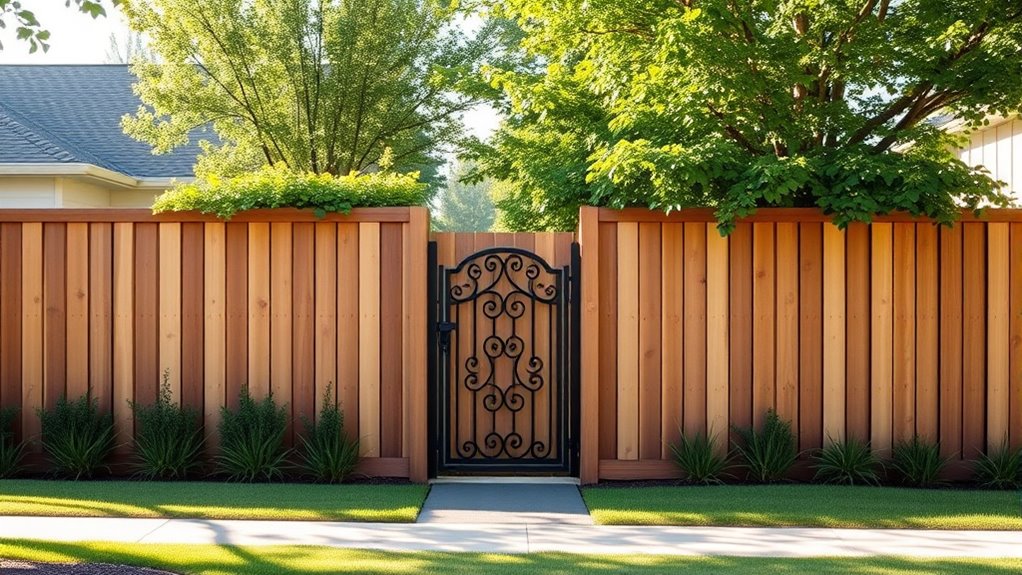

To balance privacy and security in your front yard, choose fencing that provides height and opacity, like wood or vinyl, to block views and deter intruders. Combine these with landscaping elements such as shrubs or decorative plants to soften the look and boost curb appeal. Pair sturdy materials with thoughtful design for a strong yet inviting barrier. Keep in mind how your fencing style complements your home’s architecture. Discover tips to create a secure, private, and attractive front yard as you explore further.

Get privacy and security gear delivered free — and shop member deals
- Fast, free delivery on millions of items
- Access to Prime Big Deal Days deals on October 6–7
- Prime Video, Amazon Music and more included
Key Takeaways
- Choose fencing materials that provide height and opacity for privacy while maintaining durability for security.
- Incorporate landscaping elements like hedges or shrubbery to soften fences and enhance visual appeal.
- Use decorative fencing styles that complement your home’s architecture to balance aesthetics with functionality.
- Combine different fence types, such as solid panels with see-through sections, to optimize privacy and security.
- Regularly maintain fences and landscaping to ensure safety, privacy, and curb appeal are consistently upheld.
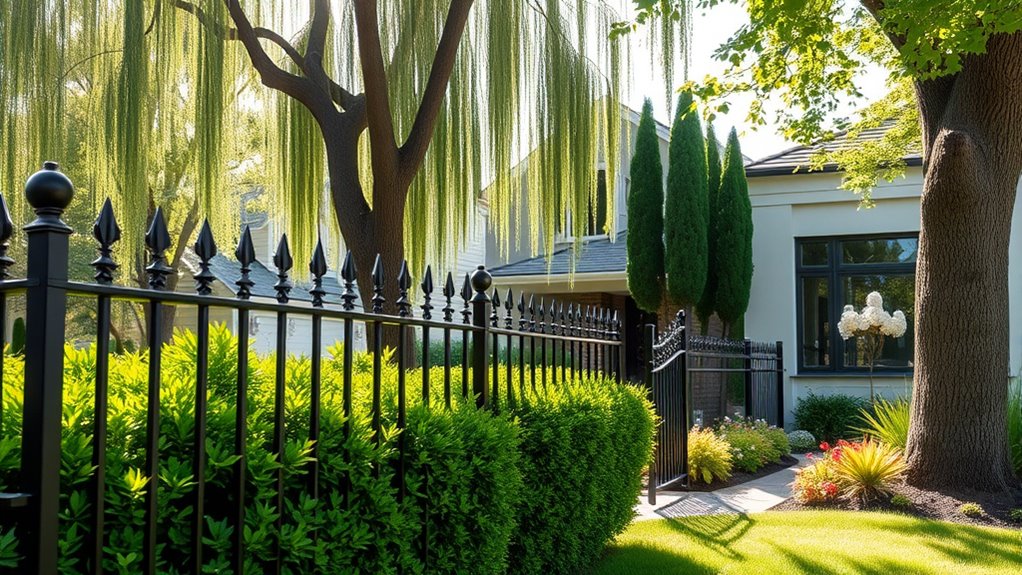
Front-yard fencing often presents a trade-off between privacy and security that homeowners must carefully consider. Your choice of fencing impacts not just safety but also the overall look of your property. When evaluating fencing options, think about how fencing materials and landscaping design work together to create the desired environment. If privacy is your priority, you might lean toward taller, opaque fences made of wood or vinyl. These materials effectively block views from neighbors and passersby, giving you a sense of seclusion. However, such fences can sometimes feel imposing or heavy, so balancing height with aesthetic appeal is *essential*. A well-planned landscaping design can soften the look of high fences, adding greenery or decorative elements that blend privacy with visual appeal.
Balancing privacy with aesthetic appeal is essential when choosing front-yard fencing.
If security is your main concern, sturdiness and durability become key factors in your fencing material choice. Chain-link fences, for example, are cost-effective and allow visibility, which can deter intruders by providing a clear line of sight. On the other hand, materials like wrought iron or steel fences offer higher security because they are difficult to breach. When selecting fencing materials, consider how they fit into your landscaping design. For instance, combining a strong metal fence with lush shrubbery or climbing plants can enhance security while maintaining an inviting appearance. Incorporating landscaping elements such as thorny bushes or dense hedges along the fence line can also improve security without sacrificing style.
Your fencing design should complement your home’s architecture and the overall landscape. For example, a sleek modern home pairs well with minimalist fencing materials like aluminum or composite panels, which can be designed to strike a balance between privacy and openness. Conversely, traditional or rustic homes may benefit from wooden fences that can be customized with decorative post caps or lattice accents to add character. Remember, the goal is to create a cohesive look where fencing and landscaping work hand in hand. Strategic placement of trees, flower beds, and other landscape features can help soften fencing edges, making your front yard both secure and welcoming. Additionally, understanding security zone info can help inform your fencing choices to optimize safety and deterrence.
Ultimately, choosing the right fencing involves balancing your need for privacy and security with your aesthetic preferences. Think about how fencing materials and landscaping design influence each other, and select options that provide safety without compromising curb appeal. With thoughtful planning, you can craft a front yard that feels both secure and inviting, reflecting your personal style while safeguarding your home.
As an affiliate, we earn on qualifying purchases.
Frequently Asked Questions
What Materials Are Best for Combining Privacy and Security?
You should choose materials like vinyl, wood, or metal for combining privacy and security. Vinyl offers great material durability and low maintenance, while wood provides aesthetic customization and a natural look. Metal fences, such as wrought iron or steel, add strength and security. Each material balances privacy and security differently, so consider your specific needs for durability and aesthetic appeal to pick the best option for your front yard.
How Do Local Regulations Impact Front-Yard Fencing Choices?
Local regulations greatly influence your front-yard fencing choices. You need to check neighborhood zoning rules, which dictate fence height, materials, and placement. Fencing permits are often required before installation; failing to obtain them can lead to fines or removal. These regulations ensure your fence aligns with community standards and safety requirements, so always review local codes and apply for necessary permits to avoid issues and stay compliant with your local rules.
Can Fencing Influence Neighborhood Aesthetics Positively?
Yes, fencing can positively influence neighborhood aesthetics by enhancing visual harmony and strengthening community identity. When you choose a design that complements your home’s style and adheres to local regulations, it creates a cohesive look that benefits everyone. Well-maintained fences add charm and character, making your neighborhood more inviting. By selecting thoughtful fencing options, you help foster a sense of unity and pride among residents.
Are There Eco-Friendly Fencing Options Available?
Yes, there are eco-friendly fencing options that can transform your yard into a green paradise. You can choose fences made from sustainable materials like bamboo, recycled wood, or composite materials that minimize environmental impact. Plus, eco-friendly coatings help protect the environment while keeping your fence durable and beautiful. By choosing these options, you’re making an impactful choice that benefits the planet and enhances your home’s curb appeal.
How Does Fencing Affect Home Resale Value?
Fencing can boost your home’s resale value, especially if it’s durable and well-maintained. In gated communities, high-quality fencing enhances security and curb appeal, attracting buyers. Durable fencing materials like vinyl or composite last longer and require less upkeep, making your property more appealing. However, overly personal or elaborate designs might limit buyer interest. Ultimately, a balanced, attractive fence can positively influence your home’s market value.
As an affiliate, we earn on qualifying purchases.
Conclusion
Ultimately, finding the right balance between privacy and security with front-yard fencing is like walking the tightrope of Icarus—striving for safety without losing sight of openness. You must weigh your needs carefully, knowing that too much privacy can feel isolating, while too little leaves you vulnerable. By thoughtfully choosing your fence, you shape your sanctuary—your modern-day fortress—without sacrificing the welcoming warmth that makes your home truly yours.
As an affiliate, we earn on qualifying purchases.
As an affiliate, we earn on qualifying purchases.
Fall Picks
fall essentials
As an affiliate, we earn on qualifying purchases.