In just 30 seconds, you can quickly check if your door is truly locked and secure by gently jiggling the handle, inspecting for gaps around the lock or frame, and ensuring the deadbolt fully extends without wobbling. Look for signs like loose hardware or shifting doors that could indicate vulnerability. If you notice anything off, taking steps to improve your door’s security can help. Keep going to discover how to strengthen your home’s defenses effectively.

Get privacy and security gear delivered free — and shop member deals
- Fast, free delivery on millions of items
- Access to Prime Big Deal Days deals on October 6–7
- Prime Video, Amazon Music and more included
Key Takeaways
- Gently shake the door to check for jiggles or shifts indicating loose hardware or misalignment.
- Inspect around the lock and door frame for visible gaps or light shining through, signaling poor sealing.
- Test the handle without a key—wobbling or easy movement suggests lock or latch issues.
- Confirm the deadbolt fully extends and stays engaged when locked.
- Ensure security features like locks and cameras are functioning properly and not compromised.
door security lock inspection tool
As an affiliate, we earn on qualifying purchases.
As an affiliate, we earn on qualifying purchases.
Why You Should Quickly Check If Your Door Is Secure

You should quickly check if your door is secure because it’s a simple step that can prevent potential break-ins or accidents. Your home security depends on the integrity of your doors, so regular door maintenance is essential. A loose or misaligned door can be an easy target for intruders, and it might also cause safety hazards like falling or trapping you inside. Ensuring your door latch is working correctly and that hinges are tight helps keep your home protected. Regular door maintenance can help identify and fix minor issues before they become major problems. Additionally, inspecting your door’s security features ensures that locks and latches are functioning correctly, further enhancing your safety. Checking door alignment using simple tools like a level can reveal hidden issues that compromise security. Being aware of home security best practices is an important part of maintaining a safe living environment. Proper door reinforcement can significantly improve your home’s overall security by making forced entry more difficult. This quick check is a crucial part of your overall security routine, giving you peace of mind and confidence that your home is safe. Don’t overlook this simple yet effective way to strengthen your safety measures.
As an affiliate, we earn on qualifying purchases.
How to Perform a 30-Second Door Lock Test
To perform a quick 30-second door lock test, start by gathering any tools you might need, like a flashlight or a screwdriver. Then, follow the proper steps to test your lock, applying consistent pressure and observing how it responds. You should also verify that your lock meets security standards for residential properties to ensure optimal protection. Ensuring your lock is properly installed can significantly reduce vulnerabilities. Additionally, understanding European cloud security standards can help you assess the overall robustness of your security systems. Taking a moment to perform regular checks ensures ongoing safety and peace of mind. Recognizing the importance of home security best practices can further enhance your safety measures. Finally, interpret your results to determine if your lock is secure or needs attention.
Gather Necessary Tools
Before performing a 30-second door lock test, gather the essential tools to guarantee the process goes smoothly. Having the right items ready makes it easier to check your lock’s security effectively. Here are four key tools to have on hand:
- A lock pick set – useful for testing lock vulnerabilities through lock picking.
- A duplicate key – helpful if you need to compare or test key duplication options.
- A flashlight – ensures you can see the lock mechanism clearly in low light.
- A screwdriver – to remove or adjust the lock if necessary.
These tools help you evaluate whether your lock is secure or if it’s susceptible to lock picking or easy key duplication, ensuring you can address vulnerabilities quickly. Additionally, understanding lock security principles can help you choose the most effective measures to protect your home.
Execute the Test Properly
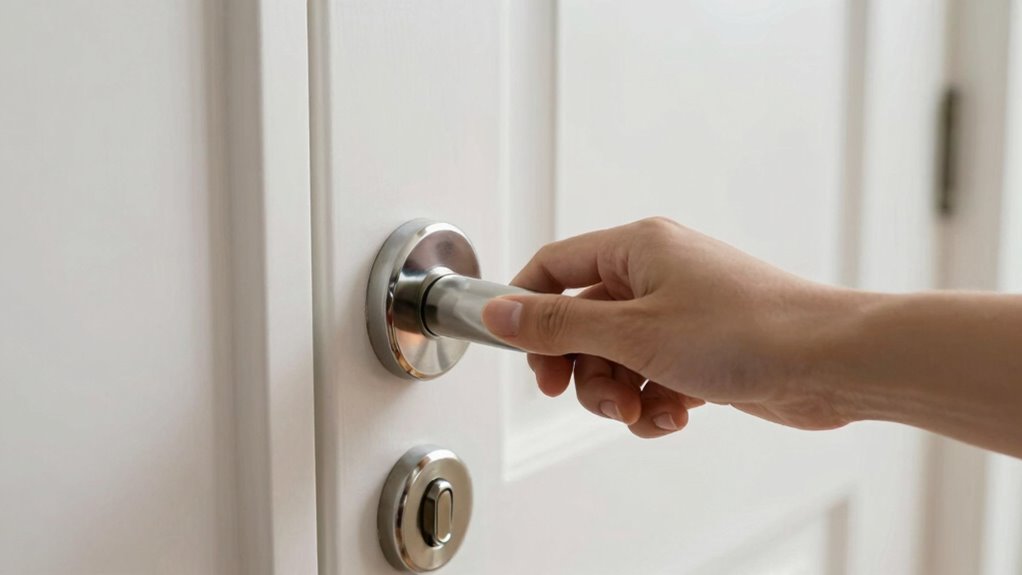
Gathering your tools sets the stage for an efficient test, but knowing how to perform the 30-second lock check precisely is what truly guarantees your door’s security. Start by closing the door firmly, ensuring all door accessories like hinges and handles are secure. Lock the door completely, then gently attempt to turn the handle without using the key; if it turns, the lock isn’t fully engaged. During the test, listen for any unusual noises that may indicate a problem with your lock maintenance. Make sure the deadbolt extends fully and holds steady. Avoid rushing—this quick check relies on your attention to detail. Performing the test properly helps identify weaknesses early, giving you peace of mind that your door is truly secure. Understanding lock mechanisms can help you better assess whether your lock is functioning properly, especially when considering Rhythm Failure techniques that emphasize precise, effective security checks.
Interpret Your Results
When you finish the test, carefully observe how your door responds. If it stays securely locked, your lock is secure; no immediate action needed. If it opens easily, consider tightening or replacing your lock. Here are key points to interpret your results:
- Locked Firmly: Your lock is secure; no immediate action needed.
- Loose or Wobbly Lock: Tighten screws or replace components to improve security.
- Unlocks Easily: Check for key or lock issues, and consider professional maintenance.
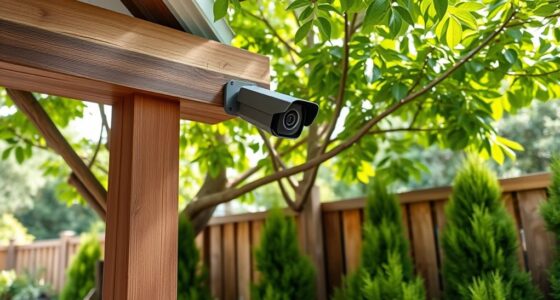
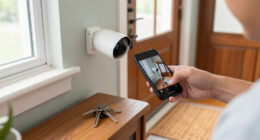
- Security Camera Placement: Ensure cameras cover your entry points; they complement your lock’s security. Regular inspections of your home security system components, such as locks and cameras, can further enhance your home’s safety.
- Additional Security Measures: Consider outdoor lighting and reinforcing door frames to deter intruders and improve overall security.
As an affiliate, we earn on qualifying purchases.
Signs That Your Door Might Not Be Locked or Secure

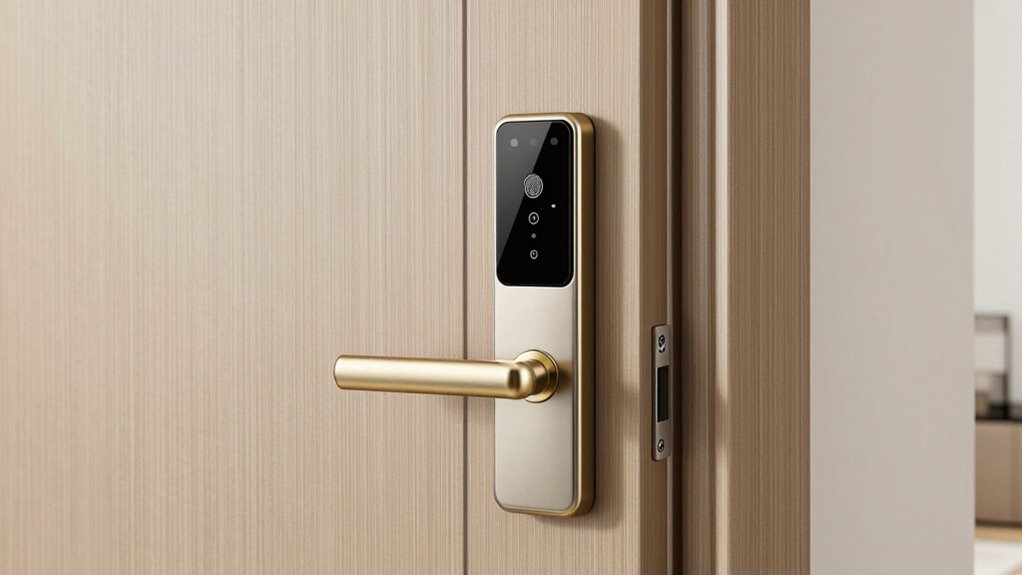
You should be alert for signs that your door isn’t fully secure. If it jiggles when you give it a gentle shake, or if you notice visible gaps around the lock, it could be compromised. Unusual movements or shifting of the door also signal it might not be properly locked. Regularly inspecting your door’s security features can help ensure your home’s security measures are up to date. Additionally, understanding home security best practices can further strengthen your safety. Ensuring your door’s locking mechanisms are functioning properly is a crucial step in maintaining overall security. Incorporating advanced security technologies, such as smart locks or sensors, can provide an extra layer of protection against intrusion.
Door Jiggling Test
The door jiggling test is a quick way to check if your door is securely locked. If it moves or feels loose when you jiggle the handle, your lock may not be fully engaged. Here are signs to watch for:
- The handle wobbles without resistance.
- The lock doesn’t latch properly when closed.
- You hear a click but can still jiggle the door.
- Your smart locks or alarm systems don’t activate as expected.
- The filtration system in your lock mechanism might be compromised, affecting its reliability. Regular maintenance of lock components can help ensure your security system functions properly.
If any of these occur, your door might not be as secure as you think. Upgrading to smart locks or integrating alarm systems can help prevent unauthorized access. Always double-check lock engagement after jiggling to ensure your home stays safe.
Visible Lock Gaps
Noticing visible gaps around your door can be a quick way to tell if it’s fully secured. Look for visual lock gaps where the door frame and lock don’t line up perfectly. These gaps indicate poor door latch alignment, making it easier for someone to pry or force the lock open. Check along the sides and top of the door for any space. If you see light shining through or notice the lock isn’t flush against the frame, your door may not be fully locked. Use this table to identify common signs of insecure locks:
| Sign | What it Means | Action Needed |
|---|---|---|
| Visible lock gaps | Poor latch alignment or misfit | Realign or replace latch |
| Light shining through | Gaps in lock or door frame | Adjust or reinforce door/frame |
| Door doesn’t close flush | Misaligned or loose lock | Tighten or replace hardware |
| Lock not flush with frame | Weak connection or damage | Repair or upgrade lock |
| Excessive gaps around lock | Poor installation or wear | Consult a locksmith |
Unusual Door Movements
Unusual door movements are a clear sign that your door might not be fully secure. If your door shifts, wobbles, or doesn’t sit flush, it could indicate door hinge issues or compromised door frame integrity. These issues can make it easier for someone to force entry or cause the lock to malfunction. Watch for these signs:
- The door feels loose or wobbly when you open or close it.
- It rubs against the frame or doesn’t align properly.
- You notice gaps between the door and the frame.
- The door swings open on its own or requires extra force to close.
- Addressing these problems promptly helps ensure your door remains secure. Ignoring unusual movements can weaken the door’s overall security and leave your home vulnerable. Additionally, understanding the importance of creative storytelling in branding can help you communicate these security concerns effectively to your community or customers. Being proactive about maintenance and understanding door security fundamentals can significantly enhance your safety measures.
As an affiliate, we earn on qualifying purchases.
What to Do If Your Door Fails the Security Check

If your door fails the security check, don’t panic. First, review your existing setup. If you have an alarm system, ensure it’s activated and functioning correctly to alert you to any breaches. Consider upgrading to smart locks that provide better security and remote control access, making it easier to lock your door securely from anywhere. If the lock feels loose or unreliable, replace or repair it promptly. Double-check all hardware for signs of tampering or wear. It’s also wise to reinforce doorframes or add additional security features like a deadbolt. Taking these steps immediately can help prevent unauthorized access while giving you peace of mind. Regularly testing your security measures guarantees your door remains safe and reliable in the long run. Incorporating sizing and load‑planning tools can help assess whether your door hardware can withstand forced entry attempts.
Easy Ways to Strengthen Your Door Security Long-Term
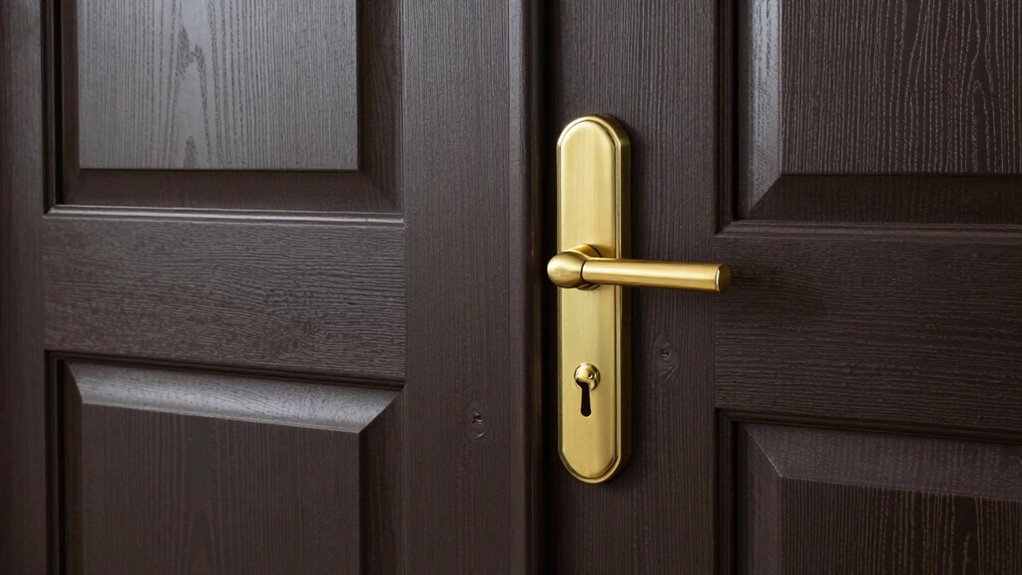
To effectively strengthen your door security over the long term, start by upgrading to a high-quality deadbolt and ensuring it’s properly installed. Next, consider door reinforcement techniques like adding a strike plate or reinforcing hinges to prevent forced entry. Installing alarm systems that trigger when the door is tampered with adds an extra layer of protection. Here are four easy ways to boost your security:
- Install a heavy-duty strike plate with long screws
- Reinforce door frames and hinges
- Use smart alarm systems with door sensors
- Regularly inspect and maintain all security components
These steps make your door more resistant to break-ins and help deter potential intruders, keeping your home safer long-term.
When to Call a Professional for a Home Security Review

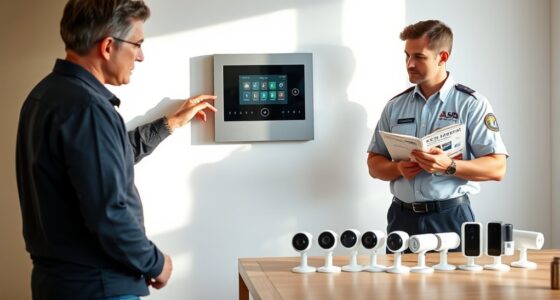
While upgrading and maintaining your door security is important, there are times when bringing in a professional can make a big difference. If you’re unsure about your system’s effectiveness or considering advanced options like home automation and smart locks, a security review is prudent. A professional can identify vulnerabilities you might overlook and recommend tailored solutions. For example, a review can determine if your smart locks are properly integrated into your home automation system or if they need upgrades for better security.
| When to Call a Professional | Why It Matters |
|---|---|
| Upgrading to smart locks | Ensures proper installation and integration |
| Frequent security breaches | Identifies loopholes and vulnerabilities |
| Complex home automation | Optimizes system security and functionality |
| Uncertain about lock integrity | Provides expert assessment of hardware |
| Need for a thorough review | Ensures your entire security system works cohesively |
Frequently Asked Questions
Can I Check My Door’s Security Without Opening It?
Yes, you can check your door’s security without opening it by testing your lockpicking skills carefully or using security sensors. You might try gently probing the lock to see if it’s easy to pick or detect any movement with sensors. These methods help you assess vulnerabilities without compromising your door’s integrity. Just be cautious, and if you’re unsure, consult a professional locksmith to ensure your security stays intact.
How Often Should I Perform This Quick Security Check?
You should perform this quick security check weekly to guarantee your lock maintenance is up to date and your door remains secure. Regular checks help you spot potential vulnerabilities early and decide if security upgrades are needed. Staying consistent with this routine keeps your home safer, giving you peace of mind. Make it part of your weekly maintenance to maintain peak security and address any issues before they become serious problems.
Are There Specific Locks That Are Harder to Pick?
Sure, some locks are like Fort Knox—designed to thwart lock picking with extra durability and complex mechanisms. High-security locks, such as those with hardened steel or patented keyways, make lock picking a nightmare. If you want to stay one step ahead of potential intruders, invest in locks explicitly built for durability. Remember, the tougher the lock, the less likely a sneaky lock picker will crack your defenses.
What Are Common Signs of a Compromised Door Lock?
You notice signs like difficulty turning the key, a loose or rattling lock, or visible damage around the lock area. These can indicate someone has attempted lock picking or that the lock is compromised. If it feels less secure, consider security upgrades like stronger locks or smart systems. Regularly check for these signs to stay ahead of potential break-ins and ensure your door remains secure against unauthorized access.
Is This Check Effective for All Types of Doors?
Yes, this quick check works well for most door types, but effectiveness varies. For wooden or metal doors, it’s straightforward to see if the lock holds firm. However, with glass or sliding doors, different door materials and lock types can make it trickier to gauge security. Always consider the specific door material and lock type, and adapt the check accordingly for the most accurate assessment.
Conclusion
Think of your door as the first line of defense guarding your castle. A quick 30-second check can reveal if you’re vulnerable or secure. Don’t leave your safety to chance—treat each check like a knight inspecting their fortress. By staying vigilant and taking simple steps now, you keep intruders at bay. Remember, a strong door is your shield—make sure it’s always locked and ready to defend what matters most.
Fall Picks
fall essentials
As an affiliate, we earn on qualifying purchases.