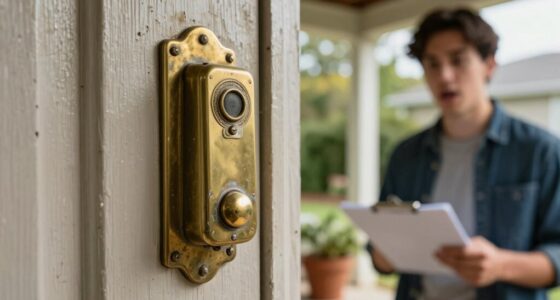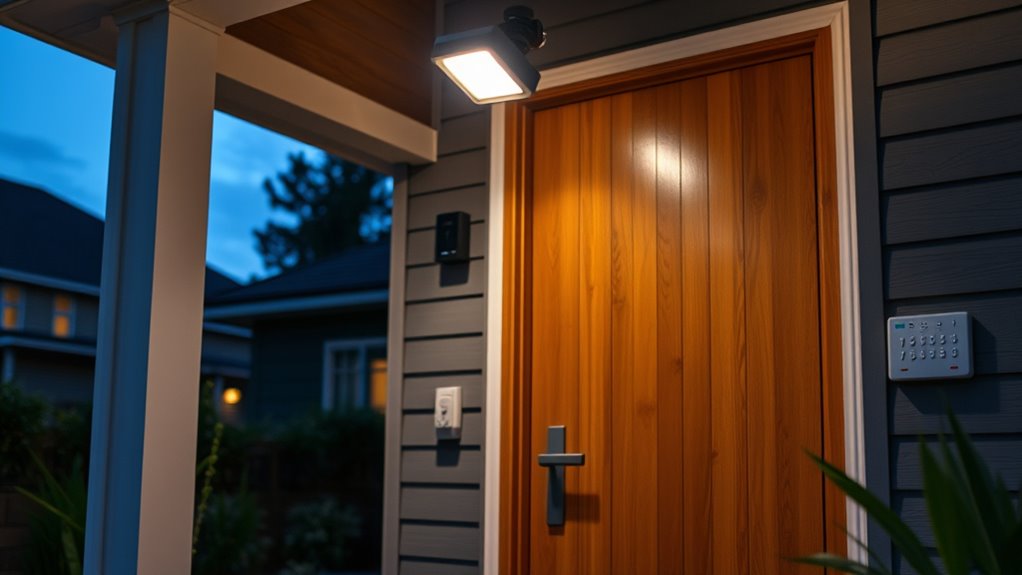

To create layered home security from doors to digital, start by installing smart locks and using temporary keys for visitors, eliminating worries about lost keys. Add motion sensors near entry points and dark corners that detect movement and trigger alerts or lights. Integrate security cameras for visual confirmation, and combine these with outdoor lighting for added deterrence. Regularly update your devices and educate family members on safety, helping you build a strong, multi-layered defense system. Keep going to discover the essentials behind each layer.
Key Takeaways
- Install smart locks for remote access, temporary keys, and activity monitoring.
- Use motion sensors at entry points and dark corners to detect and alert unexpected activity.
- Integrate surveillance cameras and outdoor lighting for visual confirmation and deterrence.
- Regularly update device firmware, change passwords, and educate household members on security best practices.
- Build a layered system combining locks, sensors, lighting, and cameras for comprehensive home protection.
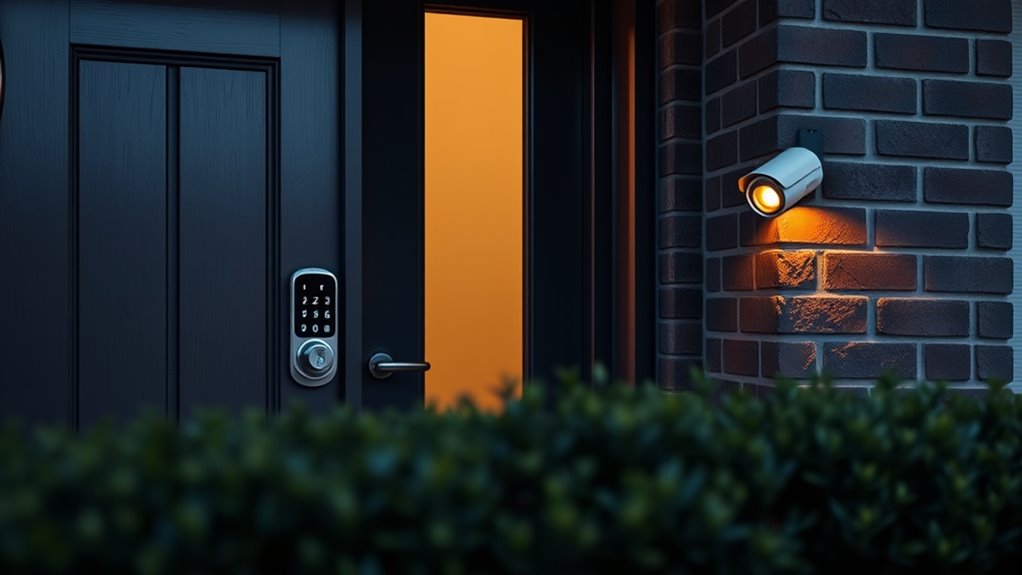
Creating layers of home security is essential to effectively protect your property and loved ones. When you add multiple safeguards, you make it more difficult for intruders to succeed, increasing your peace of mind. One of the first steps you can take is upgrading your door locks to smart locks. Unlike traditional locks, smart locks allow you to control access remotely, set temporary keys for visitors, and monitor who enters and exits your home. With smart locks, you no longer have to worry about lost keys or lockouts; instead, you can lock and unlock doors with a smartphone app or even a voice command. This technology adds an extra layer of security by enabling real-time control and monitoring, making it easier to respond swiftly if something seems off.
In addition to smart locks, integrating motion sensors into your security system considerably enhances your home’s defenses. Motion sensors detect movement in designated areas, alerting you immediately if unexpected activity occurs. Placed at entry points, hallways, or dark corners, these sensors can trigger alarms or send notifications directly to your phone, allowing you to react promptly. This immediate feedback acts as a deterrent for potential intruders, who often prefer to operate unnoticed. When combined with security cameras, motion sensors not only notify you of activity but also provide visual evidence, helping authorities identify and apprehend intruders more efficiently.
Beyond smart locks and motion sensors, you should consider the strategic placement of these devices around your property. For example, installing motion sensors near back doors, side entrances, or windows makes it harder for intruders to approach undetected. Pairing these with outdoor lighting and surveillance cameras creates a thorough defense system that covers both physical and digital threats. You can also set up automations, like having lights turn on when motion is detected at night, creating the illusion of activity and discouraging unwanted visitors. These layered measures work together to make your home a less appealing target while giving you greater control and visibility over what’s happening around your property.
Finally, remember that technology alone isn’t enough. Regularly updating your devices, changing passwords, and testing your security system guarantees everything functions properly. Educate your family about security protocols and encourage vigilance. Incorporating cybersecurity best practices such as strong passwords and firmware updates further fortifies your home’s defenses against digital threats. By combining smart locks, motion sensors, and other security measures, you build a multi-tiered protection system that’s both proactive and reactive, making your home safer and more secure from every angle.

Philips Wi-Fi Smart Deadbolt Lock, Keyless Entry Door Locks for Front Door
- Multiple Unlock Methods: App, passcode, fingerprint, key, voice
- Remote Access: Control lock remotely via Wi-Fi
- Voice Control Compatibility: Works with Alexa and Google Assistant
As an affiliate, we earn on qualifying purchases.
As an affiliate, we earn on qualifying purchases.
Frequently Asked Questions
How Often Should I Update My Home Security System?
You should update your home security system at least once a year to guarantee it stays effective. Regular updates help keep your security alarm and window sensors functioning properly, protecting your home from new threats. Check for firmware updates, replace outdated sensors, and review your system’s settings. If you experience any issues or changes in your home, update your security system promptly to maintain peak safety and peace of mind.
What Is the Most Cost-Effective Security Upgrade?
The most cost-effective security upgrade is a smart lock, which fits into your budget planning and enhances door security. Start with a security assessment to identify vulnerabilities, then invest in smart locks and motion-activated lighting. These upgrades are affordable, easy to install, and provide significant protection without breaking the bank. Regularly review your security setup to guarantee you’re maximizing your investment and keeping your home safe.
How Can I Protect My Smart Home Devices From Hacking?
To protect your smart home devices from hacking, you should use strong encryption protocols and make certain device authentication. Always change default passwords, enable two-factor authentication when available, and keep your firmware updated. Use a secure Wi-Fi network with a strong password, and consider segmenting your smart devices on a separate network. These steps make it harder for hackers to access your devices and keep your smart home secure.
Are DIY Security Systems as Effective as Professional Ones?
You might think DIY security systems are just as effective as professional ones, but don’t be fooled. While DIY options can cover basic needs, their effectiveness often falls short in critical moments. Professional systems bring reliable monitoring and expert setup, ensuring your home’s safety isn’t left to chance. So, if you value peace of mind over saving a few bucks, trust in professional reliability over DIY effectiveness.
What Legal Considerations Exist for Home Security Cameras?
You need to be aware of privacy laws and surveillance regulations when installing home security cameras. These laws typically require you to avoid capturing footage of neighbors’ private property or public spaces without permission. Make sure your cameras focus only on your property, and familiarize yourself with local regulations to stay compliant. Violating these rules could lead to legal issues, so always prioritize ethical and lawful surveillance practices.

Wired PIR Sensor Dual Passive Infrared Motion Detector Hard Wired for Existing Home Alam System or Occupancy Sensor
- Self-Test and Interference Resistance: Includes self-test, temperature compensation, anti-interference features
- Pulse Counting Technology: Adjustable pulse count for different environments
- Wide Operating Voltage: DC 9-16V power supply
As an affiliate, we earn on qualifying purchases.
As an affiliate, we earn on qualifying purchases.
Conclusion
By layering your home security, you’re building a fortress that’s tough to breach. Think of each security measure as a brick in your wall—stronger together, harder to penetrate. From sturdy doors to digital alarms, every layer adds a shield of protection. Stay vigilant, keep upgrading, and remember: a well-secured home isn’t just a place; it’s your sanctuary, wrapped in a web of defenses that’s as reliable as your own heartbeat.

Blink Outdoor 4 – Wireless smart security camera, two-year battery life, 1080p HD day and infrared night live view, two-way talk. Sync Module Core included – 3 camera system
- Battery Life: Up to two years of battery life
- Video Quality: 1080p HD live view
- Night Vision: Infrared night vision
As an affiliate, we earn on qualifying purchases.
As an affiliate, we earn on qualifying purchases.

ProGreen 6000K Battery Motion Sensor Light Outdoor Waterproof Wireless LED Battery Powered Wall Light Auto On/Off Night Light 2 Pack Cool White
- High-Brightness LED Beads: 9 LEDs with 100 lumens, 50,000-hour lifespan
- Dual Lighting Modes: Auto and On modes for versatile use
- Wireless Easy Installation: No wires needed, mounts with screws
As an affiliate, we earn on qualifying purchases.
As an affiliate, we earn on qualifying purchases.