
Stop sharing your garage door remote code and neglecting security right now. Never give your code to others or leave your remote in plain sight—it puts your home at risk. Always use strong PINs, keep your remote in a secure place, and regularly check or change batteries. Make sure you use verified apps and keep security features like rolling codes enabled. Continuing to ignore these tips can compromise your home—it’s vital to learn more to stay protected.
Key Takeaways
- Do not share your remote code or programming with others to prevent unauthorized access.
- Avoid leaving your garage remote in plain sight or unsecured locations to prevent theft or cloning.
- Never disable security features like rolling codes, which protect against hacking and signal interception.
- Do not ignore remote malfunctions; reprogram or replace batteries immediately to ensure security and functionality.
- Avoid using unverified apps or links for remote control, as they can compromise your garage’s security.

2 Garage Door Opener Remote, for Lift Master Chamberlain Craftsman Garage Door Opener Remote 893LM 893Max 891LM 971LM 973LM 371LM 373LM, Red Orange Green Yellow Purple Learn Button Garage Door Remote
Universal Garage Door Opener Remote – Compatible with Chamberlain Lift Master, and Craftsman garage door opener Please make…
As an affiliate, we earn on qualifying purchases.
As an affiliate, we earn on qualifying purchases.
Why Securing Your Garage Remote Matters

Securing your garage remote is essential because it prevents unauthorized access to your home and increases your security. If someone gains control of your remote, they could easily commit garage theft or break into your house. Remote hacking is a real threat, with hackers using simple devices to intercept and clone signals. Without proper security measures, your remote becomes vulnerable, putting your property at risk. Always keep your remote in a safe place and consider updating your remote’s firmware when possible. Using rolling codes adds an extra layer of protection, making it harder for hackers to duplicate your signals. Additionally, understanding the importance of wave and wind security measures can help you better protect your remote from potential threats. Remember, your garage remote isn’t just a convenience—it’s a potential security weak point if not protected properly. Implementing encryption technologies can further enhance your remote’s security by ensuring that signals are more difficult for intruders to decipher. Staying informed about wireless communication vulnerabilities can help you adopt the most effective security practices. Recognizing the net worth and value of your home can motivate you to prioritize security enhancements for peace of mind. Being aware of security protocols related to remote access can also help you adopt the most current and effective protection measures.
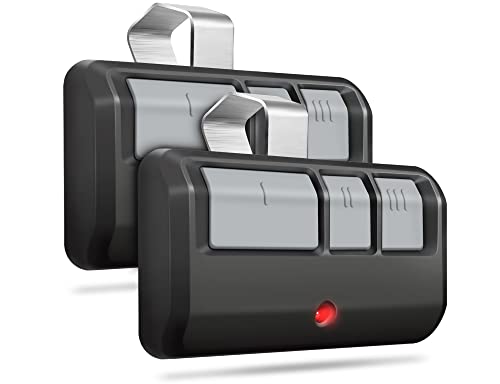
2 for Chamberlain LiftMaster Craftsman Garage Door Opener Remote 893LM 893Max 971LM Universal
Universal: Works on LiftMaster, Chamberlain and Craftsman garage door openers manufactured from 1993 to current; Compatible for 3…
As an affiliate, we earn on qualifying purchases.
As an affiliate, we earn on qualifying purchases.
Never Share Your Garage Door Remote Code With Others
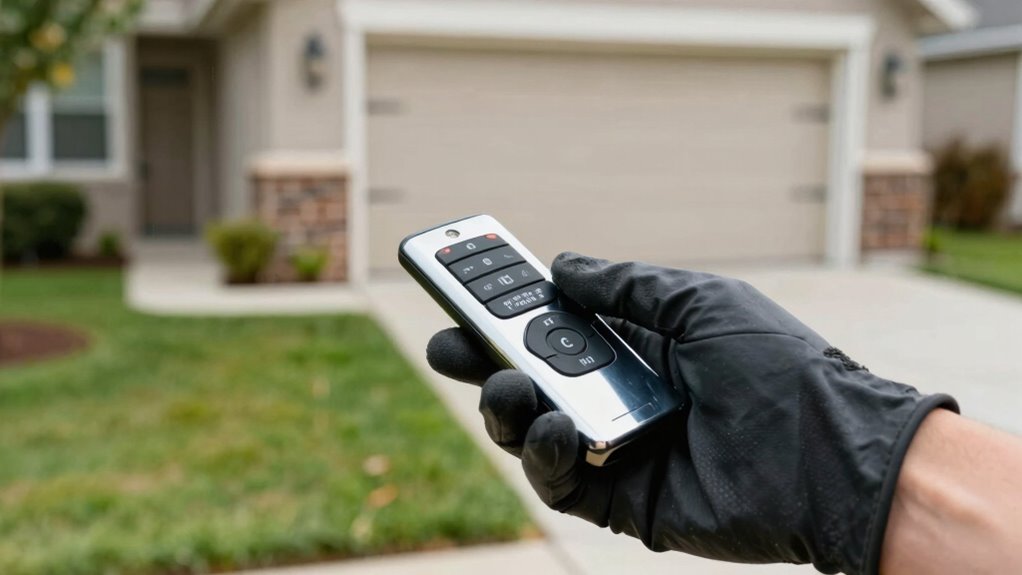
Sharing your garage door remote code can put your security at risk. If others have access, they might open your garage without permission or cause damage. To protect your property, keep your code private and only share it when absolutely necessary. Remember, using secure codes and access controls can further enhance your safety. Additionally, regularly updating your access codes can prevent unauthorized entry over time. Implementing encryption methods for your remote signals can also help safeguard against hacking attempts. Staying informed about security vulnerabilities related to garage door openers can help you take proactive measures. Being aware of industry best practices ensures you stay ahead of potential security threats.
Risks of Sharing Codes
Since anyone with access to your garage door remote code can operate your garage, it’s crucial to keep this information private. Sharing your code compromises your garage security, making it vulnerable to theft or intrusion. Remote sharing might seem harmless, but it can lead to unintended access if others share or lose control of the code. Once your code is out, you lose control over who can open your garage, increasing the risk of break-ins. Additionally, if your remote code gets into the wrong hands, it becomes difficult to track or revoke access. Protecting your garage security means keeping your codes private and only sharing them with trusted individuals. Regularly updating your security measures can help safeguard your property from unauthorized access. Implementing two-factor authentication or changing codes periodically can further enhance your garage security. Also, consider using smart garage systems that allow you to monitor and control access remotely, giving you added peace of mind. Utilizing filtering and pump protection can also prevent malfunctions and ensure your garage opener functions smoothly. Being aware of potential cybersecurity vulnerabilities related to garage remotes can help you stay ahead of emerging threats.
Protect Your Garage Security
To keep your garage safe, it’s essential that you never share your remote code with others. Sharing can compromise your security and make your garage vulnerable. Always keep your remote control troubleshooting tips in mind—if your remote isn’t working properly, don’t share it; instead, inspect the batteries or consider reprogramming it. Regular garage door maintenance helps prevent security gaps, like outdated codes or malfunctioning remotes. Ensuring your remote uses secure technology reduces the risk of hacking or unauthorized access, and understanding network security protocols can further safeguard your home systems. Additionally, utilizing high-security access systems can further enhance your garage’s defenses against intrusion. Incorporating traditional practices and cultural knowledge into your home security routines can also promote a more holistic approach to safety, respecting your community’s heritage and natural environment. Being aware of vetted security zone info can help you choose the most reliable and effective security solutions for your needs.
2 for Chamberlain LiftMaster Craftsman Garage Door Opener Remote 893LM 893Max 971LM Universal
Universal: Works on LiftMaster, Chamberlain and Craftsman garage door openers manufactured from 1993 to current; Compatible for 3…
As an affiliate, we earn on qualifying purchases.
As an affiliate, we earn on qualifying purchases.
Use Strong, Unique PINs for Keypad Access

Using strong, unique PINs for your keypad access is essential to keep your garage secure. Weak or reused PINs compromise PIN security and make it easier for intruders to gain remote access. To improve safety, picture these steps:
Choose strong, unique PINs and update them regularly to keep your garage safe from intruders.
- Imagine a PIN that combines letters and numbers, like 7X9J, making it harder to guess.
- Visualize changing your PIN regularly, like updating your password on important accounts.
- Think of avoiding obvious combinations, such as your birth year or simple sequences like 1234.
- Remember that PIN security relies on unpredictability and regular updates to prevent unauthorized access.
- Incorporate wiring basics to ensure your keypad installation is secure and protected from tampering.
- Regularly testing your system can help identify vulnerabilities and maintain security integrity, which depends on understanding and applying proper system design principles.
- Additionally, understanding the body jewelry measurements can be crucial when replacing or upgrading components to ensure proper fit and function.
2 for Chamberlain LiftMaster Craftsman Garage Door Opener Remote 893LM 893Max 971LM Universal
Universal: Works on LiftMaster, Chamberlain and Craftsman garage door openers manufactured from 1993 to current; Compatible for 3…
As an affiliate, we earn on qualifying purchases.
As an affiliate, we earn on qualifying purchases.
Keep Your Remote in a Safe, Out-of-Sight Place
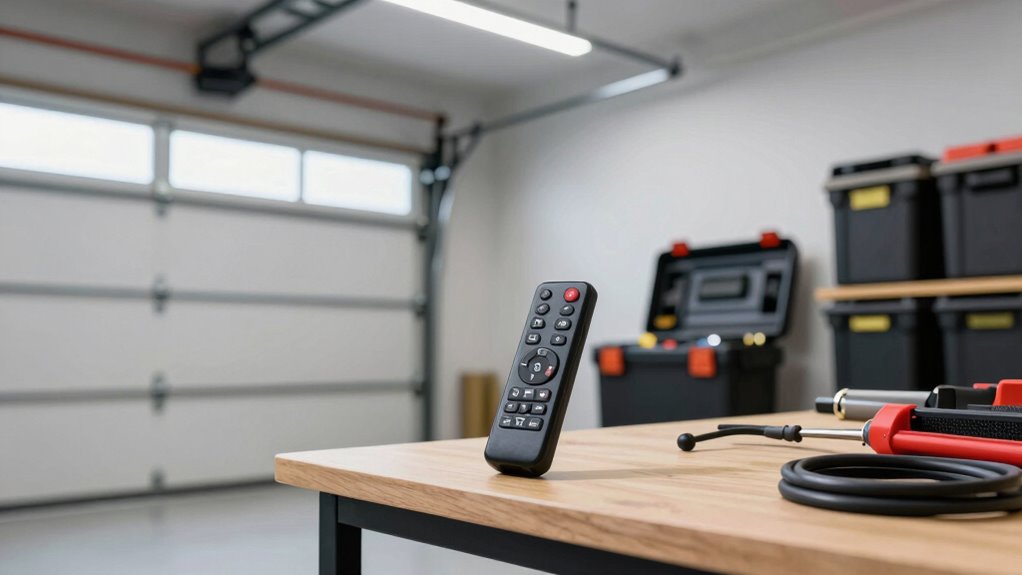
Keeping your garage door remote in a discreet, out-of-sight location is a simple but effective way to prevent unauthorized access. When you store your garage remote in secure storage, you minimize the risk of someone stealing or copying the device. Avoid leaving it on countertops, hooks, or in plain sight where burglars or curious individuals can easily find it. Instead, choose a hidden spot such as a drawer, safe, or locked cabinet. This small step makes it harder for intruders to access your garage remotely. Remember, the key is to keep your garage remote out of sight and in a secure storage area, reducing the chances of unwanted visitors gaining entry through your garage door.
Regularly Check and Replace Remote Batteries
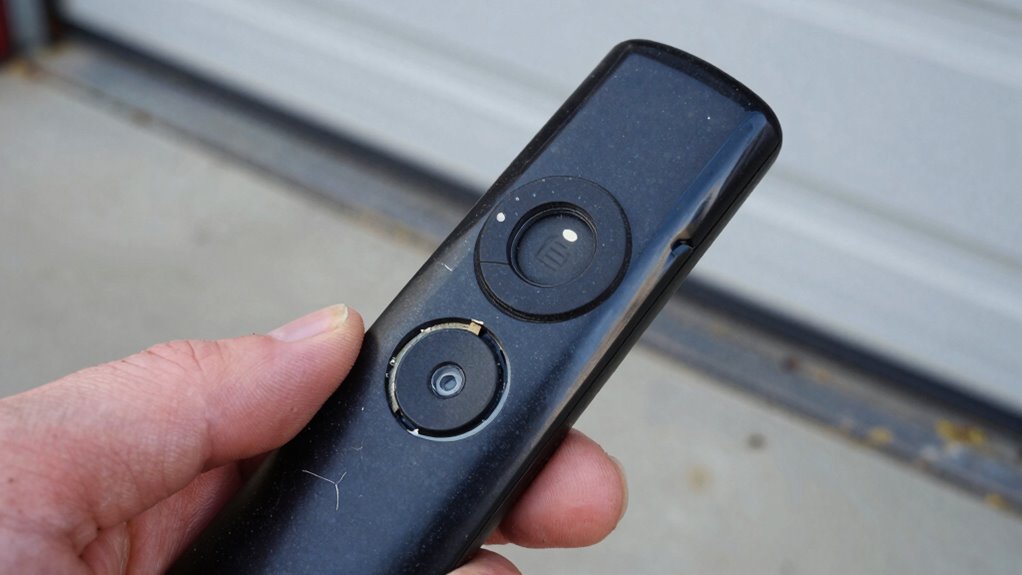
Make sure you check your remote batteries regularly to avoid surprises. Use the correct type of batteries to guarantee proper function. Replace them as soon as they start to weaken for reliable operation.
Check Battery Regularly
Since remote batteries can lose power without warning, it’s important to check them regularly to verify your garage door operates smoothly. A weak remote battery can prevent your remote from functioning properly, especially if it’s not correctly positioned in its remote placement. To guarantee reliable operation, consider these steps:
- Open the remote casing gently to access the remote battery.
- Visually inspect the remote battery for corrosion or low charge.
- Replace the remote battery if it looks worn or the remote isn’t responding consistently.
Use Correct Batteries
Using the correct batteries in your garage door remote guarantees reliable operation and prevents unnecessary malfunctions. Always check your remote’s manual to identify the right battery types, such as alkaline or lithium batteries, to maximize performance. Using incompatible batteries can cause power issues or damage the remote’s circuitry. Regular remote maintenance includes verifying that you have the proper batteries and replacing them as needed. Keep spare batteries on hand so you can quickly swap out weak ones and avoid interruptions. Properly installing the batteries, with correct polarity, also helps maintain reliable control. By prioritizing the use of correct batteries, you reduce the chance of remote failure and extend its lifespan, assuring your garage door operates smoothly when you need it most.
Replace When Weak
Regularly checking your garage door remote’s batteries guarantees it stays responsive when you need it. When the batteries weaken, remote replacement becomes essential to maintain remote security and functionality. Signs include delayed responses or total failure to operate. To prevent issues, consider these steps:
- Visual inspection of battery life indicator or corrosion.
- Testing the remote’s response before opening the garage.
- Replacing batteries immediately if you notice any sluggish performance or warning signals.
Use Verified Garage Door Apps and Avoid Unsecured Links
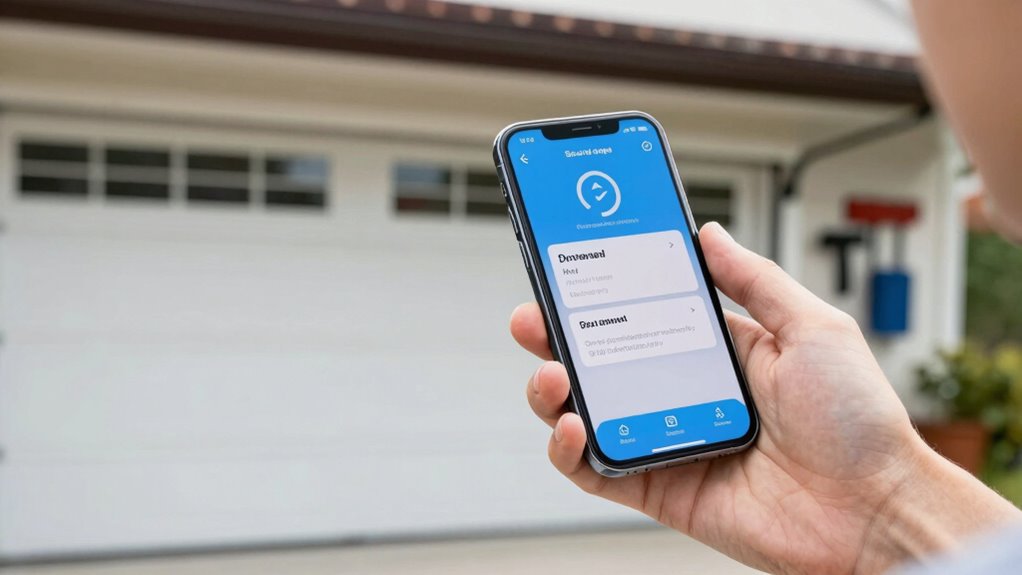
To keep your garage door secure, only download and use verified apps from trusted sources. Unsecured links or third-party apps can expose your system to hacking, risking unauthorized access. Always verify your garage door sensors are compatible with the app and that you’re maintaining your remote control properly. Using unverified apps can compromise your remote control maintenance, making it easier for intruders to manipulate your garage door. Stick to official app stores and updates from reputable manufacturers. This reduces the risk of malware or spyware infiltrating your system, which could disable your garage door’s security features. By choosing verified apps, you safeguard your garage and prevent potential security breaches, keeping your home protected from unwanted intrusions.
Keep Security Features Like Rolling Code Enabled

Have you checked that your garage door opener’s security features, like rolling code technology, are enabled? Keeping these features active is essential for your security. When you practice good remote control etiquette, you prevent unauthorized access. Here are three reasons to keep rolling code enabled:
- It changes the code each time you use the remote, making it difficult for intruders to intercept and replicate.
- It protects your garage from potential hacking attempts during garage door maintenance or repairs.
- It ensures your remote and opener stay synchronized, reducing accidental access issues.
Reprogram Remotes Properly: Reset Before Reusing
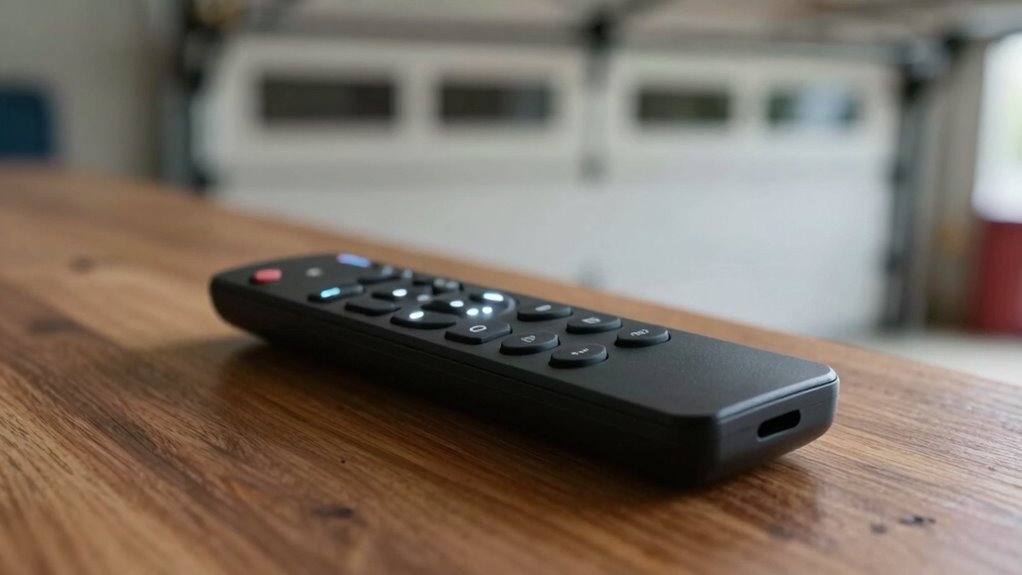
Before reprogramming your garage door remote, always reset it to make sure a clean slate. This step ensures proper remote synchronization and prevents conflicts with existing codes. Resetting your remote clears any previous programming protocols, reducing the risk of malfunction or unintended access. Follow your garage door system’s specific instructions for resetting, which often involves pressing and holding buttons or removing batteries temporarily. Once reset, you can safely proceed with reprogramming, knowing the remote is ready for fresh programming protocols. This process helps avoid issues like signal interference or failed synchronization. Remember, a properly reset remote is key to reliable operation and security. Always verify that the remote responds correctly after reprogramming before storing it away or relying on it regularly.
Update or Reprogram Your Remote After Repairs or System Changes

Whenever you’ve completed repairs or made system updates, reprogramming your garage door remote is essential to guarantee it works seamlessly with the new setup. This step ensures proper remote maintenance and maintains system compatibility. Imagine the remote syncing smoothly with your opener, like fitting puzzle pieces perfectly. To do this:
- Press and hold the ‘Learn’ button on your garage door opener until the LED lights up.
- Quickly press your remote’s button three times to transmit the new code.
- Test the remote to confirm it opens and closes the door correctly.
Updating your remote after repairs prevents glitches and ensures reliable operation. Skipping this step can leave your remote incompatible with the system, risking failure or malfunction. Proper reprogramming keeps everything running smoothly.
Frequently Asked Questions
Can My Garage Remote Be Hacked Remotely?
Yes, your garage remote can be hacked remotely due to security vulnerabilities in some models. Hackers exploit weaknesses like weak encryption or outdated systems, leading to remote hacking. To protect yourself, avoid using universal remotes, keep your system updated, and consider changing the default code. Stay vigilant and regularly check for security updates to minimize the risk of remote hacking and keep your garage secure.
How Often Should I Change My Garage Remote’s Security Code?
You should change your garage remote’s security code every six months to stay ahead of hackers, as studies show frequent updates reduce security breaches considerably. Regular remote code updates are essential for maintaining strong security practices. By doing so, you prevent unauthorized access and ensure your garage remains protected. Make it a habit to review and update your remote’s codes periodically, keeping your home safe and secure at all times.
Are Universal Garage Remotes More Secure Than Brand-Specific Ones?
Universal garage remotes aren’t necessarily more secure than brand-specific ones. They often use fixed codes, which can be easier for hackers to crack, putting your remote security at risk. To prevent hacking, you should regularly update your remote’s security code and consider remotes with rolling code technology. This way, you enhance hacking prevention and guarantee your garage stays protected, no matter the remote type you choose.
What Signs Indicate My Garage Remote May Be Compromised?
Imagine your garage door opening unexpectedly, even when you haven’t pressed the remote. Signs of remote hacking include strange activity, such as doors operating at odd hours or remote buttons responding erratically. These garage remote vulnerabilities suggest your device might be compromised. If you notice unfamiliar signals or unexplained openings, it’s time to reset your remote, change the code, and consider upgrading to a more secure system to protect your home.
Is It Safe to Use a Garage Remote App on My Smartphone?
Using a garage remote app on your smartphone can be safe if you prioritize remote app security. Make sure you use strong, unique passwords and keep your device’s software up to date. Be cautious about connecting to public Wi-Fi networks, as they can compromise smartphone garage safety. Regularly check for app updates and only download from trusted sources. Proper security measures guarantee your remote app remains a safe and convenient way to operate your garage door.
Conclusion
Think of your garage remote as the key to a fortress. If you leave it out or share it freely, you’re handing over the gates to intruders. Stay vigilant—keep your remote secure, update your security settings, and treat your remote like a prized treasure. By guarding it wisely, you’re fortifying your home’s defenses, ensuring that only you hold the secret to entry. Protect your fortress, and keep unwanted guests at bay.