The door frame “kick test” is a quick way to check if your door’s structure can handle force and stay secure. To perform it, kick the lower part of the door with steady, controlled force—never swinging wildly. If the frame cracks, wobbles, or shows signs of damage afterward, it might need reinforcement. Keep an eye out for visible weakness or movement—you’ll find simple tips that help strengthen your security if needed, just ahead.
Key Takeaways
- The kick test assesses door frame strength by applying controlled force to detect signs of weakness or damage.
- Visible cracks, excessive movement, or looseness after kicking indicate the need for reinforcement.
- Signs like paint chipping, splintering, or structural wobbling suggest the frame may require strengthening.
- If your door or frame shows damage or fails to resist force during the kick test, reinforcement is recommended.
- Reinforce weak frames with metal plates, longer screws, or professional upgrades to improve security and stability.

U 10539 Door Reinforcement Plate & U10385 Strike for 1-3/4" Thick Doors
- Fits 1-3/4 inch thick doors: Suitable for standard thick doors
- Includes strike plate: Comes with U 10385 strike plate
- Enhanced security reinforcement: Boosts anti-pry and door reinforcement
As an affiliate, we earn on qualifying purchases.
As an affiliate, we earn on qualifying purchases.
What Is the Door Frame Kick Test and Why Is It Important?
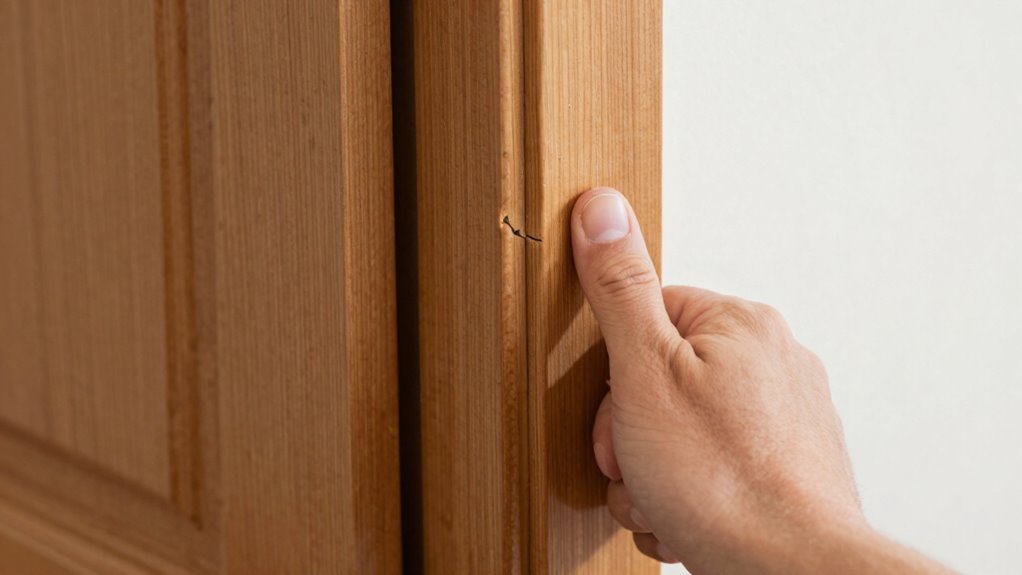
Have you ever wondered how to quickly check if a door frame is strong enough to withstand force? The door frame kick test is a simple method for evaluating door frame integrity. It involves applying a deliberate force, usually by kicking the lower part of the door, to see if the frame holds firm or shows signs of weakness. This quick security assessment helps determine if your door frame can resist forced entry or needs reinforcement. Understanding the strength of your door frame is vital for safety, especially in high-risk areas. Performing this test regularly can alert you to vulnerabilities before they become serious issues. Remember, a sturdy door frame is your first line of defense against break-ins and unwanted intrusions. Using professional-grade materials for reinforcement can significantly improve your door’s security if the test reveals weaknesses. Additionally, adopting European cloud solutions can enhance overall security infrastructure for your property or organization. Regularly inspecting and reinforcing your door frame with appropriate materials can prevent costly repairs and improve long-term protection. Moreover, integrating security best practices into your routine can further bolster your safety measures.

4-Pack #9 x 1-1/2" Permanent Stripped Screw Hole Repair Kit
- Easy Permanent Repair: Fixes stripped screw holes quickly and permanently
- Suitable for Tight Spaces: Shorter 1.5-inch screws for obstructed areas
- Complete Repair Kit: Includes screws, drill bit, and driver bits
As an affiliate, we earn on qualifying purchases.
As an affiliate, we earn on qualifying purchases.
How to Safely Perform the Kick Test on Your Door Frame
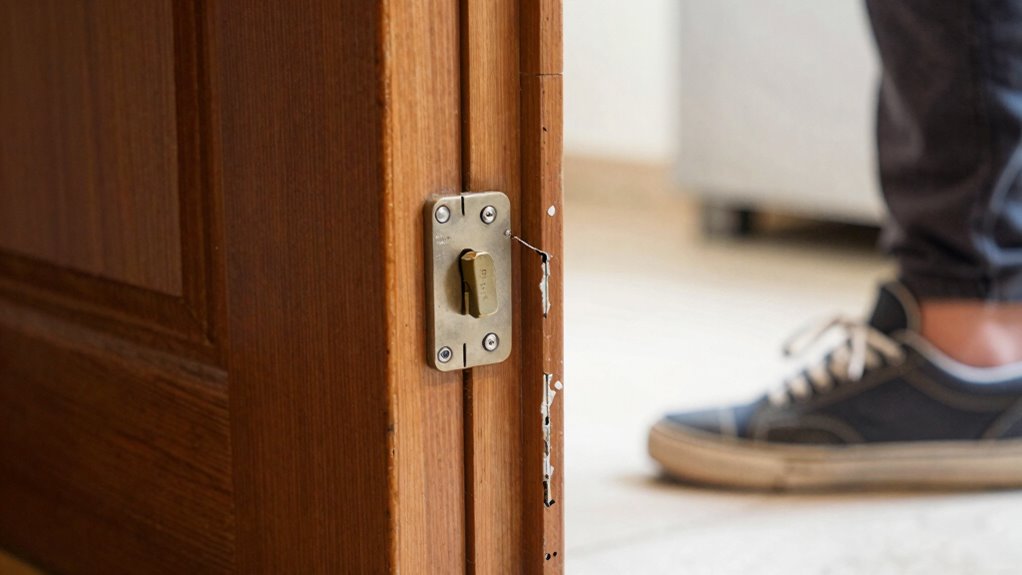
To safely perform the kick test, start by gathering the necessary tools, like a sturdy shoe or boot. Make sure you use proper technique, kicking with controlled force to prevent injury or damage. Pay attention to your surroundings and proceed carefully to ensure an effective and safe test. Incorporating Free Floating principles can help you assess your door frame’s stability without causing unnecessary damage. Additionally, understanding home safety practices can guide you in recognizing when reinforcement might be needed based on your test results. Remember, knowing how to interpret the door frame’s response can help you determine if reinforcement is truly necessary. Being aware of structural integrity can further inform your assessment process and ensure safety during the test.
Gather Necessary Tools
Before you start the kick test, gather the essential tools to guarantee your safety and accuracy. You’ll need a sturdy pair of work gloves to protect your hands during the process. A flashlight is helpful to inspect the door frame material and check for any hidden damage or weaknesses. Make sure to have a level or a straightedge to assess door hinge alignment and ensure the frame is properly aligned. A measuring tape can help you document any gaps or movement after the test. Additionally, wearing safety glasses adds protection against debris or splinters. Having these tools ready ensures you can perform the kick test confidently, accurately assess your door’s condition, and determine if reinforcement is necessary. Understanding door frame integrity is crucial for identifying when reinforcement might be needed to prevent future issues. Plus, familiarizing yourself with structural weaknesses can help you recognize subtle signs of deterioration before they become major problems.
Use Proper Technique
Start by positioning yourself at a safe distance from the door frame and ensuring your footing is stable. Use your leg or foot to deliver a controlled, firm kick directly into the center of the frame, avoiding any swinging motions. Apply steady force without excessive force that could cause injury or damage. Remember, this is part of a security assessment, so focus on the strength of the frame rather than brute force. If the door shows signs of weakness or gives way, consider a hardware upgrade to reinforce it. Use proper technique to prevent injury and get accurate results. Always perform the kick test cautiously, especially if you suspect the door frame may be compromised, and prioritize safety over force. Assessing structural integrity is essential to ensure safety when performing this test. Additionally, understanding the door frame reinforcement options can help you make informed decisions if reinforcement becomes necessary. Being aware of support options can also guide you in choosing the best way to strengthen your door frame if needed, particularly when considering wiring basics or ventilation requirements that may impact overall door stability.

Prime-Line U 10385 Door Strike, 5-1/2 In. and 6 In. Hole Spacing
- Replace standard latch and strike: One-piece combo plate for latch and deadbolt
- Maximum security design: Includes six 3-inch screws for strong hold
- Adjustable for different door spacings: Fits 5-1/2 inch to 6 inch hole centers
As an affiliate, we earn on qualifying purchases.
As an affiliate, we earn on qualifying purchases.
Signs Your Door Frame Fails the Kick Test and Needs Reinforcement
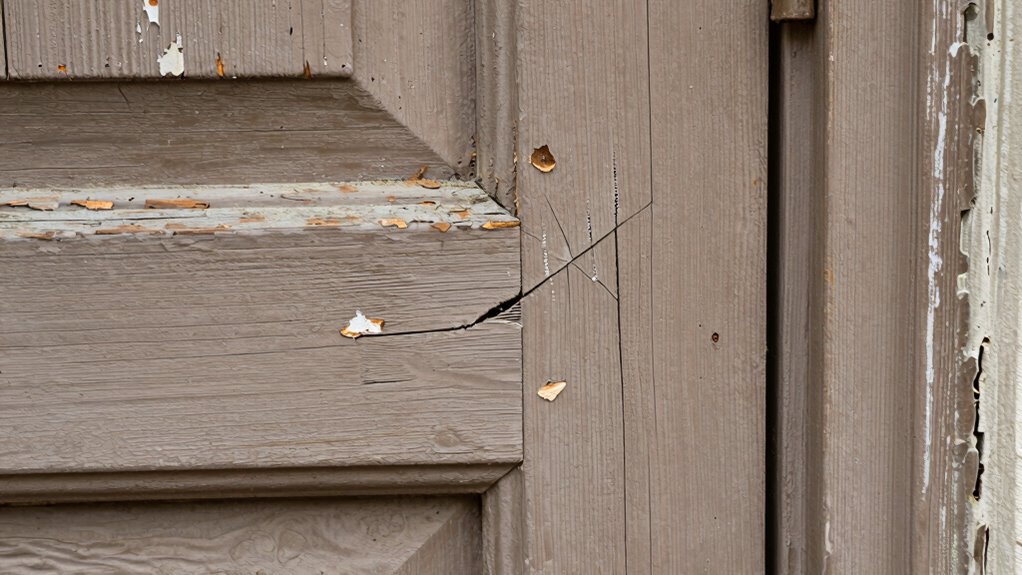
If your door frame shows visible damage or cracks after the kick test, it’s a clear sign it needs reinforcement. You should also notice excessive movement when opening or closing the door, which indicates instability. Additionally, unusual noises like creaking or squeaking could point to underlying issues with the frame’s integrity. Monitoring door frame stability can help prevent further damage and ensure proper security. Regular inspections and understanding structural integrity are crucial for maintaining a secure and durable door frame. Being aware of home safety measures can also help in identifying potential vulnerabilities early. Paying attention to signs of material deterioration can further indicate when reinforcement is necessary. Recognizing how environmental factors impact the frame’s condition can aid in timely maintenance.
Visible Frame Damage
Visible damage to your door frame is a clear sign it has failed the kick test and needs reinforcement. Look closely at the frame for cracks, dents, or splintering, which indicate structural weakness. You might also notice paint imperfections such as chips, peeling, or bubbling around the edges—these can signal underlying damage due to stress. Decorative accents like moldings may appear loose or cracked, further pointing to compromised integrity. If you see peeling paint or visible cracks, it’s a sign the frame can’t withstand force anymore. These damages not only compromise security but also suggest that reinforcement or repairs are necessary to restore stability and prevent further deterioration. Regularly inspecting your door frame and understanding its structural integrity can help you catch issues early before they become major problems. Additionally, knowing how to perform the kick test properly can help you assess the strength of your door frame more accurately. Since material composition influences how a door frame responds to force, being aware of the type of material can guide you in deciding whether reinforcement is needed. Don’t ignore these signs; they’re your cue to act.
Excessive Door Movement
When your door begins to shift or wobble more than usual, it’s a clear sign the door frame is failing the kick test and needs reinforcement. Excessive door movement indicates compromised door frame integrity, reducing your home’s security. During a security assessment, you’ll notice the door doesn’t sit firmly in its frame or responds with noticeable give when pushed. This instability suggests the frame can’t withstand force, making it vulnerable to forced entry. If you observe a loose or wobbly door, it’s time to reinforce the frame. Addressing this issue promptly helps restore stability and security, preventing potential breaches. Regularly testing for excessive movement is a simple yet effective way to ensure your door frame remains sturdy and reliable over time.
Unusual Noise When Opening
Unusual noises when opening your door, such as creaking, squeaking, or grinding sounds, can indicate that the door frame is failing the kick test and needs reinforcement. These sounds often point to loosened or damaged joints, which compromise your door security. If your door makes odd noises despite proper alignment, it suggests the frame isn’t stable enough to withstand force, increasing vulnerability. Addressing this during home renovation is essential to prevent further damage and improve safety. Reinforcing your door frame can eliminate these noises and restore strength, ensuring it performs well under pressure. Recognizing these signs early can help prevent structural deterioration and costly repairs. Ignoring these signs may lead to more severe structural issues, making future repairs costly. Recognizing unusual noises early helps you maintain a secure, reliable entrance for your home.

1 Pair 12 Inch L x 4-9/16 Inch W x 1-1/4 T Exterior Door Frame Rot Repair Kit,Solid Wood Door Jamb Repair Kit,The Ultimate Fix for Rotted Door Frames
- Complete Jamb Repair Set: Includes both left and right jamb pieces
- Fits In-Swing Doors: Designed for in-swing doors with sloped sills
- Standard Size for Rot Repair: Repairs up to 12 inches of rot
As an affiliate, we earn on qualifying purchases.
As an affiliate, we earn on qualifying purchases.
Common Causes of Weak or Damaged Door Frames
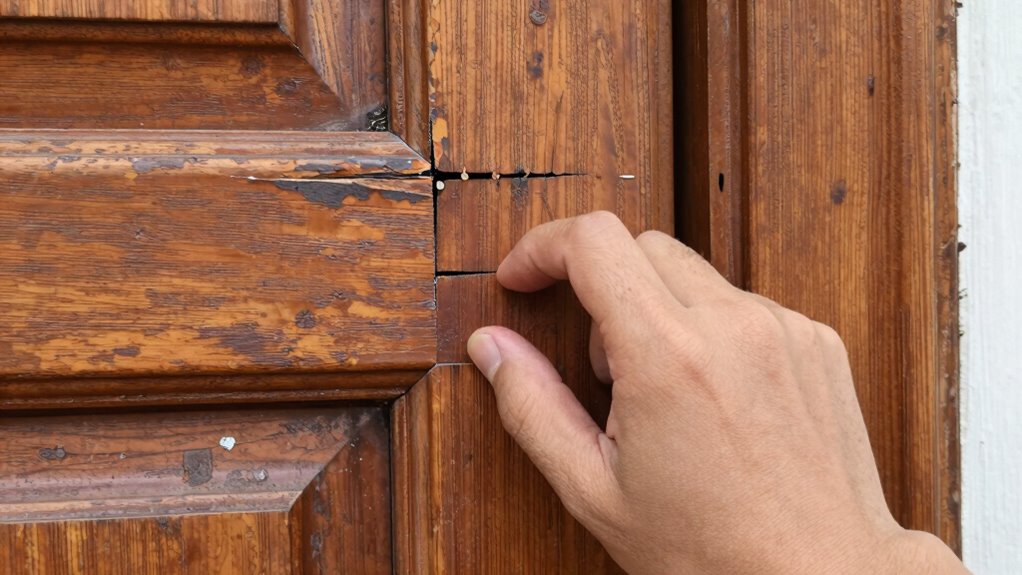
Weak or damaged door frames often result from a combination of environmental factors and improper installation. Over time, certain issues can compromise your door’s stability. Common structural issues include warping, rotting, or cracking, especially if the door frame materials aren’t suited for your climate. Environmental factors like moisture, humidity, or temperature fluctuations cause wood to swell, shrink, or decay. Poor installation can lead to misalignment and stress on the frame. You might also notice damage from frequent impacts or forced entry attempts. Additionally, settling of the building foundation can shift the frame, creating weaknesses. Regular wear and tear, especially in high-traffic areas, can exacerbate these issues. Being aware of these causes helps you spot potential problems before they worsen. Recognizing signs of material deterioration early can prevent costly repairs later on. Paying attention to structural integrity can help you identify when reinforcement is truly needed.
How to Reinforce Your Door Frame If It Doesn’t Pass the Test
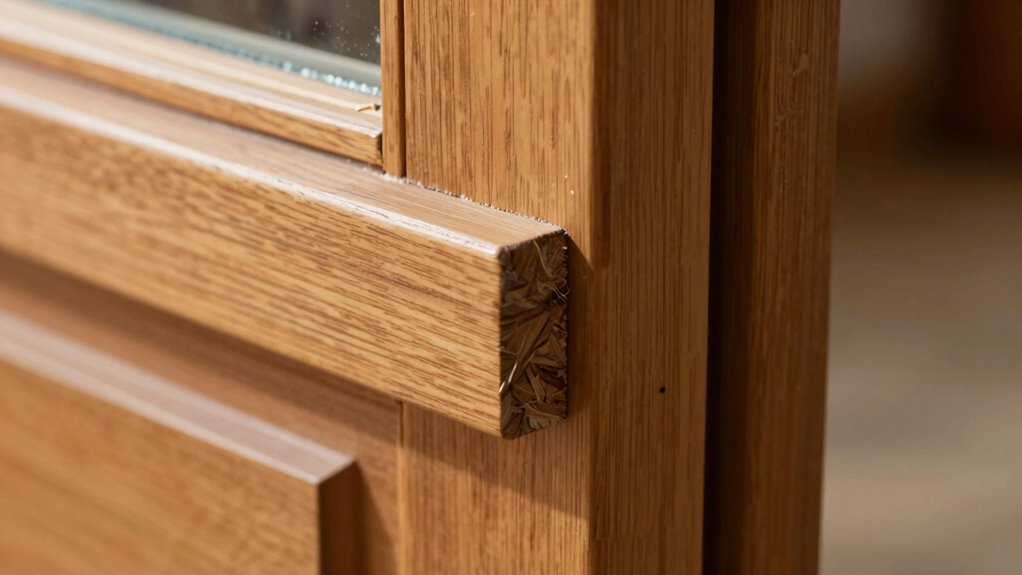
If your door frame fails the kick test, reinforcing it promptly can prevent further damage and improve security. Start by installing metal strike plates and longer screws in the hinges and lockset areas to strengthen the frame’s attachment to the wall. Consider adding a door reinforcement kit, which includes a steel bracket that wraps around the frame’s perimeter, providing extra stability. You can also replace weak or damaged sections of the frame with sturdier materials like metal or reinforced wood. Ensuring proper anchoring into wall studs is vital for effective security upgrades. These measures make your door more resistant to force, deter intruders, and give you peace of mind. Reinforcing your door frame is a practical step toward a safer, more secure home.
When to Call a Professional for Door Frame Repairs
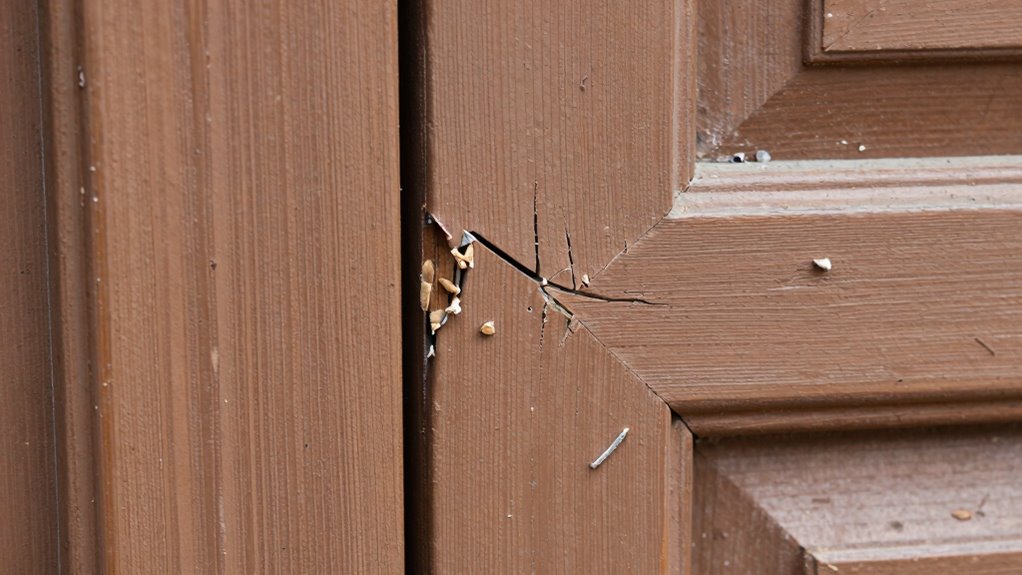
While reinforcing your door frame can often be a manageable DIY project, there are situations where calling in a professional is the best choice. If you notice persistent instability, cracks, or signs that your door frame no longer provides adequate security, it’s time to seek expert help. Professionals can accurately assess door frame stability and ensure proper repairs, preventing future issues. Consider calling a pro if:
- The door frame is severely warped or cracked
- Your door no longer latches securely
- There’s visible damage that affects structural integrity
- You want to enhance home security upgrades
- Repairs require specialized tools or expertise
Addressing these issues promptly ensures your door remains secure and functional, safeguarding your home effectively. Don’t hesitate to get professional assistance when needed to maintain safety and stability.
Tips for Maintaining a Strong and Secure Door Frame Over Time

Regularly inspecting your door frame and addressing minor issues promptly can keep it strong and secure over time. Focus on maintaining door frame stability by checking for cracks, warping, or loose hinges. Tighten screws and bolts as needed to prevent wobbling or instability. Consider applying reinforcement plates or installing security upgrades like strike plates and deadbolts to enhance overall security. Keep the area around the door free of debris and ensure proper alignment to avoid unnecessary stress on the frame. If you notice signs of wear or damage, repair or replace components immediately. Consistent maintenance prevents small issues from escalating, preserving the door frame’s integrity and ensuring it provides reliable security for your home.
Additional Home Security Tips to Protect Against Intruders

Maintaining a sturdy door frame is just one part of an extensive security approach. To further protect your home against intruders, consider these additional security tips. First, enhance door frame integrity by installing solid core doors and reinforced strike plates. Second, implement smart locks and security cameras for real-time monitoring. Third, add outdoor lighting around entry points to deter intruders. Fourth, reinforce windows with security film or bars. Fifth, invest in home security upgrades like alarm systems and motion sensors. These measures create multiple layers of protection, making your home less appealing and more difficult to breach. Combining door frame reinforcement with these security tips considerably boosts your overall home security, giving you peace of mind.
Frequently Asked Questions
Can Weather Conditions Affect the Door Frame’s Strength?
Weather conditions can impact your door frame’s strength over time, especially if exposed to extreme elements like heavy rain, snow, or intense sunlight. These conditions affect climate resilience, causing materials like wood or metal to expand, contract, or weaken. Regular exposure without proper maintenance can lead to warping or cracking, reducing the door frame’s ability to withstand force. To keep your door secure, guarantee weatherproofing and inspect for damage regularly.
What Tools Are Needed for Door Frame Reinforcement?
Imagine your door frame standing strong like a fortress wall. To reinforce it, you’ll need a drill, screws, a pry bar, and metal brackets. These tools help fix door frame damage and apply reinforcement techniques, ensuring your door can withstand force. With a sturdy drill and brackets, you tighten loose frames and add support, transforming a fragile entryway into a secure barrier that stands tall against daily wear and tear.
How Often Should I Perform the Kick Test?
You should perform the door kick test regularly, especially if you live in an area prone to break-ins or after home renovations. Regularly testing helps maintain door security and identify weak spots needing reinforcement methods. If the door shows signs of movement or damage during the test, reinforce it promptly with stronger hinges, a new frame, or additional locks. Consistent checks guarantee your home stays secure and protected.
Are Certain Door Frame Materials More Resistant to Damage?
Think of door frame materials as your home’s armor—some are better suited for the task. Metal and solid wood generally resist damage more effectively than hollow or flimsy options. If you want increased damage resistance, opt for sturdy materials like steel or hardwood. These choices help prevent dents, warping, or breakage, ensuring your door stays strong and secure over time. Remember, the right material makes all the difference in durability.
What Safety Precautions Should I Take During Reinforcement?
When doing reinforcement, prioritize safety by wearing gloves and eye protection to prevent injuries. Make certain your workspace is clear of obstructions and use proper tools to avoid accidents. Follow all instructions for security upgrades carefully, and don’t rush the process—DIY safety is essential. If you’re unsure, consider consulting a professional. Taking these precautions protects you and ensures your reinforcement is secure and effective.
Conclusion
By giving your door frame a simple kick test, you’re checking if it can stand up to real-world pressure. Imagine your home’s entrance as a fortress gate—strong and unyielding. If it wobbles or cracks, it’s time to reinforce it. Regularly inspecting and maintaining your door frame keeps your sanctuary secure, like a sturdy shield guarding your loved ones. Don’t wait for a break-in—strengthen your home’s first line of defense today.