To assess power outage risks in your home or apartment, start by inspecting your electrical system for outdated wiring, damaged circuits, and overloaded outlets. Check weather vulnerabilities, such as storms or shading issues affecting solar panels. Consider your regional outage history and infrastructure stability. Stay prepared by developing an emergency plan, knowing your backup options like generators or batteries, and maintaining these systems regularly. Continuing further will help you understand how to strengthen your home’s resilience against outages.
Key Takeaways
- Assess regional weather patterns and historical outage data to identify high-risk areas.
- Inspect electrical systems regularly for outdated wiring, overloaded circuits, and faulty components.
- Evaluate backup power options like generators or battery systems for reliability during outages.
- Implement smart monitoring and safety systems to detect and prevent electrical failures.
- Develop and rehearse emergency plans, including communication, evacuation, and vulnerable neighbor support.
What Are the Main Power Outage Risks in Your Home?

Power outages can strike unexpectedly, and certain risks within your home increase the likelihood of experiencing one. If you have solar panels, heavy storms or shading issues can disrupt energy production, leading to power interruptions. Poor generator maintenance also heightens vulnerability; neglecting regular checks can cause your backup power source to fail when you need it most. Additionally, outdated wiring, overloaded circuits, or faulty appliances can trigger outages or damage your electrical system. Weather-related risks, such as storms or high winds, can damage power lines or infrastructure nearby. Understanding these risks helps you prepare better. Regularly inspecting your solar panels and maintaining your generator ensures they operate reliably. Recognizing the importance of contrast ratio can help you ensure your home’s electrical components function efficiently and safely, reducing the risk of outages. Being aware of electrical system vulnerabilities enables you to implement targeted safety measures. Conducting wiring basics inspections and upgrades can significantly lower the chance of electrical failures that lead to outages. Moreover, proper load‑planning ensures your electrical system can handle unexpected demands and prevents overloads that may cause outages. Addressing potential system weaknesses proactively can further minimize the chances of unexpected power disruptions in your home.
How to Identify Vulnerable Systems and Devices

To effectively identify vulnerable systems and devices in your home, start by conducting a thorough inspection of your electrical setup. Check if your appliances and electronics are connected to surge protectors, which can prevent damage during power fluctuations. Examine your smart home devices, ensuring their wiring and connections are secure and up to date. Look for outdated or damaged wiring, frayed cords, or overloaded circuits that could pose risks during outages. Evaluate the placement of critical systems like your sump pump, HVAC controls, and security systems to ensure they’re protected and easily accessible. Being aware of home system vulnerabilities can help you prioritize upgrades or protective measures, reducing the risk of damage or failure during a power outage and enhancing your overall home resilience. Regularly home system maintenance can also help detect potential issues early and improve your home’s power outage preparedness, ensuring your essential devices remain operational when needed. Additionally, understanding electrical safety best practices can further minimize hazards and protect your home during unexpected outages. Incorporating seasonal checklists for electrical safety and device inspection can further strengthen your home’s resilience against outages.
How Likely Is a Power Outage in Your Area?

Understanding the likelihood of a power outage in your area involves examining local factors such as weather patterns, infrastructure reliability, and regional history. Areas prone to severe weather, like storms or heavy snowfall, often face higher outage risks. Utility maintenance also plays a vital role; frequent or delayed maintenance can increase vulnerability. If your region experiences frequent weather disruptions, the chances of outages rise, especially during storms or extreme temperatures. Checking local weather patterns helps you gauge potential risks. Additionally, reviewing regional outage history reveals how often and how long outages last. Regional infrastructure quality can further inform your preparedness. Regular assessments of local power grid stability can help identify areas at higher risk and improve your overall readiness. Incorporating advanced monitoring systems can provide early warnings of potential failures, enhancing your ability to respond promptly. Moreover, staying informed about regional energy policies can influence the reliability and resilience of your local power supply. Being aware of these factors allows you to better anticipate outages and prepare accordingly, ensuring you can protect your home and stay resilient when power disruptions occur.
Checking Your Home’s Electrical Safety and Infrastructure
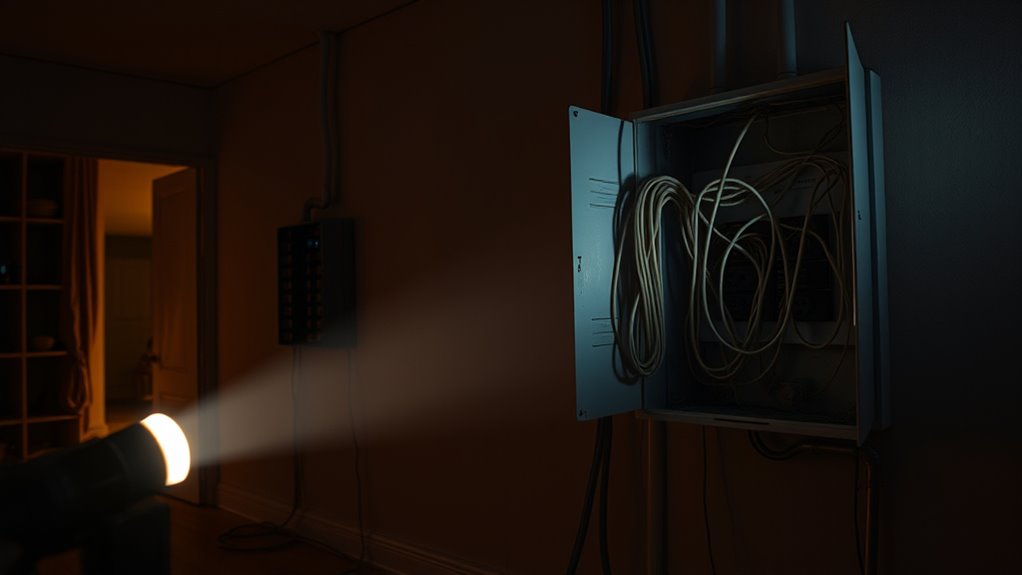
Regularly inspect your circuit breakers to guarantee they trip properly and haven’t become faulty. Check your wiring for signs of wear or damage to prevent potential hazards. Don’t forget to test your emergency power sources so you’re prepared if the main supply fails. Additionally, consider evaluating your home’s electrical infrastructure to ensure it can support the demands of modern devices and any electric bikes or generators. Regular assessments can help identify potential overloads and prevent power outages before they happen. Incorporating smart electrical systems can also enhance monitoring and safety.
Inspect Circuit Breakers Regularly
Inspecting your circuit breakers is a crucial step in maintaining your home’s electrical safety. Regular circuit inspection helps you identify signs of wear, corrosion, or overheating that could lead to power outages or electrical fires. During breaker maintenance, look for tripped breakers or any that feel loose or warm to the touch. If a breaker trips frequently, it may indicate an underlying issue needing professional attention. Make sure all breakers are labeled correctly for easy identification and reset them carefully if they trip. By routinely checking your circuit breakers, you ensure they function properly and reduce the risk of electrical failures. Staying proactive with breaker maintenance protects your home’s electrical system and minimizes the chances of unexpected power outages. Recognizing electrical system health in your electrical system can also help you better understand its true condition and safety status. Additionally, understanding how overcurrent protection functions can help prevent dangerous overloads and ensure your system operates safely. Regular inspections also allow you to notice early signs of corrosion or damage that might compromise the system’s reliability. Furthermore, conducting these inspections can help identify hidden issues that might not be immediately visible but could cause problems in the future.
Verify Wiring Integrity Frequently
Because wiring issues can develop over time and pose serious safety risks, verifying your home’s wiring integrity frequently is essential. Regular electrical inspections help ensure wiring safety by identifying loose connections, damaged insulation, or signs of wear that could lead to shorts or fires. You should look out for flickering lights, warm outlets, or burning smells, which indicate problems needing immediate attention. Keep an eye on exposed wiring or outlets that don’t work properly, and consider scheduling professional inspections at least once every few years. Maintaining wiring safety not only reduces the risk of power outages but also protects your home and loved ones. Staying proactive with electrical inspections helps catch issues early, preventing costly repairs and unsafe conditions down the line.
Test Emergency Power Sources
Ensuring your home’s emergency power sources are reliable is a vital step in maintaining electrical safety. Regularly testing your generator and portable power options helps identify issues before an outage occurs. Perform generator maintenance by running it under load at least once a month, checking fuel levels, and inspecting for corrosion or worn parts. For portable power devices, test them periodically to guarantee they turn on correctly and supply adequate power. Keep backup batteries charged and verify connections are secure. If you notice any irregularities during testing, address them promptly. Regular testing guarantees your emergency power sources will operate effectively during an outage, providing peace of mind and safeguarding your home and loved ones.
Creating a Power Outage Emergency and Contingency Plan

Creating a power outage emergency and contingency plan is essential to guarantee disruption and assure safety when the lights go out unexpectedly. Start by establishing clear procedures for evacuations, sheltering, and communication. Regularly practice power outage drills so everyone knows what to do during an outage, reducing panic and confusion. Utilize community alert systems to stay informed about outages and receive timely updates. Make sure all household members understand how to access emergency contacts, locate flashlights, and use backup communication devices if needed. Keep a list of essential supplies, such as batteries, non-perishable food, and water. Your plan should also include steps for checking on vulnerable neighbors and coordinating with local authorities if necessary. A well-prepared plan minimizes risks and keeps everyone safe.
What Backup Power Options Are Right for You?

Choosing the right backup power option depends on your specific needs, budget, and the size of your household or business. Generator options vary from portable units to whole-house systems, providing reliable power during outages. Portable generators are affordable and easy to move, ideal for powering essentials. Whole-house generators offer continuous power and convenience but require a larger investment. Battery solutions, like solar-powered backup batteries or uninterruptible power supplies (UPS), are quiet and low-maintenance, perfect for short-term outages or sensitive electronics. They’re scalable and can be integrated with solar panels for sustainability. Evaluate your power needs, budget constraints, and whether you prefer fuel-based generators or clean energy solutions. This will help you choose the most effective backup power option to keep your home or business running smoothly during outages.
Review and Update Your Power Outage Preparedness Regularly

Regularly reviewing and updating your power outage preparedness guarantees your backup plans stay effective as your needs and technology change. Check your batteries regularly to ensure they’re fully charged and replace them if they show signs of wear or aging. Proper battery maintenance prevents failures during an outage. Additionally, revisit your generator safety protocols; ensure fuel supplies are adequate, and test the generator periodically to confirm it operates correctly. Keep safety guidelines handy, and review them to avoid hazards like carbon monoxide poisoning or electrical issues. As technology advances, consider new backup options or upgrades to existing systems. Staying proactive with your planning minimizes surprises and enhances your safety and comfort during outages. Making these updates part of your routine keeps your preparedness reliable and effective.
Frequently Asked Questions
How Can Smart Home Technology Influence Outage Preparedness?
Smart home technology improves your outage preparedness by providing real-time alerts and automatic backup systems. With a smart home, you can monitor power status remotely and receive notifications about outages instantly. You can also automate essential devices to stay operational during outages, ensuring safety and comfort. This proactive approach makes managing outages easier, giving you peace of mind and better control over your home’s power stability.
What Are the Legal Requirements for Backup Power Systems?
Think of legal requirements for backup power systems as a safety net woven tightly to catch you during a power fall. You must follow local, state, and federal codes, which often mandate emergency preparedness plans and backup solutions for critical systems. Ensuring legal compliance means installing proper systems, maintaining them regularly, and documenting your efforts. This way, you stay prepared and protected, turning vulnerability into resilience against outages.
How Do Seasonal Changes Affect Outage Risks?
Seasonal changes markedly impact your outage risks. During seasonal storms, you’re more vulnerable to power disruptions from strong winds and heavy rain. Temperature fluctuations also play a role; extreme cold can strain power grids, causing outages, while heatwaves increase demand, potentially overload systems. Staying prepared means understanding these risks, maintaining backup power options, and monitoring weather forecasts to protect your home and stay connected during seasonal shifts.
Can Neighborhood Outage Patterns Indicate Larger Grid Issues?
Yes, neighborhood outage patterns can indicate larger grid issues. By analyzing these patterns, you can assess grid stability and identify potential risks. Outage forecasting relies on monitoring local outages, which often reflect systemic problems affecting wider areas. If you notice frequent outages in your neighborhood, it might signal grid weaknesses or maintenance needs, helping utility providers address issues before they escalate into widespread failures.
What Insurance Coverage Is Available for Power Outage Damages?
When it comes to power outage damages, you’re often covered through your homeowner’s or renter’s insurance. You can file insurance claims for damages caused by outages, but coverage limits vary. Don’t assume everything’s covered—review your policy carefully. Sometimes, additional coverage like flood or specific electrical damage riders can fill the gaps. It’s better to be safe than sorry, so check your policy to know what’s protected.
Conclusion
By neglecting these precautions, you risk being plunged into darkness during the apocalypse—your fridge defrosting, your meds spoiling, and your entire life grinding to a halt. Take charge now, assess every vulnerability, and prepare with unwavering resolve. Because when the lights go out unexpectedly, only those who’ve planned meticulously will emerge unscathed, ready to face the chaos. Don’t wait until it’s too late—your home’s safety depends on your proactive vigilance today.