To safeguard your Zigbee and Z-Wave devices, focus on five key security features: end-to-end encryption to keep data private, secure key management and device authentication to ensure trusted connections, regular firmware updates to patch vulnerabilities, strong user access controls, and continuous security monitoring. These features work together to shield your smart home from threats and prevent unauthorized access. Keep these in mind, and you’ll understand how to strengthen your home’s security even further.
Key Takeaways
- End-to-end encryption ensures private, secure communication from device to recipient, preventing interception and unauthorized access.
- Secure device pairing methods authenticate devices, preventing infiltration by unauthorized or malicious devices.
- Robust key management guarantees only trusted devices connect, maintaining system integrity and security.
- Regular firmware and software updates patch vulnerabilities, addressing zero-day threats and enhancing security features.
- Continuous security monitoring and proper configuration help detect threats early and maintain a resilient, protected smart home network.
Why Security Features Matter in Zigbee and Z-Wave Systems
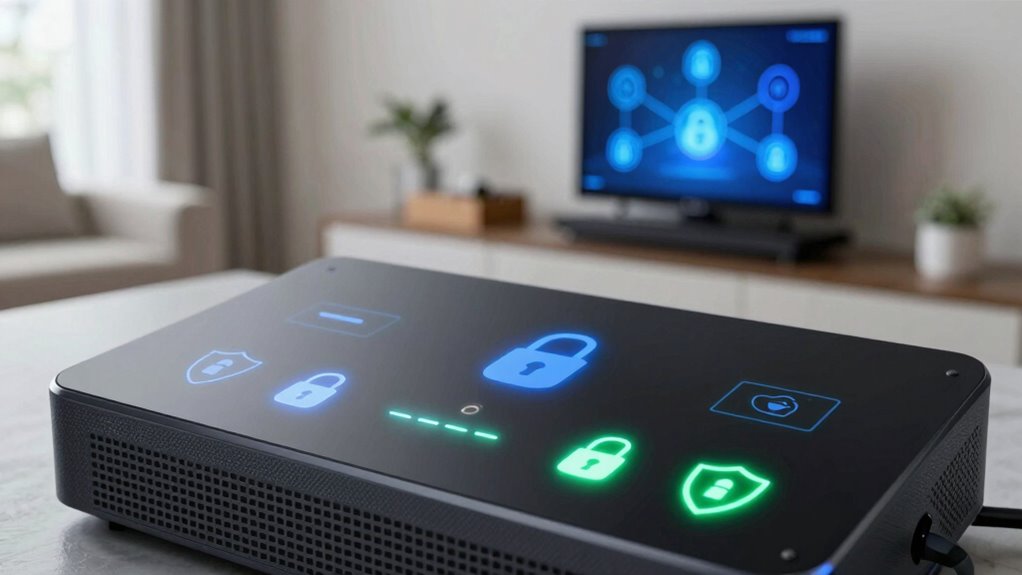
Security features are vital in Zigbee and Z-Wave systems because these networks often control sensitive home automation devices. If a device is tampered with, it could give an attacker unauthorized access, risking your privacy and safety. That’s why protecting against device tampering is essential. Implementing network segmentation helps contain potential breaches by isolating critical devices from less secure parts of your network. This practice is supported by vetted security protocols that ensure the integrity and confidentiality of your communications. Proper security features prevent unauthorized control and mitigate risks associated with device tampering. They also guarantee that your automation remains reliable and safe, giving you peace of mind that your smart home is protected from malicious threats. Additionally, focusing on hardware security measures can further enhance protection against physical tampering and unauthorized access. Incorporating secure firmware updates is also crucial to address evolving vulnerabilities and maintain system integrity over time. Moreover, employing robust encryption methods helps safeguard data transmissions and prevents eavesdropping. Ensuring that these security measures are in place helps maintain the overall security of your home automation system.
What Are the Key Security Features to Look For?

To effectively safeguard your Zigbee and Z-Wave networks, you need to look for key security features that guarantee your devices and data stay safe from threats. First, ensure strong device compatibility, so your security protocols integrate seamlessly across all devices, reducing vulnerabilities. Next, focus on user access controls—robust authentication methods prevent unauthorized entry and protect your network from intruders. Look for systems that support multi-factor authentication or unique device keys to keep user access secure. Additionally, regular firmware updates are essential to patch known vulnerabilities. Maintaining up-to-date firmware ensures that your devices are protected against newly discovered exploits. Incorporating security standards can further strengthen your network by aligning with industry best practices, making it more resilient against attacks. Consistent security practices help to establish a comprehensive defense, reducing the risk of breaches. Establishing encryption protocols adds an extra layer of protection, safeguarding your data during transmission. Implementing threat detection methods can help identify and respond to suspicious activity promptly, further enhancing your network’s security. These features work together to create a resilient security environment, making it harder for hackers to exploit weak points and giving you peace of mind that your smart home remains protected.
How End-to-End Encryption Protects Your Smart Home Devices
End-to-end encryption (E2EE) acts as a powerful shield for your smart home devices by ensuring that your data remains private from the moment it leaves your device until it reaches its intended recipient. During device pairing, E2EE encrypts your data, making it unreadable to anyone intercepting the signal. This prevents hackers from accessing sensitive information even if they capture network traffic. Fundamentals and techniques from the knowledge base help home users understand and implement these security measures effectively. Additionally, understanding cloud computing implications is important for managing data security and compliance within smart home environments. Network segmentation further enhances security by isolating your smart devices from the rest of your network, limiting potential attack vectors. With E2EE in place, your devices communicate securely, and even if an attacker gains access to your network, they can’t decipher your data. This layered approach keeps your smart home safe, maintaining privacy and preventing unauthorized control. Implementing secure pairing methods is essential for establishing trusted device connections and reducing vulnerabilities. Moreover, staying informed about emerging threats can help you adapt your security practices to evolving risks.
Why Secure Key Management and Device Authentication Are Critical

Secure key management and device authentication are essential because they guarantee that only trusted devices can connect and communicate within your smart home system. During device pairing, secure methods ensure that unauthorized devices can’t infiltrate your network. Proper key management assigns and stores encryption keys safely, preventing interception or tampering. Encryption protocols rely on these keys to protect data transmitted between devices, making it unreadable to outsiders. Without robust device authentication, malicious actors could impersonate legitimate devices, risking your privacy and security. By ensuring that each device is verified and that encryption keys are managed securely, you create a reliable, protected environment. Implementing encryption protocols and other security measures further fortifies your smart home against cyber threats. This foundation prevents unauthorized access and keeps your smart home functioning safely and seamlessly. cybersecurity is also vital to defend against evolving threats targeting connected devices.
How Firmware Updates Keep Your Zigbee and Z-Wave Systems Safe
Regular firmware updates play an essential role in maintaining the security of your Zigbee and Z-Wave systems. They patch firmware vulnerabilities that hackers might exploit, preventing potential breaches. Staying consistent with update frequency ensures your device defenses stay strong against emerging threats. Ignoring updates leaves your system exposed to known issues, while timely updates keep security features current. To help you understand, here’s a quick overview:
| Firmware Vulnerabilities | Update Frequency | Security Impact |
|---|---|---|
| Known exploits | Regular updates | Reduced risk of breaches |
| Outdated firmware | Infrequent updates | Increased vulnerability |
| Zero-day threats | Immediate updates | Critical security patch |
| Firmware bugs | Scheduled updates | Enhanced device stability |
| Security patches | Continuous updates | Long-term protection |
Maintaining firmware integrity through timely updates is vital for long-term security, especially as threats evolve. Gold IRA Markets emphasizes the importance of secure and reliable updates to protect your investments, highlighting the parallels in maintaining smart home security. Regularly checking for firmware vulnerabilities and applying updates promptly can significantly improve your system’s resilience. Implementing automated update processes can help ensure you don’t miss critical security patches. Staying informed about latest security threats related to your devices is also essential for comprehensive protection. Consistently updating your system is key to safeguarding your smart home.
Frequently Asked Questions
How Do Zigbee and Z-Wave Differ in Security Implementations?
You’ll find that Zigbee and Z-Wave differ mainly in their encryption protocols and device authentication. Zigbee uses AES-128 encryption, providing strong security, while Z-Wave also employs AES-128 but emphasizes secure device authentication during pairing. This means Zigbee can offer more flexible encryption options, but Z-Wave’s focus on robust device authentication helps prevent unauthorized access. Both aim to keep your smart home safer through their unique security implementations.
Can Security Vulnerabilities in One Device Affect the Entire Network?
Yes, vulnerabilities in one device can affect your entire network. If a compromised device bypasses device authentication, it might access other devices or data. To prevent this, you should implement network segmentation, isolating vulnerable devices from critical parts of your network. Regularly update firmware, change default passwords, and monitor for suspicious activity to strengthen security and minimize the risk of a single device’s flaw spreading.
What Are Common Signs of a Compromised Zigbee or Z-Wave Device?
You’ll notice signs like unusual device behavior, frequent disconnects, or unexpected commands, which often signal a compromised device. Firmware updates are essential because they patch vulnerabilities, preventing unauthorized access. If your device starts acting strangely or responds without your input, it’s a clear warning. Stay vigilant, keep firmware current, and monitor for irregular activity to protect your network from potential threats.
How Does Device Compatibility Impact Security Standards?
Device compatibility directly impacts security standards because interoperability challenges can lead to vulnerabilities. When devices aren’t certified, they might not adhere to strict security protocols, increasing risks. You should prioritize certified devices to guarantee they meet established security standards. Compatibility issues can create gaps that hackers exploit, so choosing compatible, certified devices helps maintain a secure smart home environment and minimizes potential entry points for cyber threats.
Are There Industry Certifications for Zigbee and Z-Wave Security?
You’ll find that Zigbee and Z-Wave don’t have industry-wide certifications like some tech giants, but they do follow rigorous certification standards that include encryption protocols to guarantee security. These standards validate device interoperability and safety, acting like a fortress for your smart home. While no single badge guarantees absolute security, adhering to these certification standards considerably boosts protection against hacking and unauthorized access.
Conclusion
Remember, in the domain of smart homes, security isn’t just a feature—it’s the fortress shielding your digital life. By prioritizing end-to-end encryption, secure key management, and regular firmware updates, you hold the keys to a safer, smarter home. Don’t let vulnerabilities be the cracks in your digital castle; instead, build a stronghold where your devices thrive securely. After all, isn’t peace of mind worth every effort?