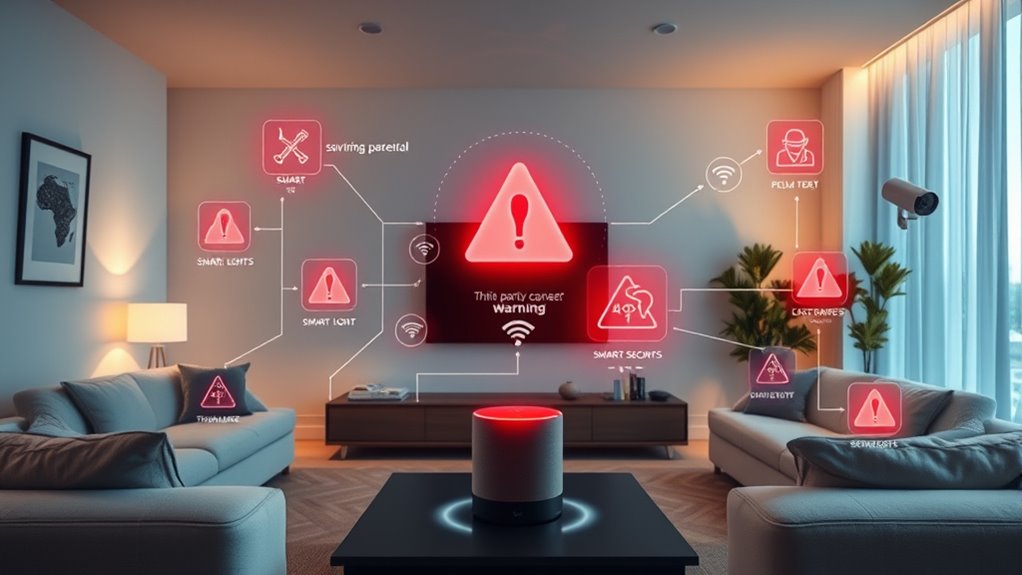

Third-party integrations in smart-home ecosystems can pose serious risks to your privacy and security. These devices often collect sensitive data and may lack proper security updates, making them vulnerable to hackers who could gain control of your devices or access personal information. Poor authentication or unvetted apps increase the chances of breaches and unauthorized monitoring. To protect yourself, it’s essential to understand these dangers and follow best practices—exploring further can help you secure your smart home better.

Get privacy and security gear delivered free — and shop member deals
- Fast, free delivery on millions of items
- Access to Prime Big Deal Days deals on October 6–7
- Prime Video, Amazon Music and more included
Key Takeaways
- Third-party integrations can expose sensitive personal data to unauthorized access or misuse.
- Insecure third-party devices may serve as entry points for hackers into the broader smart home network.
- Data breaches from third-party gadgets can compromise privacy and enable cybercriminal surveillance.
- Lack of regular security updates on third-party devices increases vulnerability to exploits.
- Poor security practices and unchecked permissions heighten risks of unauthorized access and privacy violations.

As smart-home ecosystems become more popular, integrating third-party devices has become essential to creating a seamless and customizable experience. However, this convenience often comes with hidden risks that you need to be aware of. When you connect devices from different manufacturers, you open the door to privacy concerns and security vulnerabilities. Many third-party products lack the rigorous security standards that flagship brands implement, making your smart home more susceptible to hacking or unauthorized access.
Privacy concerns are at the forefront when integrating third-party devices. These gadgets often collect and transmit data about your daily routines, habits, and even sensitive personal information. If these devices aren’t properly secured, that data can be intercepted or misused by malicious actors. For example, a seemingly harmless smart camera or voice assistant could be exploited to monitor your activities or listen in on private conversations. This risk increases when third-party apps or firmware are involved, as they may not adhere to strict data protection regulations. Without careful scrutiny, you could unintentionally give third-party providers access to more information than you realize, compromising your privacy.
Third-party devices can collect sensitive data, risking privacy breaches if not properly secured.
Security vulnerabilities are another major concern. Many third-party devices lack regular security updates, leaving them exposed to known exploits. Hackers often target these less secure devices as entry points into your broader home network. Once compromised, they can gain control over other connected devices like locks, thermostats, or security systems. The interconnected nature of smart homes means that a single vulnerable device can jeopardize your entire ecosystem. Additionally, poorly secured devices may not support strong authentication or encryption, making it easier for cybercriminals to hijack your smart home network. This can lead to theft of personal data, unauthorized surveillance, or even physical security breaches.
To minimize these risks, it’s essential to do thorough research before adding third-party devices. Look for reputable brands with a track record of security updates and data privacy practices. Always change default passwords, enable two-factor authentication if available, and keep firmware updated regularly. Consider segmenting your smart home network, isolating third-party devices from your primary devices and sensitive data. While integrating third-party devices can enhance your smart home, neglecting security measures can turn that convenience into a vulnerability. Stay vigilant, prioritize security, and always be cautious about the devices you bring into your connected home environment. Additionally, opting for vetted third-party products can significantly reduce potential security and privacy risks.
smart home security camera with privacy features
As an affiliate, we earn on qualifying purchases.
As an affiliate, we earn on qualifying purchases.
Frequently Asked Questions
How Can I Identify Insecure Third-Party Integrations?
You can identify insecure third-party integrations by checking for known security vulnerabilities and privacy risks. Look for reviews, update history, and developer reputation. If an app or device hasn’t been updated recently or has unresolved security issues, it’s a red flag. Also, review permissions requested—if they seem excessive or unnecessary, it could expose your smart home to privacy risks. Always prefer trusted sources and regularly monitor for security alerts.
What Are the Legal Implications of Using Third-Party Smart Home Devices?
Did you know that over 60% of users worry about privacy concerns with third-party smart home devices? When you use these devices, you’re legally responsible for data sharing and privacy compliance. If you mishandle user data or neglect security standards, you could face penalties or lawsuits. Always review the terms and guarantee proper data management to avoid legal issues and protect your privacy and your users.
Are There Specific Certifications for Safe Third-Party Smart-Home Integrations?
Yes, there are industry standards and certification programs that assess the safety of third-party smart-home integrations. These certifications, like UL or Wi-Fi Alliance, ensure devices meet strict security and interoperability criteria. When choosing third-party products, look for these certifications to minimize risks. They help you confirm that the integration complies with established safety protocols, giving you peace of mind and reducing potential vulnerabilities in your smart-home ecosystem.
How Often Should I Update Third-Party Device Firmware to Ensure Security?
You should update your third-party device firmware as soon as security patches become available, ideally at least once a month. Regular firmware updates help fix vulnerabilities and improve overall security. Don’t ignore prompt updates, since outdated firmware can expose your smart-home ecosystem to potential hacking risks. Staying current with firmware updates guarantees your devices remain protected against emerging threats and keeps your smart-home environment safe and secure.
Can Third-Party Integrations Affect My Smart Home’s Warranty or Insurance?
Did you know that 65% of warranty claims involve issues caused by third-party devices? Integrating these devices can affect your smart home’s warranty and insurance coverage. If a third-party integration causes damage or malfunction, your warranty claim might be denied, and insurance may not cover the repair costs. Always check your warranty and insurance policies before adding new integrations to avoid unexpected expenses and coverage issues.
secure smart home hub with two-factor authentication
As an affiliate, we earn on qualifying purchases.
As an affiliate, we earn on qualifying purchases.
Conclusion
While third-party integrations can make your smart home more convenient, they also open Pandora’s box of potential security risks. You need to stay vigilant and weigh the benefits against the dangers. Don’t put all your eggs in one basket—carefully choose trusted partners and keep your systems updated. By doing so, you can enjoy the perks without falling into the trap of unforeseen vulnerabilities. Stay cautious, and your smart home will serve you well without surprises.
smart home network segmentation router
As an affiliate, we earn on qualifying purchases.
As an affiliate, we earn on qualifying purchases.
privacy-focused smart home devices
As an affiliate, we earn on qualifying purchases.
As an affiliate, we earn on qualifying purchases.
Fall Picks
fall essentials
As an affiliate, we earn on qualifying purchases.