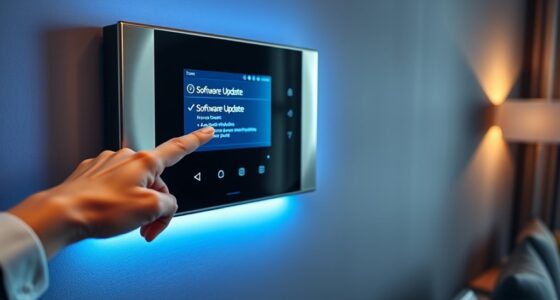
To encrypt your local smart home data, you should enable device encryption features provided by your devices and use strong, unique passwords. Regularly update your equipment to guarantee you have the latest security patches and encryption protocols. Implement access controls with multi-factor authentication to restrict unauthorized access. Properly securing your data minimizes risks of breaches and privacy invasion. For more detailed steps and best practices, you’ll discover valuable insights if you continue exploring this topic.
Listen free for 30 days with Audible
Thousands of audiobooks and originals — cancel anytime.
As an affiliate, we earn on qualifying purchases.
Key Takeaways
- Implement device-level encryption to convert stored smart home data into unreadable code, ensuring confidentiality.
- Use strong encryption algorithms and keep device firmware updated to maintain the effectiveness of data protection.
- Establish strict access controls with multi-factor authentication to restrict unauthorized data access.
- Regularly review and update encryption settings and permissions, especially when adding devices or new household members.
- Protect local data repositories with secure key management practices to prevent key theft or misuse.

As smart home devices become more integrated into daily life, protecting the data stored locally on these systems is increasingly important. Your smart home gathers a wealth of personal information—from security camera footage and door lock statuses to energy usage patterns and personal schedules. If this data falls into the wrong hands, your privacy could be compromised, or worse, malicious actors might manipulate your home systems. To prevent this, implementing robust security measures like device encryption and access control is essential.
Device encryption acts as a vital first line of defense. It transforms your sensitive data into unreadable code, guaranteeing that even if someone gains unauthorized access to your local storage, they can’t decipher the information without the decryption key. When you enable device encryption on your smart home hub or local server, you’re effectively securing your data behind a digital barrier. This means that, should a hacker breach your network, the stolen data remains protected, considerably reducing the risk of identity theft, privacy invasion, or malicious misuse. Encryption algorithms are continually evolving, so it’s wise to keep your devices updated with the latest security patches to assure encryption remains effective against emerging threats.
However, encryption alone isn’t enough. You need to establish strict access control protocols to manage who can view or modify your data. Access control involves setting permissions and authentication methods that restrict device and user access. For example, you might require multi-factor authentication for accessing your home’s central hub or limit administrator rights to trusted individuals only. By doing so, you minimize the chances of unauthorized users gaining control over your smart home data repositories. Strong passwords, biometric verification, and role-based permissions are practical tools you can deploy to enhance access control.
Additionally, advanced encryption algorithms are essential for staying ahead of potential security breaches and ensuring your data remains protected against sophisticated cyber threats. Together, device encryption and access control form a thorough security framework. They work hand-in-hand to safeguard your local data—encryption makes the data unreadable to outsiders, while access control ensures only authorized users can unlock it. Remember, the security of your smart home isn’t just about installing devices; it’s about actively managing and protecting the data they generate. Regularly review your encryption settings and access permissions, especially when adding new devices or changing household members. Maintaining these security layers isn’t a one-time task but an ongoing process that adapts as your smart home ecosystem evolves. By taking these steps, you help guarantee your smart home remains a secure, private haven amid the digital age.
smart home device encryption hardware
As an affiliate, we earn on qualifying purchases.
As an affiliate, we earn on qualifying purchases.
Frequently Asked Questions
How Often Should Smart-Home Data Be Encrypted?
You should encrypt your smart home data regularly, ideally whenever there are updates or changes. The data encryption frequency depends on how often your smart home data updates—more frequent updates mean you should encrypt more often to keep information secure. Make sure to re-encrypt data after major system updates or when new devices are added. Consistent encryption protects your privacy and prevents unauthorized access to sensitive smart home information.
What Are the Best Encryption Standards for Home Devices?
Sure, you want the best encryption standards for your smart home devices. Opt for device-specific encryption protocols like AES-256, which are practically Fort Knox for your data. Combine that with strict user access controls to keep intruders at bay—unless you fancy inviting hackers to a party. Remember, the goal isn’t just encryption but making your smart home so secure they’ll need a PhD to break in.
Can Encryption Affect Smart-Home Device Performance?
Encryption can affect your smart-home device performance by introducing encryption overhead, which may increase device latency. This extra processing can slow down response times or cause delays in device actions. However, modern encryption standards are optimized to minimize these impacts, so you might not notice significant performance drops. Still, it’s good to be aware that stronger encryption could slightly affect your device’s speed, especially on less powerful hardware.
How to Securely Manage Encryption Keys Locally?
To securely manage encryption keys locally, you should use robust key management practices like storing keys in hardware security modules or secure enclaves. Avoid hardcoding keys or storing them on easily accessible devices. Regularly rotate keys and implement access controls. Hardware security solutions protect keys from theft or tampering, ensuring your smart home data remains safe. Proper key management minimizes risks and maintains the integrity of your encrypted data.
What Are Common Vulnerabilities in Home Data Encryption?
Think of your home data like a guarded treasure chest; vulnerabilities lurk like sneaky pickpockets. Weak device firmware acts like an unlocked door, inviting intruders. Poor user authentication is like a flimsy lock, easy to pick. Attackers exploit these flaws to access your encrypted data. To stay safe, keep firmware updated and enforce strong authentication, turning your home into a fortress, not a fragile bubble.
multi-factor authentication smart home
As an affiliate, we earn on qualifying purchases.
As an affiliate, we earn on qualifying purchases.
Conclusion
By encrypting your local smart-home data, you substantially reduce the risk of unauthorized access. Did you know that over 70% of smart-home devices are vulnerable to data breaches? Implementing strong encryption measures ensures your personal information stays private and protected. Stay proactive about security, and you’ll enjoy the convenience of your smart home without sacrificing peace of mind. Remember, a well-encrypted repository is your best defense against potential cyber threats.
smart home security camera encryption
As an affiliate, we earn on qualifying purchases.
As an affiliate, we earn on qualifying purchases.
As an affiliate, we earn on qualifying purchases.
Evergreen bestsellers Picks
bestsellers
As an affiliate, we earn on qualifying purchases.