
To prevent data leakage from smart appliances, confirm you use strong, up-to-date encryption protocols like TLS and WPA3, and keep firmware regularly updated to patch security flaws. Set secure, unique Wi-Fi passwords and consider isolating appliances on a separate network. Enable multi-factor authentication if supported and disable unnecessary features or remote access options. Combining these steps can greatly reduce vulnerabilities. Continued attention to these practices will help you strengthen your device security even further.
Key Takeaways
- Use strong, up-to-date encryption protocols like TLS and WPA3 for data transmission.
- Regularly update device firmware to patch security vulnerabilities.
- Segregate smart appliances on a separate, secure network from main devices.
- Enable multi-factor authentication and disable unnecessary features to reduce attack surfaces.
- Maintain ongoing security practices through vigilance, monitoring, and informed updates.
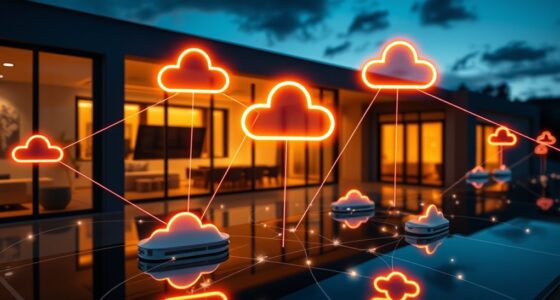
As smart appliances become more integrated into our daily lives, they also open new avenues for data breaches if not properly secured. These devices continuously collect and transmit sensitive information, from personal schedules to financial details, making them attractive targets for cybercriminals. To protect your data, understanding how encryption protocols play a essential role is fundamental. Strong encryption safeguards the information exchanged between your appliance and other devices or servers, ensuring that even if intercepted, the data remains unreadable. Look for appliances that use up-to-date encryption standards, such as TLS or WPA3, which provide robust security layers. These protocols help prevent unauthorized access, making it considerably harder for hackers to exploit vulnerabilities.
Secure your smart appliances with up-to-date encryption standards like TLS and WPA3 to prevent unauthorized access and data breaches.
In addition to encryption, keeping your smart appliances’ firmware updated is crucial. Firmware updates often contain patches for security flaws identified since the device’s manufacture. If you neglect these updates, your appliances may become vulnerable to known exploits, which cybercriminals readily target. Regularly checking for firmware updates and installing them promptly ensures your device benefits from the latest security enhancements. Many manufacturers now offer automatic updates, so enabling this feature can save you time and reduce the risk of overlooking critical patches. By doing so, you close security gaps that could otherwise be exploited to gain access to your personal data. Ensuring that your network uses secure Wi-Fi configurations is another vital step in protecting your connected devices.
Beyond encryption protocols and firmware updates, you should also consider secure network practices. Setting a strong, unique Wi-Fi password and enabling network encryption adds another layer of protection. Segregate your smart appliances onto a separate network, isolating them from your primary devices like computers and smartphones. This way, even if one device gets compromised, the breach doesn’t easily spread across your entire home network. Additionally, disable unnecessary features or remote access options unless absolutely needed, since these can provide additional entry points for cyber threats.
Implementing multi-factor authentication (MFA) where possible provides further security. Many smart appliance platforms now support MFA, requiring an additional verification step beyond just a password. This extra layer makes it much more difficult for hackers to gain control of your devices, even if they manage to steal login credentials. Overall, securing your smart appliances involves a combination of strong encryption protocols, timely firmware updates, secure network configurations, and additional protective measures like MFA. By staying proactive, you considerably reduce the chances of your personal data being leaked or compromised, ensuring your connected home remains safe and private.
Frequently Asked Questions
How Can I Identify if My Smart Appliance Is Leaking Data?
You can identify if your smart appliance is leaking data by monitoring your network for unusual activity or unexpected data transfers. Check your device’s encryption settings to make sure data is protected during transmission. Regularly review your network monitoring tools for anomalies, such as unknown connections or high data volumes. If you notice any suspicious activity, consider resetting the device and updating its firmware to improve security and prevent data leaks.
Are There Specific Brands More Vulnerable to Data Leakage?
Certain brands are more vulnerable to data leakage due to manufacturer security gaps. You should research brand vulnerabilities by checking security reviews and user reports. Brands with a history of delayed security updates or weak default passwords often pose higher risks. To protect your data, opt for manufacturers known for strong security practices, regularly update your devices, and change default passwords. Staying informed helps you choose smarter, more secure smart appliances.
What Legal Rights Do Consumers Have Regarding Data Breaches?
You have the right to protect your consumer privacy and seek justice if a data breach occurs. Data protection laws, like GDPR or CCPA, give you control over your personal information, requiring companies to notify you and safeguard your data. You can file complaints, demand corrections, or pursue legal action. Stay informed, exercise your rights, and hold companies accountable to ensure your data remains secure and your privacy respected.
How Often Should I Update My Smart Appliance Firmware?
You should update your smart appliance firmware as soon as updates become available, ideally at least once a month. Firmware updates often include vital security patches that protect your device from vulnerabilities. Regularly checking for firmware updates guarantees your appliance stays secure and functions smoothly. Don’t delay installing updates—keeping your device current is the best way to prevent data leakage and enhance overall security.
Can I Retrofit Older Appliances to Improve Security?
You can retrofit older appliances to improve security by adding hardware or software updates, but it’s often limited. Did you know that over 60% of smart device vulnerabilities come from outdated firmware? While retrofit security measures like installing firmware updates or adding security modules can help, they may not fully protect older models. Upgrading to newer appliances with built-in security features is usually the most effective way to safeguard your data.
Conclusion
To keep your data safe, stay vigilant and regularly update your smart appliances’ security settings. Remember, a stitch in time saves nine—address vulnerabilities before they become problems. By taking proactive steps, you prevent potential data leaks and protect your privacy. Smart appliances can make life easier, but only if you prioritize their security. Keep learning and stay cautious; your data’s safety depends on it. Better safe than sorry, after all.