Get privacy and security gear delivered free with Prime
- Fast, free delivery on millions of items
- Prime Video, Amazon Music and more included
- Member-only deals all year
Key Takeaways
- Cellular (4G) backup is a critical differentiator, separating premium kits like PGST from basic Wi-Fi-only models.
- Sensor quantity directly impacts price and coverage; 8-piece kits suit apartments, while 24-piece kits cover large family homes.
- Integration with existing smart home devices (Alexa/Google) adds convenience but may lock users into specific ecosystems.
- DIY installation is standard across all nine picks, eliminating professional fees but requiring careful placement of sensors for optimal detection.
- Siren volume and audio alerts vary widely, with some budget kits offering louder deterrents than mid-range branded systems.
| Arlo Home Security System with Keypad Hub, Five 8-in-1 Sensors, and Yard Sign |  | Best for Multi-Hazard Awareness | Power Source: Corded electric | Connectivity: Wi-Fi; SecureLink | Included Sensors: Five 8-in-1 sensors | VIEW ON AMAZON | See Our Full Breakdown |
| PGST 9-Piece Home Security System with Wi-Fi and 4G |  | Best No-Subscription Value | Kit contents: Base station, keypad, 4 sensors, 2 motion detectors, 2 remotes | Connectivity: 2.4 GHz Wi-Fi and 4G | Compatible devices: Alexa, Google, smartphone, tablet, PC | VIEW ON AMAZON | See Our Full Breakdown |
| Ring Alarm 14-Piece Wireless Security System Kit |  | Best for Larger Homes | Included components: 1 base, 2 keypads, 8 contact sensors, 2 motion detectors, 1 extender | Recommended home size: 2–4 bedrooms | Connectivity: Ethernet, Wi-Fi, Z-Wave, Bluetooth | VIEW ON AMAZON | See Our Full Breakdown |
| Ring Alarm 8-Piece Kit (2nd Gen) Home Security System |  | Best for Small Homes | Included components: 1 base, 1 keypad, 4 contact sensors, 1 motion detector, 1 extender | Recommended home size: 1–2 bedrooms | Connectivity: Ethernet, Wi-Fi, Z-Wave, Bluetooth | VIEW ON AMAZON | See Our Full Breakdown |
| 24-Piece Home Security Alarm System with Wi-Fi and 4G |  | Best for Maximum Coverage | Included pieces: 24 | Connectivity: 2.4 GHz Wi-Fi and 4G | Audible noise: 120 dB | VIEW ON AMAZON | See Our Full Breakdown |
| 24-Piece Wireless Home Alarm System with Wi-Fi and 4G Backup |  | Best for Connectivity Redundancy | Kit Contents: 24 pieces (10 door/window, 5 motion) | Connectivity: 2.4 GHz Wi-Fi and 4G LTE | Siren Volume: 120 dB | VIEW ON AMAZON | See Our Full Breakdown |
| HOAYVKJ Wireless WiFi Home Alarm System with 120 dB Siren, Motion Sensors and Remote Controls |  | Best Compact Starter Kit | Kit Contents: 4 motion sensors, 2 remotes, 1 siren, 1 plug | Connectivity: Wireless, WiFi | Alarm Volume: 120 dB | VIEW ON AMAZON | See Our Full Breakdown |
| Wireless Home Security System with 1080p Indoor WiFi Camera – 13‑Piece Kit, Alexa & Google Compatible |  | Best for Visual Verification | Kit Contents: 13 pieces including camera and RFID | Camera Resolution: 1080p | Connectivity: WiFi and GSM | VIEW ON AMAZON | See Our Full Breakdown |
| PGST 24-Piece Wi-Fi and 4G Home Security Alarm System |  | Best for Emergency Features | Kit Size: 24 pieces | Connectivity: 2.4 GHz Wi-Fi and 4G | Emergency Device: Portable SOS included | VIEW ON AMAZON | See Our Full Breakdown |
| home security systems australia | Connectivity |
|---|---|
| Arlo Home Security System with | Wi-Fi; SecureLink |
| PGST 9-Piece Home Security Sys | 2.4 GHz Wi-Fi and 4G |
| Ring Alarm 14-Piece Wireless S | Ethernet, Wi-Fi, Z-Wave, Bluetooth |
| Ring Alarm 8-Piece Kit | Ethernet, Wi-Fi, Z-Wave, Bluetooth |
| 24-Piece Home Security Alarm S | 2.4 GHz Wi-Fi and 4G |
| 24-Piece Wireless Home Alarm S | 2.4 GHz Wi-Fi and 4G LTE |
| HOAYVKJ Wireless WiFi Home Ala | Wireless, WiFi |
| Wireless Home Security System | WiFi and GSM |
| PGST 24-Piece Wi-Fi and 4G Hom | 2.4 GHz Wi-Fi and 4G |
More Details on Our Top Picks
Arlo Home Security System with Keypad Hub, Five 8-in-1 Sensors, and Yard Sign
This system stands out for its 8-in-1 sensor versatility, covering motion, leaks, and smoke/CO detection in a single unit. Unlike the Ring Alarm 8-Piece Kit, which focuses strictly on intrusion, Arlo addresses broader household safety risks. The SecureLink technology extends range and battery life, making it ideal for larger properties without frequent maintenance. However, the reliance on a paid subscription for professional monitoring and premium features increases long-term costs compared to subscription-free alternatives like the PGST 9-Piece System. The hub is wired, which limits placement flexibility slightly compared to fully wireless hubs.
Pros:- Sensors detect multiple hazards including smoke, CO, and water leaks.
- SecureLink technology improves connection range and battery efficiency.
- One-tap emergency response via hub or app adds convenience.
Cons:- Professional monitoring requires a paid subscription after the trial.
- Hub requires a wired power connection, limiting placement options.
- Some advanced features require additional Arlo hardware.
Best for: Homeowners who want integrated smoke, CO, and leak detection alongside intrusion security.
Not ideal for: Budget-conscious buyers who want to avoid recurring subscription fees for core monitoring features.
- Power Source:Corded electric
- Connectivity:Wi-Fi; SecureLink
- Included Sensors:Five 8-in-1 sensors
- Sensor Technology:Motion, Door, Leak, Freeze, Smoke/CO
- Dimensions:12.03 × 8.39 × 7.83 inches
- Weight:1.69 kg
- Installation:DIY; adhesive-backed sensors
Our verdict“Choose this if you want a single ecosystem that protects against fire and water damage as well as burglaries.”
PGST 9-Piece Home Security System with Wi-Fi and 4G
The PGST 9-Piece System offers a compelling value proposition by eliminating monthly fees while providing 4G cellular backup. This is a significant advantage over the Ring Alarm 14-Piece Kit, which restricts cellular backup to its paid tiers. The kit includes sufficient sensors for a standard apartment or small home, with app and voice control via Alexa. While it lacks the polished ecosystem integration of Ring or Arlo, its self-adhesive installation and lack of recurring costs make it accessible. The primary tradeoff is the need to purchase cameras separately, as this kit is strictly for intrusion detection.
Pros:- No monthly subscription fees for core alarm functions.
- Automatic 4G fallback ensures connectivity during Wi-Fi outages.
- Includes multiple control options: app, keypad, remote, and voice.
Cons:- Cameras are not included and must be bought separately.
- Sensor expansion requires additional purchases for larger homes.
- App interface may feel less refined than major brand ecosystems.
Best for: Renters or budget-focused homeowners who want reliable alerts without ongoing subscription costs.
Not ideal for: Users who require professional police dispatch or integrated video surveillance in the base package.
- Kit contents:Base station, keypad, 4 sensors, 2 motion detectors, 2 remotes
- Connectivity:2.4 GHz Wi-Fi and 4G
- Compatible devices:Alexa, Google, smartphone, tablet, PC
- Monitoring:24/7 professional monitoring option
- Dimensions:7 x 3.1 x 3 inches
- Unit count:9
- Installation:Self-adhesive
Our verdict“This is the smart choice for those who prioritize cost savings and cellular redundancy over professional monitoring.”
Ring Alarm 14-Piece Wireless Security System Kit
Designed for 2–4 bedroom homes, this kit provides extensive coverage with eight contact sensors and two keypads. Compared to the Ring Alarm 8-Piece Kit, it includes more entry points and a range extender, reducing dead zones in larger layouts. The Z-Wave connectivity ensures reliable communication between sensors and the hub. However, accessing cellular backup and professional monitoring requires a Ring subscription, adding to the total cost of ownership. While the hardware is robust, the ecosystem lock-in means users are committed to Ring’s service model for full functionality.
Pros:- Includes eight contact sensors for extensive door/window coverage.
- Range extender included to maintain signal strength in larger homes.
- Two keypads allow for convenient arming/disarming at multiple locations.
Cons:- Cellular backup and professional monitoring require a paid subscription.
- Higher upfront cost compared to smaller kits like the 8-piece version.
- Dependent on Ring’s ecosystem for full feature access.
Best for: Families with multiple entry points who want comprehensive intrusion detection and Alexa integration.
Not ideal for: Small apartment dwellers who do not need the extra sensors or range extender included in this kit.
- Included components:1 base, 2 keypads, 8 contact sensors, 2 motion detectors, 1 extender
- Recommended home size:2–4 bedrooms
- Connectivity:Ethernet, Wi-Fi, Z-Wave, Bluetooth
- Base station battery backup:24 hours
- Base station dimensions:6.65 x 6.65 x 1.46 in
- Warranty:1-year limited warranty
- Security modes:Disarmed, Away, Home
Our verdict“Ideal for medium-to-large homes needing broad sensor coverage and seamless smart home integration.”
Ring Alarm 8-Piece Kit (2nd Gen) Home Security System
This compact kit is tailored for 1–2 bedroom residences, offering essential protection without the bulk of larger systems. It shares the same reliable Z-Wave technology and 24-hour battery backup as the 14-Piece Kit but with fewer sensors. The single keypad and four contact sensors are sufficient for entry-level security needs. While it lacks the cellular backup found in the PGST 9-Piece System without a subscription, its app-based control and Alexa compatibility remain strong. It is a streamlined entry point into the Ring ecosystem for those with limited square footage.
Pros:- Compact and easy to install for small living spaces.
- Base station includes up to 24-hour battery backup.
- Seamless integration with Ring cameras and Alexa devices.
Cons:- Professional monitoring and cellular backup require a paid subscription.
- Limited sensor count for homes with many windows or doors.
- Range extender is included but may be unnecessary for tiny units.
Best for: Apartment renters or small home owners seeking a simple, expandable starter security system.
Not ideal for: Users with more than four entry points who would quickly exhaust the included sensor count.
- Included components:1 base, 1 keypad, 4 contact sensors, 1 motion detector, 1 extender
- Recommended home size:1–2 bedrooms
- Connectivity:Ethernet, Wi-Fi, Z-Wave, Bluetooth
- Base station battery backup:Rechargeable, up to 24 hours
- Base station dimensions:6.65 × 6.65 × 1.46 in
- Keypad dimensions:4.13 × 4.41 × 0.75 in
- Warranty:1-year limited warranty
Our verdict“A streamlined, reliable option for small spaces that prioritizes ease of use over extensive coverage.”
24-Piece Home Security Alarm System with Wi-Fi and 4G
This extensive 24-piece kit provides unmatched sensor density for large properties, far exceeding the PGST 9-Piece System in raw component count. It features a 120 dB siren and an SOS emergency device, offering immediate local deterrence and personal safety options. The 4G automatic fallback ensures alerts are sent even if internet access is cut. However, the lack of 5G support may be a limitation in areas with transitioning networks. While it avoids mandatory subscriptions, third-party fees for SMS alerts may apply, adding a small layer of complexity to the otherwise straightforward setup.
Pros:- Includes 24 pieces for extensive coverage of doors, windows, and motion.
- Automatic 4G cellular backup maintains connectivity during Wi-Fi outages.
- Built-in 120 dB siren and portable SOS device for immediate response.
Cons:- Does not support 5G networks.
- Third-party fees may apply for SMS or phone call alerts.
- Complex setup due to the high number of components.
Best for: Large homeowners or small businesses needing comprehensive sensor coverage and emergency SOS features.
Not ideal for: Users in areas with poor 4G coverage or those who prefer a streamlined, single-app ecosystem without third-party integrations.
- Included pieces:24
- Connectivity:2.4 GHz Wi-Fi and 4G
- Audible noise:120 dB
- Maximum range:100 meters
- Voice assistants:Alexa, Google Assistant
- Dimensions:7.78 x 4 x 3.54 inches
- Weight:1.1 pounds
- Emergency device:Portable SOS device
Our verdict“The go-to choice for those who need maximum physical coverage and emergency tools without ongoing monitoring fees.”
24-Piece Wireless Home Alarm System with Wi-Fi and 4G Backup
This kit stands out for its dual connectivity approach, combining 2.4 GHz Wi-Fi with 4G LTE backup. Unlike the HOAYVKJ Wireless WiFi Home Alarm System, which relies solely on Wi-Fi, this system maintains communication if your internet drops, a critical feature for Australian homes with unstable connections. The inclusion of 10 door/window sensors and 5 motion detectors provides broad coverage out of the box, reducing the need for immediate add-ons. However, the requirement to source your own 4G SIM card adds a layer of setup complexity and ongoing cost that simpler systems avoid. While the 48-hour battery backup offers peace of mind during power outages, the reliance on a 2.4 GHz network only may frustrate users with modern 5 GHz-only routers.
Pros:- Automatic switch to 4G LTE if Wi-Fi fails
- Extensive sensor kit covers most standard homes
- 48-hour battery backup for power cuts
- Integrates with Amazon Alexa for voice control
Cons:- Requires separate 4G SIM card purchase and setup
- Limited to 2.4 GHz Wi-Fi networks only
- No included cloud storage for video evidence
Best for: Homeowners in areas with frequent power or internet outages who need guaranteed alert delivery via cellular backup.
Not ideal for: Tech beginners who do not want to manage separate SIM card subscriptions and APN settings.
- Kit Contents:24 pieces (10 door/window, 5 motion)
- Connectivity:2.4 GHz Wi-Fi and 4G LTE
- Siren Volume:120 dB
- Battery Backup:Up to 48 hours
- Compatibility:Alexa, Smart Life, Tuya
- Installation:DIY self-installation
Our verdict“Choose this if reliable alert delivery during internet blackouts outweighs the hassle of managing a SIM card.”
HOAYVKJ Wireless WiFi Home Alarm System with 120 dB Siren, Motion Sensors and Remote Controls
This system is designed for minimalist setups or single-room security, offering a straightforward entry point compared to the expansive PGST 24-Piece Wi-Fi and 4G Home Security Alarm System. With only four motion sensors and a 120 dB siren, it is less cluttered and faster to install for small apartments or sheds. The IP65-rated siren allows for outdoor placement, a feature the indoor-focused TUGARD 13‑piece kit lacks. However, the limited sensor count means larger homes will require significant additional investment to achieve comparable coverage. The lack of cellular backup also makes it vulnerable to internet disconnection, a trade-off for its lower price and simpler architecture.
Pros:- Simple 6-piece kit is easy to install
- Weatherproof IP65 siren works indoors or outdoors
- No monthly subscription fees required
- Compact remote controls for quick arming
Cons:- Only includes 4 motion sensors, no door/window sensors
- No cellular backup if Wi-Fi goes down
- Expandability requires buying additional sensors separately
Best for: Renters or owners of small apartments needing basic motion detection without complex wiring.
Not ideal for: Large families or multi-story homes that require door and window perimeter protection.
- Kit Contents:4 motion sensors, 2 remotes, 1 siren, 1 plug
- Connectivity:Wireless, WiFi
- Alarm Volume:120 dB
- Weather Resistance:IP65
- Control Methods:App, Remote
- Warranty:1 year
Our verdict“Ideal for securing a single room or small flat where simplicity trumps comprehensive coverage.”
Wireless Home Security System with 1080p Indoor WiFi Camera – 13‑Piece Kit, Alexa & Google Compatible
The integrated 1080p WiFi camera is the defining feature here, allowing users to visually verify alarms before calling authorities—a capability missing from the 24-Piece Wireless Home Alarm System with Wi-Fi and 4G Backup. This kit balances sensor coverage with visual evidence, including RFID cards for keyless entry. It operates via GSM SMS/voice when internet is down, though like other budget kits, it requires a separate SIM card for this functionality. While the 3-year warranty exceeds the 1-year coverage of the HOAYVKJ system, the reliance on 2.4 GHz Wi-Fi and the need for a separate SIM for GSM features adds setup friction. It is a solid middle ground for those who want more than just audible alarms.
Pros:- Includes 1080p indoor camera for video verification
- RFID cards provide keyless arming/disarming
- GSM backup works without internet connection
- Compatible with both Alexa and Google Assistant
Cons:- GSM features require a separate SIM card
- Only supports 2.4 GHz Wi-Fi networks
- Camera is indoor-only, limiting exterior monitoring
Best for: Users who want visual confirmation of intruders and keyless entry via RFID.
Not ideal for: Those who want a completely wireless, plug-and-play experience without SIM card management.
- Kit Contents:13 pieces including camera and RFID
- Camera Resolution:1080p
- Connectivity:WiFi and GSM
- Siren Volume:110 dB
- Warranty:3 years
- Compatibility:Alexa, Google Assistant, Tuya
Our verdict“Select this if seeing who triggered the alarm is as important as hearing it.”
PGST 24-Piece Wi-Fi and 4G Home Security Alarm System
This system differentiates itself with a dedicated portable SOS device and tamper alerts, features absent in the standard 24-Piece Wireless Home Alarm System with Wi-Fi and 4G Backup. The automatic 4G failover ensures alerts reach your phone even if broadband fails, mirroring the connectivity robustness of the top pick but adding physical emergency hardware. It supports both Alexa and Google Assistant, offering broader smart home integration than the Alexa-only HOAYVKJ model. However, users must budget for third-party SMS charges for phone alarms, which can accumulate over time. The self-adhesive installation is convenient but may lack the durability of screw-mounted alternatives in high-traffic areas.
Pros:- Includes portable SOS emergency button
- Tamper alerts for sensors and hub
- Dual support for Alexa and Google Assistant
- No mandatory subscription for core functions
Cons:- Third-party fees may apply for SMS/phone alarms
- Does not support 5G Wi-Fi networks
- Self-adhesive mounting may loosen over time
Best for: Households with elderly members or children who need a dedicated physical panic button.
Not ideal for: Users who want to avoid any recurring third-party fees for SMS or phone call alerts.
- Kit Size:24 pieces
- Connectivity:2.4 GHz Wi-Fi and 4G
- Emergency Device:Portable SOS included
- Voice Assistants:Alexa, Google Assistant
- Audible Noise:120 dB
- Installation:Self-adhesive
Our verdict“Perfect for those prioritizing physical emergency access and broad smart home compatibility.”
How We Picked
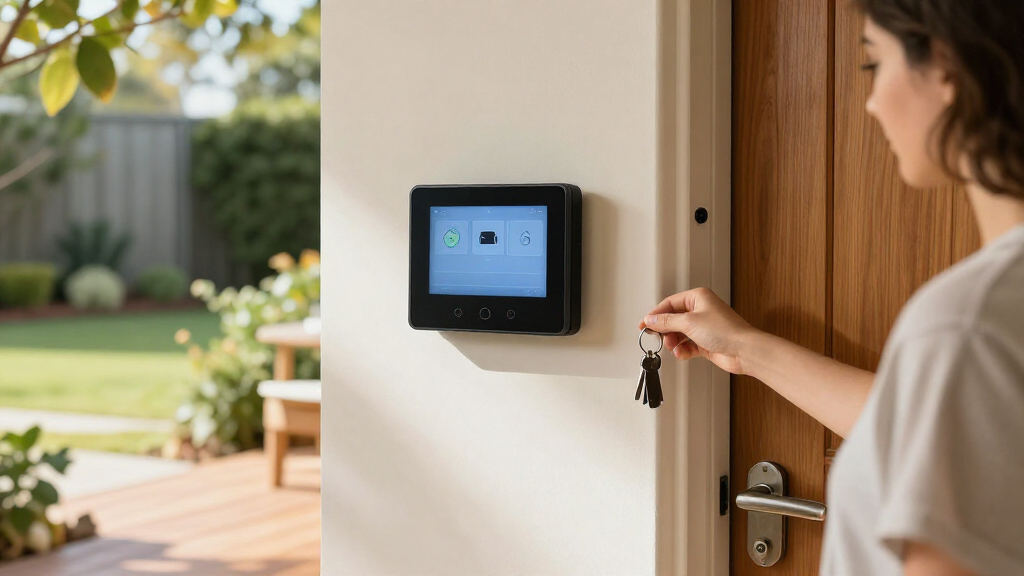
I evaluated these nine security systems by prioritizing three core factors: connectivity reliability, sensor coverage, and ease of installation. In the Australian market, where internet stability can vary between metro and regional areas, I gave higher weight to systems offering 4G cellular backup, as this ensures alerts are sent even if the home Wi-Fi fails. I also examined the number and type of sensors included in each kit, comparing door/window contacts and motion detectors against the typical footprint of Australian suburban homes.
Value was assessed not just by the upfront cost, but by the scalability of the system. I looked at whether components could be added later and if the central hub supported future expansions. This approach highlights products that offer long-term utility rather than just a low entry price, helping readers avoid kits that become obsolete or insufficient as their security needs grow.
Factors to Consider When Choosing Home Security Systems Australia
Selecting a security system involves more than counting sensors. You must align the technology with your home’s architecture and your tolerance for maintenance. Here are the key factors to weigh before purchasing.Connectivity: Wi-Fi vs. 4G Backup
Most modern systems rely on Wi-Fi to send alerts to your phone, but this creates a single point of failure. If your internet goes down, or if a burglar cuts the line, a Wi-Fi-only system becomes a silent alarm box. 4G backup modules use a SIM card to transmit data via mobile networks, ensuring your system stays online during outages. While this often requires a subscription or a compatible SIM, it provides a layer of resilience that is particularly valuable in areas with unstable connections. If you live in a city with reliable fiber, Wi-Fi-only might suffice, but for regional or older properties, cellular backup is a worthwhile investment.
Sensor Coverage and Home Size
A system is only as good as its sensor placement. A 5-piece kit might protect a small studio apartment but will leave blind spots in a three-bedroom house. Match the kit size to your entry points, including front and back doors, garage windows, and ground-floor windows. I recommend mapping your home’s vulnerable spots before buying. If you have a large backyard or multiple entrances, look for kits with at least 10-15 sensors or the ability to buy add-ons. Over-buying is better than under-covering, as gaps in protection can render the whole system ineffective against determined intruders.
Power Source and Battery Life
Wireless sensors run on batteries, which eventually die. The frequency of maintenance depends on the sensor type. Motion detectors often consume more power than door contacts, especially if they are set to high sensitivity. Check if the system provides low-battery alerts via the app, which saves you from guessing when to replace them. Some premium models offer longer battery life or rechargeable options, reducing long-term hassle. For busy households, a system that sends proactive maintenance notifications is far more practical than one where you discover a dead sensor during a break-in attempt.
Smart Home Integration and Ecosystem Lock-in
Many users choose security systems that integrate with Alexa, Google Home, or Apple HomeKit. This allows you to arm the system with voice commands or view camera feeds on smart displays. However, this convenience can lead to ecosystem lock-in. If you later switch your primary smart home platform, you might find your security system less compatible or harder to control. If you already have a strong preference for one ecosystem, choose a system that natively supports it. If you are starting fresh, prioritize systems with open standards or broad compatibility to keep your options open for future tech upgrades.
Professional Monitoring vs. Self-Monitoring
Self-monitoring means you receive alerts on your phone and decide how to respond. Professional monitoring involves a third-party company contacting emergency services on your behalf. In Australia, self-monitoring is the standard for most retail kits, keeping costs low but placing the burden of response on you. Professional monitoring usually requires a monthly subscription and is often tied to specific providers rather than retail hardware kits. If you travel frequently or worry about not seeing notifications, professional monitoring offers peace of mind. For most homeowners with reliable phone service, self-monitoring combined with loud sirens is sufficient and cost-effective.
Frequently Asked Questions
Do I need a subscription for these home security systems?
For most of the kits listed, such as the Ring Alarm and Arlo system, basic self-monitoring via the app is free. You receive push notifications and can arm or disarm the system without paying a monthly fee. However, features like cloud video storage for cameras or professional monitoring services typically require a subscription. If you only need door and window alerts with local siren activation, you can often run these systems indefinitely without ongoing costs. Always check the specific terms for video recording, as this is where most hidden fees arise.Are wireless systems vulnerable to jamming?
Modern wireless protocols like Z-Wave and Zigbee, used by many quality systems, are designed with anti-jamming measures. They use frequency hopping and encryption to prevent signal interference. While older or very cheap systems might be susceptible to simple radio jammers, reputable brands like Ring and Arlo implement robust encryption. To further mitigate risk, choose systems with cellular backup, as an intruder would need to jam both the local Wi-Fi and the cellular network simultaneously to completely silence the alarm, which is technically difficult and noisy.Can I install these systems myself if I rent?
Yes, most wireless home security kits are designed for easy DIY installation using adhesive strips, making them perfect for renters. You avoid drilling holes, which preserves your bond. However, ensure the adhesive is strong enough for outdoor surfaces if you place sensors externally. When moving out, you can typically remove the sensors and take the hub with you. Check your lease agreement to confirm that attaching small devices to walls or doors is permitted, though most landlords allow non-invasive installations for security purposes.What happens if my power goes out?
A good security system should have an internal battery backup in the main hub. When the mains power fails, the hub switches to battery power, keeping the Wi-Fi or 4G connection alive for several hours. Some systems also have battery backups in the sensors themselves. If you live in an area prone to storms or power cuts, prioritize systems with a clear battery backup specification. Without this, your security system could go offline exactly when you might need it most, during severe weather events.Is a security system enough to deter burglars?
A security system is a deterrent, but not a physical barrier. Visible sensors, yard signs, and camera stickers can discourage opportunistic thieves who prefer easy targets. However, a determined intruder can bypass sensors. Therefore, combine your security system with physical security measures like solid locks, motion-sensor lighting, and trimmed bushes that block sightlines. The system’s main role is to alert you and scare off the intruder with a loud siren, giving you time to react or call police, rather than physically stopping the break-in.Conclusion
Choosing the right security system comes down to matching the kit’s capabilities with your home’s specific needs. For the best overall balance of ease and reliability, the Arlo Home Security System is the top choice for most Australian households. If you need extensive coverage and cellular backup to handle power or internet failures, the PGST 24-Piece System is the superior premium option. For those on a tighter budget or living in smaller apartments, the Ring Alarm 8-Piece Kit offers essential protection without overwhelming complexity. Beginners should look for kits with clear app interfaces and pre-paired sensors to minimize setup frustration. Regardless of your choice, ensure the system covers all entry points and has a backup power source to remain effective during outages.
Fall Picks
fall essentials
As an affiliate, we earn on qualifying purchases.