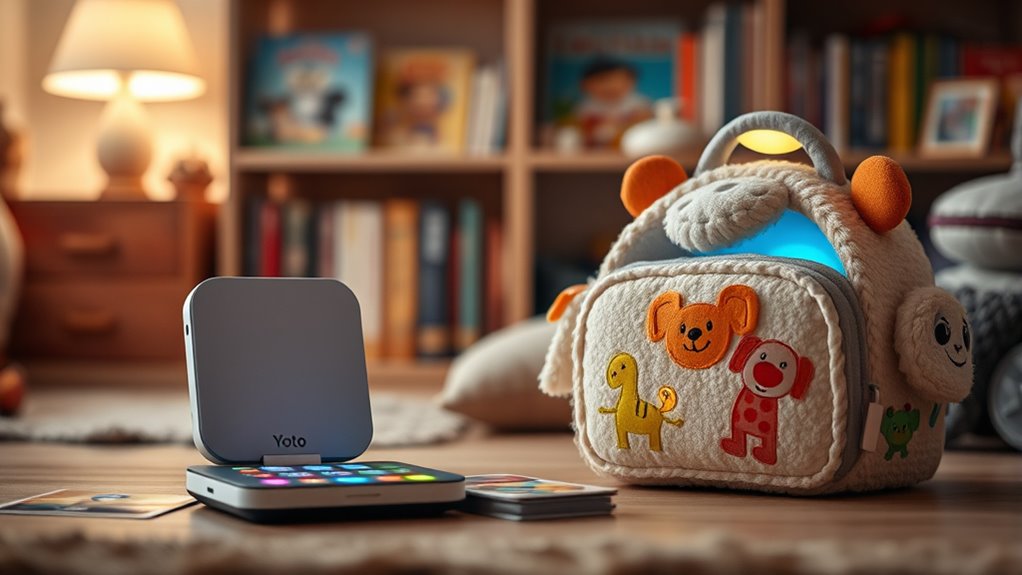

In 2025, I find that both the Yoto Player and Toniebox excel in screen-free fun, but they suit different needs: Yoto offers a vast library of curated cards, perfect for personalized storytelling, while Toniebox’s figurines make content collection exciting and interactive. Durability and ease of use are strong points for both. To truly see which device fits your child best, keep exploring the key differences—you’ll discover more benefits along the way.
Key Takeaways
- Yoto offers a vast library with over 1,000 cards, including Make Your Own options for personalized content, while Toniebox focuses on figurine-based stories and songs.
- Both devices are designed for durability and portability, with Yoto featuring a sturdy plastic body and Toniebox using soft, shock-absorbing materials.
- Parental controls via apps ensure safe, curated content; Yoto emphasizes filtering and volume limits, Toniebox offers timers and usage monitoring.
- Yoto’s physical cards enable easy content expansion, whereas Toniebox’s figurines unlock new stories, supporting ongoing engagement.
- User interfaces are simple: Yoto uses physical cards and buttons, while Toniebox activates content through figurines, making both suitable for independent, screen-free play.
YOTO PAW Patrol Audio Card for Kids

If you’re looking for a fun and screen-free way to keep your kids entertained, the YOTO PAW Patrol Audio Card is an excellent choice. It features five exciting stories about the Mighty Pups saving Adventure Bay, read by Richard Hughes in a friendly US accent. The card offers 50 minutes of engaging content, including stories, music, activities, sleep sounds, and podcasts. Designed for kids aged 3 and up, it’s easy to use—just insert the card into your Yoto Player or Mini, then control playback with the device or app. Plus, it’s safe, with no ads, cameras, or mics, making it a trusted option for parents.
Best For: parents seeking a fun, screen-free entertainment option for children aged 3 and up that promotes safe and engaging storytelling.
Pros:
- Easy to use with simple insert and play functionality for kids.
- Safe content with no ads, cameras, or mics, ensuring parental peace of mind.
- Offers a variety of content including stories, music, activities, and sleep sounds for versatile entertainment.
Cons:
- Limited to the specific content available on the Yoto Card platform.
- Requires a Yoto Player or Mini device for playback, which is an additional purchase.
- The content duration is around 50 minutes, which may require multiple cards for extended entertainment.
Toniebox 2 Audio Player Starter Set for Kids 1

The Toniebox 2 Audio Player Starter Set for Kids 1+ is an excellent choice for parents seeking a durable, user-friendly device that encourages independent play. Its tropical teal design is appealing and built to withstand rough handling by children aged 1 to 9+. The set includes the main device, a Playtime Puppy Tonie, and a USB-C charging cable, with accessories sold separately. Kids can explore hundreds of stories, songs, and interactive content, including the new Tonieplay mode for adventures and challenges. Its simple controls—placing Tonies on the box, tapping sides for tracks, and ear presses for volume—make it easy for young children to operate independently.
Best For: parents seeking a durable, easy-to-use, screen-free audio device that encourages independent play and safe entertainment for children ages 1 to 9+.
Pros:
- Kid-friendly, intuitive design suitable for young children to operate independently
- Robust construction built to withstand rough handling by kids aged 1–9+
- Offers a wide variety of interactive content including stories, songs, and games, with new options added monthly
Cons:
- Wi-Fi required for initial setup, which may be a limitation in areas with poor connectivity
- Additional accessories like power adapters and extra Tonies are sold separately, increasing overall cost
- Interactive features such as Tonieplay and the light rink are optional and may require separate purchase
Bag for Toniebox and Figures, Carrying Case Compatible with Yoto Player

A well-designed carrying case can make a significant difference for parents and kids who want to keep their Toniebox and figures organized on the go. Made from durable nylon and polyester, this bag features an adjustable shoulder strap and sturdy handle for easy transport. It includes a detachable transparent compartment to display 5-8 figures and compartments designed to hold the charging dock, adapter, headphones, and accessories. Compatible with Toniebox, Yoto Player, and Yoto Cards, it offers customizable organization with removable sections. Perfect for travel, it keeps everything protected and easily accessible, making outings more convenient for both parents and children.
Best For: parents and kids who want a durable, organized, and portable solution for carrying their Toniebox, figures, and accessories during travel or outings.
Pros:
- Made from durable nylon and polyester for long-lasting use
- Features adjustable shoulder strap and sturdy handle for comfortable portability
- Includes a transparent detachable compartment for easy viewing and organization of figures
Cons:
- Does not include the Toniebox, figures, or accessories, only the carrying bag
- May be bulky if carrying only a few small items
- Compatibility is limited to specific devices like Toniebox, Yoto Player, and Yoto Cards
Factors to Consider When Choosing Yoto Player Vs Toniebox Review

When choosing between the Yoto Player and Toniebox, I consider key factors like content options, durability, and parental controls to guarantee the device fits my child’s needs. I also look at interactive features and how portable or easy it is to store the device for our active lifestyle. These points help me decide which one offers the best overall experience for my family.
Content Selection Options
Choosing between the Yoto Player and Toniebox depends heavily on the variety and customization of content you want for your child. Yoto offers over 1,000 cards, including stories, music, activities, and podcasts, giving kids a broad range of options. Plus, with Make Your Own cards, you can personalize content to suit your child’s interests, making the experience more tailored. On the other hand, Toniebox features a curated library of hundreds of Tonies, with new titles added monthly, focusing on high-quality, story-driven content. It also supports interactive modes like Tonieplay, adding an engaging twist beyond traditional audio. Both devices allow parental controls, but Yoto’s physical cards and Toniebox’s figurines shape how content is accessed and enjoyed. Your choice hinges on whether you prefer extensive customization or curated, interactive content.
Device Durability and Design
Both the Yoto Player and Toniebox are built to withstand the rough and tumble of active play, which is essential for devices used by young children. The Yoto Player features a sturdy plastic body with minimal moving parts, making it less prone to damage during energetic use. Meanwhile, the Toniebox is constructed with soft, shock-absorbing materials and rounded edges, offering added safety and durability. Both devices come with tough carrying cases made from durable materials like nylon and polyester, designed to handle travel and rough handling. These design choices *guarantee* that both the Yoto Player and Toniebox can endure frequent use by children aged 1 to 9+, emphasizing resilience and long-term usability for active kids.
Parental Control Features
As parents consider the durability and design of the Yoto Player and Toniebox, evaluating their parental control features becomes equally important. Yoto offers content filtering, volume limits, and management through its Yoto App, making it easy to supervise what kids access and control their listening time. It provides a safe environment with curated content, no ads, cameras, or microphones. The Toniebox, on the other hand, uses the Tonies app to set timers, monitor usage, and approve or restrict content, giving parents thorough control over both content and device activity. While both prioritize screen-free entertainment, Yoto emphasizes app-based controls and curated content, whereas Toniebox combines physical figure management with remote oversight. These features help ensure safe, age-appropriate use tailored to each child’s needs.
Interactive Play Capabilities
When comparing the interactive play capabilities of the Yoto Player and Toniebox, it’s clear that each offers a unique way for kids to engage with their content. The Yoto relies on inserting physical audio cards, which can be swapped to change stories, music, or podcasts, giving kids a sense of control and customization. In contrast, the Toniebox uses figurines called Tonies that, when placed on the device, instantly play preloaded content, making access quick and intuitive. The Toniebox also offers optional accessories like the Tonieplay controller, which adds quizzes and challenges for extra engagement. Both devices support screen-free fun with simple controls, but Yoto emphasizes curated content through its cards, while Toniebox focuses on figurine-based interaction and expanding content with new Tonies.
Portability and Storage
Portability and storage are crucial factors to take into account when choosing between the Yoto Player and Toniebox, especially if your family is on the go. I look for devices that come with a dedicated carrying case or bag, making transportation and protection much easier. The size and weight matter too—I want something lightweight and manageable for kids to handle comfortably during travel. It’s also important that the device supports rechargeable batteries or compatible power adapters, so it’s ready to use anywhere. Additionally, I check if there are storage compartments or accessories that can hold multiple figures, cards, or related items securely. finally, a design that allows quick setup and packing makes frequent outings more convenient, ensuring the device is travel-friendly and practical for busy families.
Frequently Asked Questions
Are There Subscription Fees for Yoto Player or Toniebox Content?
Yes, there are subscription fees for both Yoto Player and Toniebox content. With Yoto, you can buy individual audio cards or subscribe to their Yoto Club, which offers access to a library of stories and songs for a monthly fee. Toniebox charges for physical Tonies figures, but the audio content often comes included or can be purchased separately. I recommend checking each platform’s website for the latest subscription details.
Which Device Offers Better Parental Controls and Content Management?
If I had to pick, I’d say the Yoto Player offers better parental controls. For example, I can easily set time limits and filter content directly through their app, giving me peace of mind. The Toniebox also has controls, but Yoto’s app-based system feels more all-inclusive. It’s perfect for busy parents like me who want to manage what our kids listen to without fuss.
How Durable Are the Devices for Young Children’s Daily Use?
Both devices are quite durable and designed for young children’s daily use. I’ve found that the Toniebox feels sturdier with its soft, shock-absorbing exterior perfect for rough handling. The Yoto Player is also resilient but slightly more delicate due to its plastic components. Overall, I’d say the Toniebox edges out slightly for durability, but either device can withstand everyday play if handled with care.
Can Both Devices Be Easily Customized With Third-Party Content?
Both devices can be customized with third-party content, but it’s like trying to tame a wild beast—Yoto’s platform is more open, allowing easier uploads and tweaks, while Toniebox’s system is more locked down, making customization a challenge. I’d say Yoto feels like a sandbox for parents and kids to get creative, whereas Toniebox is more like a pre-set playground. If customization matters, Yoto definitely takes the crown.
How Do the Devices Compare in Battery Life and Charging Options?
Both devices offer decent battery life, but the Yoto Player tends to last longer, often around 10-12 hours, while the Toniebox averages about 8-10 hours. Charging options differ too; the Yoto uses a standard USB-C port, making it easy to charge with various cables. The Toniebox has a proprietary charging dock, which can be less convenient but keeps things simple. Overall, Yoto’s battery and charging setup feel more flexible.
Conclusion
So, whether you prefer the playful, programmable Yoto Player or the charming, collectible Toniebox, both bring big benefits for little listeners. Consider your child’s curiosity, your convenience, and your crafting comfort. Ultimately, the choice comes down to what suits your family best—because in the end, the right audio adventurer will eagerly entertain and educate. Decide wisely and delight daily; your child’s mesmerizing curiosity will thank you!