For a VPN router for secure browsing hardware, I’d start with the GL.iNet GL-MT3600BE Beryl 7: its travel-friendly design, Wi-Fi 7, and 2.5G port make it a strong all-around choice. The Netgate 1100 suits buyers who want a configurable wired security gateway, while the GL.iNet GL-MT2500A Brume 2 is a simpler fit when Wi-Fi is already handled elsewhere. The main tradeoffs are portability versus home coverage, ease of setup versus control, and wireless convenience versus the steadier performance of a wired gateway. VPN support alone does not guarantee fast encrypted traffic, so processor capacity and your VPN provider’s configuration matter too. Read on for the full comparison and a pick matched to your network.

Get privacy and security gear delivered free with Prime
- Fast, free delivery on millions of items
- Prime Video, Amazon Music and more included
- Member-only deals all year
Key Takeaways
- Portable use is a clear strength of the lineup: several GL.iNet travel routers combine VPN support with compact designs, while wired gateways are better suited to a fixed network.
- Wi-Fi 7 and a 2.5G port do not tell the whole performance story. Encrypted VPN throughput, client count, and the speed of your internet plan also shape the experience.
- The Netgate 1100 and GL.iNet Brume models serve different buyers. Netgate suits hands-on firewall configuration; the wired Brume gateways are more focused on adding VPN protection to an existing setup.
- Wi-Fi coverage and VPN routing are separate decisions. A wired VPN gateway may need a separate access point, while an all-in-one router reduces hardware but can be harder to place for ideal coverage.
- Newer wireless standards are most useful when your devices and network can use them. Buyers with older clients may gain more from straightforward setup, VPN compatibility, or wired multi-gig ports.
| GL.iNet GL-AXT1800 Slate AX Pocket-Sized Wi-Fi 6 Travel Router with VPN |  | Best Overall for Travel | Wireless standard: Wi-Fi 6 (802.11ax) | Wi-Fi speed: Up to 1800 Mbps | Frequency bands: Dual-band | VIEW ON AMAZON | See Our Full Breakdown |
| Netgate 1100 pfSense+ Security Gateway – Firewall, Router, VPN |  | Best for Firewall Control | Processor: ARM Cortex-A53, 1.2 GHz dual-core | Memory: 1 GB RAM | Ports: 3 x 1 GbE | VIEW ON AMAZON | See Our Full Breakdown |
| Deeper Connect Mini DPN Router, 1Gbps ARM64 Quad Core Hardware Gateway with Layer 7 Firewall, Smart Routing, Multi Device Coverage, and Lifetime Decentralized Privacy VPN Router |  | Best for Simple Privacy Setup | Processor: ARM64 quad-core | Data transfer rate: Up to 1 Gbps | Memory: 2 GB RAM | VIEW ON AMAZON | See Our Full Breakdown |
| GL.iNet GL-MT3600BE Beryl 7 Dual-Band Wi-Fi 7 Travel Router |  | Best Premium Travel Pick | Wireless standard: Wi-Fi 7 | Wireless speed: Up to 688 Mbps (2.4 GHz) + 2882 Mbps (5 GHz) | Maximum data rate: 3600 Mbps | VIEW ON AMAZON | See Our Full Breakdown |
| GL.iNet GL-MT2500A Brume 2 Wired VPN Security Gateway 2.5G WAN |  | Best Wired VPN Gateway | Connectivity: Wired Ethernet | WAN port: 2.5 Gigabit | LAN port: 1 Gigabit | VIEW ON AMAZON | See Our Full Breakdown |
| GL.iNet GL-MT3000 Beryl AX Wi-Fi 6 Travel Router, 2.5G WAN, VPN, OpenWrt | 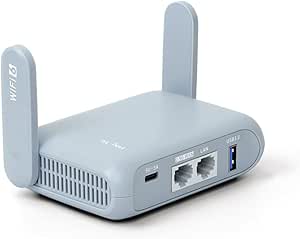 | Best Overall for Secure Travel Browsing | Wi-Fi standard: Wi-Fi 6 | Wireless speed: 574 Mbps on 2.4 GHz; 2402 Mbps on 5 GHz | WAN: 2.5G multi-gigabit | VIEW ON AMAZON | See Our Full Breakdown |
| GL.iNet GL-SFT1200 Opal Travel Router, AC1200 Dual-Band Wi-Fi | 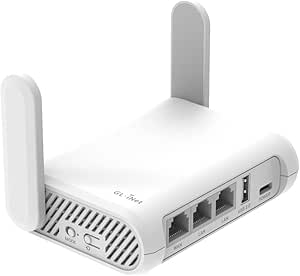 | Best Value Travel VPN Router | Wireless speed: Up to 1200 Mbps | Frequency bands: Dual-band, 2.4 GHz and 5 GHz | Ports: 2 Gigabit LAN, 1 Gigabit WAN | VIEW ON AMAZON | See Our Full Breakdown |
| Roam 7 BE3600 Wi-Fi 7 Portable Travel Router Dual-Band, 2.5G Port, USB 3.0 |  | Best for Flexible Travel Setups | Wi-Fi technology: Wi-Fi 7 | Wireless speed: Up to 2882 Mbps on 5 GHz and 688 Mbps on 2.4 GHz | Bands: Dual-band, 2.4 GHz and 5 GHz | VIEW ON AMAZON | See Our Full Breakdown |
| TP-Link Omada ER707-M2 Multi-Gigabit VPN Router |  | Best for Multi-Gigabit Business Networks | WAN and WAN/LAN ports: 1x 2.5 Gbps WAN; 1x 2.5 Gbps WAN/LAN | Additional ports: 4x Gigabit WAN/LAN; 1x SFP WAN/LAN; 1x USB 2.0 | VPN and security protocols: SSL, IPsec, GRE, SSH, IKEv1/v2, PPTP, L2TP, OpenVPN | VIEW ON AMAZON | See Our Full Breakdown |
| TP-Link ER605 Wired Gigabit VPN Router |  | Best for Small-Business WAN Redundancy | Ports: 1 Gigabit WAN, 2 Gigabit WAN/LAN, 2 Gigabit LAN, 1 USB WAN | Maximum WAN ports: 3 Ethernet WAN ports | USB WAN: Supported | VIEW ON AMAZON | See Our Full Breakdown |
| GL.iNet GL-BE6500 Flint 3e Wi-Fi 7 Router with VPN for Home and Gaming |  | Best for High-Traffic Homes | VIEW ON AMAZON | See Our Full Breakdown | |||
| GL.iNet GL-BE3600 Slate 7 Wi-Fi 7 Travel Router Touchscreen 2.5G |  | Best for Secure Travel | VIEW ON AMAZON | See Our Full Breakdown | |||
| Cudy Gigabit Multi-WAN Router R700 |  | Best for Multi-ISP Reliability | VIEW ON AMAZON | See Our Full Breakdown | |||
| GL.iNet GL-BE9300 Flint 3 Tri-Band Wi-Fi 7 Router with VPN |  | Best for High-Density Wi-Fi | VIEW ON AMAZON | See Our Full Breakdown | |||
| GL.iNet GL-MT5000 Brume 3 Wired VPN Security Gateway |  | Best Wired VPN Gateway | VIEW ON AMAZON | See Our Full Breakdown |
More Details on Our Top Picks
GL.iNet GL-AXT1800 Slate AX Pocket-Sized Wi-Fi 6 Travel Router with VPN
The Slate AX balances portable Wi-Fi 6 and VPN flexibility, making it a strong fit for travelers who want one small router for hotel connections, personal devices, and occasional file sharing. It supports OpenVPN and WireGuard, while its OpenWrt software offers room to adjust network settings beyond a basic travel router. Compared with the newer GL.iNet Beryl 7, it uses Wi-Fi 6 rather than Wi-Fi 7, but its listed dual-band speed and three Ethernet ports make it a versatile travel hub.
The tradeoff is that VPN setup takes manual work in the admin panel, so it is less approachable than the plug-and-play Deeper Connect Mini. Its compact coverage is also a poor match for a large home, and public hotspot time limits can disrupt repeater connections. I’d choose it for adaptable travel protection, not as a whole-house access point.
Pros:- OpenVPN and WireGuard support provide flexible options for routing traffic through a VPN.
- Wi-Fi 6 dual-band networking supports newer devices and travel network sharing.
- Three Ethernet ports offer more wired connection options than the two-port Deeper Connect Mini.
- USB file sharing and customizable OpenWrt software add useful travel and configuration flexibility.
Cons:- VPN features require manual configuration through the admin panel.
- Compact coverage is limited for large homes or multi-room spaces.
- Hotel or public hotspot repeater connections may drop when the hotspot imposes time limits.
Best for: Frequent travelers who want a compact Wi-Fi 6 router with OpenVPN or WireGuard, Ethernet connections, and USB file sharing.
Not ideal for: Buyers seeking a hands-off VPN setup or reliable Wi-Fi coverage across a large home.
- Wireless standard:Wi-Fi 6 (802.11ax)
- Wi-Fi speed:Up to 1800 Mbps
- Frequency bands:Dual-band
- Ports:3 Ethernet, 1 Type-C
- VPN support:OpenVPN and WireGuard
- Operating system:OpenWrt 21.02
- Security:WPA3
- Maximum devices:120
Our verdict“Choose the Slate AX if you want a configurable travel router with VPN support and wired flexibility, and can handle some setup.”
Netgate 1100 pfSense+ Security Gateway – Firewall, Router, VPN
The Netgate 1100 puts firewall and routing control ahead of built-in Wi-Fi. Its pfSense+ software makes it suited to buyers who want a dedicated wired gateway for VPN and network security rules, rather than a travel router that broadcasts wireless access. The compact, silent design can sit in a home office or small business network, and the listed maximum transfer rate of 940 Mbps puts it near gigabit-class wired use.
Unlike the GL.iNet Brume 2, the Netgate has three 1 GbE ports rather than a 2.5 GbE WAN port, but it offers pfSense+ and included technical support. It has no Wi-Fi, so a separate wireless access point is needed. The 1 GB of RAM and requirement for networking knowledge also make this a less suitable choice for someone who just wants a simple VPN switch. I’d favor it when firewall configuration matters more than quick setup.
Pros:- Preloaded pfSense+ provides a dedicated platform for firewall and routing configuration.
- Listed maximum transfer rate of 940 Mbps suits near-gigabit wired connections.
- Three 1 GbE ports support multiple wired network connections.
- Compact, silent hardware and included technical support suit a fixed home-office or business setup.
Cons:- No built-in Wi-Fi, so wireless devices need a separate access point.
- Three ports are limited compared with gateways offering more wired expansion.
- Advanced configuration may be challenging for buyers without networking experience.
Best for: Technically confident home or small-business users who want a dedicated pfSense+ firewall and VPN gateway for a wired network.
Not ideal for: Travelers or households looking for an all-in-one wireless VPN router that can be set up without networking knowledge.
- Processor:ARM Cortex-A53, 1.2 GHz dual-core
- Memory:1 GB RAM
- Ports:3 x 1 GbE
- Operating system:pfSense+ (FreeBSD)
- Maximum data transfer rate:940 Mbps
- Form factor:Compact
- Hardware warranty:1 year
- Support:24/7 TAC Lite support
Our verdict“Pick the Netgate 1100 if you want pfSense+ firewall control for a wired network and are comfortable managing its settings.”
Deeper Connect Mini DPN Router, 1Gbps ARM64 Quad Core Hardware Gateway with Layer 7 Firewall, Smart Routing, Multi Device Coverage, and Lifetime Decentralized Privacy VPN Router
The Deeper Connect Mini is the low-friction choice for buyers who want a privacy gateway without configuring a conventional VPN client themselves. Its plug-and-play approach and decentralized VPN service are aimed at everyday household browsing, while the listed coverage of about 1,500 square feet suits many small-to-medium homes. That simplicity sets it apart from the Netgate 1100, which offers more hands-on firewall control but expects greater networking knowledge.
The convenience comes with limits: the Mini has only two ports and lacks the advanced configuration range of the Netgate’s pfSense+ platform or the OpenWrt options on the Slate AX. Its WPA2 security listing is also less current than the WPA3 support listed for those GL.iNet models. Performance may vary when many devices share the connection, so I would not treat it as a high-capacity security appliance or a fit for demanding threat models.
Pros:- Plug-and-play setup is more approachable than configuring the Netgate 1100.
- Decentralized VPN access is described as lifetime-use, avoiding a traditional recurring VPN service model.
- Listed coverage of about 1,500 square feet can suit small-to-medium households.
- ARM64 quad-core hardware and a 1 Gbps data rate provide a clear wired-network basis.
Cons:- Limited advanced configuration compared with pfSense+ or OpenWrt-based alternatives.
- WPA2 is an older listed security protocol than the WPA3 support on the Slate AX and Beryl 7.
- Performance may vary when many devices are active at once.
Best for: Households that want a straightforward privacy gateway for everyday browsing and prefer not to configure a traditional VPN client.
Not ideal for: Power users, high-threat environments, or homes with many simultaneous devices that need extensive firewall controls.
- Processor:ARM64 quad-core
- Data transfer rate:Up to 1 Gbps
- Memory:2 GB RAM
- Ports:2
- Wireless compatibility:802.11a/b/g/n/ac
- Wireless bands:Dual-band
- Coverage:About 1,500 sq. ft. / 140+ sq. m
- Security protocol:WPA2
Our verdict“Choose the Deeper Connect Mini for approachable, everyday privacy protection, but skip it if you need advanced controls or high-capacity performance.”
GL.iNet GL-MT3600BE Beryl 7 Dual-Band Wi-Fi 7 Travel Router
The Beryl 7 is the performance-focused travel pick here, pairing Wi-Fi 7 with OpenWrt and VPN client and server capabilities. Its 5 GHz band is listed at up to 2882 Mbps, and the two 2.5 GbE ports give travelers faster wired options than the Slate AX’s listed Ethernet ports. WPA3, DNS over HTTPS, and DNS over TLS add layers of protection around wireless access and name lookups, which helps when sharing an unfamiliar network with multiple devices.
Compared with the Slate AX, this model offers newer wireless technology and faster multi-gigabit Ethernet, but it requires more setup knowledge and may be more router than a basic traveler needs. Its 512 MB of RAM is the listed memory, and full VPN use may depend on an active subscription. I’d choose it over the Deeper Connect Mini for configuration flexibility, not for plug-and-play simplicity.
Pros:- Wi-Fi 7 and listed speeds up to 2882 Mbps on 5 GHz offer newer wireless capability than the Slate AX.
- Two 2.5 GbE ports provide multi-gigabit WAN and LAN connections.
- OpenWrt supports customization, with VPN client and server capabilities.
- WPA3 plus DNS over HTTPS and DNS over TLS add security options for travel networks.
Cons:- Setup may require more technical knowledge than the plug-and-play Deeper Connect Mini.
- Full VPN use may require an active VPN subscription.
- Its advanced wireless and wired capabilities may be unnecessary for simple browsing needs.
Best for: Frequent travelers who want Wi-Fi 7, 2.5 GbE connections, and configurable VPN and DNS protections in a portable router.
Not ideal for: Buyers who prioritize simple setup, do not need multi-gigabit networking, or want VPN service included without a subscription.
- Wireless standard:Wi-Fi 7
- Wireless speed:Up to 688 Mbps (2.4 GHz) + 2882 Mbps (5 GHz)
- Maximum data rate:3600 Mbps
- Ethernet ports:2 x 2.5 GbE (WAN and LAN)
- USB port:1 x USB 3.0
- Operating system:OpenWrt 21.02
- Security protocols:WPA3, DNS over HTTPS, DNS over TLS, IPv6
- Maximum supported devices:Up to 120
Our verdict“Choose the Beryl 7 if you want the most advanced portable networking and VPN controls here, and are willing to configure them.”
GL.iNet GL-MT2500A Brume 2 Wired VPN Security Gateway 2.5G WAN
The Brume 2 is for buyers who want VPN protection at the network edge without another Wi-Fi radio. It supports OpenVPN and WireGuard, plus VPN cascading for users who want client and server functions in one wired gateway. Its 2.5 GbE WAN port is a useful distinction from the Netgate 1100, which lists three 1 GbE ports but no multi-gigabit interface. USB 3.0 and 8 GB of eMMC storage add practical flexibility for a compact wired device.
The clear tradeoff is that this is not an all-in-one router for wireless households: it has no Wi-Fi, so a separate access point is needed. Its listed maximum data transfer rate is 150 Mbps, while the product description also cites up to 355 Mbps for VPN connections; buyers should distinguish those stated figures rather than assume full multi-gigabit VPN throughput. Compared with the Beryl 7, it suits fixed wired networks, not portable wireless use.
Pros:- OpenVPN and WireGuard support provide two common VPN options.
- VPN cascading supports simultaneous VPN client and server operation.
- A 2.5 GbE WAN port supports faster incoming wired links than the Netgate 1100’s listed 1 GbE ports.
- USB 3.0 and 8 GB of eMMC storage add flexibility in a compact gateway.
Cons:- No Wi-Fi means wireless devices need a separate access point.
- The listed maximum data transfer rate is 150 Mbps, below the 2.5 GbE WAN link speed.
- Advanced VPN and cascading features may require networking knowledge to configure.
Best for: Home-office or small-business users who already have Wi-Fi equipment and want a dedicated wired gateway with OpenVPN, WireGuard, or VPN cascading.
Not ideal for: Buyers who need an all-in-one wireless router or expect VPN traffic to run at multi-gigabit speeds.
- Connectivity:Wired Ethernet
- WAN port:2.5 Gigabit
- LAN port:1 Gigabit
- VPN support:OpenVPN and WireGuard
- VPN feature:VPN cascading
- USB port:USB 3.0
- Storage:8 GB eMMC
- Maximum data transfer rate:150 Mbps
Our verdict“Pick the Brume 2 for a wired network that needs flexible VPN routing, but choose a travel router if you also need Wi-Fi.”
GL.iNet GL-MT3000 Beryl AX Wi-Fi 6 Travel Router, 2.5G WAN, VPN, OpenWrt
The GL.iNet GL-MT3000 Beryl AX balances portable Wi-Fi with configurable VPN features better than the wired TP-Link ER605, which needs a separate access point for wireless devices. Its Wi-Fi 6 and 2.5G WAN port give travelers room for fast hotel or wired connections, while OpenWrt supports deeper customization than a basic travel hotspot. That flexibility can help buyers tailor how devices connect, but it also means setup may take more attention than the simpler goal of sharing a connection. Compared with the GL.iNet GL-SFT1200 Opal, the Beryl AX has a faster wireless specification and multi-gig WAN, making it the stronger pick for demanding connections. The tradeoff is limited published hardware detail, and VPN service itself may require a separate subscription.
Pros:- Wi-Fi 6 supports faster wireless connections than the Opal’s AC1200 class.
- 2.5G WAN port can accommodate faster wired internet connections.
- OpenWrt offers extensive customization and plugin support.
- Portable design suits hotel rooms and temporary workspaces.
Cons:- OpenWrt and VPN configuration can be demanding for less technical users.
- A VPN subscription may be needed for full VPN service.
- Processor details are not specified.
Best for: Frequent travelers and remote workers who want configurable VPN protection and Wi-Fi 6 in a compact router.
Not ideal for: Beginners seeking a plug-and-play VPN setup, or buyers who need detailed processor specifications before choosing hardware.
- Wi-Fi standard:Wi-Fi 6
- Wireless speed:574 Mbps on 2.4 GHz; 2402 Mbps on 5 GHz
- WAN:2.5G multi-gigabit
- LAN:1G gigabit
- VPN and firmware:VPN client and server; Linux with OpenWrt 21.02
- USB:USB 3.0
- Security:WPA3 and WPA2-PSK
- Power:5 volts
Our verdict“Choose the Beryl AX if you want a portable, customizable Wi-Fi 6 VPN router with a multi-gig WAN connection.”
GL.iNet GL-SFT1200 Opal Travel Router, AC1200 Dual-Band Wi-Fi
The GL.iNet GL-SFT1200 Opal is the straightforward travel pick for buyers who want dual-band Wi-Fi and VPN support without stepping up to the Beryl AX’s Wi-Fi 6 and 2.5G WAN. Its gigabit ports can connect a wired room outlet or device, while the light 145 g body and retractable antennas make it easy to pack. OpenWrt and support for OpenVPN and WireGuard offer useful privacy options, though configuring them still takes some work. Compared with the newer Roam 7, the Opal has less wireless headroom and fewer listed operating modes, but it presents a simpler, lighter travel-router proposition. Its limits matter: it does not support easytethering, and the listed toggle switch has no function by default, so buyers should not expect every setup detail to be automatic.
Pros:- Compact 145 g design with retractable antennas for travel.
- Dual-band AC1200 wireless supports everyday browsing and streaming.
- Gigabit WAN and LAN ports provide wired connection options.
- OpenWrt supports OpenVPN and WireGuard.
Cons:- Does not support easytethering.
- VPN and network setup requires configuration.
- The default toggle switch has no function.
Best for: Travelers who want a lightweight dual-band router with wired ports and VPN options for hotel or temporary networks.
Not ideal for: Users who need Wi-Fi 7 speeds, USB tethering, or a setup that works without configuration.
- Wireless speed:Up to 1200 Mbps
- Frequency bands:Dual-band, 2.4 GHz and 5 GHz
- Ports:2 Gigabit LAN, 1 Gigabit WAN
- VPN protocols:OpenVPN and WireGuard
- Firmware:OpenWrt
- Memory:128 MB RAM
- Antennas:2 retractable antennas
- Weight:145 g
Our verdict“Pick the Opal for a light, capable travel router when Wi-Fi 6 or Wi-Fi 7 performance is not a priority.”
Roam 7 BE3600 Wi-Fi 7 Portable Travel Router Dual-Band, 2.5G Port, USB 3.0
The Roam 7 BE3600 suits travelers who need more than a standard router mode: it can also run as a hotspot, access point, repeater, client, or USB-tethered router. That flexibility sets it apart from the GL.iNet GL-SFT1200 Opal, while its Wi-Fi 7 and 2.5G WAN offer more wireless and wired headroom than the Opal’s AC1200 design. For secure browsing, it lists OpenVPN and WireGuard alongside older VPN protocols, so buyers can match the router to a compatible service or network. The spec sheet claims capacity for up to 90 devices, which may appeal to group travel or a small temporary workspace. Still, it lacks a 6 GHz band, needs USB-C power, and its broad mode and protocol choices may be more involved than casual users want.
Pros:- Wi-Fi 7 provides high stated wireless speeds on 2.4 GHz and 5 GHz.
- Router, hotspot, access point, repeater, client, and USB-tethering modes support varied travel networks.
- 2.5G WAN and USB 3.0 add wired and peripheral flexibility.
- USB-C power can work with compatible power banks.
Cons:- Does not support the 6 GHz Wi-Fi band.
- Requires an external USB-C power source.
- Multiple modes and VPN options may complicate setup for casual users.
Best for: Remote workers, campers, and group travelers who need several ways to connect devices or share wired and tethered internet.
Not ideal for: Buyers who specifically need 6 GHz Wi-Fi, battery-powered operation, or a simple single-mode router.
- Wi-Fi technology:Wi-Fi 7
- Wireless speed:Up to 2882 Mbps on 5 GHz and 688 Mbps on 2.4 GHz
- Bands:Dual-band, 2.4 GHz and 5 GHz
- Ports:1x 2.5 Gbps WAN, 1x 1 Gbps LAN, USB 3.0
- VPN protocols:OpenVPN, WireGuard, L2TP, PPTP
- Operating modes:Router, hotspot, AP, repeater, client, USB tethering
- Device capacity:Up to 90 devices
- Power:USB-C; compatible with power banks
Our verdict“Choose the Roam 7 if flexible connection modes and Wi-Fi 7 matter more than 6 GHz support or a beginner-focused setup.”
TP-Link Omada ER707-M2 Multi-Gigabit VPN Router
The TP-Link Omada ER707-M2 is a wired gateway for buyers prioritizing multi-WAN routing, VPN options, and centralized management over built-in Wi-Fi. Dual 2.5G WAN connections and additional WAN/LAN ports give an office more flexibility for internet links and network segmentation than the compact TP-Link ER605, whose ports are gigabit. The ER707-M2 also lists a broad set of VPN and tunneling protocols, making it a stronger fit for varied business connections than a travel router such as the GL.iNet Beryl AX. That capacity comes with a different kind of effort: Omada management and VPN configuration are aimed at network operators, not travelers seeking a quick private hotspot. There is no built-in Wi-Fi, so wireless browsing requires a separate access point, adding hardware and setup to the network.
Pros:- Two 2.5 Gbps WAN-capable ports support multi-gig internet links.
- Multiple VPN and tunneling protocols suit varied business connections.
- Omada cloud management supports centralized network administration.
- High stated session and client capacity fits larger network environments.
Cons:- No built-in Wi-Fi; a separate access point is required for wireless devices.
- Advanced setup may be difficult for users without networking experience.
- Its wired business focus is less convenient for travel or simple home browsing.
Best for: Small businesses and technically capable office administrators who need multi-gig WAN options, VPN routing, and centralized Omada management.
Not ideal for: Home users or travelers who want wireless coverage from one device, or beginners who do not want to configure a wired network.
- WAN and WAN/LAN ports:1x 2.5 Gbps WAN; 1x 2.5 Gbps WAN/LAN
- Additional ports:4x Gigabit WAN/LAN; 1x SFP WAN/LAN; 1x USB 2.0
- VPN and security protocols:SSL, IPsec, GRE, SSH, IKEv1/v2, PPTP, L2TP, OpenVPN
- Maximum concurrent sessions:500,000
- Maximum clients:1000+
- Wireless:No built-in Wi-Fi
- Power supply:9 volts
- Weight:1.1 kg
Our verdict“Choose the ER707-M2 for a managed, wired business network that needs multi-gig WAN and broad VPN support.”
TP-Link ER605 Wired Gigabit VPN Router
The TP-Link ER605 makes the most sense for a small office that values backup internet and wired VPN routing more than an all-in-one wireless device. It supports up to three Ethernet WAN connections plus USB WAN, so a business can build in another route to the internet rather than relying on a single connection. Its SPI firewall, filtering, and Omada SDN integration give administrators useful tools for managing network access. Compared with the Omada ER707-M2, the ER605 offers gigabit rather than 2.5G-class routing, but its compact body and multiple WAN options suit modest wired deployments. It is not a direct replacement for a travel VPN router like the Opal: there is no built-in Wi-Fi, and setup may be more involved than a home user expects. A separate access point is needed for wireless browsing.
Pros:- Supports up to three Ethernet WAN ports for multiple internet connections.
- USB WAN support allows a mobile broadband backup connection.
- SPI firewall, DoS defense, and filtering add network controls.
- Omada SDN integration supports centralized management in compatible setups.
Cons:- No built-in Wi-Fi; wireless devices need a separate access point.
- Configuration can be challenging for first-time network administrators.
- Gigabit ports provide less wired headroom than the ER707-M2’s 2.5G connections.
Best for: Small-business owners or IT administrators who want gigabit VPN routing with backup WAN options and Omada management.
Not ideal for: Travelers, wireless-only households, or beginners seeking a router with built-in Wi-Fi and minimal configuration.
- Ports:1 Gigabit WAN, 2 Gigabit WAN/LAN, 2 Gigabit LAN, 1 USB WAN
- Maximum WAN ports:3 Ethernet WAN ports
- USB WAN:Supported
- VPN support:20 LAN-to-LAN IPsec, 16 OpenVPN, 16 L2TP, 16 PPTP
- Security features:SPI firewall, DoS defense, IP/MAC/URL filtering
- Wireless:No built-in Wi-Fi
- Dimensions:6.22 x 3.98 x 0.98 inches
- Weight:12.64 ounces
Our verdict“Pick the ER605 for a compact small-business wired network where WAN backup and gigabit VPN routing matter more than built-in wireless.”
GL.iNet GL-BE6500 Flint 3e Wi-Fi 7 Router with VPN for Home and Gaming
The Flint 3e is the most balanced choice here for a household that wants VPN protection without giving up newer Wi-Fi performance. Its Wi-Fi 7 connection, stated coverage of 2,500 square feet, and support for many simultaneous devices suit busy homes with streaming, gaming, and work traffic. Compared with the Flint 3, it lists a lower maximum wireless speed but wider coverage, a useful trade for households prioritizing reach over the highest listed throughput. Built-in VPN, parental controls, and ad blocking add practical network-wide controls, though setup may take more effort than a basic consumer router. Its advanced features can also be unnecessary if you only need to encrypt one device or have modest internet demands.
Pros:- Wi-Fi 7 and up to 6.5 Gbps stated maximum speed support demanding home traffic.
- Stated coverage of 2,500 square feet suits larger homes.
- Built-in VPN, parental controls, and ad blocking add network-wide management options.
- Five ports and four antennas support a flexible home setup.
Cons:- Advanced setup may be challenging for users new to VPN routers.
- Its feature set may be excessive for basic browsing and a small number of devices.
- Wireless performance depends on the internet connection and client devices.
Best for: Households with several active users who want Wi-Fi 7 coverage and VPN controls across a larger home.
Not ideal for: Small households with basic browsing needs, or beginners who want a simple router setup without advanced network settings.
Our verdict“Choose the Flint 3e if your busy home needs broad Wi-Fi 7 coverage plus router-level VPN features, rather than the Flint 3’s higher listed speed.”
GL.iNet GL-BE3600 Slate 7 Wi-Fi 7 Travel Router Touchscreen 2.5G
The Slate 7 puts travel-friendly control ahead of whole-home reach: its touchscreen gives travelers a direct way to check and manage the router, while VPN client and server support can protect devices sharing a temporary connection. Dual-band Wi-Fi 7 and a 2.5G WAN port make it more capable than a simple travel access point, and OpenWrt gives technically confident owners room to customize it. Compared with the home-focused Flint 3e, this is the more portable choice, but its listed coverage is indoor and its two Ethernet ports leave less room for wired devices. The touchscreen can simplify everyday interaction, yet advanced VPN and firmware configuration still calls for some networking knowledge.
Pros:- Touchscreen and app controls provide accessible ways to manage the router.
- VPN client and server functions support flexible secure-access setups.
- OpenWrt 23.05 and 2 GB RAM offer room for customization.
- A 2.5G WAN port supports faster wired upstream connections.
Cons:- Two Ethernet ports limit wired-device connections.
- Advanced OpenWrt and VPN configuration may challenge casual users.
- Its indoor coverage makes it a poor fit for replacing a large-home router.
Best for: Frequent travelers who want a portable router with VPN client and server functions, a touchscreen, and OpenWrt customization.
Not ideal for: People seeking a primary router for broad home coverage or anyone who wants advanced VPN setup to be entirely hands-off.
Our verdict“Pick the Slate 7 for travel when you want portable VPN control and a touchscreen, not broad home coverage like the Flint 3e.”
Cudy Gigabit Multi-WAN Router R700
The Cudy R700 is the wired choice for buyers whose first concern is keeping a connection available, not adding Wi-Fi. Support for up to five WAN connections, automatic failover, and load balancing can help a small office or technically managed home route around an ISP outage or distribute traffic. OpenWRT readiness adds options for VPN, firewall rules, and VLAN segmentation. Compared with the GL.iNet Brume 3, the R700 emphasizes multiple ISP links, while the Brume specifies 2.5G ports and a stated VPN throughput figure. The R700’s five ports are Gigabit Ethernet, and there is no built-in wireless, so users need separate Wi-Fi hardware. Its advanced controls also make it less suitable for buyers seeking a plug-and-play VPN appliance.
Pros:- Supports up to five WAN connections with failover and load balancing.
- OpenWRT readiness enables VPN, firewall, and VLAN customization.
- Five Gigabit Ethernet ports support wired network layouts.
- Compact dimensions allow placement in a small network cabinet or desk setup.
Cons:- No built-in Wi-Fi, so a separate access point is needed for wireless devices.
- Advanced multi-WAN and OpenWRT configuration can require networking experience.
- Gigabit ports offer less bandwidth headroom than the Brume 3’s listed 2.5G ports.
Best for: Small-office administrators or advanced home users with multiple internet connections who need failover, load balancing, and wired VPN management.
Not ideal for: Wireless-first households, or beginners who want a simple Wi-Fi router with minimal configuration.
Our verdict“Choose the R700 if ISP redundancy and multi-WAN control matter more than built-in Wi-Fi or multi-gigabit ports.”
GL.iNet GL-BE9300 Flint 3 Tri-Band Wi-Fi 7 Router with VPN
The Flint 3 is the strongest fit in this group for a crowded home network where multiple devices compete for wireless capacity. Its tri-band Wi-Fi 7 design and MLO support are aimed at handling demanding activity across many connections, while VPN and parental-control features bring security and household management into the router. Compared with the dual-band Flint 3e, the Flint 3 favors more wireless capacity and a higher stated maximum speed, but its coverage claim is 2,000 square feet rather than 2,500. That makes it a more specialized pick for dense usage than for maximizing reach. The feature set may take time to configure, and the listed speed is a maximum rather than a guarantee for every internet plan or device.
Pros:- Tri-band Wi-Fi 7 is suited to demanding, device-dense wireless networks.
- MLO support adds a modern connectivity feature for compatible devices.
- VPN and parental controls support security and household network management.
- Web and mobile app controls offer more than one setup and management route.
Cons:- Stated coverage is 2,000 square feet, less than the Flint 3e’s 2,500-square-foot claim.
- Advanced features can require technical configuration.
- Actual wireless speeds vary with the service plan, environment, and connected devices.
Best for: Homes with many connected devices and simultaneous gaming, streaming, or work traffic that want tri-band Wi-Fi and router-level VPN features.
Not ideal for: Buyers prioritizing the widest stated coverage, or those with a basic connection and little need for advanced network controls.
Our verdict“Choose the Flint 3 over the Flint 3e when tri-band capacity for a crowded network matters more than the larger stated coverage area.”
GL.iNet GL-MT5000 Brume 3 Wired VPN Security Gateway
The Brume 3 is the most focused VPN appliance in this lineup: it leaves Wi-Fi to a separate access point and concentrates on wired routing, multi-WAN flexibility, and VPN throughput. Its stated 1,100 Mbps VPN speed with hardware acceleration gives buyers a concrete performance target, while three 2.5G ports provide more wired bandwidth headroom than the Gigabit-only Cudy R700. OpenWrt, WireGuard, OpenVPN, and VPN obfuscation suit owners who want to tailor their security setup or work around network restrictions. The tradeoff is clear: there is no wireless access, and configuration may be a hurdle for beginners. Compared with the Wi-Fi-equipped Flint routers, this is less convenient as a single-box home solution but better suited to a dedicated wired gateway role.
Pros:- Hardware-accelerated VPN throughput is stated at up to 1,100 Mbps.
- Three 2.5G ports allow faster wired connections than the R700’s Gigabit ports.
- WireGuard, OpenVPN, and VPN obfuscation support varied privacy and access needs.
- OpenWrt supports customization and additional software.
Cons:- Wired-only connectivity means a separate wireless access point is required.
- OpenWrt and VPN setup may be difficult for beginners.
- The processor is not specified in the supplied product data.
Best for: Technically confident users building a wired network who want a dedicated VPN gateway with multi-gigabit ports and protocol flexibility.
Not ideal for: Anyone who needs Wi-Fi from the router itself or wants a beginner-friendly, all-in-one home setup.
Our verdict“Pick the Brume 3 for a dedicated, customizable wired VPN gateway; choose a Flint model if you need Wi-Fi in the same device.”

How We Picked
I compared the 15 routers by how well their hardware and setup fit the goal of secure browsing through a VPN. The main criteria were VPN configuration and routing flexibility, the likely usefulness of the available wired and wireless connections, form factor, and whether a device can serve as a complete Wi-Fi router or needs another access point. I also weighed how much setup and ongoing network management a typical buyer would need to handle.
The order prioritizes balanced, practical choices before more specialized gear: a capable portable router leads, followed by options for dedicated security, wired VPN use, and home Wi-Fi. A higher Wi-Fi generation or more ports did not automatically earn a higher position; those features matter only when they match the buyer’s devices and network. I give room to different use cases because no single design suits travel, a home network, and an advanced firewall setup equally well.
Factors to Consider When Choosing Vpn Router For Secure Browsing Hardware
Before choosing a router, I’d decide how VPN traffic should move through the network and who will manage the setup. That choice often matters more than a headline Wi-Fi generation. These factors help separate a convenient travel router from a wired gateway or a more involved firewall appliance.
Choose Full-Tunnel or Selective VPN Routing
A router VPN can send all connected devices through one encrypted tunnel, which is convenient for devices that cannot run VPN apps. It can also create problems when a service blocks VPN traffic or a device needs a local connection, such as a printer or smart-home hub. Check whether the router lets you route selected clients or destinations outside the tunnel. That flexibility can prevent a household-wide setting from disrupting everyday tasks. If you only want VPN protection on a laptop or phone, a router may add complexity without much benefit. Match the routing controls to how many devices need protection and whether they need different rules.
Check VPN Throughput, Not Just Internet Port Speed
A multi-gigabit port describes the wired link, not the speed you will necessarily get while traffic is encrypted. VPN performance depends on the router’s processing capacity, the protocol in use, the VPN service, and the distance to its server. A fast broadband plan can expose a bottleneck that was hidden on a slower connection. Look for credible VPN throughput figures for the protocol you plan to use, and treat port speed as only one part of the picture. If your internet service is modest, spending extra on faster ports may not change your browsing experience. A secure, stable connection can matter more than a headline speed that your VPN setup cannot reach.
Decide Whether You Need Wi-Fi Built In
An all-in-one wireless router is easier to deploy and can reduce the number of devices and cables in a home or hotel setup. A wired VPN gateway can sit between the modem and an existing router or access point, letting you keep a Wi-Fi system you already like. That approach may require more setup and careful placement in the network chain. It also gives you more choice over Wi-Fi coverage and upgrades. A common mistake is buying a wired gateway while assuming it will provide wireless access by itself. Check the product’s role and plan for a separate access point if your setup needs one.
Match the Router to Your Setup Skills
VPN hardware varies in how much configuration it expects from the owner. A guided interface can make basic tunnel setup and device routing more approachable, while a configurable firewall can offer more control at the cost of time and network knowledge. Before buying, check whether your VPN provider supports the router’s available protocols and offers setup instructions for its firmware. Also confirm how firmware updates, backups, and recovery work. Advanced controls are useful only if you can maintain them and understand the effect of each rule. If you want a set-and-forget home network, favor a clear setup path over a long list of features.
Plan for Coverage, Client Count, and Placement
Router specifications do not guarantee strong Wi-Fi in every room; walls, interference, and placement can change real coverage. A compact travel router is designed around portability, not necessarily whole-home reach. In a larger home, a separate access point or mesh system may be a better way to distribute Wi-Fi while a gateway handles VPN routing. Count the devices that will be active at once, including streaming boxes and smart-home equipment, rather than just the people in the household. More connected clients can increase the load on both wireless capacity and VPN processing. Place the router where it has a clear signal path and where its ports can reach the modem and any wired devices.
Consider Travel, Updates, and Long-Term Upkeep
A travel router can protect several devices on a shared connection, but hotel sign-in pages and captive portals may require an extra login step before the VPN can connect. Check how the device handles shared or unstable networks and whether its power and size suit your travel routine. At home, update availability and a clear path to restore settings matter because a VPN router becomes part of the network’s security boundary. Save a known-good configuration before changing VPN or firewall rules. A device that is easy to recover can be more useful than one with extra features that are difficult to maintain. For any router, confirm that its software support and VPN configuration options fit your plans beyond initial setup.
Frequently Asked Questions
Will a VPN router protect every device on my Wi-Fi automatically?
Only if the router is configured to route those devices through the VPN tunnel. Some setups send all traffic through the VPN, while others let you choose which devices or destinations use it. Devices connected to a separate router or access point may bypass the tunnel if the network is wired incorrectly. Check for clear routing rules and confirm that a device’s traffic follows the intended path after setup. A router VPN also does not replace device updates, strong passwords, or careful account security.
Can I use a wired VPN gateway with my current Wi-Fi router?
Often, yes: a wired gateway can be placed between your modem and current router, or used alongside an access point, depending on the network design. The key is choosing which device handles routing and avoiding an accidental double-router setup that complicates connections. You may need to change operating modes or disable routing features on one device. Check the gateway’s port layout and your current router’s supported modes before buying. If you want a single box that provides Wi-Fi and VPN routing, choose a wireless router rather than assuming a wired gateway includes Wi-Fi.
How can I tell whether VPN speeds will be enough for streaming or video calls?
Look for VPN throughput figures measured with the protocol you plan to use, not only the router’s maximum port or Wi-Fi speed. Your VPN provider, selected server, internet plan, and network congestion all affect the result. Video calls usually benefit from a stable connection and low delay, while high-resolution streaming may need more sustained bandwidth. If several people will use the VPN at once, single-device figures may not reflect your household’s experience. When published data is limited, choose a returnable option and test it against your actual VPN service and typical workload.
Do I need a Wi-Fi 7 VPN router if my devices are older?
Not necessarily. Older phones, laptops, and access points will not gain Wi-Fi 7 link features they do not support, so the wireless generation alone may not improve their connection. A newer router can still make sense if you expect to upgrade devices or need its wired ports and other capabilities. For many buyers, VPN compatibility, usable configuration tools, and enough encrypted throughput matter more than the newest Wi-Fi label. Consider the router as part of your whole network rather than as an isolated wireless upgrade. If your current Wi-Fi already covers your space, a wired VPN gateway may be a more direct fit.
Is a router VPN a replacement for VPN apps on laptops and phones?
A router VPN can cover devices that do not support VPN apps and can make protection easier to manage across a network. Apps still offer useful control when you need different locations, per-app settings, or protection while away from home. A device using mobile data instead of the router’s Wi-Fi will not benefit from the router tunnel. Some services or network rules may also require individual app settings. Many households use both approaches: router routing for selected home devices and apps for portable devices.
Conclusion
For most buyers, I’d choose the GL.iNet GL-MT3600BE Beryl 7 as the best overall when portability and modern wireless connections matter. For best value in a compact travel setup, compare the GL.iNet Opal and Beryl AX against your speed needs; the more capable models make more sense when their ports and VPN options will be used. The Netgate 1100 is my best premium-style pick for hands-on firewall control, while the Brume 2 is a practical choice for someone who already owns Wi-Fi hardware and wants a wired VPN gateway. For beginners, I’d favor a GL.iNet travel router with a straightforward interface over a firewall appliance that expects more network management. Choose the Wi-Fi 7 Flint models for a home network that can use newer wireless hardware, and a wired gateway when you want VPN routing without replacing your access point. Match the router to your VPN service and the way your devices connect; that will matter more than choosing the newest specification on the list.