For most home and small-business camera systems, I’d start with the Synology DS423: its four bays offer room to build storage capacity and redundancy as surveillance needs grow. The TERRAMASTER F4-424 Pro stands out for buyers who need stronger processing and memory, while the Synology DS223 is a simpler two-bay route for modest setups. The main tradeoffs are bay count, surveillance software compatibility, storage resilience, and how much setup and maintenance you want to handle. A NAS can keep footage on your own network, but camera licensing, supported camera models, and retention capacity still shape the experience. Continue reading for the full breakdown of all 12 options and how I’d match them to different surveillance needs.

Get privacy and security gear delivered free with Prime
- Fast, free delivery on millions of items
- Prime Video, Amazon Music and more included
- Member-only deals all year
Key Takeaways
- Four bays offer the clearest growth path: the Synology DS423, DS425+, DS425+, UGREEN DH4300 Plus, and TERRAMASTER F4-424 Pro give buyers more room to balance capacity, redundancy, and future camera growth than the two-bay models.
- The strongest specification sheet is not the whole surveillance decision: the TERRAMASTER F4-424 Pro’s Core i3-N305 and 32GB of DDR5 make it the performance-led pick, but software support and camera compatibility still need checking.
- Synology’s lineup covers several distinct budgets and workloads: DS124 and DS223j suit modest storage duties, while DS423, DS425+, and DS725+ provide more headroom or expansion options.
- Included drives simplify setup but narrow flexibility: Buffalo’s TeraStation WS5420DN and LinkStation 210 ship with storage, unlike the diskless models, though the one-bay LinkStation offers less room for storage resilience.
- Surveillance-specific fit should outrank media-server labels: models promoted for media or private-cloud use may still serve as storage, but buyers should verify surveillance application support, camera limits, and licensing before choosing one.
| Synology DS725+ Expandable NAS Storage – 2-Bay Diskless Private Cloud for Home and Small Business |  | Best for Expandable Surveillance | Drive bays: 2 | Maximum stated capacity: Up to 140TB with optional DX525 expansion | Surveillance support: Up to 30 IP cameras | VIEW ON AMAZON | See Our Full Breakdown |
| TERRAMASTER F4-424 Pro NAS 4-Bay, Core i3-N305 8-Core, 32GB DDR5 (Diskless) |  | Best for Performance-Heavy Workloads | Drive bays: 4 | Processor: Intel Core i3-N305, 8 cores and 8 threads, up to 3.8GHz | Memory: 32GB DDR5 4800MHz | VIEW ON AMAZON | See Our Full Breakdown |
| Synology DS225+ Private Cloud Media Server – 2-Bay Diskless NAS with Intel CPU for Hardware Transcoding | 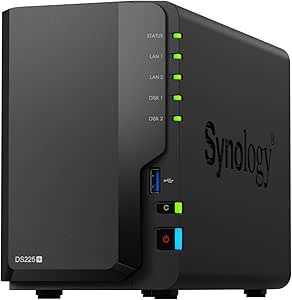 | Best Compact Synology for Home Surveillance | Drive bays: 2 | Maximum stated capacity: Up to 40TB | Surveillance support: Up to 30 IP cameras | VIEW ON AMAZON | See Our Full Breakdown |
| Synology DS425+ Private Cloud Media Server (4-Bay Diskless NAS) |  | Best Four-Bay Synology for Camera Retention | Drive bays: 4 | Maximum stated storage volume: 80TB | Surveillance support: Up to 30 IP cameras | VIEW ON AMAZON | See Our Full Breakdown |
| UGREEN DH4300 Plus 4-Bay NAS |  | Best Beginner-Friendly General-Purpose NAS | Drive bays: 4 | Maximum stated capacity: Up to 128TB | Memory: 8GB LPDDR4X | VIEW ON AMAZON | See Our Full Breakdown |
| Buffalo TeraStation WS5420DN 4-Bay Windows Server IoT 2025 Desktop NAS 32TB (4x8TB) with HDD Included |  | Best for Windows-Based Surveillance Storage | Drive bays: 4 | Included drives: 4 × 8 TB | Configured RAID: RAID 5 | VIEW ON AMAZON | See Our Full Breakdown |
| Synology DS124 1-Bay Diskless NAS |  | Best Compact Entry for One-Camera Archiving | Drive bays: 1 | Drive configuration: Diskless | Dimensions: 2.8 × 6.54 × 8.82 inches | VIEW ON AMAZON | See Our Full Breakdown |
| Synology DS223j 2-Bay DiskStation (Diskless) |  | Best Value for a Basic Two-Drive Camera Archive | Model: DS223j | Drive bays: 2 | Drive configuration: Diskless | VIEW ON AMAZON | See Our Full Breakdown |
| Synology DS223 Home & Office Backup Hub – Centralize Files, Protect Data & Monitor Property (2-Bay Diskless NAS) | 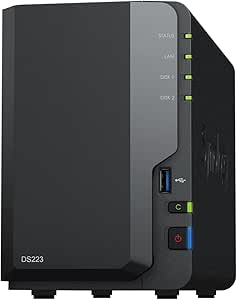 | Best for Home and Small-Office Camera Sharing | Drive bays: 2 | Drive configuration: Diskless | Dimensions: 9.15 × 4.25 × 6.5 inches | VIEW ON AMAZON | See Our Full Breakdown |
| UGREEN NAS DXP2800 2-Bay for Advanced Home Users, Remote Workers & Creators |  | Best for AI Features and Advanced Home Workloads | Drive bays: 2 | Drive configuration: Diskless | Processor: Intel N100 quad-core | VIEW ON AMAZON | See Our Full Breakdown |
| BUFFALO LinkStation 210 6TB 1-Bay NAS Network Attached Storage with Hard Drives Included |  | Best for Simple, Ready-to-Use Storage | Capacity: 6TB | Drive bays: 1 | Included drive: HDD included | VIEW ON AMAZON | See Our Full Breakdown |
| Synology DS423 Family & Business Backup – Secure File Sharing, Photo Vault & Video Surveillance (4‑Bay Diskless NAS) |  | Best for Dedicated Multi-Camera Surveillance | Model: DS423 | Drive bays: 4 | Drive configuration: Diskless | VIEW ON AMAZON | See Our Full Breakdown |
| network attached storage for surveillance | Drive bays | Warranty | Drive configuration | Dimensions |
|---|---|---|---|---|
| Synology DS725+ Expandable NAS | 2 | 3 years | — | 8.78 × 4.17 × 6.54 inches |
| TERRAMASTER F4-424 Pro NAS 4-B | 4 | 2 years | Diskless | — |
| Synology DS225+ Private Cloud | 2 | 3 years | — | 9.14 × 4.25 × 6.5 inches |
| Synology DS425+ Private Cloud | 4 | 3 years | — | 8.78 × 7.83 × 6.54 inches |
| UGREEN DH4300 Plus 4-Bay NAS | 4 | — | Diskless; HDDs and SSDs not included | — |
| Buffalo TeraStation WS5420DN 4 | 4 | 3 years; optional 5-year extension | — | — |
| Synology DS124 1-Bay Diskless | 1 | 2 years | Diskless | 2.8 × 6.54 × 8.82 inches |
| Synology DS223j 2-Bay DiskStat | 2 | 2 years | Diskless | — |
| Synology DS223 Home & Office B | 2 | 2 years | Diskless | 9.15 × 4.25 × 6.5 inches |
| UGREEN NAS DXP2800 2-Bay for A | 2 | 2 years | Diskless | — |
| BUFFALO LinkStation 210 6TB 1- | 1 | 2 years | — | — |
| Synology DS423 Family & Busine | 4 | 2 years | Diskless | 9" D x 6.6" W x 7.24" H |
More Details on Our Top Picks
Synology DS725+ Expandable NAS Storage – 2-Bay Diskless Private Cloud for Home and Small Business
The DS725+ suits buyers who want a compact surveillance NAS now and a path to greater capacity later. Its standout advantage is support for up to 30 IP cameras alongside RAID, snapshots, and backup tools, while the optional DX525 expansion raises stated capacity to 140TB. That flexibility sets it apart from the DS225+, which is also a 2-bay Synology with 30-camera support but is listed for up to 40TB and does not specify the same expansion path. The tradeoff is that the DS725+ starts with only two bays, so a larger camera archive means buying an expansion unit rather than filling more bays in the main enclosure. SSD caching and M.2 slots may help responsiveness, but the processor and memory details provided are limited, and setup may take patience for first-time NAS owners.
Pros:- Supports up to 30 IP cameras for a sizeable surveillance deployment.
- Optional DX525 expansion provides a stated maximum capacity of 140TB.
- RAID, backups, and snapshots offer several ways to protect recordings and files.
- M.2 SSD caching can improve responsiveness for supported workloads.
Cons:- Only two drive bays are built in, limiting drive capacity and layout choices without expansion.
- The supplied product details do not specify memory capacity or a more precise processor model.
- Setup and surveillance configuration may be challenging for beginners.
Best for: Small businesses or property owners planning to add camera capacity over time and wanting Synology’s surveillance and data-protection tools.
Not ideal for: Buyers who want several drive bays in one enclosure or a simple plug-and-record setup; expansion adds hardware and surveillance configuration takes effort.
- Drive bays:2
- Maximum stated capacity:Up to 140TB with optional DX525 expansion
- Surveillance support:Up to 30 IP cameras
- Supported drives:HDDs and SSDs
- Processor:Intel Celeron
- SSD caching:M.2 slots
- Dimensions:8.78 × 4.17 × 6.54 inches
- Warranty:3 years
Our verdict“Choose the DS725+ if you want a compact Synology surveillance system that can grow beyond two bays, and skip it if you need multiple drive bays in the base unit.”
TERRAMASTER F4-424 Pro NAS 4-Bay, Core i3-N305 8-Core, 32GB DDR5 (Diskless)
The F4-424 Pro is the performance-led choice here for a small business running surveillance alongside other demanding NAS tasks. Its eight-core Core i3-N305 and 32GB of DDR5 provide more specified processing and memory headroom than the Synology DS425+, whose listed appeal centers on 2.5GbE networking, storage protection, and support for up to 30 cameras. Dual 2.5GbE ports and link aggregation can help when several users or services access the system, while four bays and broad RAID choices give buyers room to balance capacity and redundancy. The main caveat for a surveillance-focused purchase is that the supplied details do not state an IP-camera limit or name a surveillance application. It also arrives diskless, its memory is not upgradeable, and its higher-performance hardware may be more audible in a quiet room.
Pros:- Eight-core Intel processor and 32GB DDR5 memory provide substantial listed compute resources.
- Four bays support more in-enclosure storage options than the two-bay DS225+ and DS725+.
- Dual 2.5GbE ports support faster network connections and link aggregation.
- RAID 0/1/5/6/10, JBOD, and single-drive modes offer varied storage layouts.
Cons:- Diskless configuration requires a separate drive purchase before it can store recordings.
- The supplied product details do not specify an IP-camera limit or surveillance software.
- Memory is listed as non-upgradeable, and the high-performance components may produce noticeable noise.
Best for: Small-business IT buyers who need a four-bay NAS for recording storage plus concurrent file, backup, or application workloads, and who can verify software compatibility for their cameras.
Not ideal for: A buyer seeking a clearly specified, ready-to-configure camera-management platform; the provided information does not state camera limits or surveillance software support.
- Drive bays:4
- Processor:Intel Core i3-N305, 8 cores and 8 threads, up to 3.8GHz
- Memory:32GB DDR5 4800MHz
- Network ports:2 × 2.5GbE
- M.2 storage:2 NVMe SSD slots
- RAID modes:RAID 0/1/5/6/10, JBOD, Single
- Drive configuration:Diskless
- Warranty:2 years
Our verdict“Pick the F4-424 Pro for a busy, multi-purpose NAS when its camera-management compatibility checks out, not when you need documented surveillance support out of the box.”
Synology DS225+ Private Cloud Media Server – 2-Bay Diskless NAS with Intel CPU for Hardware Transcoding
The DS225+ is a compact option for a home or small office that wants surveillance storage without dedicating a large enclosure to it. It supports up to 30 IP cameras, with RAID, snapshots, and backups adding protection for recordings and other files. Compared with the DS425+, it gives up two drive bays and built-in 2.5GbE, but takes up less space and has a stated capacity of up to 40TB. Its Intel CPU and hardware transcoding also make it more appealing when the NAS will handle media streaming alongside camera footage; that matters less if the system’s only job is recording. This is a diskless unit, so drives are a separate purchase, and its two-bay limit makes long retention periods harder to support as camera counts and recording quality rise. Plan for some technical setup.
Pros:- Supports up to 30 IP cameras in a compact two-bay enclosure.
- RAID, backups, and snapshots provide protection options for recordings and other data.
- Intel CPU hardware transcoding supports media streaming beyond surveillance.
- Stated storage capacity of up to 40TB suits smaller archives.
Cons:- Two bays provide less capacity and drive-layout flexibility than the four-bay DS425+.
- Diskless setup requires buyers to source and install drives.
- Technical configuration may be demanding for buyers new to NAS surveillance.
Best for: Home users and small offices with a modest camera system who also want one compact NAS for backups and media streaming.
Not ideal for: Businesses needing longer footage retention, more drive-layout flexibility, or faster built-in networking; the DS425+ offers four bays and 2.5GbE.
- Drive bays:2
- Maximum stated capacity:Up to 40TB
- Surveillance support:Up to 30 IP cameras
- Processor:Intel CPU
- Transfer speed:Up to 282MB/s
- Mounting:Tabletop
- Dimensions:9.14 × 4.25 × 6.5 inches
- Warranty:3 years
Our verdict“Choose the DS225+ for compact home surveillance with media and backup duties, but favor the DS425+ if footage retention and expansion matter more.”
Synology DS425+ Private Cloud Media Server (4-Bay Diskless NAS)
For surveillance buyers who want more room for recording drives in the main unit, the DS425+ is the most balanced Synology option in this group. Its four bays give more capacity and RAID-layout flexibility than the two-bay DS225+, while built-in 2.5GbE helps move footage and backups across a faster wired network. Synology lists support for up to 30 IP cameras, plus RAID, snapshots, and automated backups, making the surveillance fit clearer than the TERRAMASTER F4-424 Pro’s supplied specifications, which do not state a camera limit. The compromise is that this remains a diskless NAS, so the drive cost and setup are on the buyer. Four bays also set a ceiling if a deployment grows beyond what the enclosure can hold, and it may be more NAS than a small household needs.
Pros:- Four bays offer more in-enclosure capacity and RAID flexibility than the DS225+.
- Supports up to 30 IP cameras for a substantial surveillance setup.
- Built-in 2.5GbE supports faster wired transfers than standard gigabit networking.
- RAID, snapshots, and automated backups help protect footage and shared files.
Cons:- Diskless configuration requires compatible drives to be purchased separately.
- Four bays may be excessive for a small camera system with limited retention needs.
- The four-bay enclosure limits future growth compared with a system designed for external expansion.
Best for: Small businesses and serious home users who want documented support for up to 30 cameras, four internal drive bays, and Synology backup tools.
Not ideal for: Light home users with only a few cameras or anyone who needs an included-drive system; the diskless four-bay unit adds setup and drive planning.
- Drive bays:4
- Maximum stated storage volume:80TB
- Surveillance support:Up to 30 IP cameras
- Networking:Built-in 2.5GbE
- Transfer speed:Up to 278MB/s
- Mounting:Tabletop
- Dimensions:8.78 × 7.83 × 6.54 inches
- Warranty:3 years
Our verdict“Choose the DS425+ if you want a four-bay Synology with stated 30-camera support and faster networking; choose the DS225+ for a smaller, simpler footprint.”
UGREEN DH4300 Plus 4-Bay NAS
The DH4300 Plus puts ease of setup and general home use ahead of documented camera-management depth. Its NFC-assisted setup and beginner-friendly app may reduce the initial configuration burden compared with the DS225+, which offers named support for up to 30 IP cameras but may require more technical setup. Four bays and a stated capacity of up to 128TB give the UGREEN room for a substantial local archive, and 2.5GbE plus a stated read speed of 312MB/s can help with transfers on a suitable wired network. Still, the product information does not specify an IP-camera limit or surveillance software, so I would verify compatibility before choosing it as a dedicated recorder. It is diskless, needs Ethernet rather than Wi-Fi, and virtual machines are unsupported.
Pros:- NFC setup and a beginner-friendly app make initial configuration more approachable.
- Four bays and up to 128TB of stated capacity support a sizable local archive.
- 2.5GbE and a stated read speed of 312MB/s support faster wired transfers.
- AI photo backup, Docker support, and HDMI output add uses beyond surveillance.
Cons:- The supplied product details do not state an IP-camera limit or surveillance application.
- Diskless configuration requires separate drive purchases and installation.
- No built-in Wi-Fi; virtual machines are unsupported.
Best for: Home users or remote workers who want an approachable four-bay NAS for local storage and backups, with surveillance as a secondary use after checking camera compatibility.
Not ideal for: Buyers selecting a NAS primarily as a dedicated camera recorder who need a stated camera limit or named surveillance platform; those details are not provided.
- Drive bays:4
- Maximum stated capacity:Up to 128TB
- Memory:8GB LPDDR4X
- Networking:2.5GbE Ethernet
- Read speed:Up to 312MB/s
- Drive interface:Serial ATA
- Video output:HDMI
- Drive configuration:Diskless; HDDs and SSDs not included
Our verdict“Choose the DH4300 Plus for an easy-to-configure general NAS that may also store camera footage, but prefer a model with explicit camera support for surveillance-first use.”
Buffalo TeraStation WS5420DN 4-Bay Windows Server IoT 2025 Desktop NAS 32TB (4x8TB) with HDD Included
For a small business already managing its network with Windows tools, the Buffalo TeraStation WS5420DN is the most turnkey surveillance-storage pick here: four pre-tested 8 TB drives arrive configured in RAID 5, leaving 24 TB usable before formatting and system overhead. That ready-to-use capacity suits multi-camera recording better than the diskless Synology DS223j, which needs drives bought and installed separately. Native Windows Server IoT 2025 and Azure and OneDrive integration also fit organizations that want familiar administration and a hybrid backup path. The tradeoff is less flexibility than a diskless NAS for choosing drives, and RAID 5 is not a backup. At 18 pounds, it is better placed in a fixed office location; buyers with multiple Windows users may also need to account for separate CALs.
Pros:- Includes four pre-tested 8 TB drives configured in RAID 5, providing 24 TB usable capacity.
- Runs Windows Server IoT 2025 for familiar administration in Windows-centered environments.
- Azure and OneDrive integration supports a hybrid approach to storing important footage and files.
- Includes a 3-year warranty, 24/7 North American support, and an optional 5-year extension.
Cons:- No Client Access Licenses are included, which may add requirements for multi-user deployments.
- RAID 5 provides drive-failure tolerance but does not replace a separate backup of surveillance footage.
- The 18-pound desktop unit is less suited to cramped spaces or frequent relocation.
Best for: Small businesses that want a ready-to-configure, high-capacity NAS for camera footage and already use Windows Server or Microsoft cloud services.
Not ideal for: Home users seeking a low-complexity, compact setup or organizations needing included Client Access Licenses for multiple users.
- Drive bays:4
- Included drives:4 × 8 TB
- Configured RAID:RAID 5
- Usable capacity:24 TB
- Operating system:Windows Server IoT 2025
- Drive interface:Serial ATA-600
- Form factor:Desktop, 3.5-inch drives
- Warranty:3 years; optional 5-year extension
Our verdict“Choose the WS5420DN if you want included drives, substantial RAID 5 capacity, and Windows-based management for a small-business surveillance setup.”
Synology DS124 1-Bay Diskless NAS
The Synology DS124 is the smallest, simplest way in this group to explore NAS-based home surveillance, especially if the goal is a modest archive rather than a multi-camera recorder. Its single drive bay keeps the enclosure compact, and Synology’s surveillance features include AI-powered capabilities. Unlike the two-bay DS223j and DS223, though, it offers no second bay for a mirrored drive, so a disk failure can interrupt recording and put locally stored footage at risk. It is also diskless, meaning the drive is a separate purchase. I’d treat it as a fit for a light-duty camera setup with an independent backup plan, not as the foundation for a growing system or footage that must remain available through a drive failure.
Pros:- Compact one-bay enclosure suits a shelf or small home office.
- Synology software offers AI-powered home surveillance features.
- Supports automatic backup from iOS, Android, Mac, and Windows devices.
- Private file access can reduce reliance on recurring cloud storage subscriptions.
Cons:- Diskless configuration requires a separate compatible drive purchase.
- One drive bay provides no internal drive redundancy.
- Limited bay count constrains capacity and makes expansion less flexible than the DS223j or DS223.
Best for: Home users setting up a single-camera or otherwise light-duty surveillance archive who value a compact enclosure and Synology’s software.
Not ideal for: Households recording from several cameras or buyers who need drive redundancy, higher capacity, or uninterrupted recording after a drive failure.
- Drive bays:1
- Drive configuration:Diskless
- Dimensions:2.8 × 6.54 × 8.82 inches
- Weight:1,247 g
- Enclosure material:Alloy steel
- Color:Black
- Warranty:2 years
Our verdict“Pick the DS124 for compact, light-duty home monitoring when you can accept a single drive and maintain a separate backup.”
Synology DS223j 2-Bay DiskStation (Diskless)
The Synology DS223j makes a practical step up from the one-bay DS124 for buyers who want two drive bays and IP-camera support without moving to a more performance-focused NAS. A second drive gives more room to configure storage than the DS124 and can support a mirrored setup, though mirroring reduces usable capacity and is not a substitute for backing up footage elsewhere. The DS223j’s appeal is its straightforward mix of private-cloud access, automated backups, and home surveillance support. Compared with the more capable Synology DS223, it is better framed as a basic monitoring and file-storage hub than a collaboration-centered home-office system. This model is diskless, and setup may take some technical patience if NAS and camera configuration are new to you.
Pros:- Two bays offer more storage and configuration options than the single-bay DS124.
- Supports IP cameras for home monitoring.
- Automated backups can use cloud and external-drive destinations.
- Remote private-cloud access supports file sharing across devices.
Cons:- Diskless package requires separate compatible drives.
- Initial NAS and camera setup may challenge users new to network storage.
- A two-bay design limits capacity and expansion compared with four-bay models.
Best for: Budget-conscious home users who want a two-bay Synology for a few IP cameras, routine backups, and shared household files.
Not ideal for: Buyers who want included drives, a no-configuration plug-and-play recorder, or advanced workloads beyond basic home storage and monitoring.
- Model:DS223j
- Drive bays:2
- Drive configuration:Diskless
- Surveillance support:IP cameras
- Backup destinations:Cloud and external drives
- Warranty:2 years
Our verdict“Choose the DS223j if you want a basic two-bay Synology camera archive and are comfortable selecting drives and configuring the system.”
Synology DS223 Home & Office Backup Hub – Centralize Files, Protect Data & Monitor Property (2-Bay Diskless NAS)
The Synology DS223 is a stronger fit than the DS223j when camera monitoring sits alongside shared work files, device backups, and collaboration. Its motion alerts and remote viewing make it useful for checking a property away from home, while version control and centralized storage bring extra value to a household or small office with several users. Both it and the DS223j have two bays and arrive diskless; the DS223 earns its distinct role through its broader backup and collaboration focus, not through greater bay count. That also means it may be more NAS than a buyer needs for a simple camera archive. The two-bay limit still caps expansion, and mirrored drives protect against some drive failures but cannot replace an off-device copy of important recordings.
Pros:- Supports DIY IP-camera monitoring with motion alerts and remote viewing.
- Combines surveillance with centralized files and collaboration features.
- Automated backups can include computers, mobile devices, cloud, and external drives.
- Metal enclosure and tabletop format suit a fixed home or office setup.
Cons:- Diskless design requires buyers to source and install drives.
- Two bays restrict storage growth compared with four-bay NAS options.
- Broader collaboration features may be unnecessary for a camera-only setup.
Best for: Households and small offices that want to combine remote IP-camera monitoring with shared files, versioned work documents, and automated device backups.
Not ideal for: Buyers seeking a dedicated, high-capacity multi-camera recorder or those who want a ready-to-run package with drives included.
- Drive bays:2
- Drive configuration:Diskless
- Dimensions:9.15 × 4.25 × 6.5 inches
- Weight:1,280 g
- Enclosure material:Metal
- Mounting type:Tabletop
- Surveillance features:Motion alerts and remote viewing
- Warranty:2 years
Our verdict“Pick the DS223 if you want one two-bay NAS for remote camera checks, shared files, and backups across a home or small office.”
UGREEN NAS DXP2800 2-Bay for Advanced Home Users, Remote Workers & Creators
The UGREEN NAS DXP2800 stands apart from the Synology DS223 and DS223j by pairing home surveillance with more substantial hardware and app-focused workloads. Its Intel N100 quad-core processor and 8 GB DDR5 RAM are suited to buyers who also plan to run media services, containers, or virtual machines, while face, people, and pet detection can help sort alerts beyond basic motion triggers. Dual M.2 NVMe slots and a stated capacity of up to 80 TB add headroom, though the two-bay layout still sets a physical limit on hard-drive expansion. It arrives diskless, so the system requires separate drive purchases. For a straightforward camera archive, the Synology two-bay options are simpler alternatives; the DXP2800 makes more sense when surveillance is one of several demanding jobs.
Pros:- Intel N100 quad-core CPU and 8 GB DDR5 RAM suit more demanding NAS workloads.
- AI surveillance features include face, people, and pet detection.
- Dual M.2 NVMe slots add options for fast storage or caching.
- Supports up to 80 TB of stated capacity and includes 2.5 GbE connectivity.
Cons:- Diskless configuration requires separate compatible drives.
- Advanced processing and app features may be unnecessary for basic camera recording.
- Two hard-drive bays limit conventional drive expansion.
Best for: Advanced home users and creators who want AI-assisted camera alerts alongside media services, containers, or virtual machines.
Not ideal for: Casual buyers who need only basic camera recording, prefer an included-drive system, or do not plan to use its advanced hardware and apps.
- Drive bays:2
- Drive configuration:Diskless
- Processor:Intel N100 quad-core
- Memory:8 GB DDR5
- M.2 slots:2 × NVMe
- Maximum stated capacity:Up to 80 TB
- Network connectivity:2.5 GbE Ethernet
- Warranty:2 years
Our verdict“Choose the DXP2800 if you want AI-assisted surveillance in a capable home server, rather than a NAS dedicated only to recording cameras.”
BUFFALO LinkStation 210 6TB 1-Bay NAS Network Attached Storage with Hard Drives Included
The LinkStation 210 suits a buyer who wants a basic network destination for camera footage without sourcing drives separately. Its included 6TB HDD makes initial setup more direct than the diskless Synology DS423, though that model offers dedicated surveillance support for up to 30 IP cameras and room for four drives. The Buffalo’s single bay keeps the setup straightforward, but it leaves no internal path to add capacity or create a multi-drive array. Ethernet connectivity supports storage access across a local network, while automated backups and secure file sharing also help with general household files. I’d choose this for a modest camera setup where simplicity matters more than expansion; buyers planning a growing surveillance system should look instead at the DS423 or another multi-bay NAS.
Pros:- Includes a 6TB hard drive, so buyers can start without sourcing a separate drive.
- Single-bay design keeps the storage setup simple for a small home system.
- Supports secure file sharing and automated backups alongside surveillance footage storage.
- Works with Windows and macOS.
Cons:- One drive bay limits capacity expansion and does not provide a second internal drive for redundancy.
- The product details do not specify dedicated IP-camera management or a supported camera count, unlike the Synology DS423.
- Some features require specific macOS versions.
Best for: Home users with a modest surveillance setup who want an included drive and straightforward network storage for camera clips and household backups.
Not ideal for: People planning a multi-camera installation with growing retention needs, or buyers who want multiple drive bays for expansion and storage redundancy.
- Capacity:6TB
- Drive bays:1
- Included drive:HDD included
- Connectivity:Ethernet
- Backup features:Automated backups
- File sharing:Secure file sharing
- Compatibility:Windows and macOS
- Warranty:2 years
Our verdict“Choose the LinkStation 210 for basic, ready-to-use network storage with an included 6TB drive, but skip it if your camera system needs room to grow.”
Synology DS423 Family & Business Backup – Secure File Sharing, Photo Vault & Video Surveillance (4‑Bay Diskless NAS)
The DS423 is the stronger fit when surveillance is a central job rather than an occasional use: its built-in video surveillance support accommodates up to 30 IP cameras, with camera licenses sold separately. Four bays give a growing system more room to add storage than the one-bay Buffalo LinkStation 210, while Synology’s DSM provides management tools alongside file sharing, photo storage, and backups. Immutable snapshots add a recovery option if files are affected by ransomware, a useful safeguard for footage and business records. The tradeoff is a diskless start: you must buy drives separately, and the camera license adds another requirement. Its four-bay limit can also constrain larger deployments. I’d favor this over the Buffalo for a multi-camera installation, but not for someone seeking the simplest ready-to-run package.
Pros:- Supports video surveillance for up to 30 IP cameras.
- Four drive bays offer more storage capacity and expansion room than the single-bay LinkStation 210.
- Immutable snapshots and multi-destination backup features add recovery options for important footage and files.
- DSM combines surveillance, secure file sharing, and photo storage in one management environment.
Cons:- Diskless design requires a separate hard-drive purchase before storage is available.
- Surveillance camera licenses are sold separately.
- Four bays may limit capacity for larger camera deployments.
Best for: Home and small-business owners building a multi-camera IP surveillance system who also want shared files, photo storage, and ransomware-resistant backups.
Not ideal for: Buyers who want an included hard drive or a low-effort, license-free camera setup, and larger deployments that may outgrow four drive bays.
- Model:DS423
- Drive bays:4
- Drive configuration:Diskless
- Surveillance support:Up to 30 IP cameras; camera license sold separately
- Operating software:Synology DSM
- Backup feature:Immutable snapshots and multi-destination support
- Dimensions:9″ D x 6.6″ W x 7.24″ H
- Weight:2210 g
- Warranty:2 years
Our verdict“Choose the DS423 for an expandable, feature-rich multi-camera setup if you are prepared to buy drives and camera licenses separately.”

How We Picked
I ranked these NAS devices by how well their hardware and configuration suit continuous camera recording, not by general-purpose storage appeal. I weighed bay count and expansion options, processor and memory headroom, whether drives are included, and the likely ease of configuring retention and remote access. For surveillance buyers, supported camera software, camera licensing, and compatibility matter just as much as headline specifications, so I treat those as checks buyers should complete for their own camera system rather than assume support from a product name.
The order favors models that give a broad range of home and small-business users a practical balance of capacity, room to grow, and manageable setup. Four-bay units generally rank ahead of comparable two-bay options for multi-camera retention, while capable two-bay models remain sensible for smaller deployments. Compact entry-level devices and preloaded one-bay systems rank lower for surveillance because limited bays can constrain future capacity or storage resilience; the Buffalo Windows Server model serves a more specialized buyer rather than a typical home setup.
| network attached storage for surveillance | Drive configuration |
|---|---|
| Synology DS725+ Expandable NAS | — |
| TERRAMASTER F4-424 Pro NAS 4-B | Diskless |
| Synology DS225+ Private Cloud | — |
| Synology DS425+ Private Cloud | — |
| UGREEN DH4300 Plus 4-Bay NAS | Diskless; HDDs and SSDs not included |
| Buffalo TeraStation WS5420DN 4 | — |
| Synology DS124 1-Bay Diskless | Diskless |
| Synology DS223j 2-Bay DiskStat | Diskless |
| Synology DS223 Home & Office B | Diskless |
| UGREEN NAS DXP2800 2-Bay for A | Diskless |
| BUFFALO LinkStation 210 6TB 1- | — |
| Synology DS423 Family & Busine | Diskless |
Factors to Consider When Choosing Network Attached Storage For Surveillance
Choosing a surveillance NAS starts with the camera workload and the footage you need to keep, not the number of features on the product page. I’d work through these decisions before buying drives or settling on a bay count.
Estimate recording capacity from cameras and retention
Work out how many cameras will record, their resolution and frame rate, and whether they record continuously or only when motion is detected. Continuous recording from several high-resolution cameras can fill disks much faster than event-based recording, so a vague estimate often leads to an undersized system. Calculate the retention period you need and add room for growth rather than buying to the bare minimum. Keep in mind that usable capacity can be lower than the sum of the drive labels when a RAID or other redundancy arrangement is used. A four-bay NAS can give you more flexibility than a two-bay unit, but it cannot compensate for an unrealistic retention target.
Check camera and surveillance software compatibility first
Confirm that the NAS’s surveillance application supports your camera models and the features you rely on, such as motion events, audio, or high-resolution streams. Check the software’s camera limit and licensing rules before committing, since some systems include only a limited number of camera licenses. ONVIF support can help with interoperability, but it does not guarantee that every camera feature will work as expected. Also confirm which NAS models and operating-system versions the recording software supports. A NAS with impressive CPU and memory specifications is a poor fit if its surveillance tools do not work with your cameras.
Choose bays and redundancy around the cost of lost footage
More bays can support larger pools and offer more ways to allocate capacity and redundancy, while two-bay units can be easier to manage for a small camera system. A one-bay NAS has no second internal drive for mirrored protection, so drive failure may interrupt recording and put locally stored footage at risk. Redundancy can help maintain access after a drive failure, but it is not a backup: accidental deletion, theft, or a failure affecting the whole NAS can still remove recordings. Decide how much downtime or lost footage your property can tolerate, then weigh redundancy against usable storage capacity. Buyers who need both longer retention and room to grow should avoid choosing a bay count based only on their initial camera count.
Match processing headroom to the recording workload
Recording multiple streams, handling motion analysis, serving remote users, and running other NAS applications all draw on system resources. A modest setup with a few supported cameras may not need a high-end processor, while a larger deployment or a NAS doing several jobs can benefit from more CPU and memory headroom. Hardware transcoding is mainly useful for converting media for playback; it is not a substitute for checking surveillance recording performance. Avoid paying for specifications that do not address your actual camera software or recording load. Leave headroom if you expect to add cameras or run other services later.
Account for network reliability and remote access
Camera footage depends on a stable connection between each camera and the NAS, so check that your network can carry all streams at once. Wired Ethernet is generally a better foundation for fixed cameras than relying on a congested wireless link. A faster NAS port does not repair weak cabling, an overloaded switch, or poor camera coverage; examine the entire path from camera to storage. For remote viewing, use the NAS vendor’s supported secure access methods and keep system software updated. Do not expose the recorder directly to the public internet just to make footage easier to reach.
Budget for drives, monitoring, and maintenance
Diskless NAS models require compatible drives, so include those in the system plan and check the manufacturer’s drive guidance. Preloaded systems can reduce setup steps, but confirm whether their installed capacity and drive arrangement fit your retention and redundancy needs. Surveillance writes are continuous, making drive health monitoring and prompt replacement more relevant than they are for occasional file storage. Plan for alerts, software updates, and a separate backup or export process for footage that must be retained as evidence. A system that is easy to keep updated and monitored can be a better long-term fit than one with more raw performance but a maintenance routine you are unlikely to follow.
Frequently Asked Questions
Can I use any NAS on this list with my existing IP cameras?
Not automatically. Compatibility depends on the NAS surveillance application, the camera model, and which camera features you need. Check the vendor’s current compatibility list and confirm the camera licensing limit before purchasing. ONVIF support may help cameras and software communicate, but it does not promise access to every advanced feature. If your cameras are already installed, use their exact model numbers when checking support rather than relying on a brand name alone.
Is a two-bay NAS enough for a small home camera system?
It can be enough if you have a modest number of cameras and a retention target that fits the usable capacity. A two-bay unit can also support a mirrored drive arrangement, though that reduces the space available for recordings. If you expect to add cameras or keep footage for longer, four bays offer more room to adjust storage and redundancy. Estimate capacity using your actual camera settings and recording schedule before choosing. The camera count alone does not determine whether two bays will be sufficient.
Does RAID protect surveillance footage from every kind of data loss?
No. RAID or drive redundancy can help keep a NAS available when a drive fails, depending on the selected arrangement, but it does not protect against deletion, theft, fire, malware, or failure of the NAS itself. Important footage should be copied or exported to a separate destination, especially when it may be needed for an investigation or insurance claim. Check how long the NAS keeps recordings and whether clips can be exported promptly. Treat redundancy as a way to reduce some interruptions, not as a complete backup plan.
Should I buy a NAS with drives included or a diskless model?
A system with drives included can simplify initial setup and makes the supplied capacity clear, but buyers should check how those drives are arranged and whether the capacity suits their retention target. Diskless models give you more choice over drive capacity and configuration, but you must budget for compatible drives and install them. For continuous camera recording, drive suitability and health monitoring matter whichever route you choose. A preloaded one-bay unit may be convenient, yet its limited bay count can constrain redundancy and future growth. Choose based on total system fit rather than setup convenience alone.
When is it worth paying for a four-bay surveillance NAS instead of a two-bay model?
A four-bay model is worth considering when you need longer footage retention, plan to add cameras, or want more flexibility in how storage and redundancy are arranged. It can also suit a NAS that will handle surveillance alongside other storage tasks. The tradeoff is a larger system and the need to buy more drives if you want to use all bays. A two-bay NAS remains a reasonable choice for a small deployment with a well-defined retention target. Compare projected usable capacity and expansion needs rather than choosing by bay count alone.
Conclusion
Best overall: I’d choose the Synology DS423 for a home or small-business system that needs four bays and a practical growth path. Best value: the Synology DS223 is a sensible starting point for a modest two-bay setup, while buyers seeking a lower-complexity entry point can look at the DS223j or DS124, accepting their tighter capacity and workload limits. Best premium: the TERRAMASTER F4-424 Pro is the performance-led choice for buyers who need more processing and memory, provided its surveillance software fits their cameras. Best for beginners: the Buffalo TeraStation WS5420DN comes with drives and a Windows Server IoT setup, which may appeal to buyers who want a more configured system, though it is a specialized choice. Best for specific needs: consider the Synology DS725+ if you want an expandable two-bay option, the Synology DS425+ for a four-bay Synology setup, or the UGREEN DH4300 Plus if its feature set and camera support match your planned system. Before settling on any pick, confirm camera compatibility, licensing, usable capacity, and retention requirements.