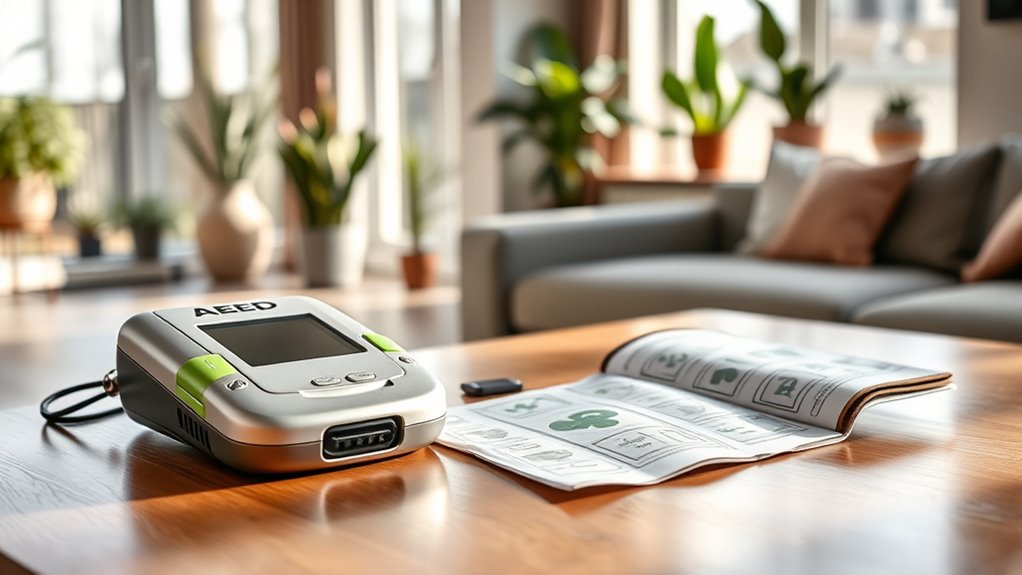
For home cardiac emergency preparedness, I’d put the Philips HeartStart Home AED first for its home-focused design, while the Zoll AED Plus stands out for CPR feedback and the Philips OnSite packages offer practical choices for different storage and accessory needs. The main tradeoff is between straightforward home use, added guidance or feedback, and package contents such as a carry case or spare supplies. An AED can support emergency response, but it does not replace calling emergency services, CPR training, or following the device’s voice prompts. Read on for how the eight options differ and which one best fits your household’s plan.

Get privacy and security gear delivered free with Prime
- Fast, free delivery on millions of items
- Prime Video, Amazon Music and more included
- Member-only deals all year
Key Takeaways
- The Philips HeartStart Home AED is the clearest home-specific pick. Its intended setting gives it an edge for households seeking a device selected for home preparedness rather than a general-use package.
- The Zoll AED Plus differentiates itself through CPR feedback. That feature may appeal to households that prioritize coaching during compressions, though it is a different kind of choice from the Philips OnSite models.
- Most products here are variations on the Philips HeartStart OnSite. The Ready-Pack, slim-case, standard-case, value, and business packages primarily call for close comparison of included accessories and intended setup.
- Package labels do not tell the whole story. Buyers should verify the exact contents, compatible pads and battery, and readiness dates before choosing between the OnSite bundles.
- Fit and upkeep matter as much as the device name. A case that suits the planned storage spot and a clear schedule for checking consumables can make a home AED more practical to keep ready.
| Philips HeartStart AED Defibrillator Value Package |  | Best for Home Readiness Checks | Model: M5066A-R01VPB | Weight: 6.1 pounds | Dimensions: 20 x 15 x 10 inches | VIEW ON AMAZON | See Our Full Breakdown |
| Philips HeartStart OnSite AED Defibrillator, Ready-Pack M5066A-R01 |  | Best for Public-Space Supply Readiness | Model: M5066A-R01 | Weight: 6.1 pounds | Battery: 1 CR123A battery included | VIEW ON AMAZON | See Our Full Breakdown |
| Zoll AED Plus |  | Best for CPR Feedback | Electrode type: CPR-D-padz | Electrode shelf life: 5 years | Battery life: 5 years | VIEW ON AMAZON | See Our Full Breakdown |
| Philips HeartStart Home AED Defibrillator (M5068A-C02) |  | Best Overall for Home Preparedness | Model: M5068A-C02 | Battery: Pre-installed rechargeable battery | Battery warranty: 4 years | VIEW ON AMAZON | See Our Full Breakdown |
| Philips HeartStart OnSite AED Defibrillator with Slim Carry Case (Model M5066A-CO2) | 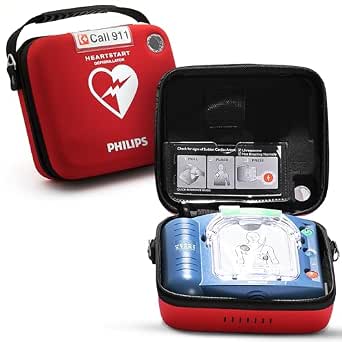 | Best Compact Carry-Case Option | Model: M5066A-CO2 | Weight: 5.4 pounds | Package dimensions: 12.44 x 11.02 x 7.52 inches | VIEW ON AMAZON | See Our Full Breakdown |
| Philips HeartStart OnSite AED Defibrillator Value Package | 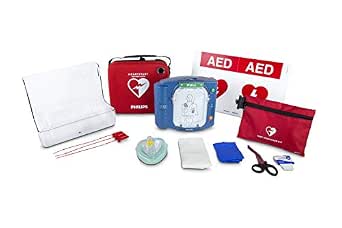 | Best for Organized Shared Spaces | Model: M5066A-C02VPB | Weight: 8.9 pounds | Dimensions: 20.75 x 15 x 10 inches | VIEW ON AMAZON | See Our Full Breakdown |
| Philips HeartStart OnSite AED Defibrillator with Standard Carry Case (M5066A-C01) | 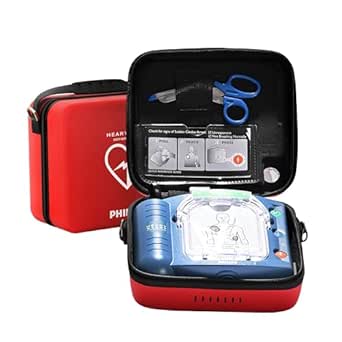 | Best Compact Carry-Case Pick | Model: M5066A-C01 | Package dimensions: 10.5 x 9.5 x 5.75 inches | Weight: 5.6 pounds | VIEW ON AMAZON | See Our Full Breakdown |
| Philips HeartStart OnSite AED Defibrillator – Business Package (M5066A-C02BPB) |  | Best for a Fixed Home AED Station | Model: M5066A-C02BPB (M5066A-RO1) | Dimensions: 20.75 x 15.62 x 21.5 inches | Weight: 21 pounds | VIEW ON AMAZON | See Our Full Breakdown |
| home aed for cardiac emergency preparedness | Model | Battery | Weight | AED warranty |
|---|---|---|---|---|
| Philips HeartStart AED Defibri | M5066A-R01VPB | 1 CR123A battery included | 6.1 pounds | 8 years |
| Philips HeartStart OnSite AED | M5066A-R01 | 1 CR123A battery included | 6.1 pounds | 8 years |
| Zoll AED Plus | — | — | — | — |
| Philips HeartStart Home AED De | M5068A-C02 | Pre-installed rechargeable battery | — | 8 years |
| Philips HeartStart OnSite AED | M5066A-CO2 | 1 CR123A battery included | 5.4 pounds | — |
| Philips HeartStart OnSite AED | M5066A-C02VPB | 1 CR123A, included | 8.9 pounds | 8 years |
| Philips HeartStart OnSite AED | M5066A-C01 | 1 CR123A, included | 5.6 pounds | 8 years |
| Philips HeartStart OnSite AED | M5066A-C02BPB (M5066A-RO1) | 1 CR123A, included | 21 pounds | 8 years |
More Details on Our Top Picks
Philips HeartStart AED Defibrillator Value Package
The HeartStart AED Defibrillator Value Package suits households that want an approachable device with prompts for a rescuer who may have no AED experience. Its step-by-step voice guidance and CPR instructions can help direct action under pressure, while readiness self-tests give owners a way to monitor the unit between emergencies. At 6.1 pounds, it can be moved or stored with its carry case, though its listed dimensions make it less compact than the slim-case Philips HeartStart Home AED. This package is aimed at home and private-residence use, rather than the broader public-setting use described for the HeartStart OnSite. The tradeoff is that full functionality requires separately purchased training pads, and the battery and pads have expiration dates that call for ongoing replacement planning.
Pros:- Voice prompts and CPR guidance support rescuers without prior AED experience.
- Self-tests help owners monitor device readiness.
- Carry case and 6.1-pound weight make it movable around a residence.
- Can be converted into a trainer with optional training pads.
Cons:- Training pads for trainer conversion are sold separately.
- Pads and battery have expiration dates that require replacement planning.
- Listed dimensions are less suited to buyers prioritizing a slim storage footprint.
Best for: Households seeking a guided AED for a private residence and willing to track pad and battery replacement dates.
Not ideal for: Buyers who want training pads included or a unit specifically described for public settings; this package requires separate training pads and is positioned for home use.
- Model:M5066A-R01VPB
- Weight:6.1 pounds
- Dimensions:20 x 15 x 10 inches
- Battery:1 CR123A battery included
- AED warranty:8 years
- Battery warranty:4 years
- Guidance:Step-by-step voice prompts and CPR guidance
- Training conversion:Optional training pads required
Our verdict“Choose this package for a guided home AED with readiness self-tests, but not if you need training pads included or a more compact case.”
Philips HeartStart OnSite AED Defibrillator, Ready-Pack M5066A-R01
The HeartStart OnSite Ready-Pack is the stronger fit for buyers equipping a shared space and wanting spare supplies packaged with the AED. It includes pre-installed pads and a spare cartridge, a practical distinction from the Philips HeartStart AED Defibrillator Value Package, which requires separate training pads for trainer conversion. Step-by-step prompts and CPR guidance are designed to help a responder act without prior AED experience, while daily, weekly, and monthly self-tests provide recurring checks of readiness. At 6.1 pounds, it remains portable in its carry case, but the product is described for public environments, not home use. That makes it a less direct match for a household buyer than the Philips HeartStart Home AED, which is specifically presented for home use and includes training pads. The supplied spare cartridge is useful, but battery replacement details are not specified.
Pros:- Pre-installed pads and a spare cartridge provide additional supplies with the device.
- Voice prompts and CPR guidance can assist responders without AED training.
- Daily, weekly, and monthly self-tests support ongoing readiness checks.
- Carry case and 6.1-pound weight make it portable between locations.
Cons:- Product information describes it for public environments rather than home use.
- Training pads for trainer conversion must be purchased separately.
- Battery life and replacement details are not specified.
Best for: Organizations outfitting a shared public space that want pre-installed pads, a spare cartridge, and recurring self-tests.
Not ideal for: Households seeking a home-designated AED or buyers who need clearly stated battery replacement details; this model is positioned for public environments.
- Model:M5066A-R01
- Weight:6.1 pounds
- Battery:1 CR123A battery included
- AED warranty:8 years
- Battery warranty:4 years
- Self-test schedule:Daily, weekly, and monthly
- Included supplies:Pre-installed pads and spare cartridge
- Training conversion:Optional training pads cartridge required
Our verdict“Pick this Ready-Pack for a public shared space that needs spare pads and regular self-tests, rather than for a household seeking a home-designated unit.”
Zoll AED Plus
The Zoll AED Plus stands out for buyers who place particular value on feedback during CPR, rather than choosing a Philips model chiefly for its simple voice-led operation. Its real-time CPR feedback combines audio and visual prompts, giving a responder additional guidance while compressions are underway. The rugged, water-resistant design also suits varied environments better than a home-focused option such as the Philips HeartStart Home AED. Readiness upkeep may be less frequent: the supplied CPR-D-padz electrodes and batteries each have a stated five-year life, alongside automatic self-testing. The tradeoffs are meaningful for a household: this model is described as best used by BLS-trained responders, is bulkier, and carries a higher cost than basic models. Buyers who want a straightforward, untrained-user-focused home device may find the Philips guidance more directly aligned with their needs.
Pros:- Real-time CPR feedback adds guidance during chest compressions.
- Audio and visual prompts provide more than one cue format.
- Five-year stated life for electrodes and batteries reduces replacement frequency compared with shorter-life supplies.
- Rugged, water-resistant design and pediatric capability broaden its use.
Cons:- BLS training is recommended for optimal use.
- Bulkier design is less convenient to store or move than the slim-carry Philips models.
- Described as relatively costly compared with basic models.
Best for: Homes with a BLS-trained responder that want CPR feedback, pediatric capability, and a rugged device.
Not ideal for: Households without a BLS-trained responder or those prioritizing a compact unit and straightforward guidance for untrained users.
- Electrode type:CPR-D-padz
- Electrode shelf life:5 years
- Battery life:5 years
- Pediatric capability:Yes
- Automatic shock delivery:Yes
- Self-testing:Automatic self-testing
- CPR guidance:Real-time feedback
- Design:Rugged and water-resistant
Our verdict“Choose the Zoll AED Plus when a BLS-trained household responder values CPR feedback and ruggedness more than compact storage or beginner-focused simplicity.”
Philips HeartStart Home AED Defibrillator (M5068A-C02)
The Philips HeartStart Home AED is the most directly matched option here for a household preparing for a cardiac emergency. Its pre-installed adult SMART pads, step-by-step voice prompts, and CPR guidance make the package ready for a home user to learn and store, rather than requiring the separate training pads needed for the Philips HeartStart AED Defibrillator Value Package. It also includes a training pad set, so a household can practice the device’s prompts without buying that component separately. Philips states that the unit can deliver a shock within eight seconds, and automatic daily, weekly, and monthly self-tests help owners keep tabs on readiness. Compared with the Zoll AED Plus, this model is more explicitly aimed at untrained home users, though the Zoll offers CPR feedback and a five-year stated life for its electrodes and batteries.
Pros:- Pre-installed adult SMART pads make the unit ready for use without installing the initial cartridge.
- Voice prompts and CPR instructions are aimed at users without AED experience.
- Training pad set is included for practice.
- Daily, weekly, and monthly self-tests support readiness monitoring.
Cons:- Additional training pads and accessories may still need to be purchased.
- Battery and pad replacement dates require ongoing attention.
- The listed dimensions are described only as a slim carry case, limiting precise storage planning.
Best for: Households that want a home-designated AED with adult pads installed, guided instructions, and training pads included.
Not ideal for: Buyers who need a clearly specified full-size dimension or want a rugged, water-resistant unit with a stated five-year electrode and battery life.
- Model:M5068A-C02
- Battery:Pre-installed rechargeable battery
- Battery warranty:4 years
- AED warranty:8 years
- Pads included:Pre-installed adult SMART Pads Cartridge and training pads set
- Self-test schedule:Daily, weekly, and monthly
- Stated shock delivery:Within 8 seconds
- Case:Slim portable carry case
Our verdict“For a household wanting a ready-to-store AED with installed adult pads and included training pads, this is the most home-focused choice in the group.”
Philips HeartStart OnSite AED Defibrillator with Slim Carry Case (Model M5066A-CO2)
The HeartStart OnSite with Slim Carry Case is the portability pick for buyers who need to move an AED between a home and another location or store it in a tighter space. At 5.4 pounds, it is lighter than the 6.1-pound Philips HeartStart Home AED and Value Package, while its compact package dimensions provide a more concrete guide for storage planning. Adult SMART pads are pre-installed, and adaptive voice prompts provide guidance for a rescuer; the unit is also described as safe to operate on wet or metal surfaces, a useful distinction from the home-specific HeartStart Home model. Its public-setting positioning, however, makes it a less direct choice for buyers who want an AED explicitly designed for home use. Training pads are optional, and its CR123A battery needs replacement over time.
Pros:- At 5.4 pounds, it is lighter than the listed 6.1-pound Philips home and value-package models.
- Slim carry case and stated package dimensions help with portable storage.
- Pre-installed adult SMART pads and adaptive voice prompts guide the responder.
- Described as safe to operate on wet or metal surfaces.
Cons:- Training pads for practice are sold separately.
- CR123A battery requires replacement over time.
- Product positioning emphasizes public settings rather than home use.
Best for: People moving an AED between locations or storing one in a limited space who want installed adult pads and a slim case.
Not ideal for: Buyers specifically seeking a home-designated AED with training pads included or who prefer not to manage battery replacement.
- Model:M5066A-CO2
- Weight:5.4 pounds
- Package dimensions:12.44 x 11.02 x 7.52 inches
- Battery:1 CR123A battery included
- Manufacturer:Philips Healthcare
- Pads:Pre-installed adult SMART pads
- Training conversion:Optional training pads required
- Surface use:Described as safe on wet or metal surfaces
Our verdict“Choose this OnSite model when compact storage and portability matter most, but favor the HeartStart Home AED for a home-designated package with training pads included.”
Philips HeartStart OnSite AED Defibrillator Value Package
The Value Package suits a home where an AED needs a clear, visible place and several household members may need to locate it quickly. Its wall mount, sign, and response kit add deployment support that the Standard Carry Case package does not list, while the OnSite’s voice prompts and readiness self-tests can guide a responder without prior device training. Compared with the Business Package, this package is described as more portable and avoids the listed 21-pound cabinet setup, making it easier to move between locations. The tradeoff is that it still weighs 8.9 pounds, and its listed dimensions are substantial, so it is not the most compact choice for a small home. Training pads are a separate purchase, and the battery has a shorter warranty than the AED.
Pros:- Wall mount and sign can make the AED easier to locate during an emergency.
- Response kit adds supplies for a more prepared deployment point.
- Voice prompts provide step-by-step guidance for responders without training.
- Self-tests help monitor readiness without routine manual checks.
Cons:- At 8.9 pounds and with large listed dimensions, it takes more space than the 5.6-pound Standard Carry Case package.
- Training pads for trainer use must be purchased separately.
- The battery warranty is four years, shorter than the AED’s eight-year warranty.
Best for: Households or small shared venues that want a visible wall-mounted AED with response supplies included and may need to move it occasionally.
Not ideal for: Buyers seeking the lightest home setup, or anyone who specifically wants a unit packaged with training pads.
- Model:M5066A-C02VPB
- Weight:8.9 pounds
- Dimensions:20.75 x 15 x 10 inches
- Battery:1 CR123A, included
- AED warranty:8 years
- Battery warranty:4 years
- Included accessories:Carry case, wall mount, wall sign, response kit
Our verdict“Choose this package if you want a visible, equipped AED station that remains more movable than the heavier Business Package.”
Philips HeartStart OnSite AED Defibrillator with Standard Carry Case (M5066A-C01)
Among these three OnSite packages, the Standard Carry Case is the simplest choice for a home that values portability over a fixed AED station. At 5.6 pounds, it is lighter than the Value Package and far lighter than the Business Package’s listed 21-pound setup, so a household member can carry it to another room or nearby location more readily. Pre-installed SMART adult pads and Quick Shock technology are intended to support a fast response, while voice prompts guide CPR and the unit runs automatic self-tests. The package does not list the wall sign, mount, response kit, or cabinet supplied with the other options, so buyers must arrange a visible storage location and any additional response supplies themselves. Training cartridges are also sold separately, and the pads and battery have shorter warranty coverage than the AED.
Pros:- The 5.6-pound unit is lighter than the other two listed packages.
- Pre-installed SMART adult pads support a ready-to-use setup.
- Quick Shock technology is specified to deliver therapy within eight seconds.
- Automatic self-tests reduce the need for manual readiness checks.
Cons:- Does not list the wall sign, mount, response kit, or cabinet included with the other packages.
- Training pad cartridges must be purchased separately.
- Battery and pad coverage is shorter than the eight-year AED warranty.
Best for: Households that want a lighter, carryable AED with adult pads ready in the unit and have a separate plan for visible storage and response supplies.
Not ideal for: Buyers who want an all-in-one wall station with a sign, cabinet, or response kit included.
- Model:M5066A-C01
- Package dimensions:10.5 x 9.5 x 5.75 inches
- Weight:5.6 pounds
- Manufacturer:Philips Healthcare
- Battery:1 CR123A, included
- AED warranty:8 years
- Battery warranty:4 years
- Included equipment:Standard carry case and pre-installed SMART adult pads
Our verdict“Pick this model if carrying ease matters more than having a complete wall-mounted response station in the box.”
Philips HeartStart OnSite AED Defibrillator – Business Package (M5066A-C02BPB)
The Business Package is the most station-like option here: its basic cabinet, wall sign, and fast response kit support a designated AED point rather than a device kept in a portable case. That setup can help household members or visitors find the unit quickly, while voice-led CPR guidance and self-tests support readiness without depending on a trained operator. Compared with the Standard Carry Case model, it includes more of the equipment needed to organize a response location; compared with the Value Package, it is considerably heavier at 21 pounds and is less convenient to relocate. That weight and its listed dimensions make this a poor fit for small homes or anyone planning to carry the AED between rooms. Training pads are not included, and pads are covered only until their expiration date.
Pros:- Basic cabinet and wall sign help establish a clearly marked AED location.
- Fast response kit is included with the station setup.
- Pre-installed battery and SMART adult pads support ready-to-use storage.
- Voice prompts and self-tests support guided use and readiness monitoring.
Cons:- The 21-pound package is much heavier than the Standard Carry Case model and harder to move.
- Large listed dimensions require dedicated storage space.
- Training pad cartridges are separate, and pad coverage lasts only until expiration.
Best for: Large homes, shared residences, or home-based workplaces that can dedicate space to a fixed, clearly marked AED station.
Not ideal for: Small households or buyers who need a lightweight AED they can carry or store discreetly.
- Model:M5066A-C02BPB (M5066A-RO1)
- Dimensions:20.75 x 15.62 x 21.5 inches
- Weight:21 pounds
- Manufacturer:Philips Healthcare
- Battery:1 CR123A, included
- AED warranty:8 years
- Battery warranty:4 years
- Included accessories:Basic cabinet, wall sign, fast response kit, carry case, SMART adult pads
Our verdict“Choose the Business Package if you have space for a fixed, marked AED station and value included deployment accessories over portability.”

How We Picked
I compared these eight listings through the lens of home emergency readiness: how approachable the device appears for a household, what kind of user guidance or CPR support it offers, and whether its stated package and storage setup suit a home. I also weighed the practical ownership questions buyers need to resolve, including pads and battery replacement, readiness checks, storage, and access for household members. I have not treated package names as proof of superior performance; buyers should confirm the exact included components and device version with the seller and manufacturer.
The ranking favors a clearly home-oriented option, then gives weight to meaningful differences in feedback and setup rather than minor packaging variations. The Zoll AED Plus earns a distinct place for CPR feedback, while the Philips OnSite variants are grouped by the needs their cases and bundles may serve. Value and premium labels reflect fit and included setup elements, not price or claims that one AED can replace emergency services, CPR training, or medical advice.
Factors to Consider When Choosing Home Aed For Cardiac Emergency Preparedness
Choosing a home AED is less about collecting the most accessories and more about building a plan people can follow under stress. I’d decide who may need to use it, where it will live, and who will keep its supplies current before comparing bundle names.
Choose for the people who may use it
Think about the likely users in your household, including visitors or caregivers who may not know the device. Voice prompts and a clear operating sequence can matter more in a stressful event than advanced features that nobody understands. Do not assume every user will remember a class or have time to read a manual during an emergency. Arrange for household members to learn the device’s instructions and CPR basics through appropriate training. A device that seems simple to one person may be unfamiliar to another, so include the people who would actually respond in the decision.
Plan the AED’s location before choosing a case
A home AED only helps if responders can find it and reach it quickly. Pick a visible, accessible location and tell household members and regular visitors where it is kept. A carry case may help protect and organize the device, but a compact case is not useful if it is stored out of sight or packed away behind other items. Check the manufacturer’s storage instructions for environmental limits, and avoid assuming a garage, vehicle, or damp area is suitable. Access and suitable storage should guide case choice more than appearance.
Compare package contents line by line
Similar model names can be sold in packages with different cases or accessories, so do not rely on labels such as value, ready, or business. Confirm the exact AED model, included pads, battery, case, and any extra supplies before ordering. Check that the consumables match the device and that their expiration dates leave a useful period after purchase. A bundle with more items may still be a poor fit if it includes components your household does not need or omits something you expected. Verify the bill of contents with the listing and manufacturer rather than inferring it from the package title.
Make a maintenance plan that has an owner
A home AED requires attention after purchase: pads and batteries have service lives, and the device needs periodic readiness checks. Assign one person to review status indicators and record dates, then set reminders for replacement intervals listed by the manufacturer. If several adults share responsibility, write down who handles each check so it does not become an assumed task. Ask how replacement supplies are sourced and confirm they are compatible with the exact model. A simple written routine is more useful than buying extra supplies without a plan to monitor them.
Decide whether CPR feedback is a priority
Some buyers may value feedback that supports CPR performance, while others may put greater weight on straightforward voice guidance and a home-oriented setup. Consider the skills and comfort level of likely responders, but do not treat device coaching as a substitute for CPR instruction. Ask what the feedback feature measures and how it communicates with the user, using the manufacturer’s documentation rather than assuming every system works the same way. Extra functions can add decision complexity if users have not learned them. Choose support people can follow, not a feature list chosen solely for its length.
Build the full emergency response around the AED
An AED is one part of a response, not a standalone emergency plan. Household members should know to contact emergency services, follow dispatcher directions, begin CPR when appropriate, and use the AED according to its prompts. Keep emergency contact information accessible and make sure the AED’s location is known to more than one person. If a home has caregivers or frequent guests, share the plan with them as well. Preparedness depends on people and process alongside the device, so include training and communication in the household plan.
Frequently Asked Questions
Should I choose the Philips HeartStart Home AED or an OnSite package for a household?
I’d start with whether you want a model specifically positioned for home use or an OnSite package whose case and accessories match your setup. Compare the exact instructions, included components, and supply requirements for the specific model numbers rather than assuming the devices are identical. The Home AED is the clearest home-focused choice in this lineup, while the OnSite variants offer more package and case combinations. Confirm storage requirements and replacement supplies before deciding. If more than one household member may respond, include them in the choice and training plan.
Is the Zoll AED Plus a better choice because it offers CPR feedback?
It may be a better fit for a household that places particular value on CPR feedback, but that feature alone does not make it the right choice for everyone. Consider whether likely responders can understand and use the feedback under pressure, and review the manufacturer’s guidance to learn how it works. Compare that support with the voice guidance and setup of the Philips models. No AED feature replaces CPR training or emergency services. Choose the option that best fits the people who will respond, not simply the one with the most prominent feature.
How do I compare the Philips OnSite Value, Ready-Pack, and case bundles?
Compare each listing’s exact model number and written contents rather than relying on bundle names. Check whether it includes a carry case, which supplies are included, and the condition and expiration dates of pads or batteries. Confirm whether any extras are compatible with the specific AED and useful for your household. A case bundle may suit a planned storage location, while another package may make sense if it includes items you would otherwise need to source. If the listing is unclear, ask the seller or manufacturer for a complete contents list before buying.
Where should I store a home AED so family members can reach it?
Choose a consistent, visible place that adults in the home can reach quickly and tell household members and regular caregivers where it is. Follow the device maker’s temperature and storage instructions; a convenient spot is not suitable if it falls outside those limits. Avoid putting it somewhere hidden, locked, or blocked by stored items. If you use a carry case, keep it with the AED so the device and its supplies stay together. Review the location as household routines change and make sure more than one person can access it.
What should I check after buying a home AED?
Read the manufacturer’s instructions, confirm the device indicates readiness, and verify the included pads and battery are correct for that model. Record any expiration or replacement dates and assign someone to check status indicators on the schedule specified by the manufacturer. Make sure household members know where the AED is and how to follow its prompts, and arrange CPR and emergency-response training as appropriate. Keep the seller’s or manufacturer’s supply information available so replacement parts can be sourced later. These steps turn a purchase into a maintained part of a household emergency plan.
Conclusion
For most households, I’d choose the Philips HeartStart Home AED as best overall because it is the lineup’s most directly home-oriented option. The Zoll AED Plus is my best pick for CPR-feedback-focused buyers, while a Philips OnSite bundle can be the best value when its verified contents match what your home needs. For beginners, I’d prioritize a device whose prompts and instructions the intended responders can follow, then pair it with training; the Home AED is a reasonable starting point on that basis. Buyers with a specific storage or portability need should compare the OnSite slim and standard carry cases, and those considering a business package should confirm its contents suit a household. Whichever model you choose, the right answer is the one people can find, use, and keep ready.
Fall Picks
Arlo Essential Wireless Security Camera 2K (3rd Gen) – 3-Cam Kit with Yard Sign
As an affiliate, we earn on qualifying purchases.