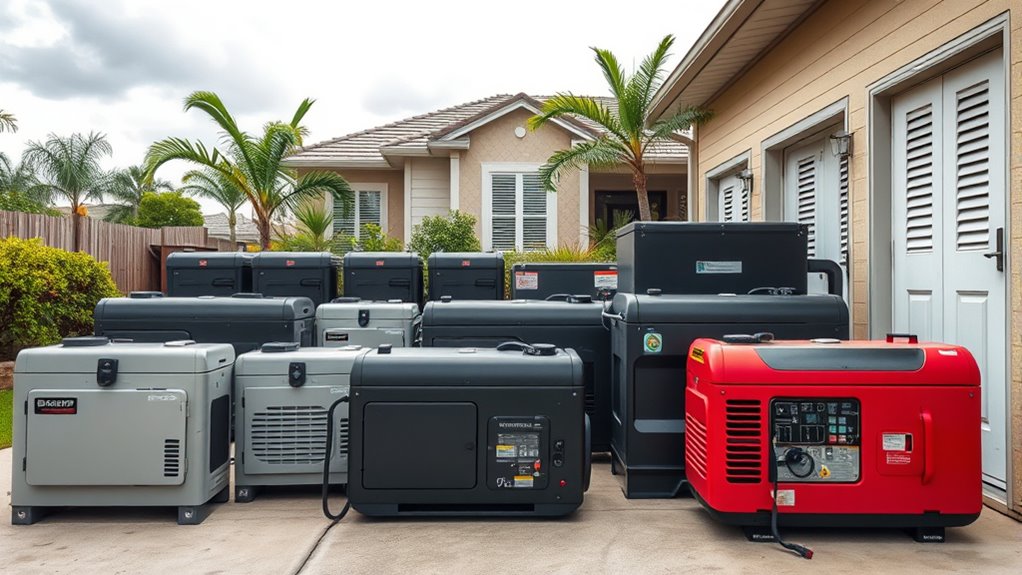
For hurricane preparedness, I’d choose the Westinghouse WGen11500DFc as the best overall balance of substantial output, dual-fuel flexibility, and a CO sensor. The DuroMax XP13000HX suits households that need more capacity, while the Jackery Explorer 1000 v2 is a quieter, fuel-free option for essential electronics and modest loads. The main tradeoff is between the longer runtime and appliance support of a fuel generator and the quiet, low-maintenance operation—but shorter runtime—of a battery station. Smaller stations are easier to store and use indoors, but they cannot replace a whole-home backup. Read on for the full breakdown by outage needs, fuel, capacity, and portability.

Get privacy and security gear delivered free with Prime
- Fast, free delivery on millions of items
- Prime Video, Amazon Music and more included
- Member-only deals all year
Complete the kit


Key Takeaways
- The lineup splits into two jobs: large dual-fuel and tri-fuel generators can serve bigger loads, while the battery stations are better for quiet backup of phones, lights, routers, and other modest essentials.
- The Westinghouse WGen11500DFc is the strongest all-around fit: it pairs substantial generator capacity with dual-fuel operation and a CO sensor, without reaching the lineup’s largest output class.
- More wattage is not the only reason to size up: the WGen14500DFc and DuroMax XP13000HX are aimed at heavier household loads, but their size, fuel needs, and operating demands make them a poor match for every buyer.
- Fuel flexibility changes the outage plan: dual-fuel models can use gasoline or propane, while the Westinghouse WGen9500TFc adds a third fuel option; that flexibility only helps if the chosen fuel is stored and available.
- Small power stations are convenience backups, not whole-house solutions: the 88Wh MARBERO M82 and compact Jackery Explorer 300 emphasize easy handling, while the ABOK Ark3600’s 3840Wh capacity targets longer battery-based backup.
| MARBERO M82 Portable Power Station, 88Wh, 120W Surge |  | Best Compact Pick for Essential Devices | Capacity: 88Wh | Running wattage: 80W | Surge wattage: 120W | VIEW ON AMAZON | See Our Full Breakdown |
| LIBRIDS Portable Power Station, 640Wh, 600W Output, 1200W Surge |  | Best for UPS-Style Electronics Backup | Battery capacity: 640Wh | Battery type: LiFePO₄ | Running output: 600W | VIEW ON AMAZON | See Our Full Breakdown |
| Westinghouse WGen14500DFc Dual Fuel Portable Generator with CO Sensor |  | Best Overall for High-Load Home Backup | Running wattage: 14,500 watts | Peak wattage: 18,000 watts | Fuel type: Gasoline and propane | VIEW ON AMAZON | See Our Full Breakdown |
| Portable Power Station, 300W (600W Surge), 192Wh |  | Best Compact UPS-Ready Battery Station | Battery capacity: 192Wh | Battery chemistry: LiFePO₄ | Surge output: 600W | VIEW ON AMAZON | See Our Full Breakdown |
| DuroMax XP13000HX 13,000-Watt Dual-Fuel Portable Generator |  | Best Transfer-Switch-Ready Alternative | Power output: 13,000 watts | Fuel type: Gasoline or propane | Engine: 500cc OHV, 4-stroke | VIEW ON AMAZON | See Our Full Breakdown |
| Westinghouse WGen11500DFc Dual Fuel Portable Generator with CO Sensor | 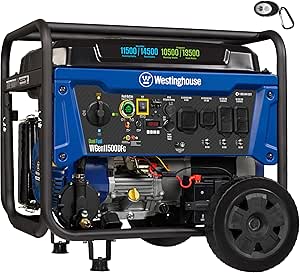 | Best for High-Demand Home Backup | Running wattage: 11,500 watts | Peak wattage: 14,500 watts | Fuel: Gasoline or propane | VIEW ON AMAZON | See Our Full Breakdown |
| Jackery Explorer 300 Portable Power Station, 292Wh |  | Best Compact Backup for Phones and Essentials | Capacity: 292Wh | Peak output: 600W | Battery chemistry: LiFePO4 | VIEW ON AMAZON | See Our Full Breakdown |
| Westinghouse WGen9500DF Dual Fuel Portable Generator, 12,500 Peak Watts |  | Best for Flexible Fuel and Starting Options | Running wattage on gasoline: 9,500 watts | Peak wattage on gasoline: 12,500 watts | Running wattage on propane: 8,500 watts | VIEW ON AMAZON | See Our Full Breakdown |
| WEN DF1100X 11,000-Watt Dual-Fuel Portable Generator with Electric Start and CO Shutdown Sensor |  | Best Dual-Fuel Value for Practical Backup Loads | Gasoline running wattage: 8,300 watts | Gasoline surge wattage: 11,000 watts | Propane running wattage: 7,500 watts | VIEW ON AMAZON | See Our Full Breakdown |
| MARBERO 155Wh Portable Power Station with 30W Solar Panel |  | Best Small Solar Kit for Basic Emergency Charging | Capacity: 155Wh | Solar panel output: 30W | Solar charging time: 6–7 hours | VIEW ON AMAZON | See Our Full Breakdown |
| Jackery Explorer 1000 v2 Portable Power Station |  | Best Mid-Size Battery Backup | Battery capacity: 1,070Wh | Battery type: LFP | Output: 1,500W; 3,000W surge | VIEW ON AMAZON | See Our Full Breakdown |
| ABOK Ark3600 Portable Power Station, 3840Wh, with 500W Alternator Charger |  | Best High-Capacity Battery Backup | Battery capacity: 3,840Wh, expandable to 11,520Wh | Battery type: LiFePO₄ | Peak power: 4,500W | VIEW ON AMAZON | See Our Full Breakdown |
| Westinghouse WGen9500TFc Tri-Fuel Portable Generator |  | Best for Flexible Fuel Options | Fuel types: Gasoline, propane, and natural gas | Running wattage: 9,500W gasoline; 8,500W propane; 7,500W natural gas | Peak wattage: 12,500W gasoline; 11,200W propane; 9,500W natural gas | VIEW ON AMAZON | See Our Full Breakdown |
| EM300 300W Portable Power Station, 259Wh LiFePO4 Solar Generator |  | Best Compact Backup for Small Essentials | Capacity: 259Wh / 70,000mAh | Battery type: LiFePO₄ | AC output: 300W; 600W peak | VIEW ON AMAZON | See Our Full Breakdown |
| generator for hurricane preparedness | Weight |
|---|---|
| MARBERO M82 Portable Power Sta | 3.2 lbs |
| LIBRIDS Portable Power Station | — |
| Westinghouse WGen14500DFc Dual | — |
| Portable Power Station | 8.8 lbs |
| DuroMax XP13000HX 13,000-Watt | 245 pounds |
| Westinghouse WGen11500DFc Dual | — |
| Jackery Explorer 300 Portable | 7.1 pounds |
| Westinghouse WGen9500DF Dual F | — |
| WEN DF1100X 11,000-Watt Dual-F | — |
| MARBERO 155Wh Portable Power S | 3.7 pounds |
| Jackery Explorer 1000 v2 Porta | 23.8 lb |
| ABOK Ark3600 Portable Power St | 92 lb |
| Westinghouse WGen9500TFc Tri-F | — |
| EM300 300W Portable Power Stat | 7.2 lb |
More Details on Our Top Picks
MARBERO M82 Portable Power Station, 88Wh, 120W Surge
For hurricane readiness, I’d treat the MARBERO M82 as a compact communications and lighting backup, not a household generator. At 3.2 pounds, it is far easier to store and carry than the 8.8-pound 192Wh Portable Power Station, and its eight ports make it useful for charging several small devices. The built-in LED light with SOS mode adds practical value during an outage. Its limit is the 80W running output: it cannot handle many appliances, and its 88Wh capacity is modest even for repeated phone charging. Unlike the larger LIBRIDS H1008, it lacks the capacity and output for broader backup tasks. I’d choose it for a go-bag or as a secondary power source, while keeping expectations firmly on small electronics.
Pros:- Lightweight 3.2-pound design is easy to store and carry.
- Eight output ports support several small devices at once.
- Built-in LED light includes an SOS mode.
- Battery management system includes overload and short-circuit protection.
Cons:- 80W running output rules out many household appliances.
- 88Wh capacity limits how long it can supply devices.
- Compatible solar panels are not included.
Best for: People who want a very lightweight backup for phones, small electronics, and emergency lighting in a go-bag.
Not ideal for: Households seeking to run a refrigerator, medical equipment with substantial power needs, or multiple devices through a long outage.
- Capacity:88Wh
- Running wattage:80W
- Surge wattage:120W
- Output ports:8
- Weight:3.2 lbs
- Dimensions:6.5 × 4.6 × 3.1 inches
- Charging time:0–80% in 2 hours with included adapter
- Charging methods:AC, battery, and compatible 30W or 60W solar panel
Our verdict“Choose the M82 for portable lighting and small-device charging, not as a substitute for a higher-capacity outage power source.”
LIBRIDS Portable Power Station, 640Wh, 600W Output, 1200W Surge
The LIBRIDS H1008 is the stronger fit when a hurricane plan prioritizes keeping electronics online rather than powering large appliances. Its 10ms UPS switching can help connected equipment stay powered through a brief interruption, while the 640Wh LiFePO₄ battery and four AC outlets give it much more staying power than the MARBERO M82. A stated 1.5-hour AC recharge is also useful when grid power returns briefly. The tradeoff is a firm 600W running ceiling, so it cannot match the home-backup capacity of the Westinghouse WGen14500DFc or DuroMax XP13000HX. It is also specified for dry conditions, making sheltered placement non-negotiable during a storm. I’d pick it for routers, computers, and smaller electronics, not wet outdoor use or high-demand appliances.
Pros:- 10ms UPS switching supports backup for connected electronics.
- 640Wh LiFePO₄ battery is rated for 4000+ cycles.
- Four AC outlets and eight total ports allow several devices to connect.
- Pure sine wave inverter is suited to sensitive electronics.
Cons:- 600W running output limits appliance choices.
- Must be kept away from rain, moisture, and wet conditions.
- Battery backup is not a replacement for the high output of a fuel generator.
Best for: Households that want battery backup for a router, computer, and other electronics, with UPS switching for connected equipment.
Not ideal for: Buyers who need to run high-wattage appliances or who cannot keep the unit in a dry, protected location.
- Battery capacity:640Wh
- Battery type:LiFePO₄
- Running output:600W
- Surge output:1200W
- AC outlets:4
- Total output ports:8
- UPS switching time:10ms
- AC charging time:About 1.5 hours
- Warranty:5 years
Our verdict“Pick the H1008 for dry-location backup of electronics and short interruptions, but choose a fuel generator for major household loads.”
Westinghouse WGen14500DFc Dual Fuel Portable Generator with CO Sensor
For a hurricane-prone household that needs substantial backup power, I rank the Westinghouse WGen14500DFc above the battery stations in this group. Its 14,500 running watts and 120/240-volt output can support far more home equipment than the LIBRIDS H1008, while gasoline or propane operation gives owners a fuel choice if one supply is limited. Electric and remote start reduce the effort of getting it running, and the CO sensor adds a safety feature; it still needs to operate outdoors, away from living spaces. The large 10.5-gallon tank is paired with a stated runtime of up to 16 hours at 25% load, though actual runtime depends on load and conditions. This much output comes with a real penalty: it is a heavy-duty unit that can be difficult to move, and the transfer switch is sold separately.
Pros:- 14,500 running watts provide far more capacity than the listed battery stations.
- Dual-fuel operation offers gasoline and propane options.
- Electric and remote start simplify startup.
- CO sensor and automatic low-oil shutdown add safety protections.
Cons:- Heavy-duty size can make transport and placement difficult.
- Transfer switch and interlock kit are sold separately.
- Fuel runtime varies with load and operating conditions.
Best for: Homeowners who need high-output 120/240-volt backup and want the flexibility to run on gasoline or propane.
Not ideal for: People with limited storage or mobility, or buyers who need a quiet, indoor-safe battery backup for electronics.
- Running wattage:14,500 watts
- Peak wattage:18,000 watts
- Fuel type:Gasoline and propane
- Engine:713cc 4-stroke OHV V-twin
- Fuel tank capacity:10.5 gallons
- Runtime:Up to 16 hours at 25% load on gasoline
- Voltage:120/240 volts
- Total power outlets:7
- THD:Less than 5%
Our verdict“Choose the WGen14500DFc when high household output matters more than easy transport, and plan separately for transfer equipment and safe outdoor placement.”
Portable Power Station, 300W (600W Surge), 192Wh
This 192Wh LiFePO₄ power station sits between the MARBERO M82 and the LIBRIDS H1008: it offers more capacity and a higher 300W running output than the M82, but remains far below the LIBRIDS in energy storage and output. That middle ground suits small electronics, LED lighting, and limited low-wattage use without the weight of a household generator. Its ≤10ms UPS function can help maintain power to connected devices during a brief outage, while the 65W USB-C PD port handles compatible devices efficiently. A built-in light with strobe and SOS modes adds storm-related utility. The 8.8-pound weight is still portable, but not as effortless as the MARBERO. I’d also verify its fit before buying: the supplied dimensions conflict, and neither the solar panel nor car charger is included.
Pros:- LiFePO₄ battery is rated for 4000+ charge cycles.
- 65W USB-C PD and five additional outlets support varied small-device charging.
- UPS switching time is listed at up to 10ms.
- Built-in LED offers brightness, strobe, and SOS modes.
Cons:- 300W running output is not suitable for high-wattage appliances.
- Solar panel and car charger are not included.
- Product details list conflicting dimensions.
Best for: People seeking a portable battery for small electronics and lighting, with UPS support and more capacity than a pocket-size station.
Not ideal for: Households expecting to power refrigerators or other high-wattage appliances, or buyers who need an included solar panel or car charger.
- Battery capacity:192Wh
- Battery chemistry:LiFePO₄
- Surge output:600W
- Output ports:6: 2 AC, 1 USB-C PD, 2 USB-A, 1 car outlet
- USB-C PD output:65W
- UPS switching time:≤10ms
- Weight:8.8 lbs
- Dimensions:Conflicting listings: 5.9 × 9.4 × 7.3 inches and 9.4 × 7.3 × 5.4 inches
Our verdict“Choose this station for portable, small-load backup with UPS support, but look to the LIBRIDS H1008 or a fuel generator for longer or heavier loads.”
DuroMax XP13000HX 13,000-Watt Dual-Fuel Portable Generator
The DuroMax XP13000HX is aimed at buyers who want a powerful fuel generator with a direct path to home connection. Its 13,000-watt output and 120/240V 50A outlet make it a more relevant hurricane backup choice than the small battery stations, and that outlet is compatible with transfer switches. Compared with the Westinghouse WGen14500DFc, it provides less stated power, but the DuroMax includes a 50A connection and CO Alert. It runs on gasoline or propane, with electric start and a digital display to help manage operation. The catch is substantial: at 245 pounds, it is not easy to reposition, and the supplied runtime of up to 17 hours depends on operating conditions. Buyers should also account for the transfer-switch setup and safe outdoor operation rather than treating portability as simple.
Pros:- 13,000-watt output supports substantially larger loads than the portable battery stations.
- Gasoline and propane options provide fuel flexibility.
- 120/240V 50A outlet is transfer-switch-ready.
- Electric start and CO Alert are included.
Cons:- 245-pound weight makes relocation difficult.
- Runtime and output can vary with operating conditions.
- Requires suitable outdoor placement and a properly planned transfer-switch setup.
Best for: Homeowners who want dual-fuel, high-output backup with a 50A outlet for a transfer-switch setup.
Not ideal for: Buyers who need a generator they can move alone, or who want a quiet battery unit for indoor electronics backup.
- Power output:13,000 watts
- Fuel type:Gasoline or propane
- Engine:500cc OHV, 4-stroke
- Starting system:Electric start
- Voltage:240 volts
- Runtime:Up to 17 hours
- Weight:245 pounds
- Dimensions:30 × 29 × 26 inches
- Outlets:Four 120V GFCI household outlets; one 120V 30A; one 120/240V 30A twist-lock; one 120/240V 50A
Our verdict“Choose the XP13000HX for high-output dual-fuel backup and a 50A connection, provided its weight and installation needs fit your home.”
Westinghouse WGen11500DFc Dual Fuel Portable Generator with CO Sensor
For hurricane outages that may affect several major appliances at once, the WGen11500DFc offers the strongest balance of output and fuel flexibility in this group. Its 11,500 running watts on gasoline exceed the WGen9500DF’s 9,500, giving buyers more room for simultaneous household loads. The gasoline and propane options also help when one fuel is hard to obtain, while remote and electric starting reduce the effort of getting power running during bad weather. Less than 5% THD is a plus for compatible sensitive electronics. The tradeoff is substantial size: its 550cc engine and 9.5-gallon tank call for dedicated outdoor storage and careful moving. A transfer switch is sold separately, so it is not a complete home-connection setup by itself.
Pros:- 11,500 running watts on gasoline suit demanding household backup loads
- Gasoline and propane operation gives fuel flexibility
- Remote and electric starting simplify startup
- Less than 5% THD supports compatible sensitive electronics
Cons:- Large engine and fuel tank make storage and movement more difficult
- Transfer switch is sold separately
- Gasoline runtime is specified at 25% load, not at heavier outage loads
Best for: Households planning to power multiple major appliances and electronics, with safe outdoor space for a large generator and access to gasoline or propane.
Not ideal for: Apartment residents, buyers with limited storage, or anyone seeking a ready-to-use transfer-switch setup without purchasing additional equipment.
- Running wattage:11,500 watts
- Peak wattage:14,500 watts
- Fuel:Gasoline or propane
- Engine:550cc 4-stroke OHV
- Fuel tank:9.5 gallons
- Runtime:Up to 19 hours at 25% load on gasoline
- Starting:Electric and remote start
- Power quality:Less than 5% THD
- Safety features:CO sensor, automatic low-oil shutdown, and overload protection
Our verdict“Choose the WGen11500DFc if you need substantial whole-home-style backup capacity and can accommodate its size and separate transfer-switch requirements.”
Jackery Explorer 300 Portable Power Station, 292Wh
The Jackery Explorer 300 is a quiet, lightweight complement to a larger hurricane generator, not a substitute for one. At 7.1 pounds, it is easier to carry indoors for phones, tablets, and other modest loads than the wheeled WGen9500DF, and its 292Wh capacity provides more reserve than the 155Wh MARBERO kit. Two AC outlets plus USB and car-port options let several small devices share one battery. Its 300W rated output limits what it can run, however, so appliances such as refrigerators or high-draw equipment are outside its intended role. Solar charging is supported, but the panel is not included; without a panel or access to a wall outlet, its stored energy is finite during a prolonged outage.
Pros:- Light 7.1-pound design is easy to carry and store
- 292Wh capacity exceeds the MARBERO 155Wh station’s reserve
- AC, USB-C, USB-A, and car-port connections support varied small devices
- Solar charging compatibility adds a recharging option when paired with a panel
Cons:- 300W rated output rules out many household appliances
- Solar panel is not included
- Battery capacity may be limiting over a long outage without a way to recharge
Best for: People who want a portable, quiet battery for keeping phones, tablets, and other low-power devices charged during outages.
Not ideal for: Households seeking refrigerator or other high-wattage appliance backup, or buyers who expect solar charging without purchasing a compatible panel.
- Capacity:292Wh
- Peak output:600W
- Battery chemistry:LiFePO4
- Weight:7.1 pounds
- AC outlets:2
- Other ports:100W USB-C PD, 2 USB-A, and 120W car port
- Solar charging:About 80% in approximately 2.8 hours with a 100W panel
Our verdict“Pick the Explorer 300 for portable charging of small essentials, but pair it with a larger generator if you need appliance backup.”
Westinghouse WGen9500DF Dual Fuel Portable Generator, 12,500 Peak Watts
The WGen9500DF makes sense for buyers who want strong outage output without stepping up to the WGen11500DFc’s higher running wattage and larger 9.5-gallon tank. It supplies 9,500 running watts on gasoline, offers propane as an alternative, and has remote, electric, and recoil starting—useful options if a battery-start method is unavailable. Its 6.6-gallon tank is listed for up to 12 hours of runtime, though actual duration depends on load. Wheels help with positioning, but they do not make a heavy-duty generator effortless to move or store. Compared with the WEN DF1100X, this Westinghouse adds remote starting and a longer listed maximum runtime, while the WEN provides a CO shutdown sensor in its stated safety features.
Pros:- 9,500 gasoline running watts support substantial home backup loads
- Runs on gasoline or propane
- Three starting methods provide flexibility during an outage
- Wheels and transfer-switch and RV-oriented outlets support practical setup options
Cons:- Large, heavy-duty form requires significant storage space
- Maximum runtime is listed as 12 hours, with runtime varying by load
- Minimal assembly is required before use
Best for: Homeowners who need substantial dual-fuel backup and value having remote, electric, and recoil starting methods.
Not ideal for: Buyers who need the highest running-watt capacity in this group, a stated CO shutdown sensor, or a compact generator for limited storage space.
- Running wattage on gasoline:9,500 watts
- Peak wattage on gasoline:12,500 watts
- Running wattage on propane:8,500 watts
- Fuel:Gasoline or propane
- Engine:457cc 4-stroke OHV
- Fuel tank:6.6 gallons
- Maximum runtime:Up to 12 hours
- Starting methods:Remote, electric, and recoil
Our verdict“Choose the WGen9500DF for robust dual-fuel backup and multiple starting options if the WGen11500DFc’s extra output is not necessary.”
WEN DF1100X 11,000-Watt Dual-Fuel Portable Generator with Electric Start and CO Shutdown Sensor
The WEN DF1100X is a sensible middle ground for buyers who need 120V and 240V connections but do not require the WGen11500DFc’s 11,500 running watts. It delivers 8,300 running watts on gasoline and 7,500 on propane, with a CO shutdown sensor and electric start for added convenience. The included wheel and handle kit and LPG hose make initial setup more practical than a bare generator package. Its 6.6-gallon tank is rated for up to 8.5 hours at half load, shorter than the WGen9500DF’s listed maximum runtime, though the stated load conditions differ. The WEN also has a two-year warranty and no remote-start option listed, so buyers who prioritize longer stated runtime or remote operation may prefer the Westinghouse alternative.
Pros:- Gasoline and propane operation offers fuel choice
- CO Watchdog shutdown sensor is included
- 120V and 240V outlets accommodate a range of backup connections
- Wheel and handle kit and LPG hose are included
Cons:- Runtime is listed as up to 8.5 hours at half load
- No remote start is listed
- Two-year warranty is shorter than the listed three-year coverage on the Westinghouse models
Best for: Homeowners who want dual-fuel 120V/240V backup, a CO shutdown sensor, and a wheeled kit for moving the unit around their property.
Not ideal for: Buyers seeking remote starting, longer listed runtime, or the higher gasoline running output of the WGen11500DFc.
- Gasoline running wattage:8,300 watts
- Gasoline surge wattage:11,000 watts
- Propane running wattage:7,500 watts
- Fuel:Gasoline or LPG
- Engine:457cc 4-stroke OHV
- Fuel tank:6.6 gallons
- Runtime:Up to 8.5 hours at half load
- Voltage:120V/240V
- Safety feature:CO Watchdog shutdown sensor
Our verdict“Choose the DF1100X for dual-fuel household backup with a CO shutdown sensor, provided its runtime and lack of remote start fit your plans.”
MARBERO 155Wh Portable Power Station with 30W Solar Panel
The MARBERO 155Wh kit is the most self-contained small-scale pick here: it includes a 30W solar panel, unlike the Jackery Explorer 300, whose compatible panel is sold separately. That makes it easier to start with solar charging, but the modest 155Wh capacity and 100W AC outlets limit it to small electronics and similarly low-power needs—not household appliances. Its 3.7-pound weight, multiple output types, and three-mode flashlight suit a compact emergency kit, while the panel’s IP65 rating adds protection for the panel itself as described in the listing. Solar charging is listed at 6–7 hours, and cloudy hurricane conditions can restrict solar input. Compared with a fuel generator such as the WEN DF1100X, this battery is quiet and portable but cannot provide sustained high-wattage backup.
Pros:- Includes a 30W solar panel and power converter
- Low 3.7-pound weight suits portable emergency storage
- AC, USB, USB-C, DC, and car outputs cover several small-device types
- Built-in flashlight offers steady, SOS, and strobe modes
Cons:- 155Wh capacity provides limited stored energy for an extended outage
- 100W AC outlets cannot support many appliances
- Solar charging is listed as taking 6–7 hours and depends on usable sunlight
Best for: Buyers assembling a lightweight emergency kit who want included solar charging for phones and other low-power devices.
Not ideal for: Families who need to run a refrigerator, medical equipment with substantial power demands, or multiple household appliances through a long outage.
- Capacity:155Wh
- Solar panel output:30W
- Solar charging time:6–7 hours
- AC outlets:2 × 100W
- USB ports:1 QC3.0 USB-A, 2 standard USB-A, and 1 USB-C on the station
- Surge wattage:150W
- Weight:3.7 pounds
- Flashlight modes:Steady, SOS, and strobe
Our verdict“Pick the MARBERO kit for compact solar-assisted charging of small essentials, not as a replacement for a generator that can power household loads.”
Jackery Explorer 1000 v2 Portable Power Station
The Jackery Explorer 1000 v2 is a practical middle ground for hurricane outages when you want to keep phones, networking gear, lights, and select small appliances running without a fuel-powered generator. Its 1,070Wh LFP battery and 1,500W output offer far more reserve than the EM300, while its 23.8-pound frame is easier to carry than the 92-pound ABOK Ark3600. Three pure-sine-wave AC outlets and a mix of USB and DC ports let several devices charge at once. The tradeoff is that this is still a battery station, not a substitute for a high-output generator: runtime and appliance choices are limited by its capacity. Fast one-hour charging requires a setting in the app, and solar panels are sold separately and restricted to Jackery-compatible panels.
Pros:- 1,070Wh LFP battery provides substantially more reserve than compact stations such as the EM300.
- 1,500W output and three AC outlets support several compatible devices at once.
- 23.8-pound weight and foldable handle make it easier to move than the ABOK Ark3600.
- App charging modes offer a choice between speed, quieter operation, and energy efficiency.
Cons:- Battery capacity cannot match the long-duration backup potential of the much larger ABOK Ark3600.
- The one-hour charge rate requires enabling emergency charging in the app; the default is 1.7 hours.
- Solar panels are sold separately, and solar charging is limited to Jackery panels.
Best for: Households seeking portable backup for phones, lights, routers, and a few modest-wattage devices during shorter outages.
Not ideal for: Buyers who need to run multiple high-draw appliances for an extended outage or want broad third-party solar-panel compatibility.
- Battery capacity:1,070Wh
- Battery type:LFP
- Output:1,500W; 3,000W surge
- AC outlets:3 pure sine wave
- USB ports:2 USB-C and 1 USB-A
- Weight:23.8 lb
- Charging time:1 hour with emergency charging enabled; 1.7 hours by default
- Battery lifespan:Over 70% capacity after 4,000 charge cycles
Our verdict“Choose the Jackery Explorer 1000 v2 for portable, mid-size backup for essentials, but pick a larger station or fuel generator for extended, high-load outages.”
ABOK Ark3600 Portable Power Station, 3840Wh, with 500W Alternator Charger
For buyers who want substantial stored power without operating a gasoline generator, the ABOK Ark3600 stands apart in this group. Its 3,840Wh LiFePO₄ battery can expand to 11,520Wh, giving it a much larger reserve than the Jackery Explorer 1000 v2 for longer outages and more demanding backup plans. Rated output reaches 3,600W, with 15 ports for distributing power around a household. Combined AC and solar charging is listed at 1.29 hours, though AC-only charging takes three hours. Wheels and a telescoping handle help with relocation, but they do not make a 92-pound unit easy to lift or position. Unlike the Westinghouse WGen9500TFc, it avoids fuel and engine operation, but its stored energy must be replenished and does not provide the same fuel-based runtime.
Pros:- 3,840Wh capacity, expandable to 11,520Wh, provides far more stored energy than the Jackery Explorer 1000 v2.
- 3,600W rated output and 4,500W peak power support a broader range of loads than compact stations.
- Fifteen output ports and AC, solar, and car charging offer flexible connection and recharge options.
- Wheels and a telescoping handle help move the 92-pound station across level surfaces.
Cons:- At 92 pounds, it is difficult to lift and is a poor fit for homes where it must be carried up stairs.
- AC-only charging takes three hours, so restoring a depleted battery is not instantaneous.
- Unlike the Westinghouse WGen9500TFc, it relies on stored battery energy rather than ongoing fuel supply.
Best for: Households seeking a large, expandable battery reserve for several devices and appliances, with a practical way to roll the unit between storage and use locations.
Not ideal for: Buyers who need a lightweight backup, frequent stair carrying, or fuel-based power that can be replenished while an outage continues.
- Battery capacity:3,840Wh, expandable to 11,520Wh
- Battery type:LiFePO₄
- Peak power:4,500W
- Output ports:15
- Charging:1,500W AC; 2,000W solar; 120W car
- Charging time:1.29 hours with combined AC and solar; 3 hours with AC
- Weight:92 lb
- Battery life:Over 4,000 cycles; lifespan up to 10 years
Our verdict“Choose the ABOK Ark3600 if large, expandable battery capacity matters more than easy lifting or fuel-powered extended runtime.”
Westinghouse WGen9500TFc Tri-Fuel Portable Generator
The Westinghouse WGen9500TFc is the strongest fit here for households that need fuel-powered backup and want a choice of what to burn. It runs on gasoline, propane, or natural gas, so owners can match the generator to available supplies and, when set up for it, a natural-gas connection. On gasoline, it provides 9,500 running watts and up to 12 hours of runtime from its 6.6-gallon tank—capacity and sustained output the battery-based Jackery Explorer 1000 v2 cannot match. Remote and electric starting reduce the effort of getting power going, while a CO sensor and automatic low-oil shutdown add protective features. The tradeoff is the usual one for a large portable generator: it needs fuel, outdoor placement, and careful handling. Its wheels help with rolling, but the heavy-duty unit can still be hard to move.
Pros:- Three fuel choices provide flexibility when gasoline availability is uncertain.
- 9,500 running watts on gasoline can support substantially larger loads than the battery stations in this group.
- Remote, electric, and recoil starting offer several ways to start the generator.
- CO sensor, automatic low-oil shutdown, covered outlets, and overload protection add useful safeguards.
Cons:- Requires fuel and outdoor operation, unlike the Jackery Explorer 1000 v2 battery station.
- Heavy-duty construction makes it difficult to move despite the wheels.
- Minimal assembly is required before use.
Best for: Homeowners who need sustained, high-output backup and can store fuel or connect the generator to a compatible natural-gas supply.
Not ideal for: Apartment dwellers, buyers without a safe outdoor operating location, or anyone prioritizing quiet, fuel-free backup for electronics.
- Fuel types:Gasoline, propane, and natural gas
- Running wattage:9,500W gasoline; 8,500W propane; 7,500W natural gas
- Peak wattage:12,500W gasoline; 11,200W propane; 9,500W natural gas
- Engine:457cc 4-stroke OHV
- Fuel tank capacity:6.6 gallons
- Runtime:Up to 12 hours
- Starting:Remote, electric, and recoil
- Outlets:8
- Safety features:CO sensor, automatic low-oil shutdown, and overload protection
Our verdict“Choose the WGen9500TFc for sustained household backup with three fuel options, provided you have a safe outdoor setup and a plan for fuel.”
EM300 300W Portable Power Station, 259Wh LiFePO4 Solar Generator
The EM300 is a compact choice for keeping personal electronics and a few low-wattage essentials powered, not for running a household through a long hurricane outage. At 7.2 pounds, it is much easier to carry or store than the Jackery Explorer 1000 v2, while its 259Wh capacity is far smaller and calls for disciplined power use. The 300W pure-sine-wave AC output can handle compatible small devices; USB-C output up to 65W is useful for charging some laptops directly. Wall, car, and solar charging, plus pass-through charging, give it several ways to stay useful. Its LiFePO₄ battery is rated for 2,000-plus cycles, though that is below the Jackery’s stated 4,000-cycle figure. The panel is separate, and the limited output rules out many larger appliances.
Pros:- At 7.2 pounds, it is easier to store and carry than the Jackery Explorer 1000 v2.
- 65W USB-C output can charge compatible laptops without using an AC outlet.
- Wall, car, and solar charging plus pass-through charging provide flexible use.
- LiFePO₄ battery is rated for more than 2,000 charge cycles.
Cons:- 259Wh capacity offers much less outage reserve than the Jackery Explorer 1000 v2 or ABOK Ark3600.
- 300W AC output limits the appliances and devices it can run.
- The supported 100W solar panel is sold separately.
Best for: Campers, travelers, and households wanting a lightweight outage kit for phones, a laptop, lights, and other low-power devices.
Not ideal for: Families seeking backup for refrigerators, major appliances, or many devices over an extended outage; its capacity and 300W output are too limited.
- Capacity:259Wh / 70,000mAh
- Battery type:LiFePO₄
- AC output:300W; 600W peak
- USB-C output:Up to 65W
- Charging methods:Wall, car, and solar
- Solar panel support:100W panel supported; panel sold separately
- Battery cycle life:2,000+ charge cycles
- Weight:7.2 lb
- Features:LCD display, SOS light, pass-through charging, and battery management system
Our verdict“Pick the EM300 for portable backup of small electronics and low-power essentials, not as a primary source for household hurricane power.”

How We Picked
I ranked these products by how well their stated capabilities fit common hurricane outage needs: keeping small electronics available, supporting essential household appliances, and supplying larger loads for longer periods. I weighed output and battery capacity against portability, fuel options, charging methods, and practical ease of use. Safety features such as CO sensors or shutdown systems also mattered, but they do not make fuel-burning generators safe to run indoors or in enclosed spaces.
The order reflects the role each product can realistically fill, not a claim that one type suits every home. Larger dual-fuel units rank ahead for broad household backup, with the WGen11500DFc leading for its mix of capacity and fuel flexibility. The WGen14500DFc and XP13000HX serve higher-demand households; smaller battery stations rank for quiet, low-fuss essential loads, and the high-capacity ABOK Ark3600 stands out for buyers who want substantial battery storage. Product names and listed specifications are the basis for this comparison; actual runtime, supported loads, and compatibility depend on conditions and equipment.
Factors to Consider When Choosing Generator For Hurricane Preparedness
I’d start by planning around the loads you need to keep running, rather than picking the biggest rating in the lineup. A hurricane backup plan also depends on safe placement, fuel access, charging options, and how much setup you can manage during a stressful outage.
List Essential Loads Before Choosing Capacity
Write down the appliances and devices you expect to run at the same time, then check their running and startup wattage on the labels or manuals. Motors in refrigerators, pumps, and air conditioners can draw more power at startup than while running, so a generator that matches only the steady load may still fall short. Decide whether your plan is limited to lights, communications, and device charging or includes major appliances. Avoid assuming that a large advertised peak figure is equivalent to continuous usable output. If you need to power hardwired circuits, ask a qualified electrician about transfer equipment and the generator’s compatibility before buying.
Plan Fuel Around the Outage, Not Just the Generator
Dual-fuel and tri-fuel models offer choices, but each fuel source comes with storage, availability, and connection requirements. Gasoline can be difficult to obtain after a major storm and requires careful storage; propane stores differently but still depends on having adequate supply and the right setup. A third fuel option can add flexibility, yet it does not help if that fuel is unavailable locally or your home lacks a suitable connection. Estimate how long you may need power and how much fuel your planned loads could require. Do not treat fuel flexibility as a substitute for a realistic resupply plan.
Treat Generator Placement as a Safety Requirement
Portable fuel generators produce carbon monoxide and must operate outdoors, away from doors, windows, vents, and attached garages, following the manufacturer’s instructions and local guidance. A CO sensor or shutdown feature is an added safeguard, not permission to run a generator indoors or close to the house. Decide in advance where the unit can sit safely, how its exhaust will be directed, and how you will protect cords from water and trip hazards. Never operate a fuel generator in rain or standing water unless the manufacturer explicitly permits that setup with proper protection. Battery power stations avoid exhaust at the point of use, but their charging equipment and connections still need dry, safe placement.
Choose Between Runtime, Quiet, and Convenience
Fuel generators can support heavier loads and keep operating as long as fuel and maintenance allow, but they bring engine noise, exhaust, and routine upkeep. Battery stations are quiet and simpler to use for electronics and lights, yet their stored energy is finite and high-draw appliances can drain them quickly. Solar panels or alternator charging may help replenish a battery station, but charging speed depends on conditions and the equipment used. Consider where the unit will be stored, who will operate it, and whether recharging will be possible during a long outage. A hybrid plan—fuel generator for large loads and a battery unit for quiet overnight essentials—can be more practical than asking one device to do every job.
Check Connections and Home Integration Before Purchase
Output capacity alone does not tell you whether a generator can connect to your home or run a specific appliance. Check outlet types, voltage, transfer-switch requirements, and any equipment-specific startup needs before committing. Never connect a portable generator to a wall outlet or improvise a backfeed connection; a qualified electrician can specify safe home integration. For a battery station, verify that its output and charging inputs match the devices and recharging methods you intend to use. This step can prevent buying a capable unit that still cannot serve the circuits or equipment you need.
Account for Storage, Maintenance, and Handling
A large generator may offer valuable output but needs a safe outdoor operating area, fuel planning, and periodic maintenance. Make sure you can move and store it, including any requirements for a level surface and weather protection. Battery stations usually need less engine upkeep, but they still require sensible storage and periodic charge checks according to the manufacturer’s guidance. Keep cords, fuel containers, and any needed transfer equipment in the same preparedness plan rather than treating the generator as a stand-alone purchase. If setup complexity is a concern, prioritize clear controls and a backup arrangement you can operate safely before a storm arrives.
Frequently Asked Questions
Can a portable generator run my whole house during a hurricane?
That depends on the generator’s continuous output, your home’s loads, and how the generator connects to the electrical system. The larger Westinghouse, DuroMax, and WEN models offer more potential capacity than the compact battery stations, but their names or peak figures alone do not prove they can power every circuit at once. List appliance running and startup demands, then have an electrician confirm transfer equipment and circuit compatibility. Many households get better results by prioritizing selected essentials rather than trying to operate everything. Never connect a generator directly to a home outlet.
Is a battery power station enough for a multi-day outage?
It can be enough for low-power essentials if the stored capacity and recharging plan match your use. Small units such as the MARBERO M82 and Jackery Explorer 300 are suited to lighter loads, while a larger-capacity option such as the ABOK Ark3600 can store substantially more energy. High-draw appliances can consume that reserve quickly, and solar or alternator charging depends on the conditions and compatible equipment. Make a daily energy budget for the devices you need, then plan how often and by what method you can recharge. If that plan is uncertain, a fuel generator or a mixed backup setup may be a better fit.
Should I choose a dual-fuel or tri-fuel generator?
Choose based on the fuels you can store, access, and connect safely—not simply on the number of options. Dual-fuel models in this roundup use gasoline and propane, while the Westinghouse WGen9500TFc adds a third fuel choice. More options can help when one supply becomes hard to find, but each option requires compatible connections and a dependable supply plan. Check the manufacturer’s guidance for fuel use and performance, since output can vary by fuel. If you only have practical access to one fuel, a tri-fuel feature may add little value.
Can I run a generator in a garage or under a covered patio?
No fuel-burning generator should be operated in a garage, even with the door open, or in another enclosed or partly enclosed area where exhaust can collect. CO sensors and automatic shutdown features provide another layer of protection, but they do not make an unsafe location acceptable. Follow the generator maker’s instructions and public safety guidance for outdoor placement, clearance, and exhaust direction. Keep it away from openings into the home and protect it from weather only with an arrangement approved for that use. Battery power stations do not produce engine exhaust during use, but their charging setup still needs safe, dry conditions.
Do I need both a fuel generator and a power station?
Not every household does, but the two types cover different outage needs. A fuel generator can support larger loads for extended periods when fuel is available, while a battery station can quietly handle communications, lighting, and electronics without running an engine. Using a battery unit overnight may reduce noise and avoid keeping a fuel generator on for small loads, though it must have enough stored energy for that plan. A combination also provides a backup if one system cannot be used at a given moment. Compare the added cost, storage space, and charging needs with the loads you actually need to protect.
Conclusion
For most households seeking a single hurricane backup, I’d choose the Westinghouse WGen11500DFc as the best overall for its substantial output, dual-fuel flexibility, and CO sensor. The WEN DF1100X is my best value-style pick for buyers who want a large dual-fuel generator with electric start and CO shutdown, while the Westinghouse WGen14500DFc is the best premium choice for households with heavier planned loads. For beginners who mainly need quiet power for everyday essentials, I’d start with the Jackery Explorer 1000 v2 rather than an engine generator. Choose the Westinghouse WGen9500TFc if access to three fuel types matters most, or the ABOK Ark3600 if you want high-capacity battery storage. Match the unit to your load list, fuel plan, and safe operating space before deciding.