Choosing a DIY home security system with no monthly fee eliminates recurring costs but requires careful selection of hardware that handles local storage and self-monitoring. My top overall pick is the SimpliSafe 9-Piece Wireless Home Security System because it balances professional-grade build quality with true fee-free operation when self-monitored. For those needing extensive coverage, the Tolviviov 12-Piece Wireless WiFi Home Security Alarm System offers more sensors for less upfront cost, though its app interface is less polished. The main tradeoff you face is between ease of use and feature depth; premium brands offer better integration, while budget kits provide more hardware but require more manual setup. Continue reading to see how these fifteen options stack up against each other in terms of reliability, connectivity, and value.

Get privacy and security gear delivered free with Prime
- Fast, free delivery on millions of items
- Prime Video, Amazon Music and more included
- Member-only deals all year
Key Takeaways
- SimpliSafe remains the most reliable option for self-monitoring due to its robust local hub and seamless app integration, despite having fewer included sensors than budget alternatives.
- Budget kits like Tolviviov and XUK offer significantly more sensors per dollar but often lack the refined mobile app experience and reliable cloud notification speeds of major brands.
- 4G cellular backup is a critical differentiator in this category; systems without it rely entirely on your home Wi-Fi, leaving you vulnerable during internet outages.
- No monthly fee systems shift the burden of monitoring to the homeowner, meaning you must actively check alerts rather than relying on a professional dispatch center.
- Integration with smart home ecosystems like Alexa and Google Assistant is inconsistent across budget kits, making SimpliSafe the safer choice for smart-home-centric households.
| SimpliSafe 9-Piece Wireless Home Security System with HD Indoor Camera |  | Best for Camera Coverage | Included components: Base Station, keypad, 4 entry sensors, 2 motion sensors, indoor camera | Camera resolution: 1080p | Camera field of view: 120° | VIEW ON AMAZON | See Our Full Breakdown |
| tolviviov 12-Piece Wireless WiFi Home Security Alarm System |  | Best for Door-and-Window Coverage | Included components: 1 base station, 9 door sensors, 2 remote controls | Connectivity: Wireless, 2.4 GHz Wi-Fi | Smartphone control: App with real-time alarm notifications | VIEW ON AMAZON | See Our Full Breakdown |
| XUK Wireless Home Alarm System with 4.3-Inch Touchscreen |  | Best for Multiple Ways to Arm and Control | Model: XK-A107F | Connectivity: 2.4 GHz Wi-Fi | Display: 4.3-inch color touchscreen | VIEW ON AMAZON | See Our Full Breakdown |
| SimpliSafe 8-Piece Wireless Home Security System | 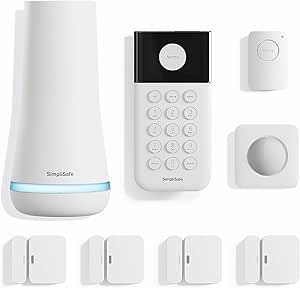 | Best for Simple, Camera-Free Protection | System size: 8 pieces | Included sensors: 4 entry sensors and 1 motion sensor | Additional control: Wireless, backlit keypad and panic button | VIEW ON AMAZON | See Our Full Breakdown |
| Wireless Smart Home Security Alarm System Kit |  | Best for Expandable Smart Life Setup | Included components: 1 alarm hub, 4 door and window sensors, 1 remote control | Siren volume: 120 dB | Connectivity: 2.4 GHz Wi-Fi and 433 MHz wireless | VIEW ON AMAZON | See Our Full Breakdown |
| Tolviviov 15-Piece WiFi Home Security Alarm System |  | Best for Broad Door-and-Window Coverage | Included components: Base station, keypad, motion sensor, 10 door sensors, 2 remote controls | Connectivity: 2.4 GHz Wi-Fi | Siren: 120 dB | VIEW ON AMAZON | See Our Full Breakdown |
| Wireless Home Alarm System, 24-Piece Wi-Fi and 4G Kit |  | Best for Connectivity Backup | Kit size: 24 pieces | Included sensors: 10 door/window sensors and 5 motion detectors | Connectivity: 2.4 GHz Wi-Fi and GSM/4G LTE | VIEW ON AMAZON | See Our Full Breakdown |
| Tolviviov WiFi Home Alarm System with App Alerts |  | Best Simple Wi-Fi-Only Pick | Included components: Base station, keypad, motion sensor, 10 door sensors, 2 remote controls | Connectivity: 2.4 GHz Wi-Fi | Siren: 120 dB | VIEW ON AMAZON | See Our Full Breakdown |
| 12-Piece Wi-Fi and 4G Home Alarm System with App and Voice Control |  | Best for Voice Assistant Variety | Included sensors: 4 door sensors and 2 motion sensors | Connectivity: Wi-Fi and GSM/4G LTE; SIM required for 4G | Battery backup: Up to 48 hours | VIEW ON AMAZON | See Our Full Breakdown |
| SimpliSafe Gen 3 11-Piece Wireless Home Security System with Indoor HD Camera |  | Best for Camera-and-Sensor Coverage | Components: Base station, indoor camera, keypad, 6 entry sensors, 2 motion sensors, key fob | Camera resolution: 1536p | Installation: Wireless; no wiring or drilling | VIEW ON AMAZON | See Our Full Breakdown |
| D1D9 10-Piece Wireless Home Security Alarm System with 4G and Wi-Fi |  | Best for Rental Properties | Kit Contents: 1 host, 4 door/window sensors, 1 motion detector, 2 remotes, 1 siren | Connectivity: Wi-Fi, 4G Cellular | Installation Type: Self-adhesive | VIEW ON AMAZON | See Our Full Breakdown |
| ANNKE 9-Piece Wireless Alarm System |  | Best for Local Deterrence | Kit Contents: Control panel, 4 sensors, PIR camera, sounder, keypad, keyfob | Siren Volume: 120 dB | Connectivity: 2.4 GHz Wi-Fi or Ethernet | VIEW ON AMAZON | See Our Full Breakdown |
| SimpliSafe 12-Piece Wireless Home Security System with HD Camera |  | Best Premium Ecosystem | Pieces Included: 12 | Camera Resolution: 1080p HD | Motion Sensor Range: 35 ft | VIEW ON AMAZON | See Our Full Breakdown |
| Hapippofa Gen 2 Wireless Home Security System, 16-Piece DIY Alarm Kit |  | Best Value for Coverage | Kit Contents: 1 hub, 6 door sensors, 3 motion detectors, 2 remotes, 2 key fobs, 1 SOS, 1 siren | Connectivity: 2.4 GHz WiFi, Optional 4G | App Compatibility: Smart Life | VIEW ON AMAZON | See Our Full Breakdown |
| PGST 12-Piece Wireless Home Security System with Wi-Fi and 4G |  | Best for Smart Home Integration | Kit Contents: Base station, keypad, 4 sensors, 2 motion detectors, 2 remotes | Connectivity: 2.4 GHz Wi-Fi and 4G | App Compatibility: Smart Life, Tuya | VIEW ON AMAZON | See Our Full Breakdown |
| diy home security system no monthly fee | Connectivity |
|---|---|
| SimpliSafe 9-Piece Wireless Ho | — |
| tolviviov 12-Piece Wireless Wi | Wireless, 2.4 GHz Wi-Fi |
| XUK Wireless Home Alarm System | 2.4 GHz Wi-Fi |
| SimpliSafe 8-Piece Wireless Ho | — |
| Wireless Smart Home Security A | 2.4 GHz Wi-Fi and 433 MHz wireless |
| Tolviviov 15-Piece WiFi Home S | 2.4 GHz Wi-Fi |
| Wireless Home Alarm System | 2.4 GHz Wi-Fi and GSM/4G LTE |
| Tolviviov WiFi Home Alarm Syst | 2.4 GHz Wi-Fi |
| 12-Piece Wi-Fi and 4G Home Ala | Wi-Fi and GSM/4G LTE; SIM required for 4G |
| SimpliSafe Gen 3 11-Piece Wire | — |
| D1D9 10-Piece Wireless Home Se | Wi-Fi, 4G Cellular |
| ANNKE 9-Piece Wireless Alarm S | 2.4 GHz Wi-Fi or Ethernet |
| SimpliSafe 12-Piece Wireless H | Cellular, Wi-Fi |
| Hapippofa Gen 2 Wireless Home | 2.4 GHz WiFi, Optional 4G |
| PGST 12-Piece Wireless Home Se | 2.4 GHz Wi-Fi and 4G |
More Details on Our Top Picks
SimpliSafe 9-Piece Wireless Home Security System with HD Indoor Camera
For buyers who want to check a room as well as detect an opened door, this SimpliSafe 9-piece bundle pairs four entry sensors and two motion sensors with a 1080p indoor camera. Its 120° field of view gives the camera a broader room view than an alarm-only kit, while app and voice control make routine arming easier. The base station’s backup battery can keep the system running for up to 24 hours during an outage. Compared with the SimpliSafe 8-Piece Wireless Home Security System, this version adds a camera and a second motion sensor, but does not include that model’s panic button. The no-monthly-fee appeal comes with a boundary: professional monitoring is optional, and some services may carry a cost. The camera is wired, so it needs a suitable outlet and placement.
Pros:- Includes four entry sensors, two motion sensors, a keypad, and an indoor camera
- 1080p camera with a 120° field of view adds visual room checks
- App control and compatibility with Alexa and Google Assistant
- Base station backup battery lasts up to 24 hours
Cons:- Indoor camera is wired, limiting placement to locations near power
- Professional monitoring is optional and may involve a service cost
- Product and monitoring support are limited to the US
Best for: Households that want self-monitored entry and motion alerts plus a wired indoor camera for checking a main room.
Not ideal for: Buyers seeking a completely wire-free camera setup or a bundle that includes a panic button.
- Included components:Base Station, keypad, 4 entry sensors, 2 motion sensors, indoor camera
- Camera resolution:1080p
- Camera field of view:120°
- Motion sensor range:35 feet
- Motion sensor field of view:90°
- Base Station battery backup:Up to 24 hours
- Base Station siren:95 dB
- Connectivity and control:Wireless; app control; Amazon Alexa and Google Assistant
Our verdict“Choose this bundle if visual checks matter alongside DIY alerts, but skip it if you need a wire-free camera or a panic button.”
tolviviov 12-Piece Wireless WiFi Home Security Alarm System
The tolviviov 12-Piece is a practical fit for a home with many accessible doors and windows: it supplies nine contact sensors and two remote controls, rather than spending part of the kit on a camera. Smartphone alarm notifications and Alexa or Google Assistant control support a self-managed setup without a subscription or contract. That sensor-heavy mix gives it broader entry-point coverage out of the box than the SimpliSafe 8-Piece Wireless Home Security System, which includes four entry sensors, one motion sensor, and a panic button. The tradeoff is that the tolviviov kit’s listed components do not include a motion sensor or camera, so it is less suited to monitoring activity inside a room. It also uses 2.4 GHz Wi-Fi only, and the base station must stay connected to its AC adapter; backup power is listed for up to eight hours.
Pros:- Nine contact sensors cover more entry points than the included sensor sets in the SimpliSafe bundles here
- Two remote controls provide a convenient alternative to app operation
- App notifications and Alexa or Google Assistant voice control
- Expandable to 20 sensors and five remotes or keypads without a required subscription
Cons:- No camera or motion sensor is listed among the included components
- Works on 2.4 GHz Wi-Fi, not 5 GHz
- Base station needs an AC adapter, with backup battery support listed for up to eight hours
Best for: DIY homeowners who want to cover numerous doors and windows with contact sensors and manage alerts from a phone.
Not ideal for: Buyers who want an indoor camera, motion sensors included in the kit, or a base station that can run untethered from AC power.
- Included components:1 base station, 9 door sensors, 2 remote controls
- Connectivity:Wireless, 2.4 GHz Wi-Fi
- Smartphone control:App with real-time alarm notifications
- Voice assistants:Alexa and Google Assistant
- Expansion capacity:Up to 20 sensors and 5 remotes or keypads
- Backup battery:Up to 8 hours
- Installation:Self-adhesive DIY installation
- Power:Battery-powered sensors; base station connects to AC adapter
Our verdict“Pick this kit for plentiful door-and-window sensors and app alerts, but choose a camera-equipped or motion-sensor bundle for broader indoor monitoring.”
XUK Wireless Home Alarm System with 4.3-Inch Touchscreen
The XUK XK-A107F stands apart from the more sensor-focused tolviviov kit by putting control choices at the center: a 4.3-inch touchscreen, app, remote, and RFID card give household members several ways to operate the alarm. That flexibility can suit homes where not everyone wants to rely on a phone. The system also lists app notifications, Alexa and Google Assistant support, an integrated battery backup, and a 90 dB siren. For a no-monthly-fee setup, the main qualification is alert delivery: SMS and voice-call alerts require a SIM card, while the stated app notifications use Wi-Fi. Unlike the SimpliSafe 9-Piece bundle, the supplied details do not list an indoor camera or a specific collection of entry sensors, so buyers should verify the sensor package before relying on it for perimeter coverage.
Pros:- Control through touchscreen, app, remote, or RFID card
- Works with Alexa and Google Assistant
- Integrated battery backup is intended to keep the alarm operating during power outages
- Listed two-year warranty
Cons:- SMS and voice-call alerts require a SIM card
- Requires 2.4 GHz Wi-Fi
- Provided product details do not specify an included entry-sensor set or camera
Best for: Households that want a central touchscreen and alternate controls such as a remote or RFID card, alongside app-based alerts.
Not ideal for: Buyers who need a clearly specified set of door and window sensors, an included camera, or cellular SMS and call alerts without adding a SIM card.
- Model:XK-A107F
- Connectivity:2.4 GHz Wi-Fi
- Display:4.3-inch color touchscreen
- Control methods:Touchscreen, iOS/Android app, remote, RFID card
- Smart home compatibility:Alexa and Google Assistant
- Siren volume:90 dB
- Sensor technology:Motion detection
- Backup power:Integrated battery
- Warranty:2 years
Our verdict“Choose the XUK if a touchscreen and several control methods matter more than a clearly defined sensor bundle or included camera.”
SimpliSafe 8-Piece Wireless Home Security System
If the priority is a straightforward alarm rather than indoor video, this SimpliSafe 8-piece system keeps the package focused: four entry sensors, one motion sensor, a keypad, Base Station, and a panic button. Its 100 dB base station siren and battery backup of up to 24 hours add useful alarm and outage support, while wireless setup avoids wiring or drilling. Compared with the SimpliSafe 9-Piece bundle, this model trades away the 1080p camera and second motion sensor but includes a panic button, making it a better fit for buyers who value a direct alert control over room monitoring. App and voice control are available, yet the no-monthly-fee distinction matters: professional dispatch and network backup require a monitoring subscription. It is best treated as a self-managed alarm when those paid services are not wanted.
Pros:- Includes four entry sensors, a motion sensor, and a panic button
- Wireless setup requires no wiring or drilling
- Base Station battery backup lasts up to 24 hours
- App control and compatibility with Alexa and Google Assistant
Cons:- No camera is included
- Professional dispatch and network backup require a monitoring subscription
- Professional monitoring support is limited to the US
Best for: Renters or homeowners who want a camera-free, self-installed alarm with a panic button and coverage for several entry points.
Not ideal for: Buyers who want video verification, multiple motion sensors, or professional dispatch and network backup without a subscription.
- System size:8 pieces
- Included sensors:4 entry sensors and 1 motion sensor
- Additional control:Wireless, backlit keypad and panic button
- Motion sensor range:35 feet
- Motion sensor field of view:90°
- Pet compatibility:Pets under 60 lbs
- Base Station battery backup:Up to 24 hours
- Base Station siren:100 dB
- Voice control:Amazon Alexa and Google Assistant
Our verdict“Pick this SimpliSafe kit for a simple alarm with a panic button, but choose the 9-piece bundle if indoor camera coverage is a priority.”
Wireless Smart Home Security Alarm System Kit
This kit suits buyers who want to start with a small set of entry sensors and add compatible devices later. It includes a hub, four door and window sensors, and a remote with a one-touch SOS function; the Smart Life app provides push notifications, and Alexa and Google Home support ties the alarm into a common smart-home setup. Its advertised capacity of up to 100 accessories gives it more stated expansion headroom than the tolviviov 12-Piece system, which supports up to 20 sensors, though a larger setup means sourcing additional accessories. The built-in rechargeable backup battery and 120 dB siren add alarm resilience, but the kit’s listed maximum range is 10 meters, so placement and coverage deserve attention. It uses 2.4 GHz Wi-Fi only and includes no camera or motion sensor in the supplied components.
Pros:- Remote control includes a one-touch SOS function
- Smart Life app supports remote control and push notifications
- Compatible with Alexa and Google Home
- Supports up to 100 accessories and includes a rechargeable backup battery
Cons:- Only four door and window sensors are included; additional accessories may be needed for wider coverage
- Supports 2.4 GHz Wi-Fi only
- Listed maximum range is 10 meters, and no camera or motion sensor is included
Best for: Smart Life app users who want a compact starter alarm with an SOS remote and room to add compatible accessories over time.
Not ideal for: Buyers who need broad coverage from included components, a camera or motion sensor, or 5 GHz Wi-Fi support.
- Included components:1 alarm hub, 4 door and window sensors, 1 remote control
- Siren volume:120 dB
- Connectivity:2.4 GHz Wi-Fi and 433 MHz wireless
- App:Smart Life
- Smart home compatibility:Alexa and Google Home
- Maximum accessory capacity:Up to 100 accessories
- Backup battery:Built-in rechargeable battery
- Maximum range:10 meters
- Installation:Self-adhesive; no wiring required
Our verdict“Choose this kit for a Smart Life-based alarm you plan to expand, but favor the tolviviov bundle if you need more contact sensors immediately.”
Tolviviov 15-Piece WiFi Home Security Alarm System
For a no-monthly-fee setup that prioritizes entry points, I’d shortlist the Tolviviov 15-Piece: its ten door sensors give it wider included coverage than the Tolviviov WiFi Home Alarm System with App Alerts, which lists the same sensor count but offers a similar core setup. The keypad, two remotes, app alerts, and Alexa support give household members several ways to arm and disarm the system, while the 120 dB siren provides a local alarm without a monitoring plan. It can expand to 20 sensors, which leaves room to cover more doors and windows later. The tradeoff is that alerts depend on 2.4 GHz Wi-Fi, and the stated battery backup is only eight hours. I’d skip it if you want cellular alert backup or a longer outage window; the 24-piece Wi-Fi and 4G kit is better suited to that need.
Pros:- Includes ten door sensors, a motion sensor, keypad, and two remotes.
- App control and real-time alerts without a monthly system fee.
- 120 dB siren provides a strong local alarm.
- Expandable to 20 sensors and compatible with Alexa.
Cons:- Works with 2.4 GHz Wi-Fi only, not 5 GHz.
- Backup battery is rated for eight hours.
- DIY installation and setup may take time to configure.
Best for: Households with many exterior doors or windows that want app alerts and local siren coverage without a subscription.
Not ideal for: Buyers who need cellular backup during Wi-Fi outages or a backup battery lasting beyond eight hours.
- Included components:Base station, keypad, motion sensor, 10 door sensors, 2 remote controls
- Connectivity:2.4 GHz Wi-Fi
- Siren:120 dB
- Backup battery:8 hours
- Maximum range:100 feet
- Expandable capacity:Up to 20 sensors and 5 remote controls/keypads
- Smart home compatibility:Alexa
- Installation:DIY
Our verdict“Choose this Tolviviov kit if broad entry-point coverage matters more than cellular backup or extended outage operation.”
Wireless Home Alarm System, 24-Piece Wi-Fi and 4G Kit
This kit stands apart from the Wi-Fi-only Tolviviov 15-Piece by offering a 4G connection as a fallback when home internet is unavailable. That distinction matters for buyers who want alerts to have another path out during a Wi-Fi disruption, though the SIM card is not included and cellular service may bring its own cost. The 24-piece package includes ten door or window sensors and five motion detectors, so it provides more motion coverage out of the box than the 12-piece Wi-Fi and 4G system. Its hub battery backup is rated for up to 48 hours, and alerts can arrive through push notifications or SMS. The tradeoffs are the added SIM setup and the requirement to drill to mount the hub. I’d favor it over simpler kits when connectivity resilience and broad sensor coverage are priorities.
Pros:- Wi-Fi and GSM/4G LTE connectivity provide an alternative alert path when Wi-Fi is down.
- Includes ten door/window sensors and five motion detectors.
- Hub battery backup is rated for up to 48 hours.
- Supports app alerts, SMS, Alexa, Smart Life, and Tuya.
Cons:- SIM card is not included, and cellular service may involve separate costs.
- Hub installation requires drilling for wall mounting.
- Uses 2.4 GHz Wi-Fi rather than 5 GHz.
Best for: Homeowners seeking multiple motion detectors and a cellular fallback path, and who are comfortable sourcing a SIM and mounting the hub.
Not ideal for: Renters who cannot drill, or buyers who want cellular backup without arranging a separate SIM card and service.
- Kit size:24 pieces
- Included sensors:10 door/window sensors and 5 motion detectors
- Connectivity:2.4 GHz Wi-Fi and GSM/4G LTE
- SIM card:Not included
- Motion detection:12 meters; 110° field of view
- Siren:120 dB
- Battery backup:Up to 48 hours
- Alert types:Audible alarm, push notification, SMS
- Installation:DIY, wall-mounted hub
Our verdict“Pick this 24-piece kit if you value 4G fallback and extensive included sensing enough to handle SIM setup and hub mounting.”
Tolviviov WiFi Home Alarm System with App Alerts
I’d choose this Tolviviov when the goal is a straightforward, subscription-free alarm rather than cellular resilience or a more elaborate feature set. Its listed contents match the Tolviviov 15-Piece closely: ten door sensors, one motion sensor, a keypad, and two remotes. Both rely on 2.4 GHz Wi-Fi, offer app alerts, and use a 120 dB siren, so the practical choice may come down to the stated package and fit rather than a major capability difference. The eight-hour battery backup can carry the system through a shorter outage, but it falls well short of the up-to-48-hour backup listed for the 24-Piece Wi-Fi and 4G Kit. Expansion to 20 sensors helps if coverage needs grow. I’d pass if your priority is cellular alerts, long outages, or a system that avoids dependence on Wi-Fi.
Pros:- Includes ten door sensors, a motion sensor, keypad, and two remotes.
- App notifications and a 120 dB siren support local, subscription-free use.
- Backup battery provides up to eight hours of operation.
- Can expand to 20 sensors and five remotes or keypads.
Cons:- Connects through 2.4 GHz Wi-Fi only.
- Eight-hour backup is limited compared with the 24-piece 4G kit.
- No cellular connection is listed for alerts during an internet outage.
Best for: People who want a basic DIY alarm with app notifications, a full set of entry sensors, and no monthly system fee.
Not ideal for: Buyers who need 4G fallback, longer battery backup, or support for 5 GHz Wi-Fi.
- Included components:Base station, keypad, motion sensor, 10 door sensors, 2 remote controls
- Connectivity:2.4 GHz Wi-Fi
- Siren:120 dB
- Backup battery:Up to 8 hours
- Maximum range:100 feet
- Expandable capacity:Up to 20 sensors and 5 remote controls/keypads
- Power source:Battery powered
- Color:Grey
Our verdict“Choose this model for a simple Wi-Fi-based DIY alarm, but favor a 4G-capable kit if you need an alternate alert connection.”
12-Piece Wi-Fi and 4G Home Alarm System with App and Voice Control
Compared with the larger 24-Piece Wi-Fi and 4G Kit, this 12-piece system gives up sensor quantity but adds stated compatibility with both Alexa and Google Assistant. Its four door sensors and two motion sensors suit a smaller home or a focused set of entry points, while the 120 dB siren and app, SMS, or phone-call alert options broaden how an alarm can reach you. The listed battery backup of up to 48 hours is a notable advantage over the eight-hour Tolviviov Wi-Fi kits. Still, 4G requires a SIM card, and mobile service may carry a separate cost, so “no monthly fee” applies to the system subscription rather than every possible connectivity expense. I’d pick this over the 24-piece kit for voice-control flexibility in a smaller layout, but not for buyers who need many included sensors.
Pros:- Provides Wi-Fi and GSM/4G LTE connectivity for an alternate alert path.
- Supports Alexa and Google Assistant, plus Smart Life and Tuya.
- Battery backup is rated for up to 48 hours.
- Alerts can include push notifications, SMS, and phone calls.
Cons:- A SIM card is required for 4G and is not included in the listed system details.
- Cellular service may create costs beyond the system’s no-subscription setup.
- Includes only four door sensors and two motion sensors.
Best for: Smart-home users with a smaller property who want 4G fallback, long stated battery backup, and Alexa or Google Assistant control.
Not ideal for: Large homes needing many included entry and motion sensors, or buyers unwilling to arrange a SIM and possible cellular service.
- Included sensors:4 door sensors and 2 motion sensors
- Connectivity:Wi-Fi and GSM/4G LTE; SIM required for 4G
- Battery backup:Up to 48 hours
- Siren:120 dB
- Maximum range:330 feet
- Alert types:Push notification, SMS, phone call, audible alarm
- Smart home compatibility:Alexa, Google Assistant, Smart Life, Tuya
- Control methods:App, push button, remote, voice
- Installation:DIY with self-adhesive sensors
Our verdict“Choose this 12-piece system for voice-assistant choice and 4G fallback in a smaller home, not for maximum sensor coverage.”
SimpliSafe Gen 3 11-Piece Wireless Home Security System with Indoor HD Camera
The SimpliSafe Gen 3 11-Piece is the camera-focused choice here: it pairs six entry sensors and two motion sensors with an indoor camera, while the Wi-Fi-only Tolviviov kits rely on a siren and alerts rather than included video. Wireless, no-drill installation suits renters or anyone who wants to avoid running wires, and the camera’s controllable privacy shutter gives a clear physical way to block its view when it is not needed. App control and Alexa and Google Assistant compatibility cover everyday remote management. The main caveat for a no-monthly-fee buyer is that live agent intervention requires an optional professional monitoring plan; base-station network backup also requires a plan. The 100 dB siren is lower than the 120 dB units in the Tolviviov and 4G kits. I’d choose it for camera visibility, not for the loudest alarm or fully independent monitoring features.
Pros:- Includes an indoor camera with 1536p resolution and a controllable privacy shutter.
- Six entry sensors and two motion sensors provide varied detection coverage.
- Wireless setup requires no wiring or drilling.
- Supports app control, Alexa, and Google Assistant.
Cons:- Live agent intervention requires a professional monitoring plan.
- Base-station network backup also requires a professional monitoring plan.
- The 100 dB base-station siren is less powerful by specification than the 120 dB sirens in several other listed kits.
Best for: Renters and households who want an indoor camera alongside entry and motion sensors, with installation that avoids drilling.
Not ideal for: Buyers who want cellular or network backup and live agent response without a professional monitoring plan, or who prioritize a 120 dB siren.
- Components:Base station, indoor camera, keypad, 6 entry sensors, 2 motion sensors, key fob
- Camera resolution:1536p
- Installation:Wireless; no wiring or drilling
- Base-station siren:100 dB
- Base station battery life:Up to 24 hours
- Motion sensor range:35 feet
- Motion sensor field of view:90 degrees
- Smart home compatibility:Amazon Alexa, Google Assistant
Our verdict“Pick this SimpliSafe package if an indoor camera and no-drill setup matter more than avoiding every monitoring-plan dependency.”
D1D9 10-Piece Wireless Home Security Alarm System with 4G and Wi-Fi
This kit stands out for renters who need a security solution that leaves no trace. The self-adhesive mounting system allows you to install sensors without drilling holes, preserving your security deposit while providing robust protection. Unlike the ANNKE 9-Piece Wireless Alarm System, which relies on standard AA batteries that need frequent swapping, the D1D9 uses a mix of lithium-ion and power supply options, offering a more stable power profile for the base unit. However, the tradeoff is the requirement for a SIM card or Wi-Fi for remote alerts; if your internet goes down and you haven’t set up the 4G backup with a valid SIM, you lose remote visibility. It is a solid entry-level choice for those prioritizing non-invasive installation over advanced features.
Pros:- Non-invasive self-adhesive installation preserves walls
- Dual connectivity via 4G and Wi-Fi ensures redundancy
- Expandable ecosystem allows adding more sensors later
- App control provides remote monitoring without a hub
Cons:- Requires a SIM card or active Wi-Fi for full functionality
- Included batteries may arrive depleted and need replacement
- Wired siren requires a nearby power outlet
Best for: Renters or homeowners in apartments who cannot drill holes in walls or doors.
Not ideal for: Users who want a completely offline system, as remote alerts depend on Wi-Fi or a cellular connection.
- Kit Contents:1 host, 4 door/window sensors, 1 motion detector, 2 remotes, 1 siren
- Connectivity:Wi-Fi, 4G Cellular
- Installation Type:Self-adhesive
- Power Source:Battery and Power Supply
- Maximum Range:80 meters
- Control Method:Mobile App
- Battery Type:Lithium-ion
Our verdict“Ideal for renters who need a drill-free, app-connected security setup with cellular backup.”
ANNKE 9-Piece Wireless Alarm System
While many budget kits focus on app notifications, the ANNKE 9-Piece Wireless Alarm System prioritizes immediate, local deterrence with a 120 dB indoor sounder. This volume level is significantly louder than the PGST 12-Piece Wireless Home Security System, making it more effective at scaring off intruders before they even trigger a phone alert. The inclusion of a PIR camera detector adds a layer of verification that standard motion sensors lack, helping to reduce false alarms from pets or curtains. The downside is the power management; the system requires 16 AA batteries that are not included, creating an immediate cost and maintenance burden. It is a strong choice if you value a loud, local alarm over sleek design or low maintenance.
Pros:- Powerful 120 dB siren provides strong local deterrence
- PIR camera detector helps verify motion events
- No monthly fee for core hardware functionality
- App control allows for remote arming and status checks
Cons:- Requires 16 AA batteries which are not included
- Professional monitoring is an optional paid add-on
- Battery life requires regular manual monitoring
Best for: Homeowners who prioritize a loud local siren to deter intruders immediately.
Not ideal for: Users who dislike frequent battery maintenance, as it requires 16 AA cells not included in the box.
- Kit Contents:Control panel, 4 sensors, PIR camera, sounder, keypad, keyfob
- Siren Volume:120 dB
- Connectivity:2.4 GHz Wi-Fi or Ethernet
- Power Source:Battery powered (16 x AA)
- Control Methods:App, Push Button, Remote
- Operating Modes:Stay, Away, Disarm
- Dimensions:16.14 x 11.22 x 5.91 inches
Our verdict“Choose this if you want a loud, verified local alarm system and don’t mind managing AA batteries.”
SimpliSafe 12-Piece Wireless Home Security System with HD Camera
SimpliSafe occupies a unique space in this roundup: it is the most polished system here, but it technically bends the “no monthly fee” rule if you want full monitoring. The 12-piece kit includes an indoor 1080p HD camera and a smash-proof keypad, offering a level of build quality and design that DIY kits like the Hapippofa Gen 2 cannot match. The system operates without a subscription for local alarms and app control, but the true value lies in its optional 24/7 professional monitoring, which requires a fee. If you strictly refuse to pay a monthly subscription, this system feels incomplete compared to fully self-contained options. It is best for those who want a premium, contract-free experience that can scale to professional protection later.
Pros:- Includes a 1080p HD indoor camera with privacy shutter
- Smash-proof keypad and base station enhance durability
- Seamless integration with Alexa and Google Assistant
- No long-term contracts or cancellation fees
Cons:- Professional monitoring requires a monthly subscription
- No outdoor cameras included in this bundle
- Higher initial hardware cost than generic DIY kits
Best for: Buyers who want a sleek, brand-name system and are open to optional professional monitoring.
Not ideal for: Strict budget-conscious buyers who refuse to ever pay a monitoring subscription fee.
- Pieces Included:12
- Camera Resolution:1080p HD
- Motion Sensor Range:35 ft
- Battery Backup:Up to 24 hours
- Connectivity:Cellular, Wi-Fi
- Voice Compatibility:Alexa, Google Assistant, Vera
- Siren Volume:95 dB
- Enclosure Material:Stainless Steel
Our verdict“The best choice for users who want a premium, no-contract system and might upgrade to monitoring later.”
Hapippofa Gen 2 Wireless Home Security System, 16-Piece DIY Alarm Kit
The Hapippofa Gen 2 wins on sheer quantity and ease of entry. With 16 pieces, it covers more ground than the ANNKE 9-Piece System right out of the box, including six door/window sensors and three motion detectors. The touchscreen hub and pre-paired components significantly reduce setup time, making it accessible for those who find complex networking intimidating. While it supports optional 4G for SMS alerts, this requires a separate SIM and plan, unlike systems with built-in cellular backup. It lacks the polished app interface of SimpliSafe, but for the price per sensor, it offers the most comprehensive hardware coverage for a medium-sized home without recurring fees.
Pros:- 16-piece kit offers extensive coverage for the price
- Touchscreen hub simplifies local control and setup
- Components arrive pre-paired to reduce configuration time
- No monthly subscription fee for core operations
Cons:- 4G cellular backup requires a separate SIM card and plan
- Does not support 5 GHz Wi-Fi networks
- App interface is less refined than premium competitors
Best for: Large homes or apartments that need multiple entry point sensors covered immediately.
Not ideal for: Users who require 5 GHz Wi-Fi support, as this system is limited to 2.4 GHz networks.
- Kit Contents:1 hub, 6 door sensors, 3 motion detectors, 2 remotes, 2 key fobs, 1 SOS, 1 siren
- Connectivity:2.4 GHz WiFi, Optional 4G
- App Compatibility:Smart Life
- Siren Volume:120 dB
- Setup Type:DIY, Pre-paired
- Power Source:Battery powered
- USB Connector:Type-C
Our verdict“The most cost-effective option for covering many entry points with a user-friendly touchscreen interface.”
PGST 12-Piece Wireless Home Security System with Wi-Fi and 4G
If you already use Alexa or other Tuya-compatible devices, the PGST 12-Piece System integrates more naturally than the D1D9 10-Piece System. It supports Smart Life and Tuya apps, allowing you to automate security routines alongside your smart lights or plugs. The automatic 4G switching is a standout feature; if your Wi-Fi drops, the system seamlessly fails over to cellular, provided you have the SIM installed. However, it does not include cameras in the base kit, forcing you to buy compatible units separately if you want video verification. This is the best pick for tech-savvy users who want their security system to be part of a larger, voice-controlled smart home ecosystem.
Pros:- Native support for Alexa and Smart Life/Tuya apps
- Automatic failover to 4G if Wi-Fi connection is lost
- Compact base station design fits discreetly in homes
- No monthly fees for local alarm and app control
Cons:- Cameras are not included and must be purchased separately
- May require additional sensors for very large properties
- 4G functionality requires a compatible SIM card
Best for: Smart home enthusiasts who want voice control via Alexa and Tuya ecosystem compatibility.
Not ideal for: Users who need video surveillance included in the box, as cameras are sold separately.
- Kit Contents:Base station, keypad, 4 sensors, 2 motion detectors, 2 remotes
- Connectivity:2.4 GHz Wi-Fi and 4G
- App Compatibility:Smart Life, Tuya
- Voice Assistant:Amazon Alexa
- Alarm Volume:110 dB
- Maximum Range:100 meters
- Sensor Technology:PIR motion detection
- Weight:7.2 ounces
Our verdict“Ideal for smart home users who prioritize voice integration and automatic cellular backup.”

How We Picked
To rank these systems, I evaluated each option based on hardware reliability, app usability, and connectivity redundancy. I prioritized systems that offer a dedicated local hub, as this ensures the alarm triggers even if your internet connection fails. I also assessed the user interface of companion apps, favoring those with clear alert histories and easy arming/disarming processes over clunky, poorly translated interfaces.
Connectivity was another major factor. I distinguished between systems that rely solely on Wi-Fi and those that include 4G cellular backup. Systems with cellular backup received higher rankings because they maintain communication with your phone during power or internet outages. Finally, I considered the scalability of each kit, looking at how easily additional sensors and cameras can be added without requiring complex professional installation.
Factors to Consider When Choosing Diy Home Security System No Monthly Fee
Selecting a security system without a subscription model changes how you interact with your home protection. It shifts the responsibility from a monitoring center to you, which impacts both hardware choices and daily habits.The Importance of Local Storage and Backup Connectivity
When you remove the monthly fee, you also remove the professional monitoring safety net. This makes local storage and cellular backup non-negotiable features for serious security. Without a monitoring center, your system must store footage locally on an SD card or internal hard drive, as cloud storage often requires a subscription. Furthermore, if your home loses internet power, a Wi-Fi-only system becomes silent. Look for kits that include 4G SIM card slots to ensure alerts still reach your phone via cellular networks during an outage. This redundancy is the primary reason premium DIY kits cost more upfront; you are paying for independent communication pathways.
Understanding Self-Monitoring Responsibilities
Self-monitoring means you are the dispatch center. You must be prepared to receive push notifications on your phone, assess the situation via live video, and call 911 yourself. This requires a responsive app with low latency. Many budget kits suffer from delayed notifications, which can render real-time response impossible. Test the app’s speed and reliability before fully installing the system. If you travel frequently or have a busy schedule, consider whether you can realistically monitor your home 24/7. For many, the cost of a subscription is worth the peace of mind of having professionals handle the dispatch, so honestly evaluate your availability before committing to a fee-free model.
Sensor Quality and False Alarm Prevention
Cheap sensors are prone to false alarms, which can lead to ‘alarm fatigue’ where you start ignoring notifications. High-quality motion sensors use passive infrared technology with pet-immunity modes to distinguish between a cat and an intruder. Budget kits often lack sophisticated algorithmic filtering, leading to frequent false triggers from curtains moving or temperature changes. Check if the system allows you to customize sensitivity settings for each sensor. The ability to fine-tune detection zones helps prevent unnecessary alerts. Investing in better hardware upfront saves the frustration of constantly resetting the system and losing trust in its reliability.
Smart Home Integration and Ecosystem Compatibility
If your home already uses smart lights, locks, or thermostats, ecosystem compatibility becomes a key factor. Major brands like SimpliSafe often integrate with Alexa and Google Assistant, allowing you to arm the system with voice commands. Many no-fee budget kits operate in a silo, requiring you to use their specific app for all controls. While this isn’t a security flaw, it reduces convenience. Determine if you want a standalone security solution or one that acts as a hub for broader home automation. If integration matters, verify that the specific model you choose supports your existing smart home platform, as this feature is rarely standard in lower-cost generic kits.
Installation Complexity and Future Scalability
DIY implies easy installation, but the reality varies. Some systems use adhesive mounts that fail over time, while others require drilling for secure placement. Look for removable mounting options that don’t damage walls if you rent. Additionally, consider scalability. You might start with a small kit but need to add door sensors for a back gate or a camera for the driveway later. Ensure the manufacturer sells additional components separately and that they are compatible with your existing hub. Some generic kits have limited accessory availability, leaving you stranded if you need to expand coverage. A system that grows with your home provides better long-term value than a static kit.
Frequently Asked Questions
Do I need an internet connection for a no-fee security system to work?
Yes, you generally need an internet connection for remote monitoring and app alerts, but the system will still function locally without it. Most DIY systems have a local hub that triggers the siren and records video even if the Wi-Fi goes down. However, you will not receive push notifications on your phone until the connection is restored. Systems with 4G cellular backup are the exception, as they can send alerts via mobile networks independently of your home internet. If your area has unreliable internet, prioritize a kit with cellular capabilities to maintain remote visibility.How do I record video without paying for cloud storage?
You must use local storage options, such as an SD card inserted into the camera or a Network Video Recorder (NVR) connected to the hub. Most no-fee systems support microSD cards, allowing you to record footage directly onto the device. When the card fills up, it typically overwrites the oldest footage in a loop. Be aware that if an intruder steals the camera, they take the footage with it. For better security, choose a system where the camera streams to a separate hub that stores the video, keeping the recording device hidden and out of reach.Can I upgrade a no-fee system to professional monitoring later?
It depends entirely on the manufacturer. Major brands like SimpliSafe offer the flexibility to add professional monitoring later if you decide self-monitoring is too stressful. However, many generic or budget-specific no-fee kits are designed exclusively for self-monitoring and lack the infrastructure for professional dispatch. If you are unsure about your long-term commitment to self-monitoring, choose a system from a reputable brand that offers a monitoring subscription as an optional add-on. This gives you the freedom to switch strategies without replacing your entire hardware setup.Are no-fee systems less reliable than monitored ones?
The hardware reliability can be identical, but the response mechanism differs. A monitored system has a dedicated team ready to dispatch police immediately upon a triggered alarm. A no-fee system relies on you to see the alert and act. If you are asleep or away from your phone, a no-fee system might not trigger an emergency response. Therefore, reliability in terms of ‘getting help’ is lower with no-fee systems unless you have a reliable network of neighbors or family members who also receive alerts. The hardware itself is often just as secure, but the human element is the variable.What happens if I lose my Wi-Fi password or change my router?
You will need to reconfigure each device to connect to the new network, which can be tedious depending on the system’s design. Premium systems often make this easy through the app, allowing you to reconnect devices with a few taps. Budget kits may require you to reset each sensor and camera individually, which can be frustrating. Some advanced systems support WPS (Wi-Fi Protected Setup) for easier reconnection. Before purchasing, check if the system requires individual device re-pairing after network changes, as this impacts maintenance effort significantly.Conclusion
Choosing the right DIY home security system with no monthly fee comes down to balancing upfront hardware costs with your willingness to self-monitor. The SimpliSafe 9-Piece Wireless Home Security System is the best overall choice for most homeowners due to its reliable hardware, intuitive app, and option to add monitoring later if needed. It offers the best balance of ease of use and security performance.
For those on a tighter budget who need more sensors, the Tolviviov 12-Piece Wireless WiFi Home Security Alarm System is the best value pick. It provides extensive coverage for a fraction of the cost, though you must accept a less polished app experience. If you are a tech-savvy user who wants maximum control and 4G backup, the Wireless Home Alarm System, 24-Piece Wi-Fi and 4G Kit is the best premium feature set, offering robust redundancy. Beginners should stick with SimpliSafe or similar branded kits to avoid the complexity of generic systems, ensuring a smoother installation and more reliable daily use.