
For most homes, I’d start with the Ring Alarm 8-Piece Kit, which balances a familiar DIY setup with enough sensors for a small home. The SimpliSafe 8-Piece System is a strong alternative for buyers who want a more guided security service, while the eufy Security Essential 7-Piece Alarm System suits those who value a self-managed setup. The main tradeoffs are kit size, Wi-Fi or cellular backup, monitoring choices, and how easily you can add coverage later. A larger sensor count does not automatically mean better protection if the sensors do not match your doors, windows, and layout. Read on for the full comparison and picks by buyer type.

Get privacy and security gear delivered free with Prime
- Fast, free delivery on millions of items
- Prime Video, Amazon Music and more included
- Member-only deals all year
Key Takeaways
- Ring Alarm 8-Piece Kit leads as a balanced starting point; the 5-piece kit may leave larger homes short on entry sensors, while the 14-piece kit makes more sense when you already know you need broader coverage.
- The Ring, SimpliSafe, and ADT Blu kits sit apart from many app-led DIY kits because their ecosystems and monitoring options can shape the experience as much as the included hardware.
- Several non-Ring kits emphasize large sensor counts or a touchscreen hub, but buyers should match those pieces to their floor plan instead of treating the biggest bundle as the best value.
- The eufy 5-piece and 7-piece kits favor a smaller, self-managed setup; they suit buyers who want a restrained sensor package more than those seeking broad out-of-box coverage.
- Connectivity is a meaningful dividing line: Wi-Fi-only kits depend on the home network, while Wi-Fi and cellular options can add a backup path, subject to service and plan details.
| Ring Alarm 8-Piece Kit (2nd Gen) Home Security System |  | Best Overall Starter Kit | Kit contents: 1 base station, 1 keypad, 4 contact sensors, 1 motion detector, 1 range extender | Recommended home size: 1–2 bedrooms | Connectivity: Ethernet, Wi-Fi, Z-Wave, Bluetooth for setup | VIEW LATEST PRICE | See Our Full Breakdown |
| Ring Alarm 5-Piece Wireless Security System Kit |  | Best for a Minimal Starter Setup | Included components: Base station, keypad, contact sensor, motion detector, range extender | Connectivity: Ethernet, Wi-Fi, Z-Wave, Bluetooth; cellular backup with a compatible subscription | Base station backup battery: Rechargeable, 24-hour backup | VIEW LATEST PRICE | See Our Full Breakdown |
| Tolviviov 8-Piece WiFi Home Security Alarm System |  | Best No-Subscription Pick | Kit contents: 1 alarm station, 5 door and window sensors, 2 remote controls | Wi-Fi: 2.4 GHz only; does not support 5 GHz | Maximum expansion: 20 sensors and 5 remote controls/keypads | VIEW LATEST PRICE | See Our Full Breakdown |
| DIY WiFi Home Security Alarm System Kit, 21 Pieces |  | Best for Large Sensor Coverage | Kit size: 21 pieces | Wi-Fi: 2.4GHz only | Door and window sensors: 6 included; up to 2-year battery life | VIEW LATEST PRICE | See Our Full Breakdown |
| Ring Alarm 14-Piece Wireless Security System Kit |  | Best for Multi-Room Homes | Kit contents: 1 base station, 2 keypads, 8 contact sensors, 2 motion detectors, 1 range extender | Recommended home size: 2–4 bedrooms | Connectivity: Ethernet, Wi-Fi, Z-Wave, Bluetooth; cellular backup with compatible subscription | VIEW LATEST PRICE | See Our Full Breakdown |
| 8-Piece WiFi and GSM Home Security Alarm System with Touchscreen |  | Best for Flexible Alerts | Kit contents: Control panel, motion sensor, door/window sensor, 2 remote controls, 2 RFID tags, siren | Connectivity: 2.4 GHz WiFi and 2G cellular | Display: 2.4-inch TFT touchscreen | VIEW LATEST PRICE | See Our Full Breakdown |
| tolviviov 12-Piece Wireless Wi-Fi Home Security Alarm System |  | Best for Door Coverage | Included components: 1 base station, 9 door sensors, 2 remote controls | Connectivity: Wireless, 2.4 GHz WiFi | Control methods: App, remote, voice | VIEW LATEST PRICE | See Our Full Breakdown |
| Tolviviov 15-Piece WiFi Home Security System |  | Best for Large Entry-Point Coverage | Included components: WiFi alarm base station, keypad, motion sensor, 10 door sensors, 2 remote controls | Connectivity: WiFi, Alexa | WiFi compatibility: 2.4 GHz only; 5 GHz not supported | VIEW LATEST PRICE | See Our Full Breakdown |
| Hapippofa Gen 2 Wireless Home Security System, 16-Piece DIY Alarm Kit |  | Best for Multi-Room DIY Coverage | Kit contents: Touchscreen hub, 6 door/window sensors, 3 PIR motion detectors, 2 remotes, 2 RFID key fobs, SOS button, wired siren | Connectivity: 2.4 GHz WiFi; optional 4G cellular | App: Smart Life | VIEW LATEST PRICE | See Our Full Breakdown |
| eufy Security 5-Piece Home Alarm Kit |  | Best Compact Starter Kit | Included components: HomeBase, keypad, motion sensor, 2 entry sensors | Connectivity: Wireless | Control method: App | VIEW LATEST PRICE | See Our Full Breakdown |
| PGST 9-Piece Home Security System with Wi-Fi and 4G |  | Best for Connectivity Backup | Kit contents: Base station, keypad, 4 door/window sensors, 2 motion detectors, 2 remote controls | Connectivity: 2.4 GHz Wi-Fi and 4G | Control methods: App, push button, remote, voice | VIEW LATEST PRICE | See Our Full Breakdown |
| SimpliSafe 8-Piece Wireless Home Security System | 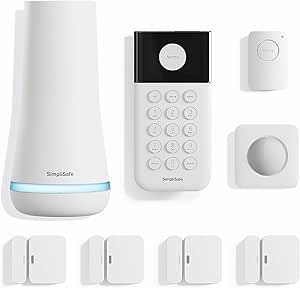 | Best for DIY Setup | Included components: Base station, keypad, 4 entry sensors, motion sensor, panic button | Connectivity: Wireless | Siren: 100 dB | VIEW LATEST PRICE | See Our Full Breakdown |
| RenseCum 24-Piece Wireless Home Security Alarm System with 4.3-Inch Touch Screen |  | Best for Many Entry Points | Set size: 24 pieces | Screen: 4.3-inch touch screen | Connectivity: Wireless; product details conflict on Wi-Fi and GSM/4G | VIEW LATEST PRICE | See Our Full Breakdown |
| eufy Security Essential 7-Piece Alarm System |  | Best for Local Storage | Included components: HomeBase Mini, keypad, 4 entry sensors, 1 motion sensor | Storage: 64GB local storage | Connectivity: Wireless | VIEW LATEST PRICE | See Our Full Breakdown |
| ADT Blu Home Security System Starter Kit |  | Best for Pet Owners | Included components: Base hub, 3 door/window sensors, pet-friendly motion sensor, yard sign, 4 window stickers | Connectivity: Wireless with cellular backup; Bluetooth accessories | Power source: Corded electric base; battery-powered accessories | VIEW LATEST PRICE | See Our Full Breakdown |
| home security system kit | Connectivity |
|---|---|
| Ring Alarm 8-Piece Kit | Ethernet, Wi-Fi, Z-Wave, Bluetooth for setup |
| Ring Alarm 5-Piece Wireless Se | Ethernet, Wi-Fi, Z-Wave, Bluetooth; cellular backup with a compatible subscription |
| Tolviviov 8-Piece WiFi Home Se | — |
| DIY WiFi Home Security Alarm S | — |
| Ring Alarm 14-Piece Wireless S | Ethernet, Wi-Fi, Z-Wave, Bluetooth; cellular backup with compatible subscription |
| 8-Piece WiFi and GSM Home Secu | 2.4 GHz WiFi and 2G cellular |
| tolviviov 12-Piece Wireless Wi | Wireless, 2.4 GHz WiFi |
| Tolviviov 15-Piece WiFi Home S | WiFi, Alexa |
| Hapippofa Gen 2 Wireless Home | 2.4 GHz WiFi; optional 4G cellular |
| eufy Security 5-Piece Home Ala | Wireless |
| PGST 9-Piece Home Security Sys | 2.4 GHz Wi-Fi and 4G |
| SimpliSafe 8-Piece Wireless Ho | Wireless |
| RenseCum 24-Piece Wireless Hom | Wireless; product details conflict on Wi-Fi and GSM/4G |
| eufy Security Essential 7-Piec | Wireless |
| ADT Blu Home Security System S | Wireless with cellular backup; Bluetooth accessories |
More Details on Our Top Picks
Ring Alarm 8-Piece Kit (2nd Gen) Home Security System
For a small home that needs coverage at several entry points, I’d put the Ring Alarm 8-Piece Kit ahead of the more basic Ring Alarm 5-Piece Wireless Security System. Four contact sensors, a motion detector, and a range extender give this kit a more usable starting layout for a one- or two-bedroom home, while app alerts make it possible to check the system away from home. Its rechargeable base station backup is rated for up to 24 hours, adding a buffer during a power outage. The tradeoff is that professional monitoring and some features depend on a separate subscription, and expansion means buying additional sensors separately. Compared with the Ring Alarm 14-Piece Wireless Security System Kit, this is easier to fit into a smaller home, but it has fewer sensors and only one keypad.
Pros:- Four contact sensors and one motion detector provide a fuller initial setup than the Ring 5-Piece kit.
- Range extender is included to help the wireless system reach its sensors.
- Rechargeable base station battery is rated for up to 24 hours of backup.
- Ring app alerts support remote system monitoring.
Cons:- Professional monitoring and some features require a separate Ring subscription.
- Extra sensors and accessories must be purchased separately.
- One included keypad may be inconvenient for homes with multiple common entrances.
Best for: People in one- or two-bedroom homes who want a Ring app controlled starter kit with coverage for several doors and windows.
Not ideal for: Households with multiple floors or many entry points that need more included sensors and a second keypad from the start.
- Kit contents:1 base station, 1 keypad, 4 contact sensors, 1 motion detector, 1 range extender
- Recommended home size:1–2 bedrooms
- Connectivity:Ethernet, Wi-Fi, Z-Wave, Bluetooth for setup
- Base station battery backup:Rechargeable, up to 24 hours
- Security modes:Disarmed, Away, Home
- Base station dimensions:6.65 × 6.65 × 1.46 in
- Warranty:1-year limited warranty
Our verdict“Choose this kit for a small home that needs more entry sensors than the basic Ring 5-Piece set while keeping the setup compact.”
Ring Alarm 5-Piece Wireless Security System Kit
The Ring Alarm 5-Piece Wireless Security System Kit makes sense when a buyer wants the core Ring alarm components and plans to add coverage gradually. Its single contact sensor, motion detector, keypad, base station, and range extender cover a basic layout, but leave less room for multiple doors and windows than the Ring Alarm 8-Piece Kit (2nd Gen), which includes four contact sensors. App alerts and remote monitoring keep the system manageable from a phone, while Alexa voice control is available. A rechargeable battery provides 24-hour base station backup; cellular backup and professional monitoring require a compatible subscription. I’d choose this for a small apartment or a home where only one entry point needs a contact sensor at first. Buyers with broader coverage needs may quickly need separately sold sensors.
Pros:- Includes the core base station, keypad, motion detector, contact sensor, and range extender.
- App alerts and remote device monitoring are available through Ring.
- Expandable with separately sold sensors and accessories.
- Rechargeable base station backup is rated for 24 hours.
Cons:- Only one contact sensor is included, limiting entry-point coverage out of the box.
- Professional monitoring and some features require a separate subscription.
- Cellular backup depends on a compatible subscription.
Best for: Apartment dwellers or first-time alarm buyers who want a small Ring setup centered on one monitored entry point and a motion detector.
Not ideal for: Households seeking coverage for several doors and windows without purchasing extra sensors soon after setup.
- Included components:Base station, keypad, contact sensor, motion detector, range extender
- Connectivity:Ethernet, Wi-Fi, Z-Wave, Bluetooth; cellular backup with a compatible subscription
- Base station backup battery:Rechargeable, 24-hour backup
- Security modes:Disarmed, Away, Home
- Base station dimensions:6.65 × 6.65 × 1.46 in
- Base station operating temperature:-4°F to 104°F (-20°C to 40°C)
- Warranty:1-year limited warranty
Our verdict“Pick this if you want a compact Ring system for a simple layout and are comfortable adding sensors as your coverage needs grow.”
Tolviviov 8-Piece WiFi Home Security Alarm System
If avoiding recurring subscription fees is the priority, the Tolviviov 8-Piece WiFi Home Security Alarm System offers a different path from the Ring kits. Five door and window sensors give it more entry coverage than the Ring Alarm 5-Piece Wireless Security System Kit, and two remotes let household members arm or disarm it without opening an app. The system supports app alerts, voice control, and expansion to 20 sensors, with an 8-hour emergency battery backup. That backup is shorter than the Ring kits’ 24-hour rating, and the alarm station must stay connected to AC power. Its Wi-Fi connection is 2.4 GHz only, so it may require router configuration in homes set up for 5 GHz. I’d favor it for DIY buyers who want broad sensor coverage without a subscription.
Pros:- Five door and window sensors are included for entry-point coverage.
- No subscription fee is listed for the system.
- Two remotes provide a way to control the alarm without using the app.
- Can expand to 20 sensors and five remotes or keypads.
Cons:- Supports 2.4 GHz Wi-Fi only, not 5 GHz.
- Alarm station must remain connected to AC power.
- Emergency battery backup is rated for up to 8 hours, shorter than the Ring kits’ 24-hour rating.
Best for: DIY households that want several door and window sensors, local remote controls, and app alerts without a recurring subscription.
Not ideal for: Buyers who need a longer stated backup period, 5 GHz Wi-Fi support, or a system that does not depend on a powered alarm station.
- Kit contents:1 alarm station, 5 door and window sensors, 2 remote controls
- Wi-Fi:2.4 GHz only; does not support 5 GHz
- Maximum expansion:20 sensors and 5 remote controls/keypads
- Backup battery:Up to 8 hours
- Maximum range:100 meters
- Power:AC adapter required for alarm station; battery backup
- Installation:Self-adhesive DIY setup without tools
Our verdict“Choose Tolviviov if you want more included entry sensors and no subscription fee, and can work with 2.4 GHz Wi-Fi and shorter backup.”
DIY WiFi Home Security Alarm System Kit, 21 Pieces
This 21-piece DIY WiFi Home Security Alarm System Kit is the coverage-first choice in this batch: it lists six door and window sensors, motion detection, remotes, and a 120dB siren. That gives it a broader included setup than the Tolviviov 8-Piece WiFi Home Security Alarm System, which supplies five entry sensors and two remotes but a smaller kit. The hub’s battery is rated for up to 48 hours, longer than the stated backup for either Ring kit, and the system works with Smart Life/Tuya and Alexa. The tradeoffs are a 2.4GHz-only Wi-Fi connection and drilled hub mounting, which makes installation less flexible than Tolviviov’s self-adhesive approach. I’d shortlist it for buyers who value a loud siren and many included pieces over simple placement.
Pros:- Six door and window sensors are included.
- 120dB siren provides a loud local alarm.
- Hub battery is rated for up to 48 hours of backup.
- Works with Smart Life/Tuya app and Alexa.
Cons:- Hub installation requires drilling.
- Connects to 2.4GHz Wi-Fi only.
- The supplied description does not specify the exact contents of all 21 pieces.
Best for: Homeowners who want multiple entry sensors, motion detection, and a loud siren in a larger DIY setup.
Not ideal for: Renters who cannot drill for hub mounting or households whose Wi-Fi setup does not support 2.4GHz devices.
- Kit size:21 pieces
- Wi-Fi:2.4GHz only
- Door and window sensors:6 included; up to 2-year battery life
- Motion detection:110° angle; up to 12 meters
- Siren:120dB
- Hub backup battery:Up to 48 hours
- Installation:Hub requires drilled mounting
Our verdict“Choose this kit when broad sensor coverage and a loud siren matter more than drill-free installation or dual-band Wi-Fi support.”
Ring Alarm 14-Piece Wireless Security System Kit
For a two- to four-bedroom home, the Ring Alarm 14-Piece Wireless Security System Kit is the most ready-to-deploy Ring option here. Eight contact sensors and two motion detectors spread coverage across more entry points and rooms than the Ring Alarm 8-Piece Kit (2nd Gen); a second keypad also makes arming the system from another part of the home more practical. The base station retains a 24-hour rechargeable backup, and the app supports remote monitoring. Its larger bundle is useful when a home needs that sensor count, but it can be more equipment than a small apartment needs. As with the other Ring kits, professional monitoring and some features require a separate subscription, and further expansion calls for separately sold accessories. I’d reserve this pick for households that can use the extra sensors now.
Pros:- Eight contact sensors and two motion detectors cover more areas than the smaller Ring kits.
- Two keypads support arming from separate parts of the home.
- Rechargeable base station backup is rated for 24 hours.
- App notifications and remote monitoring are available through Ring.
Cons:- Professional monitoring and some features require a separate Ring subscription.
- Additional sensors and accessories are sold separately.
- The larger bundle may be unnecessary for homes with few entry points.
Best for: Families in two- to four-bedroom homes who want multiple entry sensors, two motion detectors, and keypads in separate areas.
Not ideal for: People in small apartments or compact homes who would leave much of the included sensor bundle unused.
- Kit contents:1 base station, 2 keypads, 8 contact sensors, 2 motion detectors, 1 range extender
- Recommended home size:2–4 bedrooms
- Connectivity:Ethernet, Wi-Fi, Z-Wave, Bluetooth; cellular backup with compatible subscription
- Base station battery backup:Rechargeable, 24 hours
- Security modes:Disarmed, Away, Home
- Base station dimensions:6.65 × 6.65 × 1.46 in
- Warranty:1-year limited warranty
Our verdict“Choose this Ring kit for a multi-room home that can use its eight contact sensors and second keypad from day one.”
8-Piece WiFi and GSM Home Security Alarm System with Touchscreen
For buyers who want a kit that can alert them in more than one way, this system pairs WiFi app alerts with 2G cellular connectivity and SMS notifications. Its touchscreen panel, motion and entry sensors, remotes, RFID tags, and siren give it more control options out of the box than the eufy Security 5-Piece Home Alarm Kit, which is a simpler app-led setup. Support for up to 100 wireless zones also leaves room to add sensors as coverage needs grow.
The tradeoff is its network dependence: WiFi is limited to 2.4 GHz, and the cellular connection uses 2G. I’d check that 2G service is available where the system will be used before relying on it as a backup. This makes the most sense for buyers who value flexible alerts and expansion, while those seeking a straightforward, compact starter kit may prefer eufy.
Pros:- Includes a touchscreen panel, motion and entry sensors, two remotes, RFID tags, and a siren
- Offers app and SMS alerts alongside app and voice control
- Supports Alexa and Google Assistant
- Can expand to up to 100 wireless zones
Cons:- WiFi works only on the 2.4 GHz band
- Cellular connectivity uses 2G, whose local availability may be limited
Best for: Households that want touchscreen control, several alert methods, and room to add sensors over time
Not ideal for: Buyers who need 5 GHz WiFi or want cellular backup on a newer network than 2G
- Kit contents:Control panel, motion sensor, door/window sensor, 2 remote controls, 2 RFID tags, siren
- Connectivity:2.4 GHz WiFi and 2G cellular
- Display:2.4-inch TFT touchscreen
- Siren:120 dB
- Wireless zones:Up to 100
- Compatible assistants:Alexa and Google Assistant
- App:Tuya Smart
- Power and connector:Battery powered; USB Type-C
Our verdict“Choose this kit if you want several ways to control and receive alerts from an expandable alarm system and can confirm 2G service is available.”
tolviviov 12-Piece Wireless Wi-Fi Home Security Alarm System
With nine contact sensors and two remotes in the box, this tolviviov kit is a practical fit for a home with many doors or windows to monitor. That focus separates it from the 8-Piece WiFi and GSM Home Security Alarm System with Touchscreen, which offers a touchscreen and more alert routes but includes fewer entry sensors. Self-adhesive, DIY installation also suits buyers who want to place sensors themselves, and the system can grow to 20 sensors.
The simpler setup comes with limits: it relies on 2.4 GHz WiFi for connectivity, and the base station needs AC power. Its backup battery provides up to eight hours, which may not cover a longer outage. I’d pick it for broad entry-point coverage and app alerts, but buyers seeking cellular backup or a longer stated backup duration should compare other kits in this roundup.
Pros:- Includes nine door sensors and two remote controls
- Supports real-time mobile alerts and app control
- Works with Alexa and Google Assistant
- Can expand to 20 sensors and requires no subscription fee
Cons:- Supports only 2.4 GHz WiFi
- Base station must remain connected to AC power
- Backup battery lasts up to eight hours
Best for: Renters or homeowners with several accessible doors and windows who want a self-installed alarm with app alerts
Not ideal for: Buyers who need cellular connectivity or extended operation during a power outage
- Included components:1 base station, 9 door sensors, 2 remote controls
- Connectivity:Wireless, 2.4 GHz WiFi
- Control methods:App, remote, voice
- Compatible assistants:Alexa and Google Assistant
- Siren volume:120 dB
- Backup battery:Up to 8 hours
- Maximum expansion:20 sensors and 5 remotes/keypads
- Installation and power:Self-adhesive DIY; base station requires AC adapter
Our verdict“Choose this kit when covering many doors and windows matters more than cellular backup or long outage operation.”
Tolviviov 15-Piece WiFi Home Security System
This kit combines 10 door sensors with a motion sensor, keypad, and two remotes, making it the entry-focused pick for buyers who want to cover many openings in one DIY setup. Compared with the tolviviov 12-Piece Wireless Wi-Fi Home Security Alarm System, it adds a keypad, a motion sensor, and another door sensor. Those additions can make arming and checking a larger home more convenient without requiring a monthly fee.
Its reach is still bounded: the system expands to 20 sensors, and it connects over 2.4 GHz WiFi only. The supplied information does not include a professional installation option, so buyers should be comfortable setting it up themselves. I’d favor this version over the 12-piece kit when the extra keypad and entry sensor suit the floor plan; a smaller home may not need the added coverage.
Pros:- Includes 10 door sensors, a motion sensor, keypad, and two remotes
- Provides app control and real-time smartphone alerts
- Supports Alexa voice control
- Has no monthly subscription fee and can expand
Cons:- Works only with 2.4 GHz WiFi
- Maximum expansion is 20 sensors and 5 remotes or keypads
- No professional installation option is stated
Best for: DIY-minded households with many doors or windows that want a keypad and broad entry coverage in one kit
Not ideal for: People seeking professional installation or a simpler system for a small home
- Included components:WiFi alarm base station, keypad, motion sensor, 10 door sensors, 2 remote controls
- Connectivity:WiFi, Alexa
- WiFi compatibility:2.4 GHz only; 5 GHz not supported
- Siren volume:120 dB
- Maximum expansion:20 sensors and 5 remotes/keypads
- Maximum range:100 feet
- Backup battery:8 hours
- Installation:DIY
Our verdict“Choose this kit if you want a keypad and more entry sensors than the 12-piece tolviviov bundle for a self-installed home alarm.”
Hapippofa Gen 2 Wireless Home Security System, 16-Piece DIY Alarm Kit
The Hapippofa kit brings together six door/window sensors, three motion detectors, and an SOS button, giving it broader room coverage than the entry-heavy Tolviviov 15-Piece WiFi Home Security System. A touchscreen hub, RFID key fobs, remotes, and a wired siren add several ways to arm the system or raise an alert. Its Smart Life app handles WiFi alerts and remote control, while optional cellular calling and SMS offer another notification route if you buy a SIM card and plan.
That cellular option adds setup and ongoing service requirements, even though the kit itself requires no monthly subscription. It also uses 2.4 GHz WiFi only. The supplied siren information conflicts, listing both 100 dB and 120 dB, so I would not choose it based on a specific siren level. It suits buyers who want a varied sensor mix and accept those caveats.
Pros:- Includes six contact sensors, three motion detectors, and an SOS button
- Provides touchscreen, remote, and RFID control options
- Supports app alerts and remote control over WiFi
- Optional 4G calling and SMS are available without a required kit subscription
Cons:- Optional 4G calling and SMS require a separately purchased SIM card and plan
- WiFi support is limited to 2.4 GHz
- Siren volume is inconsistently listed as 100 dB and 120 dB
Best for: DIY households that want motion and entry sensors across multiple rooms plus an optional cellular alert route
Not ideal for: Buyers who want cellular alerts without arranging a separate SIM and plan, or need a confirmed siren specification
- Kit contents:Touchscreen hub, 6 door/window sensors, 3 PIR motion detectors, 2 remotes, 2 RFID key fobs, SOS button, wired siren
- Connectivity:2.4 GHz WiFi; optional 4G cellular
- App:Smart Life
- Wireless range:100 feet
- Siren volume:Conflicting supplied listings: 100 dB and 120 dB
- Cellular service:SIM card and plan sold separately
- Installation:DIY, screw-in; sensors and accessories arrive pre-paired
- Connector:USB Type-C
Our verdict“Choose Hapippofa for its varied sensor mix and optional cellular alerts if you are comfortable arranging the SIM plan and overlooking the unclear siren specification.”
eufy Security 5-Piece Home Alarm Kit
The eufy kit keeps the hardware list focused: a HomeBase, keypad, motion sensor, and two entry sensors. For a smaller home or a first alarm setup, that compact mix may be easier to place and manage than the sensor-heavy tolviviov 12-Piece Wireless Wi-Fi Home Security Alarm System, which is better suited to covering many openings. Eufy sends motion and breach alerts through its app, installs with included mounts and adhesive, and has no monthly fees.
The tradeoff is limited coverage in the box: two entry sensors will not cover a home with many accessible doors and windows. The supplied details also describe app alerts and do not include professional monitoring by default. I’d choose this kit for a straightforward, app-managed starter setup; buyers who need more sensors or cellular notifications should look to larger kits such as Hapippofa.
Pros:- Includes a HomeBase, keypad, motion sensor, and two entry sensors
- DIY setup uses included mounts and adhesive
- App alerts cover motion and entry breaches
- No monthly fees
Cons:- Two entry sensors may be insufficient for homes with many openings
- Smartphone and app are required for alerts
- Professional monitoring is not included by default
Best for: Apartment dwellers or first-time buyers who want a small, app-managed alarm kit for a few entry points
Not ideal for: Households with many doors and windows to cover or buyers seeking professional monitoring by default
- Included components:HomeBase, keypad, motion sensor, 2 entry sensors
- Connectivity:Wireless
- Control method:App
- Alert type:Motion
- Maximum range:30 feet
- Power source:Battery powered
- Battery cell type:Lithium metal
- Warranty:12 months
Our verdict“Choose eufy for a compact, no-monthly-fee starter kit, and choose a larger bundle if you need broader sensor coverage.”
PGST 9-Piece Home Security System with Wi-Fi and 4G
Wi-Fi with 4G fallback gives this kit a useful distinction among the starter systems here: it can switch to cellular connectivity if Wi-Fi disconnects. Its base station, keypad, four entry sensors, two motion detectors, and two remotes offer more ways to arm the system than the leaner SimpliSafe 8-Piece Wireless Home Security System. App, keypad, remote, and Alexa controls also suit households where not everyone wants to rely on a phone.
The tradeoff is that camera coverage requires separate PGST purchases, and some features depend on a compatible app and network. Unlike the eufy Security Essential 7-Piece Alarm System, which includes local storage, this kit’s standout case is connectivity flexibility rather than included storage. I’d choose it for a sensor-focused setup with cellular backup, while buyers seeking a clearly specified local-storage option should look elsewhere.
Pros:- Includes four entry sensors, two motion detectors, a keypad, and two remotes
- Supports 2.4 GHz Wi-Fi with automatic 4G switching
- Offers app, keypad, remote, and Alexa control
- Sensor coverage can be expanded
Cons:- Cameras must be purchased separately
- Some features rely on a compatible app and network connection
Best for: Households that want multiple ways to arm a sensor-based alarm and a cellular fallback if home Wi-Fi drops
Not ideal for: Buyers who want included cameras or local storage as part of the starter kit
- Kit contents:Base station, keypad, 4 door/window sensors, 2 motion detectors, 2 remote controls
- Connectivity:2.4 GHz Wi-Fi and 4G
- Control methods:App, push button, remote, voice
- Compatible devices:Alexa, Google, smartphone, tablet, personal computer
- Installation:Self-adhesive
- Dimensions:7 x 3.1 x 3 inches
- Model:A04-H
Our verdict“Choose the PGST if connectivity backup and several included sensors matter more than having cameras or local storage in the box.”
SimpliSafe 8-Piece Wireless Home Security System
The panic button and straightforward DIY setup give this kit a practical edge for people who want a familiar, dedicated way to call for help without wiring or drilling. It includes four entry sensors and a motion sensor, while its 100 dB siren adds an audible alert inside the home. Compared with the PGST 9-Piece Home Security System with Wi-Fi and 4G, SimpliSafe has fewer included motion detectors and no listed 4G fallback, but it makes professional monitoring an optional path.
That path comes with a tradeoff: monitoring and some features require a subscription, and service is supported only in the US. The base station battery lasts up to 24 hours, which can help during a power outage, though it does not make the whole kit independent of ongoing service choices. This is a better fit for buyers who value a simple entry kit and optional monitoring than for those prioritizing no-subscription use.
Pros:- DIY installation requires no wiring or drilling
- Includes four entry sensors, a motion sensor, and a panic button
- Works with the SimpliSafe app, Alexa, and Google Assistant
- Professional monitoring is optional and has no long-term contract
Cons:- Professional monitoring and some features require a subscription
- System and monitoring services are supported only in the US
Best for: US renters or homeowners who want a DIY alarm with a panic button and the option to add professional monitoring
Not ideal for: Buyers outside the US or households that want all monitoring features without a subscription
- Included components:Base station, keypad, 4 entry sensors, motion sensor, panic button
- Connectivity:Wireless
- Siren:100 dB
- Motion sensor range:35 feet
- Motion sensor field of view:90 degrees
- Base station battery life:Up to 24 hours
- Warranty:1-year limited manufacturer warranty
Our verdict“Pick SimpliSafe if you want a simple DIY kit with a panic button and optional US monitoring, and can accept subscription limits.”
RenseCum 24-Piece Wireless Home Security Alarm System with 4.3-Inch Touch Screen
With a stated 24-piece set and a 4.3-inch touch-screen panel, this kit is aimed at buyers who want to cover many doors, windows, and other entry points from one central control. Its self-adhesive installation can also appeal to people who want to avoid drilling. Compared with the ADT Blu Home Security System Starter Kit, which includes three entry sensors and a pet-friendly motion sensor, RenseCum is positioned around a larger sensor set and a touchscreen interface.
There is a significant information gap: the listing’s title mentions GSM/4G and Wi-Fi, while its description says it can operate without Wi-Fi or a router. That leaves the connectivity behavior unclear, making it harder to judge remote alerts and fallback coverage against the PGST kit’s stated Wi-Fi and 4G switching. I’d consider it for broad entry-point coverage only after confirming the exact connectivity and included sensor count; buyers who need dependable remote access should favor a better-specified option.
Pros:- Listed as a 24-piece kit for multiple entry points
- Includes a 4.3-inch touch-screen control panel
- Self-adhesive installation avoids drilling
- Product details describe offline operation without Wi-Fi or a router
Cons:- Listing conflicts on whether Wi-Fi or GSM/4G is supported or required
- The exact contents represented by the 24-piece count are not detailed in the supplied specifications
Best for: Homeowners with many doors or windows who want a large sensor bundle and a central touchscreen
Not ideal for: Buyers who need clearly documented network behavior or rely on confirmed remote alerts
- Set size:24 pieces
- Screen:4.3-inch touch screen
- Connectivity:Wireless; product details conflict on Wi-Fi and GSM/4G
- Control methods:App, touch
- Installation:Self-adhesive
- Compatible devices:Smartphone, tablet, personal computer
- Model:A107F
Our verdict“Consider RenseCum for a touchscreen-led, large sensor setup only if the seller confirms its connectivity and kit contents.”
eufy Security Essential 7-Piece Alarm System
The 64GB local storage and no-monthly-fee positioning make this kit the clearest fit here for buyers who want storage included with their home alarm. It pairs a HomeBase Mini with a keypad, four entry sensors, and a motion sensor, giving a small household a balanced starting layout. Compared with the SimpliSafe 8-Piece Wireless Home Security System, eufy emphasizes local storage and guided setup rather than a panic button and an optional professional monitoring path.
Its five-year stated battery life may reduce replacement interruptions, but the battery-powered sensors will still need eventual replacement. The seven-piece bundle also leaves expansion to separately purchased accessories, so a larger home may need more spending and setup after the initial install. I’d rank it for buyers who value local storage and a contained DIY kit; those wanting cellular backup should look instead at the PGST system, which explicitly lists Wi-Fi and 4G connectivity.
Pros:- Includes HomeBase Mini with 64GB local storage
- No monthly fee is listed
- Includes four entry sensors and one motion sensor
- Guided setup and app control avoid complicated wiring
Cons:- Battery-powered components eventually require replacement
- Additional accessories may be needed to expand coverage
Best for: DIY households that want local storage and a starter mix of entry and motion sensors without a monthly fee
Not ideal for: Buyers who need cellular backup or expect a larger home to be fully covered by the included sensors
- Included components:HomeBase Mini, keypad, 4 entry sensors, 1 motion sensor
- Storage:64GB local storage
- Connectivity:Wireless
- Control method:App, push button
- Power source:Battery powered
- Battery average life:5 years
- Warranty:12
Our verdict“Choose eufy if local storage and a no-monthly-fee starter setup matter more than cellular backup or extensive included coverage.”
ADT Blu Home Security System Starter Kit
The pet-friendly motion sensor gives this starter kit a distinct role for households where a standard motion detector could be a concern. It also includes three door and window sensors, a base hub, a yard sign, and four window stickers, so buyers get visible deterrents alongside basic indoor detection. Compared with the eufy Security Essential 7-Piece Alarm System, ADT Blu includes a pet-friendly sensor and signs, while eufy offers more entry sensors and specified local storage.
Setup is designed for adhesive strips or optional screws through the ADT+ app, and alerts go to a phone when a sensor is triggered. The corded base hub limits placement to a powered outlet, and monitoring requires a paid subscription after the 30-day free period. Its 90-day limited warranty is also shorter than the SimpliSafe kit’s listed one-year warranty. I’d choose ADT Blu when the pet-focused sensor and deterrent materials fit the home, not when outlet-free placement or longer warranty coverage is the priority.
Pros:- Includes a pet-friendly motion sensor and three entry sensors
- DIY setup supports adhesive strips or optional screw mounts
- ADT+ app provides alerts when a sensor is triggered
- Can be expanded with additional cameras and sensors
Cons:- Base hub requires corded power, limiting placement
- Monitoring requires a paid subscription after the 30-day free period
- Eligible equipment parts have a 90-day limited warranty
Best for: Pet-owning households seeking a DIY starter kit with a pet-friendly motion sensor and visible deterrent signs
Not ideal for: Buyers who need a battery-powered base hub, longer listed warranty coverage, or monitoring without a paid subscription
- Included components:Base hub, 3 door/window sensors, pet-friendly motion sensor, yard sign, 4 window stickers
- Connectivity:Wireless with cellular backup; Bluetooth accessories
- Power source:Corded electric base; battery-powered accessories
- Installation:Self-adhesive strips or optional screw mounts
- App:ADT+
- Warranty:90-day limited warranty on eligible equipment parts
- Model:KIT-BS
Our verdict“Pick ADT Blu if you have pets and want an app-guided starter kit with deterrent signs, and can place its hub near power.”

How We Picked
I ranked these home security system kits by how well their included pieces, setup approach, and connectivity fit a real household—not by sensor count alone. I weighed the balance of hub, entry sensors, motion detection, and controls; the clarity of app or keypad operation; and whether monitoring or expansion choices are part of the system’s appeal. I also considered how much a buyer may need to learn about compatibility, subscriptions, and cellular service before choosing.
The ranking favors kits that offer a clear use case and a practical path to cover common entry points. Ring Alarm 8-Piece takes the overall spot for its middle-ground bundle, while smaller kits rank better for compact homes and larger bundles for buyers with more rooms or openings. Systems with cellular connectivity, touchscreens, or established monitoring ecosystems earn attention when those features solve a specific need, but complexity and service dependencies count against them. Product names and listed kit sizes describe the lineup; buyers should check the current package contents and service terms before purchase.
Factors to Consider When Choosing Home Security System Kits
I’d choose a kit by working backward from how your home is laid out and how you expect to respond to an alert. These decisions affect the system you need more than a large bundle count or a long feature list.
Map entry points before choosing a sensor count
Walk through every exterior door and accessible ground-floor window, then note where motion detection could cover a shared path. This gives you a coverage plan tied to your home rather than a package number. A kit with many contact sensors can still leave a gap if you need a motion sensor for a large open room. Also consider detached garages, basement doors, and rooms where pets move around. If you expect to expand later, check whether compatible sensors are sold separately. Buying a smaller kit can be sensible when it covers the essentials and the add-on path is clear.
Decide what should happen when the internet drops
Wi-Fi-connected systems rely on a working home network for some app and alert functions, so think about how you want the alarm to behave during an outage. A kit that supports cellular communication may offer another route, but that feature can require a compatible plan or separate service. Read what remains available without internet, including local siren behavior, keypad control, and remote notifications. Do not assume that cellular backup means every feature will continue as usual. If you live somewhere with frequent outages, backup power and communication terms deserve as much attention as sensor coverage. In a stable network environment, a simpler Wi-Fi setup may be enough.
Compare self-monitoring with paid monitoring
Self-monitoring puts alerts and decisions in your hands, which can work well if someone is usually available to check a phone. Professional monitoring may suit households that want an outside service to handle alarm events, but the plan’s cost, contract, cancellation terms, and response process all matter. Check whether the kit works without a subscription and which functions are restricted when a plan ends. Also ask who receives alerts when multiple household members share access. Choosing hardware before understanding its service model can leave you paying for features you did not intend to use. Match the monitoring arrangement to your routine, not just the advertised feature list.
Choose controls everyone in the household can use
Consider whether household members prefer a keypad, touchscreen, phone app, or a mix of controls. A phone-first system may feel simple to one person and inconvenient to a guest, caregiver, or family member without app access. A hub with physical controls can make arming and disarming more direct, though it also adds a device to install and maintain. Check how the system handles user permissions, temporary access, and forgotten codes. Think through the routine at the door: a system that is awkward to disarm can lead people to bypass it. Ease of use is a security feature because it affects whether the system gets used consistently.
Check expansion and ecosystem fit before you commit
Many buyers add cameras, sensors, or smart-home devices after the initial installation, so confirm compatibility with the exact hub and generation in the kit. An ecosystem can simplify control when the devices you already own are supported, but it can also narrow future choices. Review whether add-ons use the same app and whether they need separate subscriptions. If you are moving or expect to change internet providers, consider how easy it is to reset and reinstall the equipment. Avoid choosing a system based only on a promise of broad compatibility; verify the devices and functions you plan to use. A kit that fits your current setup with room to grow is usually easier to live with than an oversized package.
Frequently Asked Questions
Is a larger home security kit automatically better?
No. A larger package only helps when its sensors cover the openings and rooms that matter in your home. Start with a floor plan and identify exterior doors, accessible windows, and shared interior paths. Some bundles emphasize contact sensors, while others may include a different balance of controls or detection devices. Check the included pieces and the system’s expansion options before deciding that a high piece count is the better fit.
Can I use a home security kit without paying for monitoring?
Some systems support self-monitoring, but the available functions vary by brand and plan. Before buying, confirm whether app alerts, remote control, event history, and cellular communication work without a paid service. A local siren can still be useful, but it does not provide the same outside response as a monitoring service. If you may subscribe later, check the plan terms and how service is activated. Base the decision on the tasks you want the system to handle when an alarm goes off.
What happens if my Wi-Fi or power goes out?
The answer depends on the hub, its backup battery, and whether the kit supports cellular communication. Some functions may continue locally while app access or remote alerts are interrupted. Cellular backup can provide another communication path, but it may depend on an active service plan and network coverage. Check the manufacturer’s outage behavior for the exact model rather than assuming all alarms work the same way. If outages are common where you live, make backup power and communication part of your selection criteria.
Should I choose a kit with a touchscreen or keypad?
Choose the control style that fits who will arm and disarm the system every day. A touchscreen can put several controls in one place, while a keypad may provide a direct way to enter a code without opening an app. A phone-based setup can be convenient for remote access but may be less comfortable for guests or household members who do not use the app. Check whether the system offers user codes and how access can be shared. The best interface is the one your household will use reliably.
How can I tell whether a kit will work with devices I already own?
Check compatibility against the exact system generation and hub, because support can differ across models in the same brand family. Make a short list of the cameras, voice assistants, and smart-home devices you expect to connect, then verify each one in the manufacturer’s compatibility information. Also look for subscription requirements or features that only work inside a particular app. Broad claims about smart-home support do not guarantee every device can trigger or control every alarm function. If you plan to add equipment later, confirm that compatible add-ons are available separately.
Conclusion
I’d choose the Ring Alarm 8-Piece Kit as the best overall for a balanced starting bundle, and the Ring Alarm 5-Piece Kit as the best value when a smaller home needs only basic entry coverage. For buyers who want a more guided service ecosystem, SimpliSafe 8-Piece is my best premium pick; those new to DIY alarms may prefer the simpler scale of the eufy Security Essential 7-Piece. For broader coverage or cellular communication, compare the larger Tolviviov and touchscreen Wi-Fi/GSM or Wi-Fi/4G kits against your actual floor plan and service needs. Pick the kit whose controls, backup options, and sensor mix match the way your household lives, then verify current contents and monitoring terms before ordering.