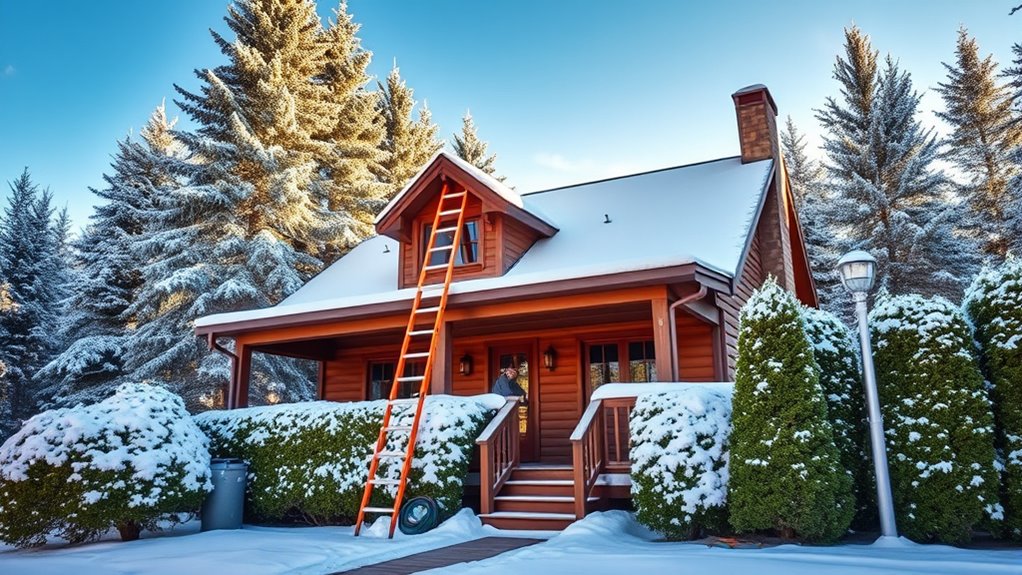

To keep your vacation home secure, focus on seasonal tasks like trimming landscaping, sealing entry points, and inspecting gutters to prevent damage. Reinforce doors and windows with locks or sensors, and consider using smart devices for real-time monitoring. Prepare for weather changes by inspecting roofs and clearing drains, and set up a routine to regularly check security systems and property conditions. Staying proactive will help you protect your investment—learn more to enhance your approach further.

Get privacy and security gear delivered free — and shop member deals
- Fast, free delivery on millions of items
- Access to Prime Big Deal Days deals on October 6–7
- Prime Video, Amazon Music and more included
Key Takeaways
- Perform seasonal landscaping and pest control to prevent overgrowth and protect property from pests.
- Secure doors and windows with reinforced locks and sensors for enhanced safety.
- Use smart technology like sensors and remote cameras for real-time monitoring and alerts.
- Prepare for weather changes by inspecting roofing, sealing gaps, and trimming trees.
- Establish a routine check-in schedule to inspect security systems, leaks, and property condition regularly.
As an affiliate, we earn on qualifying purchases.
Essential Seasonal Maintenance Tasks for Your Vacation Property

To keep your vacation home in top shape, performing seasonal maintenance tasks before and after each stay is essential. Start with landscaping enhancements to prevent overgrowth and maintain curb appeal, making your property look inviting and well-kept. Trim bushes, mow lawns, and clear debris, reducing hiding spots for pests. Implement pest control strategies, such as sealing entry points and applying treatments, to ward off insects and rodents during your absence. Regularly inspect gutters and drainage systems to prevent water damage and mold growth. By addressing landscaping and pest prevention proactively, you protect your investment and ensure your getaway remains comfortable and secure. Additionally, building resilience by preparing your property for unexpected weather events can further safeguard your investment. These measures help minimize surprises upon return and keep your vacation home in excellent condition year-round.
As an affiliate, we earn on qualifying purchases.
Tips for Securing Doors and Windows During Absence

Securing your doors and windows is vital to protect your vacation home while you’re away. Reinforcing locks ensures they can’t be easily forced open, adding an extra layer of security. Installing window sensors alerts you immediately if a window is tampered with, providing peace of mind. Consider using lock reinforcement devices on all entry points to prevent forced entry. Here’s a quick overview:
| Security Tip | Benefit | Implementation |
|---|---|---|
| Lock reinforcement | Deters intruders | Add metal plates or reinforce strike plates |
| Window sensors | Immediate alerts | Install sensors on all accessible windows |
| Secure secondary entries | Reduces access points | Lock or reinforce basement and garage doors |
In addition, utilizing digital platforms for monitoring your property can enhance security and provide real-time updates.
remote security cameras for home
As an affiliate, we earn on qualifying purchases.
As an affiliate, we earn on qualifying purchases.
Utilizing Modern Technology for Property Monitoring

Modern technology offers powerful tools to monitor your vacation home remotely, giving you peace of mind no matter where you are. Smart sensors can detect leaks, temperature changes, or unusual activity, alerting you immediately through your smartphone. With remote access, you can check security cameras, lock or release doors, and adjust settings from anywhere. These devices let you stay informed and respond quickly to potential issues, preventing costly damages or break-ins. Installing smart sensors and cameras is straightforward and affordable, making it easy to enhance your property’s security. Additionally, these systems can provide real-time alerts to notify you instantly of any suspicious activity or environmental changes. By leveraging these modern tools, you can assure your home remains safe and well-maintained during your absence, giving you confidence and peace of mind wherever you are.
As an affiliate, we earn on qualifying purchases.
Preparing Your Home for Different Weather Conditions

Preparing your vacation home for different weather conditions is essential to guarantee it remains in good shape year-round. Proper preparation helps prevent damage from storms, snow, heat, and humidity. Start by inspecting your roofing and sealing gaps to avoid leaks. Incorporate landscaping tips, such as trimming trees away from the house and ensuring proper drainage, to minimize storm damage. Additionally, pest prevention is vital—seal entry points and remove standing water to deter pests during wet seasons. Consider the following weather-specific strategies:
| Weather | Landscaping Tips | Pest Prevention |
|---|---|---|
| Winter | Clear snow, insulate pipes | Seal gaps, remove debris |
| Summer | Maintain drainage, shade plants | Eliminate standing water |
| Storms | Trim trees, reinforce windows | Store valuables, pest traps |
| Humid | Ventilate, keep gutters clean | Use repellents, trim vegetation |
Furthermore, implementing self-reflection techniques can help identify potential vulnerabilities in your home’s maintenance routine, ensuring proactive measures are taken before issues arise.
Creating a Regular Check-In Routine for Peace of Mind

Establishing a regular check-in routine gives you peace of mind by guaranteeing your vacation home stays in good condition, even when you’re not there. Consistent visits allow you to monitor landscape lighting, prevent pest issues, and spot potential problems early. During your check-ins, consider these actions:
Regular check-ins ensure your vacation home stays secure, well-maintained, and inviting year-round.
- Inspect landscape lighting to ensure safety and deter intruders
- Check for signs of pests or pest control needs
- Review the exterior and interior for damage or leaks
- Ensure all security systems are functioning properly
- Verify that windows and doors are secure
- Keep track of performance metrics to assess the overall condition of your property
Regular visits help maintain your property’s appearance and security, reducing the risk of costly repairs. By staying proactive, you keep your vacation home safe, well-maintained, and welcoming whenever you visit again.
Frequently Asked Questions
How Often Should I Update My Home Security System?
You should update your home security system at least once a year to stay current with security system upgrades and technology integration. Regular updates guarantee your system remains effective against new threats and compatible with smart home devices. Check for firmware or software updates, and consider professional assessments to identify vulnerabilities. Staying proactive guarantees your vacation home stays secure, giving you peace of mind wherever you are.
What Are the Signs of Potential Vandalism?
Vandalism can be like a shadow lurking unseen. Watch for property damage signs such as broken windows, graffiti, or tampered locks, which signal trouble. Unusual vehicles or strangers near your home also raise red flags. To prevent vandalism, keep your property well-lit, trim bushes, and install security cameras. Regular checks help you catch early signs and act swiftly, protecting your home from potential damage and maintaining your peace of mind.
How Can I Prevent Pests During Off-Season?
To prevent pests during the off-season, you should implement pest prevention strategies like sealing cracks, removing standing water, and storing food properly. Regular off-season monitoring helps you catch infestations early, so check your property periodically for signs of pests. Keep the home clean and eliminate clutter, which can serve as hiding spots. These steps make it less inviting for pests and help maintain your vacation home’s condition year-round.
Are There Specific Insurance Considerations for Seasonal Homes?
Imagine your vacation home sitting quietly, waiting for your return. You should review your insurance coverage to guarantee it includes protection against damages from storms, theft, or vandalism. Specific considerations include understanding your policy coverage limits and filing insurance claims promptly if needed. This way, you protect your investment and avoid surprises, giving you peace of mind knowing your seasonally vacant home is safeguarded even when you’re miles away.
How Do I Handle Emergencies Remotely?
You handle emergencies remotely by setting up remote alarm monitoring to get instant alerts, so you can act quickly. Make certain you have an emergency contact plan in place, assigning trusted neighbors or nearby friends to respond if needed. Keep contact information updated and guarantee they know how to access your home if necessary. Regularly test your alarm system and maintain clear communication channels to stay ahead of any issues.
Conclusion
As you prepare to leave your vacation home, imagine it standing strong like a quiet sentinel, weathering the seasons while you’re away. With routine maintenance, secure doors and windows, and modern tech watching over it, your retreat remains safe and inviting. Picture your home nestled peacefully, ready to welcome you back with open arms, no matter what the weather brings. Your careful planning transforms your getaway into a worry-free escape, secure and serene.
Fall Picks
fall essentials
As an affiliate, we earn on qualifying purchases.