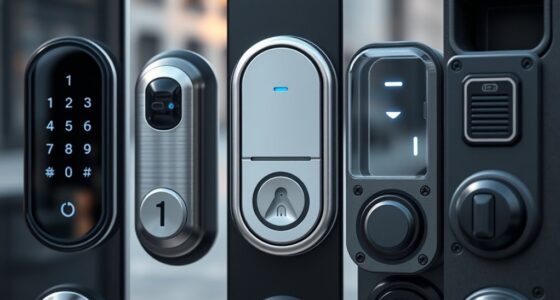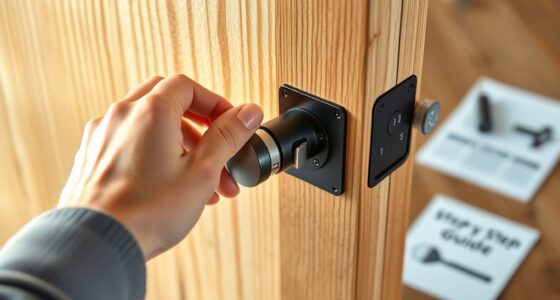
To prevent lockouts caused by battery failure, you should regularly check your smart lock’s battery level through alerts or app notifications. Keep spare batteries handy and replace them before they run out. Use backup power options like external batteries or integrated backup systems to guarantee continuous access during outages. Mechanical keys can serve as a reliable fallback. Exploring these safeguards helps maintain security; continue here to learn more ways to protect your lock.
Key Takeaways
- Regularly monitor battery levels via app notifications or indicator lights to replace batteries before failure causes lockouts.
- Incorporate backup power sources like external batteries or solar panels to ensure continuous lock operation during outages.
- Use mechanical key backups and ensure they are easily accessible for emergency entry during electronic or battery failures.
- Maintain proper battery contacts and keep compartments dry to prevent corrosion-related power disruptions.
- Implement alerts for low battery status to enable proactive replacement and prevent unexpected lockouts.
Common Causes of Battery-Related Lockouts
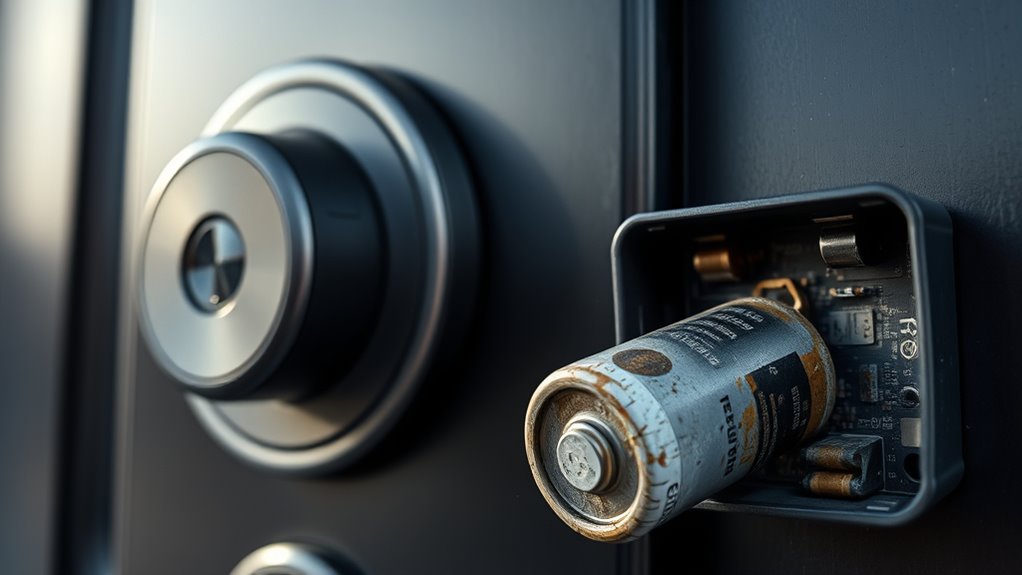
Battery-related lockouts often happen because of simple but overlooked issues. One common cause is battery corrosion, which occurs when moisture and dirt build up on the terminals, disrupting the power flow. Corrosion can be easily missed but noticeably affects your lock’s functionality. Another frequent problem is improper installation; if the batteries aren’t inserted correctly or if contacts aren’t aligned, the lock won’t receive power. Many people neglect to double-check battery placement, leading to unexpected lockouts. Regularly inspecting the battery compartment for corrosion and ensuring batteries are installed properly can prevent these issues. Additionally, understanding AI in Education can help manufacturers develop smarter lock systems that detect battery health and alert users proactively. Taking a few moments to maintain your lock’s power source can save you from frustration and potential security risks caused by battery-related failures.
Low Battery Alerts and Notifications
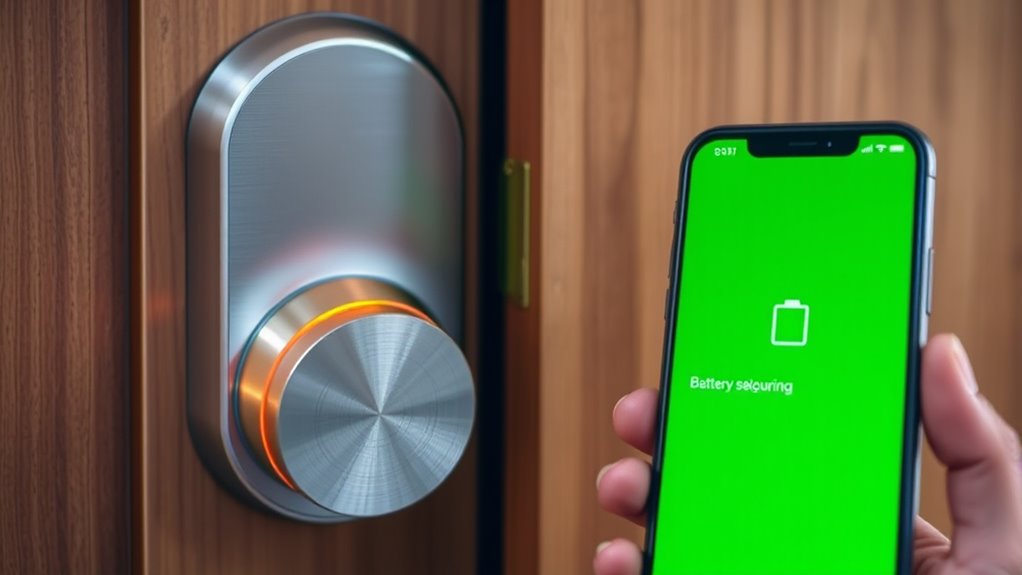
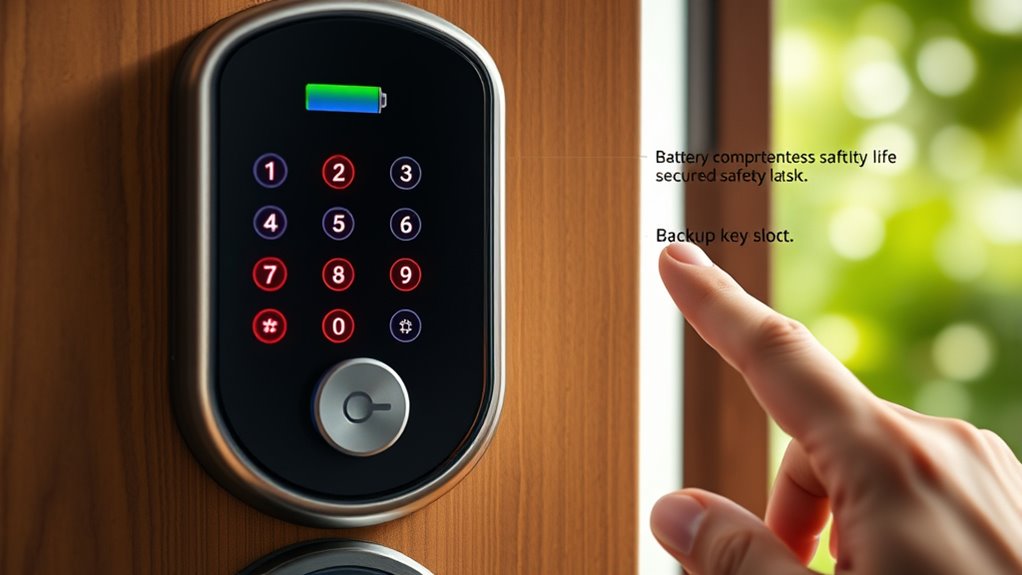
Many modern locks now come equipped with low battery alerts and notifications to help you stay ahead of potential failures. The battery indicator provides clear visual cues, showing when your battery level drops to a critical point. These alerts notify you before the battery completely dies, giving you ample time to replace or recharge it. Some locks also offer alert customization, allowing you to set how and when you receive notifications—whether through app alerts, email, or audible signals. This flexibility ensures you won’t be caught off guard. By paying attention to these alerts, you can proactively manage your lock’s power needs, reducing the risk of lockouts due to dead batteries. Staying vigilant with alerts keeps your smart lock functioning smoothly and reliably. Additionally, integrating AI technology into these systems can further enhance timely notifications and maintenance reminders.
Built-In Backup Power Options

Built-in backup power options keep your devices running even when main power fails. You can rely on external power sources or integrated backup batteries to maintain operation. Exploring these options helps guarantee your equipment stays functional during outages. Additionally, understanding the significance of angel numbers can provide spiritual reassurance during unexpected disruptions.
External Power Sources
When the primary power source fails, external power sources with built-in backup options can keep your device operational. Emergency power supplies, such as external batteries, are essential for guaranteeing your smart lock remains functional during outages. These external batteries can be connected easily, providing a quick power boost without the need for internal batteries. They are especially useful if you’re away from home or in a situation where replacing batteries isn’t immediately possible. External power sources are reliable backup options that prevent lockouts caused by power failures. By keeping a charged external battery nearby, you ensure continuous access, even during extended outages. Incorporating sustainable power solutions can further reduce environmental impact while maintaining security. This simple safeguard offers peace of mind, knowing your smart lock can always operate when you need it most.
Backup Battery Integration
Have you considered how integrated backup batteries can guarantee your smart lock stays operational during power failures? Built-in backup power options provide a seamless safety net, ensuring you’re never locked out. These batteries are designed for power conservation, extending their lifespan while maintaining essential functions. By efficiently managing energy use, the backup battery remains ready when needed most, reducing the risk of sudden lockouts. Regularly checking and replacing batteries helps maximize their lifespan, ensuring reliable performance over time. Integrating backup batteries also minimizes dependence on external power sources, simplifying maintenance. Additionally, the contrast ratio of the backup system influences how effectively it maintains performance in varying conditions, ensuring consistent operation during outages. Overall, a well-designed backup battery system offers peace of mind, keeping your smart lock functional during outages without draining power unnecessarily.
Mechanical Key Access as a Fallback
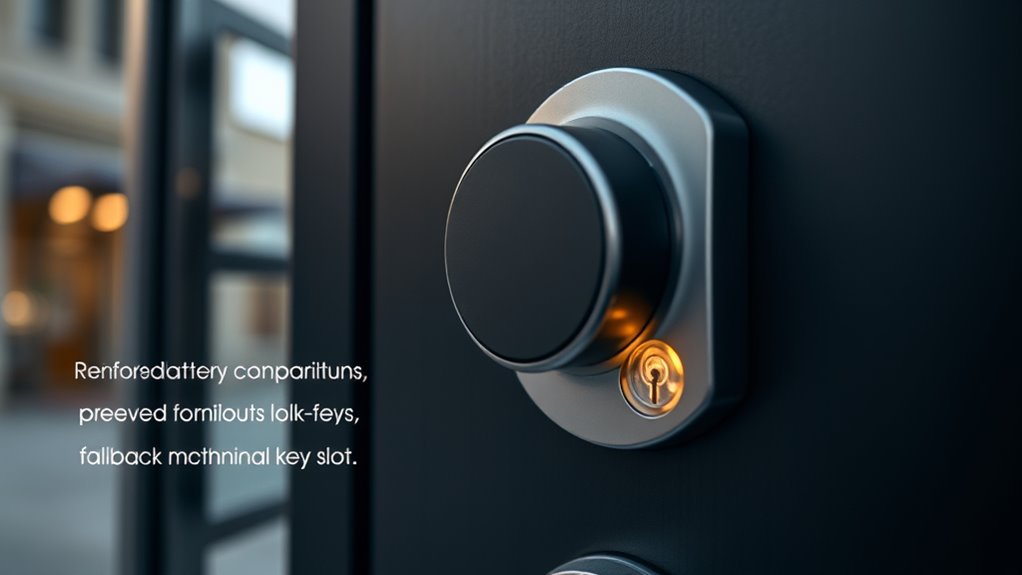
When relying on a mechanical key as a backup, consider the keyhole’s visibility and placement to make certain of quick access in emergencies. You’ll also want a lock mechanism that’s durable and secure enough to withstand frequent use without failure. Proper design helps you avoid frustration and keeps your safety fallback reliable when electronic systems fail. Additionally, selecting a robust locking mechanism can enhance overall security and longevity of the lock.
Keyhole Visibility and Placement
Ensuring that the keyhole for mechanical access is both visible and well-placed is essential for quick and reliable fallback operation. Clear keyhole visibility allows you to locate it easily, even in low light or stressful situations. Proper keyhole placement should be intuitive, ideally near the lock’s main body and accessible without obstruction. Avoid hiding the keyhole behind decorative covers or inside tight spots that could delay access. Consider using contrasting colors or markings to make the keyhole stand out. Well-designed placement minimizes the effort needed to find and use the key, especially during emergencies. Remember, the primary goal is to facilitate fast, straightforward access when electronic systems fail, ensuring you’re never locked out due to poor keyhole visibility or misplaced positioning. Incorporating good lighting around the keyhole area can further enhance visibility during critical moments.
Mechanical Key Durability
Mechanical keys must withstand frequent use and harsh conditions without failing, as they serve as an essential fallback during electronic system outages. A durable metal key ensures reliable access when batteries die or electronic components malfunction. To emphasize this, consider the importance of key durability:
| Situation | Impact | Your Response |
|---|---|---|
| Daily door use | Wear and tear | Use a high-quality metal key |
| Extreme weather | Material fatigue | Choose corrosion-resistant metal |
| Long-term storage | Key degradation | Regularly inspect and replace |
| Frequent use in emergencies | Potential failure | Maintain spare keys readily available |
| Misuse or rough handling | Increased risk of breakage | Handle with care and proper insertion |
Investing in a robust, well-made metal key guarantees your safety and peace of mind when electronic systems fail. Durable materials are essential for ensuring the key’s longevity and reliability over time.
Secure Lock Mechanisms
Secure lock mechanisms provide an essential backup when electronic systems fail, allowing you to access your property without relying on digital controls. Mechanical key access remains a reliable form of user authentication, guaranteeing you’re not locked out during power or battery failures. These physical locks maintain access control and give you peace of mind in emergencies. To maximize effectiveness, consider:
- High-quality key cylinders resistant to tampering
- Unique key patterns that enhance security
- Dual-access options combining electronic and mechanical methods
Having a sturdy mechanical backup ensures you can verify user authentication even when the electronic system is down. It’s a simple yet crucial safeguard, keeping your property accessible under any circumstance. Mechanical key access as a fail-safe is vital for comprehensive security. Secure lock mechanisms serve as a fail-safe, reinforcing your smart lock’s overall reliability.
External Power Sources for Emergency Entry
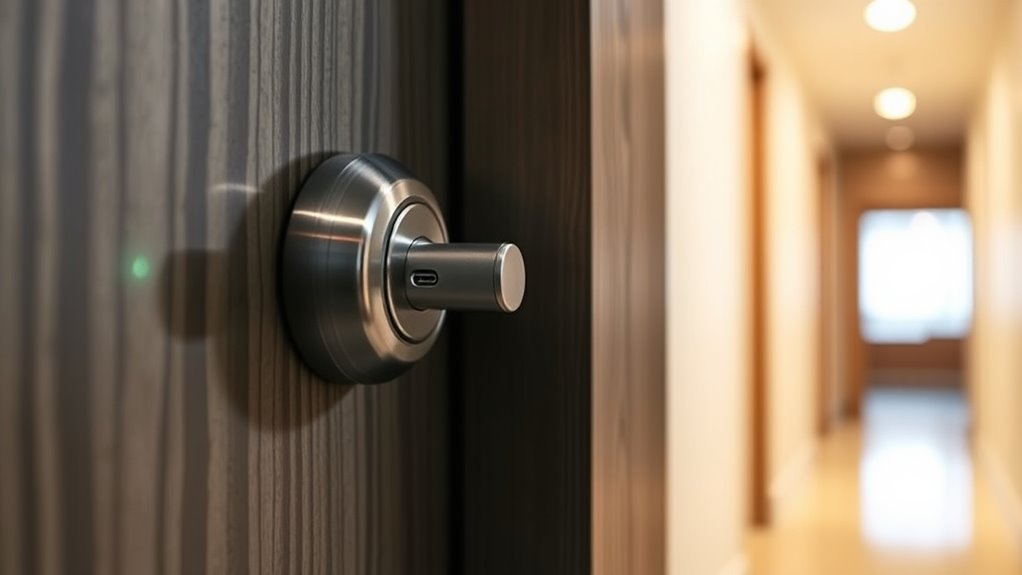
Have you ever wondered how emergency entry systems stay accessible when their batteries die? External power sources like solar charging and power banks guarantee you can still unlock your door in a pinch. Solar panels can harvest sunlight, providing a sustainable backup, especially in sunny environments. Power banks are portable and reliable, giving you a quick power boost when needed. Here’s a quick comparison:
| Feature | Solar Charging | Power Bank |
|---|---|---|
| Power Source | Sunlight | External battery pack |
| Portability | Fixed installation | Highly portable |
| Dependence | Weather-dependent | Always ready |
| Maintenance | Occasional cleaning | Recharging as needed |
| Use Case | Long-term sustainability | Emergency quick power |
Both options keep your smart lock accessible during power failures. Incorporating backup power options into your security plan ensures continuous access even during outages.
Audible Alarms and Visual Indicators

Audible alarms and visual indicators play a crucial role in alerting you to system status and potential issues. When your smart lock detects low battery levels or faults, visual indicator lights signal the problem, while audible alarm signals provide immediate alerts. These alerts help you respond quickly, preventing lockouts or failure to operate. Pay attention to the color and pattern of visual indicator lights, as they often specify the nature of the issue. Many systems also emit distinct sounds for different problems, making troubleshooting easier.
- Recognize different visual indicator light colors and patterns
- Listen for specific audible alarm signals during alerts
- Respond promptly to prevent lockout situations
Battery Life Monitoring and Maintenance Tips
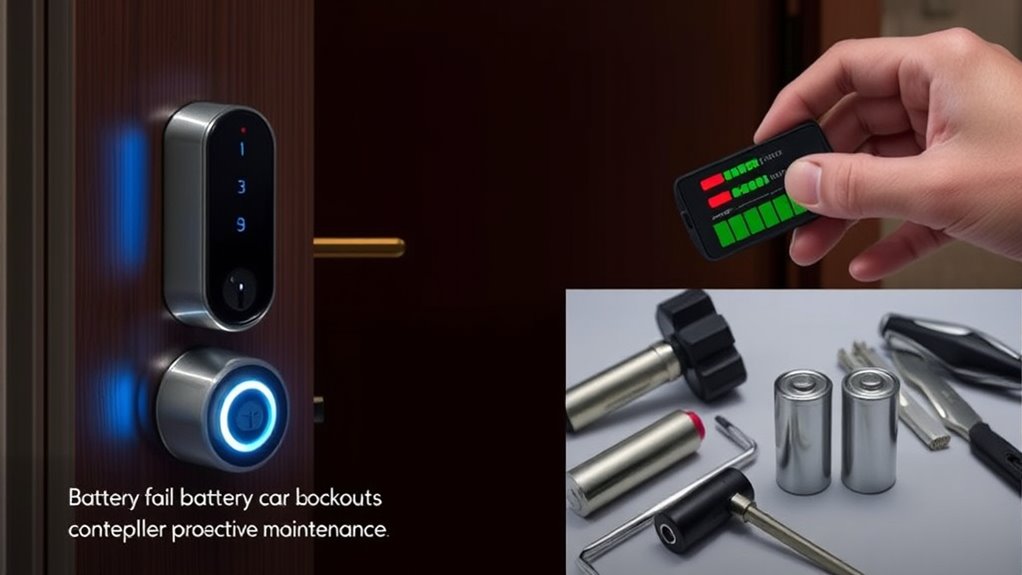
Regularly monitoring your smart lock’s battery life helps guarantee it remains reliable when you need it most. Check the battery level through the lock’s app or built-in indicators to stay ahead of power depletion. When the battery drops below the recommended threshold, perform a quick battery replacement to avoid unexpected lockouts. Keep an eye on the power consumption patterns—higher usage might drain batteries faster, signaling it’s time for a change. Using high-quality batteries can extend their lifespan and ensure consistent performance. Regular maintenance includes cleaning battery contacts and ensuring the compartment is dry and free of corrosion. Staying proactive with battery replacements and understanding your lock’s power needs will help prevent failures and keep your smart lock operating smoothly.
Designing for Redundancy and Reliability

To guarantee your smart lock remains dependable even if a component fails, designing for redundancy and reliability is essential. Incorporate multiple power sources, such as energy harvesting options like solar or kinetic energy, to supplement traditional batteries. Optimize power management to extend battery life and prevent unexpected outages. Redundant systems, like backup power modules or secondary control circuits, ensure the lock functions during primary component failures. Consider these strategies:
- Use energy harvesting to supplement power and reduce reliance on batteries
- Implement robust power management to maximize efficiency and lifespan
- Add redundant components for fail-safe operation during primary system failures
These measures ensure your smart lock stays operational, even in adverse conditions, safeguarding your access without interruption.
Selecting Smart Locks With Robust Safeguards

When choosing a smart lock, prioritizing models with robust safeguards guarantees reliable security and consistent operation. Look for locks that use secure wireless communication protocols to prevent hacking or signal interference. These safeguards guarantee your lock remains responsive and safe, even if the battery weakens. Biometric authentication adds an extra layer of security, allowing you to open doors with fingerprints or other biometric data, reducing reliance on batteries alone. Also, consider models that offer backup options such as physical keys or low-battery alerts, ensuring you’re never locked out unexpectedly. Robust safeguards not only protect your home but also give you peace of mind, knowing your smart lock can handle power failures or communication issues without compromising security.
Frequently Asked Questions
Can External Power Sources Damage the Smart Lock’S Electronics?
External power risks can potentially cause electronic damage to your smart lock if not used properly. When you connect an external power source, make certain it matches the lock’s voltage and current specifications. Using incompatible or unstable power supplies might lead to electrical surges, harming the electronics. Always follow manufacturer guidelines to prevent damage, and consider using built-in safeguards to protect your smart lock from accidental external power issues.
How Long Do Backup Batteries Typically Last During an Outage?
Did you know that most backup batteries in smart locks last between 24 to 48 hours during an outage? Your power backup’s battery lifespan depends on usage and the lock’s features. Typically, you can expect a reliable backup to keep your lock functioning through short outages, but it’s wise to verify your specific model’s specs. Regularly replacing or recharging backup batteries ensures you won’t get locked out unexpectedly.
Are There Certain Smart Lock Models More Prone to Battery Failures?
Certain smart lock models are more prone to battery failures due to issues with model reliability and battery compatibility. You might find that lower-quality brands or older models don’t handle power fluctuations well, increasing failure risks. To minimize lockouts, choose reputable brands known for reliable battery performance and make certain your batteries are compatible with your lock’s specifications. Regular maintenance and using high-quality batteries can also help prevent unexpected failures.
What Maintenance Schedule Is Recommended for Optimal Battery Performance?
Think of your smart lock’s battery like a car’s fuel—regular topping-up maintains it running smoothly. You should replace the batteries every 6 to 12 months, depending on usage, and enable power management features if available. Check your lock’s battery status monthly, and replace batteries immediately when they show low power. This routine ensures reliable access and prevents unexpected lockouts, keeping your smart lock functioning seamlessly.
How Do Environmental Factors Influence Battery Longevity in Smart Locks?
Environmental factors like temperature fluctuations and humidity effects markedly impact your smart lock’s battery longevity. Extreme temperatures cause batteries to drain faster or lose capacity over time, while high humidity can lead to corrosion and electrical issues. To extend battery life, keep your lock in a stable environment, avoid direct sunlight or damp areas, and regularly check for signs of moisture. Proper placement and maintenance help guarantee reliable operation and longer-lasting batteries.
Conclusion
By understanding common battery issues and leveraging built-in safeguards, you can avoid being caught out in the cold. Regular maintenance, alerts, backup options, and choosing smart locks with solid safeguards make sure you’re never left in the dark. Think of it as having a safety net under a tightrope—your smart lock’s reliability keeps your home secure and your peace of mind intact. Stay proactive, and you’ll keep your lock working smoothly—no surprises ahead.