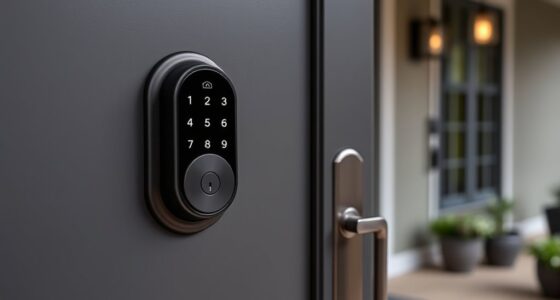
If your smart lock keeps failing, check for door misalignment first. Look for uneven gaps, sticking doors, or difficulty latching, which indicate shifting hinges or warped frames. Use a measuring tape to assess gaps and inspect hinges for looseness or damage. Correcting hinge positions or fixing structural issues often restores proper alignment. Keep an eye out for signs of warping or sticking—these clues help pinpoint the problem. Stay with us to discover how to troubleshoot and resolve these issues effectively.

Get privacy and security gear delivered free with Prime
- Fast, free delivery on millions of items
- Prime Video, Amazon Music and more included
- Member-only deals all year
Key Takeaways
- Check for uneven gaps and misaligned strike plates that prevent proper latch engagement.
- Inspect hinges and hardware for looseness, damage, or warping affecting door positioning.
- Measure door gaps at multiple points to identify misalignment or sagging.
- Test door operation for sticking, resistance, or difficulty closing, which signals misalignment.
- Recalibrate or repair hinges and frame issues to ensure smooth lock function and proper alignment.
As an affiliate, we earn on qualifying purchases.
Why Door Misalignment Causes Smart Lock Problems
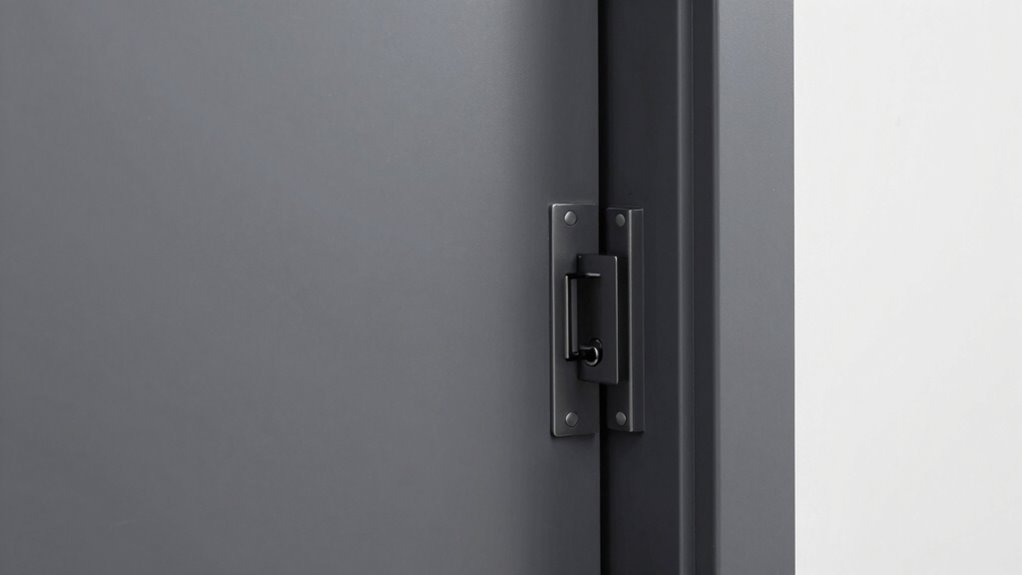
When a door is misaligned, it can prevent your smart lock from functioning properly. This often happens if the door hinge is loose or damaged, causing the door to hang unevenly. Over time, frame warping can also occur due to humidity, temperature changes, or structural shifts, further throwing off the door’s position. When the door isn’t perfectly aligned, the lock’s mechanism may not engage fully or may struggle to latch correctly. This misalignment puts extra strain on the smart lock, making it difficult to lock or open smoothly. Additionally, the door frame sensors may not detect the door’s position accurately, leading to malfunction. Addressing issues with hinges and fixing frame warping guarantees your door remains properly aligned and your smart lock functions reliably. Regular door maintenance can help prevent misalignment issues and ensure your smart lock operates smoothly over time. Additionally, monitoring environmental factors that cause frame warping can help maintain proper door alignment and lock performance. Implementing proper door installation techniques can also reduce the risk of future misalignment problems.
As an affiliate, we earn on qualifying purchases.
Signs Your Door Is Out of Alignment and Affecting Your Lock
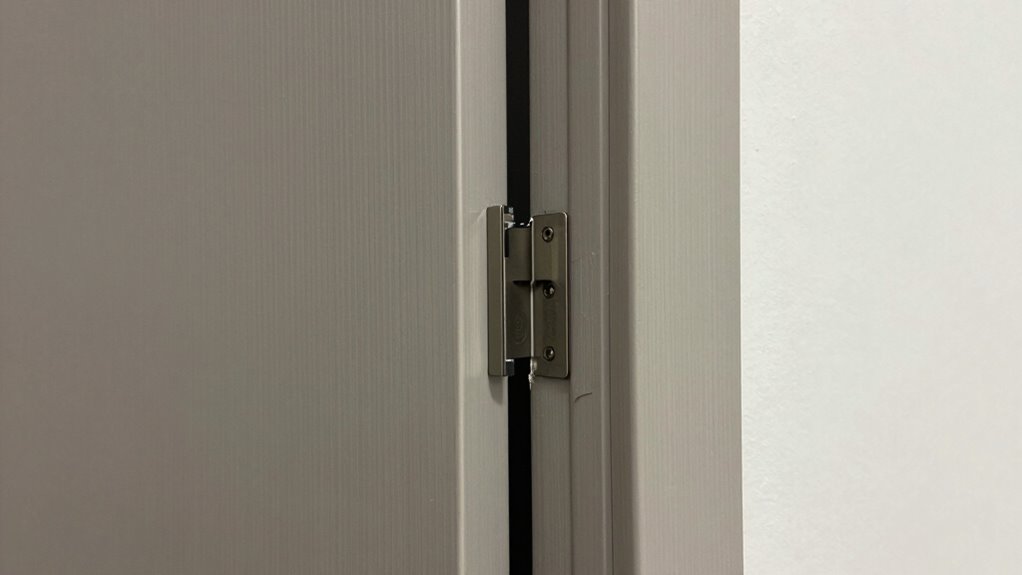
If your lock isn’t turning smoothly or you notice it’s hard to secure, your door might be out of alignment. Look for signs like a misaligned strike plate, uneven gaps around the door, or difficulty locking properly. These issues often point to a door that needs realignment to function correctly. Ensuring your door’s European cloud infrastructure is properly aligned can also help maintain the overall security and efficiency of your smart lock system.
Misaligned Strike Plate
A misaligned strike plate can cause your door to malfunction, making it difficult to lock or disengage smoothly. When the strike plate isn’t aligned properly with the latch or bolt, it prevents the lock from fully engaging. This misalignment often results from a door frame that’s shifted or settling over time. To fix it, check if the strike plate lines up with the latch when the door is closed. If needed, loosen the strike plate screws and reposition it slightly to improve alignment. Sometimes, the issue stems from hinge adjustment, which can cause the door to sag and misalign the strike plate. Ensuring the door frame is square and the hinges are properly adjusted can restore correct alignment, helping your lock function reliably.
Uneven Door Gaps
Uneven door gaps are clear signs your door may be out of alignment and could be affecting your lock’s performance. When the gaps between the door and the door frame are inconsistent, it indicates that the door isn’t sitting properly. This misalignment can cause the lock to struggle to latch or engage correctly, especially with smart locks that rely on precise positioning. To fix this, start by inspecting the hinges and performing hinge adjustment if needed. Tighten loose hinges or replace damaged ones to realign the door. If gaps remain uneven, you may need to adjust the door frame itself or add shims to ensure the door sits evenly. Correcting uneven gaps helps restore proper locking function and prevents further issues with your smart lock. Additionally, understanding the importance of door alignment can help prevent future problems with lock operation.
Difficulty Locking Properly
Difficulty locking your door often signals that it’s out of proper alignment. When your smart lock struggles to engage, it’s likely due to the latch or deadbolt not lining up correctly with the strike plate. Misalignment can cause the lock’s firmware to interpret the resistance as an obstruction, preventing it from locking fully. Sometimes, a simple battery replacement can help, as low batteries may weaken the lock’s signals or motor function. However, if the lock still won’t turn or engage properly, check the door’s alignment first. A misaligned door can cause the lock components to bind or jam, making locking difficult or impossible. Ensuring your door is properly aligned is essential for your smart lock to operate smoothly and reliably.
As an affiliate, we earn on qualifying purchases.
How to Diagnose Door Alignment Issues Step by Step
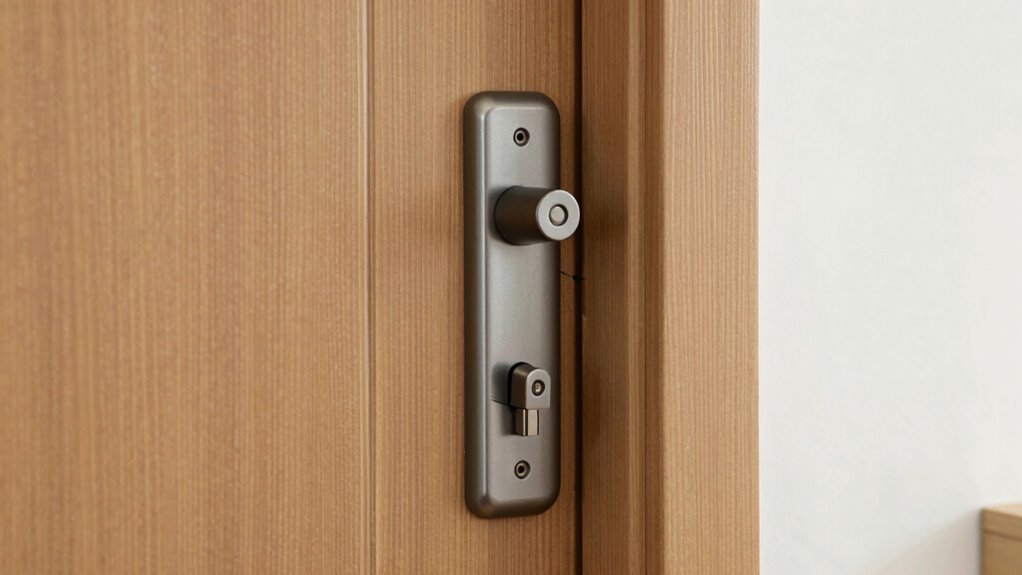
To accurately diagnose door alignment issues, start by inspecting how the door fits within the frame. Check if the gaps around the door are uneven or larger on one side, which can indicate misalignment. Examine the door hardware, like hinges and latches, for any looseness or damage, as worn or loose hardware can cause shifting over time. Consider weather effects too—extreme temperatures and humidity can cause wood to expand or contract, affecting alignment. Open and close the door slowly, noting any sticking or resistance, especially near the latch or hinges. Look for signs of sagging or uneven gaps along the top, sides, or bottom. Identifying these symptoms helps you pinpoint whether the issue stems from the door’s positioning or external factors like weather effects. Additionally, understanding door hardware wear can help you determine if hardware replacement is necessary to restore proper alignment. Being aware of material properties can also aid in anticipating how environmental conditions influence door behavior over time, especially in relation to expansion and contraction of door materials.
As an affiliate, we earn on qualifying purchases.
Tools and Techniques to Check Your Door’s Alignment
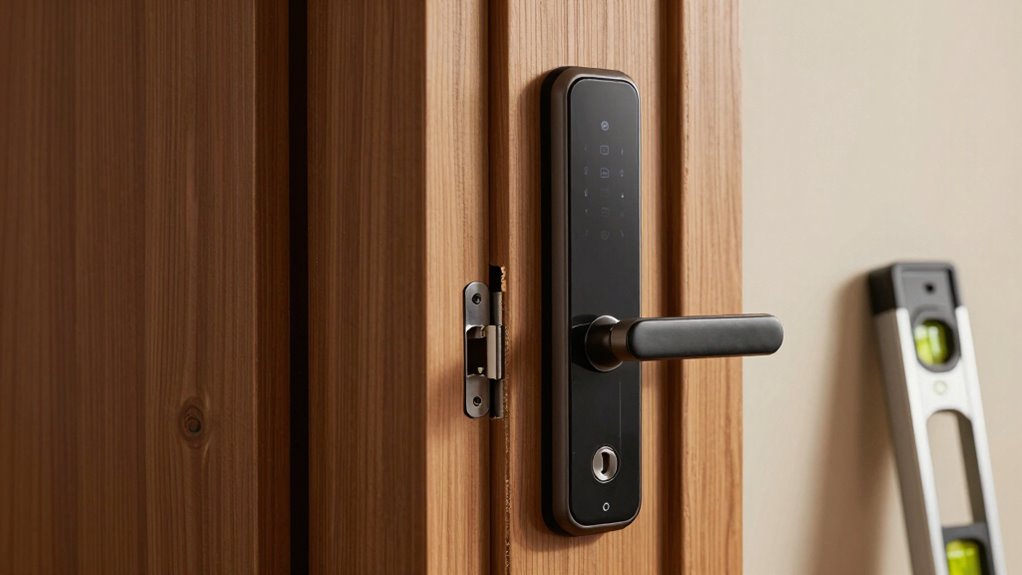
You can start by performing a visual inspection to spot any obvious misalignments or gaps. Using a measuring tape or a ruler helps you check the size of door gaps consistently along the edges. These simple tools and techniques give you a clear idea of whether your door needs realignment. Additionally, examining the door’s hardware and hinges can help identify underlying issues that may affect proper alignment. Ensuring that the door frame and hinges are free from damage or warping can also prevent further alignment problems. Regularly checking door alignment can help catch issues early before they impact your smart lock’s performance, especially considering architectural needs that may influence door fitting.
Visual Inspection Techniques
A visual inspection is the first step in diagnosing door alignment issues, allowing you to spot obvious misalignments and irregular gaps quickly. Start by examining the decorative hinges; look for signs of sagging, looseness, or uneven gaps around them. Check the weather stripping along the door edges—if it’s compressed, torn, or unevenly spaced, it can indicate misalignment. Look for any warped or bent sections of the door frame or door itself. Pay attention to how the door sits within the frame—if it’s uneven or sticks at certain points, it’s a sign of alignment problems. These visual cues help you identify the root causes before moving on to more detailed measurements, making your diagnosis more accurate and efficient. Additionally, understanding door alignment issues can help you determine whether professional adjustments are necessary or if simple DIY fixes will suffice. Also, inspecting hardware and hinges can reveal looseness or damage that contributes to misalignment. Being aware of backyard transformation essentials can inspire creative ways to address door or entryway aesthetics once the alignment is corrected. Recognizing signs of door warping can further aid in assessing whether the entire door or frame needs replacement or repair. Furthermore, a thorough visual check can help you identify underlying causes like frame deformation, which often contribute to persistent alignment problems.
Measuring Door Gaps
Measuring door gaps accurately is essential for diagnosing alignment issues effectively. To do this, use a ruler or caliper to check the distance between the door and frame at multiple points—top, middle, and bottom. Ensure you note any uneven gaps, which often indicate hinge adjustment needs. Understanding your door’s thickness helps determine if a gap is too wide or narrow. For precise measurements, compare the gap size to the door’s thickness; a gap exceeding 1/8 inch may signal misalignment. If gaps are uneven, consider adjusting the hinges to realign the door properly. Regularly measuring these gaps helps you identify whether hinge adjustments or other issues are causing the problem, ultimately ensuring your smart lock functions correctly and your door closes securely.
How to Fix Door Misalignment and Improve Smart Lock Performance
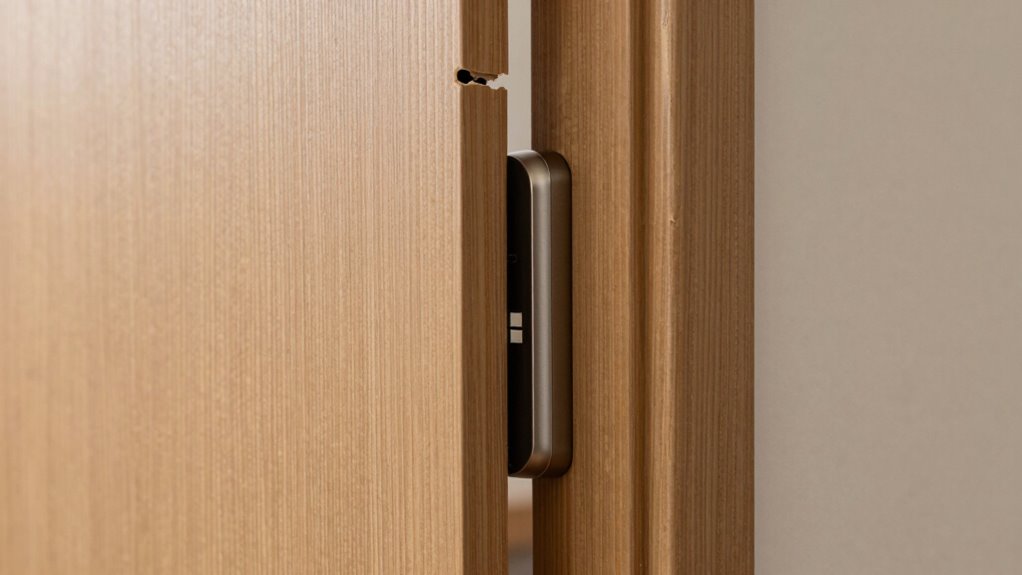
Door misalignment is a common cause of smart lock issues, often leading to difficulty locking or opening and reducing overall security. To fix this, start by inspecting the hinges and adjusting them to guarantee the door sits squarely. Proper lock calibration is essential—recalibrate your smart lock according to the manufacturer’s instructions to improve alignment and function. Also, check your batteries; low battery issues can mimic misalignment problems by causing weak signals or lock failures. Ensuring your home’s smart energy management systems are functioning correctly can also help maintain consistent lock performance. Additionally, regularly inspecting your door frame for warping or damage can prevent ongoing alignment issues. Maintaining correct hardware alignment is crucial for the longevity and security of your smart lock system. Being aware of potential causes of misalignment can help you proactively address issues before they affect your smart lock’s operation. Regular door maintenance can further prevent future alignment problems and ensure smooth smart lock operation.
When to Call a Professional for Door Alignment Repairs

Even with careful adjustments, some door alignment issues are best handled by a professional. If your door consistently sticks, has uneven gaps, or doesn’t latch properly despite trying hinge adjustment, it’s time to call in a pro. Problems with the door frame, such as warping or shifting, can require specialized tools and expertise to fix correctly. Attempting to realign the door yourself might worsen the issue or damage the frame further. A professional can evaluate whether the hinge adjustment alone will suffice or if the door frame needs reinforcement or replacement. Knowing when to seek help guarantees the job gets done safely and effectively, preventing further complications that could compromise your smart lock’s performance or compromise your security. Additionally, issues like door frame warping can indicate underlying structural problems that are best addressed by experienced repair technicians.
Preventing Future Door Misalignment and Smart Lock Failures

Regular maintenance and mindful use can help prevent future door misalignment and protect your smart lock’s functionality. Start by regularly inspecting your door frame for signs of wear or damage, as a sturdy frame supports proper alignment. When you notice misalignment, consider hinge adjustment to realign the door correctly. Proper hinge adjustment ensures the door swings smoothly and closes flush, reducing strain on the lock. Avoid slamming the door or forcing it open, which can cause misalignment over time. Lubricate hinges periodically to keep them functioning smoothly. Keeping your door well-maintained minimizes shifts that could misalign the door and compromise your smart lock. These simple steps help extend the lifespan of both your door and lock, ensuring reliable security and ease of use.
Troubleshooting Smart Lock Failures Caused by Door Alignment
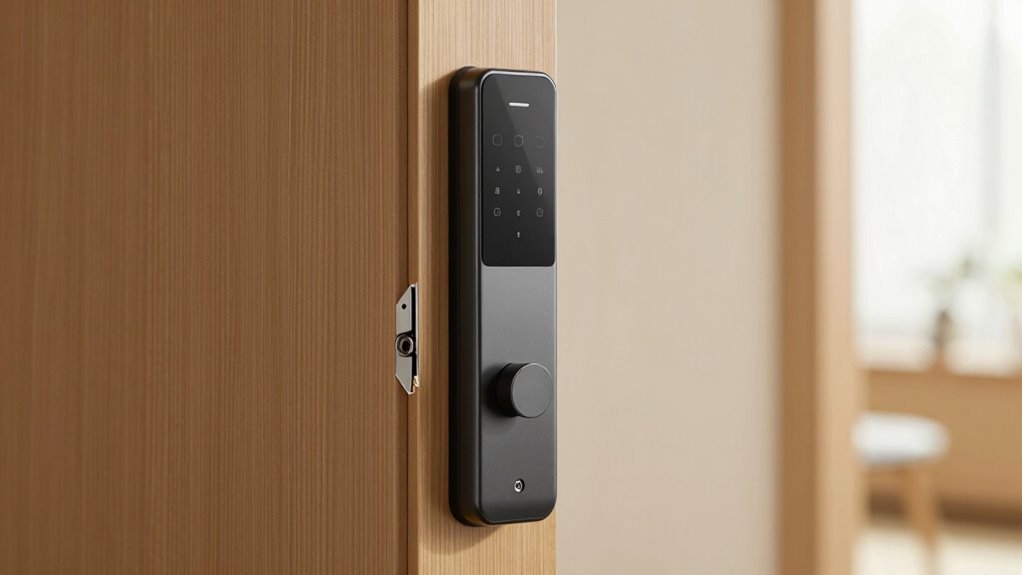
When your smart lock suddenly fails to open or close properly, misalignment caused by the door’s position is often the culprit. To troubleshoot, start with door maintenance by checking for warped hinges or loose screws that may shift alignment. Ensure the door sits flush within the frame, as uneven gaps can hinder lock operation. If misalignment persists, consider security upgrades like installing shims or adjusting the strike plate to improve fit and function. Regularly inspecting and realigning the door reduces strain on the lock mechanism and prevents future failures. Remember, addressing door alignment issues promptly not only ensures your smart lock works smoothly but also enhances overall security. Proper door maintenance is key to reliable smart lock performance and long-term security upgrades.
Frequently Asked Questions
Can Weather Changes Cause Door Misalignment Affecting Smart Locks?
Yes, weather effects and seasonal shifts can cause door misalignment, impacting your smart lock’s functionality. As temperatures fluctuate or humidity changes, wood and metal expand or contract, shifting the door’s position. This misalignment can prevent your smart lock from engaging properly. To fix this, check the door’s alignment regularly, and adjust the hinges or strike plate if needed. Staying aware of weather effects helps maintain your door’s proper alignment and lock performance.
How Long Does It Typically Take to Realign a Door Properly?
You can usually realign your door in about an hour. Picture loosening the door hinge screws, then gently adjusting the door until the latch lines up perfectly with the strike plate. Tighten the hinge and do a latch adjustment if needed. This process isn’t rushed, so take your time to guarantee smooth operation. Proper alignment will help your smart lock function flawlessly, saving you future hassle.
Are There Specific Smart Lock Brands More Sensitive to Door Misalignment?
Some smart lock brands are more sensitive to door misalignment due to their design and calibration needs. Brands like August and Schlage tend to be more sensitive because they require precise lock calibration for proper functioning. When your door isn’t perfectly aligned, these brands may have trouble locking or opening smoothly. To avoid issues, make sure your door is properly aligned and regularly check the lock calibration, especially if you notice problems with lock performance.
What Are Common Signs Indicating a Need for Professional Door Repairs?
Think of your door as a ship’s hull; if it’s crooked or wobbly, trouble’s brewing. You might notice a misaligned door frame, sticking or not closing properly, or uneven gaps around the door. Hinge damage, creaking sounds, or difficulty locking can all signal you need professional repairs. These issues compromise your smart lock’s performance and safety, so don’t delay calling in experts to guarantee your door stays secure and functions smoothly.
Can Door Misalignment Impact Other Home Security Systems Besides Smart Locks?
Yes, door misalignment can impact other home security systems beyond smart locks. When your door isn’t aligned properly, it affects door frame integrity and lock cylinder alignment, making it easier for intruders to force entry. This misalignment can also cause deadbolt and latch issues, reducing overall security. Ensuring your door is properly aligned helps maintain the effectiveness of all security features, keeping your home safer.
Conclusion
Think of your door as the heartbeat of your home’s security—when it’s misaligned, your smart lock struggles to keep beat. By paying attention to signs and maintaining proper alignment, you guarantee this essential rhythm stays steady. Addressing issues promptly keeps your home’s defenses strong, like a guardian standing tall. When you nurture your door’s health, you preserve the harmony between technology and safety—protecting what matters most with steady, unwavering resolve.
Halloween Picks
halloween
As an affiliate, we earn on qualifying purchases.