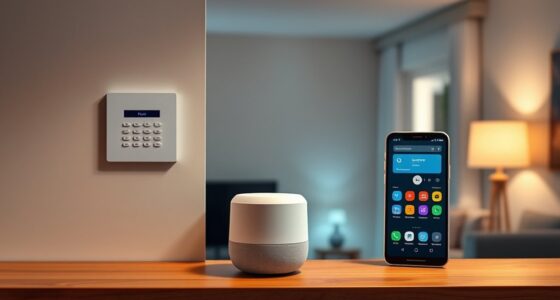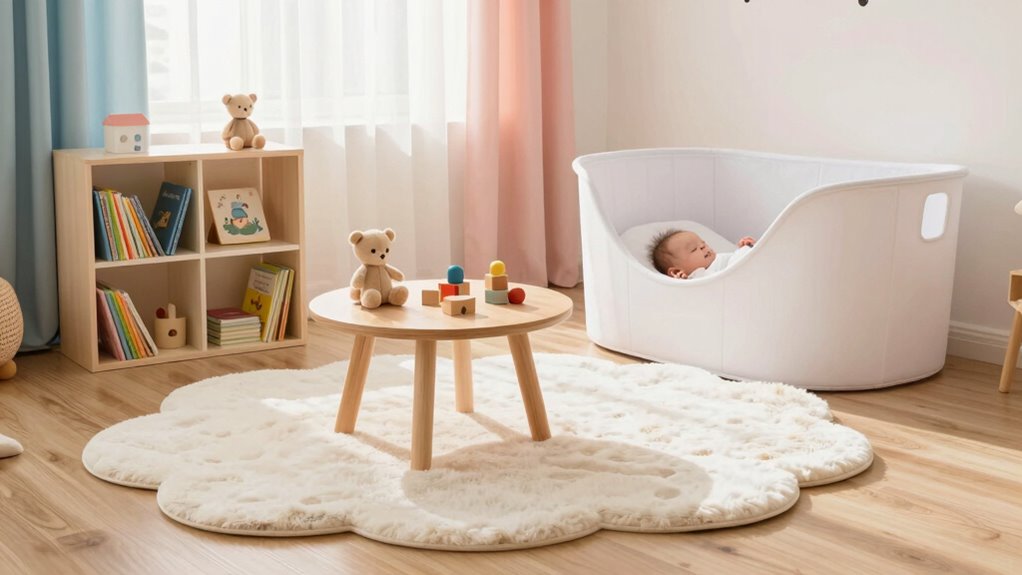
To create a safe, quiet “Kids Home” mode, set up a dedicated space with physical boundaries like decorative lighting and childproofing tools such as outlet covers and cabinet locks. Use soft, sound-absorbing materials like plush rugs, acoustic panels, and cozy furniture to diminish noise. Maintain good air quality with ventilation and filters, and keep hazards out of reach. As your child grows, stay alert for safety updates and ways to keep the environment calm. Explore more tips to ensure a nurturing space.
Key Takeaways
- Design a designated, organized play area with clear boundaries and safety features to promote calm and secure environment.
- Incorporate soundproofing materials like acoustic panels and plush rugs to minimize noise and create a peaceful space.
- Implement childproofing measures such as outlet covers, corner protectors, and secure furniture to ensure safety.
- Maintain optimal air quality with proper ventilation, air purifiers, and non-toxic materials to support health and comfort.
- Regularly update decor, furniture, and safety checks to adapt to children’s growth and prevent hazards.
Why a Safe, Quiet Kids’ Space Is Essential for Your Family’s Wellbeing
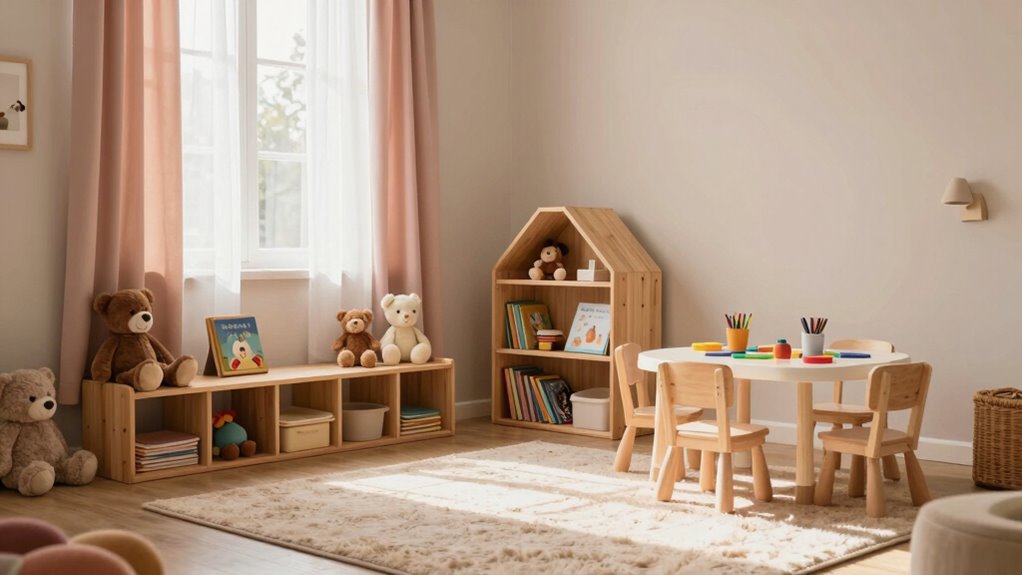
Creating a safe, quiet space for your kids isn’t just about giving them a place to play; it’s essential for their overall wellbeing. An organized playroom with clear playroom organization helps children feel secure and in control of their environment. When the space is tidy and well-structured, it reduces chaos and minimizes hazards, making supervision easier. Parental supervision becomes more effective when you can easily see and access everything your kids are doing. A designated, calm area encourages focus, creativity, and relaxation, which are crucial for emotional development. Plus, a safe space helps your children learn boundaries and independence while giving you peace of mind knowing they’re protected. Incorporating simple, functional systems can make maintaining a safe and calming environment more manageable for busy households. Establishing playroom organization tailored to your child’s needs can further enhance safety and reduce clutter. Implementing childproofing techniques ensures hazards are minimized, creating an even safer environment for your kids. Additionally, using child-friendly storage solutions can help keep the space tidy and accessible for children to participate in cleanup. Incorporating natural elements such as plants or natural light can also promote a soothing atmosphere and support your child’s wellbeing.
Setting Up Physical and Digital Boundaries for Safety and Calm
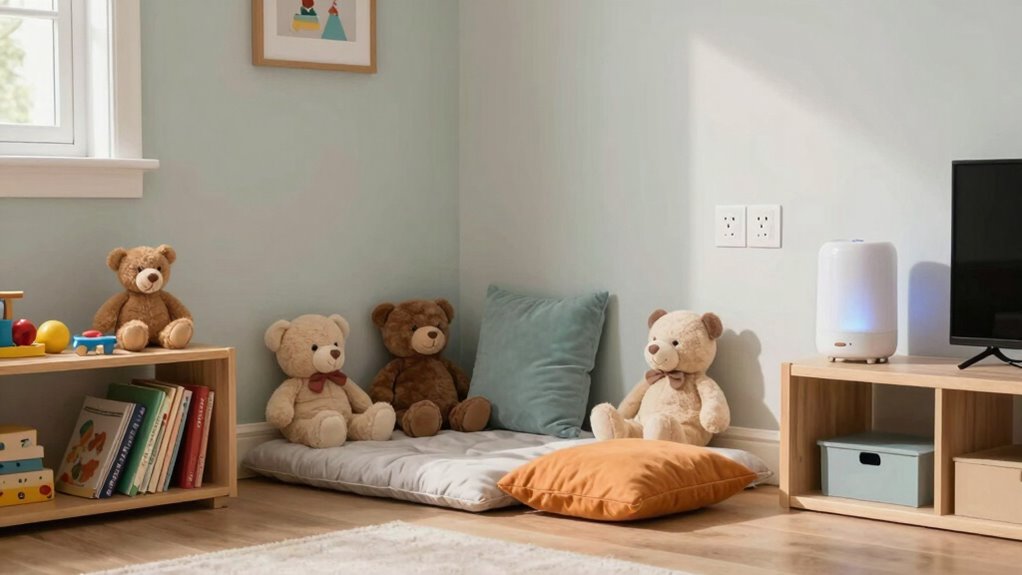
Once your kids have a designated safe space, setting clear boundaries helps maintain that calm environment. You can use physical boundaries like decorative lighting to define areas where kids can play and relax, creating a visual cue for boundaries. Incorporate interactive toys within these zones to encourage appropriate engagement and prevent overstimulation. Digital boundaries are equally important—set limits on screen time and establish rules for device use. Use lockable storage or parental controls to restrict access to content that may disrupt peace. Consistently reinforce these boundaries, explaining their purpose to your children. This approach helps your kids understand what’s expected, reducing conflicts and keeping the space safe, quiet, and centered around calm interactions. Implementing energy-efficient technology can further support a sustainable approach to managing your child’s environment. Additionally, choosing child-safe materials for furnishings and decor enhances safety and peace of mind in your child’s space. Incorporating local reviews of safe and calming products can also help you select trusted items that contribute to a peaceful atmosphere, especially when considering modern kitchen innovations that promote safety and quiet. Understanding child development principles can guide you in creating the most appropriate boundaries for your child’s age and needs.
Must-Have Features for a Safe and Peaceful Kids’ Area

To create a safe and peaceful kids’ area, you need to focus on childproofing essentials that prevent accidents and injuries. Noise control solutions help maintain a calm environment and reduce stress for both kids and adults. By combining these features, you guarantee a space that’s secure and soothing for everyone. Incorporating air quality management can also help eliminate airborne irritants and promote healthier breathing in the space. Additionally, ensuring proper ventilation and air filtration can further improve indoor air quality, creating a more comfortable environment for children. Using vetted safety products and materials can ensure durability and peace of mind.
Childproofing Essentials
Ensuring your kids’ area is safe starts with essential childproofing features that prevent accidents and promote peace of mind. Using childproofing gadgets and following safety checklists helps create a secure environment. Imagine:
- Outlet covers that prevent electrical shocks.
- Corner protectors on sharp furniture edges.
- Cabinet locks to keep dangerous items out of reach.
- Door knob covers to restrict access to unsafe areas.
These simple measures make a big difference. Regularly inspecting and updating your safety checklists guarantees you don’t miss any hazards. Childproofing isn’t a one-time task; it’s an ongoing process that keeps your little ones safe as they grow. Additionally, implementing air purifier maintenance and filter replacement routines ensures the air quality remains safe for children, especially in spaces with potential airborne pollutants. Proper childproofing products are essential for creating a safe environment, and choosing those that are vetted for safety and effectiveness is a wise decision. Incorporating child safety standards into your planning helps ensure comprehensive protection. Maintaining proper ventilation considerations can also improve air quality and reduce indoor pollutants. By investing in these essentials, you create a peaceful space where your kids can explore safely and confidently, especially when considering air quality management.
Noise Control Solutions
Creating a peaceful kids’ area requires effective noise control solutions that minimize disruptions and promote calm. To achieve this, focus on materials and strategies that absorb sound, like plush rugs, acoustic panels, and soft furnishings. Choosing the right playroom decor can also dampen noise levels, making the space more soothing. Incorporate educational toys that promote quiet play, reducing loud disruptions. Consider these options:
| Solution | Benefits | Best For |
|---|---|---|
| Acoustic panels | Absorb excess sound | Playroom walls |
| Soft rugs & cushions | Minimize echo and footsteps | Play area floor |
| Quiet storage bins | Reduce clutter, noise from toys | Toy organization |
| Soundproof doors | Contain noise within the room | Playroom entrances |
Implementing these solutions creates a serene environment, perfect for learning and relaxation. Additionally, selecting soundproof doors can significantly improve the overall noise reduction in the space. Using soundproofing techniques can further enhance the effectiveness of these measures and ensure a consistently peaceful atmosphere. Incorporating sound-absorbing materials can also help in maintaining a quiet environment, making the space more comfortable for children and caregivers alike. Employing effective noise mitigation strategies can optimize the room’s acoustics and foster a calm, focused setting.
How to Choose Child-Safe, Noise-Reducing Materials and Technology
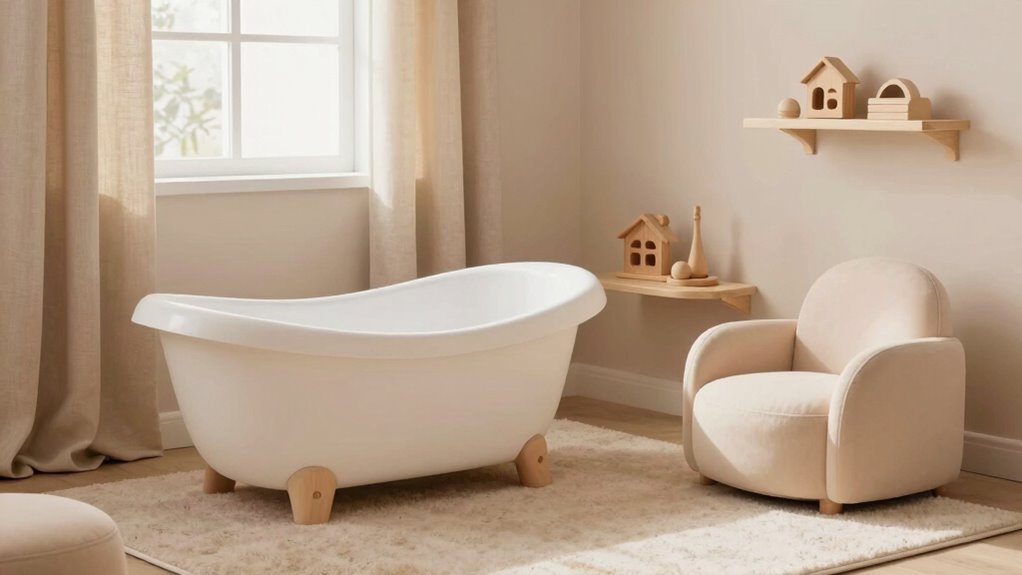
Choosing child-safe, noise-reducing materials and technology is essential for creating a safe and peaceful environment at home. Focus on sound absorbing, non toxic materials that prioritize safety and effectiveness. To visualize, consider:
- Thick, plush rugs that muffle footsteps and reduce echo, creating a cozy and quiet space.
- Foam panels made from non toxic materials placed on walls for sound absorption and safety.
- Soft, fabric-covered furniture that dampens noise and is safe for kids.
- Quiet technology like noise-canceling devices with child-friendly features, ensuring a peaceful atmosphere without hazards.
- Incorporating creative storytelling into your environment can also help soothe children and promote a calm atmosphere. Additionally, selecting safe, non toxic materials is crucial for avoiding health risks.
Keeping Your Kids’ Space Calm and Safe as They Grow
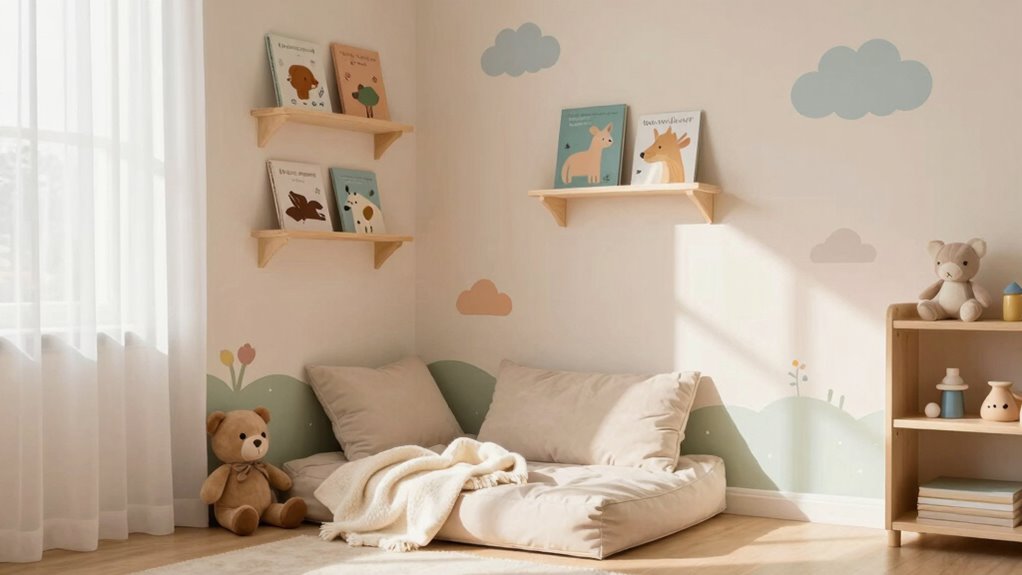
As your children grow, their needs and environments change, making it important to adapt their space for ongoing safety and tranquility. Incorporate creative decor that evolves with their interests, keeping the space engaging yet calm. Use soft, soothing colors and simple layouts to maintain a peaceful atmosphere. Choose educational toys that promote learning without overstimulation, and make certain they are safely stored away when not in use. Regularly inspect the space for potential hazards as your child becomes more mobile and curious. Keep furniture secure and clutter minimized to prevent accidents. By updating decor and toys thoughtfully, you create a safe environment that encourages growth while maintaining a calm, quiet atmosphere. Your attentiveness helps foster a nurturing space that adapts seamlessly as your child develops.
Common Mistakes to Avoid When Designing a Kids’ Quiet Space
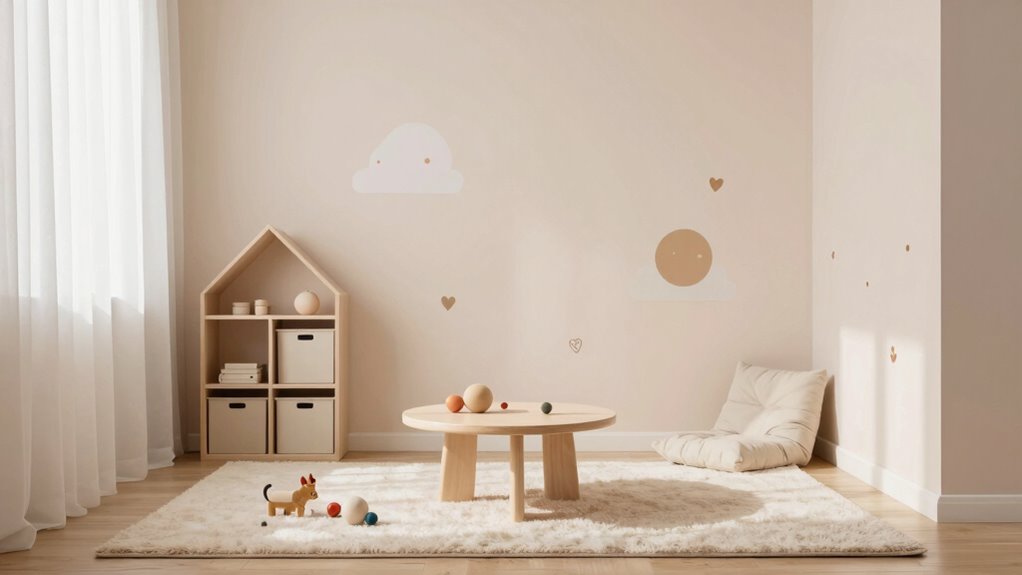
When designing a kids’ quiet space, avoid overcrowding and clutter, which can make the area feel chaotic and overwhelming. Don’t overlook safety measures like secure furniture and outlets, as safety should always come first. Additionally, choosing poor soundproofing options can defeat the purpose of a calm retreat, so select solutions that genuinely minimize noise.
Overcrowding and Clutter
Overcrowding and clutter can quickly turn a quiet space into a chaotic environment that hampers concentration and relaxation. When too many toys, books, and decor items crowd the area, it becomes difficult for kids to focus or unwind. To avoid this, think carefully about what you include. Visualize a clean, organized space with:
- A single, eye-catching piece of interactive decor that sparks curiosity
- Designated storage for sensory activities, neatly tucked away when not in use
- Minimal toys and supplies, regularly rotated to prevent excess
- Clear open areas for movement and calm activities
Ignoring Safety Measures
Ignoring safety measures can turn a peaceful kids’ quiet space into a hazard zone. You might overlook supervision, assuming kids are safe on their own, but accidents happen quickly. Failing to install child-proof locks or outlet covers increases risks of injury or electrical hazards. Neglecting comfort can also lead to unsafe conditions; uncomfortable furniture may cause kids to fidget or try risky moves to adjust, increasing the chance of falls or spills. Always ascertain the space is secure and monitored, especially during quiet activities. Incorporate safety features like corner protectors and slip-resistant rugs. Remember, a safe environment isn’t just about avoiding hazards—it’s about actively preventing them. Prioritize supervision and comfort to create a truly safe, calming space for your kids.
Poor Soundproofing Choices
Choosing the right soundproofing options can make or break the effectiveness of your kids’ quiet space. Poor soundproofing choices often lead to common pitfalls that invite noisy distractions. For example:
- Using thin, hollow doors that echo sound instead of blocking it.
- Relying solely on lightweight curtains instead of solid acoustic barriers.
- Leaving gaps around windows and vents that let noise seep through.
- Overlooking the importance of insulated walls that absorb sound effectively.
These soundproofing pitfalls can turn a peaceful room into a noisy hub, making it hard for your kids to focus or relax. To avoid this, select quality, dense materials designed for sound absorption, and ensure all gaps are sealed. Proper soundproofing creates a calm environment, free from disruptive noise and distractions.
Frequently Asked Questions
How Often Should I Update Safety Features in the Kids’ Space?
You should update safety features regularly, ideally every six months, or whenever you notice potential hazards. Check childproof locks to make sure they’re secure and functioning properly. Use safety checklists to identify and address new risks as your child grows or as your home changes. Staying proactive helps you maintain a safe and quiet environment, giving you peace of mind knowing your little one is protected and comfortable at all times.
Can I Incorporate Interactive Tech Without Compromising Safety?
Yes, you can incorporate interactive technology into your kids’ space without jeopardizing safety. Focus on safety considerations like choosing tech with secure, child-friendly features and avoiding sharp or small parts. Keep cords out of reach and install devices securely. Regularly check for updates and monitor usage to prevent accidents. By prioritizing safety considerations, you ensure that interactive technology enhances your kids’ experience while keeping their environment safe and quiet.
What’s the Best Way to Involve Children in Designing Their Space?
You can involve children in designing their space through creative collaboration by asking for their ideas and preferences. Encourage them to share personalization ideas like favorite colors, themes, or furniture choices. Let them draw or choose decor to make the space feel truly theirs. This active participation fosters ownership, sparks their creativity, and guarantees the room reflects their personality, making it a safe, quiet, and enjoyable environment.
How Do I Balance Fun and Calm in the Kids’ Area?
Your kids’ space can be a peaceful paradise that’s bursting with energy! Balance fun and calm by incorporating playful decor that sparks creativity and defining quiet zones for relaxation. Use soft colors and cozy furniture in certain areas, and lively, colorful elements elsewhere. This way, you create a versatile environment that invites both active play and peaceful downtime, making the space perfect for every mood.
Are There Eco-Friendly Options for Safety and Noise Reduction?
Yes, you can choose eco-friendly options for safety and noise reduction. Look for safety products made from recyclable materials to minimize environmental impact. Use natural insulation, like wool or cotton, to keep the space quiet and comfortable without relying on synthetic options. These choices create a safer, quieter kids’ area that’s gentle on the planet, helping you maintain a healthy, eco-conscious environment for your children.
Conclusion
So, go ahead—create that perfect kids’ haven. Because nothing says “I’ve got this” like a silent sanctuary where chaos is banned and peace reigns. Just remember, a quiet space isn’t just about peace and safety; it’s your secret weapon against endless tantrums and sleepless nights. Who knew that building a little fortress of calm could also be your most brilliant parenting move? Cheers to a quieter, safer, and slightly more sane family life!